June 3, 2024
Mohenjo
Business, Food For Thought, Human Interest, Political, Science, Technical
amazon, business, Business News, current-events, Future, Hotels, human-rights, medicine, mental-health, research, Science, Science News, technology, Technology News, travel, vacation

30 slides…
Click the link below the picture
.
Human DNA was indeed first discovered in the 1860s, marking a significant milestone in our understanding of human life. Since then, scientists have made numerous discoveries that shed light on early human history. In 2018, a notable breakthrough occurred when a team of scientists unearthed the skeletons of two Native American infants.
This discovery yielded unexpected information and valuable insights that extended beyond their initial expectations. Continue reading through this incredible story in order to learn more!
(the first of 30 slides)
.
 ©Photo credit should read NICOLAS TUCAT/AFP via Getty Images
.
.
Click the link below for the 30 slides:
.
__________________________________________
June 3, 2024
Mohenjo
Business, Food For Thought, Human Interest, Political, Science, Technical
amazon, business, Business News, current-events, Future, Hotels, human-rights, medicine, mental-health, research, Science, Science News, technology, Technology News, travel, vacation

Click the link below the picture
.
A kerfuffle erupted last week after actor Scarlett Johansson complained that one of OpenAI’s chatbot voices sounded a lot like her. It isn’t hers — the company created it using recordings from someone else. Nevertheless, the firm has suspended the voice out of respect for Johansson’s concerns. But the media flurry has cracked open a broader discussion about peoples’ rights to their own personas. In the age of generative artificial intelligence (genAI), are existing laws sufficient to protect the use of a person’s appearance and voice?
The answer isn’t always clear, says Carys Craig, an intellectual-property scholar at York University in Toronto, Canada, who will be speaking on this topic next month during a Canadian Bar Association webcast.
Several members of the US Congress have, in the past year, called for a federal law to enshrine such protections at the national level. And some legal scholars say that action is needed to improve privacy rights in the United States. But they also caution that hastily written laws might infringe on freedom of speech or create other problems. “It’s complicated,” says Meredith Rose, a legal analyst at the non-profit consumer-advocacy group Public Knowledge in Washington, DC. “There’s a lot that can go wrong.”
“Rushing to regulate this might be a mistake,” Craig says.
Fake me
GenAI can be used to easily clone voices or faces to create deepfakes, in which a person’s likeness is imitated digitally. People have made deepfakes for fun and to promote education or research. However, they’ve also been used to sow disinformation, attempt to sway elections, create non-consensual sexual imagery, or scam people out of money.
Many countries have laws that prevent these kinds of harmful and nefarious activities, regardless of whether they involve AI, Craig says. But when it comes to specifically protecting a persona, existing laws might or might not be sufficient.
Copyright does not apply, says Craig, because it was designed to protect specific works. “From an intellectual-property perspective, the answer to whether we have rights over our voice, for example, is no,” she says. Most discussions about copyright and AI focus instead on whether and how copyrighted material can be used to train the technology, and whether new material that it produces can be copyrighted.
Aside from copyright laws, some regions, including some US states, have ‘publicity rights’ that allow an individual to control the commercial use of their image, to protect celebrities against financial loss. For example, in 1988, long before AI entered the scene, singer and actor Bette Midler won a ‘voice appropriation’ case against the Ford Motor Company, which had used a sound-alike singer to cover one of her songs in a commercial. And in 1992, game-show host Vanna White won a case against the US division of Samsung when it put a robot dressed as her in a commercial.
.
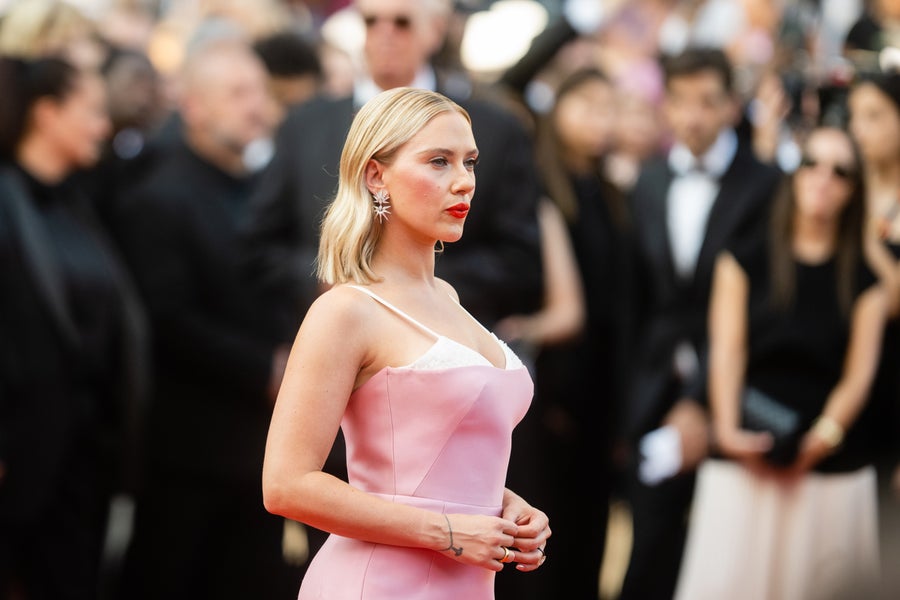
Scarlett Johansson has said she believes an OpenAI chatbot voice was intended to imitate her. Samir Hussein/WireImage
.
.
Click the link below for the article:
.
__________________________________________
June 3, 2024
Mohenjo
Business, Food For Thought, Human Interest, Political, Science, Technical
amazon, business, Business News, current-events, Future, Hotels, human-rights, medicine, mental-health, research, Science, Science News, technology, Technology News, travel, vacation

Click the link below the picture
.
German composer Ludwig van Beethoven began losing his hearing in his 20s, a fact that deeply upset and embarrassed him. Over the years, his hearing loss worsened, and by the time he died at age 56 in 1827, the composer was totally deaf.
But the cause of Beethoven’s deafness has always been a mystery, along with the slew of other health problems he suffered, including diarrhea and abdominal cramps. Now, nearly 200 years after his death, researchers may finally have an answer.
An analysis of Beethoven’s hair has revealed high levels of lead, arsenic, and mercury, researchers report this week in a letter to the editor of the journal Clinical Chemistry. The heavy metals alone probably weren’t enough to kill him, but they do offer a possible explanation for some of his symptoms.
Researchers tested two authenticated locks of Beethoven’s hair. One had 380 micrograms of lead per gram of hair, while the other had 258 micrograms. For reference, a normal level of lead in a gram of hair is around 4 micrograms or less. His hair also had 13 times the normal level of arsenic, and four times the normal level of mercury.
The high amount of lead, in particular, likely contributed to his gastrointestinal issues and deafness, the researchers write in the paper.
“These are the highest values in hair I’ve ever seen,” says study co-author Paul Jannetto, a pathologist at Mayo Clinic, to the New York Times’ Gina Kolata. “We get samples from around the world, and these values are an order of magnitude higher.”
.
:focal(2165x2124:2166x2125)/https://tf-cmsv2-smithsonianmag-media.s3.amazonaws.com/filer_public/da/1a/da1ae46e-b7e8-44aa-8594-a5695edcd73d/joseph_karl_stielers_beethoven_mit_dem_manuskript_der_missa_solemnis.jpg) A portrait of Ludwig Van Beethoven by Joseph Karl Stieler, painted in 1820. Public Domain via Wikimedia Commons
A portrait of Ludwig Van Beethoven by Joseph Karl Stieler, painted in 1820. Public Domain via Wikimedia Commons
.
.
Click the link below for the article:
.
__________________________________________
June 2, 2024
Mohenjo
Business, Food For Thought, Human Interest, Political, Science, Technical
amazon, business, Business News, current-events, Future, Hotels, human-rights, medicine, mental-health, research, Science, Science News, technology, Technology News, travel, vacation
Click the link below the picture
.
Around 2,500 years ago humankind began to recognize that our planet is round—although a few “flat Earth” supporters still deny this today. The shape of our universe is not clear, however. Previous studies have suggested that the cosmos probably has a fairly simple shape, such as the three-dimensional equivalent of a spherical surface or a plane. But this view may be wrong, according to cosmologists from the Collaboration for Observations, Models and Predictions of Anomalies and Cosmic Topology (COMPACT). In a paper published in April 2024, they found that the shape of the universe could be significantly more complex than previously assumed.
Earth also appears flat at first glance. This is because its radius is so large that the surface’s curvature is barely perceptible. To prove it’s a sphere, you would just have to start walking. If you were to move straight ahead without ever turning—crossing over mountains and oceans—you would inevitably return to the start at some point.
Cosmologists collect similar clues to determine the shape of the universe. They could send a spaceship out to traverse the cosmos. Instead, they peer into the night sky and examine traces of the oldest light that reaches us from the depths of the cosmos. This radiation was created around 300,000 years after the big bang. Although photons had existed even before that, matter was so densely packed into what was then a small universe that the light quanta had no chance of traveling freely. Eventually, however, the universe cooled down to such an extent that it became transparent. The photons were able to spread freely through space—and still do today.
Photons from this early time in the universe reach us as cosmic background radiation. Approximately the same pattern of old light comes from every corner of the universe. This radiation provides clues to the shape of the universe. If, for example, the curvature of the universe were to change at one point, the cosmic background radiation would not be as homogeneous as we observe it. Experts therefore assume that the universe is either curved in the same way everywhere—or is completely flat.
.
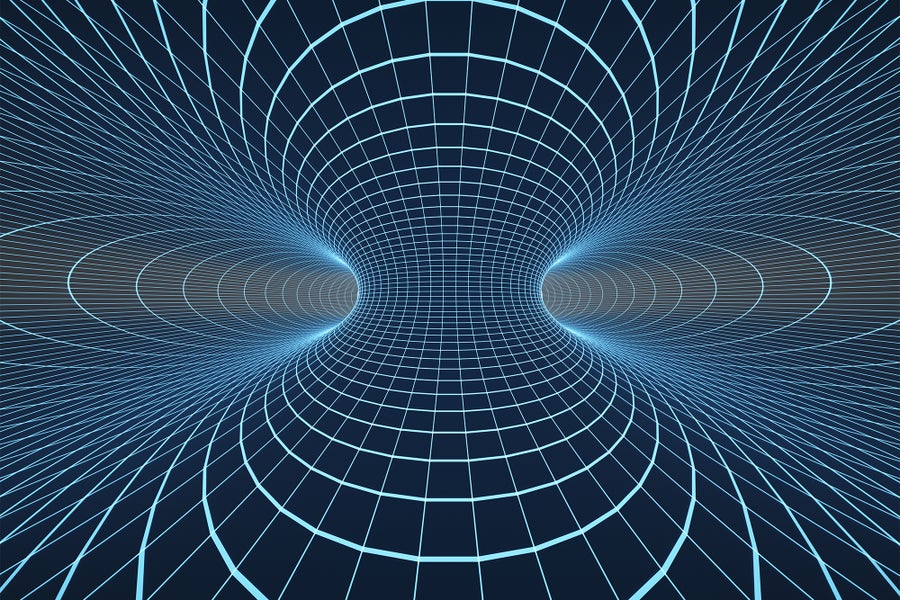
Some cosmologists have explored the possibility that our universe is shaped like a giant torus or donut. Yuanyuan Yan/Getty Images
.
.
Click the link below for the article:
.
__________________________________________
June 2, 2024
Mohenjo
Business, Food For Thought, Human Interest, Political, Science, Technical
amazon, business, Business News, current-events, Future, Hotels, human-rights, medicine, mental-health, research, Science, Science News, technology, Technology News, travel, vacation

Click the link below the picture
.
My father—my famous father—died in 2023, at the age of ninety. Two years before he passed, he got an email from a freelance writer named Ruth Crawford asking him for an interview. I read it to him, as I did all his personal and business correspondence, because by then he’d given up his electronic devices—first his desktop computer, then his laptop, and finally his beloved phone. His eyesight stayed good right up to the end, but he said that looking at the iPhone’s screen gave him a headache. At the reception following the funeral, Doc Goodwin told me that Pop might have suffered a series of mini-strokes leading up to the big one.
Around the time he gave up his phone—this would have been five or six years before he died—I took early retirement from my position as Castle County School Superintendent, and went to work for Dad full-time. There was plenty to do. He had a housekeeper, but those duties fell to me at night and on the weekends. I helped him dress in the morning and undress at night. I did most of the cooking, and cleaned up the occasional mess when Pop couldn’t make it to the bathroom in the middle of the night.
He had a handyman as well, but by then Jimmy Griggs was pushing eighty himself, and so I found myself doing the chores Jimmy didn’t get around to—everything from mulching Pop’s treasured flowerbeds to plunging out the drains when they got clogged. Assisted living was never discussed, although God knows Pop could have afforded it; a dozen mega-best-selling novels over forty years had left him very well off.
The last of his “engaging doorstoppers” (Donna Tartt, New York Times) was published when Pop was eighty-two. He did the obligatory round of interviews, sat for the obligatory photos, and then announced his retirement. To the press, he did so graciously, with his “trademark humor.” (Ron Charles, Washington Post) To me, he said, “Thank God the bullshit’s finished.” With the exception of the informal picket-fence interview he gave Ruth Crawford, he never spoke for the record again. He was asked many times and always refused; claimed he’d said all he had to say, including some things he probably should have kept to himself.
.
 Getty Images / Art Illustration by Mike Kim
.
.
Click the link below for the article:
.
__________________________________________
June 1, 2024
Mohenjo
Business, Food For Thought, Human Interest, Political, Science, Technical
amazon, business, Business News, current-events, Future, Hotels, human-rights, medicine, mental-health, research, Science, Science News, technology, Technology News, travel, vacation
Click the link below the picture
.
For decades, clinical algorithms that were used to diagnose disease have included race as a variable. Over the past several years, growing recognition that this may lead to diagnoses being entirely missed or undertreated in certain racial groups has led some doctors and researchers to push to remove race from these algorithms. But change has come slowly to the medical system, in part because clinicians don’t fully know what the ramifications of changing algorithms that are so central to their work will be.
A new analysis, published in the New England Journal of Medicine, estimated the impacts of removing race from spirometry, a test used to measure lung function. Historically, physicians in the U.S. expected Black people to have lower lung function, so algorithms that analyze spirometer data have corrected for this by using a different scale. The new study found that switching to a race-neutral equation would result in classifying the lung disease of nearly half a million Black Americans as more severe and increasing disability payments to Black veterans by more than $1 billion.
There are tradeoffs with changing such an important algorithm, but overall the new study “provides good support for the change from race-adjusted to global standards for pulmonary function test interpretation,” says Neil Schluger, a pulmonologist at New York Medical College, who was not involved with the research.
The spirometer is a device that measures the amount of air a person can blow in one breath—a gauge of how well that person’s lungs are functioning. The device has a long history of being used to legitimize racist views of lung function, says Lundy Braun, a historian at Brown University, who has written a book on the subject. Thomas Jefferson once speculated that Black people had different lung function than white people. So when spirometers—which were developed in Europe—were first used in the U.S., physicians here assumed their measurements differed by race, Braun says.
The idea persisted to the present day. But there’s been a growing recognition that “putting race into an algorithm is a flawed concept in that it is assuming something biologic about a person, even though we know that race is not representative of biological differences,” says Sidra Bonner, a general surgeon at the University of Michigan.
.
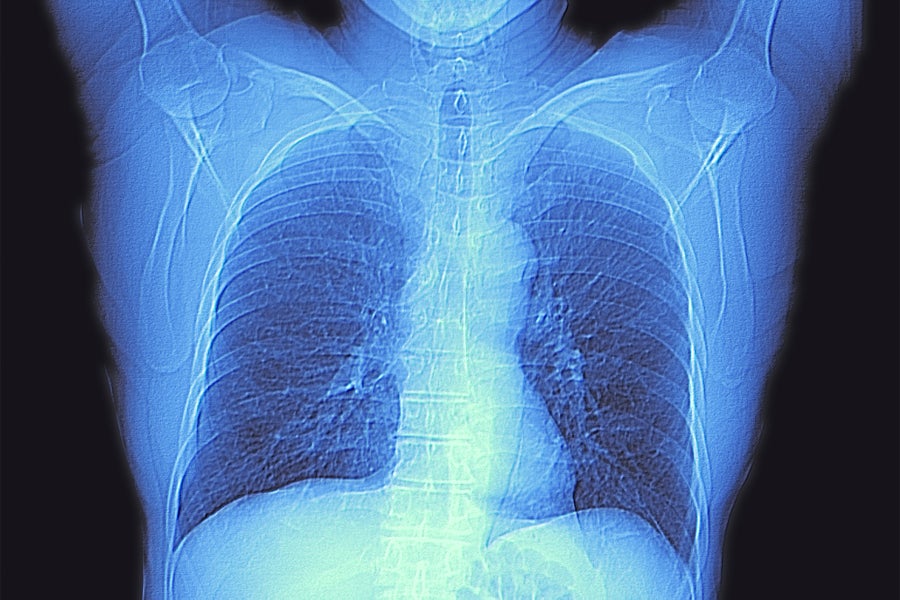
In addition to CT scans, pulmonary function tests are often used to diagnose lung disease. Alfred Pasieka/Science Photo Library/Getty Images
.
.
Click the link below for the article:
.
__________________________________________
June 1, 2024
Mohenjo
Business, Food For Thought, Human Interest, Political, Science, Technical
amazon, business, Business News, current-events, Future, Hotels, human-rights, medicine, mental-health, research, Science, Science News, technology, Technology News, travel, vacation

Click the link below the picture
.
Microwave ovens have long been a staple in kitchens worldwide, revolutionizing the way people cook and consume food. However, a small but growing movement is going microwave-free, driven by health risks and food quality concerns.
Conversations on social media platforms reveal a sentiment that microwaves are unsafe. Individuals, confident in the health benefits of going microwave-free, share their personal experiences in testimonials, often accompanied by sentiments like “I’ve never looked back.” Some claim that microwave cooking depletes food of nutrients and harms health.
But are these concerns legitimate?
Microwave ovens rely on a unique form of non-ionizing radiation, known as “microwaves,” that are distinct from the ionizing radiation found in x-rays and other high-energy sources. According to Christopher Baird, a physicist at West Texas A&M University who specializes in electromagnetics, the microwaves in our kitchens are a form of electromagnetic radiation similar to radio waves.
“It’s exceedingly rare for a microwave oven to malfunction badly enough to harm a nearby human,” Baird says. “Even in those exceedingly rare cases, no damage is done beyond burns and surface nerve damage.”
The inception of the microwave
Microwave ovens are a staple in American kitchens, but that wasn’t always the case. Microwave ovens were initially conceived by Percy Spencer in 1945 after he observed heat-generating microwaves emitted by a magnetron during a radar experiment. His first attempt at converting this to a kitchen tool was colossal, towering at around six feet and weighing over 750 pounds—a far cry from modern models.
When wartime technology was adapted for domestic use following WWII, it resulted in smaller, more user-friendly microwave ovens in American kitchens. Subsequently, the ‘70s saw a notable shift in American eating habits. Food companies increasingly catered to busy families and individuals or those who preferred not to cook, expanding their offerings to frozen, microwavable dinners and snacks—a trend that increased Americans’ dependence on prepared, convenient foods.
.

Microwave ovens have been a kitchen staple since the 1970s and the rise of the frozen dinner. Although some people may worry about the radiation, experts say they pose no threat—unlike those ultra-processed meals we typically heat up in them. Photograph by Peter Finch, Getty Images
.
.
Click the link below for the article:
.
__________________________________________
May 31, 2024
Mohenjo
Business, Food For Thought, Human Interest, Political, Science, Technical
amazon, business, Business News, current-events, Future, Hotels, human-rights, medicine, mental-health, research, Science, Science News, technology, Technology News, travel, vacation
Click the link below the picture
.
“SEE AMERICA FIRST,” proclaimed an April 1, 1906, headline in the New York Times, encouraging American tourists to expand their vacation horizons beyond Europe. The slogan, debuted by Utah boosters a few months earlier to promote westward travel, received the Times’ enthusiastic endorsement: “In a fortnight the Far Easterner can really go Far West and see things worth seeing, see many scenic wonders by the way.”
Today, affordable flights to far-flung destinations abound, and it’s easy for the American traveler to again lose sight of how much beauty and diversity exists in their own backyard. The great American road trip has long offered a cure for such complacency, and this summer should be no different: About 75 percent of Americans are expected to travel by car.
Seeking inspiration for your own road trip? These roads are more than just pathways to some of the nation’s most compelling destinations—they’re unforgettable in their own right. With scenic vistas, roadside attractions, and historic curiosities aplenty, these routes call to mind another bygone travel slogan: Getting there is half the fun!
Alaska Highway, Alaska
In the early days of World War II, fears of a potential attack on the Territory of Alaska spurred military officials to create the Alaska Highway. In just nine months, more than 10,000 members of the Army Corps of Engineers completed over 1,500 miles of roadway, a pace no doubt motivated by a healthy dose of competition. Take the 95th Regiment: an under-equipped unit of Black engineers who staked their paychecks on a bet with their white counterparts that they could finish a bridge in five days. It only took them three and a half, and not because of slapdash workmanship—the Sikanni Chief River Bridge was the first permanent structure on the highway and stood for half a century before arson destroyed it in 1992.
On the way to the permafrost of the Alaskan tundra, eagle-eyed motorists may spot caribou, moose, and grizzly bears along the road. Those keen on eyeing bald eagles should plan a stop near the Canadian border at the Tetlin National Wildlife Refuge. Its wetlands serve as a pit stop for 180 species of migratory birds, including America’s national bird, on their springtime journey towards the ice fields and glaciers at the road’s northernmost reaches. Drivers who opt to follow their wingbeats north can check out a very different type of air travel at Mukluk Land in Tok, Alaska. The junkyard-turned-amusement park is home to “Santa’s Rocket Ship” (a futuristically styled bus straight out of “The Jetsons”) as well as Skee-Ball, miniature golf, and— what else?—the world’s largest mukluk (a sealskin boot).
.
:focal(1060x706:1061x707)/https://tf-cmsv2-smithsonianmag-media.s3.amazonaws.com/filer_public/b3/a6/b3a65305-4361-408a-8d1a-0657bd724062/gettyimages-905296508.jpg) About 75 percent of Americans are expected to travel by car this summer. Taking the scenic route along such roadways as Highway 101, seen above in Del Mar, California, can make the trip even more worthwhile. Art Wager/Getty Images
About 75 percent of Americans are expected to travel by car this summer. Taking the scenic route along such roadways as Highway 101, seen above in Del Mar, California, can make the trip even more worthwhile. Art Wager/Getty Images
.
.
Click the link below for the article:
.
__________________________________________
May 31, 2024
Mohenjo
Business, Food For Thought, Human Interest, Political, Science, Technical
amazon, business, Business News, current-events, Future, Hotels, human-rights, medicine, mental-health, research, Science, Science News, technology, Technology News, travel, vacation
Click the link below the picture
.
The U.S. is bracing for another summer of powerful storms and wildfires, on the heels of an unusually warm winter and spring, and the monthly shattering of ocean heat records. Beyond the now-annual threat of smoke that last year blanketed the nation, a thickening haze of lies also looms—about everything from global warming and wildfire smoke to abortion and racism. To break through the dense fog of propaganda on media and social media, those who value scientific integrity will need to expose and rip apart the increasingly interconnected fantasies spun by the anti-reality industry.
With the presumptive Republican presidential nominee falsely calling climate change a “hoax” invented by China, a former tobacco and coal lobbyist brazenly lying to Fox News viewers that last summer’s dense wildfire smoke posed “no health risk,” and an Alabama court redefining frozen embryos as “children,” the consequences of indulging decades of antiscientific agitprop are clear. Conservative think tanks and lobbying groups have spent tens of millions to push false messaging and draft restrictive laws around abortion. The false messaging has included lies about its prevalence, basic biology, and reality in women’s lives. To energize far-right voters, these groups have attacked transgender health care with the same playbook, yielding more than 400 anti-trans laws in 2024 alone. They’ve demonized vaccines and masks, minimized harms from tobacco and wildfire smoke, and denied the realities of climate change and COVID. In the classroom, where many anti-reality crusaders have long fought against the teaching of evolution, they’ve expanded to banning books about race, sexual orientation, and gender identity, while attacking global warming education.
Overcoming the mounting harm from the parade of con artists gaslighting the public won’t be easy. More scientists and journalists must help clarify how right-wing ideologues have twisted science and weaponized anti-reality. Ongoing efforts, though, are already revealing the radical motives of such extremists, who share sophisticated ploys, influencers, and, often, deep-pocketed funders.
Meredithe McNamara, a pediatrician at Yale School of Medicine, describes denying reality as one of the main “disinformation playbook” tactics: “The first move is, if you want to ban some sort of care or advance a toxic policy, then deny that the condition for which care is sought even exists, or make false claims about it,” she told me. Denying the existence of dangerous pregnancies or gender dysphoria, directly parallels the denial of COVID, systemic racism, and air pollution.
A 2020 analysis by the climate change-focused journalism site DeSmog revealed that climate denialists share extensive overlaps with those “spreading COVID misinformation, touting false cures, ginning up conspiracy theories and fomenting attacks on public health experts.” Activists affiliated with the Heartland Institute, an oil and gas industry–funded booster of climate denialism, repeatedly attacked COVID public health measures. Some have woven those threads into a wild conspiracy theory about a plot by “eco-radicals” to restrict personal freedoms. Conservative scholars at the even more influential Heritage Foundation, also funded by oil and gas magnates, have misleadingly portrayed COVID and climate models as highly sensitive to “assumptions,” and suggested that climate model advocates “often try to beef them up to satisfy an agenda.”
.
 Thomas Jackson/Getty Images
.
.
Click the link below for the article:
.
__________________________________________
May 30, 2024
Mohenjo
Business, Food For Thought, Human Interest, Political, Science, Technical
amazon, business, Business News, current-events, Future, Hotels, human-rights, medicine, mental-health, research, Science, Science News, technology, Technology News, travel, vacation
Some content on this page was disabled on April 15, 2025 as a result of a DMCA takedown notice from Guardian Media Group. You can learn more about the DMCA here:
https://wordpress.com/support/copyright-and-the-dmca/
Older Entries
Newer Entries
 James' World 2