Woolly mammoths won’t be trouncing through the Arctic tundra anytime soon.
Contrary to recent headlines, which herald the extinct beast’s coming resurrection, scientists are still a long way from figuring out how to revive the elephant ancestor.
Woolly mammoths roamed the planet for hundreds of thousands of years before they vanished about 4,000 years ago. Paleontologists say the culprit for the die-off was possibly overhunting, or changes in mammoth’s food supply after the last Ice Age.
A camp of scientists — known as “revivalists” — are dedicated to bringing mammoths back in the modern era for environmental and biological reasons. Some researchers have made important early progress, although nothing is close to leaving the lab.
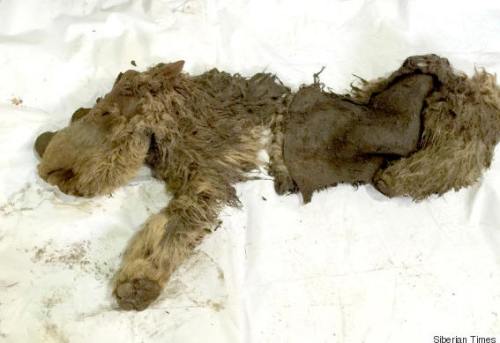
Scientists are going gaga over the recent discovery of a baby woolly rhino.
The pristine specimen of the tiny extinct rhino–the only one of its type ever found–was discovered in permafrost along the bank of a stream in Siberia’s Sakha Republic, The Siberian Times reported.
“At first we thought it was a reindeer’s carcass, but after it thawed and fell down we saw a horn on its upper jaw and realized it must be a rhino,” Alexander ‘Sasha’ Banderov, the hunter who made the discovery, told the Times. “The part of the carcass that stuck out of the ice was eaten by wild animals, but the rest of it was inside the permafrost and preserved well.”
.
(Academy of Sciences Republic of Sakha/Siberian Times)
Film and Writing Festival for Comedy. Showcasing best of comedy short films at the FEEDBACK Film Festival. Plus, showcasing best of comedy novels, short stories, poems, screenplays (TV, short, feature) at the festival performed by professional actors.

 (Academy of Sciences Republic of Sakha/Siberian Times)
 James' World 2