An engineering student who was an LGBTQ activist was shot and killed by Georgia Tech campus police on Saturday night, officials said Sunday.
The school identified the victim as Scout Schultz, 21, a fourth-year engineering student from Lilburn, Georgia, who police said was armed with a knife. Schultz, president of Georgia Tech’s Pride Alliance, identified as non-binary and intersex and preferred to be referred to with they/them gender pronouns, according to the alliance’s website.
At a news conference Monday, Schultz’s family’s attorney said the student was experiencing a “mental breakdown” on the night of the shooting.
“What was Scout doing that day?” said the attorney, L. Chris Stewart. “Standing there disoriented, having a mental breakdown and was shot from 20 feet away.”
Police made contact Saturday with Schultz outside a campus parking garage after they received a 911 call at 11:17 p.m. on Saturday, according to the Georgia Bureau of Investigation. The original call reported that Schultz was also carrying a gun, officials said.
.
Georgia Tech student Scout Schultz. Georgia Tech Pride Alliance
Special relativity teaches us that the three dimensions of space and the solitary dimension of time are woven together like a fabric. It’s impossible to think of them as separate entities, only a singular unified entity — space-time. We can’t think of motion through space without being mindful of motion through time, and vice versa. Left-right, up-down, back-forth and past-future are all on equal footing.
And yet, time does seem a little different. We have complete freedom of movement within space, but we cannot avoid our future. Time seems to have an “arrow,” whereas the spatial dimensions are ambidextrous. Given the unity between time and space, it leads to the obvious question: Is time travel, of any sort, possible? Under any circumstances? At all? [How Time Travel Works in Science Fiction (Infographic)]
With the angry glare of the public eye squarely focused on Equifax after announcing a massive breach, the company is waiving fees on credit freezes. Which is good news because it’s the only thing that’s going to save your bacon.
The company had previously offered victims a free year of credit report monitoring — but customers and advocates were quick to point out that this wouldn’t actually stop anyone’s identity from getting exploited. Hackers would still be able to open up new credit cards and go on spending sprees, apply for other loans or mortgages, and leave you holding the bag for the debt or the bad name.
Equifax announced the move on Twitter in reply to a customer tweet — which has less visibility than a new standalone tweet and would only be seen by people reading the comment thread or following a link.
But, however muted the trumpet heralding was, it’s still good news.
The moon’s shadow crosses the United States, a child experiences weightlessness and more of the best space images of August 2017.
.
Starburst
NASA astronaut Jack Fischer tweeted this photo of the sun through a window on the space station on Aug. 9, writing “Tried a new lens and snapped a lucky pic as the sun ducked behind International Space Station.”
From clot-busting drugs to bypass surgery, cardiologists have many options for treating the 700,000-plus Americans who suffer a heart attack each year. But treatment options remain limited for the 5.7 million or so Americans who suffer from heart failure, an often debilitating condition in which damage to the heart (often resulting from a heart attack) compromises its ability to pump blood.
“Severe heart damage can pretty much incapacitate people,” says Dr. Timothy Henry, director of cardiology at the Cedars-Sinai Medical Center in Los Angeles. “You can’t climb a flight of stairs, you’re fatigued all the time, and you’re at risk of sudden cardiac arrest.”
Medication is available to treat heart failure, but it’s no panacea. And some heart failure patients undergo heart transplantation, but it remains an iffy proposition even 50 years after the first human heart was transplanted in 1967.
IN BRIEF: In the pursuit of renewable and cleaner energy sources, nuclear power remains one of the viable options.To make it an even safer choice, a Dutch nuclear research firm began experiments with a kind of nuclear fission that uses thorium salts.
Erasing Nuclear Fears
Until such time that scientists figure out how to stabilize nuclear fusion, the most powerful energy source available remains its relatively less powerful cousin, fission. While there are already a number of countries using nuclear fission reactor plants, there’s still a lingering shadow of fear over the technology, thanks to several cases of nuclear meltdowns in the past.
Clothing today is mostly about covering up. In the future, it might also be about powering up — literally.
Researchers across the country are working to develop fabrics that harvest energy from your body movements and use it to provide a bit of extra juice for your cellphone or a fitness tracker — or maybe to change the color or pattern of the fabric itself. “Something that’s kind of snazzy,” says Dr. Cary Pint, assistant professor of mechanical engineering at Vanderbilt University in Nashville, Tennessee and a leading researcher in the field.
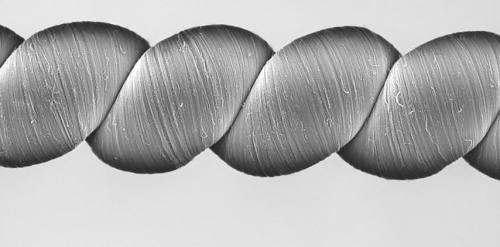
One group of researchers at the University of Texas at Dallas has developed an energy-harvesting yarn made of carbon nanotubes, hollow cylinders 10,000 times thinner than a human hair. The tubes are bound into larger yarns and twisted so much that they coil. Experiments show that when these tightly coiled “twistron” yarns are placed side by side and then stretched, they generate a tiny electrical current.
China once held the title for the world’s fastest train, but a devastating crash in 2011 forced the country to slow down their transits, lest they experience another tragic event.
Next month, however, China will regain is lost title, as it plans to introduce several new bullet trains that will move at the speeds necessary to once again be the world’s fastest. Prior to the aforementioned accident, China’s bullet trains traveled at 350 km/h (217 mph), but were then reduced to 250-300 km/h (155-186 mph).
Come September 21, when the new trains are up and running, speeds will return to 350 km/h, but will be capable of going 400 km/h (248 mph). For comparison, the still-in-development Hyperloop One recently reached speeds of 308 km/h (192 mph), though the plan is to hit 402 km/h (250 mph) while still in testing.
.
Railway workers pose next to one of China’s new bullet trains. Chinatopix Via AP
From cloaking devices that conceal spaceships, to Harry Potter’s hand-me-down disappearing blanket, or even the One Ring and its power to conceal its wearer, invisibility is a staple in science fiction and fiction in general. Scientists have been hard at work, however, to bring such a technology into reality. Joining the research and development of cloaking technology is Japanese car manufacturer Toyota.
The company recently acquired a patent from the United States Patent and Trademark Office (USPTO) for “Apparatuses and methods for making an object appear transparent,” which Toyota filed last June 17. Seems exciting, especially since it’s a car maker working on an invisibility tech or cloaking device. It actually is interesting, but not because it’s meant to turn Toyota’s cars invisible — well, at least not all of them.
President Donald Trump is leaning toward ending the Obama-era program that allows young undocumented immigrants who came to the United States as children to remain, two sources told NBC News.
But the end of the policy, Deferred Action for Childhood Arrivals, better known as DACA, would come with a six-month delay, possibly giving Congress a window to act on the program.
The decision, which was first reported by Politico and is likely to come Tuesday, is not final until it is announced, the sources said.
Film and Writing Festival for Comedy. Showcasing best of comedy short films at the FEEDBACK Film Festival. Plus, showcasing best of comedy novels, short stories, poems, screenplays (TV, short, feature) at the festival performed by professional actors.

 Georgia Tech student Scout Schultz. Georgia Tech Pride Alliance
 Scout Schultz


 .
. Starburst
 ‘Beating Heart’ Patch
 Railway workers pose next to one of China’s new bullet trains. Chinatopix Via AP
 A ‘Cloaking Device’

 James' World 2