Madeira, an autonomous region of Portugal, is an archipelago comprising 4 islands off the northwest coast of Africa. It is known for its namesake wine and warm, subtropical climate. The main island of Madeira is volcanic, green and rugged, with high cliffs, pebbly beaches and settlements on deltas of the Fajã River. Capital Funchal has botanic gardens and is known for its harbor and a large New Year’s fireworks show.
If you had to group pitches into two categories, you would choose “fastball” and “other.” The “other” makes pitching interesting. If the ball went straight every time, pitchers would essentially be functionaries, existing merely to serve the hitters. Long ago, that is just what they were, as the name implies. Think of pitching horseshoes: you’re making an underhand toss to a specific area. That was pitching for much of the 1800s. For 20 years—1867 through 1886—batters could specify whether they wanted the pitch high or low. The poor pitcher was forced to comply.
Baseball might have continued as a test of hitting, running, and fielding skills had pitchers not discovered their potential for overwhelming influence. What if they could make the pitch behave differently? Long before cameras and websites could classify every pitch into a type, many of the offerings intended to deceive a hitter—in-shoots and out-shoots, in- curves and out-curves and drops, in the old parlance—were largely known as curveballs. The “other” was, simply, everything that wasn’t a fastball.
In researching the history of curveballs at the Hall of Fame Library in Cooperstown, I was struck by how many people claimed to be the inventor. In 1937 The New York Times published an obituary of a man named Billy Dee of Chester, New Jersey, who was said to have invented the curveball in 1881. Dee threw a baseball with frayed seams and, intrigued by its movement, said he practiced and practiced until “I soon was able to loop the old apple without the benefit of the damaged seam.” Sounds impressive—but what’s this? A 1948 Times obituary of one George McConnell of Los Angeles, “an old- time Indian fighter” who “decided that the ‘English’ being put on billiard balls could be used with a baseball.” That was in 1878.
CNN’s Don Lemon reviews President Trump’s interpretations on historical events, like the the American Civil War and the white nationalist rally in Charlottesville, Virginia, in an attempt to set the record straight on the past.
They’re cute, they’re fluffy, and they’re public enemy number one in Australia.
Australia is at war — with feral cats. By 2020, the government wants to kill two million free roaming cats, a large chunk of the total feral cat population, which is estimated to be between 2 and 6 million
.
Some areas of Australia have gone even further. In the northeastern state of Queensland, there’s even a council offering a $10 ($7) bounty per feral cat scalp — a policy People for the Ethical Treatment of Animals (PETA) has lambasted as “cruel.”
.
Nor is the problem exclusive to Australia. In neighboring New Zealand, a prominent environmentalist has proposed a cat-free future, with both domestic and feral cats either controlled or culled.
Kara Alaimo, an assistant professor of public relations at Hofstra University, is the author of “Pitch, Tweet, or Engage on the Street: How to Practice Global Public Relations and Strategic Communication.” She was spokeswoman for international affairs in the Treasury Department during the Obama administration. Follow her on Twitter @karaalaimo. The opinions expressed in this commentary are her own.
Amazon recently acknowledged that it employs people to listen to an “extremely small number of interactions from a random set of customers” who have the company’s virtual assistant, Alexa, on devices such as smart speakers in their homes. The company says it does so in order to improve the accuracy of the software’s future responses. The idea of other people listening in to what we say in the privacy of our homes is creepy enough. But the real danger lies in the potential for Amazon to aggregate all that information and use it to try to manipulate us — or for others to get their hands on it and use it against us.
Four more members of the United States armed forces are now under investigation for their ties to a white nationalist group, military officials have confirmed to HuffPost.
A lance corporal in the Marines, a master sergeant in the Air Force, a specialist in the Army, and a private in the Minnesota National Guard have been identified as belonging to Identity Evropa, an organization listed by the Anti-Defamation League and the Southern Poverty Law Center as an extremist group.
There are now a total of 11 Identity Evropa members known to be under investigation by the U.S. military. Last month, HuffPost found seven other U.S. servicemen were being investigated over their connections to the group.
Letchworth State Park is a 14,427-acre state park located in Livingston and Wyoming counties, New York. The park is roughly 17 miles long, following the course of the Genesee River as it flows north through a deep gorge and over several large waterfalls.
Attorney General William Barr’s cheerleading for President Donald Trump on Thursday morning was entirely inappropriate, and forces the question of whether a cover-up is underway.
Barr claimed, in his brief back and forth with journalists, that he was only there to answer questions about the process of producing the report of Special Counsel Robert Mueller, not its substance. But, in fact, his statement was mostly about the substance, as he chose to spin it. First, he said the report concluded there was “no collusion,” without explaining anything about the many contacts between the Trump campaign and Russian actors. With the redacted report now released, we may know soon how accurate that conclusion is.
.
Just a taste. Photographer: Brendan Smialowski/AFP/Getty Images
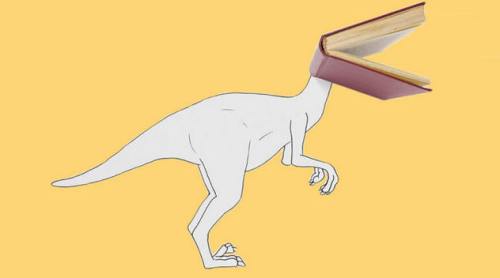
When I tell people this, most say, “Oh, yes, for sure, yes.” But then two seconds later, they say “I just wish I had the time.”
Well, you know what? I’m calling shenanigans on that excuse. Because the truth is we do have the time. A University of California report shows we’re consuming more information now than we ever have before — more than 100,000 words per day. Think about how many texts and alerts and notifications and work emails and personal emails and news headlines and fly-by tickers and blog feeds and Twitter spews and Instagram comments you’re reading each day.
With all that garbage reading, who has time for books anymore?
Film and Writing Festival for Comedy. Showcasing best of comedy short films at the FEEDBACK Film Festival. Plus, showcasing best of comedy novels, short stories, poems, screenplays (TV, short, feature) at the festival performed by professional actors.

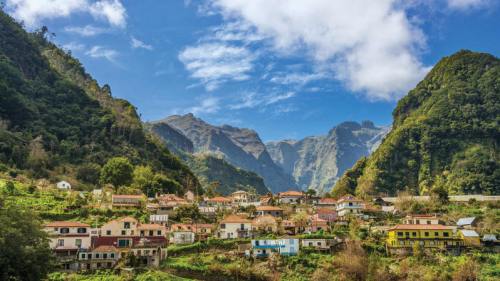 An image of Madeira Portugal
 The pitch
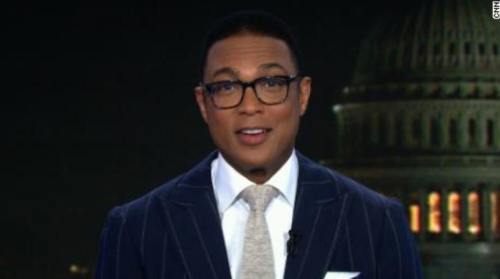 Don Lemon
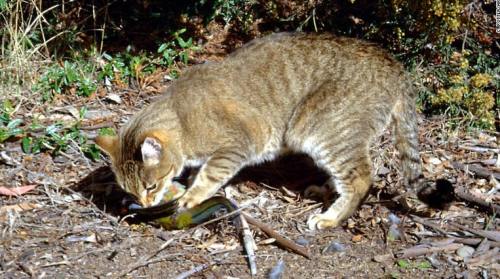 feral feline

 .
.
 Words unnecessary
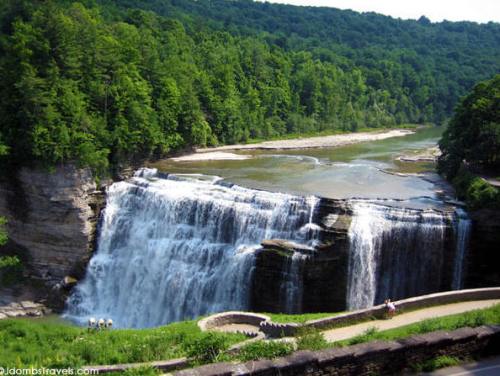 An image of a waterfall in Letchworth State Park


 cintascotch/Getty Images
