It’s no secret that employee-employer tensions about heading back to the workplace are growing. As more employers push to get employees back in-house, the workers themselves are taking a harder stand. An April 2021 survey by FlexJobs found that 60% of women and 52% of men would quit if they weren’t allowed to continue working remotely at least part of the time. Sixty-nine percent of men and 80% of women said that remote work options are among their top considerations when looking for a new job.
The “official” reasons that they don’t want to head back to the workplace are well-documented. They’re more productive. It’s easier to blend work and life when your commute is a walk down the hallway. But, for some, the reasons are more personal and difficult to share. Who will walk the dog they adopted during the pandemic? They gained weight and need to buy new work clothes. The thought of being trapped in a cubicle all day makes them want to cry.
We spoke with several people who shared their very personal reasons why they don’t want to return to work. (Because of the sensitive nature of some of the comments, Fast Company has allowed some of the individuals to use a pseudonym to protect their identities.)
A wooden spoon gliding over cast iron. Barely tall enough to see over the stove, Lamar Cornett watched his mother, a cook, make his favorite dish of scrambled eggs.
That first cooking lesson launched a lifelong journey in food. Cornett has spent over 20 years in Kentucky restaurants, doing every job short of being the owner. The work is grueling and tense but rewarding and rowdy, and so fast-paced that the pandemic shutdown was like lightning on a cloudy day.
“It was almost like there was this unplanned, unorganized general strike,” Cornett said.
In those rare quiet moments, millions of restaurant workers like Cornett found themselves thinking about the realities of their work. Breaks barely long enough to use the restroom or smoke a cigarette. Meals inhaled on the go. Hostile bosses, crazy schedules, and paltry, stagnant pay.
To top it off: rude customers, whose abuses restaurant staff are often obligated to tolerate. And lately, testy diners have only gotten more impatient as they emerge from the pandemic shutdowns.
Cornett, off work for a few weeks, realized he received enough money through unemployment benefits to start saving — for the first time. He wondered if the work he loves would ever entail a job that came with health insurance or paid leave.
.
Lamar Cornett has worked in restaurants for more than 20 years. During the pandemic, he began thinking about leaving that career behind.
Vancouver is a major city in western Canada, located in the Lower Mainland region of British Columbia. As the most populous city in the province, the 2016 census recorded 631,486 people in the city, up from 603,502 in 2011. The Greater Vancouver area had a population of 2,463,431 in 2016, making it the third-largest metropolitan area in Canada. Vancouver has the highest population density in Canada, with over 5,400 people per square kilometer. Vancouver is one of the most ethnically and linguistically diverse cities in Canada: 52 percent of its residents are not native English speakers, 48.9 percent are native speakers of neither English nor French, and 50.6 percent of residents belong to visible minority groups.
Vancouver is consistently named as one of the top five worldwide cities for livability and quality of life, and the Economist Intelligence Unit acknowledged it as the first city ranked among the top ten of the world’s most well-living cities for ten consecutive years. However, Vancouver also ranks as the most expensive city to live in Canada and as the fourth-most expensive housing market globally. In 2011, the city planned to become the greenest city in the world by 2020. Vancouverism is the city’s urban planning design philosophy. Wikipedia
With eight separate, flexible plates of shell held together by a skirt of muscle called a girdle, chitons look a bit like armored pebbles, ready for battle. The marine mollusks aren’t actually suited for action. They spend most of their time stuck in place, suctioned to rocks in the intertidal zone. While they’re clinging, their radula, a sort of tongue barbed with scores of sharp “teeth,” scrapes algae and other food from the surface. For chitons, that’s about as exciting as it gets.
They might seem simple, uncomplicated, even boring, but Lauren Sumner-Rooney, an evolutionary biologist at the Oxford University Museum of Natural History, thinks that reputation is a little unfair. “Even things that we’ve considered very, very simple,” she says, “may have a lot more going on.”
Sumner-Rooney roots for underdogs. She’s fascinated, for instance, by Astyanax mexicanus, a cave-dwelling tetra fish that evolved without eyes, and cave salamanders, whose ghostly pallor and gangly limbs are adapted to a lightless life. Her work focuses on brain structure in poorly understood animals such as chitons or tusk shells, which use tentacle-like organs called captacula to assist in gathering food.
.
Do chitons have brains? What is a brain, anyway? Photo credit: Dilettantiquity / CC by 2.0.
The scene is a familiar one: an urban park, with young couples picnicking, dog owners playing fetch, parents chatting while their children scamper around. Marie – a young child – becomes entranced by a new wonder of her world – maybe a springtime butterfly, maybe another child throwing an impressive fit. Eventually, looking away from her intense focus, she realizes that the world has shifted around her and that her parents are no longer in sight. Interest and elation morph into concern and fear, as she holds back her tears and begins to search. Just around the corner, she finds her father, who scoops her up, and, as quick as her fear started, it dissipates; her world is complete and safe again.
From the moment we are born, we are hardwired to seek attachment to others. Throughout our lives, relationships that involve attachment serve as sources of emotional security, joy, and companionship, while at other times, pain and grief. Compared with those of other animals, human relationships are staggeringly multifaceted. Yet despite this, what lies at the core of our relationships is an elaboration of a phenomenon whose roots across the species spectrum are wide and deep. As we wend our way through life’s course – from infancy to adolescence to adulthood to loss – attachment holds a strong grip on our lives, shifting to accommodate our changing needs. While the roots of this phenomenon tell us much about who we are, they tell us just as much about mysteries that remain unanswered in evolution, psychology, neuroscience, and more.
The Baltic Sea is an arm of the Atlantic Ocean, enclosed by Denmark, Estonia, Finland, Germany, Latvia, Lithuania, Poland, Russia, Sweden, and the North and Central European Plain.
The sea stretches from 53°N to 66°N latitude and from 10°E to 30°E longitude. A marginal sea of the Atlantic, with limited water exchange between the two water bodies, the Baltic Sea drains through the Danish Straits into the Kattegat by way of the Øresund, Great Belt, and Little Belt. It includes the Gulf of Bothnia, the Bay of Bothnia, the Gulf of Finland, the Gulf of Riga, and the Bay of Gdańsk.
The Baltic Proper is bordered on its northern edge, at latitude 60°N, by the Åland Islands and the Gulf of Bothnia, on its northeastern edge by the Gulf of Finland, on its eastern edge by the Gulf of Riga, and in the west by the Swedish part of the southern Scandinavian Peninsula.
The Baltic Sea is connected by artificial waterways to the White Sea via the White Sea-Baltic Canal and to the German Bight of the North Sea via the Kiel Canal. Wikipedia
In late June, when temperatures climbed to 115 degrees in Portland, Oregon, houses and buildings across the Pacific Northwest were caught way off guard. Most were designed for much cooler temperatures, with insulation and ventilation tuned to handle moderate highs and lows. Typically, even on hot days, the evening lows would be cold enough to bring down the overall temperature of buildings, keeping them from turning into roasting ovens. Air conditioning was typically irrelevant, and buildings could usually stay comfortable passively, or without much intervention.
But that was before. The heatwave showed that temperatures can and probably will continue to be higher than in previous decades. The low- or no-effort temperature control that has been designed into the region’s homes likely won’t be able to keep up, according to Mike Fowler, an architect at Seattle-based Mithun. “We’re going to phase out of that by the end of the decade. And this has been eye-opening for a lot of folks,” he says.
A new type of building design will be needed in the Pacific Northwest sooner than most people expected, he says, but design approaches that are regularly used in hotter, more extreme climates offer some clues for how architecture will need to evolve.
Are you an ecosystem? Your mouth, skin, and gut are home to whole communities of microscopic organisms, whose influence on your body ranges from digesting your food to training your immune system and, possibly, impacting your mood and behavior. What are these tiny tenants, and how do they change the way we think about human health, disease, and even identity?
The human body is made up of trillions of cells—well, trillions of human cells. Around the beginning of the 21st century, scientists learned that in fact, the human body contains many trillions more microbial cells—possibly three times as many. This is the microbiome: the collection of microorganisms (bacteria, fungi, and other microbes) living in and on the human body. It is an especially curious discovery—it has been with us, evolving, interacting, and helping to determine our fate as organisms, since before the emergence of the human species itself. And while scientists have known about the existence of some microorganisms on and in the human body since the discovery of E. coli, the magnitude, and importance of the microbiome has only recently begun to come to light.
Film and Writing Festival for Comedy. Showcasing best of comedy short films at the FEEDBACK Film Festival. Plus, showcasing best of comedy novels, short stories, poems, screenplays (TV, short, feature) at the festival performed by professional actors.

 [Source photo: Solovyova/iStock]


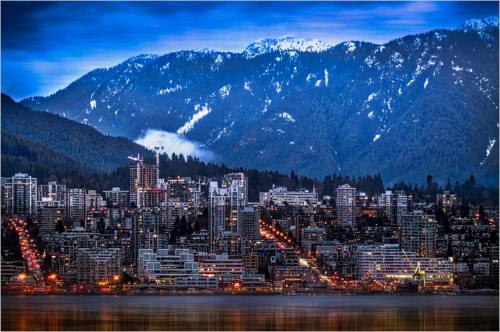


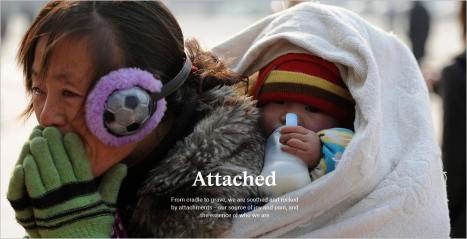 Photo by Jianan Yu/Reuters

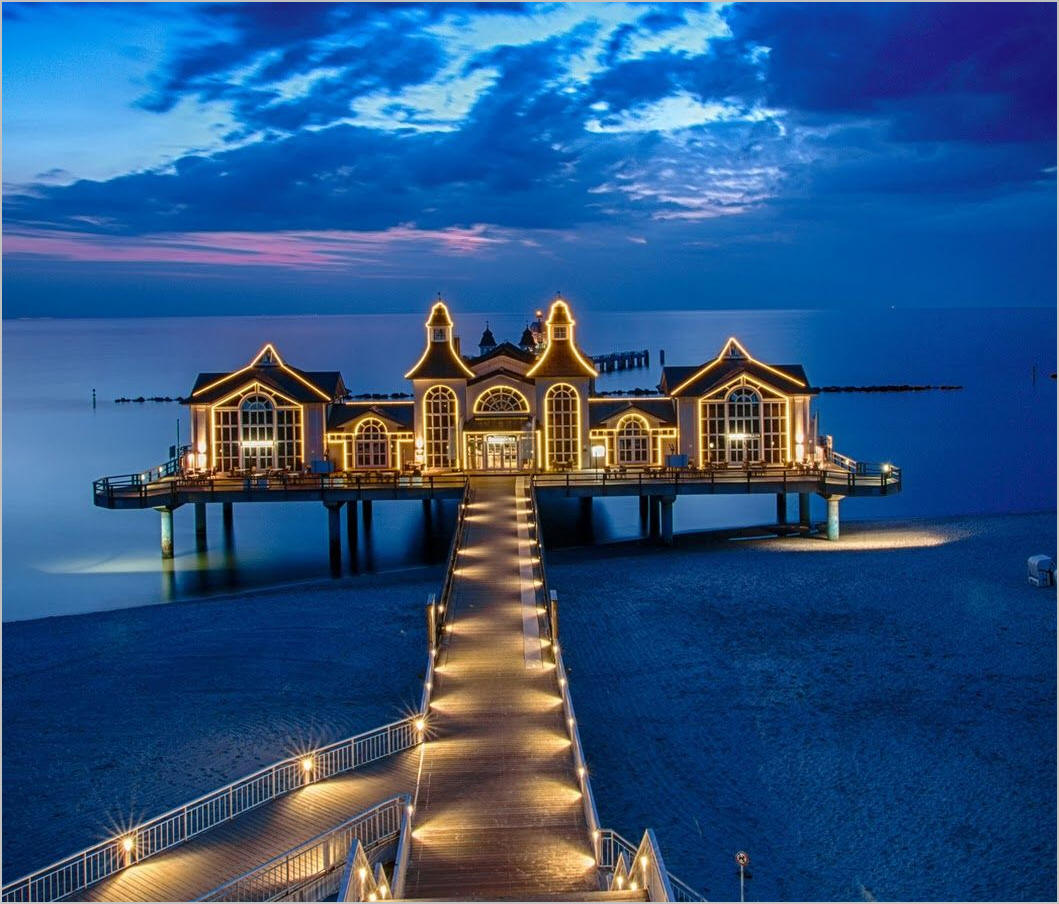

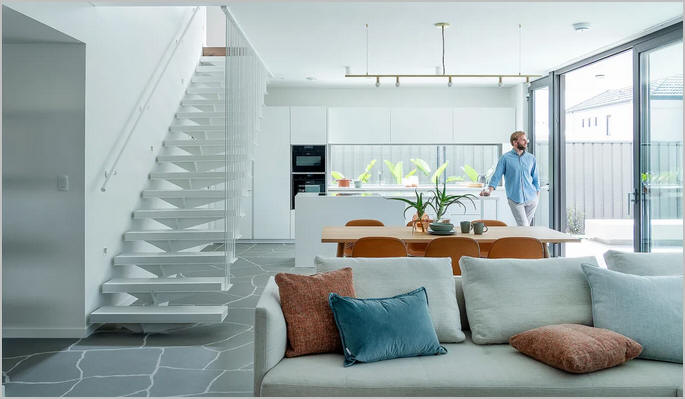 Photo: Courtesy Jody D’Arcy

 James' World 2