February is Black History Month. It has become the month the nation recognizes as a time to celebrate the strides and achievements black people have accomplished over the centuries. But — contrary to founder Carter G. Woodson’s intention — it has become the relegated timeframe to squeeze in as much information about a select few civil rights leaders while whitewashing their stories.
This year, we challenge that. HuffPost is celebrating Black History Month by highlighting our culture, narratives and wholeness with the theme Black History Built This.
Monthlong, we will challenge the revisionist history many have been taught about the role of blackness in this country by shining a light on the historical figures and events pertinent to accurately telling America’s history. More often than not, black people’s accomplishments and contributions to this country are understated or ignored completely. We are seldom given proper credit, let alone praise, for how our rich history and culture has not only influenced, but helped construct the basis for what we view as progress today. tangie
Dianna Cohen is on alert. From the newspaper on her front stoop each morning, to the clothes she will pick up at the dry cleaner, to the lunch she’ll eat, to the shelves at her seemingly eco-friendly health food store — Cohen’s nemesis appears everywhere.
The world seems to be wrapped in plastic — and Cohen is not buying it. She is fighting to lead a life free of plastics, and to get others to do the same.
The Los Angeles native has taken her campaign against plastic waste — an annoyance of her youth and later the medium of her work as a visual artist — and made it her life’s cause.
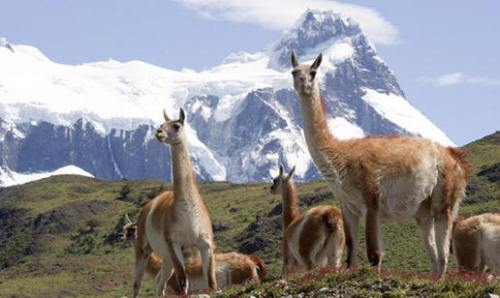
Patagonia (Spanish pronunciation:[pataˈɣonja]) is a sparsely populated region at the southern end of South America, shared by Argentina and Chile. The region comprises the southern section of the Andes mountains and the deserts, pampas and grasslands to the east. Patagonia is one of the few regions with coasts on three oceans, with the Pacific Ocean to the west, the Atlantic Ocean to the east, and the Southern Ocean to the south.
The Colorado and Barrancas rivers, which run from the Andes to the Atlantic, are commonly considered the northern limit of Argentine Patagonia. The archipelago of Tierra del Fuego is sometimes included as part of Patagonia. Most geographers and historians locate the northern limit of Chilean Patagonia at Huincul Fault, in Araucanía Region.
In 2016, security researchers presented attendees of DEFCON, the annual Las Vegas hacker convention, with some unnerving findings about internet-connected smart locks: After testing over a dozen varieties of the devices across multiple manufacturers, the researchers found that 75 percent of them had major security vulnerabilities that left them exposed to hackers, who could unlock them from a quarter of a mile away.
For Steven Weber, a professor at the University of California School of Information and the director of The Center for Long-Term Cybersecurity, the security challenges facing smart locks epitomize a larger reality: When it comes to security, seemingly intangible digital vulnerabilities are increasingly having real-world practical consequences. This is a trend that will only increase as technology’s influence over everyday life continues to expand.
.
As “cybersecurity” becomes just “security” the industry will need a new kind of cybersecurity worker.
American black bears found in Yosemite National Park have long been of intense interest to park visitors and managers. Seeing one of the approximately 300 to 500 black bears in Yosemite can evoke excitement, awe, and fear.
If visitors spot a bear while in the park, it is a black bear-not a brown or grizzly bear. The last known grizzly bear was shot outside the Yosemite region in the early 1920s; the species no longer exists in California despite its presence on the California state flag.
Lorena is very matter-of-fact about the whole thing. There, she said as she drove us around in her Kia on a recent afternoon, was the hospital where surgeons reattached John Wayne Bobbitt’s penis after she cut it off with a kitchen knife as he slept on the night of June 23, 1993.
Fifteen minutes away, near Maplewood Drive, was the gravel-strewn field where she disposed of the detached penis out the driver’s side window. So, why did she throw it away? I asked. “I tried to drive the car, obviously, but I had this thing in my hand so I couldn’t drive so I got rid of it.” Obviously.
Residents of a Russian town invaded by polar bears have said they are taking children to school by car and patrolling the streets with stun grenades as they wait for bear experts to arrive.
Nadezhda Kireyeva, a postal worker in the Arctic military town of Belushya Guba, told The Telegraph that locals have taken precautions against attack while trying to continue with their daily lives, even though coming face-to-face with a polar bear incites a mix of “adrenaline, terror and the question of what to do”. She recently saw a group of seven bears on the street.
According to Ms Kireyeva, the town’s 2,000 residents have become more vigilant and don’t go outside alone. Despite the short distances, cars have been organized to bring employees to work and children to school. Soldiers are under orders to move around only in vehicles.
.
Polar bears have been filmed entering homes in Belushya Guba, a military town on the Arctic island of Novaya ZemlyaCredit: VK
Film and Writing Festival for Comedy. Showcasing best of comedy short films at the FEEDBACK Film Festival. Plus, showcasing best of comedy novels, short stories, poems, screenplays (TV, short, feature) at the festival performed by professional actors.

 .
.




 As “cybersecurity” becomes just “security” the industry will need a new kind of cybersecurity worker.
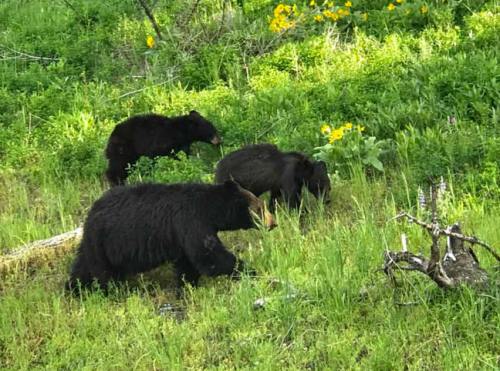 Mama bear and cubs