
Home

I Went to Florida to See the 31-Year-Old Candidate Thrilling Gen Z. We’re in Trouble.

Leave a comment

Click the link below the picture

.

Last week, James Fishback, a 31-year-old running for governor in Florida, was speaking to a packed house at the Queens Harbour Yacht and Country Club in Jacksonville. Every one of the room’s almost 100 seats was taken, and people were standing several rows deep around the perimeter, with more listening from the lobby outside. The crowd was mostly male and very young; several attendees told me they were in high school. A few wore the “America First” baseball caps popular with followers of Nick Fuentes, the influential white nationalist troll.

Slight and bespectacled, Fishback has a geeky charisma and the verbal dexterity of a former competitive high school debater. His policies are a mishmash of extreme conservatism and economic progressivism; nationalism tinged with socialism, if you will. He believes that Florida’s gun laws are too strict, its abortion laws are too lax and its public teacher pay is too low. He’s called for a 50 percent sin tax on OnlyFans creators and $10,000 grants to high-performing high school graduates to buy homes or start businesses. Though he’s the son of an immigrant — his mother is Colombian — he wants a total immigration moratorium.

Most of all, Fishback has made contempt for Israel and its American lobby a centerpiece of his campaign, constantly reminding audiences how much America spends on Israel while its own needs are ignored. He often calls Byron Donalds, a Black Republican congressman who is the front-runner in the governor’s race, “AIPAC Shakur,” a play on Tupac Shakur. Appearing on Tucker Carlson’s show in January, Fishback described the “sexual, sadistic” pleasure that pro-Israel donors get in forcing America to “bend over” for a foreign country. Carlson endorsed him and wrote, “Pretty soon, all winning Republican politicians will talk like this.”

After Fishback’s hourlong speech, a young guy stood up to ask how he could trust the candidate to keep his promises, especially when it came to refusing money from AIPAC, the American Israel Public Affairs Committee. Fishback claimed that three weeks prior, a donor had offered his PAC $500,000 if he would disavow Fuentes’s supporters. “I hung up the phone because I will never disavow patriotic Americans,” he shouted, to whoops and applause.

Fuentes’s ideology is a sneering, adolescent sort of Nazism. As he said on his podcast last year: “Jews are running society. Women need to shut the [expletive] up. Blacks need to be imprisoned for the most part.” In Fishback, Fuentes’s followers — often known as groypers — have a candidate who is serious about representing them.

It turns out that there are a lot of Gen Z men who have been waiting for a candidate like Fishback to come along. The Jacksonville event was hosted by the Greater Intracoastal Republican Club, which regularly brings Republican candidates to speak. The group’s president, Laura Collins, seemed somewhat amazed by the turnout. “I was surprised to have so many young people,” she told me. “This is the most people that we’ve had for any candidate.”

Fishback is extremely unlikely to ever become governor of Florida. Most polls show him with 5 percent or 6 percent of the vote, and as of January, he’d raised around $19,000, compared with more than $45 million by Donalds, who has Donald Trump’s endorsement. He may not even be legally qualified for the office, since Florida law requires governors to have lived in the state for at least seven years, and Fishback registered to vote in the District of Columbia in 2020.

But anyone concerned with the escalating extremism of the young right should be paying attention to his campaign and the enthusiastic crowds it’s drawing. More than any political candidate yet, Fishback has managed to bring the paranoid, transgressive, meme-drunk spirit of the right-wing internet into the real world. Chris Rufo, a conservative operative who played a major role in Ron DeSantis’s war on wokeness, is no fan of Fishback, but said that “he’s demonstrated a pretty sophisticated method for turning a campaign with no budget, a skeleton staff, into the most talked about campaign in Florida politics.”

Fishback is tapping into an increasingly radicalized generation of Republicans. In December, the conservative Manhattan Institute found that 31 percent of Republicans under 50 identify their own views as racist, and 25 percent say their views are antisemitic. For those over 50, it’s only 4 percent for each. The same survey showed that a majority of Republican men under 50 think that the Holocaust either didn’t happen or was exaggerated.

Last week, College Republicans of America appointed a new political director, Kai Schwemmer, who is a Fuentes crony and Fishback admirer. “James fishback has trustworthy physiognomy, Byron Donalds, on the other hand, is deceitful and suspicious,” he posted on X. Fishback doesn’t represent the mainstream of the Republican Party today, but he’s showing us one vision of a post-Trump Republican future.

After Fishback’s speech, I met Jeremiah Kimmell, a 22-year-old wearing one of the blue “America First” baseball caps common to Fuentes’s movement, and Charles Metcalf, 20. Kimmell runs a land-clearing business but sees little prospect of an independent adult life. “We live with our parents,” he told me. “We don’t see any end in sight, in that we’re not going to own a home. Something has to change.”

Fuentes, he told me, “gave me a political consciousness.” Then he discovered Fishback on social media and signed up to volunteer as a county chair, his first foray into politics. Kimmell insisted he has nothing against Jews — “I love everyone,” he said — but he deeply resents American aid to Israel and laws that tar criticism of the Jewish state as antisemitic. He was indignant at having to certify that he wasn’t boycotting Israel when bidding on a state contract.

At Fishback events, it was easy to see how laws meant to quash anti-Israel activism have backfired, particularly among young men who’ve come of age in a conservative movement that treats demands for greater linguistic sensitivity as woke tyranny. When they’re ordered to watch what they say about Israel, it only imbues attacks on Zionism with subversive excitement. “Just like whenever you’re being raised up, and your parents say, ‘Hey, don’t do that,’ it makes the kid want to do it even more,” said Metcalf.

Given everything Israel has done to earn the world’s opprobrium, it isn’t always easy to determine the line between legitimate criticism and antisemitic demonization. Wherever that line is, though, Fishback seems to delight in crossing it. Like Carlson, he often performs a slick two-step routine when it comes to Jews, baiting them and then acting affronted, even incredulous, when accused of bigotry.

At a campaign stop at the University of Central Florida last month, Fishback referred to the junk in school cafeterias as “goyslop,” a far-right term for unhealthy food that Jews foist on non-Jews. When I spoke to him before his Jacksonville rally, he insisted it was just a harmless joke. “As President Trump rather eloquently said, we do a little bit of trolling,” he told me.

For a decade now, Trump has shown that trolling gets attention, which is one of the most invaluable commodities in modern politics. There have always been extremists at the edge of conservative politics, congeries of Nazi sympathizers, neo-Confederates, theocrats, and militia types. Traditionally, the Republican Party’s relationship to these far-right figures has been an uneasy mix of pandering and embarrassment. One of Trump’s innovations was to dispatch with all shame, reveling in the energy born of smashing taboos.

In Trump’s Republican Party, Hitlerian language about immigrants and minorities has become routine. (Just this week, the MAGA congressman Andy Ogles wrote on X, “Muslims don’t belong in American society.”) It shouldn’t be surprising that young conservatives, raised in a movement that celebrates cruel provocations, don’t see antisemitism as off limits. “I think it’s unfortunate, but the algorithm right now on the right, and the young right in particular, rewards conspiracy, antisemitism, and ideological slop,” said Rufo.

No one can say for sure how much social media shapes its audiences’ prejudices as opposed to simply catering to them. What’s clear, however, is that it’s a boon to Fishback’s style of politics. He engages in stunts, joining Tinder to lobby the women he matches with and beefing with the popular OnlyFans model Sophie Rain. He hurls racist taunts at his enemies, writing that Don Lemon, who was arrested after reporting on a protest in a Minnesota church, is “lucky he’s not getting hanged in the public square.” And he presents himself as one of the few Republicans bold enough to take on Zionist power.

Almost all of the people I met at Fishback events said they learned about him on Instagram or TikTok, except for an older woman who attended the Jacksonville rally at the urging of her grandson in Kansas. Like most political observers, I knew there were lots of frustrated, epistemologically unmoored, and extremely online young people out there; it’s why influencers like Fuentes have such significant audiences. Still, it was slightly uncanny to meet so many of them in the flesh, like comment threads come to life.

The day after the Jacksonville rally, Fishback went to St. Augustine, where he spoke from the bed of a pickup truck to about 100 people in an asphalt lot. As he often does, he drew elliptical links between Israel and the Jeffrey Epstein sex trafficking scandal. Someone recently asked him, he said, if he thinks Israel has a right to exist. “I believe that American citizens have a right to exist in their country without being replaced, without being trafficked, and without being sent to war and distorted and converted by foreign powers,” he said.

When Marco Rubio all but admitted last week that Israel had dragged America to war with Iran — before trying to walk his comments back — it was a gift to Fishback, who presented it as confirmation of his assertions about malign Israeli influence. Unlike most Republicans, he isn’t shy about criticizing Trump for starting the war, demanding that he publicly explain his objectives and plans for getting out. But Fishback puts most of the blame for the conflict on Israel.

“Israel roped us into this war because they are too cowardly to fight for themselves,” he said in St. Augustine. “If they were so convinced that Iran was a threat, they could have done it themselves, but they want to spill our blood, our treasure, spend our money.”

After he spoke, I met Ashton Rozar, a polite 20-year-old sign language interpreter, who told me it was his first-ever political rally. His ideological awakening, he said, came when Kanye West published a list “of names of Jewish people who are in control of banking systems and stuff like that.”

He described a sense of helplessness in the face of the obscene corruption he learns about online, particularly around Epstein, and said he often struggles to discern truth from falsehood, especially given the proliferation of A.I. In Fishback, he saw a seemingly credible source — a real-world politician — whom he could count on to help anchor his suspicions in facts. “Fishback is the guy that everybody’s using for proof,” he said.

Ironically, given how Fishback is benefiting from the young right’s groyper turn, he’s a latecomer to anti-Israel politics. In 2023, he called Bari Weiss’s book “How to Fight Anti-Semitism” the best he’d read that year. The next year, he blasted Joe Biden for not being tough enough on Iran, which he said was funding proxies that “attack the Jewish state, and that is unacceptable.”

When I asked Fishback how his views had shifted so drastically, he paraphrased Ernest Hemingway on bankruptcy, saying, “They changed gradually and then suddenly.” He was disturbed, he said, at “seeing free speech rights erode” over Israel. Then came Israel’s bombing of the Holy Family Catholic Church in Gaza last July, which Fishback, a conservative Catholic, called “the crossing of the Rubicon.”

It almost doesn’t matter whether Fishback’s conversion was sincere; more important was that it was opportune. He had been attempting to make it in conservative politics for years, efforts that have exploded in scandal and litigation. In the ultranationalist right, he found a growth market.

In 2019, Fishback founded the high school debate program Incubate Debate, an alternative to the National Speech and Debate Association, which he claimed had been subverted by woke judges. “That’s why you rarely see students present arguments in favor of capitalism, defending Israel, or challenging affirmative action,” he wrote in a viral 2023 Free Press article.

But by the time that article came out, as NBC News would later report, one of Florida’s largest school districts had cut ties with Fishback, claiming he’d started an inappropriate relationship with an Incubate Debate student when she was 17. They moved in together when she was 18, and she’d later seek a restraining order against him, though a judge denied her request. Fishback denies any wrongdoing.

Fishback also spent the last few years locked in litigation with a former employer, the hedge fund Greenlight Capital, which accused him of stealing confidential information and publicly inflating his job title, among other allegations. In September, he agreed to pay the hedge fund’s legal costs.

Just before leaving Greenlight, Fishback had formed his own company, Azoria Capital. In 2024, he started a new anti-woke fund to great fanfare at Mar-a-Lago. It collapsed months later. In January, a Florida judge ordered Fishback to surrender Azoria Capital stock certificates and luxury purchases to the U.S. Marshals Service as payment on the $229,000 he owes to Greenlight. His Tesla has also been repossessed.

Now he has reinvented himself as a populist opponent of Wall Street, Israel, and Big Tech, making his financial troubles part of his pitch. “I’m not rich,” he said in a December video, adding, “I have student loan debt, credit card debt; my car was repossessed months ago.” Then he laid into his “billionaire ex-boss” and said, “No one should be elected Florida governor by how much money they have in the bank, but how much fuel they have in their heart” to fight for Florida families.

Somehow, his pivot appears to be working.

After Fishback’s event in Jacksonville, he went to a local Waffle House, part of a Waffle House tour he’d promoted on Carlson’s show. When I arrived, a few minutes after he did, young people were swarming the place. (The next day, Waffle House would ban him.) I couldn’t push through the throngs to get into the restaurant, so I hung out with the crowd milling about outside. There I met 23-year-old Leicee Guiou, who told me, “This is the first thing I’ve ever really shown up to since the Black Lives Matter protests.”

Guiou, a case worker for foster children, is a registered Democrat and a “big Zohran Mamdani fan.” But she said she’s considering changing her registration so she can vote for Fishback in the primary. She’s drawn to his promise not to take money from AIPAC and to his insistent emphasis on affordability. Guiou said she and her fiancé have to live with roommates because rent is so expensive and homeownership unachievable.

She told me that she listens to Fuentes sometimes, and some of what he says makes sense to her. “I would say that there are some things that he speaks for that I agree with, especially about things not being affordable, about the elites purposefully keeping the general population under their control by pricing us out of things that should be considered basic needs,” said Guiou. And she listens to Candace Owens, who has lately been accusing Charlie Kirk’s wife of complicity in a Zionist plot to murder him. “My politics are kind of confusing, right?” she told me with a laugh.

Of course, these are confusing times, especially if you’re young and have grown up in a country heaving from crisis to crisis, processing national breakdown through the schizoid pulses of social media, understanding that something has gone horribly wrong but not how or why. In this environment of hysteria and decay, a podcaster or a politician can go far by promising to unmask the dark forces responsible for it all.

“I think that most of the older generation in the Republican Party don’t like him, simply because they think that his policies are too extreme,” Rozar, the sign language interpreter, said of Fishback. “But Gen Z likes him so much because he has those extreme policies.”

.

https://static01.nyt.com/images/2026/03/15/multimedia/15goldberg-mtzk/12goldberg-mtzk-superJumbo-v3.jpg?quality=75&auto=webpDamon Winter/The New York Times

.

.

Click the link below for the complete article:

https://www.nytimes.com

.

__________________________________________

No U.S. states had a record cold winter. Nine had a record hot one

Leave a comment

Click the link below the picture

.

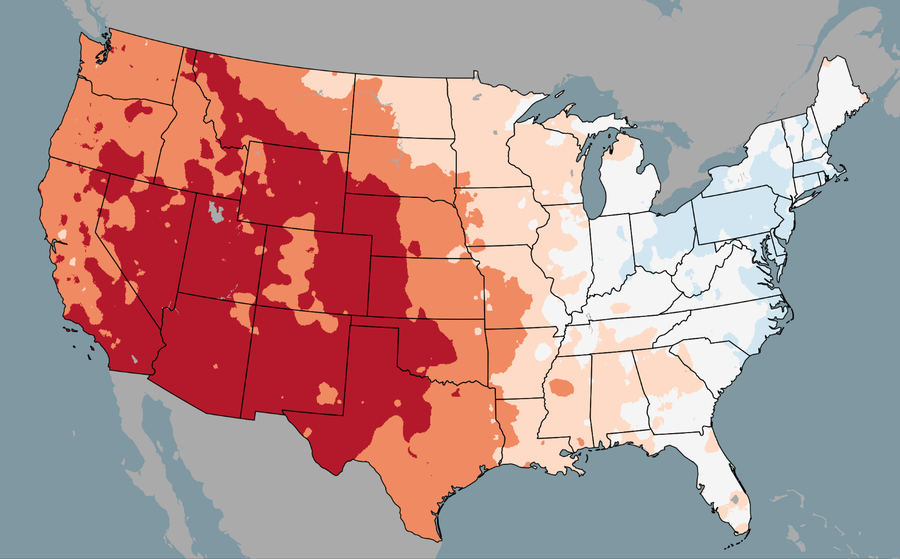
For those in the eastern half of the country, this winter seemed like an endless slog of frigid temperatures and stubbornly persistent snow piles. So it may come as a surprise to many that nowhere in the U.S. had a record cold winter this year. Nowhere even came close.

What did set records was heat. The western half of the country spent the winter baking—nine states had their hottest winter ever, and five their second-hottest—which worsened drought conditions and has raised the risks of damaging wildfires come spring and summer. So much of the country was so warm that, despite the cold in parts of the east, it was the second-warmest winter on record for the contiguous U.S. in the past 131 years.

“The grass is regreening for again for the second time this winter,” climate scientist Daniel Swain of the California Institute for Water Resources told Scientific American in early February from his home in Colorado.

And for much of the eastern U.S., the winter was actually around average. Eight states had below-average temperatures, but those were only in the lower third of the record books.

The reason it felt so cold out east and so hot out west is the same: climate change. Winter is the fastest-warming season, and cold snaps are shorter and less cold than they used to be. An analysis of more than 200 locations around the U.S. by the nonprofit Climate Central showed that the coldest winter temperatures today are seven degrees Fahrenheit (four degrees Celsius) warmer on average than they were in 1970. So when we do get a spate of chilly weather, it feels colder than it did in the past because we’re not as acclimated to it.

It’s a longer-term version of how 60 degrees F (16 degrees C) feels amazingly warm after a cold winter but refreshingly cool after a hot summer—it’s all a matter of what your body has adjusted to.

Climate change also means that even when the weather setup brings Arctic air surging southward, it’s not as cold as it once was, making cold records increasingly rare.

“When folks complain that all they hear about is record warmth (‘Why do you never talk about the record cold?’)—well, this is why!” Swain wrote in a recent blog post. “Record cold has become a truly rare condition, whereas record warmth is now occurring with remarkable and disconcerting frequency.”

Heat records will keep piling up as long as heat-trapping greenhouse gases continue to accumulate in the atmosphere. And the west has more record-shattering temperatures in store: a heat wave in the region in mid-March could send the mercury soaring above 100 degrees F (38 degrees C) in some places.

.

https://static.scientificamerican.com/dam/m/1db31906c373fb56/original/Screenshot-2026-03-13-at-7-48-42-AM_web.png?m=1773403000.072&w=900

Average temperatures for December through February across the contiguous U.S. Red denotes where the winter was record warm, and dark orange where it was much above average. White areas were average, and light blue were below average. NOAA

.

.

Click the link below for the complete article:

https://www.scientificamerican.com/article/it-was-a-record-hot-winter-for-the-u-s-despite-chilly-weather-in-the-east/

.

__________________________________________

AI agents could easily send college grad unemployment over 30%, ServiceNow CEO says

Leave a comment

Click the link below the picture

.

Artificial intelligence adoption could lead to significant job struggles for entry-level workers as companies boost productivity, according to ServiceNow CEO Bill McDermott.

McDermott told “Squawk on the Street” on Friday that unemployment for new college graduates “could easily go into the mid-30s in the next couple of years.”

“So much of the work is going to be done by agents. So it’s going to be challenging for young people to differentiate themselves in the corporate environment,” he added.

The Federal Reserve Bank of New York put the unemployment rate for recent college graduates at the end of 2025 at about 5.7%. The underemployment rate of 42.5% was the highest level since 2020.

Across industries, businesses are slashing costs and cutting jobs with the help of new AI tools.

Last month, Block announced plans to cut nearly half its workforce as AI automates more work. Meanwhile, software firm Atlassian, which has seen its stock dive 54% this year on AI disruption fears, said this week it would lay off about 10% of its workforce to support AI investments.

Compared to previous technological revolutions, experts say AI is chipping away at many white-collar jobs, including coding and marketing roles, and allowing companies to reduce hiring and improve productivity with fewer workers.

Palantir CEO Alex Karp previously told CNBC that he wants to grow revenue by 10 times while reducing headcount. Amazon CEO Andy Jassy said in June that the company will also shrink its corporate workforce with AI tools.

McDermott told CNBC that ServiceNow’s tools will help businesses slash hiring costs, adding that the software firm has already taken out 90% of the use cases that previously relied on humans in customer service. It also allows businesses to maintain headcount while growing free cash flows and revenue.

“I do think it’s coming quicker than people anticipate,” he said.

.

.

.

Click the link below for the complete article:

https://www.cnbc.com/2026/03/13/software-ai-agents-college-graduate-unemployment.html

.

__________________________________________

Judge Quashes Justice Dept.’s Subpoenas of Fed, Crippling Its Pursuit of Trump’s Rivals

Leave a comment

Click the link below the picture

.

A federal judge in Washington threw a major roadblock into a criminal investigation of Jerome H. Powell, the Federal Reserve chair, quashing grand jury subpoenas issued to the central bank by federal prosecutors over renovations underway at its headquarters in Washington.

In a blistering 27-page decision unsealed on Friday, the judge, James E. Boasberg, derided the U.S. attorney’s office in Washington for pursuing a case against Mr. Powell, delivering a serious setback to President Trump in his effort to use the criminal justice system to punish political foes or pursue his agenda. Mr. Powell has long resisted calls from the White House to significantly lower borrowing costs, prompting a litany of attacks that has also included an effort by the president to fire another top official, Lisa D. Cook.

“There is abundant evidence that the subpoenas’ dominant (if not sole) purpose is to harass and pressure Powell either to yield to the president or to resign and make way for a Fed chair who will,” Judge Boasberg wrote.

He continued, “On the other side of the scale, the government has offered no evidence whatsoever that Powell committed any crime other than displeasing the president.”

The ruling was a reminder of the real-world limitations on authority the president has claimed to be nearly boundless. Time and again, judges and juries across the country have rejected what they appear to increasingly view as attempts by the Trump administration to replace executive fiat for traditional rule of law. In particular, Mr. Trump’s efforts to pursue criminal cases against his perceived enemies have almost uniformly floundered, with either juries declining to bring indictments or judges questioning the basis of the charges.

Judge Boasberg’s decision did not necessarily mean the official end of the inquiry led by a Trump loyalist, Jeanine Pirro, the U.S. attorney in Washington. But it has dealt a crippling, perhaps fatal, blow to an inquiry that might now delay legislative approval of the White House’s handpicked replacement for Mr. Powell while deepening divisions among Republicans.

If prosecutors intend to continue pursuing it, they would have to find other ways of obtaining evidence, like persuading a judge to issue a search warrant.

A fiery Ms. Pirro, appearing at a hastily called news conference in her office up the block from Federal District Court in Washington, where Judge Boasberg sits as the chief judge, said she planned to both appeal and file a motion requesting the judge to reconsider.

She also followed the bellicose lead of her boss, Mr. Trump, by attacking the judge, accusing him of harboring an animus toward the president and claiming that he had “neutered the grand jury’s ability” to obtain information from the Federal Reserve about its expenditures.

“Jerome Powell today is now bathed in immunity, preventing my office from investigating the Federal Reserve,” said Ms. Pirro, who asserted the subpoenas were issued because Mr. Powell ignored prior requests for information. “This is wrong, and it is without legal authority.”

The exchange was the latest development in a three-sided battle between a top Trump ally determined to pursue a dubious legal course to placate the president, a Fed chair fighting for the independence of an institution whose stewardship is essential to the economy, and a judge who has emphatically rejected the administration’s maximalist legal strategy.

The investigation began late last year, when Ms. Pirro’s office served two subpoenas to the Fed’s Board of Governors. Prosecutors sought records about recent renovations of the board’s buildings and testimony that Mr. Powell delivered to Congress that briefly discussed the project, which is running over budget by about $700 million and is set to cost around $2.5 billion. The administration seized on those cost overruns and accused Mr. Powell of mismanaging the project, culminating in a visit by Mr. Trump at the construction site in July.

The criminal investigation is only the latest in a string of attacks by the White House to pressure the Fed into lowering borrowing costs. The Justice Department’s investigation prompted a rare rebuke from Mr. Powell, who accused the White House of using the threat of criminal charges to coerce the central bank into lowering rates.

“This is about whether the Fed will be able to continue to set interest rates based on evidence and economic conditions — or whether instead monetary policy will be directed by political pressure or intimidation,” he said in January in an extraordinary video message.

The investigation also drew condemnation from lawmakers from both political parties. Crucially, several Republican senators on the powerful Banking Committee, which oversees the Fed and manages anyone nominated by the president to the central bank, voiced their support for Mr. Powell.

Senator Thom Tillis of North Carolina, a pivotal member of the committee, warned in January that he would block any attempt by Mr. Trump to nominate a new Fed chair, throwing a wrench into the president’s plans to replace Mr. Powell with Kevin M. Warsh, a former governor he tapped for the job. On Friday, Mr. Tillis said the judge’s ruling “confirms just how weak and frivolous the criminal investigation of Chairman Powell is, and it is nothing more than a failed attack on Fed independence.”

He called on Ms. Pirro’s office to “save itself further embarrassment and move on,” while warning that appealing the ruling would delay the confirmation of Mr. Warsh as chair.

Judge Boasberg’s ruling was merely the latest embarrassing failure by the Justice Department to use the criminal justice system to go after people Mr. Trump has perceived to be his enemies.

In Ms. Pirro’s office alone, a pair of prosecutors working for her tried and failed last month to secure an indictment against six Democratic lawmakers who posted a video in the fall that enraged Mr. Trump by reminding active-duty members of the military and intelligence community that they were obligated to refuse illegal orders.

Around the same time, prosecutors in the office shelved their efforts to investigate whether former President Joseph R. Biden Jr. and his aides had broken the law by using the autopen to sign presidential documents, despite intense pressure from Mr. Trump to build a case.

In the Eastern District of Virginia, a judge dismissed the criminal cases brought against the former F.B.I. director James Comey and New York’s attorney general, Letitia James, saying the prosecutor who had brought them had been illegally appointed.

Prosecutors sought to continue pursuing the case against Ms. James, bringing charges to two separate grand juries, one in Norfolk, Va., and another in Alexandria, Va., in two weeks, only to be rejected twice.

In his ruling in the Fed case, Judge Boasberg began by quoting a few of the nearly 100 statements that Mr. Trump and his aides have made attacking Mr. Powell and pressuring him to lower interest rates. The judge also noted that last July, Bill Pulte, the director of the Federal Housing Finance Agency, posted a message on social media “asking Congress to investigate Chairman Jerome Powell” over “his political bias,” the board’s renovations and the chairman’s testimony about them.

“In sum,” Judge Boasberg wrote, “the president spent years essentially asking if no one will rid him of this troublesome Fed chair. He then suggested a specific line of investigation into him, which had been proposed by a political appointee with no role in law enforcement, who hinted that it could be a way to remove Powell.”

Ms. Pirro, he went on, “promptly complied” with the suggestion to begin a criminal inquiry.

“Those facts strongly imply that this investigation was launched for an improper purpose, as were the resulting subpoenas,” Judge Boasberg concluded.

The Latest on the Trump Administration


  • Talks With Cuba: President Miguel Díaz-Canel announced that his government had been holding talks with the Trump administration while managing an increasingly severe lack of fuel. The Cuban government also said that it was planning to release 51 prisoners, a move that appears to be an effort to appease the U.S. government.

  • Sanctions on Russia: The U.S. temporarily lifted sanctions on Russian oil that is currently at sea, allowing it to be shipped to buyers around the world as the Trump administration scrambles to contain energy prices that have been soaring because of the war in Iran. Kremlin officials said the American move, which Europe opposes, showed that Moscow could not be dislodged from the center of global energy markets.

  • Mystery Surrounding Would-Be Assassin: Defense Secretary Pete Hegseth said the leader of an Iranian unit that had planned to assassinate President Trump had been killed. But U.S. officials privately acknowledge the story is not that simple.

  • Homeland Security Funding: Many Department of Homeland Security employees are on track to miss a paycheck during the nearly monthlong lapse in funding for the agency, leading officials to warn of potential disruptions in air travel if more airport security workers call out of work.

  • Pentagon’s Outreach to Wall Street: A headhunting presentation aimed at recruiting Wall Street investment bankers to the Pentagon dangled access to government officials and foreign royal families that could be used to raise capital in the future, according to a slide deck viewed by The New York Times.


.

https://static01.nyt.com/images/2026/03/13/multimedia/13dc-fed-vbkf/13dc-fed-vbkf-jumbo.jpg?quality=75&auto=webp“The government has offered no evidence whatsoever that Jerome H. Powell, the Federal Reserve chair, committed any crime other than displeasing the president,” Judge James E. Boasberg wrote. Credit…Caroline Gutman for The New York Times

.

.

Click the link below for the complete article:

https://www.nytimes.com

.

__________________________________________
The universe’s brightest supernovae are turbocharged by newborn magnetars

2 Comments

Click the link below the picture

.

Every star’s death is dramatic. Superluminous supernovae take the theatrics to another level.

In the early 2000s, scientists first saw these conspicuous cataclysms, which can shine much longer and be more than 10 times brighter than a normal supernova. And ever since, they’ve been wondering what physical process explains such supernovae’s exceptional, lingering glare.

Now they know. In a paper published today in the journal Nature, astrophysicists nailed down a superluminous supernova’s true source: radiation beamed out from a city-sized, freshly formed, highly magnetized, fast-spinning ball of neutrons—a so-called magnetar. Besides solving the puzzle of superluminous supernovae, this also marks the first time scientists have witnessed a magnetar’s birth. And what gave it all away is a strange quirk of Einstein’s general theory of relativity.

“It’s so remote from anything we’ve ever thought of,” says Joseph Farah, a graduate student affiliated with the at the Las Cumbres Observatory (LCO) and the University of California, Santa Barbara, who led the study. “We know so little about these things.”

What is known is that when a massive star exhausts its fuel, it collapses in on itself and explodes, leaving behind an expanding, slowly cooling cloud of radioactive gas and debris with a tiny stellar remnant at the center. When such a star was some 10 to 25 times the mass of our sun, that remnant is usually a neutron star. These are the weirdest chunks of matter in the cosmos—a teaspoon of their material weighs as much as Mount Everest—making neutron stars the sites of some of the most extreme physics out there.

Neutron stars get especially extreme when they’re rapidly spinning, pulsing out lighthouse-like beams of radiation from their poles; astronomers call these objects pulsars. And magnetars are the most extreme of all: most of them are newborn pulsars that possess magnetic fields up to 1,000 times stronger than normal.

Although theorists already had inklings that a magnetar’s tempestuous birth might help explain superluminous supernovae, clinching the case proved difficult. A potential breakthrough came in late 2024 with the eruption of a new superluminous supernova, SN 2024afav, about a billion light-years from Earth. Monitored across 200 days by astronomers at the LCO, SN 2024afav’s brightness periodically dipped, oscillating back and forth, with the time between dips getting shorter and shorter over the course of the measurement.

Farah and his co-authors went to the blackboard in search of explanations for this specific pattern. They landed on only one that could explain it. As a magnetar spins on its axis at nearly the speed of light, its immense magnetic field contorts, coils, and twists to pump out powerful radiation. Energy from this astrophysical engine sets the surrounding ejected gas aglow, souping up the supernova’s luminosity and longevity.

But what caused these stellar embers to wax and wane? The answer boils down to how the spinning dead star dragged space and time in its wake.

The magnetar was initially surrounded by a whirling disk of matter, funneling from its inner edge onto the stellar remnant. The disk was slightly tilted from the magnetar’s spin axis, and the violent maelstrom of spacetime it created twirled the disk around it. From afar, this consequence of general relativity, called “Lense-Thirring precession,” made the whole system look like a spinning top wobbling upon a table.

From Earth’s vantage point—right along the faraway magnetar’s equator—the wobbling disk acted like a film projector’s shutter, periodically occluding our view of the dead star supercharging SN 2024afav. As the days went by and the magnetar chomped away at its disk, that torus of material shrank inward. This sped up the shutter effect, making the dips in light more and more frequent until the disk was gone.

This stellar origin story, the authors say, matches the data better than anything else they could come up with. That makes it the surest evidence yet of what’s really going on at the center of a superluminous supernovae. “Other possible energy sources wouldn’t produce such a pattern,” says Daniel Kasen of the University of California, Berkeley, one of the astrophysicists who first proposed the magnetar explanation in 2010 and is acknowledged for providing helpful discussion in the new paper. “A magnetar can act as a powerful engine that lights up the supernova to extraordinary brightness.”

The confirmation opens up magnetars as yet another cosmic laboratory for testing general relativity. “Everything about the system is extreme,” says Adam Ingram, an astrophysicist at Newcastle University in England, who served as a peer reviewer for the study. “The gravitational field is strong enough for the most exotic predictions of general relativity to be large effects.”

Over its lifetime, the newly operational Vera C. Rubin Observatory in Chile will see millions of supernovae, including many more of these rare events. And wherever general relativity is visible in the world, Farah says, there’s an opportunity to better understand it—and perhaps even to find new cracks in the edifice of Einstein’s greatest theory, from which fresh ideas could spring. “It means we can test one of our fundamental theories of reality in one of the most extreme environments in the universe,” he says.

.

https://static.scientificamerican.com/dam/m/651fd053a9d93450/original/magnetar-beaming.jpeg?m=1773248922.487&w=900

An artist’s conception of a magnetar beaming out radiation. Astronomers found an extra-bright supernova powered by such an engine. Joseph Farah/Curtis McCully

.

.

Click the link below for the complete article:

https://www.scientificamerican.com/article/the-universes-brightest-supernovas-are-turbocharged-by-newborn-magnetars/

.

__________________________________________

Sleep Smarter: The Ultimate Guide To Better Rest

Leave a comment

From

Click the link below the picture

.

March is Sleep Awareness Month, making it the perfect time to examine one of the most powerful pillars of our well-being: rest. In a culture that glorifies busyness, sleep often becomes the first thing we sacrifice and the last thing we prioritize. Many of us brag about how little we get, treat exhaustion like a badge of honor, and convince ourselves we’ll “catch up” on the weekend. But mounting research continues to show that getting enough shut-eye is critical.

Quality sleep impacts nearly every system in the body. It supports cognitive function, stabilizes your mood, regulates hormones, strengthens immunity, and even influences metabolism and heart health. Chronic sleep deprivation has been linked to increased stress, anxiety, depression, and long-term conditions such as hypertension and diabetes. With that said, instead of adding another serum or supplement to your wellness routine, it might be more effective to start by implementing an earlier bedtime.

Sleep Awareness Month, led by organizations such as the National Sleep Foundation, encourages people to assess their bedtime habits and commit to healthier sleep practices. Whether you’re someone who struggles to fall asleep, wakes up throughout the night, or simply doesn’t feel rested in the morning, this is the perfect time to reset.

Below, we’re breaking down everything you need to know about improving your sleep. From understanding your sleep cycle to building a nighttime routine that actually works. Consider this your evergreen guide to getting the rest you deserve.

Understand Your Sleep Cycle

Sleep isn’t one long and uniform state. It’s a cycle that repeats several times a night and often lasts 90 to 120 minutes. Each cycle includes stages of light sleep, deep sleep, and REM (rapid eye movement) sleep. Deep sleep is crucial for physical restoration, while REM sleep supports memory consolidation and emotional processing.

Most adults need 7–9 hours per night, according to sleep experts. When you consistently cut your sleep short, you interrupt these cycles, especially the later REM-heavy stages. This may explain why you sometimes wake up groggy and struggle with focus. 

If you’re not getting enough sleep, try going to bed and waking up at the same time every day, even on weekends. Consistency helps regulate your internal clock.

Create a Wind-Down Routine

Your brain needs cues that it’s safe to power down. Checking emails and scrolling in bed can keep your nervous system activated and prolong your body transitioning into sleep mode. To help you wind down on time, consider:

  • Dimming the lights an hour before bed
  • Taking a warm shower or bath
  • Reading a physical book
  • Practicing light stretching or deep breathing
  • Listening to calming music or white noise
  • Putting your phone in another room

Optimize Your Sleep Environment

Your bedroom should feel like a sanctuary and not an extension of your office or living room. Think about how you can redesign it to create a zen environment that promotes relaxation and rest. A low-hanging fruit to focus on includes the temperature: most experts recommend a cool room at around 60–67°F. Darkness is also helpful, so blackout curtains or an eye mask can make a big difference. If you’re sensitive to sound, think about noise control. White noise machines or fans can mask disruptive sounds. Of course, a comfortable bed is key, so pad up your bed with supportive pillows and a mattress that fits your sleep style. These small upgrades can significantly improve your sleep quality over time.

Rethink Your Relationship With Screens

Blue light from phones, tablets, and TVs can suppress melatonin, the hormone that helps regulate sleep. But beyond the light itself, content consumption can keep your mind racing.

If you can, aim to power down devices 30–60 minutes before bed. If that’s unrealistic, consider:

  • Using blue light filters
  • Using a Brick device or a Bloom card to lock addictive apps
  • Switching to audio content or getting an old-school radio for music that helps you sleep
  • Avoiding emotionally stimulating news or social media debates late at night

Protecting your pre-sleep mental space can help prevent late bedtimes and trouble falling asleep due to overstimulation.

Be Mindful of What You Consume

Caffeine can linger in your system for up to eight hours (sometimes longer). Alcohol may make you feel sleepy initially, but it disrupts deep and REM sleep later in the night. If you’re struggling to rest, avoid caffeine in the early afternoon and limit heavy meals near bedtime.

Be cautious about consuming alcohol close to bed and swap that out for small amounts of water instead. While hydration matters, try not to overdo fluids right before going to sleep to avoid bathroom trips in the middle of the night.

Move Your Body

Regular exercise has been shown to improve sleep quality, reduce stress, and help you fall asleep faster. However, intense workouts right before bed can elevate your heart rate and adrenaline.

Aim for movement earlier in the day when possible. Even a brisk 20–30 minute walk can positively impact your rest without disrupting your sleep. 

Address Stress Head-on

If racing thoughts are your biggest sleep thief, consider incorporating stress-management techniques during the day, not just at night. Sleep struggles are often symptoms of daytime overload, so consider ways to minimize it.

Helpful tools include:

  • Journaling before bed to “brain dump.” 
  • Mindfulness or meditation apps
  • Therapy or counseling if anxiety is persistent
  • Setting boundaries around work hours

Know When to Seek Help

Occasional restless nights are normal. But if you consistently have trouble falling or staying asleep, experience severe anxiety, have insomnia, or feel extreme daytime fatigue, it may be worth speaking with a healthcare provider.

Conditions like insomnia and sleep apnea are common and treatable. Seeking support is a step toward long-term wellness.

.

https://media.essence.com/vxcjywbwpa/uploads/2026/03/GettyImages-1558913833-1200x900.jpg?width=1200Getty Images

.

.

Click the link below for the complete article:

https://www.essence.com/lifestyle/how-to-get-more-deep-sleep/

.

__________________________________________

China’s Long-Promised Consumer Boom Is a Mirage

Leave a comment

Click the link below the picture

.

If there is a Chinese analogue to Nero’s fiddling while Rome burned, it is the country’s latest five-year plan.

The policy blueprint — which sets out China’s economic strategy for the years ahead — was approved on Thursday by the National People’s Congress in Beijing. Chapter 15, titled “Vigorously Boosting Consumption,” proclaims that the Chinese consumer is finally going to start earning more and spending more.

This promise, which Beijing has been making for more than two decades, matters far beyond China. If Chinese consumers started spending more, it would help reduce the country’s reliance on exports to fuel its economy, a strategy that now floods world markets with Chinese-made goods and creates huge trade surpluses for China and persistent tension with trading partners such as the United States.

The situation is unlikely to change under the new plan, which mostly doubles down on China’s longstanding approach of prioritizing export-oriented industries and technological development instead of creating a truly consumer-driven economy.

Even if Communist Party leaders wanted to unleash more spending, formidable obstacles stand in the way, including a work force increasingly trapped in insecure, low-wage employment, a rapidly aging and shrinking population and a weak social safety net that encourages people to save for emergencies.

China’s people, perhaps more than at any time in the last few decades, are in no mood to go out and splurge. Many have been airing growing anxiety online about falling incomes and scarce jobs. The average income was just over $500 a month in 2025. Unemployment is high.

A fundamental shift that has taken place in China’s labor market is the root cause of these problems.

Since the early 2010s, intensifying global economic competition, automation, the pandemic-era closure of countless businesses, slowing economic growth, and China’s protracted property slump have all combined to eliminate millions of manufacturing and construction jobs. This has driven countless workers into a growing service sector that requires fewer skills and offers lower pay.

An estimated 200 million people, or at least one-quarter of China’s work force, are now engaged in insecure “gig” employment — delivering meals or packages, driving ride-hailing cars, selling goods online, or doing other short-term work. According to a study last year, nearly half of gig workers have little to no social safety net — health care, pension, unemployment, housing, or maternity benefits — a problem worsened by chronic government underinvestment in social services. Advances in technology have given companies a precise view of seasonal demand and simplified recruiting, enabling them to hire and fire workers as needed.

Adding to worker insecurity is China’s household registration system, which restricts access to social services like schooling and health care outside one’s hometown. This effectively ensures that people from China’s vast countryside serve as cheap migrant labor for megacities like Beijing, Shanghai, and Shenzhen. Reform of the registration system has been discussed for decades, but eliminating it would shift enormous welfare costs onto those cities, which currently reap benefits from migrant labor without shouldering social costs.

These are hardly the foundations of a vibrant consumer economy, and the future looks no better.

The real estate crash, now five years old, has left homeowners paying mortgages on apartments they can’t sell. New families are a key driver of spending on homes, appliances, and cars. But China’s people are marrying less frequently and having fewer babies: The population fell for the fourth straight year in 2025, and the fewest babies were born since the founding of the People’s Republic of China in 1949. Fewer people, of course, means fewer consumers.

The deeper question may be whether the Chinese Communist Party’s pledges to give consumers more of a role in the economy are real — or an empty pledge to placate critics.

Consumer spending in China has hovered at 40 percent or less of China’s GDP for years (compared to more than 65 percent in the United States). The government has introduced policies in recent years to encourage spending, but these typically take the form of rebates and subsidies for appliances, electronics, and cars. This boosts sales for manufacturers and retailers but doesn’t really improve the lot of the average consumer.

Increasing the role of consumer spending in China’s economy would mean surrendering some state control to the people, something the Communist Party is loathe to do.

While the United States and Europe typically stimulate spending by putting money in consumers’ hands through tax cuts, direct payments to individuals and families, or social safety nets that reduce the need to save for emergencies, China’s government manages the economy primarily through the country’s companies. It directs investment capital to them, grants them subsidies, and uses other means to get the business sector to execute the party’s industrial policies.

Truly meaningful steps to increase the economic role of Chinese consumers would in effect redistribute income to households, leaving less capital for the party to direct toward strategic priorities like developing the tech industry, which Beijing sees as essential to securing the country’s technological self-sufficiency and competing with the United States.

The success of China’s export machine offers little incentive for the Communist Party to change course and gamble on a new consumer-focused strategy. Trade surpluses may create tension with trading partners, but they earn Beijing massive amounts of hard currency and generate endless headlines about Chinese export dominance in electric vehicles, solar panels, batteries, ships, and many other products. All of this projects an image of Chinese economic strength to audiences at home and overseas.

China’s government says the new five-year plan will lead to a marked increase in consumer spending. The more likely outcome is business as usual: more low-priced Chinese goods on world markets, more pressure on emerging economies struggling to spur their own development, even fewer Chinese imports of foreign products — and more tension with the rest of the world.

.

https://static01.nyt.com/images/2026/03/13/multimedia/13yang-fhcw/13yang-fhcw-superJumbo.jpg?quality=75&auto=webpKevin Frayer/Getty Images

.

.

Click the link below for the complete article:

https://www.nytimes.com

.

__________________________________________

Stunning video shows huge fireball blazing over Europe

2 Comments

Click the link below the picture

.

A massive fireball streaked through the evening sky over Europe on Sunday, showering at least one German town with debris and triggering an investigation into the size of the object.

The European Space Agency’s Planetary Defense team, which is leading the investigation, currently estimates that the fireball was a few meters in diameter. Apparently, the event was audible from the ground, and the fireball was visibly glowing for about six seconds. Falling debris from the meteor damaged a house, according to the agency, but there are no reported injuries.

For comparison, a large meteor that fell over Chelyabinsk Oblast in Russia in 2013, was 18 meters in diameter. It exploded during its descent about 30 kilometers (18.6 miles) above the ground, showering the surrounding area with debris and triggering a shockwave that shattered the windows of houses, injuring many. Scientists estimated that it had the same explosive power as about 440,000 tons of TNT, according to NASA.

Because of the timing of Sunday’s event and the direction the meteor was traveling in as it fell, the European Space Agency doesn’t think any of the large-scale telescope sky surveys that are designed to scan for these objects would have caught it.

It’s unclear where the fireball came from; these falling space rocks are often debris from passing comets and asteroids. When these rocks enter Earth’s atmosphere at speed, they burn up—the bigger the rock, the brighter the burn. If any bits of a meteor survives the journey through the atmosphere to hit the ground, then it becomes a meteorite. Unless they are very large, meteors typically break apart in the atmosphere, as the fireball over Europe did on Sunday.

.

https://static.scientificamerican.com/dam/m/5d823feadb2d532e/original/meteor-shower.jpg?m=1773067474.688&w=900NASA

.

.

Click the link below for the complete article:

https://www.scientificamerican.com/article/stunning-video-shows-huge-fireball-blazing-over-europe/

.

__________________________________________

This new emoji is all of us in 2026

Leave a comment

Click the link below the picture

.

It’s a new year, and that means a new opportunity for Apple to debut an emoji that perfectly encapsulates the current state of online culture. 

Last year, the company unveiled “Face With Bags Under Eyes,” a beleaguered little guy with the weight of the world on his shoulders who felt like the visual equivalent of the first year of another Trump administration. And in 2026, it appears that Apple has done it again.

The company is currently beta-testing iOS 26.4, a software update that’s expected to debut sometime in late March. The update will include new features in Apple Music, video upgrades in Apple Podcasts, and a few new widgets. It will also come with Apple’s much-anticipated annual drop of new emoji—one of which has already solidified its spot as the defining emoji of 2026 before it’s even officially available. 

We’re all a little bulge-eyed right now

Apple’s eight new emoji are a predictably mixed bag that range from a dust cloud and an orca to a landslide and an artistic interpretation of Bigfoot. But the true standout from this fresh crop of group chat fodder is undoubtedly “Distorted Face.” 

“Distorted Face” has a blushing, bug-eyed expression that looks like he’s been inflated like a helium balloon. Aesthetically, he feels like a relative of the variety of deep-fried emoji memes that Gen Z netizens have turned into popular reaction images. These images take a classic smiley emoji and edit it to convey a more niche emotion, like existential dread or incredulity (one popular example, which doesn’t have an official name, seems likely to be the design inspiration for “Distorted Face”).  

But, on a deeper level, “Distorted Face” is all of us in 2026. The unique blend of exasperation, shock, silliness, and resignation has endless applications: It’s all of us watching the most heinous AI slop videos dupe our relatives on the internet; seeing GLP-1 brands taking over our pharmacy shelves and grocery store aisles; and witnessing the president wear self-promotional branded merch during the dignified transfer of the remains of six U.S. service members.

Already, the internet is predicting that “Distorted Face” is going to have a big year. “About to be most-used emoji in history,” reads one tweet with more than 50,000 likes. A commenter under the post added: “This is literally the ‘I have no words’ emoji.”

If “Face With Bags Under Eyes” captured the “resigned expression of someone who’s well past their limit but is still soldiering on,” as Fast Company put it last year, then “Distorted Face” is the embodiment of someone who cannot really be surprised anymore—yet still manages it somehow.

.

https://images.fastcompany.com/image/upload/f_webp,c_fit,w_750,q_auto/wp-cms-2/2026/03/p-91506158-distorted-face-emoji.jpg[Image: Apple]

.

.

Click the link below for the complete article:

https://www.fastcompany.com/91506158/distorted-face-emoji

.

__________________________________________

How Trump and His Advisers Miscalculated Iran’s Response to War

Leave a comment

Click the link below the picture

.

On Feb. 18, as President Trump weighed whether to launch military attacks on Iran, Chris Wright, the energy secretary, told an interviewer he was not concerned that the looming war might disrupt oil supplies in the Middle East and wreak havoc in energy markets.

Even during the Israeli and U.S. strikes against Iran last June, Mr. Wright said, there had been little disruption in the markets. “Oil prices blipped up and then went back down,” he said. Some of Mr. Trump’s other advisers shared similar views in private, dismissing warnings that — the second time around — Iran might wage economic warfare by closing shipping lanes carrying roughly 20 percent of the world’s oil supply.

The extent of that miscalculation was laid bare in recent days, as Iran threatened to fire at commercial oil tankers transiting the Strait of Hormuz, the strategic choke point through which all ships must pass on their way out of the Persian Gulf. In response to the Iranian threats, commercial shipping has come to a standstill in the Gulf, oil prices have spiked, and the Trump administration has scrambled to find ways to tamp down an economic crisis that has triggered higher gasoline prices for Americans.

The episode is emblematic of how much Mr. Trump and his advisers misjudged how Iran would respond to a conflict that the government in Tehran sees as an existential threat. Iran has responded far more aggressively than it did during last June’s 12-day war, firing barrages of missiles and drones at U.S. military bases, cities in Arab nations across the Middle East, and on Israeli population centers.

U.S. officials have had to adjust plans on the fly, from hastily ordering the evacuation of embassies to developing policy proposals to reduce gas prices.

After Trump administration officials gave a closed-door briefing to lawmakers on Tuesday, Senator Christopher S. Murphy, Democrat of Connecticut, said on social media that the administration had no plan for the Strait of Hormuz and did “not know how to get it safely back open.”

Inside the administration, some officials are growing pessimistic about the lack of a clear strategy to finish the war. But they have been careful not to express that directly to the president, who has repeatedly

declared that the military operation is a complete success.

Mr. Trump has laid out maximalist goals like insisting that Iran name a leader who will submit to him, while Secretary of State Marco Rubio and Defense Secretary Pete Hegseth have described narrower and more tactical objectives that could provide an off-ramp in the near term.

Karoline Leavitt, the White House press secretary, said the administration “had a strong game plan” before the war broke out, and vowed that oil prices would drop after it ended.

“The purposeful disruption in the oil market by the Iranian regime is short term, and necessary for the long-term gain of wiping out these terrorists and the threat they pose to America and the world,” she said in a statement.

This article is based on interviews with a dozen U.S. officials, who asked for anonymity to discuss private conversations.

Mr. Hegseth acknowledged on Tuesday that Iran’s ferocious response against its neighbors caught the Pentagon somewhat off guard. But he insisted that Iran’s actions were backfiring.

“I can’t say that we anticipated necessarily that’s exactly how they would react, but we knew it was a possibility,” Mr. Hegseth said at a Pentagon news conference. “I think it was a demonstration of the desperation of the regime.”

Mr. Trump has displayed growing frustration over how the war is disrupting the oil supply, telling Fox News that oil tanker crews should “show some guts” and sail through the Strait of Hormuz.

Some military advisers did warn before the war that Iran could launch an aggressive campaign in response, and would view the U.S.-Israeli attack as a threat to its existence. But other advisers remained confident that killing Iran’s senior leadership would lead to more pragmatic leaders taking over who might bring an end to the war.

When Mr. Trump was briefed about risks that oil prices could rise in the event of war, he acknowledged the possibility but downplayed it as a short-term concern that should not overshadow the mission to decapitate the Iranian regime. He directed Mr. Wright and Treasury Secretary Scott Bessent to work on developing options for a potential spike in prices.

But the president did not speak publicly about these options — including political risk insurance backed by the U.S. government, and the potential of U.S. Navy escorts — until more than 48 hours after the conflict started. The escorts have not yet taken place.

Mr. Wright, the energy secretary, caused a market commotion Tuesday when he posted on social media that the Navy had successfully escorted an oil tanker through the Strait of Hormuz. His post drove up stocks and reassured oil markets. Then, when he deleted the post after administration officials said no escorts had taken place, markets were once again thrust into turmoil.

Efforts to resume shipments have been complicated by intelligence that Iran was preparing to lay mines in the strait, one U.S. official said. The Iranian operation was only in its earliest stages, but the preparatory efforts spooked the Trump administration. The U.S. military said on Tuesday evening that its forces had attacked 16 Iranian mine-laying vessels near the strait.

As the conflict has roiled global markets, Republicans in Washington have grown concerned about rising oil prices damaging their efforts to sell an economic agenda to voters ahead of the midterm elections.

Mr. Trump, both publicly and privately, has been arguing that Venezuelan oil could help solve any shocks coming from the Iran war. The administration announced on Tuesday a new refinery in Texas that officials said could help increase oil supply, ensuring that Iran does not cause any long-term damage to oil markets.

The confidence that White House officials had that the shipping lanes could stay open is surprising given that Mr. Trump authorized a military campaign last year against the Houthis, a Yemeni group backed by Iran, that had used missile and drone attacks to bring maritime commerce in the Red Sea to a halt.

In a social media post last March announcing he had authorized military strikes against the Houthis, Mr. Trump said that the attacks had cost the global economy billions of dollars, and that “no terrorist force will stop American commercial and naval vessels from freely sailing the Waterways of the World.”

But since the start of the war in Iran, Mr. Trump has not offered a consistent message. In private, his aides have said they feel frustration over his lack of discipline in communicating the objectives of the military campaign to the public.

Mr. Trump has said both that the war could go on for more than a month and that it was “very complete, pretty much.” He also said the United States would “go forward more determined than ever.”

Mr. Rubio and Mr. Hegseth, however, appear to have coordinated their messaging for now on three discrete goals that they began laying out in public remarks on Monday and Tuesday.

“The goals of this mission are clear,” Mr. Rubio said at a State Department event on Monday before Mr. Trump held his own news conference. “It is to destroy the ability of this regime to launch missiles, both by destroying their missiles and their launchers; destroy the factories that make these missiles; and destroy their navy.”

The State Department even laid out the three goals in bullet-point fashion, and highlighted a video clip of Mr. Rubio stating them on an official social media account.

The presentation by Mr. Rubio, who is also the White House national security adviser, appeared to be setting the stage for the president to bring an end to the war sooner rather than later. In his news conference, Mr. Trump boasted of how the U.S. military had already destroyed Iran’s ballistic missile capability and its navy. But he also warned of even more aggressive action if Iranian leaders tried to cut off the world’s energy supply.

Matthew Pottinger, who was a deputy national security adviser in the first Trump administration, said in an interview that Mr. Trump had indicated he could decide to pursue ambitious war goals that would take weeks at least.

“In his press conference, I could hear him circling back to a rationale for fighting a bit longer given that the regime is still signaling it won’t be deterred and is still trying to control the Strait of Hormuz,” said Mr. Pottinger, now the chair of the China program at the Foundation for Defense of Democracies, a group that advocates a close U.S. partnership with Israel and confrontation with Iran.

“He doesn’t want to have to fight a ‘sequel’ war,” Mr. Pottinger added.

The search for pathways out of the war has gained urgency since the weekend, as global oil prices surge and as the United States burns through costly munitions. Pentagon officials said in recent closed-door briefings on Capitol Hill that the military used up $5.6 billion of munitions in the first two days of the war alone, according to three congressional officials. That is a far larger amount and munitions burn rate than had been publicly disclosed. The Washington Post reported on the figure on Monday.

Iranian officials have remained defiant, saying they will use their leverage over the world’s oil supply to force the United States and Israel to blink.

“Strait of Hormuz will either be a Strait of peace and prosperity for all,” Ali Larijani, Iran’s top national security official, said in a social media post on Tuesday. “Or it will be a Strait of defeat and suffering for warmongers.”

.

https://static01.nyt.com/images/2026/03/10/multimedia/10dc-iran-planning-hmpg/10dc-iran-planning-hmpg-jumbo.jpg?quality=75&auto=webpIn response to Iranian threats, commercial shipping has come to a standstill in the Gulf, and oil prices have spiked. Credit…Benoit Tessier/Reuters

.

.

Click the link below for the complete article:

https://www.nytimes.com

.

__________________________________________

Older Entries Newer Entries

Amor Entre Estrellas

¡Bienvenido de vuelta viajero!

Heart of Loia `'.,°~

so looking to the sky ¡ will sing and from my heart to YOU ¡ bring...

Michael Ciullo

CEO and Founder of Nsight Health

MRS. T’S CORNER

https://www.tangietwoods

Nelson MCBS

Catholic News, Prayers, HD Images, Rosary, Music, Videos, Holy Mass, Homily, Saints, Lyrics, Novenas, Retreats, Talks, Devotionals and Many More

Global geopolitics

Decoding Power. Defying Narratives.

Talk Photo

A creative collaboration introducing the art of nature and nature's art.

Movie Burner Entertainment

The Home Of Entertainment News, Reviews and Reactions

Le Notti di Agarthi

Hollow Earth Society

C r i s t i a n a' s Fine Arts ⛄️

•Whenever you are confronted with an opponent, conquer him with love.(Gandhi)

TradingClubsMan

Algotrader at TRADING-CLUBS.COM

Comedy FESTIVAL

Film and Writing Festival for Comedy. Showcasing best of comedy short films at the FEEDBACK Film Festival. Plus, showcasing best of comedy novels, short stories, poems, screenplays (TV, short, feature) at the festival performed by professional actors.

Bonnywood Manor

Peace. Tranquility. Insanity.

Warum ich Rad fahre

Take a ride on the wild side

Madame-Radio

Découvre des musiques prometteuses (principalement) dans la sphère musicale française.

Ir de Compras Online

No tiene que Ser una Pesadilla.

Kana's Chronicles

Life in Kana-text (er... CONtext)

Cross-Border Currents

Tracking money, power, and meaning across borders.

Jam Writes

Where feelings meet metaphors and make questionable choices.

emotionalpeace

Finding hope and peace through writing, art, photography, and faith in Jesus.

WearingTwoGowns.COM

The Community for Wounded Healers: Former Medical Students, Disabled Nurses, and Faith-Fueled Pivots

...

love each other like you're the lyric to their music

Luca nel laboratorio di Dexter

Comprendere il mondo per cambiarlo.

Tales from a Mid-Lifer

Mid-Life Ponderings

Creative

Travel,Tourism, Life style "Now in hundreds of languages for you."

freedomdailywriting

I speak the honest truth. I share my honest opinions. I share my thoughts. A platform to grow and get surprised.

The Green Stars Project

User-generated ratings for ethical consumerism

Cherryl's Blog

Travel and Lifestyle Blog

Sogni e poesie di una donna qualunque

Questo è un piccolo angolo di poesie, canzoni, immagini, video che raccontano le nostre emozioni

My Awesome Blog

“Log your journey to success.” “Where goals turn into progress.”

pierobarbato.com

scrivo per dare forma ai silenzi e anima alle storie che il mondo dimentica.

Thinkbigwithbukonla

“Dream deeper. Believe bolder. Live transformed.”

Vichar Darshanam

Vichar, Motivation, Kadwi Baat ( विचार दर्शनम्)

Komfort bad heizung

Traum zur Realität

Chic Bites and Flights

Savor. Style. See the world.

ومضات في تطوير الذات

معا نحو النجاح

Broker True Ratings

Best Forex Broker Ratings & Reviews

Blog by ThE NoThInG DrOnEs

art, writing and music by James McFarlane and other musicians

fauxcroft

living life in conscious reality

Srikanth’s poetry

Freelance poetry writing

JupiterPlanet

Peace 🕊️ | Spiritual 🌠 | 📚 Non-fiction | Motivation🔥 | Self-Love💕