Home

Smart Brain-Zapping Implants Could Revolutionize Parkinson’s Treatment

Leave a comment

Click the link below the picture

.

Keith Krehbiel lived with Parkinson’s disease for nearly 25 years before agreeing to try a brain implant that might alleviate his symptoms. He had long been reluctant to submit to the surgery. “It was a big move,” he says. But by 2020, his symptoms had become so severe that he grudgingly agreed to go ahead.

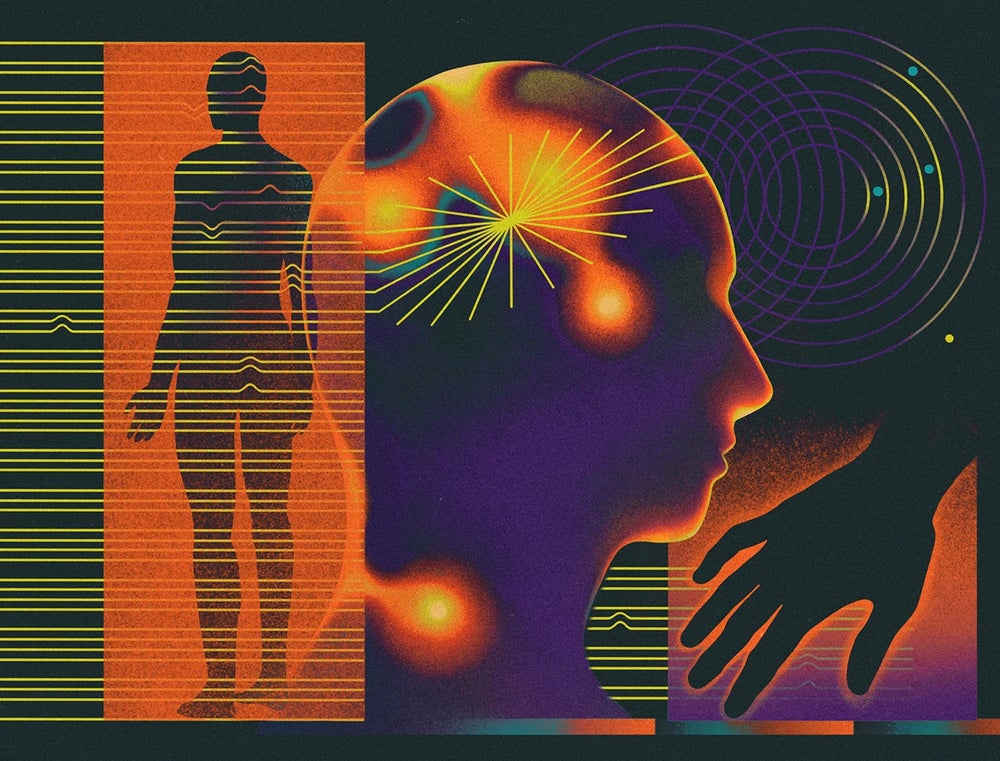
Deep-brain stimulation involves inserting thin wires through two small holes in the skull into a region of the brain associated with movement. The hope is that by delivering electrical pulses to the region, the implant can normalize aberrant brain activity and reduce symptoms. Since the devices were first approved almost three decades ago, some 200,000 people have had them fitted to help calm the tremors and rigidity caused by Parkinson’s disease. But about 40,000 of those who received devices made after 2020 got them with a special feature that has largely not yet been turned on. The devices can read brain waves and then adapt and tailor the rhythm of their output, in much the same way as a pacemaker monitors and corrects the heart’s electrical rhythms, says Helen Bronte-Stewart, a neurologist at Stanford University in California.

Bronte-Stewart received approval to start a clinical trial of this new technology, known as adaptive deep-brain stimulation (aDBS), the same week that Krehbiel was preparing for surgery. He recalls the phone call in which she asked him if he wanted to be her first participant: “I said, ‘Boy, do I!’”

Five years on, the results of this 68-person trial, called ADAPT-PD, are under review for publication. Although the exact details are still under wraps, they were convincing enough to earn approval for the technology earlier this year from both US and European regulators.

The results of this study could be a boon for the estimated one million people in the United States and 1.2 million people in Europe who now live with Parkinson’s disease — and for Medtronic, the health-care technology company based in Minneapolis, Minnesota, that manufactures the implants. The seeming success also clears a path for other companies around the world that are racing for approval on advanced devices, says Martijn Beudel, a neurologist at Amsterdam University Medical Center who worked on the trial.

The approaching wave of therapies promises to level up DBS for Parkinson’s and other motor conditions. The technology might even help to treat neurological disorders such as Tourette’s syndrome and psychiatric conditions, including obsessive–compulsive disorder (OCD) and depression. Several clinicians suggest that the new technology could have even more profound health implications — that is, if funding for US brain-implant research isn’t cut.

Deep trade-offs

Since DBS was first approved in Europe and the United States in the late-1990s, the vast majority of devices have been given to people with Parkinson’s disease. Parkinson’s is a progressive disorder, typified by the death of neurons that produce the neurotransmitter dopamine, which is key to controlling movements.

Existing drugs that aim to increase dopamine levels can only manage the symptoms. They can’t match the constant dopamine production of a healthy brain. “No matter how clever we are with it, we have never been able to exactly mimic the way the brain supplies it,” says Bronte-Stewart. This means that symptoms vary throughout the day — from the unwanted involuntary movements induced by the morning flood of dopamine-mimicking drugs to increased rigidity later in the day as the drugs wear off. The medication also comes with other side effects that vary from person to person. For Krehbiel, it was nausea so severe he had to lie down multiple times a day.

When these become overwhelming, a neurologist might recommend DBS. Implants typically dispense pulses of electrical energy deep into the brain 24 hours a day to regulate aberrant brain signals associated with uncontrollable body movements. Before this year, this always-on approach was the only commercially available form of the therapy.

But continuous DBS can sometimes amplify the drugs’ effects — or generate new symptoms. Some of these are harmless: one man with OCD developed a passion for the music of Johnny Cash when his stimulator was turned on, but was uninterested in the artist when it was off. Other symptoms are cause for more concern, including sudden-onset gambling disorders and other temporary changes in impulse control. More frequently, the addition of stimulation can induce speech impairments, such as slurring, raise the risk of falling, and cause some involuntary movements.

.
https://static.scientificamerican.com/dam/m/7c1283dd41aaf01b/original/brain_waves_human_body_parkinsons_concept.jpg?m=1752680326.543&w=1000Ada Zielińska

.

.

Click the link below for the complete article:

https://www.scientificamerican.com/article/new-parkinsons-implant-listens-to-brain-waves-to-treat-symptoms/

.

__________________________________________

Tossing and turning at night? These 4 expert-approved tips and tricks could help you to get the 8 hours you crave

2 Comments

From

Click the link below the picture

.

Poor sleeper? Sleep expert and hypnotherapist Malminder Gill was the same until she managed to turn it all around. Here, she shares the four changes that made a difference. 

It seems like everyone has some sort of sleep-related problem these days, whether it takes you hours to get to sleep or you wake up in the night and feel groggy the next day. And sleep expert Malminder Gill was no different.

Gill, 43, who’s also a clinical hypnotherapist, was once like many of us, tossing and turning at night. Insomnia disrupted her life during a transitional period around 20 years ago while she was studying for exams at university, and it took a series of changes for her to get a handle on it.

“I was under a lot of pressure, not only worrying about performing well but what the future held for me,” Gill says. “I was totally unaware of how to care for myself and my mental health.” 

She wanted to perform well, but without sufficient sleep, it was difficult. “One anxiety led to another, which led to insomnia, which disrupted my day-to-day life,” she says. Many of us will know stress loops like this all too well. There’s the wanting to get to sleep, then feeling stressed because you know you need to go to sleep, but the stress is preventing you from getting to sleep. And thus, the cycle continues.

It wasn’t until Gill took a trip to India that everything changed, and she was able to completely reset. She was off on a long holiday, looking for an adventure, but it was getting out of her routine that solved everything for her. Around the same time, she uncovered triggers that were stopping her from sleeping and learned new, healthier habits.

Since then, Gill has not only become a much better sleeper but has also made a career out of it, working as a sleep expert and hypnotherapist on Harley Street. Below, she shares the four simple changes that helped her to get the sleep she craved. 

1. Getting out of a routine 

It was no coincidence that Gill’s ability to sleep changed following her trip to India: it allowed her to shake up her routine. “Now, as a sleep expert, I know that getting out of a routine is an excellent way to combat insomnia,” she says.

Obviously, jetting off to India isn’t possible for everyone. For this reason, she suggests camping for any clients struggling with sleep. This can help break up a routine that has you feeling a little stuck.

“It [also] allows nature to reset your circadian rhythm, waking up with the sun and going to bed when it’s dark. Plus, nature is so healing. If you add a digital detox to the camping trip, you get even more incredible benefits,” she adds. 

2. Practising mindfulness 

Around the time that she went on holiday to India, she received her first session of hypnotherapy. This helped give her the tools she needed to get out of her own head. “It also uncovered emotional triggers that were keeping me from sleep,” she says.

She learned visualisation tactics that took her mind off the stresses of sleep. “I clearly remember being led through a visualisation of walking down steps and into a calm, serene environment. I was able to get out of my head and be totally present in that moment. It gave me my first taste of mindfulness, I suppose.”

This helped uncover what was triggering her emotionally and, ultimately, stopping her from sleeping. Instead, she pictured herself in a calm environment where she could drift off. Many people find it helpful to shut off their minds and relax through mindfulness and meditation, which can take many different forms.

Gill says that while she has great sleep most of the time now, when stress arises, it’s easy to fall into the old patterns that interrupt sleep. But now she has the tools to help manage this. “I love using breathing techniques and visualisations. By calming the nervous system, we can calm our emotional triggers, whatever they may be,” she says. 

3. Assessing room design 

When we say assess the room design, you don’t need to start demolishing walls to follow this advice, but there are a few bedroom-related things that can help improve your sleep.

“Essentials are low, warm lighting; blackout curtains; a cool room; and a bed that is comfortable,” Gill says. “But beyond this, keeping your bedroom and living space tidy is also important. If your environment feels busy and chaotic, so does your nervous system.”

She encourages keeping things clean and uncluttered as this helps the brain relax, allows for moments of calm, and eases you into sleep more easily each evening. 

.

https://media.stylist.co.uk/app/uploads/2024/11/paradoxical-intention-sleep-1120x1120.jpg?auto=format%2Ccompress&fit=max&fm=webp&monochrome=29000000&q=75&w=1400Credit: Getty

.

.

Click the link below for the complete article:

https://www.stylist.co.uk/health/sleep/expert-tips-excellent-sleep/1002413

.

__________________________________________

These Burger Joints Will Make The Cross-Country Trip Worth It

Leave a comment

From

Hmmmm… Hamburger Lovers Delight!

Click the link below the picture

.

Although Germany may be the originator of the hamburger, America has undoubtedly made the beef and bun sandwich their own. Cuts like chuck, sirloin, round, brisket, and tenderloin make up the patty. Buns may be topped with sesame seeds, poppy seeds, onions, or be made entirely of potato. Toppings like lettuce, tomato, and onions are classic, but new entrants like chiles, avocados, and pastrami are just as welcome. Condiments range from ketchup and mustard to relish, aiolis, and even peanut butter. The fact is that burgers have come a long way, and these joints across America have made their burgers the best around.

The Balboa Bar and Grill in San Diego, California

After owner Tom Logsdon announced that the Balboa Bar and Grill would permanently close in July 2020, burger lovers throughout San Diego celebrated collectively when the bar reopened in April 2021. Tom and his grill are back with a bigger and better restaurant and menu offering thanks to an incredible proposition from his landlord.

.

https://wh-img.instaimgs.com/wp-content/uploads/2022/02/10154321/the-cherry-cricket__c795101872.jpeg?tr=dpr-1,fo-auto,ar-1-1,w-1000Facebook

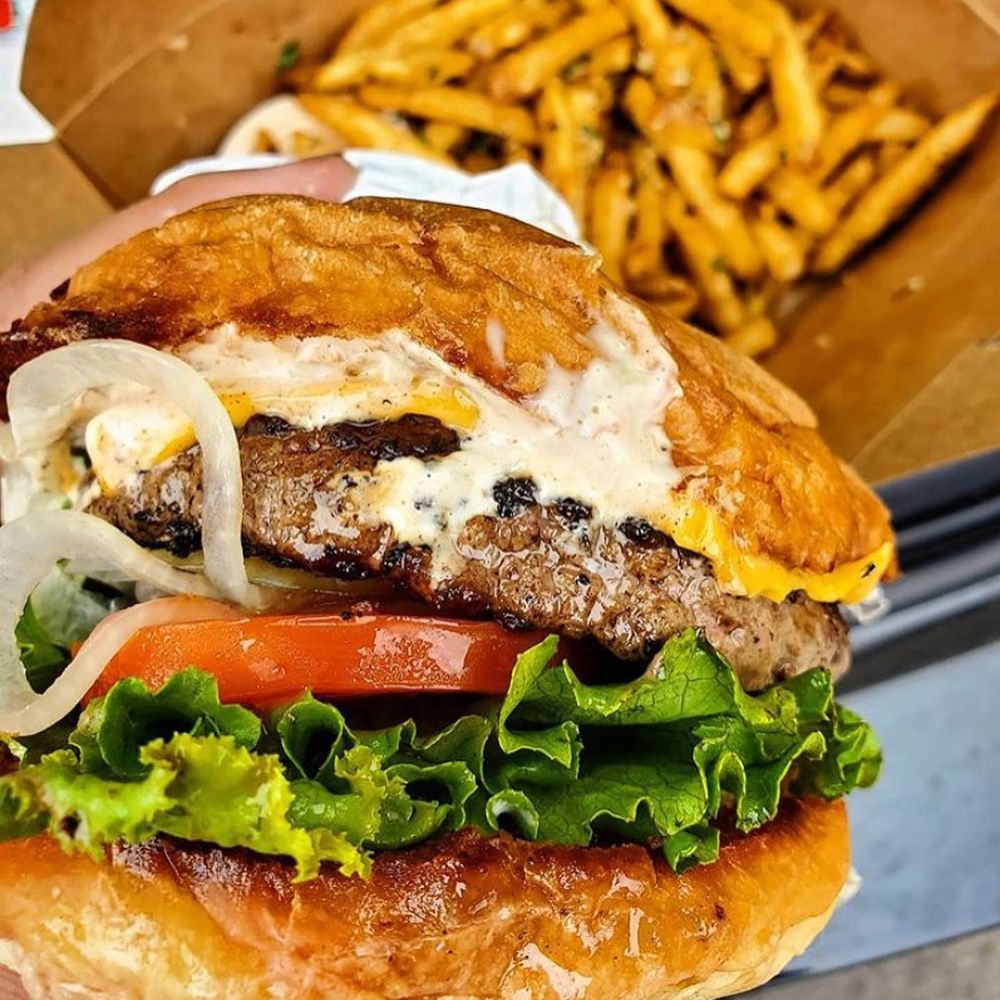
https://wh-img.instaimgs.com/wp-content/uploads/2022/02/10153943/the-balboa__5ca44b85e2.jpeg?tr=dpr-1,fo-auto,ar-1-1,w-1000As for their namesake burger, the original Balboa burger, expect “lettuce, tomato, onion, American cheese, homemade zesty aioli for $11.85.” Further, “add to any burger or sandwich salt and pepper fries for $3.00, garlic fries $4.00.”

https://wh-img.instaimgs.com/wp-content/uploads/2022/02/10154022/bills-burgers__2c93ba530d.jpeg?tr=dpr-1,fo-auto,ar-1-1,w-1000

Bill’s Hamburgers in Los Angeles, California

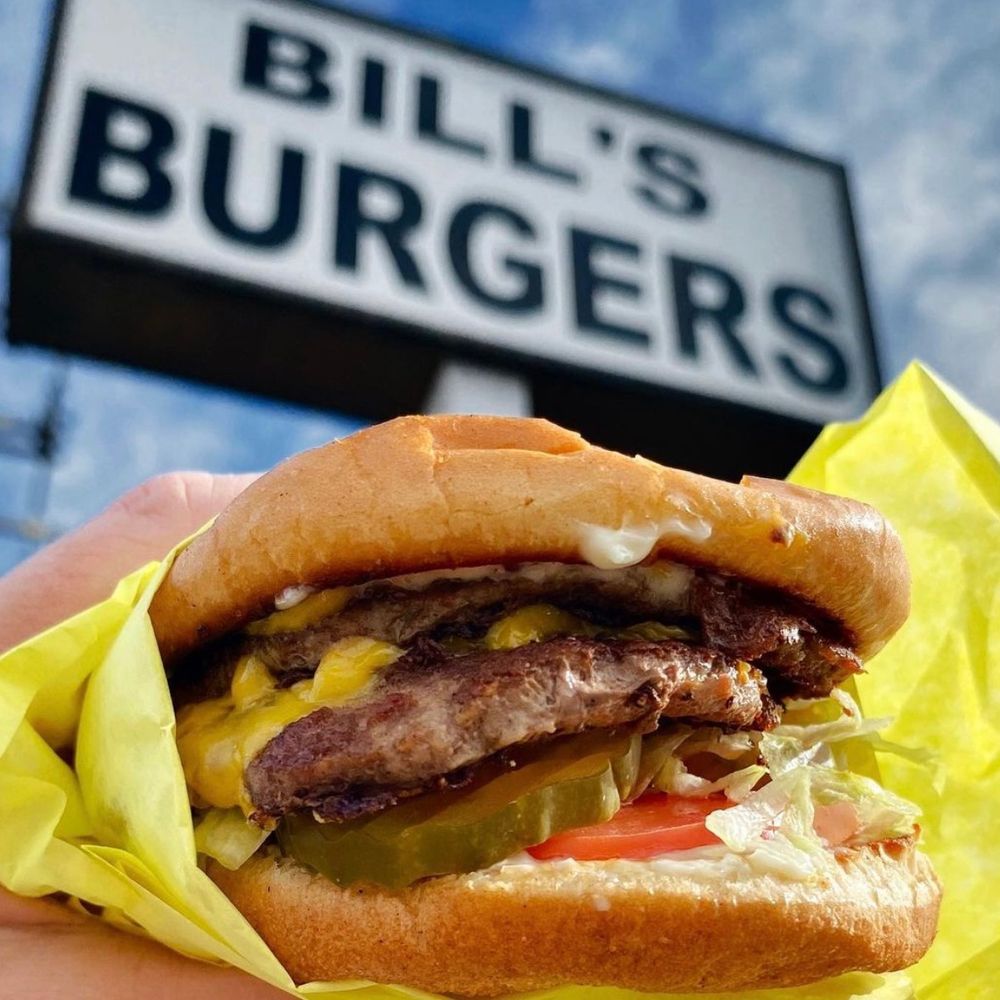
Even after years of “For Sale” signs going up and down at random, 90-something-year-old burger chef and owner Bill Elwell is still flipping his patties on a dated 1965 griddle. For over 50 years, Bill has been serving burgers people love despite his crotchety (and humorous) attitude. Yelp User Ashley G. commented, “Tiny, old school joint with burgers grilled by the tiny, old school fella who’s owned the joint 50 years. Simple burgers, simple food, cooked perfectly.”

.

.

Click the link below and try scrolling the complete list of Burger Joints:

https://spilleddaily.com/burger-joints/

.

__________________________________________

Trump is quietly undermining his most loyal supporters — and they don’t even know it

Leave a comment

Click the link below the picture

.

Trump is shafting his base economically in three ways most Trump voters don’t see or know. It’s important that they do.

The Consumer Price Index has risen 2.7 percent from a year earlier. That’s the fastest pace since February. The trend is worrying, especially for working-class consumers who have to sacrifice a larger portion of their paychecks to buy what they bought before.

So-called “core” inflation — which strips out volatile food and energy prices and is therefore a more reliable measure for underlying price pressures — is rising even faster: up 2.9 percent from the same time last year.

Trump’s tariffs are the major culprit. Prices rose noticeably on appliances, clothing, and furniture — all products heavily exposed to Trump’s import taxes from Canada, China, and other major trading partners.

Prices will almost certainly rise further over the course of the summer, as new so-called reciprocal levies go into effect, including a 50 percent import tax on Brazil and an eye-popping 50 percent import tax on copper, all set to take effect August 1.

The Yale Budget Lab has estimated that consumers will face an overall effective import tax rate of 20.6 percent. That’s the highest in 115 years, the equivalent of a $2,800 hit in yearly household income.

$2,800 is a far bigger deal for lower-income consumers than higher-income. Much of Trump’s working-class base will be hurt.

Trump wants Fed Chair Jerome Powell to cut interest rates in order to stimulate spending. But there’s no way Powell is going to do that with core inflation picking up.

Trump doesn’t have the power to fire Powell, but Trump is trying to pressure him with a White House investigation of an expensive renovation of the Fed’s headquarters, which Trump may try to use as a pretext for firing him. Earlier today, Trump again tore into Powell over both interest rates and the cost of the renovations to the Fed’s headquarters.

Trump’s pressure on Powell is worrying investors that Trump won’t allow Powell or his replacement to control inflation.

This worry is raising inflationary expectations — already causing lenders to raise longer-term interest rates. The worry is also eroding confidence in the safety and stability of the U.S. dollar, which is plunging in value.

Lower-income American consumers will be hit with three big cost increases:

(1) Import taxes (Trump’s tariffs), which will rise further on August 1. These import taxes will take a bigger bite out of the wallets of lower-income Americans than higher-income.

(2) On top of the import taxes, the declining dollar makes everything imported from the rest of the world even more expensive. Again, lower-income Americans will be hit harder than higher-income.

(3) Trump’s Big Ugly bill will cut Medicaid and food stamps, which will raise the costs of health care and food for lower-income Americans, including much of Trump’s base.

Income inequality is wider than it’s been since the first Gilded Age. Trump’s policies — import taxes (tariffs), pressure on the Fed that’s driving down the dollar, and Big Ugly cuts in Medicaid and food stamps in order to help finance a tax cut mainly for the rich — will further widen it.

Many of the working-class people who voted for Trump will be harmed the most.

They need to know.

.

https://www.alternet.org/media-library/maga-women.jpg?id=60213422&width=1245&height=700&quality=85&coordinates=0%2C309%2C0%2C310(REUTERS)

.

.

Click the link below for the complete article:

https://www.alternet.org/the-3-ways-trump-is-shafting-his-base/

.

__________________________________________

Pneumonic Plague Infections in Modern Times Show the Black Death Isn’t Dead

5 Comments

Click the link below the picture

.

A person in Arizona recently died of pneumonic plague—a rare and severe form of the disease. An expert explains how the bacteria that spurred the Black Death centuries ago continues to claim lives

Plague is often associated with Medieval history and the centuries-old Black Death epidemic, but a recent death in northern Arizona is a troublesome reminder of the flea-borne disease’s lingering hold in parts of the world, including the U.S. Local health officials in Arizona’s Coconino County, which includes the city of Flagstaff, confirmed late last week that a person there had died of pneumonic plague—a severe lung infection caused by Yersinia pestis, the bacterium behind the illness.

Human infections and fatalities from plague are relatively rare in the U.S.; according to the Centers for Disease Control and Prevention, seven human cases are reported annually on average. Prior to the Arizona case, the most recent death was reported in 2021. Y. pestis arrived in port cities in the U.S. around 1900 and has since become endemic to rats and other rodents in western U.S. states, including New Mexico, Arizona, Colorado, California, Oregon, and Nevada.

“From a public health standpoint in the U.S., it’s a scary thing that it’s plague, and it’s tragic that that this was a fatal case, but people need to remember that it’s extremely rare,” says David Wagner, executive director of the Pathogen and Microbiome Institute at Northern Arizona University, who has studied plague for more than 25 years. “Not to be flippant, but it’s more important that you put your seat belt on going to the grocery store than it is to worry about plague in the western U.S.”

Scientific American spoke with Wagner about plague’s signs and symptoms, and its persistence across time.

[An edited transcript of the interview follows.]

How do people get sick with plague?

Plague is caused by the bacterium Y. pestis and is really a disease of rodents and their fleas. You have an infected rodent; a flea feeds on the blood of that rodent, and it picks up some Y. pestis. Then, when the flea feeds on another rodent, it can pass along the Y. pestis. It’s constantly cycling back and forth between rodents and fleas in nature; that’s how it’s been maintained for thousands of years in the environment around the world.

What’s the difference between bubonic and pneumonic plague?

People call it the Black Death; they call it bubonic plague; they call it pneumonic plague—it’s all the same disease, just different clinical manifestations. What stands apart [with the recent case is] that it’s pneumonic plague. That’s kind of rare, especially in the U.S.

Pretty much all human cases, with a few exceptions, are acquired from the environment—from the bite of an infected flea. If there isn’t a rodent host for that flea to feed on, it will look for other mammals to feed on. And if humans happen to be in proximity, it will feed on humans and can transmit Y. pestis.

If the immune system doesn’t stop Y. pestis at the source of the flea bite, it will migrate through your lymphatic system to your closest major lymph node. So let’s say I was bit on my wrist; then the bacteria would go to that lymph node in my underarm and start to reproduce there. And that mass swelling, that swollen lymph node, is called a bubo—that’s why it’s called bubonic plague. These days, it’s a dead end because there’s not flea-borne transmission from one human to another. It just stops there with the treatment or death of that individual.

What people might not know is that plague has been endemic throughout the western U.S. in rodent populations for more than 100 years.

Left untreated, though, bubonic plague can get down into your lungs via the bloodstream. That’s called secondary pneumonic plague. Those individuals, then, via cough or direct contact, can spread plague person-to-person, and that’s called primary pneumonic plague.

Someone could also get pneumonic plague from an animal—for example, if they were handling an infected animal and that animal coughed. Sometimes hunters in Central Asia will kill [infected] ground squirrels, and when they’re skinning them can inhale particles. People also talk about septicemic plague, and that means it’s gotten into your bloodstream, and that typically also arises from bubonic plague. You could also get [septicemic plague] directly if you had cuts on your hands and were handling rodents without gloves.

Can pets get infected or transmit plague to humans?

Pets, especially free-roaming ones, may come into contact with dead rodents that have died of plague. Fleas can hop onto pets, which then bring them into the home. This is pretty rare because there are so few [human] cases in the U.S., but that is something we think about.

Flea and tick collars are a good idea. If animals do get sick, most of the evidence shows that dogs fight off the infection and can create antibodies against Y. pestis. Cats are more susceptible and can quickly become sick and actually can progress to pneumonic plague. It’s super, super rare, but that’s a possible way for humans to be exposed to pneumonic plague.

What are the symptoms and treatment?

With bubonic plague, typically people develop a fever, headache, chills and fatigue, and then they’ll get those swollen lymph nodes called buboes. It typically takes a few days to manifest because it sort of starts off in stealthy mode inside the body to try and avoid the immune system.

Plague is easily treated with many different types of antibiotics, as long as it’s caught in time. If untreated, bubonic plague mortality rates may be somewhere between 30 to 60 percent, depending on the situation. Pneumonic plague, left untreated, is almost always fatal. So diagnostics become really important. The challenge is that many physicians in the U.S. have never seen plague. The symptoms are a bit common to other things, so rapid testing in the lab can help.

.

https://static.scientificamerican.com/dam/m/79ffa933e096ab6f/original/yersinia_pestis_under_microscope.jpg?m=1752596374.448&w=1200

Yersinia pestis.  Eye of Science/Science Source

.

.

Click the link below for the complete article:

https://www.scientificamerican.com/article/pneumonic-plague-infections-in-modern-times-show-the-black-death-isnt-dead/

.

__________________________________________

He helped kids be creative. Now, he wants to do the same for CEOs

Leave a comment

Click the link below the picture

.

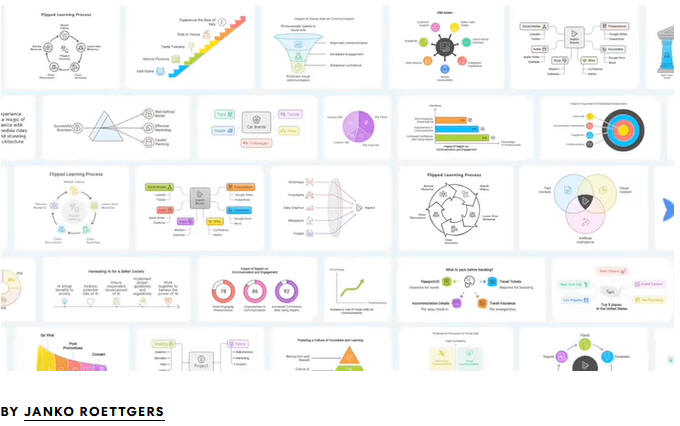
More than a decade ago, Pramod Sharma set out to make learning more engaging. Through AI and computer vision, his startup Osmo transformed iPad apps into hands-on experiences, letting kids use puzzle pieces and other physical objects to solve spelling and math problems on screen.

It was a lot of fun—until Osmo grew, and Sharma’s role shifted from inventing to managing. Meetings, PowerPoint decks, endless email threads took over. “At some point, you become a manager, and you spend a lot of time in communication,” Sharma tells Fast Company. “We realized a lot of our communication wasn’t fun.”

When Sharma and a few colleagues left Osmo four years ago, they decided to tackle that problem. The result is Napkin, a web app that uses generative AI to turn text and numbers into flow charts, diagrams, and other visuals. “You don’t need to be a graphic designer, you don’t need to be a visual thinker,” Sharma says. “Our vision is to democratize visuals for everyone.”

One year into its open beta, Napkin has surpassed five million registered users. Now, the company is preparing to monetize while staying true to the lessons learned from Osmo—chief among them: keep things light and approachable.

“Our users really love the fact that it’s playful,” Sharma says.

From Text to Visuals, with the Help of AI

Napkin’s experience starts with a screen that resembles a page from a school notebook. Users paste or write text, highlight the key parts, hit a magic button, and the app generates several draft visuals to help communicate the core ideas and numbers.

These visuals can be edited to highlight specific phrases or match a company’s branding. “When we started, we had this mindset that we wanted to push for a certain style,” Sharma says. “Now, we think of Napkin as a tool. Editing is a big part of that.”

Just as important is keeping the interface fun. “Traditionally, business products don’t tend to be fun,” Sharma says. “I used to think [that’s] because the boring stuff sells.”

With Napkin, Sharma wanted to try something different, starting with a frictionless onboarding experience. It’s a lesson drawn directly from Osmo. Kids, Sharma points out, won’t tolerate complexity. “If they don’t intuitively get it, they don’t want to play,” he says.

Like Osmo, Napkin encourages learning by doing. “We have no tutorial,” Sharma says. “That thinking comes from games.”

This hands-on approach also supports global adoption. Sixty percent of Napkin’s users don’t speak English, and the service supports dozens of languages. “South Korea is a big market for us,” Sharma says. “Japan is a huge market for us.”

Until now, Napkin has been free to use during its open beta. Soon, the company will introduce two paid subscription tiers, alongside a free plan. It has also started previewing API access for developers and companies looking to integrate the tool.

More Than Just a PowerPoint Replacement

The rise of generative AI has been a major advantage for Napkin. Sharma calls large language models a “huge accelerator.” But with that comes higher expectations, especially for visuals.

“Users have a high bar for AI,” Sharma says. “You can’t get away with 70 percent.” People may settle for rough graphics when making them on their own, but expect professional-grade output from AI. “An Apple keynote, or a TED talk: They want AI to get to that level,” he says.

Sharma doesn’t see Napkin as just a better slide tool. “It’s not just to build a better slide deck,” he says. He wants marketers, executives, and creators to tap into their visual creativity—something he compares to learning a new language.

“Before I went to college, I did not speak English at all,” says Sharma, who was born in India. “My family didn’t speak. I was in a small town. But once I went to college and started learning English, it opened my world in a very significant way.”

The same, he argues, can happen with visual communication. “What you think about new ideas changes,” he says.

.

.

.

Click the link below for the complete article:

https://www.fastcompany.com/91373315/napkin-ai-attracks-over-five-million-users

.

__________________________________________

‘Almost no way this claim is remotely true’: Economics expert dismantles Trump’s math

Leave a comment

Click the link below the picture

.

Wall Street Journal chief economics correspondent Nick Timiraos quickly saw the flaw in President Donald Trump’s Wednesday rant against Federal Reserve Chair Jerome Powell’s refusal to lower interest rates.

“Housing in our Country is lagging because Jerome ‘Too Late’ Powell refuses to lower Interest Rates,” Trump said in a post on Truth Social. “… Our rate should be three points lower than they are, saving us $1 trillion per year (as a country). This stubborn guy at the Fed just doesn’t get it — Never did, and never will. The Board should act, but they don’t have the courage to do so!”

Timiraos pointed out a glaring fact regarding the likelihood of interest expenses falling by $1 trillion per year.

“The U.S. spent $1.1 trillion on interest expenses in 2024, and so there’s almost no way this claim is remotely true,” said Timiraos on X.

Timiraos went on to post that Trump’s own Council of Economic Advisers chair last year voiced concerns that lower mortgage rates might stoke housing costs, including rent, mortgages, property taxes, and utilities.

“Okay, but what happens if lower mortgage rates start pushing home prices and rents back up?” CEA Chair Stephen Miran posted in January 2024.

Timiraos did not leave his comment hanging on X without follow-up, however. When a critic claiming to be a “macro investor” argued that interest expenses “would fall by $1 trillion” if Trump got rates to near zero, Timiraos responded by quote-posting an answer X owner Elon Musk’s “Grok” chatbot wrote saying the critic’s claim “overstates reality.”

Like his claim on interest rates, Trump has resorted to fuzzy math in the past. Economists routinely dismiss Trump’s description of tariffs as a tax on foreign nations, and must remind the reading public that his threat to hit places like Brazil with a 50 percent tariff on all imported goods will likely hurt everyday Americans far more than the Brazilian government.

.

https://img-s-msn-com.akamaized.net/tenant/amp/entityid/AA1JakUV.img?w=768&h=512&m=6&x=610&y=220&s=211&d=211

U.S. President Donald Trump meets with NATO Secretary General Mark Rutte (not pictured), as President Trump announces a deal to send U.S. weapons to Ukraine through NATO, in the Oval Office at the White House in Washington, D.C., U.S., July 14, 2025. REUTERS/Nathan Howard © provided by AlterNet

.

.

Click the link below for the complete article:

https://www.msn.com/en-ca/news/politics/almost-no-way-this-claim-is-remotely-true-economics-expert-dismantles-trump-s-math/ar-AA1J9W4p?ocid=hpmsn&cvid=40aacc616be642779cbacc840e100c90&ei=15

.

__________________________________________

Aging Rates Vary by Country. Politics Might Be Why

Leave a comment

Click the link below the picture

.

Social inequality and weak democratic institutions are linked to faster ageing, as are other environmental features such as high levels of air pollution, finds a study spanning four continents. Education was one of the top factors that protected against faster ageing.

The study also showed that ageing is accelerated by less-surprising factors such as high blood pressure and heart disease. But the link to social and political influences could help to explain why rates of ageing vary from country to country, the authors say.

“It’s a very important study”, says Claudia Kimie Suemoto, a geriatrician at the University of São Paulo in Brazil who was not involved in the work. “It gives us the global perspective of how these dependent factors shape ageing in different regions of the world.”

Political polarization and uncertainty mean that “we are living in a world of despair”, and that ages people, says lead author Agustín Ibañez, who directs the Latin American Brain Health Institute in Santiago. “We don’t think about the health impacts that this is going to have in the long run.”

The study was published today in Nature Medicine.

Age gaps

The study included 161,981 participants from 40 countries: 7 in Latin America, 27 in Europe, 4 in Asia and 2 in Africa. Just the process of harmonizing these data sets — such as checking that variables were measured in similar ways in different countries — took about 3 years, says Ibañez.

The researchers examined previous research to identify possible factors that hasten or slow ageing and that could be compared across countries. They fed data of these factors into a machine-learning model that predicts a person’s chronological age. That allowed them to calculate each person’s ‘biobehavioural age gap’: the difference between their true chronological age and their age as predicted by the model.

For example, if you are 50 years old but the model predicts that you are 60 years old, you have a biobehavioural age gap of 10 years.

Schooling protects

The top medical risk factors for faster ageing were high blood pressure, hearing impairment and heart disease. Other risk factors included unhealthy weight, alcohol consumption, sleep problems, diabetes and impaired vision.

The factors that provide the best protection against speedy ageing were education, ability to perform activities of daily living and sound cognitive abilities. Other protective factors included physical activity, good memory and the ability to walk well.

Egypt and South Africa had the fastest ageing, whereas European countries showed the slowest ageing, and nations in Asia and Latin America were in the middle.

Accelerated ageing was strongly linked to markers of eroding democracy — such as restricted voting rights, unfair elections and restrictions on the freedom of political parties. “We never expected that,” says Ibañez. Faster ageing was also linked to lower national income levels, exposure to air pollution, social inequality and gender inequality.

The researchers had data points up to 4 years apart for 21,631 participants, allowing for comparison over time. In these data sets, a bigger biobehavioural age gap predicted greater declines in both cognition and the ability to perform daily tasks.

Toll of stress

How physical ageing is linked to a person’s socio-economic and political environment is unclear, but Ibañez hypothesizes that the mechanism might be stress’s physical effects on the body and brain. “Inflammation is a huge potential pathway,” he says.

One of the limitations of working with data from so many countries, Ibañez says, is that the researchers had to omit many variables, such as smoking, that are known to strongly affect ageing, but were measured in very different ways across countries.

Another limitation, Suemoto says, is that 4 years of follow-up data “is very limited for the ageing process”. She would like to see data points 10 or 20 years apart.

Both Suemoto and Ibañez are excited about the possibility that public policy could be tailored to the factors that contribute most to ageing in a specific nation.

Intriguingly, the model predicted that some people were biologically younger than their chronological age. Perhaps studying the factors that these people have in common could point to interventions to protect others from premature ageing, Ibañez says.

.

https://static.scientificamerican.com/dam/m/3698671ab480b4d5/original/older_persons_eyes_close_up.jpg?m=1752610377.861&w=1200Pinglabel/Getty Images

.

.

Click the link below for the complete article:

https://www.scientificamerican.com/article/aging-rates-vary-by-country-politics-might-be-why/

.

__________________________________________

The public-private myth: Why religion can’t be kept behind closed doors

Leave a comment

Click the link below the picture

.

Few people have heard of Sir Edward Coke, but most people reading this live under his rule. Coke served as the Attorney General of England in the early 17th century, which meant he would recommend laws to the Crown to implement. And in 1604, he gave us one of the bedrocks of the Common Law, used all around the world: “An Englishman’s home is his castle.”

Of course, today we might say an American’s, a Canadian’s, or an Australian’s, but Coke’s legal point was that what you did within your home, so long as it was within the law, was your business. The police cannot enter your home unwarranted. The sheriffs cannot bash your door down without good reason. What you did in private was up to you.

The distinction between the private and public spheres extends far beyond Coke’s corner of jurisprudence. There exists a long philosophical tradition that divides what we do, say, and believe in public, and what happens behind closed doors. How you eat, talk, or have sex are matters for the home. How you raise your kids or spend your free time are private things. But one of the most prominent topics philosophers have often hoped to banish to the parlor room was religion. Philosophize in public, worship in private. Rationality in the marketplace, faith and emotion at home.

In this week’s Mini Philosophy interview, philosopher Simon Critchley, author of On Mysticism, argues this needs to change.

The German divide

The idea that you can believe what you like at home but must reason like everyone else in public owes much of its popularity to Martin Luther and Immanuel Kant. Both wrestled with a similar anxiety: What happens when private religious feelings spill out into the street? Luther, who opened the doors to the Reformation and made the Bible readable by the masses, quickly became nervous when people began reading it too freely. The radical fringes — peasants, Anabaptists, visionaries — started claiming divine authority for political revolt. Luther recoiled, siding with princes and writing that rebellious peasants should be “struck down like rabid dogs.”

Kant inherited this wariness and tried to offer a compromise for Protestantism. “What Kant gives us,” Critchley says, “is this modern idea of religious experience as authorized privately, but as not being sanctioned publicly.” In his 1784 essay What is Enlightenment?, Kant argues that “public reason” must be disciplined and rational, while “private reason” can hold whatever faith it likes — so long as it stays in its lane. As Critchley puts it, “Privately, you can believe whatever you like, but you have to respect that distinction between the public and the private.”

It’s a tidy solution: Religion can flourish quietly in the home but mustn’t interrupt public life. The Enlightenment, in this view, is defined by sober rationality that keeps emotion and mysticism at arm’s length. For Critchley, though, this isn’t reason — it’s repression. It’s probably not even possible.

 The Jamesian clawback

William James was a psychologist and philosopher, and he was brilliant at both. He was also one of the first thinkers to point out that we cannot neatly compartmentalize bits of our mind. We can’t say, “I’ll think like this in the morning and like this in the afternoon.” You do not hang up your beliefs when you put on your work clothes. As Critchley tells me, it’s an odd notion that “you can be a Buddhist or a Catholic or whatever, but that mustn’t interfere in your life as a citizen.”

 .

https://bigthink.com/wp-content/uploads/2025/07/public-private-myth_compressed.jpg?resize=480,270Guido Reni / Public Domain / The MET / Big Think

.

.

Click the link below for the complete article:

https://bigthink.com/mini-philosophy/mysticism-and-the-public-private-myth/

.

__________________________________________

Exclusive: Don Jr. and Eric Trump’s Middle East jaunt cost US taxpayers over $40,000 in hotel rooms and rental cars

Leave a comment

Click the link below the picture

.

Amid wanton budget cuts by the Trump Administration that put thousands of government employees out of work, canceled school lunch programs for needy kids, and zeroed out funding for crucial research into cancer, U.S. taxpayers shelled out for rental cars and hotel rooms as the president’s two eldest sons pursued private business deals in the Middle East.

Federal procurement data reviewed by The Independent shows more than $40,000 in disbursements by the Secret Service, whose agents accompanied Don Jr. and Eric Trump to Qatar and Saudi Arabia this spring, underwritten by the American public.

One transaction, a $13,984 payment arranged by the U.S. Embassy in Riyadh and funded by the State Department’s Bureau of Near Eastern Affairs, describes the outlay as: “ERIC TRUMP Protective USSS Visit – 4 rental vehicles.”

It was prepared on April 20, and approved on May 13, 2025, the same day President Trump arrived in the kingdom. However, Eric, 41, was not part of the official delegation, according to reports.

A second transaction, for $26,813.24, was arranged by the State Department and funded by the U.S. Embassy in Doha. covered a room for Donald Trump Jr., 47, at The Ned, a 5-star hotel and members-only club located in a building formerly occupied by the Qatari Interior Ministry.

“Trump Jr Visit – May 25 – Team X,” reads the expenditure, which was prepared on May 11 and approved on May 18, 2025, nearly a week after the president was in town.

“Expect tactile furnishings, classical details, and all the essentials for a comfortable home away from home,” the property’s website tells prospective travelers. “Guests enjoy access to Ned’s Club Spa and Gym throughout their stay. Airport transfers in our BMW 7 Series can be arranged upon request.”

Together, lodging and local transportation for Trump’s two adult sons cost taxpayers at least $40,797.24, a figure that does not include air travel, agents’ salaries, meals, and other significant outlays.

A Secret Service spokesman on Monday told The Independent, “We support any of our protectees, that go anywhere in the world, including foreign trips. For these foreign trips, we have personnel on the ground before a protectee gets there, so we may be on the ground several days in advance, working with the local government and local authorities.”

The contracts themselves, such as the hotel rooms and rental cars required for Don Jr. and Eric, are executed on behalf of the Secret Service by U.S. embassies in the destination countries, according to the agency spokesman.

He said the members of the Trump family “are our protectees, we protect them, regardless of where they go. When you’re a protectee, you have round-the-clock protection anywhere in the world. It doesn’t matter what type of trip it is, they’re getting protection.”

The Trump Organization, which is being nominally run by Don Jr. and Eric while their father serves a second term in the White House, recently partnered with a Qatari real estate firm – backed by the country’s sovereign wealth fund – to build a Trump-branded luxury golf resort in the emirate.

The deal was announced two weeks before Trump made the jaunt to Qatar, which subsequently “gifted” the president a $400 million Boeing 747 for his own use.

The Trump family is also developing two new real estate projects in the Saudi Arabian capital of Riyadh, as well as a Trump Tower to be erected in Jeddah.

“Combining coastal elegance with urban sophistication, Trump Tower Jeddah delivers an unmatched lifestyle,” read an April 30 press release issued by the Trump Organization. “From refined residences to world-class amenities and personalized service, every detail reflects the signature Trump standard of excellence.”

Two weeks later, the White House formally announced that Saudi Arabia had committed to buying at least $100 billion worth of military equipment from the U.S., and said Qatar had agreed to purchase $200 billion worth of U.S.-built jets from Boeing, as well as some $3 billion in American-made drones from General Atomics and Raytheon.

The trips by Don Jr. and Eric raised numerous questions about the Trump family’s aggressive monetization of the presidency, which administration officials attempted to minimize as a non-issue. During the president’s first term, the Trump Organization vowed not to pursue any foreign deals while the company’s namesake was in office – a promise promptly broken, according to an investigation by anti-corruption watchdog Global Witness.

When Trump returned to the White House in January 2021, he released an ethics agreement that said the Trump Organization would not directly strike any deals with foreign governments. However, it included no prohibition on doing business with private companies abroad, and the president’s family business is now involved in no fewer than 21 Trump-branded projects throughout the world, according to Citizens for Responsibility and Ethics in Washington, or, CREW.

Still, prior to Trump’s Middle East sojourn, White House press secretary Karoline Leavitt insisted that the notion Trump would personally benefit from his family’s private business pursuits was, in a word, “ridiculous.”

“The president is abiding by all conflict of interest laws,” Leavitt said. “The president is a successful businessman, and I think, frankly, that it’s one of the many reasons that people reelected him back to this office.”

In October 2018, U.S. taxpayers were hit with a $90,000-plus hotel bill for First Lady Melania Trump and her Secret Service detail, who were in Cairo for six hours but did not spend the night.

A vacation to Berlin the previous year by Tiffany Trump, the president’s youngest daughter, cost taxpayers at least $22,000 in hotel stays for the Secret Service agents accompanying her and her boyfriend.

But when the Secret Service traveled with members of the Trump family to Trump-owned hotels, the agency was reportedly charged “exorbitant” markups far above the usual room rate, contradicting Eric Trump’s previous claim that agents were provided lodging “at cost.”

At the same time, a vindictive Trump has sought revenge on officials he believes wronged him during his first term by revoking Secret Service details assigned to protect President Joe Biden’s adult children, along with those looking after former Secretary of State Mike Pompeo, former National Security Adviser John Bolton, and a host of others.

Craig Holman, a governmental ethics expert at nonprofit watchdog Public Citizen, told The Independent it is “sheer hypocrisy” for security expenses to be provided for Don Jr. and Eric, “but taken away from far more important officials out of favor with Trump.”

During Barack Obama’s time in office, before Trump’s foray into national politics, he raged on Twitter about the cost of providing security for the president and his family, taking aim at supposed “taxpayer funded vacations” costing the American people “millions of dollars.” Yet, according to government spending data compiled by CREW, the Trump family ended up taking 12 times the number of trips the Obamas did, depleting the Secret Service’s protection budget and forcing the agency to request more funding.

.

.

.

Click the link below for the complete article:

https://www.msn.com/en-ca/travel/news/exclusive-don-jr-and-eric-trump-s-middle-east-jaunt-cost-us-taxpayers-over-40-000-in-hotel-rooms-and-rental-cars/ar-AA1J0uz6?ocid=hpmsn&cvid=37c7269dcc584111a43463460c1b875d&ei=11

.

__________________________________________

Older Entries Newer Entries

MRS. T’S CORNER

https://www.tangietwoods

Amor Entre Estrellas

¡Bienvenido de vuelta viajero!

Heart of Loia `'.,°~

so looking to the sky ¡ will sing and from my heart to YOU ¡ bring...

Michael Ciullo

CEO and Founder of Nsight Health

Nelson MCBS

Catholic News, Prayers, HD Images, Rosary, Music, Videos, Holy Mass, Homily, Saints, Lyrics, Novenas, Retreats, Talks, Devotionals and Many More

Global geopolitics

Decoding Power. Defying Narratives.

Talk Photo

A creative collaboration introducing the art of nature and nature's art.

Movie Burner Entertainment

The Home Of Entertainment News, Reviews and Reactions

Le Notti di Agarthi

Hollow Earth Society

C r i s t i a n a' s Fine Arts ⛄️

•Whenever you are confronted with an opponent, conquer him with love.(Gandhi)

TradingClubsMan

Algotrader at TRADING-CLUBS.COM

Comedy FESTIVAL

Film and Writing Festival for Comedy. Showcasing best of comedy short films at the FEEDBACK Film Festival. Plus, showcasing best of comedy novels, short stories, poems, screenplays (TV, short, feature) at the festival performed by professional actors.

Bonnywood Manor

Peace. Tranquility. Insanity.

Warum ich Rad fahre

Take a ride on the wild side

Madame-Radio

Découvre des musiques prometteuses (principalement) dans la sphère musicale française.

Ir de Compras Online

No tiene que Ser una Pesadilla.

Kana's Chronicles

Life in Kana-text (er... CONtext)

Cross-Border Currents

Tracking money, power, and meaning across borders.

Jam Writes

Where feelings meet metaphors and make questionable choices.

emotionalpeace

Finding hope and peace through writing, art, photography, and faith in Jesus.

WearingTwoGowns.COM

The Community for Wounded Healers: Former Medical Students, Disabled Nurses, and Faith-Fueled Pivots

...

love each other like you're the lyric to their music

Luca nel laboratorio di Dexter

Comprendere il mondo per cambiarlo.

Tales from a Mid-Lifer

Mid-Life Ponderings

Creative

Travel,Tourism, Life style "Now in hundreds of languages for you."

freedomdailywriting

I speak the honest truth. I share my honest opinions. I share my thoughts. A platform to grow and get surprised.

The Green Stars Project

User-generated ratings for ethical consumerism

Cherryl's Blog

Travel and Lifestyle Blog

Sogni e poesie di una donna qualunque

Questo è un piccolo angolo di poesie, canzoni, immagini, video che raccontano le nostre emozioni

My Awesome Blog

“Log your journey to success.” “Where goals turn into progress.”

pierobarbato.com

scrivo per dare forma ai silenzi e anima alle storie che il mondo dimentica.

Thinkbigwithbukonla

“Dream deeper. Believe bolder. Live transformed.”

Vichar Darshanam

Vichar, Motivation, Kadwi Baat ( विचार दर्शनम्)

Komfort bad heizung

Traum zur Realität

Chic Bites and Flights

Savor. Style. See the world.

ومضات في تطوير الذات

معا نحو النجاح

Broker True Ratings

Best Forex Broker Ratings & Reviews

Blog by ThE NoThInG DrOnEs

art, writing and music by James McFarlane and other musicians

fauxcroft

living life in conscious reality

Srikanth’s poetry

Freelance poetry writing

JupiterPlanet

Peace 🕊️ | Spiritual 🌠 | 📚 Non-fiction | Motivation🔥 | Self-Love💕