February 12, 2024
Mohenjo
Business, Human Interest
amazon, business, Business News, current-events, Future, Hotels, human-rights, medicine, mental-health, research, Science, Science News, technology, Technology News, travel, vacation
From
Spotify
Click the link below the picture
.
“Switching over to the other hemisphere of the globe, we can’t talk about Black history without acknowledging the achievements of Toussaint Louverture and the Haitian people. This is the only slave rebellion ever to successfully result in a new state ruled by former captives. History enthusiasts might know Mike Duncan from his comprehensive History of Rome podcast, but in his other series, Revolutions, he dedicates a whole season to breaking down the collapse of France’s Saint-Domingue colony. Here’s the first episode to start.”
The French colony of Saint-Domingue was the single most lucrative colony in the New World. tangie
.
Saint-Domingue
.
.
Click the link below for the audio:
.
__________________________________________
February 11, 2024
Mohenjo
Business, Food For Thought, Human Interest, Political, Science, Technical
amazon, business, Business News, current-events, Future, Hotels, human-rights, medicine, mental-health, research, Science, Science News, technology, Technology News, travel, vacation

Click the link below the picture
.
Aging is an inevitable part of life, triggering various changes that impact our health, both physical and mental. While exercising in your 50s and beyond may seem challenging, fitness is a powerful tool to combat or counteract some of these unwanted changes.
From muscles to bones to cognitive function, the immune system, and overall longevity, you can see vast improvements in your health with just a little bit of exercise per day. And the best part is it’s never too late to start.
Here’s how fitness can improve your health as you age.
Stronger muscles and bones
From lifting groceries to climbing stairs, there are a lot of activities that rely on strong bones and muscles. Aging typically leads to loss of muscle mass and bone density, often making it difficult for individuals to maintain an active and independent lifestyle. Engaging in regular exercise can help prevent these common side effects of aging, making it easier to take care of yourself in old age while reducing the risk of injuries like falls.
Time reported that resistance training is one of the most effective methods for mitigating — or even reversing — age-related muscle decline, as it builds and preserves muscle strength and power essential for tasks. Researchers have found benefits even in patients in their late 80s who use mobility devices such as canes.
And when it comes to your bones, weight-bearing exercises encourage maintenance of bone density, prevent osteoporosis, and lower your risk of fractures, per Harvard Health. Any physical activity that requires your bones to support your weight counts as a weight-bearing exercise, including walking or strength training.
Healthier brain
A healthy brain is fundamental to daily life. Basic tasks like brushing your teeth and washing your hands, as well as complex activities such as driving and decision-making, require a well-functioning brain.
.
 vitapix/Getty Images
.
.
Click the link below for article:
.
__________________________________________
February 11, 2024
Mohenjo
Business, Food For Thought, Human Interest, Political, Science, Technical
amazon, business, Business News, current-events, Future, Hotels, human-rights, medicine, mental-health, research, Science, Science News, technology, Technology News, travel, vacation

Click the link below the picture
.
Black History Is World History
Journey around the world and back in time as editor Aric Jenkins explores the sizable impact Black societies have made on ancient civilizations.
Black history, as it is taught in the United States, tends to center narratives from post-colonial America. But world history also holds rich stories of how Black communities around the world have been making critical contributions that date back to the BC era. So why are these two disciplines often taught separately?
A blended approach would weave together the century-long rule of Black Pharaohs in Egypt, the complex role people of color played in medieval art, as well as the legacy of Great Zimbabwe and the Moors. And that’s exactly how Aric Jenkins, an articles editor at The Ringer, takes on Black history. tangie
.

.
.
Click the link below for the video (The Songhai Empire – Africa’s Age of Gold – 2:16):
Addenum (use the back arrow to switch between videos)
Click the link below (Songhai Empire: The Fall of Africas Greatest Empire – 13:09):
.
__________________________________________
February 10, 2024
Mohenjo
Business, Food For Thought, Human Interest, Political, Science, Technical
amazon, business, Business News, current-events, Future, Hotels, human-rights, medicine, mental-health, research, Science, Science News, technology, Technology News, travel, vacation
Click the link below the picture
.
More Moor History!
Time permitting, check out all of these chapters: Intro, History, Slavery, The 9th Century, and The 18th Century.
There are ads with a skip function! tangie
.

Moors
.
.
Click the link below for the videos:
.
__________________________________________
February 10, 2024
Mohenjo
Business, Human Interest, Political, Science, Technical
amazon, business, Business News, current-events, Future, Hotels, human-rights, medicine, mental-health, research, Science, Science News, technology, Technology News, travel, vacation

Click the link below the picture
.
If the term “Moor” seems familiar but confusing, there’s a reason: Though the term can be found throughout literature, art, and history books, it does not actually describe a specific ethnicity or race. Instead, the concept of Moors has been used to describe alternatively the reign of Muslims in Spain, Europeans of African descent, and others for centuries.
Derived from the Latin word “Maurus,” the term was originally used to describe Berbers and other people from the ancient Roman province of Mauretania in what is now North Africa. Over time, it was increasingly applied to Muslims living in Europe. Beginning in the Renaissance, “Moor” and “blackamoor” were also used to describe any person with dark skin.
In A.D. 711, a group of North African Muslims led by the Berber general, Tariq ibn-Ziyad, captured the Iberian Peninsula (modern Spain and Portugal). Known as al-Andalus, the territory became a prosperous cultural and economic center where education and the arts and sciences flourished.
Over time, the strength of the Muslim state diminished, creating inroads for Christians who resented Moorish rule. For centuries, Christian groups challenged Muslim territorial dominance in al-Andalus and slowly expanded their territory. This culminated in 1492, when Catholic monarchs Ferdinand II and Isabella I won the Granada War and completed Spain’s conquest of the Iberian Peninsula. Eventually, the Moors were expelled from Spain. tangie
.

Shakespeare’s play Othello features a Moorish general in the Venetian army. The 19th-century African-American actor Ira Aldridge, depicted here in the title role, was the first black man to appear in a Shakespeare performance in Britain. Photograph by Hi-Story, Alamy
.
.
Click the link below for the article:
.
__________________________________________
February 10, 2024
Mohenjo
Business, Food For Thought, Human Interest, Political, Science, Technical
amazon, business, Business News, current-events, Future, Hotels, human-rights, medicine, mental-health, research, Science, Science News, technology, Technology News, travel, vacation

Click the link below the picture
.
Europeans are bracing for a tough winter of possible energy rationing and even power blackouts due to reduced natural gas supplies from Russia, while millions are cutting their consumption to save on sky-rocketing bills.
Climate researchers say weak energy policies, aging infrastructure, conflict, and more extreme weather linked to global warming could further undermine energy security around the world in the years to come.
As governments hope for a mild winter that would help avert blackouts, what steps can ordinary people take to prepare for power cuts?
Here are seven tips from around the world on how to cope if the lights go out:
1) Prepare with an emergency ‘blackout box’
Britons are readying “blackout boxes” with emergency supplies including candles, blankets, and torches after the country’s National Grid warned in October that planned power cuts could be necessary for the first time in five decades.
Others are stocking up on camping stoves, battery-operated radios, power banks, board games, and biscuits.
With the possible power cuts set to hit during winter, the UK Networks energy company advised wearing several layers of clothing and reducing heat loss by closing the curtains and doors of unused rooms.
The Finnish National Rescue Association (SPEK) advises the “walkthrough method”: walking around your home before any power outage to remember and learn where to find emergency supplies, a method often used in workplace safety preparedness.
SPEK also promotes the “72h concept” which involves assessing how prepared households are – from food to medicine – to cope with at least three days of power disruption.
.
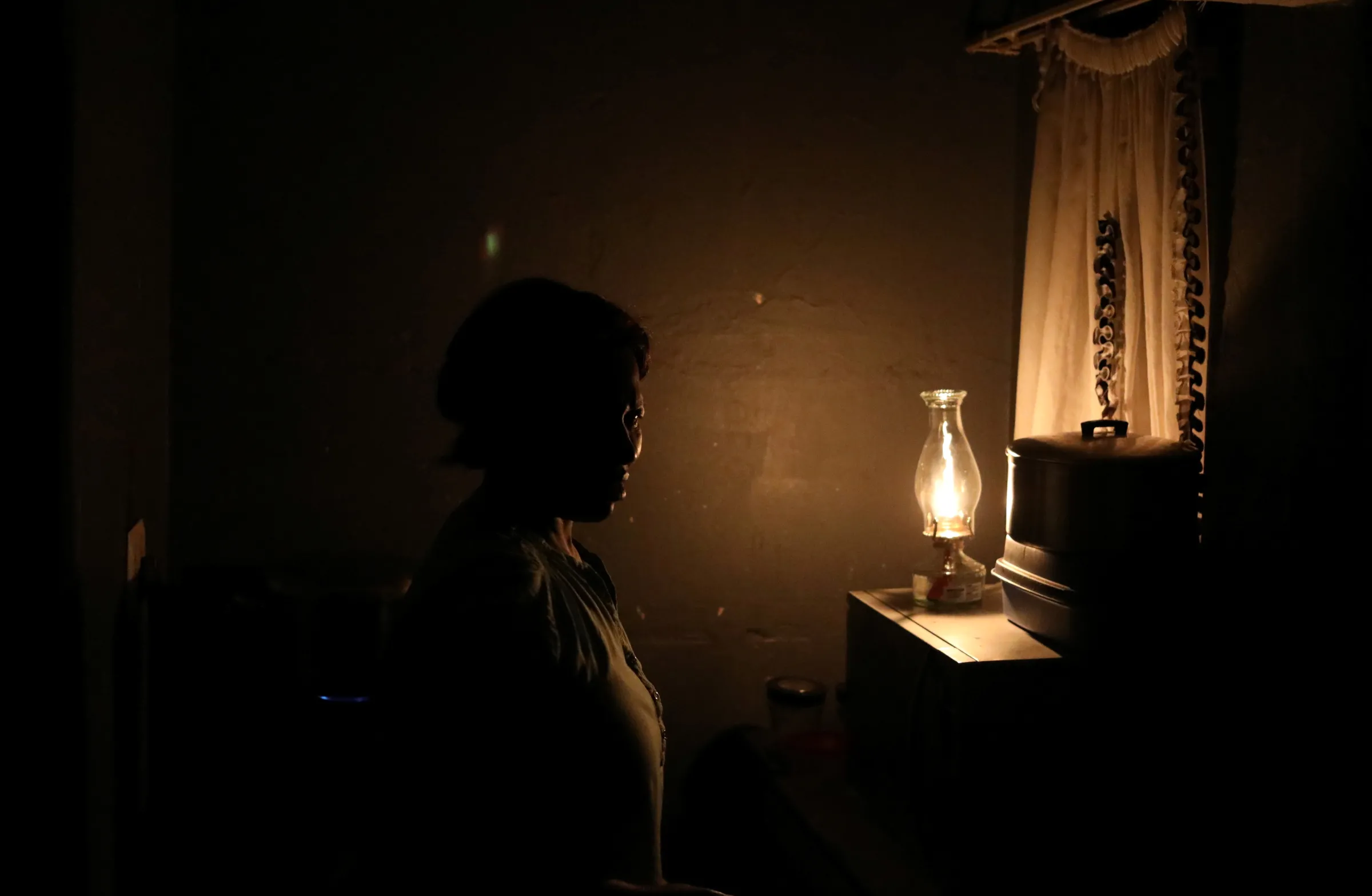 A woman looks on next to a paraffin light during an electricity load-shedding blackout in Soweto, South Africa, March 18, 2021. REUTERS/Siphiwe Sibeko
.
.
Click the link below for the article:
.
__________________________________________
February 9, 2024
Mohenjo
Business, Food For Thought, Human Interest, Political, Science, Technical
amazon, business, Business News, current-events, Future, Hotels, human-rights, medicine, mental-health, research, Science, Science News, technology, Technology News, travel, vacation

Click the link below the picture
.
In the world of classics, the exchange between Dan-el Padilla Peralta and Mary Frances Williams has become known simply as “the incident.” Their back-and-forth took place at a Society of Classical Studies conference in January 2019 — the sort of academic gathering at which nothing tends to happen that would seem controversial or even interesting to those outside the discipline. But that year, the conference featured a panel on “The Future of Classics,” which, the participants agreed, was far from secure. On top of the problems facing the humanities as a whole — vanishing class sizes caused by disinvestment, declining prominence, and student debt — classics was also experiencing a crisis of identity. Long revered as the foundation of “Western civilization,” the field was trying to shed its self-imposed reputation as an elitist subject overwhelmingly taught and studied by white men. Recently, the effort had gained a new sense of urgency: Classics had been embraced by the far right, whose members held up the ancient Greeks and Romans as the originators of so-called white culture. Marchers in Charlottesville, Va., carried flags bearing a symbol of the Roman state; online reactionaries adopted classical pseudonyms; the white-supremacist website Stormfront displayed an image of the Parthenon alongside the tagline “Every month is white history month.”
Padilla, a leading historian of Rome who teaches at Princeton and was born in the Dominican Republic, was one of the panelists that day. For several years, he has been speaking openly about the harm caused by practitioners of classics in the two millenniums since antiquity: the classical justifications of slavery, race science, colonialism, Nazism, and other 20th-century fascisms. Classics was a discipline around which the modern Western university grew, and Padilla believes that it has sown racism through the entirety of higher education. Last summer, after Princeton decided to remove Woodrow Wilson’s name from its School of Public and International Affairs, Padilla was a co-author of an open letter that pushed the university to do more. “We call upon the university to amplify its commitment to Black people,” it read, “and to become, for the first time in its history, an anti-racist institution.” Surveying the damage done by people who lay claim to the classical tradition, Padilla argues, one can only conclude that classics has been instrumental to the invention of “whiteness” and its continued domination.
In recent years, like-minded classicists have come together to dispel harmful myths about antiquity. On social media and in journal articles and blog posts, they have clarified that contrary to right-wing propaganda, the Greeks and Romans did not consider themselves “white,” and their marble sculptures, whose pale flesh has been fetishized since the 18th century, would often have been painted in antiquity. They have noted that in fifth-century-B.C. Athens, which has been celebrated as the birthplace of democracy, participation in politics was restricted to male citizens; thousands of enslaved people worked and died in silver mines south of the city, and custom dictated that upper-class women could not leave the house unless they were veiled and accompanied by a male relative. They have shown that the concept of Western civilization emerged as a euphemism for “white civilization” in the writing of men like Lothrop Stoddard, a Klansman and eugenicist. Some classicists have come around to the idea that their discipline forms part of the scaffold of white supremacy — a traumatic process one described to me as “reverse red-pilling” — but they are also starting to see an opportunity in their position. Because classics played a role in constructing whiteness, they believed, perhaps the field also had a role to play in its dismantling. tangie
.

Padilla at Princeton in January. Credit… D’Angelo Lovell Williams for The New York Times
.
.
Click the link below for the article:
.
__________________________________________
February 9, 2024
Mohenjo
Business, Food For Thought, Human Interest, Political, Science, Technical
amazon, business, Business News, current-events, Future, Hotels, human-rights, medicine, mental-health, research, Science, Science News, technology, Technology News, travel, vacation

Click the link below the picture
.
Nikki Smith, an IT worker from Columbus, Ohio, was excited to find the r/ZeroWaste subreddit. Always a bit of an environmentalist, in recent years she became more serious about doing everything she could to reduce her carbon footprint. She dove head first into the online community, eagerly adopting tips like making reusable cotton rounds out of old or ill-fitting clothes.
Beyond those gems, though, a certain kind of post has irked her.
“I kept seeing post after post after post of people sharing photos and info on ‘look at these zero-waste things I just bought!’” Smith says over email. “It just boiled me long enough that I had to speak up.”
So, after a few weeks of seeing more posts like this than usual — maybe due to more new folks recently joining the subreddit — she made a post urging people to stop buying zero-waste things, arguing that these purchases are part of the problem.
“A lot of these items were ordered online with unrecyclable packaging, and then [there’s] fuel emissions from shipping,” she says. “And a lot of these items I kept thinking probably could have been found second-hand somewhere. Water bottles especially! They’re everywhere.”
She’s not the only one on the subreddit with that sentiment. On posts where users show hauls of glass jars from big-box stores like Walmart, commenters chime in to suggest that next time they should check their local thrift stores first. One Redditor shared that they sewed their own drawstring bag for travel utensils and received particular praise. “See, this is nice,” the top comment reads. “You didn’t miss the whole point and buy fancy new bamboo cutlery when you already had metal stuff at home that would work perfectly well.”
The market for earth-friendly products is ever-growing. In 2018, the reusable water bottle market was valued at more than $8 billion, up 3 percent from 2017, and it’s expected to reach $10.4 billion by 2025. The global eco fiber market, like bamboo fabric and organic cotton harvested without the use of pesticides or other chemicals, is anticipated to reach $93 billion by 2025. The green packaging market — think reusable food containers, along with packaging made of recycled materials or materials that break down naturally — will reportedly grow to $215 billion by 2021.
Companies are now marketing to the green consumer, and though there are clear environmental benefits to this, some zero wasters are concerned that this push to buy green products ignores those other two Rs of the environmentalist mantra: reduce and reuse.
.
:format(webp)/cdn.vox-cdn.com/uploads/chorus_image/image/63781137/GettyImages_1135137418.0.jpg) Wooden cutlery, mason jars, and reusable cups are just a few of the zero-waste products on the market. Getty Images
Wooden cutlery, mason jars, and reusable cups are just a few of the zero-waste products on the market. Getty Images
.
.
Click the link below for the article:
.
__________________________________________
February 8, 2024
Mohenjo
Business, Food For Thought, Human Interest, Political, Science, Technical
amazon, business, Business News, current-events, Future, Hotels, human-rights, medicine, mental-health, research, Science, Science News, technology, Technology News, travel, vacation
Some content on this page was disabled on April 15, 2025 as a result of a DMCA takedown notice from Guardian Media Group. You can learn more about the DMCA here:
https://wordpress.com/support/copyright-and-the-dmca/
February 8, 2024
Mohenjo
Business, Food For Thought, Human Interest, Political, Science, Technical
amazon, business, Business News, current-events, Future, Hotels, human-rights, medicine, mental-health, research, Science, Science News, technology, Technology News, travel, vacation

Click the link below the picture
.
Welcome to Super Bowl LVIII week at The Ringer! In the days ahead, we’ll cover every aspect of the San Francisco 49ers–Kansas City Chiefs matchup in Las Vegas, Nevada. Let’s get started with a table setter: I’ve watched the film, crunched the numbers, and sorted through the noise to identify the 25 most important things you need to know about this game. Let’s get to it!
1. At the risk of jinxing it, I think we’re going to get a competitive Super Bowl for the third straight year. The 49ers finished the regular season second in total DVOA, and the Chiefs were fifth. Four teams finished in the top 10 of both offensive and defensive DVOA, and these are two of them (sorry, Cowboys and Ravens, hope you are enjoying Cancún).
The Chiefs are 88-25 with Patrick Mahomes as their starter. And among those 25 losses, just four have been by more than eight points. Let me say this a different way just to get the point across: In the 113 games that Mahomes has started, just four opponents—only 3.5 percent!—have managed to beat him by more than eight points. Now if you’re a hater, you can point to the fact that one of those losses came in the Super Bowl to the Tampa Bay Buccaneers. But you get the point. It doesn’t happen often.
2. Blowouts are rare for this iteration of the 49ers, too. They are 21-5 with Brock Purdy as their starter, and just three of those losses were by more than one possession. We saw it in the NFC championship game against the Lions. They can get down big (it was 24-7 in that game)—but because of how explosive the offense is, they can catch up in a hurry. Typically, when they’ve been in shoot-outs, they’ve won. Is there some randomness with the small sample? Sure. But the 49ers have not lost a game with Purdy (20-0) when they’ve scored at least 20 points.
.
:format(webp)/cdn.vox-cdn.com/uploads/chorus_image/image/73112172/superbowlkickoff_getty_ringer.0.jpg) Getty Images/Ringer illustration
Getty Images/Ringer illustration
.
.
Click the link below for the article:
.
__________________________________________
Older Entries
Newer Entries

