March 24, 2024
Mohenjo
Business, Food For Thought, Human Interest, Political, Science, Technical
amazon, business, Business News, current-events, Future, Hotels, human-rights, medicine, mental-health, research, Science, Science News, technology, Technology News, travel, vacation

Click the link below the picture
.
For two years, my Netflix password has been: tricke22ry-notiLonal-freely-soSak-lice-slacken. Yes, really. It is a strong, unique password, and it ticked boxes for reducing the chances of me getting hacked. But for all its security protections, the password was a nightmare to type into an onscreen TV keyboard, and it constantly annoyed members of my family who shared my Netflix login. It’s just the tip of my password suffering, though.
I use a password manager to generate and store all the login details for the 337 accounts I’ve made—from pizza delivery and airlines to social media and online shopping—over more than a decade online. However, using a password manager compulsively and having hundreds of strong passwords likely puts me in the minority: Many people use the same password across multiple accounts or use passwords that can easily be guessed.
The way we use passwords has been broken for a long time, but that’s finally changing. Over the past year, it has become possible to ditch the password and move to passkeys instead. Passkeys are generated codes—created using public key cryptography—that are stored on your device or in your password manager and let you log in to websites and apps using your fingerprint, face recognition, or a PIN. They can’t be guessed, leaked, or stolen, and they stop phishing attacks in their tracks, according to those behind the technology. Passkeys are widely considered to be more secure than passwords.
.
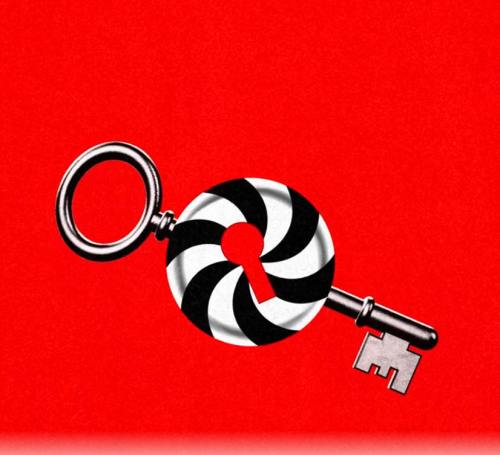 Animation: Jacqui VanLiew; Getty Images
.
.
Click the link below for the article:
.
__________________________________________
March 24, 2024
Mohenjo
Business, Food For Thought, Human Interest, Political, Science, Technical
amazon, business, Business News, current-events, Future, Hotels, human-rights, medicine, mental-health, research, Science, Science News, technology, Technology News, travel, vacation

Click the link below the picture
.
By now, every major security company has probably rolled out its own virtual private network, or VPN. Norton Secure VPN has a strong security pedigree from the NortonLifeLock name and an affordable, flexible pricing scheme that places it well within impulse-purchase territory. A refreshed design for its client software along with new features such as split tunneling and a kill switch help enormously. Add to this the lifting of the ban on BitTorrent and P2P traffic, and Norton Secure VPN has become a competitor worth watching in the VPN space.
How Much Does Norton Secure VPN Cost?
Norton lets you choose a subscription that renews monthly or annually, with a discount for the longer of the two. When we review VPNs, we focus on the monthly pricing for comparison. Seen through that lens, Norton Secure VPN compares quite favorably. Monthly plans start at $4.99 for one device, $7.99 for five devices, and $9.99 for 10 devices. As of this writing, the average per-month cost of a VPN is about $10.05. Several other VPNs manage to beat that price and offer excellent service, such as Editors’ Choice winner Mullvad, which costs a flat 5 euros ($5.73 at time of writing). Still, Norton represents a remarkable, and remarkably flexible, value.
.

.
.
Click the link below for the article:
.
__________________________________________
March 23, 2024
Mohenjo
Business, Food For Thought, Human Interest, Political, Science, Technical
amazon, business, Business News, current-events, Future, Hotels, human-rights, medicine, mental-health, research, Science, Science News, technology, Technology News, travel, vacation

Click the link below the picture
.
Julie and John Gottman are among the OGs of marriage therapy and research. The Seven Principles for Making Marriage Work, one of John’s early works, is among the bestselling marriage books of all time. And the Gottman Institute, which houses the research facility known as “The Love Lab,” is considered the gold standard for relationship research. The Gottmans, who have been married to each other since 1987 (he’s 81 and she’s 72), have a new book, Fight Right, about how couples can learn to disagree lovingly. TIME asked them to comment on some of the most common pieces of marriage advice. They didn’t hold back.
If you fight with your partner, you’re not meant for each other.
Julie Gottman: That is pure, unadulterated myth. For one thing, people have different personalities and different lifestyle preferences, so when they live together, those are going to manifest. What we have found from our research about really successful couples is that they fight frequently. What they tend to do is go much deeper underneath the surface of a fight, asking questions of one another that are meaningful, that get down to core issues, perhaps background history that’s gotten triggered in some way or if it conflicts with what we call an “ideal dream,” the values that are most important to you and how you want to live those values and live those passions. When people slow down to ask questions of one another, they end up with greater connection and greater compassion from understanding their partner better.
Every marital argument has a solution; you just have to find it.
John Gottman: Well, that’s a myth, because 69% of all conflicts are not resolvable; they come from those personality differences. People tend to argue about the same issues over and over, and those issues don’t have a solution. But the master couples find a way to accommodate those differences in personality—even to laugh about them—but find temporary solutions to the differences. It’s not so much a matter of resolving the issue as learning to understand the differences and accept those differences, and maybe even be enriched by them in a relationship.
In every fight, one person is right, and one person is wrong.
Julie: That’s the way people sabotage connection during a fight—by fighting to win, as opposed to fighting to understand. The purpose of a fight is to understand that person’s perspective and where it comes from, to give it some empathy, validate it, understand it better, and then move towards a solution. If you turn it into a contest or a competition, then one person wins, and the other person feels resentment, feels upset, feels angry because they lost; it doesn’t feel like a connection.
.
 Getty Images
.
.
Click the link below for the article:
.
__________________________________________
March 23, 2024
Mohenjo
Business, Food For Thought, Human Interest, Political, Science, Technical
amazon, business, Business News, current-events, Future, Hotels, human-rights, medicine, mental-health, research, Science, Science News, technology, Technology News, travel, vacation

Click the link below the picture
.
Three young men smile for a photo in the pub – 45 minutes later, two of them are dead.
Lewis Moghul, 22, was found to be more than three times the legal alcohol limit when he crashed his red BMW 225D MSport, killing himself and his 19-year-old passenger Sammy Phillips.
One witness described the car as traveling at “insane” speeds before it left the road and smashed into trees in Oxfordshire in February last year.
According to new BBC analysis, young men are four times more likely than other drivers to be convicted of dangerous or careless driving.
Driver and Vehicle Licensing Agency (DVLA) data for the UK also reveals men under the age of 25 are four times more likely to be caught drug-driving – and twice as likely to be caught drink-driving.
Sammy’s older brother Jamie Morris, 25, told the BBC he feared the combination of young men and cars was “lethal”.
Jamie, from Llangynog, Wales, said he remembered “hyperventilating” when he learned of his brother’s death.
“It was just tears and crying,” he said. “You are just broken.”
Sammy and Lewis had been on a night out in Henley-on-Thames with another friend, John Yolland.
All three had a passion for cars, but Sammy could not yet drive.
John described himself and Lewis as “beemer (BMW) boys”, attracted by the “thrill of the speed” and “smoking tires”.
He said he had been meant to give Sammy a lift home on the night of the crash.
“But Lewis had a new BMW and Sammy had not been in it yet, so [he was] quite excited for that,” he said.
The death of his friends was “like the world stopping”, said John, who explained he has since left the “car scene”, selling both his BMW car and motorbike.
During a sit-down discussion for BBC documentary Drive Fast Die Young, he told Sammy’s brother Jamie: “People need to realize you don’t come back, mate. You make a mistake, that’s it.”
The UK’s top roads policing officer, Chief Constable Jo Shiner, said the DVLA statistics were due to a combination of “inexperience, over-confidence” and men “often wanting to show off”.
Road safety experts want the government to toughen up the penalties and reconsider introducing graduated driving licenses.
.
 (Left to right) Lewis Moghul, John Yolland, and Sammy Phillips
.
.
Click the link below for the article:
.
__________________________________________
March 22, 2024
Mohenjo
Business, Food For Thought, Human Interest, Political, Science, Technical
amazon, business, Business News, current-events, Future, Hotels, human-rights, medicine, mental-health, research, Science, Science News, technology, Technology News, travel, vacation

Click the link below the picture
.
Spring is on its way, so whilst you’re planning your spring cleaning schedule, you may be wondering how to wash pillows and bed sheets to get them smelling and feeling as fresh as possible. Over time, sweat and natural skin oils can soak through your pillows, mattress protector, and bed sheets, so you’ll need to give them a big deep clean to ensure they’re hygienic for sleeping on. Otherwise, you could be inviting in all sorts of nasties such as dust mites, mold, bacteria, and even bed bugs.
Bed bugs feast on your blood and can really irritate your skin, causing you to scratch all night long. The same goes for dust mites – they can trigger allergy-like symptoms such as a runny nose, sneezing, coughing, or sore throats. Washing your pillows on a regular basis helps stop the build-up of bacteria that can cause breakouts, skin inflammation, and itching.
Here, we walk you through how to spring clean your pillows and bed sheets, including techniques and the products you need. If you’re looking to revamp your sleep space ready for spring and need a new bed, our guide to 2024’s best mattresses for all sleepers and budgets contains our top recommendations.
One of the things that puts people off washing their pillows is that they don’t think that they can be washed in the washing machine. Many of this year’s best pillows are made from microfiber, and the great thing about this pillow material is that it can be machine-washed.
Microfiber pillows over time attract dirt, sweat, and allergens, so regular cleaning won’t only keep those at bay, but they’ll also prolong the life of your pillow. However, before you set about the process, do read the care label of your particular pillow to ensure that you can follow these steps when spring cleaning. This is the same advice we share when explaining how to clean a mattress.
1. Remove any pillow protectors
Pillow protectors are something that you should consider if you don’t already have them. Pillow protectors act as an extra shield against sweat, oils, and little pests like dust mites from getting into your pillow. You can also machine wash your pillow protectors on a more regular basis to really keep your bed fresh.
2. Pre-treat stains and smells
Pillows attract stains, it’s normal and natural, so don’t worry if you see stains pop up. However, if you have stubborn or deep stains, it’s best to pre-treat these before you pop them in the washing machine.
.
 (Image credit: Getty Images)
.
.
Click the link below for the article:
.
__________________________________________
March 22, 2024
Mohenjo
Business, Food For Thought, Human Interest, Political, Science, Technical
amazon, business, Business News, current-events, Future, Hotels, human-rights, medicine, mental-health, research, Science, Science News, technology, Technology News, travel, vacation

Click the link below the picture
.
For three decades, a tiny text file has kept the internet from chaos. This text file has no particular legal or technical authority, and it’s not even particularly complicated. It represents a handshake deal between some of the earliest pioneers of the internet to respect each other’s wishes and build the internet in a way that benefitted everybody. It’s a mini constitution for the internet, written in code.
It’s called robots.txt and is usually located at yourwebsite.com/robots.txt. That file allows anyone who runs a website — big or small, cooking blog or multinational corporation — to tell the web who’s allowed in and who isn’t. Which search engines can index your site? What archival projects can grab a version of your page and save it? Can competitors keep tabs on your pages for their own files? You get to decide and declare that to the web.
It’s not a perfect system, but it works. Used to, anyway. For decades, the main focus of robots.txt was on search engines; you’d let them scrape your site and in exchange, they’d promise to send people back to you. Now AI has changed the equation: companies around the web are using your site and its data to build massive sets of training data, in order to build models and products that may not acknowledge your existence at all.
The robots.txt file governs a give and take; AI feels to many like all take and no give. But there’s now so much money in AI, and the technological state of the art is changing so fast that many site owners can’t keep up. And the fundamental agreement behind robots.txt, and the web as a whole — which for so long amounted to “everybody just be cool” — may not be able to keep up either.
In the early days of the internet, robots went by many names: spiders, crawlers, worms, WebAnts, web crawlers. Most of the time, they were built with good intentions. Usually, it was a developer trying to build a directory of cool new websites, make sure their own site was working properly, or build a research database — this was 1993 or so, long before search engines were everywhere and in the days when you could fit most of the internet on your computer’s hard drive.
The only real problem then was the traffic: accessing the internet was slow and expensive, both for the person seeing a website and the one hosting it. If you hosted your website on your computer, as many people did, or on hastily constructed server software run through your home internet connection, all it took was a few robots overzealously downloading your pages for things to break and the phone bill to spike.
Over the course of a few months in 1994, a software engineer and developer named Martijn Koster, along with a group of other web administrators and developers, came up with a solution they called the Robots Exclusion Protocol. The proposal was straightforward enough: it asked web developers to add a plain-text file to their domain specifying which robots were not allowed to scour their site, or listing pages that are off limits to all robots. (Again, this was a time when you could maintain a list of every single robot in existence — Koster and a few others helpfully did just that.) For robot makers, the deal was even simpler: respect the wishes of the text file.
.
:format(webp)/cdn.vox-cdn.com/uploads/chorus_asset/file/25282612/246992_AI_at_Work_TXT_FILE_ECarter.png) Illustration by Erik Carter
Illustration by Erik Carter
.
.
Click the link below for the article:
.
__________________________________________
March 21, 2024
Mohenjo
Business, Food For Thought, Human Interest, Political, Science, Technical
amazon, business, Business News, current-events, Future, Hotels, human-rights, medicine, mental-health, research, Science, Science News, technology, Technology News, travel, vacation
Click the link below the picture
.
In the spring of 2023, after her third case of COVID-19, Jennifer Robertson started to feel strange. Her heart raced all day long and she could barely sleep at night. She had dizzy spells. She felt pins and needles in her arm, she says, a “buzzing feeling” in her foot, and pain in her legs and lymph nodes. She broke out in a rash. She smelled “phantom” cigarette smoke, even when none was in the air.
Robertson, 48, had a feeling COVID-19 might have somehow been the trigger. She knew about Long COVID, the name for chronic symptoms following an infection, because her 11-year-old son has it. But “he didn’t have anything like this,” she says. “His set of symptoms are totally different,” involving spiking fevers and vocal and motor tics. Her own experience was so different from her son’s, it was hard to believe the same condition could be to blame. “I just thought, ‘It’s really coincidental that I never got well, and now I’m getting worse,’” she says.
She saw a doctor in Cyprus, where her family was living at the time, and then in Saudi Arabia, where her husband was working. Neither visit yielded much. Then, after Robertson’s family moved to Scotland in the summer of 2023, a specialist there diagnosed with Long COVID. She is still sick—and a reinfection late last year set her back—but she has found some relief in treatments prescribed by her doctors, including heart medication and antihistamines.
Robertson’s story highlights the many challenges of detecting, diagnosing, and treating Long COVID. It affects people from all walks of life and produces a vast array of symptoms that can range in severity from mild to life-altering. And because there are so many forms Long COVID can take, it can be difficult for patients and doctors to know what’s going on.
That means many people aren’t getting diagnosed or treated, says Nisreen Alwan, a professor of public health at the U.K.’s University of Southampton who studies Long COVID (and has had the condition herself). Alwan’s research suggests there is “considerable self-doubt” among Long COVID patients, with many people questioning if they should get medical care or have the condition at all. That may be in part because media coverage tends to showcase a specific type of patient—someone who is very sick, potentially to the point of being bed-bound, and battling extreme fatigue and brain fog—so people with milder or more unusual symptoms aren’t sure whether their illness counts as Long COVID, Alwan says.
It’s hard to blame people for being confused. Long COVID is so broadly defined that virtually any unexplained health issue that comes after a case of COVID-19 and lasts at least a couple months could fit the bill. More than 200 symptoms have been linked to Long COVID—everything from insomnia and hallucinations to tremors and gastrointestinal issues—and they often look very different from those of an acute COVID-19 case. Further complicating matters, some people feel better for weeks or months after their initial infection before their health deteriorates.
.
 Illustration by TIME
.
.
Click the link below for the article:
.
__________________________________________
March 21, 2024
Mohenjo
Business, Food For Thought, Human Interest, Political, Science, Technical
amazon, business, Business News, current-events, Future, Hotels, human-rights, medicine, mental-health, research, Science, Science News, technology, Technology News, travel, vacation

Click the link below the picture
.
Everything you do—walking to your yoga class, making your favorite latte order, talking to your bestie, and just getting through the workday—happens thanks to your brain. Your brain is the control center for your entire body—it’s how you get shit done. So how can you take care of such a beautifully complex and integral part of your body and keep it in great shape for as long as possible?
Lara V. Marcuse, MD, a board-certified neurologist and codirector of the Mount Sinai Epilepsy Program at the Icahn School of Medicine at Mount Sinai, shares the one thing she does every day (or almost every day, because life gets busy, folks!) to keep her brain healthy. As a bonus? It’s fun.
Pick up a difficult new skill, even if you suck at it.
“I started playing piano in my mid-40s,” Dr. Marcuse tells SELF. It all started by chance when her son began taking lessons: “I took his lesson book on the sly one night before bed, and I was totally enthralled by it,” she says, though she admits she found the songs themselves hard to get into at first. “I’m a 1980s New York City club kid. I grew up on a steady diet of house music, and I never liked classical.” It’s been seven years since she first gave playing a Chopin piece a shot, and she hasn’t looked back since. “[Playing piano] helps me get into [the] nooks and crannies of myself—and into my spirit,” she says.
Taking up a hobby that’s unfamiliar and even difficult forces your brain to exercise new or rarely used neural pathways, and that can help prevent cognitive decline and even protect your brain against Alzheimer’s disease, a type of dementia that leads to memory loss and an inability to complete daily tasks. Keeping your brain active makes neural pathways strong—and the opposite is true if you’re not finding ways to engage your mind.
.

dickcraft/Getty Images
.
.
Click the link below for the article:
.
__________________________________________
March 20, 2024
Mohenjo
Business, Human Interest, Political, Science, Technical
amazon, business, Business News, current-events, Future, Hotels, human-rights, medicine, mental-health, research, Science, Science News, technology, Technology News, travel, vacation

Click the link below the picture
.
Scientists have figured out a way to mass-produce solar panels made out of a so-called miracle material that can massively boost their efficiency.
Perovskite has been hailed for its potential to revolutionize renewable energy, however, converting its record-breaking success in the lab into commercial solar panels has proved difficult due to durability and reliability issues.
A major study into possible production methods for the technology has now concluded that a vacuum-based approach could allow the next-generation solar panels to be manufactured on a commercial scale.
A team led by the Karlsruhe Institute of Technology in Germany and the National Renewable Energy Laboratory (NREL) in the US found that vacuum processes – used to make everything from smartphones to LEDs – held significant advantages over the solvent-based approach usually used to make lab-scale solar cells.
“Vacuum-based processes have proven themselves in the industry for many decades,” said Ulrich W. Paetzold, a professor at the Institute of Microstructure Technology and Light Technology Institute at KIT.
“Although they can decisively advance the commercialization of solar cells, they are heavily underrepresented.”
Solar cells that use a combination of perovskite and silicon have demonstrated vastly more potential to generate electricity from the Sun’s energy compared to traditional silicon cells.
.

solar panel perovskite production 2024.jpg © iStock/ Getty Images
.
.
Click the link below for the article:
.
__________________________________________
March 20, 2024
Mohenjo
Business, Food For Thought, Human Interest, Political, Science, Technical
amazon, business, Business News, current-events, Future, Hotels, human-rights, medicine, mental-health, research, Science, Science News, technology, Technology News, travel, vacation

Click the link below the picture
.
Elon Musk made some striking predictions about the impact of artificial intelligence (AI) on jobs and income at the inaugural AI Safety Summit in the U.K. in November.
The serial entrepreneur and CEO painted a utopian vision where AI renders traditional employment obsolete but provides an “age of abundance” through a system of “universal high income.”
“It’s hard to say exactly what that moment is, but there will come a point where no job is needed,” Musk told U.K. Prime Minister Rishi Sunak. “You can have a job if you want to have a job or sort of personal satisfaction, but the AI will be able to do everything.”
While admitting this prospect may not make “people comfortable,” Musk seemed optimistic about what he termed a “protopian” AI-driven future.
“I think everyone will have access to this magic genie, and you’re able to ask any question. It’ll be certainly bigger for education. It’ll be the best tutor,” he said. “And there will be no shortage of goods and services. It will be an age of abundance.”
“We won’t have universal basic income. We’ll have a universal high income,” Musk said, though he did not explicitly define the difference. “In some sense, it’ll be somewhat of a leveler, an equalizer.” It’s worth noting this isn’t the first time Musk addressed the topic. In 2018, he posted on X: “Universal income will be necessary over time if AI takes over most human jobs.”
.

Elon Musk Predicts A ‘Universal High Income’ As Jobs Are Phased Out And Employment Becomes Obsolete — It’ll Be ‘Somewhat Of An Equalizer’ © Provided by Benzinga
.
.
Click the link below for the article:
.
__________________________________________
Older Entries
Newer Entries

