July 1, 2024
Mohenjo
Business, Food For Thought, Human Interest, Political, Science, Technical
amazon, business, Business News, current-events, Future, Hotels, human-rights, medicine, mental-health, research, Science, Science News, technology, Technology News, travel, vacation

Click the link below the picture
.
When the electric air taxi revolution arrives, you probably won’t, it hear coming. A remarkable feature of an electric vertical takeoff and landing (eVTOL) aircraft is how quietly it flies, scarcely noticeable amid typical city traffic sounds. Unlike a helicopter, there’s no pounding, 90-decibel “thwop, thwop, thwop.” In contrast, eVTOL aircraft use multiple small propellers that spin half as fast as a chopper’s rotor—avoiding the annoying, low-frequency sound pulses created by the big whirling blades.
Electric motors, which are quieter than helicopters’ turbine engines, also help keep any racket to a minimum. “The latest air taxi designs, such as those from leading builders like Joby and Archer, deliver a 20- to 25-decibel reduction in noise levels compared to helicopters,” says Mark Moore, the trailblazing engineer who led the development of NASA’s X-57 Maxwell electric airplane. That means that eVTOLs could be four or five times less noisy to nearby listeners. Beyond offering quieter flights, these new machines should also be significantly safer, greener, and cheaper to fly than helicopters. Moore maintains that electric air taxis are uniquely suited for what the aviation industry calls urban air mobility (UAM) services, enabling normally gridlocked travelers to “take advantage of the third dimension to escape the ant trails on the ground.”
More than two dozen major eVTOL builders have been founded in the past decade, and a few are nearing commercial certification from the U.S. Federal Aviation Administration or its European counterpart, the European Union Aviation Safety Agency (EASA). Each company is working on its own homegrown aircraft design, but all have the same goal: to provide on-demand air trips no longer than 18 to 25 miles—the “sweet spot” range for first-generation, battery-electric eVTOL taxis. These short, high-speed hops could carry commuters between city centers and airports or transport cargo and packages. Militaries may want eVTOLs for casualty evacuations or logistical supply. Other potential uses include air ambulances, donor organ delivery, and police transport, as well as scheduled shuttles and ecotourism trips—and, of course, personal flying cars.
Distributed Electric Propulsion
In 2016 Moore, who co-founded Uber Elevate, an air taxi offshoot of the ride-sharing company, and his colleagues outlined the emerging industry’s basic business model in a seminal white paper entitled “Fast-Forwarding to a Future of On-Demand Urban Air Transportation.” It galvanized the nascent UAM industry by declaring that the necessary technology had finally arrived. “What had previously been science fiction” was suddenly becoming a going enterprise, Moore recalls. Uber Elevate soon assembled potential players including budding airframe builders, airline companies, auto makers, and transport service providers, as well as potential financiers and operators of new vertiports—airports for vertical-lift aircraft.
.
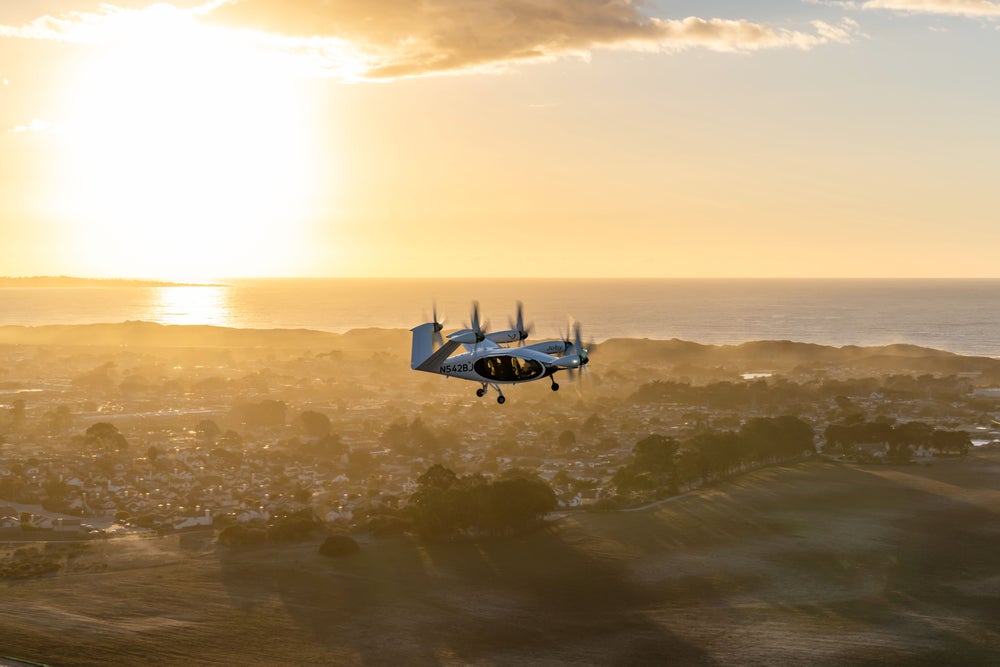
A flying electric air taxi developed by California-based Joby Aviation. Joby Aviation/© Joby Aero, Inc.
.
.
Click the link below for the article:
.
__________________________________________
July 1, 2024
Mohenjo
Business, Food For Thought, Human Interest, Political, Science, Technical
amazon, business, Business News, current-events, Future, Hotels, human-rights, medicine, mental-health, research, Science, Science News, technology, Technology News, travel, vacation

Hope you never have to use this information!
Click the link below the picture
.
Several months ago 2 cousins, just 19 years old, drowned when their car plunged into a pond.
The driver was traveling from her workplace at Amazon to a nursing home where the other cousin worked.
Medical examiners say both women died of accidental drowning and that no foul play is suspected. This emergency was tragic news and a devastating incident for the community – and it doesn’t happen to just adults.
Children and babies are frequently victims in water related accidents.
I was even more surprised to find out that over 10,000 auto accidents like this happen each year.
Some survive, others don’t.
And it made me think, “would I know what to do in a situation like this?”
“How would I save children or other passengers in a drowning car?”
We all like to think that we’d be able to escape a car crash in water.
But being in the moment, inside a car sinking in water is far more disorienting than you may think.
It happens fast.
And you may even find yourself upside down and in the dark – a panic inducing moment even without passengers.
With a short window of opportunity.
.
 Sinking Car
.
.
Click the link below for the article:
.
__________________________________________
June 30, 2024
Mohenjo
Business, Food For Thought, Human Interest, Science, Technical
amazon, business, Business News, current-events, Future, Hotels, human-rights, medicine, mental-health, research, Science, Science News, technology, Technology News, travel, vacation
Click the link below the picture
.
When historian and ecologist Laura J. Martin decided to write a history of ecological restoration, she didn’t think she would have to go back further than the 1980s to uncover its beginnings. Deep in the archives, she found evidence of a network of early female botanists from the turn of the 20th century. Martin’s book Wild by Design: The Rise of Ecological Restoration brings their work back into the record. The nonfiction account tells the stories of Eloise Butler, Edith Roberts and the wild and wonderful gardens they planted and studied.
LISTEN TO THE 26:52 PODCAST – (sound on after clicking link for article in red below narrative and picture)
Lost Women of Science is produced for the ear. Where possible, we recommend listening to the audio for the most accurate representation of what was said.
EPISODE TRANSCRIPT
Laura Martin: I found all of these, you know, gems of untold stories of women scientists in the early twentieth century, who really were laying the scientific foundation for restoration.
Sophie McNulty: I’m Sophie McNulty, and I’m a producer for Lost Women of Science.
I worked on the first two seasons of the show before I moved to the UK and ended up working on a gardening podcast for the Royal Horticultural Society. I recently returned to Lost Women of Science and, apropos of horticulture, I’m particularly excited to be hosting today’s episode on ecological restoration.
This is quite the hot topic in the world of horticulture and environmental management at large. To give you a sense of just how hot it is, today billions are spent on ecological restoration projects each year, and the UN General Assembly declared 2021 to 2030 to be the UN decade on ecosystem restoration. But, the history of this field has been largely overlooked, and when it is told, women are often written out of the narrative.
And so today, we’re going to try to remedy that by zeroing in on important early restorationists who were themselves women. We’ll be focusing on botanists Eloise Butler and Edith Roberts. And to do this, I’m so pleased to welcome Laura Martin, a professor at Williams College and author of Wild By Design, The Rise of Ecological Restoration.
Hi, Laura. Thanks for coming on the show.
Laura Martin: Thank you. I’m very excited to speak with you today, Sophie.
Sophie McNulty: So to start, before we go back in time to the stories of these early restorationists, I want to quickly define terms. So what exactly is ecological restoration and how is it different from, say, conservation or preservation?
.
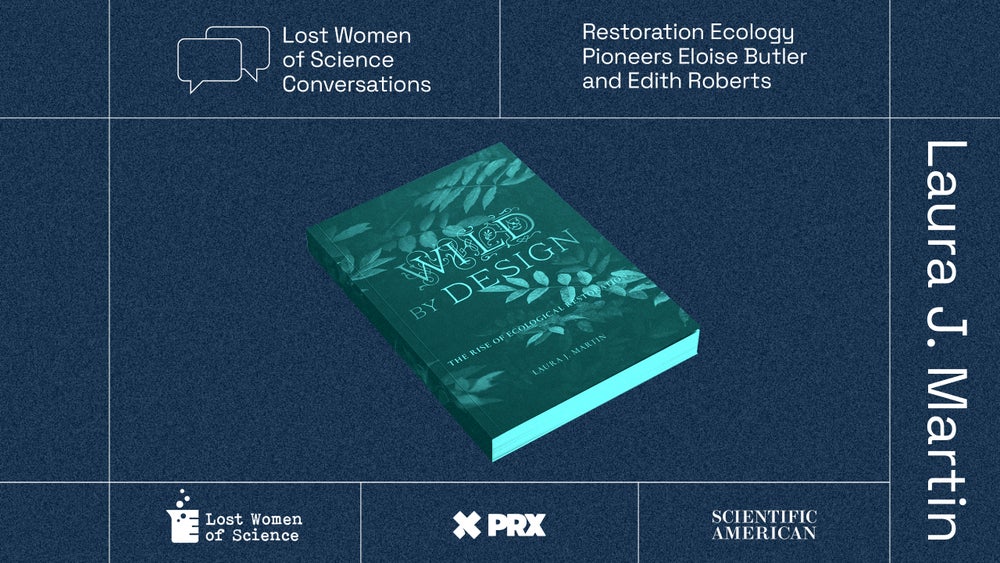 Keren Mevorach (art design); Harvard University Press (book)
.
.
Click the link below for the article:
.
__________________________________________
June 30, 2024
Mohenjo
Business, Food For Thought, Human Interest, Political, Science, Technical
amazon, business, Business News, current-events, Future, Hotels, human-rights, medicine, mental-health, research, Science, Science News, technology, Technology News, travel, vacation

Click the link below the picture
.
There’s a running joke about going on vacation with your kids — you know the one. That it’s not really a vacation. It’s just a trip, it’s just parenting in a different place, it’s just the same work you do every day except now with more sand. But here’s the hack everyone seems to be missing: go on vacation with your friends and their kids.
That’s where the breathing room is.
There’s a reason why we look for mom groups, for parents to hang next to at the park, for the dads at preschool drop-off. We want to be with the people who get it. Who don’t judge when they see our kid throw themselves mouth-first into the woodchips because we dared to suggest sunscreen. These are the kind of friends who don’t try to fix the situation, offer advice, or give a backhanded compliment like, “Wow, he’s really spirited, huh?” They just give you a knowing look and try to hide their amusement from your toddler. So why not vacation with that same kind of energy?
Going on a vacation with friends — real friends — means extra sets of adult hands around bodies of water and people to unwind with at night. It means your kids have built-in playmates for the week, are excited to run upstairs and put on a movie at bedtime while the grown-ups play Trivial Pursuit downstairs. It means you hardly see your kids while you’re at the beach, and you may be able to actually read a book because there they’ve been, for the past hour, building an epic sand castle with their besties.
There are not just extra adults but two more parents in the house — and the distinction is key. Parents who will offer to take your big kids with their kids to get ice cream because your baby’s sleeping and parents who will start breakfast for everyone because they know the value in a surplus of pancakes. They’re your friends, so you can trust them, and your kids do, too. You don’t have to worry about your kids waking up in the middle of the night and being scared because even if they walk in the wrong room, they’ll find people who love them and care about them.
Of course, the prep work for a vacation with friends is still work. Someone has to figure out a meal plan, someone has to have a list of things to do, someone has to figure out sleeping arrangements — that’s why you have to vacation with friends. With people who have seen your house messy, the kinds of friends that come over for a barbecue and take out the trash when they see it’s overflowing. The kinds of friends that always bring a dish to share and have been known to rock your babies to sleep or wipe crusty chocolate ice cream off squirming faces.
.

Fly View Productions/E+/Getty Images
.
.
Click the link below for the article:
.
__________________________________________
June 29, 2024
Mohenjo
Business, Food For Thought, Human Interest, Political, Science, Technical
amazon, business, Business News, current-events, Future, Hotels, human-rights, medicine, mental-health, research, Science, Science News, technology, Technology News, travel, vacation

Click the link below the picture
.
Earlier this year, Atlantic staff writer McKay Coppins suggested that voters, in the interest of civic hygiene and personal illumination, attend a Trump rally. This would be the way to understand the candidate, his thoughts, and his supporters, Coppins argued. He himself has attended more than 100 such gatherings since 2016, and he noted, correctly, that “nothing quite captures the Trump ethos like his campaign rallies.”
I have attended only a few of these rallies (though among them was Trump’s January 6, 2021, rally on the Ellipse, which should count double). But what one derives from the experience is, in the words of our colleague Tom Nichols, the visceral sense that Trump is deeply unwell.
Attendance at Trump rallies can be metaphysically taxing—and some seem to go longer than a Taylor Swift concert. So watching them from beginning to end online is occasionally a welcome substitute.
A couple of weeks ago, on C-SPAN, I watched my first Trump rally in quite some time, a gathering under a heat dome in Las Vegas. I watched not because I expected to learn something new about the candidate, but because I had been alerted by concerned friends and colleagues that Trump had attacked me by name. This hadn’t happened in quite some time, and self-interest dictated watching.
.
 Donald
.
.
Click the link below for the article:
.
__________________________________________
June 29, 2024
Mohenjo
Business, Food For Thought, Human Interest, Political, Science, Technical
amazon, business, Business News, current-events, Future, Hotels, human-rights, medicine, mental-health, research, Science, Science News, technology, Technology News, travel, vacation
Click the link below the picture
.
The vast majority of the cosmos is made of different kinds of stuff we cannot see. We know it’s there, but it emits no light and may not even interact directly with normal matter (so we cannot touch it, either). How do you even begin to understand such things?
The key is to study them through the ways they do affect the universe. Dark matter has gravity, so it influences the way normal matter moves around and clumps up in galaxies. (Given how there’s five or more times as much dark matter as normal matter in the universe, I often wonder which one we should call “normal,” though.) It even dictates how light flows through the space it warps by its gravity. And dark energy is causing the expansion of the universe to accelerate, which changes how we measure distances to far-flung galaxies and alters the distribution of galaxies and galaxy clusters in larger-scale cosmic structures.
These are measurable effects, if you’re clever and have access to advanced technology. We humans are, and we do, and now the European Space Agency (or ESA) has put an exceptionally powerful new tool into our kit: Euclid, a space-based observatory that is designed to reveal the secrets of the dark universe—and quite a bit about the visible universe, too.
As telescopes go, in some ways, Euclid is modest. It sports a 1.2-meter-wide mirror, only half the width of Hubble’s and one-fifth the size of the one for the James Webb Space Telescope (JWST). But despite its smaller size, Euclid’s mirror is in one important respect superior to those of these two huge observatories: Unlike the narrow field of view provided by Hubble’s and JWST’s mirrors, Euclid’s offers a panoramic vista. Each of the telescope’s celestial snapshots can capture a staggering half a square degree of sky, more than twice the apparent area of the full moon. It scans a long, wide strip of the sky every day, and its lifetime goal is to observe an incredible 15,000 square degrees in total, more than one-third of the entire sky. And it will do so in high resolution—the ability to see small details.
.

A close-up of the star-forming region M78, from a large image captured by the European Space Agency’s Euclid telescope. ESA/Euclid/Euclid Consortium/NASA, image processing by J.-C. Cuillandre (CEA Paris-Saclay), G. Anselmi (CC BY-SA 3.0 IGO)
.
.
Click the link below for the article:
.
__________________________________________
June 29, 2024
Mohenjo
Business, Food For Thought, Human Interest, Political, Science, Technical
amazon, business, Business News, current-events, Future, Hotels, human-rights, medicine, mental-health, research, Science, Science News, technology, Technology News, travel, vacation

Click the link below the picture
.
Summer vacation has begun for many of us, and chances are your kids are spending their free time in front of a screen instead of enjoying the nice weather. We won’t repeat the warnings about children and screen time here, but we admit it: Pulling them away from whatever video game is capturing their attention can be tricky. If they’re bouncing off the walls, however, then some sunshine and exercise might change their attitude. “My kids are the best selves outside, and we’ve noticed a difference,” says Shirra Baston, the founder and editor of the blog Get the Kids Outside.
If you’re looking for ways to get them to spend time outdoors, here are a few ways to find some fun and help instill in them an appreciation of nature.
Learn about nature (and the nighttime sky) with an app
True, you’re trying to get your kid off screens. But that doesn’t mean you can’t use technology to help instill a sense of curiosity in children and learn more about the world around them.
For daytime exploring, check out PlantNet (iOS, Android)—a free app that identifies plants. Reviewers say the app gives quick and accurate results without annoying ads. And get your kids interested in their winged neighbors with the Merlin app, which will record and ID any birds in the vicinity.
Baston recommends trying the SkyView app (links to the “lite” version: iOS/Android) when the sun goes down. Point your camera at the sky, and the app will identify planets, stars, constellations, and even satellites.
Attempt a science experiment
A few years ago, I made a mess in my backyard by putting Mentos in a bottle of Diet Coke, but my boys loved it (and learned a bit from it). That’s just one of the science experiments you can try outdoors. You can show your kids how people told time before watches by building a sundial or making a homemade solar oven to make s’mores. This website is a great place to start if you need some inspiration, and this video also has some fun, simple activities that will hold your child’s attention:
.
 Credit: New Africa/Shutterstock
.
.
Click the link below for the article:
.
__________________________________________
June 28, 2024
Mohenjo
Business, Food For Thought, Human Interest, Political, Science, Technical
amazon, business, Business News, current-events, Future, Hotels, human-rights, medicine, mental-health, research, Science, Science News, technology, Technology News, travel, vacation
Click the link below the picture
.
NASA’s beloved Voyager 1 mission is back to normal science operations for the first time in more than six months, according to agency personnel. The announcement was made after NASA received data from all four of the spacecraft’s remaining science instruments.
The venerable spacecraft launched in 1977 and passed into interstellar space in 2012, becoming the first human-made object to accomplish that feat. Today, Voyager 1 and its twin, Voyager 2, are NASA’s longest-running missions. But the title has been challenging to hold on to for spacecraft that were designed to operate for just four years. The aging probes are stuck in the deep cold of outer space, their nuclear power sources are producing ever less juice, and glitches are becoming increasingly common.
Most recently, Voyager 1 faced a communications issue that began in November 2023. “We’d gone from having a conversation with Voyager, with the 1’s and 0’s containing science data, to just a dial tone,” said Linda Spilker, Voyager project scientist at NASA’s Jet Propulsion Laboratory (JPL), of the spacecraft’s troubles in an interview with Scientific American in March.
After more than six months of long-distance troubleshooting—Voyager 1 is more than 15 billion miles from Earth, and any signal takes more than 22.5 hours to travel from our planet to the spacecraft—mission personnel have finally coaxed Voyager 1 to gather and send home data with all its remaining science instruments, according to a NASA statement.
The fix required months of analysis to track the issue to a particular chip within the spacecraft’s flight data subsystem. That chip’s code couldn’t be relocated in one fell swoop, however, so mission personnel split the information chip into chunks that could be tucked into stray corners of the rest of the system’s memory. NASA began implementing the new commands in April. And in May the agency directed the aging spacecraft to resume collecting and transmitting science data. Voyager 1’s plasma-wave subsystem and magnetometer bounced back immediately. Its cosmic-ray detector and ow-energy-charged-particles instrument required additional troubleshooting, but both are now finally operating normally, according to NASA.
.
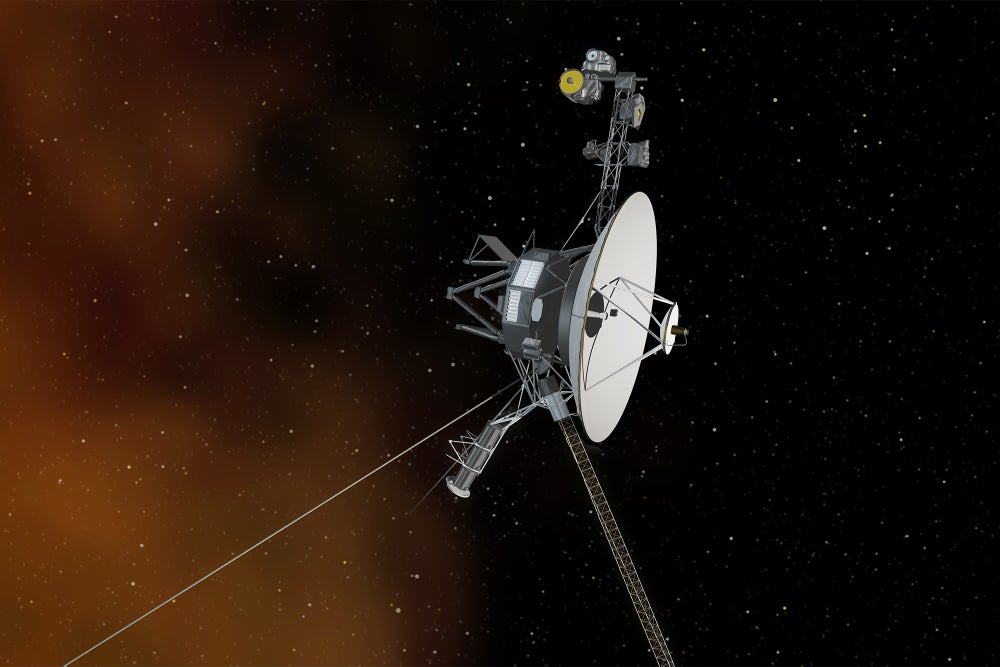
Artist concept of Voyager 1. NASA/JPL-Caltech
.
.
Click the link below for the article:
.
__________________________________________
June 28, 2024
Mohenjo
Business, Food For Thought, Human Interest, Political, Science, Technical
amazon, business, Business News, current-events, Future, Hotels, human-rights, medicine, mental-health, research, Science, Science News, technology, Technology News, travel, vacation

Click the link below the picture
.
Before I became a mother, I was certain I’d have two children — possibly three. In our many conversations about our future family, my husband wasn’t sure about a second. “Let’s see how we’re doing with one,” he would say, “then decide.”
“I already know I want two,” I said. “I’m already sure.”
My daughter was born in the spring of 2020. We spent nearly two years on all the day care waitlists in town, desperate for help, as my husband and I both worked from home. My daughter did not nap; she did not sleep; breastfeeding did not come easy. I was totally in love with my baby, totally isolated, and totally overwhelmed. While feverish with my third bout of mastitis, at the onset of the most dangerous depression of my life, I had the thought: I can’t do this again. It would be the death of me.
We had no money to spare; no more hours in the day to work; no sleep to lose. I was so humbled, so in awe that anyone had more than one child. I didn’t understand how they were making it through the day with everyone intact. As I looked closer, I saw they weren’t. They were falling apart.
My vision of having two or more children was not a fantasy, I realized, so much as a received image of what a family should look like. Having two children seemed more inevitable than desirable. I hadn’t considered having one child as a real option — and now I couldn’t imagine it any other way.
I was very fortunate that my husband agreed. We were obsessed with our daughter, we were so happy we’d made parents of ourselves, and we were at capacity. We were a kingdom of three.
My mother says that after I was born, she felt another child waiting for her.
.
 PeopleImages/Getty Images
.
.
Click the link below for the article:
.
__________________________________________
June 27, 2024
Mohenjo
Business, Food For Thought, Human Interest, Political, Science, Technical
amazon, business, Business News, current-events, Future, Hotels, human-rights, medicine, mental-health, research, Science, Science News, technology, Technology News, travel, vacation
Click the link below the picture
.
Mosquitoes are masters of speed and subtlety. Rarely do we catch one on our skin mid-bite. And when we do, the damage is often already done: the blood has been sucked, the itch-inducing saliva has been secreted, and, in some cases, a disease has already been transmitted.
This elusiveness means we have to rely on insect repellents for the best chance of evading bites. Not all mosquito-deterring products are created equal, though, says Dina Fonseca, a molecular ecologist and chair of the department of ecology at Rutgers University. Store shelves may be lined with a plethora of sprays and gadgets such as bracelets, candles, and bug zappers purported to ward off the insects, but Fonseca and other experts say only those with a few key active ingredients are effective. And as greenhouse gas emissions drive up global temperatures and make already mosquito-prone habitats even buggier, repellents may become increasingly essential.
Scientific American spoke with experts in mosquito behavior and avoidance about which products are worth the purchase and how they protect us from the pests.
What essential active ingredients should people look for in bug sprays?
Despite the vast number of brands and concoctions on the market in the U.S., only those containing Environmental Protection Agency–registered active ingredients such as diethyl toluamide (DEET), p-Menthane-3,8-diol (PMD) or icaridin (also known as picaridin) have been scientifically proved effective. Spray based on DEET, however, have long been considered supreme, Fonseca says. “It is the oldest tried-and-true gold standard among all of the repellents,” she says. “Back when I was a graduate student doing field work in a mosquito-filled bog, DEET was my best friend.”
The U.S. Department of Agriculture developed this synthetic chemical in 1946 for Army personnel deployed to mosquito-infested environments. At that time, it was used in a spray—nicknamed “bug juice”—that was 75 percent DEET and 25 percent ethanol. Bug juice irritated skin with scratches or cuts, and it held mosquitoes off for only a couple of hours. But later, the USDA and Army produced a new, longer-lasting, and gentler formula called extended duration topical insect/arthropod repellent (EDTIAR), which had no ethanol and contained just 33 percent DEET. It also included polymers that thickened the spray to help slow its evaporation—and it remains the go-to repellent for today’s military.
.

Only insect repellants with Environmental Protection Agency–registered active ingredients such as diethyl toluamide (DEET)[AS1], p-Menthane-3,8-diol (PMD), or icaridin (also known as picaridin) have been scientifically proved to effectively keep mosquitoes away. SeventyFour/Getty Images
.
.
Click the link below for the article:
.
__________________________________________
Older Entries
Newer Entries

