March 1, 2014
Mohenjo
Medical
amazon, business, Business News, Food For Thought, genetic material, Genetically Engineered Foods, Genetically Modified Food, genetically modified organism, GMO, Gmo Food, GMO Labeling, Hotels, huffingtonpost, human-rights, medicine, mental-health, research, Science, Science News, Taste News, technology, Technology News, travel, vacation, Whole Foods Market
FROM

Click link below picture
.
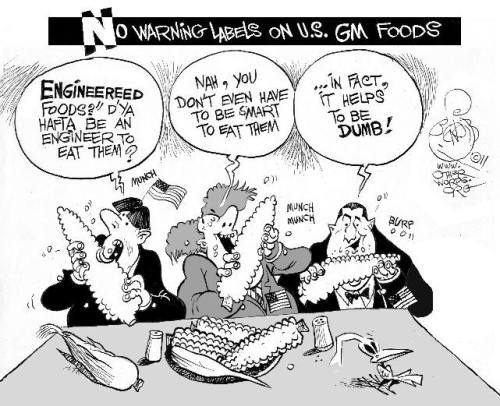
Genetically modified material sounds a little bit like science fiction territory, but in reality, much of what we eat on a daily basis is a genetically modified organism (GMO). Whether or not these modified foods are actually healthy is still up for debate — and many times, you don’t even know that you are buying something genetically modified.
It is not required to label GMOs in the U.S. and Canada, but there are substantial restrictions, and even outright bans, on GMOs in many other countries.
However, by 2018, Whole Foods Market will start labeling GMOs in the U.S. This grocery chains’ locations in Britain already provide GMO labeled products, as required by the European Union. According to the EU, GMO refers to plants and animals”in which the genetic material has been altered in a way that does not occur naturally by mating and/or natural recombination.”
.
.
.
Click link below for article:
.
__________________________________________
March 1, 2014
Mohenjo
Medical
amazon, business, Business News, Europe, Food For Thought, Food Policy, Food Politics, Food Safety, Genetically-Modified Organisms, GMO, GMO Health Risks, GMO Labeling, GMOs Labeling, Health News, Hotels, huffingtonpost, human-rights, industrialized nations, medicine, mental-health, research, Science, Science News, Taste News, technology, Technology News, travel, vacation, What Are GMOs
FROM
Click link below picture
.
For more than 40 industrialized nations — including countries such as Australia, Brazil, China, Russia, and Spain — the question of whether or not to identify and label GMOs is a no-brainer. When asked how Europeans handle GMO labeling, a European colleague of mine — not surprisingly — laughed as she wisely said, “You Americans can make such a big deal out of nothing. In Europe, this is a very easy question to answer: Research has consistently shown that it is bad for you, so we stopped using it.”
What she meant is that GMO labeling is a requirement in Europe. Because well-informed Europeans do not want to eat GMOs, they simply stopped buying them. The same food companies — such as Nestle, Kraft and Hershey, the ones pouring millions of dollars into defeating the ballot in California — Do not use GMOs in the European food market. Period.
.
.
.
Click link below for article:
.
__________________________________________

 James' World 2