July 4, 2025
Mohenjo
Business, Food For Thought, Human Interest, Political, Science, Technical
amazon, business, Business News, current-events, Future, Hotels, human-rights, medicine, mental-health, research, Science, Science News, technology, Technology News, travel, vacation

Hmmmm…This administration is placing the USA behind the rest of the world in science!
Click the link below the picture
.
We tend to think something is either alive or not–unless we’re discussing Schrödinger’s cat. For something to be considered alive, we often think of anything that can reproduce, produce its own energy, and have homeostasis – from humans, to animals, to plants, and even single-celled organisms. However, the challenge comes when trying to define a virus. They don’t grow, or reproduce on their own, nor can make their own energy. But when it infects a host, they can do some pretty population-altering things, as we saw with COVID-19. Now, researchers from Canada and Japan have found something virus-like, but more ‘alive’ (Picture: Getty Images)
.
 (Picture: Getty Images)
.
.
Click the link below for the complete Slideshow:
.
__________________________________________
July 3, 2025
Mohenjo
Business, Food For Thought, Human Interest, Political, Science, Technical
amazon, business, Business News, current-events, Future, Hotels, human-rights, medicine, mental-health, research, Science, Science News, technology, Technology News, travel, vacation

Click the link below the picture
.
Within an hour of receiving a COVID-19 vaccination in November 2020, Utah preschool teacher Brianne Dressen felt pins and needles through her arms and legs. In the medical odyssey that followed, she suffered double vision, chronic nausea, brain fog, and profound weakness. Once a rock climber, she became a couch potato.
Although Dressen’s symptoms were rare in that season of hundreds of millions of COVID-19 vaccinations, they were common enough to draw the attention of a National Institutes of Health neuroscientist named Avindra Nath, who examined Dressen and more than 30 other people with a similar syndrome in 2021. He recommended Dressen take steroids and antibodies — treatments that saved her life, she said.
And then, according to emails reviewed by KFF Health News, Nath said he couldn’t help anymore. His clinical study was ending. He directed the patients to seek local help. But, Dressen said, there wasn’t any.
Nath declined to speak to KFF Health News for this article. The FDA searched international vaccine safety databases for small-fiber neuropathy, one of the most common symptoms he mentioned in a write-up of the patients, and found it was less prevalent in vaccinated than in unvaccinated patients, said Peter Marks, who led the FDA division responsible for vaccines until Health and Human Services Secretary Robert F. Kennedy Jr. forced him out in May.
While it’s possible that Nath’s patients suffered covid vaccine injuries, Marks said, their symptoms were so varied it was hard to characterize a possible syndrome.
But for Dressen and others convinced the vaccines injured them, their experiences were symptomatic of a well-intentioned but flawed U.S. system for monitoring the rare ill effects of vaccines. The system isn’t well-funded enough to answer questions that people urgently want answered, and that can feed vaccine hesitancy, safety experts say.
Its shortcomings were on particular display during the mass vaccination campaigns of the pandemic, when even rare, serious side effects could affect thousands of people.
Now, some leading vaccine scientists are calling for more resources to research vaccine safety and support people with claims of injury, and asking Kennedy, who has a history as an anti-vaccine activist, to step up.
“Spending money on vaccine safety is not saying vaccines aren’t safe; it’s showing a commitment to continued improvement,” said Y. Tony Yang, a professor of health policy at George Washington University’s Milken Institute School of Public Health.
So far, they’ve been disappointed. While Kennedy gives the public the impression that vaccines are harmful, he hasn’t talked about ways to make them safer. And he’s made the problem worse by cutting programs and dismissing scientists who are most knowledgeable about the problems, according to numerous vaccine experts.
.
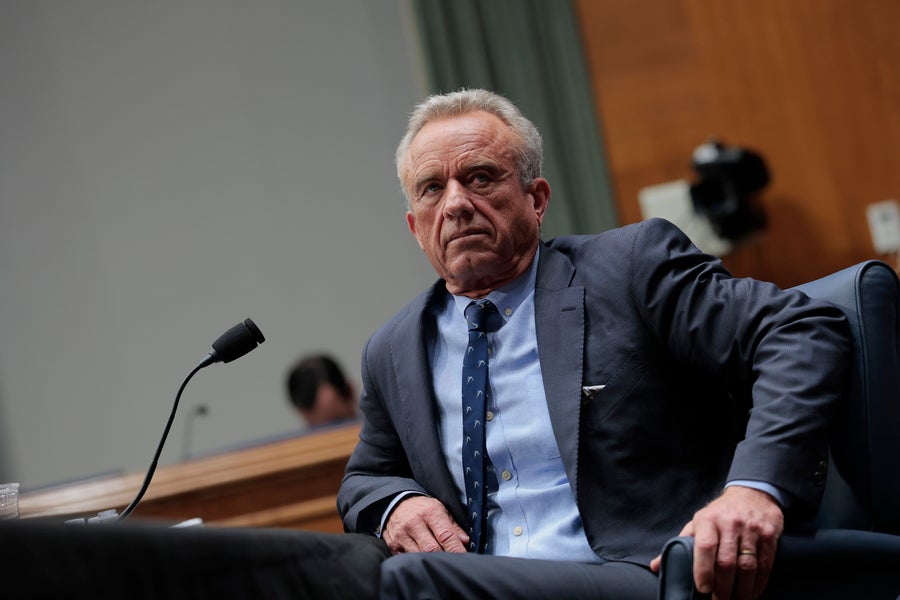
Health and Human Services Secretary Robert F. Kennedy, Jr., testified before the Senate Committee on Health, Education, Labor and Pensions in May 2025. Anna Moneymaker/Getty Images
.
.
Click the link below for the complete article:
.
__________________________________________
July 3, 2025
Mohenjo
Business, Food For Thought, Human Interest, Political, Science, Technical
amazon, business, Business News, current-events, Future, Hotels, human-rights, medicine, mental-health, research, Science, Science News, technology, Technology News, travel, vacation

Click the link below the picture
.
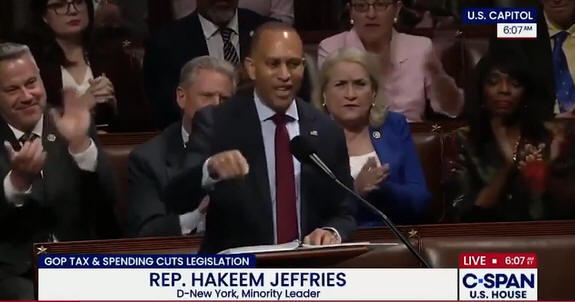
President Donald Trump’s “Big, Beautiful Bill” passed a key procedural hurdle after a long night of haggling with Republicans but is currently being held up by a marathon speech from House Minority Leader Hakeem Jeffries.
Jeffries has already spoken for more than four hours, lambasting the opposition for betraying “everyday Americans” by slashing Medicaid and miring the country in debt, calling the bill an “immoral document.”
A floor vote on the bill cannot take place until he yields his time.
Trump’s costly legislative package aims to increase funding for defense and border security at the expense of welfare programs and has divided the GOP, whose narrow 220-212 majority in the House permits only three defections.
Earlier, Trump took to Truth Social to express his frustration, demanding to know: “What are the Republicans waiting for??? What are you trying to prove??? MAGA IS NOT HAPPY, AND IT’S COSTING YOU VOTES!!!”
The House passed an earlier draft in May, but it has since been drastically revised in the Senate, which required a tie-breaking vote from Vice President JD Vance to force through on Tuesday.
Trump has set a loose deadline of July 4 to sign the bill.
.
 Hakeem
.
.
Click the link below for the complete article:
.
__________________________________________
July 3, 2025
Mohenjo
Business, Food For Thought, Human Interest, Political, Science, Technical
amazon, business, Business News, current-events, Future, Hotels, human-rights, medicine, mental-health, research, Science, Science News, technology, Technology News, travel, vacation

Click the link below the picture
.
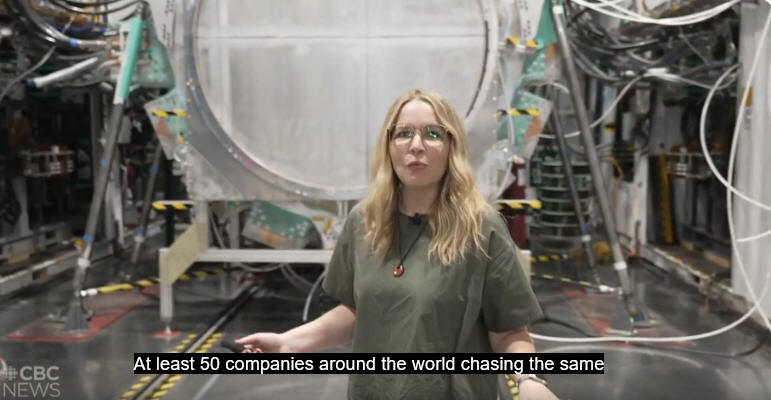
Creating the conditions of the sun on Earth has been a decades-long, global challenge — but if we crack it, it could mean limitless clean energy. Johanna Wagstaffe visits a Canadian company betting on a bold new approach to get there first.
.
 Fusion
.
.
Click the link below for the video (sound on):
.
__________________________________________
July 2, 2025
Mohenjo
Business, Food For Thought, Human Interest, Political, Science, Technical
amazon, business, Business News, current-events, Future, Hotels, human-rights, medicine, mental-health, research, Science, Science News, technology, Technology News, travel, vacation
Click the link below the picture
.
Listening to the daily news, with stories of war and conflict, can be disheartening. Unsurprisingly, data suggest that a majority of Americans feel exhausted and hopeless when they think about politics. Some psychologists have argued that Americans suffer from a sort of learned helplessness—the sense that nothing we do will make a difference—from hearing about violence such as mass shootings. We feel the pain of events in the news cycle but see ourselves as powerless to stop them.
In terms of coping with these events, meditation could help in more ways than one. The power of meditation for cultivating personal well-being is hardly a secret. For more than 20 years, neuroscientists have been documenting how mindfulness meditation can help people cultivate calm and improve their mood, among other benefits. Some recent research suggests it can also help people experience deeper psychological transformation, allowing regular practitioners to reach important insights about themselves and their world.
But there’s another consequence of meditation that people do not always anticipate. Despite the ways in which wellness movements have emphasized a highly individualistic way of thinking about meditation and self-care, meditation can also help care for and support others.
When one person takes the time to regularly be still and attend to a specific cue, such as their breath or a mantra, their practice can have spillover benefits for the people around them. It’s an idea that several studies have explored to date and one that dovetails with recent investigations into what scientists call the social ripple effect, or the idea that one person’s behavior, mood, or attitudes can spread throughout a community. It is also a potent reminder of how bringing a spirit of calm and compassion towards oneself may translate into something beneficial to those around us.
Some meditators propose that if enough people had a regular practice, the result would be a world enriched with calm and compassionate people. And there’s science to support that idea. Research demonstrates that people who meditate show increased positivity toward others. For instance, training in meditation is linked to increased sensitivity to and engagement with human suffering and an increased tendency toward altruism. Similarly, meditation interventions aimed at increasing kindness are associated with reduced bias toward numerous “others,” including ethnic out-groups, people experiencing homelessness, and people who face stigma because of their weight.
In one classic study, 20 people received eight weeks of meditation training, and another 19 were put on a wait list for training. Afterward, each participant came to an appointment and had to wait in a crowded room with just one available seat. When a researcher came in, pretending to be another person with an appointment who had a seemingly painful broken foot, the people who had received meditation training were significantly more likely to give up their seat than study participants who had not received this training.
So why might one person’s meditation practice benefit the people around
them? There are many plausible mechanisms. For one, as meditation trains participants to be aware in the present moment, it may promote sensitivity to others’ perspectives and emotions. Another possibility is that we sometimes dismiss others’ pain because it will cause us discomfort, but meditation can help practitioners better cope with negative emotions, making it less painful to engage with and respond to others’ suffering. In line with these ideas, researchers published findings in 2023 that showed that meditation increased people’s concern for the suffering of others—and that, by comparison, people without this practice were more oriented to their own distress.
Meditation may also help people develop strong interpersonal relationships. The practice may leave people in a better mood overall and build up their emotional control, both of which could improve their interactions with others. Last spring, a study that compared 47 physicians who were trained in meditation with 47 who did not have this training found that doctors in the meditation group were less anxious about communicating with their patients and reported having more trust in others. Critically, the meditating participants were also less likely to practice defensive medicine, in which doctors make health care choices based on fear of litigation instead of best practice. The higher-quality social interactions that emerged with meditation training seemed to improve doctor-patient interactions and ultimately the care that doctors provided to their patients.
.
 Richard Drury/Getty Images
.
.
Click the link below for the complete article:
.
__________________________________________
July 2, 2025
Mohenjo
Business, Food For Thought, Human Interest, Political, Science, Technical
amazon, business, Business News, current-events, Future, Hotels, human-rights, medicine, mental-health, research, Science, Science News, technology, Technology News, travel, vacation

Click the link below the picture
.
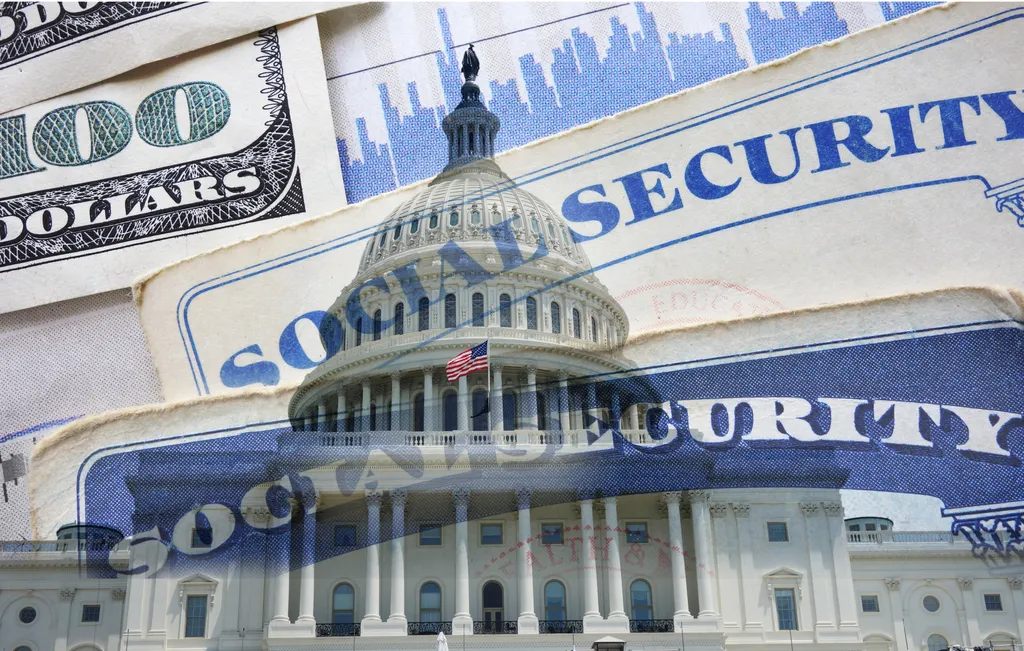
In Trump’s second presidency, he has outlined and implemented, at least in part, an ambitious agenda, including several key changes to Social Security, a program that is relied on by millions of Americans. As more changes are likely throughout the year, check back as we outline how they will affect you and your Social Security check.
In 2025, about 73 million Americans will receive Social Security, Supplemental Security Income (SSI), or both, according to the Social Security Administration, with nearly $1.6 trillion in benefits paid out annually. Trump’s agenda could directly impact Social Security, a significant source of income for most people over age 65. However, the program is on shaky ground and may need to reduce benefits in ten years if Congress doesn’t make changes to bolster its finances.
Although it’s still early in his second term, here’s what Trump has done with Social Security so far. (A separate story looks at what Trump has done with Medicare so far).
Changes to Social Security in Trump’s ‘One Big Beautiful Bill’
The One Big Beautiful Bill Act is a comprehensive tax and spending package that passed the House of Representatives on May 21, 2025, by a narrow vote. Although Trump had pledged to eliminate federal taxes on Social Security benefits, the bill doesn’t eliminate those taxes, but includes a temporary increase to the standard deduction for older people that could lower taxable income for Social Security recipients.
The bill would also raise the standard deduction by up to $4,000 for people aged 65 and over, starting in 2025 through 2028. Although this change is not aimed directly at Social Security income, it could effectively reduce the taxable burden for retirees whose total income, including benefits, is limited.
The deduction begins to phase out at $75,000 for individuals and $150,000 for married couples filing jointly, making it less relevant for higher-income seniors.
As of the end of June 2025, the Senate is actively debating the bill, which faces both Republican disagreements and Democratic opposition. The Senate version, which is around 940 pages, differs from the House version, with deeper Medicaid cuts and adjustments to tax provisions. If passed by the Senate, the bill will need to return to the House for a final vote due to changes made before the legislation reaches Trump’s desk.
New Deputy Commissioner of Office Operations at the SSA
This past April, the Social Security Administration (SSA) announced the appointment of Stephen Evangelista as the Deputy Commissioner for the Office of Operations. In this role, Evangelista will oversee the SSA’s customer support services, which include oversight of more than 1,200 field offices nationwide, as well as 23 teleservice centers that assist over the phone.
Evangelista has over 25 years of experience in executive leadership roles at SSA, most recently serving as the Assistant Deputy Commissioner for Policy in the Office of Law and Policy.
“Stephen’s proven track record of leadership and his dedication to public service make him an excellent choice for this critical role,” said Lee Dudek, Acting Commissioner of Social Security. “His deep knowledge of the agency’s programs will be an asset as we continue to improve customer service while safeguarding Americans’ hard-earned benefits.”
Trump signs memo stating non-citizens ineligible for Social Security benefits
President Trump signed a memorandum directing the Social Security Administration to take steps to ensure non-citizens who are ineligible for benefits don’t receive any from the SSA. These actions include:
- Expand the SSA’s fraud prosecutor programs
- Investigate earnings reports of people 100 years old or older with mismatched records
- Evaluate reinstatement of SSA’s civil monetary penalty program
The memo states that all non-citizens who have authorization to work in the U.S. must pay all of the existing Social Security and Medicare taxes, and may be able to draw benefits from those systems if they meet the eligibility requirements. In addition to other factors, permanent residents who are non-citizens have a 5-year residency requirement to access Medicare.
If you have student loan debt in default, your SS checks may be at risk.
Beginning May 5, the Department of Education restarted collections of defaulted federal student loans via the Treasury Offset Program, which collects delinquent debts owed to the government by withholding tax refunds and Social Security benefits. After 30 days, the government can start going after your paycheck, withholding up to 15% of a borrower’s disposable income for those in default.
“Borrowers who don’t make payments on time will see their credit scores go down, and in some cases, their wages automatically garnished,” wrote Education Secretary Linda McMahon in an opinion piece for the Wall Street Journal.
Within the next two weeks, affected borrowers should hear from the Office of Federal Student Aid. If you are in default, the Education Department urges you to contact the Debt Resolution website to make a payment, enroll in an income-driven repayment plan, or sign up for loan rehabilitation.
.
 (Image credit: Getty Images)
.
.
Click the link below for the complete article:
.
__________________________________________
July 2, 2025
Mohenjo
Business, Food For Thought, Human Interest, Political, Science, Technical
amazon, business, Business News, current-events, Future, Hotels, human-rights, medicine, mental-health, research, Science, Science News, technology, Technology News, travel, vacation

Click the link below the picture
.
A week into his second presidency, Donald Trump signed an executive order banning transgender Americans from enlisting or serving in the U.S. military. And in early June, the U.S. Department of Defense — under Defense Secretary Pete Hegseth — notified transgender Americans already serving in the military that they can either voluntarily or involuntarily leave.
But U.S. Army Major Anthony Guerrero, in a scathing op-ed published by the New York Times early Monday morning, June 30, lays out some reasons why he is vehemently opposed to the Trump Administration’s anti-transgender policy.
The U.S. Army major continues, “I may not be the sort of person you would expect to oppose a ban on transgender troops. I am a conservative evangelical Christian and a Republican. Though I have deep compassion for people who feel they are in the wrong body, I do not think that transitioning — as opposed to learning to love and accept the body God gave you — is the right thing to do in that predicament. But my views are irrelevant to the issue of transgender troops.”
Guerrero denounces Trump’s policy as “blatantly discriminatory,” arguing that it does “nothing” to increase “military readiness.”
“The executive order barring transgender troops is a legal command that provides cover for bigotry,” Guerrero laments. “It delivers hate in the guise of a national security issue, dressed up in medicalized language. The meek compliance of military leadership with the ban sends a chilling message to all service members — namely, that our ranks are open only to those who fit a specific ideological mold, regardless of their ability to serve.”
In a disclaimer at the end of Guerrero’s op-ed, the Times notes that it was “written in his personal capacity and does not represent the official views of the U.S. Military Academy, the U.S. Army or the Department of Defense.”
“Disobeying an order from a superior officer is punishable under the Uniform Code of Military Justice by dismissal, loss of pay, and confinement,” Guerrero explains. “But this issue is too important to me. I cannot remain quiet while the Army that I love ignores lessons that it should have learned long ago.”
.

President Donald J. Trump shakes hands and takes photos with military personnel during a stop-over at Ramstein Air Force Base in Germany, Wednesday evening, December 26, 2018, following his unannounced visit to U.S. troops at the Al-Asad Airbase in Iraq. (Official White House Photo by Shealah Craighead) © provided by AlterNet
.
.
Click the link below for the complete article:
.
__________________________________________
July 1, 2025
Mohenjo
Business, Food For Thought, Human Interest, Political, Science, Technical
amazon, business, Business News, current-events, Future, Hotels, human-rights, medicine, mental-health, research, Science, Science News, technology, Technology News, travel, vacation
Click the link below the picture
.
Sometimes, when the sex is really good, the colors come.
As Holly approaches orgasm, a pastel filter descends over her vision, lasting through her climax and into the afterglow. She tends to see just one or two hues in the form of blurry orbs: seafoam green, bright yellow, black and red, hot pink or white. It’s like peering through tinted glasses, she says, or looking up at an aurora-splashed sky. (Because of the intimate nature of the subject matter, some of the sources interviewed for this story asked to be identified only by their given name or to remain anonymous.)
“It’s been happening as long as I’ve been having sex, as far as I know,” says Holly, a 26-year-old from California—though it doesn’t happen every time. “It’s gotten more intense and colorful as my connections have been better and my orgasms have been better.” When, at 20 years old, she first talked about her experiences with her friends, they were bemused. “I didn’t feel surprised,” she says. “It was just kind of affirming that it was special.”
In people with synesthesia, the brain’s sensory wiring can get crossed. Orgasm synesthesia, or sexual synesthesia, is a little-known form of the phenomenon. Roughly 4 percent of people experience some kind of synesthesia; a common form is the association of colors with certain letters, numbers or sounds. In people with sexual synesthesia, it’s the sensation of orgasm (or occasionally even sensual touch) that provokes the wash of color.
This experience might be more common than we realize: to seek personal accounts, I reached out to friends and my wider communities in New Zealand, asking to hear from anyone who sees colors when they orgasm—and around a dozen immediately responded with their stories.
Some people describe their colors as “like stained glass in a cathedral,” while for others, they’re more like “artisanal soaps” or “paint being hurled at a canvas.” Francesca Radford, a 33-year-old who lives in Auckland, says she tends to see patterns, usually zebra print or reptile scales. Rob, a Web developer in Wellington, says he has had orgasms that begin with pinprick of light and grow into a chaotic mandala, accompanied by vibrations and a roaring in his ears. Cherry Chambers, a bookkeeper from Auckland, once felt she was “shot up out of the deep ocean into a night sky—basically a whirl of colors rushing past,” she says. “That was one of the most intense orgasms I have ever had.”This curious phenomenon has been sporadically documented for decades—the first academic mention is in a 1973 book by psychologist Seymour Fisher called The Female Orgasm—but it has received very little scientific attention, says Richard Cytowic, a pioneering synesthesia expert and a professor of neurology at George Washington University.
In the 1980s Cytowic had to convince colleagues that synesthesia itself was worthy of scientific investigation. This type of sensory crossover is now widely accepted and studied, but its sexual variety is less so. “It’s the kind of thing that’s going to raise eyebrows in university departments,” Cytowic says. “Even though sex is wildly popular, science about it is not.”
Now, though, neuropsychology researcher Cathy Lebeau is trying to learn more. Lebeau, whose own form of synesthesia makes her perceive letters as colored, became fascinated by accounts that suggested that sexual synesthesia could alter consciousness. For her doctoral research at the University of Quebec, she and her supervisor, neuropsychologist François Richer, interviewed 16 people with sexual synesthesia (who all also had other forms of synesthesia) and 11 people with no synesthesia, and had them complete a series of standardized questionnaires.
.
 Arvitalya/Getty Images
.
.
Click the link below for the complete article:
.
__________________________________________
July 1, 2025
Mohenjo
Business, Food For Thought, Human Interest, Political, Science, Technical
amazon, business, Business News, current-events, Future, Hotels, human-rights, medicine, mental-health, research, Science, Science News, technology, Technology News, travel, vacation

Click the link below the picture
.
Elon Musk has vowed to unseat lawmakers who support Donald Trump’s sweeping budget bill, which he has criticized because it would increase the country’s deficit by $3.3tn.
“Every member of Congress who campaigned on reducing government spending and then immediately voted for the biggest debt increase in history should hang their head in shame! And they will lose their primary next year if it is the last thing I do on this Earth,” he wrote on his social media platform, X.
A few hours later he added that if “insane spending bill passes, the America Party will be formed the next day”.
With these threats, lobbed at lawmakers over social media, the tech billionaire has launched himself back into a rift with the US president he helped prop up. Since taking leave from his so-called “department of government efficiency”, or Doge, Musk has sharply criticized Trump’s budget bill, which he has said will undermine his work at Doge by increasing spending.
Musk had been relatively quiet about the bill after his dramatic fallout with Trump, but reentered the debate this weekend.
On Monday, he said lawmakers who had campaigned on cutting spending but backed the bill “should hang their heads in shame! And they will lose their primary next year if it is the last thing I do on this Earth,” Musk said.
The Tesla and SpaceX CEO called again for a new political party, saying the bill’s massive spending indicated “that we live in a one-party country – the PORKY PIG PARTY!!”
“Time for a new political party that actually cares about the people,” he wrote.
After contributing $277m to Trump’s political campaign, Musk became a vital part of the US president’s orbit and his administration. Doge, which oversaw abrupt and chaotic cuts to various government programs, claimed it saved $190bn. But the effort may also have cost taxpayers $135bn, according to an analysis by the Partnership for Public Service (PSP), a nonpartisan non-profit that focuses on the federal workforce.
Both Musk and Trump were aligned in cutting social safety net programs, environmental and health initiatives and global aid programs. But Musk has railed against the president’s signature proposal, which he is calling his “big, beautiful bill”.
The Senate’s version of the bill would add nearly $3.3tn to the deficit over the next decade, according to a congressional budget office estimate, whereas the House-approved bill would add $2.4tn to the deficit over the next decade.
Musk has expressed disdain for both versions.
In addition to criticizing the bill’s spending provisions, he has bemoaned its slashing of subsidies for electric vehicles, saying that the bill “gives handouts to industries of the past while severely damaging industries of the future”.
.
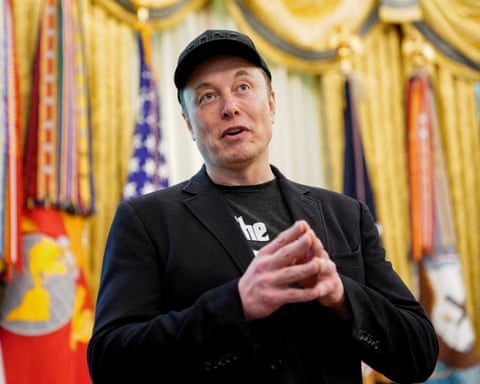 Elon Musk at a press conference at the White House on 30 May 2025. Photograph: Nathan Howard/Reuters
.
.
Click the link below for the complete article:
.
__________________________________________
July 1, 2025
Mohenjo
Business, Food For Thought, Human Interest, Political, Science, Technical
amazon, business, Business News, current-events, Future, Hotels, human-rights, medicine, mental-health, research, Science, Science News, technology, Technology News, travel, vacation

Click the link below the picture
.
A second city has been uncovered below Egypt’s iconic pyramids of Giza, according to Italian archaeologists who discovered the massive underground structure.
Located under the Mankaure pyramid, this colossal find may be able to “prove” how the three Giza pyramids are connected through the potential existence of a massive subterranean complex buried 2,000ft underground.
This remarkable discovery comes after the team previously found large underground structures below the Khafre pyramid back in March.
That being said, research co-author and radar expert from the University of Strathclyde, Filippo Biondi, has defended his team’s research. He explained to the Daily Mail that, according to their data, there is a 90 per cent probability that the Menkaure shares the same pillars as Khafre.
“We firmly believe that the Giza structures are interconnected, reinforcing our view that the pyramids are merely the tip of the iceberg of a colossal underground infrastructural complex,” Biondi told the publication.
“This network likely consists of a dense system of tunnels linking the main subterranean structures.”
He continued to describe how the measures showed “pillar-like structures with consistent characteristics.”
“Given that Menkaure is smaller than Khafre, we believe the number of pillars is likely even but fewer than those under Khafre.”
According to the researchers, there are eight pillars under the Khafre pyramid with spiral-like structures that are thought to be 2,000ft long.
What is their theory?
This latest development of detecting pillars underneath Mankaure that resemble the ones under Khafe reinforces their theory that thousands of feet below, there is a hidden “megastructure” of some kind.
No doubt, there is curiosity as to the purpose of the second city, but Biondi noted that they’re still gathering information to thoroughly study the matter,” at this time.
.
 Second city has been uncovered below Egypt’s iconic pyramids of Giza,
.
.
Click the link below for the complete article:
.
__________________________________________
Older Entries
Newer Entries
 James' World 2