Home

‘The really big bomb’: Outrage grows from all sides over Trump admin backtracking

Leave a comment

Click the link below the picture

.

U.S. Rep. Ro Khanna said he will attempt to force a vote in Congress to release all the government’s files pertaining to the notorious financier and convicted sex offender Jeffrey Epstein.

“On Tuesday, I’m introducing an amendment to force a vote demanding the FULL Epstein files be released to the public,” Khanna (D-Calif.) tweeted Saturday night. “Speaker [Mike Johnson] must call a vote and put every Congress member on record.”

The administration of President Donald Trump has been accused in recent days of covering up information about the extent of the financier’s crimes and his connections to powerful individuals, including President Donald Trump himself.

“Why are the Epstein files still hidden? Who are the rich and powerful being protected?” Khanna asked.

Since Epstein’s death in 2019 in federal custody following charges of child sex-trafficking, the billionaire investor has been the subject of rampant speculation.

Though his death was officially ruled a suicide, some have speculated that Epstein was murdered to prevent him from implicating other elite “clients” in his sex-trafficking ring. Epstein had relationships with powerful individuals, including former President Bill Clinton and the U.K.’s Prince Andrew.

Trump also has a well-documented history with Epstein. They have been extensively photographed together. And last year, an audio tape was released in which Epstein described himself as “Donald Trump’s closest friend.”

In June, amid a public falling-out with the president, billionaire Elon Musk said that the Trump administration, which he’d just departed, was covering up the files to protect Trump.

“Time to drop the really big bomb: @realDonaldTrump is in the Epstein files,” he wrote. That is the real reason they have not been made public.”

During the 2024 campaign, Trump said he would “probably” release the so-called “Epstein files” to the public. Meanwhile, many members of his Department of Justice—including FBI Director Kash Patel—rose to prominence in part by accusing Joe Biden’s administration of covering up secrets about Epstein to protect powerful Democrats and other elites.

During his confirmation hearing, Patel said he would “do everything if confirmed as FBI director to make sure the American public knows the full weight of what happened.”

In February, Attorney General Pam Bondi said the DOJ would be “lifting the veil” on “Epstein and his co-conspirators.” She said she had Epstein’s client list “sitting on

my desk right now to review” and promised that “a lot of names” would be revealed. Though in subsequent days, little was released beyond information that was already public.

A memo released July 7 by the DOJ later stated that there was “no incriminating client list” and that Epstein indeed committed suicide. It also said that “no further disclosure would be appropriate or warranted.”

This reversal resulted in widespread anger, including from many Trump supporters directed at Bondi, who they accused of covering up information that might damage the president.

“Pam Blondi [sic] is covering up child sex crimes that took place under HER WATCH when she was Attorney General of Florida,” wrote one of Trump’s closest confidantes, Laura Loomer. “Bondi needs to be fired.”

.

https://img-s-msn-com.akamaized.net/tenant/amp/entityid/AA1IzH3D.img?w=768&h=511&m=6&x=182&y=153&s=385&d=385

(REUTERS) © provided by AlterNet

.

.

Click the link below for the complete article:

https://www.msn.com/en-ca/news/politics/the-really-big-bomb-outrage-grows-from-all-sides-over-trump-admin-backtracking/ar-AA1IyOjD?ocid=winp2fptaskbarhover&cvid=ec4c861f2de34d39b1fedadf718696f8&ei=19

.

__________________________________________

Brains Process Speech and Singing Differently

2 Comments

Click the link below the picture

.

Rachel Feltman: For Scientific American’s Science Quickly, I’m Rachel Feltman. We’re wrapping up our week of summer reruns with one of my absolute favorite Science Quickly episodes. Back in October, SciAm associate news editor Allison Parshall took us on a fascinating sonic journey through the evolution of song. What turns speech into music, and why did humans start singing in the first place? A couple of 2024 studies offered a few clues.

Allison, thanks for coming back on the pod. Always a pleasure to have you.

Allison Parshall: Thanks for having me.

Feltman: So I hear we’re going to talk about music today.

Parshall: We are going to talk about music, my favorite topic; I think your favorite topic, too—I mean, I don’t want to put words in your mouth.

Feltman: Yeah, I’m a fan, yeah.

Parshall: Yeah, yeah. Well, I guess I would love to know if you have a favorite folk song.

Feltman: That is a really tough question because I love, you know, folk music and all of its weird modern subgenres. But if I had to pick one that jumps out that I’m like, “I know this is genuinely at least a version of an old folk song and not, like, something Bob Dylan wrote,” would be “In the Pines,” which I probably love mostly because I grew up kind of in the pines, in the [New Jersey] Pine Barrens, so feels, you know, appropriate.

Parshall: Will you sing it for me?

Feltman: Oh, don’t make me sing, don’t make me sing. Okay, yes.

Parshall: Yay, okay! I’m sat.

Feltman (singing): “In the pines, in the pines, where the sun don’t even shine / I’d shiver the whole night through / My girl, my girl, don’t lie to me / Tell me, ‘Where did you sleep last night?’”

That’s it; that’s the song.

Parshall: Clapping, yay! Oh, that was lovely. Honestly, I didn’t know if I expected you to sing it.

Feltman: If you ask me to sing, I’m gonna sing.

Parshall: I’m very happy. Well, I will not be singing my favorite folk song—I don’t even know if it qualifies as a folk song—but my grandma used to sing us a lullaby, and that lullaby was “The Battle Hymn of the Republic,” like, “Mine eyes have seen the glory,” or whatever. Yeah, so I think that’s my favorite one, but I don’t know if it qualifies.

Parshall: But I’m definitely not the only person, like, asking this question; I’m asking it to you for a reason. There’s this group of musicologists from around the world that have been basically going around to each other and asking each other the same thing: “Can you sing me a traditional song from your culture?”

And they’re in search of the answer to this really fundamental question about music, which is: “Why do humans across the whole world, in every culture, sing?” This is something that musicologists and evolutionary biologists have been asking for centuries, like, at least as far back as Darwin. And this year we had two cool new cross-cultural studies that have helped us get a little bit closer to an answer. And actually they’ve really changed how I think about the way that we humans communicate with one another, so I’m really happy to tell you about them.

Feltman: Yeah, why do we sing? What theories are we working with?

Parshall: Well, okay, so there’s generally two schools of thought. One is that singing is kind of an evolutionary accident—like, we evolved to speak, which is genuinely evolutionarily helpful, and then singing kind of just came along as a bonus.

Feltman: That is a pretty sweet bonus.

Parshall: I agree. It’s like we get the vocal apparatus to do the speaking, and then the singing comes along. And the people who buy into this theory like to say that music is nothing more than, quote, “auditory cheesecake,” which is a turn of phrase that has long irked Patrick Savage. He’s a comparative musicologist at the University of Auckland in New Zealand.

Patrick Savage: It’s just like a drug or a cheesecake: It’s nice to have, but you don’t really need it. It could vanish from existence, and no one would care, you know?

So that kind of pisses off a lot of us who care deeply about music and think it has deep value. But it’s kind of a challenge—like, can we show that there are any real, consistent differences between music and language?

Parshall: Savage took this challenge very seriously because, if you couldn’t tell, he belongs to the other school of thought about music’s origins: that singing served some sort of evolutionary purpose in its own right, that it wasn’t just a bonus. And if that were true, if music weren’t just a by-product of language but played, like, an actual role in how we evolved, you’d expect to see similarities across human societies in what singing is and how it functions in a way that is different from speech.

.

https://static.scientificamerican.com/dam/m/15dfc46f0f10e613/original/SQ-Friday-EP-Art.png?m=1715878940.917&w=900Anaissa Ruiz Tejada/Scientific American

.

.

Click the link below for the complete article:

https://www.scientificamerican.com/podcast/episode/how-and-why-humans-began-to-sing-a-musicology-and-neuroscience-perspective/

.

__________________________________________

REPORT: TRUMP ASKED ZELENSKYY IF UKRAINE COULD HIT MOSCOW

Leave a comment

Hmmmm… If this is true, we are in more trouble with Trump than we thought!

Click the link below the picture

.

Trump Asked Zelenskyy If Ukraine Could Strike Moscow With U.S. Long-Range Weapons: Report

Trump asked Ukrainian President Volodymyr Zelenskyy whether his country’s forces could hit Moscow if the U.S. supplied them with long-range weapons during their call on July 4, The Financial Times reported, citing sources briefed on their conversation. 52White House press secretary Karoline Leavitt sought to downplay the report, which claims Trump urged the wartime leader to increase deep strikes on Russia, claiming the outlet “is notorious for taking words wildly out of context to get clicks.””President Trump was merely asking a question, not encouraging further killing. He’s working tirelessly to stop the killing and end this war,” Leavitt said in a statement to HuffPost.The report comes a day after Trump expressed frustration with Vladimir Putin, warning the U.S. would punish Moscow if the Russian president doesn’t end the war within 50 days.

.

.

.

Click the link below for the complete article:

https://www.huffpost.com/

.

__________________________________________

‘Chaos’: Red‐state governor sounds the alarm over Trump’s agenda

Leave a comment

Click the link below the picture

.

Kentucky Gov. Andy Beshear (D) launched a searing critique of the Trump administration’s sweeping tariff policies Sunday. During an appearance on NBC News’s “Meet the Press,” Beshear labeled the strategy pure “chaos,” undermining the U.S. economy.

He warned these unpredictable tariffs are harming working families.

“The people of Kentucky, many of them, voted for [President] Donald Trump because they thought he’d make paying the bills a little bit easier at the end of the week. And he’s just making it harder,” Beshear said.

Asked if Kentuckians had backed the current tariff agenda, Beshear was unequivocal.

“No, not at all,” he said. “This is, what was it, first across the board, then reciprocal, then industry-specific. I think there was a company-specific tariff proposed. Now, we have tariffs on countries if he doesn’t like who that country is prosecuting. It is chaos. It is increasing costs.”

The governor detailed real-world consequences, noting layoffs among small businesses in Kentucky hit by rising costs of imported raw materials.

“And when a small business is laying somebody off, it’s somebody they go to church with. It’s somebody who their kids play soccer with. This is going to impact the economy in such negative ways,” he added.

In April, Trump announced “reciprocal” tariffs on numerous countries, tying rates to bilateral trade deficits. Though rates were reduced to 10 percent for a 90‑day negotiation window, the move sent shockwaves through markets.

Beshear’s statements echo bipartisan dismay in Kentucky — including from Republican Sens. Mitch McConnell and Rand Paul — as local industries like bourbon, auto manufacturing, and agriculture warn of escalating costs, production delays, and retaliatory foreign tariffs.

On Saturday, Trump announced that, effective August 1, a 30 percent tariff will be levied on imports from both Mexico and the European Union. This escalation follows several weeks of trade talks that did not yield a comprehensive agreement, with both sides unable to finalize a deal.

.

https://img-s-msn-com.akamaized.net/tenant/amp/entityid/AA1Iz09l.img?w=768&h=512&m=6&x=537&y=140&s=131&d=131

U.S. President Donald Trump gestures as he arrives at the White House, in Washington, U.S., June 9, 2025. REUTERS/Evelyn Hockstein © provided by AlterNet

.

.

Click the link below for the complete article:

https://www.msn.com/en-ca/news/politics/chaos-red-state-governor-sounds-the-alarm-over-trump-s-agenda/ar-AA1Iwx76?ocid=winp2fptaskbarhover&cvid=b1d66505007f4761a1fb914ac5cc2554&ei=7

.

__________________________________________

Most Plastic in the Ocean Is Invisible—And Deadly

Leave a comment

Click the link below the picture

.

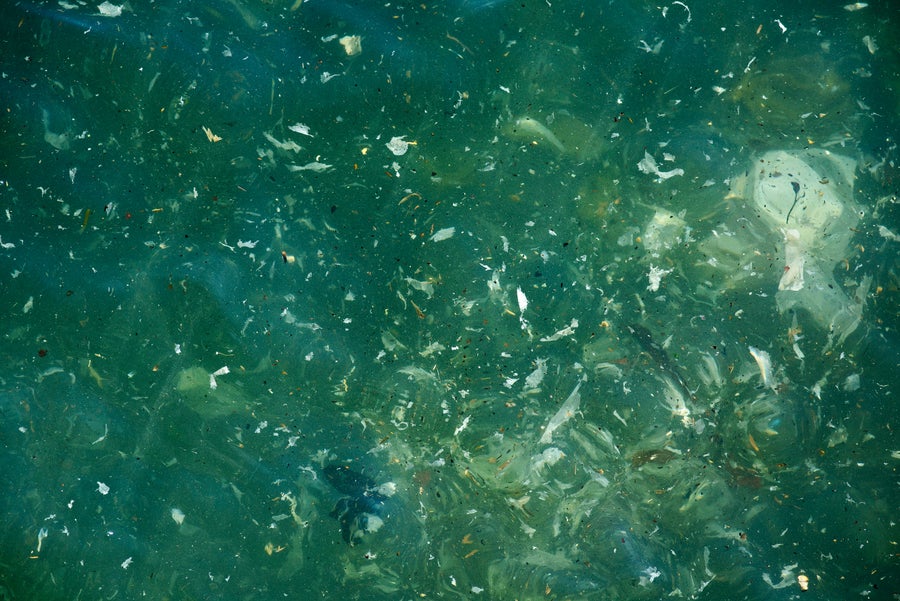
Marine plastic litter tends to grab headlines, with images of suffocating seabirds or bottles washing up along coastlines. Increasingly, researchers have been finding tiny microplastic fragments across all environments, from the most densely populated cities to pristine mountaintops, as well as in human tissue, including the brain and placenta. A study published today reveals yet another hidden source of this deadly waste: nanometre-scale particles are literally everywhere, says co-author Dušan Materić, an environmental analytical chemist at the Helmholtz Centre for Environmental Research in Leipzig, Germany.

Materić and his colleagues sampled water at three depths representative of different environments in the North Atlantic Ocean. Throughout the water column, they found three types of nanoplastic: polyethylene terephthalate (PET), polystyrene (PS), and polyvinylchloride (PVC). These were present at average concentrations of 18 milligrams per metre cubed, which translates to 27 million tonnes of nanoplastics spread across just the top layer of the temperate to subtropical North Atlantic. “Nanoplastics make up the dominant fraction of marine plastic pollution,” Materić says. In the entire world’s oceans, it is estimated that there are around 3 million tonnes of floating plastic pollution, excluding nanoplastics.

What are plastic nanoparticles, and how different are they from microplastics?

The tiniest of pieces of plastic, nanoplastics are defined by the researchers as having a diameter of less than one micrometre (one one-thousandth of a metre). Microplastics are between one micrometre and 5 millimetres across. At the smaller scale of nanoplastics, materials behave differently. Materić and his colleagues found that the particles were distributed throughout the water column, rather than settling to the bottom. The movement of the nanoplastic particles was dominated not by gravity, but by the random movement called Brownian motion, and by collisions with water molecules.

How did the team find the nanoplastics?

The scientists took water samples during a November 2020 cruise on research vessel Pelagia, which is owned by the Royal Netherlands Institute of Sea Research in Texel. They sampled at 12 locations: 5 in the system of circular currents called the North Atlantic subtropical gyre; 4 in the open ocean; and 3 from coastal areas on the European continental shelf. At each location, they gathered samples at depths of 10 metres and 1,000 metres below the surface, and then 30 metres off the ocean bottom.

The nanoplastics were detected using a technology called thermal-desorption proton-transfer-reaction mass spectrometry. “We faced multiple challenges,” says Materić, including the need to remove contaminants other than nanoplastics. Each 10-millilitre sample was run through a filter with micrometre pores to clear out microplastics. Samples were then slowly heated, releasing any organic matter and allowing the remaining plastics to be identified.

Not all was as expected. “We faced a big mystery,” says Materić. One major class of plastics, polyethylene (PE), was missing from the data, even though fragments almost certainly enter the ocean. The fragments probably transform into something else, or might fall to the sea bed, says Materić. “This suggests that PE nanoplastic cycling in the ocean environment follows some unusual pathway — either rapid chemical alteration or mineralization, or fast sinking.”

Should we be surprised that nanoplastics are an overlooked source of plastics pollution? Should we be worried?

“This does not come as a surprise to me, as I have been aware of the extent and magnitude of the problem for some time,” says Tony Walker, an environmental scientist at Dalhousie University in Halifax, Canada. “Nanoplastics, unlike microplastics, are able to pass through cell walls, meaning that they are already incorporated into the ocean phytoplankton, which serve as the base of the marine food web and are able to be transferred through the marine food web,” he explains.

The ubiquitousness of nanoplastics means they should be taken seriously, says Materić. “Given their toxicological potential, they may represent the most problematic plastic size fraction for ocean life,” he says. Walker agrees: “This should be a wake-up call to all of us,” he says. “The extent to which nanoplastics can infiltrate every ecosystem and living cell on the planet is even far worse than what we already know about microplastics and larger plastic pollution.”

What can be done to mitigate the pollution?

The next and likely final round of negotiations for a legally binding United Nations treaty on plastics pollution will kick off in August in Geneva, Switzerland. On the table is a limit on future plastic manufacture, but this is being resisted by some countries, including those that rely on oil and gas exports to power their economies.

“One of the best strategies to mitigate future nanoplastic pollution or release into the environment is to cap plastic production,” says Walker. “Turn off the tap.”

.

https://static.scientificamerican.com/dam/m/2098911c0970ea03/original/plastic_floating_in_water_at_beach.jpg?m=1752162423.107&w=900Sergi Escribano/Getty Images

.

.

Click the link below for the complete article:

https://www.scientificamerican.com/article/nanoplastics-make-up-most-of-the-oceans-plastic-pollution/

.

__________________________________________

Obama’s blunt message for Democrats: ‘Toughen up’

Leave a comment

Click the link below the picture

.

Former President Barack Obama issued a call to action for Democrats at a private fundraiser in New Jersey on Friday evening, urging those frustrated by the state of the country under President Donald Trump to “stand up for the things that you think are right.”

“I think it’s going to require a little bit less navel-gazing and a little less whining and being in fetal positions. And it’s going to require Democrats to just toughen up,” Obama said at the fundraiser, according to excerpts of his remarks exclusively obtained by CNN.

“You know, don’t tell me you’re a Democrat, but you’re kind of disappointed right now, so you’re not doing anything. No, now is exactly the time that you get in there and do something,” he said. “Don’t say that you care deeply about free speech and then you’re quiet. No, you stand up for free speech when it’s hard. When somebody says something that you don’t like, but you still say, ‘You know what, that person has the right to speak.’ … What’s needed now is courage.”

Obama’s comments come as the Democratic Party searches for its path forward in the second Trump term and beyond. Many in the party’s base have called for a more forceful response from Democratic leaders at a time when the party is locked out of power.

As Democrats debate who should lead the party, Obama encouraged them to channel their energy into the governor’s races in New Jersey and Virginia, saying the off-year elections could be “a big jumpstart for where we need to go.”

“Stop looking for the quick fix. Stop looking for the messiah. You have great candidates running races right now. Support those candidates,” Obama said, calling out the New Jersey and Virginia elections, according to the excerpts of his remarks.

“Make sure that the DNC has what it needs to compete in what will be a more data-driven, more social media-driven cycle, which will cost some money and expertise and time,” he continued.

Obama spoke at a private fundraiser hosted by New Jersey Gov. Phil Murphy and his wife, Tammy Murphy, at their home in Red Bank, New Jersey. The intimate dinner drew in $2.5 million through in-person and online donations for the Democratic National Committee, a source familiar with the event said.

A portion of the haul will be allocated to Democratic efforts in the governor’s race in New Jersey. The Democratic nominee, Rep. Mikie Sherrill, and and DNC Chair Ken Martin were on hand for the event.

Obama described Sherrill and former Rep. Abigail Spanberger, the Democratic nominee for governor in Virginia, as “powerful spokespersons for a pragmatic, commonsense desire to help people and who both have remarkable track records of service.”

“The most important thing you can do right now is to help the team, our candidate to win,” he said. “And we’ve got to start building up our coffers in the DNC.”

Obama also argued that Democrats need to focus on how to “deliver for people,” acknowledging the different views within the party about how best to do that.

“There’s been, I gather, some argument between the left of the party and people who are promoting the quote-unquote abundance agenda. Listen, those things are not contradictory. You want to deliver for people and make their lives better? You got to figure out how to do it,” he said.

“I don’t care how much you love working people. They can’t afford a house because all the rules in your state make it prohibitive to build. And zoning prevents multifamily structures because of NIMBY,” he said, referring to “not in my backyard” views. “I don’t want to know your ideology, because you can’t build anything. It does not matter.”

Obama has spoken selectively since Trump’s return to power in January. He has criticized the president’s tariff policy and warned the White House was infringing on Americans’ rights. Last month, Obama warned the country was “dangerously close” to a more autocratic government.

At the closed-press fundraiser on Friday, the former president said he has not been “surprised by what Trump’s done” or that “there are no more guardrails within the Republican Party.” He repeated his calls for institutions, including law firms and universities, to push back on intimidation efforts by the Trump administration.

“What’s being asked of us is make some effort to stand up for the things that you think are right. And be willing to be a little bit uncomfortable in defense of your values. And in defense of the country. And in defense of the world that you want to leave to your children and your grandchildren,” he said. “And if we all do that, if we do our jobs over the next year and a half, then I think we will rebuild momentum and we will position ourselves to get this country moving in the direction it should.”

.

https://media.cnn.com/api/v1/images/stellar/prod/gettyimages-2188444357.jpg?c=16x9&q=h_653,w_1160,c_fill/f_avif

.

.

Click the link below for the complete article:

https://www.cnn.com/2025/07/14/politics/obama-democrats-message

.

__________________________________________


A cult leader shows how Trump is taking America to a very dark place | Opinion

Leave a comment

Click the link below the picture

.

Former FBI agent Michael Fienberg has gone public, pointing out that the agency, under the leadership of Dan Bongino and Kash Patel, is purging itself of people who are not members of the Trump cult (my phrase, not his).

Similar cult-like behavior is on vivid display with the White House press secretary, the head of DHS, and the head of the Department of Justice — among numerous other administration officials and elected Republicans — regularly spouting lies and half-truths that target women, immigrants, and Democrats.

Rep. Marjorie Taylor Greene (R-GA) is implying that the children who died in the Texas floods were the victims of a nefarious plot — presumably by Democrats or Jews who operate space lasers — to modify the weather, completely ignoring the fact that Republican-aligned fossil fuel billionaires have been engaged in a half-century-long scheme to sabotage our atmosphere with their carbon dioxide emissions in exchange for trillions of dollars in profits. Some of which, no doubt, have been shared with Greene or her campaign.

Multiple administration officials, elected Republicans, and rightwing media cult leaders on platforms like Fox “News” have been amplifying the racist, antisemitic “Great Replacement Theory,” that wealthy Jews are paying to “replace” white people in America with Blacks, Mexicans, and other people of color. This has led to ICE becoming the largest police force in America, with a budget larger than that of the entire Russian military, soon to be sweeping a neighborhood near you in their never-ending hunt for brown-skinned people.

Donald Trump didn’t need to lure his followers into a remote jungle, like Jim Jones did in Guyana. He didn’t need to physically isolate them from the rest of the world. Instead, Trump built his Jonestown right here at home, within the boundaries of our republic, brick by brick. He did it using over 30,000 documented lies, fear, rage, and the intoxicating promise of belonging.

Today, tens of millions of Americans are trapped inside Trump’s reality-warping cult. And just as Jones’ followers drank poisoned Kool-Aid believing it was salvation, Trump’s followers have swallowed his Big Lies and are now willing to sacrifice our Constitution, our democracy, and our future on the altar of one man’s insatiable ego.

This is an old story in new packaging.

Jim Jones wasn’t always a madman. In the beginning, he offered something people desperately wanted: community, belonging, equality. He drew in the lonely, the marginalized, the disillusioned. He offered them meaning, dignity, and the hope of a better world. But slowly, he twisted that

hope into a tool of control, weaponizing his followers’ trust for his own wealth, power, and self-aggrandizement.

Donald Trump followed a similar cult leader’s path.

He didn’t invent the grievances he exploited. For decades, America’s middle class was gutted by Reaganomics and neoliberal trade policies. Jobs were shipped overseas. Unions were crushed. Wages stagnated while billionaires like Trump amassed obscene wealth.

Trump didn’t cause that pain, but he channeled it. He told working-class Americans that he alone could restore their lost greatness. At the 2016 Republican National Convention, he bellowed: “I alone can fix it.”

That wasn’t a campaign promise. It was a cult leader’s declaration. Like Jones, Trump positioned himself not as a servant of the people, but as their savior, the one indispensable man without whom all hope would be lost.

All cults, whether religious or political, thrive on division and a sense of victimhood. Jim Jones taught his followers that outsiders were out to destroy them, that they were surrounded by enemies, traitors, and saboteurs. He warned that the CIA, the media, and shadowy conspirators would annihilate Jonestown unless his people followed him without question.

Trump operates from the same playbook.

His enemies list is long: immigrants, Black voters, Muslims, women, Democrats, journalists, scientists, the “deep state,” election officials, even members of his own party who dare to tell the truth. He has spent years feeding his followers a steady diet of paranoia, victimhood, and grievance, convincing them that the only thing standing between them and ruin is him.

And just as Jones’ followers were taught to see dissent as treason, Trump’s followers are conditioned to see any criticism of him as an attack on themselves. They’ve surrendered their own personal identities to him and his cult. When he tells them that an election they lost was stolen, they believe it; not because the evidence says so, but because Trump says so. And in a cult, the cult leader’s word is truth.

Jones kept his followers in a physical jungle, cut off from the outside world. Trump does the same psychologically with the help of billionaire-backed media. His repeated attacks on the press as “the enemy of the people” are no accident: they are a deliberate strategy to isolate his followers in an information silo, where only his voice matters.

Fox “News,” Truth Social, MAGA podcasts, and a network of social media influencers form the walls of this new Jonestown. Alternative facts replace real ones. And when reality intrudes — when courts reject Trump’s lawsuits, when audits confirm his losses — his followers simply double down. “That’s just what the enemy wants us to believe.”

.

https://img-s-msn-com.akamaized.net/tenant/amp/entityid/AA1IyT5g.img?w=768&h=512&m=6&x=306&y=301&s=324&d=324

(REUTERS) © provided by AlterNet

.

.

Click the link below for the complete article:

https://www.msn.com/en-ca/news/politics/a-cult-leader-shows-how-trump-is-taking-america-to-a-very-dark-place-opinion/ar-AA1IvObU?ocid=winp2fptaskbarhover&cvid=f6885cb2495c4a9cf86db2980a1b4b46&ei=13

.

__________________________________________

The Safety Scientists Forging a More Secure Tomorrow

Leave a comment

Click the link below the picture

.

“When more people make a breakthrough discovery or build a coalition for progress, it helps advance a vision of the world in which we all want to live.” That statement of philosophy reflects how UL Research Institutes (ULRI) employees have long approached their work.  

Known for boundary-pushing research, ULRI, formerly known as Underwriters Laboratories, seeks to identify and mitigate threats to the environment, public health, and digital safety that are not well addressed elsewhere, and includes institutes focused on electrochemical, digital, chemical and fire hazards. Researchers there pursue innovative projects, often in partnership with distinguished academic and scientific organizations around the world. Here, we take a look at the minds behind the science at three ULRI institutes. 

A long hunt for safer batteries 

In 1999 American astronauts wanted to bring a digital camcorder on a space shuttle mission. But the camcorder was powered by a lithium-ion battery, a relatively new technology that hadn’t yet been approved for human spaceflight. To ensure the device wouldn’t introduce unknown hazards to the mission, Judy Jeevarajan, then a research scientist at NASA’s Johnson Space Center, ran rigorous tests on the battery to make sure it was safe. In the process, she became the first person to certify a lithium-ion battery for human space flight. 

A quarter-century later, lithium-ion batteries are everywhere, from our ubiquitous phones to implanted medical devices to satellites blinking at us in the night sky. And Jeevarajan, now vice president and executive director of the Electrochemical Safety Research Institute (ESRI) at ULRI, continues to lead the charge toward making them safe, wherever they’re used. 

As much as she relished her time as a senior scientist at NASA, Jeevarajan joined ULRI in 2015, eager to embrace the organization’s broader safety goals. In 2021, she was tapped to lead ESRI, newly created with the mission to “advance safer energy storage through science.” She quickly built the institute to a staff of 21 chemical engineers, electrical engineers, fire engineering scientists, materials scientists, computer-modeling experts, and other specialists. 

Located in a University of Houston technology park, the team collaborates with researchers in academia and industry to understand the workings of

different energy-storage systems—particularly advanced batteries and hydrogen—including what may cause them to break down and when they may become dangerous. The question that drives ESRI’s work, says Jeevarajan, is “what can we do to make the world a safer place, especially with respect to energy… and sustainability?”  

It’s a question of particular pertinence now, as battery-powered devices are crucial in the move toward renewable energy. Lithium-ion batteries—light, powerful, rechargeable—are the most widely used. But if improperly manufactured or managed, they are subject to uncontrollable overheating known as thermal runaway, which can lead to disastrous fires, smoke, and chemical emissions. 

Newer energy-storage alternatives could help mitigate these threats, says Dhevathi Rajan Rajagopalan Kannan, a research scientist at ESRI who is in charge of that project. Among the alternatives: sodium-ion batteries, which, given the abundance of sodium, are cheaper and more sustainable to produce. “What I’m trying to understand is whether the sodium-ion battery that is being used, or that is available, is safe or not,” he says. And it’s a race against time: “That is a fundamental understanding we are trying to get to before it gets more commercialized and mass-produced and adopted within the U.S.” 

.

https://static.scientificamerican.com/dam/m/531057b79765aa06/original/2R43WB0.jpg?m=1743090750.259&w=900

The digital ecosystem is complex, interconnected, and not always trustworthy.  Carloscastilla/Alamy Stock Photo

.

.

Click the link below for the complete article:

https://www.scientificamerican.com/custom-media/ul-research-institutes/the-safety-scientists-forging-a-more-secure-tomorrow/

.

__________________________________________

Floods Are Getting More Dangerous and Harder to Predict. Here’s How to Protect Your Business

Leave a comment

Click the link below the picture

.

The devastating and tragic floods that have killed at least 120 people in Texas were the latest in an increasingly familiar tale of extreme rain and its devastating consequences. Whether it’s so-called 1,000-year rain events like the one seen in the Texas Hill Country or the effect of tropical activity, like central North Carolina saw when Tropical Storm Chantal moved inland, there have been more and more headlines of communities being caught by surprise.

The economic losses can also add up. The Texas floods caused an estimated $18 billion to $22 billion in damages and economic loss. Last year, Asheville, North Carolina, saw damages of at least $53 billion after Hurricane Helene stalled over the city. And recent flooding in New Mexico and Chapel Hill, North Carolina, also damaged homes and businesses.

More floods are likely on the way, scientists warn. Global warming is creating conditions that are more suited for bigger storms. (Warm air holds more moisture.) Outdated infrastructure, inadequate warning systems, and cuts to the National Oceanic and Atmospheric Administration, which runs the National Weather Service, are only going to make matters worse.

For business owners, a flood can be catastrophic, even if business was going well beforehand. While there’s little you can do to stop flood waters from entering your offices, especially in the event of a flash flood, there are steps you can take to protect yourself in the aftermath, and a few that might offer some protections to founders who are looking for a new space.

Scout the location

While it’s critical for some businesses, like retailers, to be in a convenient spot for foot traffic, it’s important to consider the locational risks before you sign a lease or buy a building. Find out if the building is in a flood zone (FEMA has a handy tool that lets you search by address, and the First Street Foundation’s Flood Factor is another way to assess risk). If it’s a high-risk zone, consider another location. If it’s low, that’s good, but that doesn’t mean you’ll want to bypass getting flood insurance.

Get the right insurance

Once you understand the risks of your business’s location, make sure you’re insured. Note that commercial property insurance will not cover you in the event of a flood. You’ll need to get specific commercial flood insurance to protect both the physical location of your business as well as all of its contents. The National Flood Insurance Program (NFIP) from FEMA will cover up to $500,000 in losses, and it’s generally the most affordable option.

If that amount is insufficient in the event of a complete loss, consider private flood insurance, which might offer broader coverage, but be prepared to pay more for it (perhaps a lot more). And some private insurers won’t offer coverage in areas that are more likely to experience flooding. Additionally, business interruption insurance often has exclusions for flooding.

Just because you’re not in a high-risk area doesn’t mean you’re safe. The NFIP points out that one-third of the flood insurance claims it receives occur outside high flood risk areas.

Design your business with a flood in mind

If you’ve yet to begin construction on your business or are in the process renovating, there are steps you can take that will make recovery easier in the event of a flood. Opt for tile instead of carpet when you’re installing the floors. Installing cement board instead of drywall will make it much easier to reopen sooner, as it doesn’t absorb water and won’t attract mold. Rather than wooden baseboards, go with a composite material. If you’re building from scratch, place your electrical outlets higher than normal, which could prevent them from taking in water if disaster strikes. And if it’s practical to elevate the building, consider that.

Have a plan in place

Chaos follows any natural disaster. And, sadly, scammers do as well. The best way to avoid both is to have an emergency plan in place. Have contractors on retainer, so you can reopen as soon as possible. Never work with a repair company you’re unfamiliar with that claims to “know the system” or shows up promising miracles after the flood. (Having a regular contractor can also be beneficial in non-emergency times.)

Familiarize yourself with how to apply for disaster assistance from FEMA and the SBA, and know the different types of loans that are available. Do you, for instance, need a Business Physical Disaster Loan to replace real estate or inventory, or an Economic Injury Disaster Loan to meet financial obligations? Determine what sort of paperwork you’ll need to have and what restrictions there are, and keep it in a secure location.

Also, foster close relationships with your suppliers so you’re able to restock as quickly as possible, if necessary.

.

https://img-cdn.inc.com/image/upload/f_webp,c_fit,w_828,q_auto/vip/2025/07/texas-floods-protect-business-inc-2223157197.jpgA man looks at a damaged road after severe flash flooding in Hunt, Texas. Photo: Getty Images

.

.

Click the link below for the complete article:

https://www.inc.com/chris-morris/floods-dangerous-harder-to-predict-how-to-protect-your-business/91212746

.

__________________________________________

Conspiracy Theorists Are Turning on the President

Leave a comment

Click the link below the picture

.

The Trump administration had promised a bombshell. Americans, many of whom had spent years wondering over the unknowns in the Jeffrey Epstein case, would finally get their hands on the secret files that would explain it all. What really happened when the accused sex trafficker died in jail back in 2019? And who was on his “client list”—a rumored collection of famous and powerful people who participated in Epstein’s crimes?

In a September 2024 interview on the Lex Fridman Podcast, Donald Trump suggested that he would release the list if reelected. “Yeah, I’d be inclined to do the Epstein; I’d have no problem with it,” Trump said. He indulged speculation about Epstein after his reelection as well. In February, the White House hosted a collection of MAGA-world influencers and gave them binders full of heavily redacted Epstein-related documents labeled Phase 1, suggesting more to come.

.

https://cdn.theatlantic.com/thumbor/LAwOliA_EsirQ3rYYkQ0yI2ugjQ=/0x0:1200x1500/665x831/media/img/2025/07/10/2025_7_9_The_End_of_QAnon_4x5/original.jpgPhoto-illustration by The Atlantic. Sources: Sezeryadigar / Getty; Rick Friedman / Corbis / Getty.

.

.

Click the link below for the complete article:

https://www.theatlantic.com/technology/archive/2025/07/epstein-files-trump/683503/

.

__________________________________________

Older Entries Newer Entries

Amor Entre Estrellas

¡Bienvenido de vuelta viajero!

Heart of Loia `'.,°~

so looking to the sky ¡ will sing and from my heart to YOU ¡ bring...

Michael Ciullo

CEO and Founder of Nsight Health

MRS. T’S CORNER

https://www.tangietwoods

Nelson MCBS

Catholic News, Prayers, HD Images, Rosary, Music, Videos, Holy Mass, Homily, Saints, Lyrics, Novenas, Retreats, Talks, Devotionals and Many More

Global geopolitics

Decoding Power. Defying Narratives.

Talk Photo

A creative collaboration introducing the art of nature and nature's art.

Movie Burner Entertainment

The Home Of Entertainment News, Reviews and Reactions

Le Notti di Agarthi

Hollow Earth Society

C r i s t i a n a' s Fine Arts ⛄️

•Whenever you are confronted with an opponent, conquer him with love.(Gandhi)

TradingClubsMan

Algotrader at TRADING-CLUBS.COM

Comedy FESTIVAL

Film and Writing Festival for Comedy. Showcasing best of comedy short films at the FEEDBACK Film Festival. Plus, showcasing best of comedy novels, short stories, poems, screenplays (TV, short, feature) at the festival performed by professional actors.

Bonnywood Manor

Peace. Tranquility. Insanity.

Warum ich Rad fahre

Take a ride on the wild side

Madame-Radio

Découvre des musiques prometteuses (principalement) dans la sphère musicale française.

Ir de Compras Online

No tiene que Ser una Pesadilla.

Kana's Chronicles

Life in Kana-text (er... CONtext)

Cross-Border Currents

Tracking money, power, and meaning across borders.

Jam Writes

Where feelings meet metaphors and make questionable choices.

emotionalpeace

Finding hope and peace through writing, art, photography, and faith in Jesus.

WearingTwoGowns.COM

The Community for Wounded Healers: Former Medical Students, Disabled Nurses, and Faith-Fueled Pivots

...

love each other like you're the lyric to their music

Luca nel laboratorio di Dexter

Comprendere il mondo per cambiarlo.

Tales from a Mid-Lifer

Mid-Life Ponderings

Creative

Travel,Tourism, Life style "Now in hundreds of languages for you."

freedomdailywriting

I speak the honest truth. I share my honest opinions. I share my thoughts. A platform to grow and get surprised.

The Green Stars Project

User-generated ratings for ethical consumerism

Cherryl's Blog

Travel and Lifestyle Blog

Sogni e poesie di una donna qualunque

Questo è un piccolo angolo di poesie, canzoni, immagini, video che raccontano le nostre emozioni

My Awesome Blog

“Log your journey to success.” “Where goals turn into progress.”

pierobarbato.com

scrivo per dare forma ai silenzi e anima alle storie che il mondo dimentica.

Thinkbigwithbukonla

“Dream deeper. Believe bolder. Live transformed.”

Vichar Darshanam

Vichar, Motivation, Kadwi Baat ( विचार दर्शनम्)

Komfort bad heizung

Traum zur Realität

Chic Bites and Flights

Savor. Style. See the world.

ومضات في تطوير الذات

معا نحو النجاح

Broker True Ratings

Best Forex Broker Ratings & Reviews

Blog by ThE NoThInG DrOnEs

art, writing and music by James McFarlane and other musicians

fauxcroft

living life in conscious reality

Srikanth’s poetry

Freelance poetry writing

JupiterPlanet

Peace 🕊️ | Spiritual 🌠 | 📚 Non-fiction | Motivation🔥 | Self-Love💕