September 9, 2025
Mohenjo
Business, Food For Thought, Human Interest, Political, Science, Technical
amazon, business, Business News, current-events, Future, Hotels, human-rights, medicine, mental-health, research, Science, Science News, technology, Technology News, travel, vacation

Click the link below the picture
.
The Supreme Court has handed Donald Trump yet another victory by letting the administration continue to freeze billions of dollars in foreign aid while legal challenges against the government’s attempts to withhold public funding are ongoing.
On Tuesday, Chief Justice John Roberts granted the administration’s emergency appeal to temporarily block a lower court’s order, setting up a major test of what opponents have called the president’s unconstitutional attempts to control public funding approved by Congress.
Last week, a federal judge ordered the administration to spend funds that were already approved by Congress for global aid programs before that money expires at the end of the month.
U.S. Solicitor General D. John Sauer told the Supreme Court that unfreezing aid poses a “grave and urgent threat” to the presidency.
“The president can hardly speak with one voice in foreign affairs or in dealings with Congress when the district court is forcing the executive branch to advocate against its own objectives,” he wrote.
A recent study in The Lancet estimated Trump’s cuts could contribute to the deaths of 14 million people by 2030, including as many as 5 million children under the age of 5.
Several overlapping legal battles challenging Trump’s threats to the congressional power of the purse have bounced back and forth from the Supreme Court, which rejected Trump’s demand to continue blocking nearly $2 billion in foreign aid payments back in March. Last month, a panel of appellate court judges in D.C. opened the door for the administration to continue withholding billions of dollars in money for food, medicine and other aid that the president blocked on his first day in office.
But in his order last week, District Judge Amir Ali argued that the government has “given no justification to displace the bedrock expectation that Congress’s appropriations must be followed.”
The law is “explicit that it is congressional action — not the president’s transmission of a special message — that triggers rescission of the earlier appropriations,” Ali wrote last week.
The Trump administration is calling the judge’s ruling “unlawful.”
Sauer said Ali’s ruling “precipitates an unnecessary emergency and needless interbranch conflict” and urged justices to block it.
An estimated $10.5 billion of roughly $30 billion at stake is set to expire on September 30, according to Sauer.
The government intends to spend $6.5 billion of those funds before the deadline, but spending the remaining $4 billion would be a “grave and urgent threat” to the separation of powers, he argued.
Trying to “scramble” to meet that end-of-the-month deadline is “untenable,” according to Sauer.
Plaintiffs argued that the Trump administration’s “emergency” is “a circumstance of their own creation.”
The U.S. Agency for International Development, now under the State Department’s direction, has been obligated to spend those funds for more than a year, and now chooses not to, according to plaintiffs,
“The government faces no cognizable harm from having to take steps to comply with the law for the short period while this Court considers its stay application,” plaintiffs wrote.
USAID, which was among the world’s largest aid programs with hundreds of life-saving missions in dozens of countries, has already endured a virtual collapse within the first eight months of the Trump administration.
Hours after entering office, Trump issued an executive order imposing a 90-day freeze on all foreign aid distribution, then placed virtually all USAID staff on administrative leave while folding what remains of the dismantled agency into the State Department.
Elon Musk, who assumed control of the so-called Department of Government Efficiency with a mandate to slash budgets across the federal government, said he wanted the agency to be fed into a “wood chipper.”
On July 1, Secretary of State Marco Rubio said the agency would “officially cease to implement foreign assistance.”
Rubio has since handed control of what remains of the agency to White House budget director Russell Vought, who is leading efforts to claw back nearly $5 billion in congressionally approved funds.
Last month, the White House told Congress that $4.9 billion in foreign aid approved by lawmakers would not be spent through a so-called “pocket” rescission, which the government’s own watchdog has warned is an illegal attempt to undermine the congressional power of the purse and unconstitutionally erode the nation’s core system of checks and balances.
.

.
.
Click the link below for the complete article:
.
__________________________________________
September 8, 2025
Mohenjo
Business, Food For Thought, Human Interest, Political, Science, Technical
amazon, business, Business News, current-events, Future, Hotels, human-rights, medicine, mental-health, research, Science, Science News, technology, Technology News, travel, vacation
From
INSTAGRAM
Click the link below the picture for a video
 Instagram
_________________________________________________
I like a short version,
If you don’t believe in the right thing and wake up dead,
You have two things to worry about
Original or Extra Crispy
_______________________ME_________________________
.
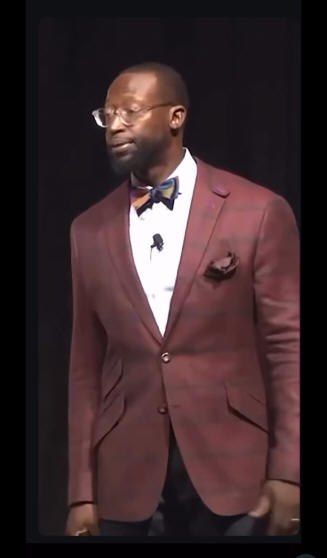 Willie Munoz on Instagram is by far the funniest version
.
1Click the link for the Video:
.
__________________________________________
September 8, 2025
Mohenjo
Business, Food For Thought, Human Interest, Political, Science, Technical
amazon, business, Business News, current-events, Future, Hotels, human-rights, medicine, mental-health, research, Science, Science News, technology, Technology News, travel, vacation

Click the link below the picture
.
A bacterial species found in spacecraft clean rooms can survive intensive antimicrobial cleaning by going dormant, new research finds. That’s important because other clean-room survivors had been known to live through disinfection by forming spores, which are thick-walled structures that protect bacteria from high temperatures or toxins such as ethanol. The actinobacterium Tersicoccus phoenicis can’t form these spores, but a new study published in the journal Microbiology Spectrum shows that it can go into a state similar to hibernation. In this state, it has no growth and almost no metabolism, but has the ability to “wake up” when conditions improve.
“In the cleanest places we build—spacecraft, pharma plants, food facilities—some microbes aren’t dead: they’re dormant,” says Alberto G. Fairén, an astrobiologist at Cornell University who wasn’t involved in the research.
While in this dormant state, T. phoenicis can’t be detected by the usual method of swabbing surfaces and checking which bacteria grow in culture from the swabs. That means it could theoretically sneak aboard spacecraft that are supposed to be free of Earth contaminants. If such a bug hitched a ride to another planet, it could wake up upon arrival and potentially disrupt existing extraterrestrial life. “It’s a huge planetary protection concern,” says Madhan Tirumalai, a biologist and biochemist at the University of Houston and lead author of the new study.
T. phoenicis was first discovered in a clean room at NASA’s Kennedy Space Center in Florida, where the Mars lander Phoenix was being prepared for launch. Two years later, it popped up in a European Space Agency clean room in South America. In 2013, scientists discovered that this mystery survivor was not only a new species but a new genus of bacteria.
This species is part of a larger group of bacteria, known as actinomycetota or actinobacteria, that are able to go dormant when conditions aren’t conducive to growth. (One famous member of this group is Mycobacterium tuberculosis, the bacterium that causes tuberculosis, which can go dormant and persist in the lungs over a lifetime.) To learn whether T. phoenicis was capable of dormancy, Tirumalai and his colleagues deprived cells of nutrients and extracted all water from them (a process called desiccation). The cells stopped growing, and the number of viable cells plummeted within days.
To show that these nonviable cells were dormant, not dead, the researchers added a protein called a resuscitation-promoting factor (Rpf), which is known to “wake up” other species of dormant actinobacteria. The Rpf revived the cells, “proving they were alive but silent,” Tirumalai says.
That’s a concern for human travel to a place such as Mars, which could offer a new, nutrient-rich environment to the hibernating microbes. Astronauts trying to survive on the red planet would need to grow food, and the sugars and nutrients involved could revive the bacteria, says study co-author William Widger, a University of Houston biologist. “That would be in the environmental safe quarters of astronauts, probably where you’d not want them.”
The microbe likely couldn’t survive on the Martian surface, however, Fairén says. “The high UV flux, extreme cold and desiccation, low atmospheric pressure, and cosmic radiation on Mars are overwhelmingly hostile—even to spore-formers. Dormant nonspore, nonprotected cells would almost certainly not endure long on exposed surfaces on Mars—minutes or less.”
That makes contamination from a robotic mission an unlikely concern, Fairén says, although human missions to the planet will almost certainly contaminate it. The paper does highlight the need for better detection and targeting of non-spore-forming bacteria in clean rooms, he says.
It’s not yet clear how to effectively clean up dormant microbes. Tirumalai and his colleagues are now looking to test other clean-room survivors for their dormancy potential, which would make a case for upending current cleaning procedures.
“If we can show that a significant number of these organisms that have been isolated from clean rooms can go into dormancy,” Tirumalai says, “bingo—we have a much bigger story.”
.
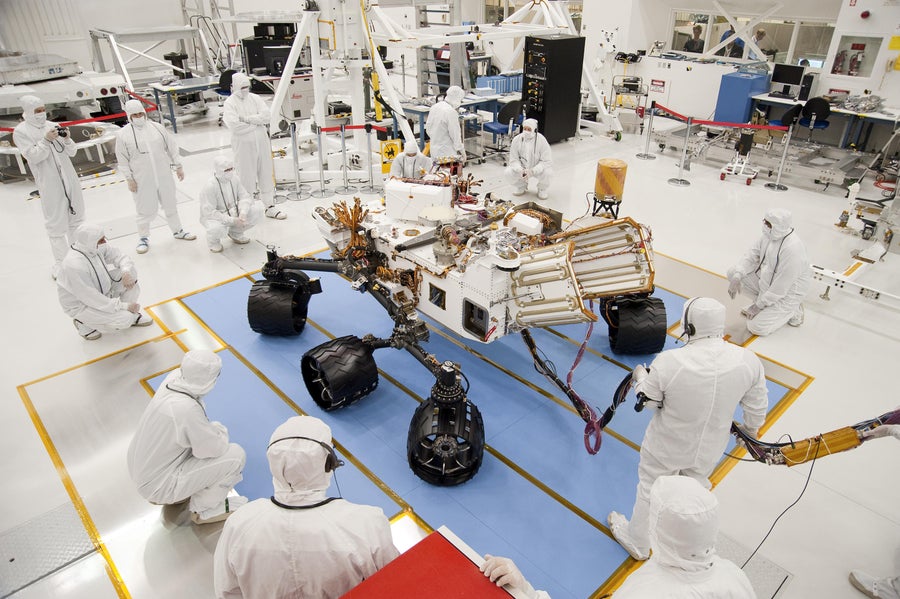
NASA’s Curiosity rover is prepared for launch in the clean room at the Spacecraft Assembly Facility at NASA’s Jet Propulsion Laboratory, Pasadena, CA. NASA/JPL-Caltech
.
.
Click the link below for the complete article:
.
__________________________________________
September 8, 2025
Mohenjo
Business, Food For Thought, Human Interest, Political, Science, Technical
amazon, business, Business News, current-events, Future, Hotels, human-rights, medicine, mental-health, research, Science, Science News, technology, Technology News, travel, vacation

Click the link below the picture
.
Donald Trump on Sunday issued what he called his “last warning” to Hamas, urging the Palestinian militant group to accept a deal to release hostages from Gaza.
“The Israelis have accepted my Terms. It is time for Hamas to accept as well,” Trump said in a post on his Truth Social platform. “I have warned Hamas about the consequences of not accepting. This is my last warning, there will not be another one!”
Hamas said in a later statement that it received some ideas from the US side through mediators to reach a ceasefire deal in Gaza.
The group said it was discussing with mediators ways to develop those ideas, without giving specifics.
Hamas also reiterated its readiness for negotiations to release all hostages in exchange for a “clear announcement of an end to the war” and the complete withdrawal of Israeli forces from the enclave.
“I think we’re going to have a deal on Gaza very soon,” Trump told reporters as he traveled back to Washington from New York, without offering any details. He added that he thought all the hostages would be returned, dead or alive. “I think we’re going to get them all.”
On Saturday, Israel’s N12 News reported that Trump has put forth a new ceasefire proposal to Hamas.
Under the deal, Hamas would free all the remaining 48 hostages on the first day of the truce in exchange for thousands of Palestinian prisoners jailed in Israel and negotiate an end to the war during a ceasefire in the enclave, according to N12.
An Israeli official said Israel was “seriously considering” Trump’s proposal but did not elaborate on its details.
.
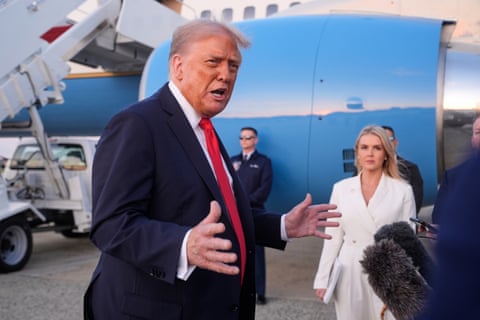 Trump speaks to reporters at Joint Base Andrews in Maryland on Sunday. Photograph: Manuel Balce Ceneta/AP
.
.
Click the link below for the complete article:
.
__________________________________________
September 8, 2025
Mohenjo
Business, Food For Thought, Human Interest, Political, Science, Technical
amazon, business, Business News, current-events, Future, Hotels, human-rights, medicine, mental-health, research, Science, Science News, technology, Technology News, travel, vacation

Click the link below the picture
.
A California serial murderer known as the “Alphabet killer”, convicted of slaying four women in 2013, actually had 26 victims, his death row confidant now claims.
Joseph Naso was convicted and sentenced to death 12 years ago for the murders of Roxene Roggasch, Carmen Colon, Pamela Parsons, and Tracy Tafoya, which occurred in the 1970s and 1990s. The women’s first names and last names all began with the same letter, earning the former photographer the haunting moniker.
“He’s guilty of more murders than anyone knows. He told me everything, and I wrote all of it down,” Noguera says in a preview of the series, which airs on September 13.
Noguera was part of a program to assist elderly prisoners and got to know Naso over a decade, when he made the bombshell confession, he claimed.
“When I told him, ‘Well, look, they got you because a list of 10,’ he started laughing,” Noguera told news outlet, KGO. “He said, ‘They got it all wrong. Yeah, I killed them women, yes. But those aren’t my top – those aren’t my list of 10. Those are my top 10.”
According to KGO, the killing 26 women may be supported by evidence found at Naso’s home. “They found a coin collection with 26 gold heads. Those represent his trophies; they represent the 26 women that he murdered,” Noguera added.
After his dealings with Naso, Noguera put together a 300-page document with clues and partial confessions, hoping to lead investigators to more victims. The case was taken up by retired FBI task force investigator Ken Mains, who also features in the Oxygen documentary.
Roggasch, 18, and 22-year-old Colon were killed by Naso in the 1970s, while 38-year-old Parsons and 31-year-old Tafoya were murdered in the 1990s. All four had been sex workers.
Naso, a father-of-two and a Little League coach, was arrested in 2009 when police officers found evidence linking him to the four crimes at his California home.
he stash included photographs of the women’s lifeless bodies, a detailed list of references to the murders, and a journal with featuring graphic descriptions of the rape and torture of other young women.
Despite this, Naso maintained his innocence, telling the jury that he was “not the monster that killed these women,” during his trial,l where he represented himself. Then-California Deputy District Attorney Dori Ahana argued in favour of the death penalty, which was ultimately handed down.
After his conviction, Naso had remained a suspect in the murders of at least two other California women.
The Independent has always had a global perspective. Built on a firm foundation of superb international reporting and analysis, The Independent now enjoys a reach that was inconceivable when it was launched as an upstart player in the British news industry. For the first time since the end of the Second World War, and across the world, pluralism, reason, a progressive and humanitarian agenda, and internationalism – Independent values – are under threat. Yet we, The Independent, continue to grow.
.

.
.
Click the link below for the complete article:
.
__________________________________________
September 7, 2025
Mohenjo
Business, Food For Thought, Human Interest, Political, Science, Technical
amazon, business, Business News, current-events, Future, Hotels, human-rights, medicine, mental-health, research, Science, Science News, technology, Technology News, travel, vacation
Hmmmm… Is the USA falling behind China in research with the Trump Administration?
Click the link below the picture
.
Your peripheral nervous system (PNS) is crucial to navigating daily life. It lets you walk, controls your eye movements, and rings your brain’s alarms when you step on a Lego brick. Yet researchers have never built a complete map of this essential network in any mammalian body.
Now, a study published in Cell shows a complete, three-dimensional map of every single nerve fiber threading through a mouse. It completes the first-ever mammalian “connectome,” a flowchart of an entire nervous system, beyond just the well-researched brain and spinal cord.
“Mapping of the PNS has been a neglected component of mapping the connectome in animal and human brain studies,” says John Darrell Van Horn, a brain and data science researcher at the University of Virginia, who was not involved in the study.
The research team began by making the bodies of 16 mice as visually transparent as possible, removing fat, calcium, and other materials that block light. They then used a custom combined slicing tool and microscope to take images of each of the bodies 400 microns at a time, which took about 40 hours per mouse—providing data the researchers say would otherwise have taken months or years to collect.
The scientists genetically modified seven of the mice to have fluorescent neurons; as expected, this caused mostly the head to light up. In four of the mice, the team applied a technique called immunostaining, which uses antibodies to target and color specific proteins—in this case, those in the body’s sympathetic nervous system, which controls “fight or flight” responses. In the remaining five mice, the researchers tested a method using viruses to measure the full length of nerve projections known as axons. They specifically focused on tracing the vagus nerve, which contains projections threading in from thousands of individual neurons. The team found that each vagus nerve fiber connected to only one organ in the gut, rather than branching to many different organs as some had predicted. (Its path through the stomach and part of the small intestine is visualized in the topmost image.)
“By revealing the precise projection patterns and organ-specific targeting of different peripheral nerves, these maps will provide a structural framework for understanding how the PNS mediates body physiology,” says co-author Guo-Qiang Bi, a biophysicist at the University of Science and Technology of China.
The researchers hope to apply this method to human tissue next to help plan precision surgeries. Van Horn says the work could also inspire therapies for nerve-related disorders such as chronic pain. “It moves us closer to the precision mapping of the entire mammalian connectome and the diseases that affect it, not just the part between the ears.”
.
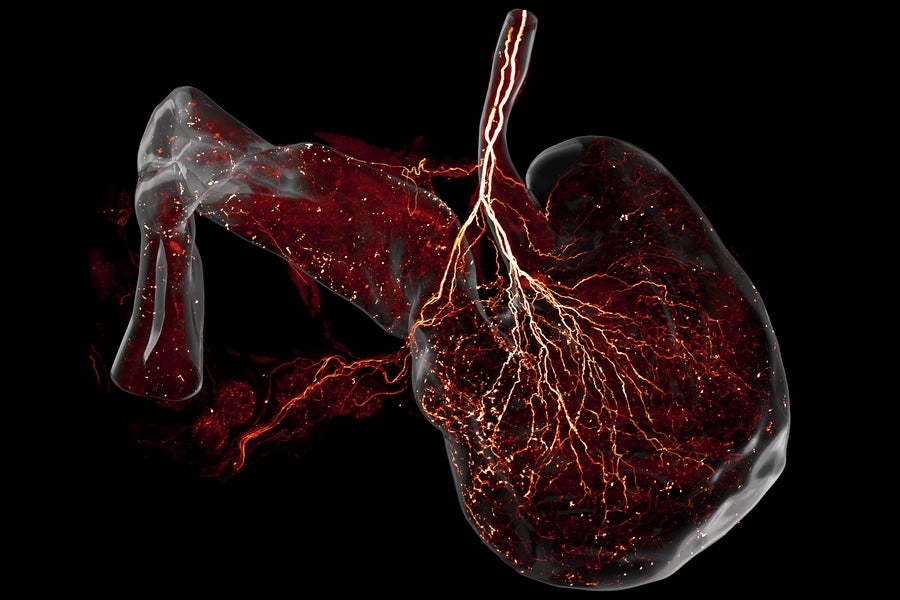
The mouse vagus nerve (white) branches into the stomach and small intestine. “High-Speed Mapping of Whole-Mouse Peripheral Nerves at Subcellular Resolution,” by Mei-Yu Shi et al., in Cell, Vol. 188, No. 14; July 10, 2025 (CC BY 4.0)
.
.
Click the link below for the complete article (for all images):
.
__________________________________________
September 7, 2025
Mohenjo
Business, Food For Thought, Human Interest, Political, Science, Technical
amazon, business, Business News, current-events, Future, Hotels, human-rights, medicine, mental-health, research, Science, Science News, technology, Technology News, travel, vacation

Click the link below the picture
.
President Donald Trump was repeatedly booed — and occasionally cheered — while attending the U.S Open Men’s final on Sunday, marking the latest sporting event where he’s been met with vocal backlash.
Trump attended the match between Jannik Sinner and Carlos Alcaraz on Sunday afternoon as a guest of the luxury watch brand Rolex, causing significant delays for fans as stricter security measures were put in place for his appearance.
While the match was initially scheduled to begin at 2 p.m., it was pushed nearly an hour as hundreds of people remained stuck in security going into the stadium.
During the National Anthem, Trump was met with boos, and when he was shown on the Jumbotron saluting from a suite at Arthur Ashe Stadium, he was met with a smattering of cheers. Later in the match, he was booed again for an extended period after the camera panned to him during a set break.
Attorney General Pam Bondi, White House press secretary Karoline Leavitt and Treasury Secretary Scott Bessent were among the members of the administration who were seen attending alongside Trump and his family.
The crowd response comes after the U.S. Tennis Association faced accusations of censorship after reportedly directing broadcasters to “refrain from showcasing any disruptions or reactions in response to the president’s attendance in any capacity.”
ABC and ESPN, however, were among those that continued to air the jeers and heckling that occurred, refusing to bow to requests to filter dissent.
The reaction to Trump adds to multiple occasions when the president has similarly been booed, including earlier this year when he attended the FIFA Club World Cup and during the 2019 World Series in his first term.
.

Trump repeated booed
.
.
Click the link below for the complete article:
https://www.huffpost.com/entry/trump-us-open-booed_n_68be01dfe4b00b82060b89d6?origin=home-latest-news-unit
.
__________________________________________
September 7, 2025
Mohenjo
Business, Food For Thought, Human Interest, Political, Science, Technical
amazon, business, Business News, current-events, Future, Hotels, human-rights, medicine, mental-health, research, Science, Science News, technology, Technology News, travel, vacation
Click the link below the picture
.
Russia must be pushed toward peace. The key to this, Ukrainian President Volodymyr Zelenskyy said, is unified action by Europe and the US, including sanctions and tariffs.
The Ukrainian president spoke about his recent meetings and visits, noting that 26 countries are now prepared to guarantee Ukraine’s security through concrete measures.
However, Zelenskyy emphasized that before peace can be secured, the Russian Federation must be compelled to move in that direction. He stressed the need to ensure Moscow stops rejecting all peace initiatives and fully understands the consequences of prolonging the war.
Security guarantees for Ukraine and Putin’s withdrawal from talks
Since August 18, when US President Donald Trump hosted Zelenskyy and European leaders at the White House, the parties have actively discussed security guarantees for a postwar Ukraine.
On September 4, the Coalition of the Willing met in Paris. Following the meeting, French President Emmanuel Macron said the countries had completed preparations for Ukraine’s security guarantees. He later clarified that 26 states are ready to either send soldiers to Ukraine or support such a mission
Commenting on the potential deployment of foreign troops, Zelenskyy said the plan would involve thousands of soldiers.
Yesterday, the Ukrainian president stressed that security guarantees must take effect immediately, without waiting for the cessation of hostilities. He clarified that these measures include not only military support but also economic guarantees.
Zelenskyy added that the Ukrainian army is the strongest safeguard for the country and for all of Europe. He noted that it numbers 800,000 personnel, making it one of the largest and most capable forces on the continent.
US President Trump has also expressed readiness to provide Ukraine with security guarantees. However, he has repeatedly clarified that American troops will not be deployed in Ukraine. He emphasized that Europe should play the primary role in delivering security guarantees.
While security discussions continue, talks between Zelenskyy and Putin have stalled.
After the Washington meeting on August 18, Trump announced plans for a bilateral meeting between the leaders of Ukraine and Russia. However, Russia began denying that Putin had promised to meet Zelenskyy, and the situation has since remained stalled. The US president stated that the leaders are not yet ready to hold the meeting.
On September 3, Putin publicly said he does not rule out meeting with Zelenskyy. However, he added that Zelenskyy would need to travel to Moscow if he is ready for the talks.
In a recent interview with ABC News, Zelenskyy said Putin could come to Kyiv. He explained that he cannot travel to Moscow, the capital of this terrorist, while Ukraine faces daily attacks.
.
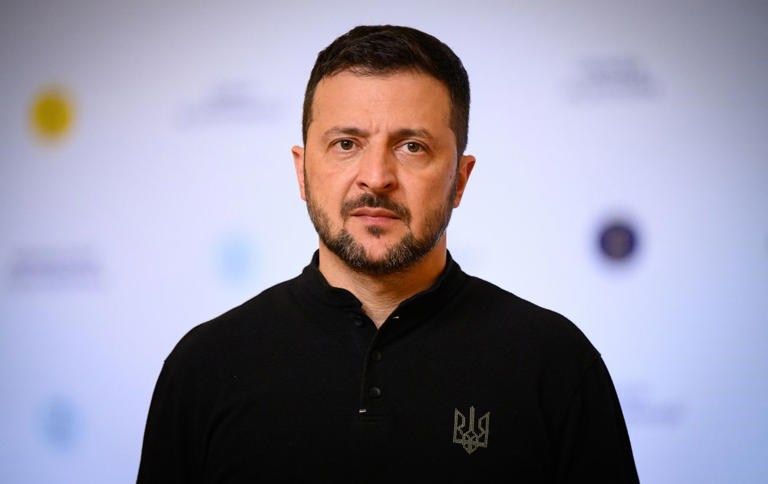
Photo: Ukrainian President Volodymyr Zelenskyy (Getty Images) © RBC-Ukraine (CA)
.
.
Click the link below for the complete article:
.
__________________________________________
September 6, 2025
Mohenjo
Business, Food For Thought, Human Interest, Political, Science, Technical
amazon, business, Business News, current-events, Future, Hotels, human-rights, medicine, mental-health, research, Science, Science News, technology, Technology News, travel, vacation
Click the link below the picture
.
University students might soon have something other than black-light posters to brighten their dorm rooms. Researchers have created glow-in-the-dark plants by injecting succulents with materials similar to those that make the posters light up. The fleshy plants shine as brightly as a night light, and can be made to do so in a wide variety of colours — a first for glowing houseplants, according to the team.
The researchers, led by Xuejie Zhang, a materials scientist at the South China Agricultural University in Guangzhou, describe today how they produced the plants in the journal Matter. They have applied for a patent on the technology, which they hope will lead to decorative installations and living lighting.
The idea of making glowing plants has captivated scientists since the late 1980s, when researchers made the first bioluminescent plant by inserting a gene from a firefly (Photinus pyralis) into a type of tobacco (Nicotiana tabacum). This work laid the foundation for the first genetically engineered luminescent houseplant to come on the market in the United States, last year. The biotechnology firm Light Bio in Sun Valley, Idaho, sells the petunia (Petunia hybrida), which glows a very faint green thanks to genes from a light-emitting mushroom.
Leafy greens … and blues and reds
Unlike the petunia, which emits light through chemical reactions in its cells, the succulent glows because of materials injected into its leaves. These materials — phosphor particles made of strontium and aluminium dosed with other metals — absorb energy from light at one wavelength, store some of that energy and then slowly re-emit it at a different wavelength for several hours. For instance, one material the scientists injected into their succulents absorbs ultraviolet and blue light, and re-emits it as green light.
This type of ‘afterglow’ phosphor is used in glow-in-the-dark toys and paints, and as an imaging tracer for laboratory animals. Whereas genetically engineered bioluminescent plants are, so far, limited in the range of colours they emit, afterglow phosphors span a wide variety of hues, including red and blue, and they can be combined to produce a white glow
The researchers purchased phosphors containing strontium aluminate and ground them down to particles of various sizes before injecting them into an assortment of plants. They found that particles around 7 micrometres in diameter glowed more brightly than did nanoparticles in plants, and were able to fill up the interior tissues of succulent leaves for a stronger, more uniform glow. By contrast, plants with simple leaf structures, such as tobacco plants and pak choi, emitted a more patchy glow.
The plant favoured by the team is the succulent Echevaria ‘Mebina’, a common houseplant that grows rosettes of dense, fleshy leaves. To make every leaf glow, the researchers had to inject each one with phoshor particles, a process that takes about ten minutes. The luminescence — which the team generated in hues of blue-green, blue-violet, green, red and white — lasted as long as 120 minutes after exposing the plant to tailored wavelengths of light or sunlight, and could be triggered again and again over the 10 days of the study.
The researchers estimate that the cost of materials to create one plant is about 10 yuan (US$1.40).
Co-author Shuting Liu, also at the South China Agricultural University, says that the team hopes to move away from injecting each leaf by using smaller particles, which can spread more readily throughout plants. But the team will need to overcome an obstacle: the smaller the particle, the dimmer the glow
.
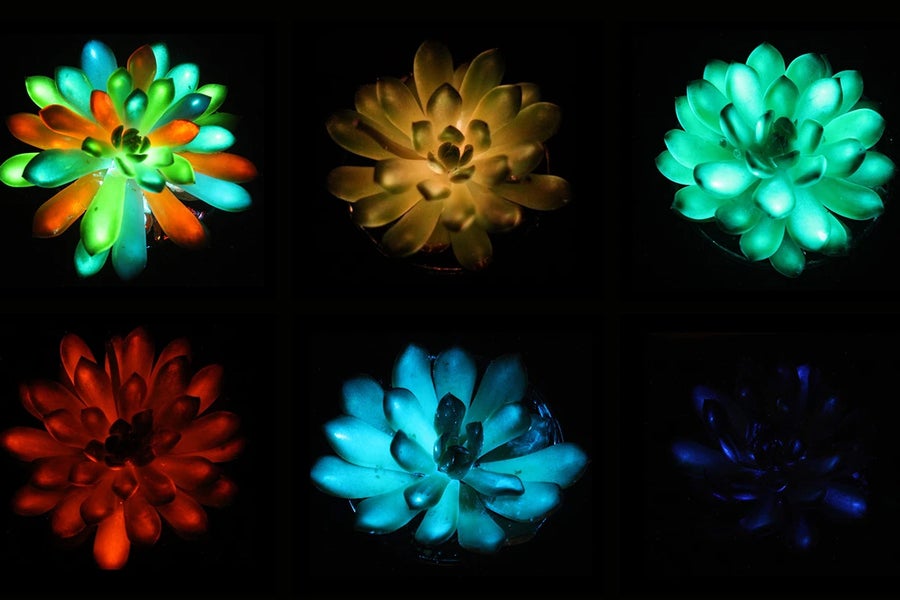
Researchers gave these succulents in the Echevaria genus a glow up by injecting them with luminescent particles. Liu et al./Matter
.
.
Click the link below for the complete article:
.
__________________________________________
September 6, 2025
Mohenjo
Business, Food For Thought, Human Interest, Political, Science, Technical
amazon, business, Business News, current-events, Future, Hotels, human-rights, medicine, mental-health, research, Science, Science News, technology, Technology News, travel, vacation

Click the link below the picture
.
A sprawling Hyundai manufacturing plant in a quiet southeast Georgia community became ground zero on Thursday for one of the most extensive immigration raids in recent US history. The operation, months in the making, ended with 475 arrests, most of them Korean nationals.
As state troopers blocked roads leading to the plant and set up a security perimeter, nearly 500 federal, state, and local officers poured into the sprawling battery production facility, still under construction.
Agents moved swiftly, lining up workers along the walls. Word of the raid spread across the property, triggering a scramble among workers who attempted to flee, with some running to a sewage pond and others hiding in air ducts.
The officers spoke with each worker, one by one, working to determine which were in the US legally, allowing some to leave and taking the rest into custody, moving them off-site and transporting them to the Folkston ICE Processing Center, officials said.
By 8 p.m., their work was done.
The high-stakes raid in Ellabell, about 25 miles west of Savannah, Georgia, was the result of what authorities characterized as a meticulously coordinated investigation involving multiple federal and state agencies and weeks of intelligence gathering, all converging in a pivotal day, marking the largest sweep yet in the current Trump administration’s immigration crackdown at US worksites.
Federal agents descended on the Hyundai site Thursday morning like it was a “war zone,” a construction worker at the electric car plant told CNN Friday.
The worker, who asked not to be named to protect his privacy, said he was part of the first group of people rounded up by federal agents.
“They just told everybody to get on the wall. We stood there for about an hour and were then taken to another section where we waited. Then we went in another building and got processed,” the employee said.
Masked and armed agents gave orders to construction workers wearing hard hats and safety vests as they lined up while officers raided the facility, video footage obtained by CNN showed.
.

.
.
Click the link below for the complete article:
.
__________________________________________
Older Entries
Newer Entries
 James' World 2