March 9, 2025
Mohenjo
Business, Food For Thought, Human Interest, Political, Science, Technical
amazon, business, Business News, current-events, Future, Hotels, human-rights, medicine, mental-health, research, Science, Science News, technology, Technology News, travel, vacation

Click the link below the picture
.
From an airplane, cars crawling down the highway look like ants. But actual ants—unlike cars—somehow manage to avoid the scourge of stop-and-go traffic. Researchers are now studying these insects’ cooperative tactics to learn how to program self-driving cars that don’t jam up.
The free flow of traffic becomes unstable as the density of cars increases on a highway. At 15 vehicles per mile per lane, one driver tapping their brakes can trigger a persistent wave of congestion. “It’s a kind of phase transition,” like water turning from a liquid to a solid form, says Katsuhiro Nishinari, a mathematical physicist at the University of Tokyo, who studies these jamming transitions
Nishinari’s previous research had shown that foraging ants can maintain their flow even at high densities. So what’s their secret? In a recent study published in Transportation Research Interdisciplinary Perspectives, researchers recorded Ochetellus ants on foraging trails and used traffic-engineering models to analyze their movement. They found that the ants don’t jam because they travel in groups of three to 20 that move at nearly constant rates while keeping good distances between one another—and they don’t speed up to pass others.
Human drivers at rush hour are hardly inclined to follow such rules. “We’re maximizing the interests of individuals, [which] is why, at a given point, you start to have a traffic jam,” says study co-author Nicola Pugno, who studies sustainable engineering at the University of Trento in Italy. But self-driving cars, if they one day become ubiquitous, could have more cooperative programming. In one vision of this future, autonomous vehicles would share information with nearby cars to optimize traffic flow—perhaps, the researchers suggest, by prioritizing constant speeds and headways or by not passing others on the road.
This vehicle network would be analogous to ants on a trail, which use scent to coordinate behavior while interacting with one another. “There is no leader,” but this organization emerges anyway, says Noa Pinter-Wollman, a behavioral scientist currently studying ants at the University of California, Los Angeles. And in both ant and vehicle traffic, this type of distributed system can be “very, very strong” and resilient, Nishinari says. (Neither Nishinari nor Pinter-Wollman was involved in the new research.)
Still, ants can do a lot of things that cars—even self-driving ones—can’t, Pinter-Wollman points out. Ants can forge trails as wide as they like, unlike drivers stuck on highways. The insects do sometimes jam up when confined in tunnels, but to keep things moving, “they’ll find a way to walk on the ceiling,” she says. Plus, unlike cars, ants don’t crash; they can literally walk over one another.
Today’s drivers can learn at least one thing from ants to avoid causing a traffic jam, Nishinari says: don’t tailgate. By leaving room between their car and the one ahead of them, drivers can absorb a wave of braking in dense traffic conditions that would otherwise be amplified into a full-blown “phantom” traffic jam with no obvious cause. “Just keeping away,” he says, can help traffic flow smoothly.
.
 Fabio Di Biase/Getty Images
.
.
Click the link below for the complete article:
.
__________________________________________
March 9, 2025
Mohenjo
Business, Food For Thought, Human Interest, Political, Science, Technical
amazon, business, Business News, current-events, Future, Hotels, human-rights, medicine, mental-health, research, Science, Science News, technology, Technology News, travel, vacation

Click the link below the picture
.
Dear Care and Feeding,
A few weeks ago, my wife “Stella” and I left our 3-year-old son “Alex” with my parents for a few days while we went out of town on business. We have left him with my mom and dad on prior occasions and everything went fine. This time, however, my dad did something that enraged my wife. When we came to pick Alex up, the first thing we saw was that his previously shoulder-length hair was gone: He had a buzz cut.
Stella demanded to know why they’d cut his hair without our permission. My dad told her that they had been at the park when some kids asked Alex if he was a boy or a girl, and it upset him. He said that afterward, he asked Alex if he would like to have his hair cut so people wouldn’t mistake him for a girl anymore, and that Alex said yes. So they went to the barber shop my dad uses and had it cut. My wife lambasted him and my mother, loaded Alex into the car, and made us leave immediately.
Nearly a month later, Stella is still outraged over Alex’s new look and is now saying she wants to cut my parents out of our lives for “traumatizing” our son. I’ve talked to Alex about his hair and he doesn’t seem “traumatized” in the least. He says he’s happy that his hair no longer gets in his face and that he doesn’t have to sit still to have it combed out all the time. He truly is fine with it. And it’s not as if my dad decided on his own to have our son’s hair cut without giving him a choice. He asked if he wanted to get it cut, and then he went along with what the kid wanted. I’ve tried to explain this to my wife, but she has no interest in hearing it. Alex has a great relationship with my parents and I’m not willing to blow that up over something so stupid. How can this be resolved when my wife is being so unreasonable?
—Hairy Situation
Dear Hairy,
If you want your parents to remain in your child’s—and your—life, I’d start by knocking off the explaining/defending of your father’s actions. He was wrong. Getting a 3-year-old’s long hair cut off while his parents are away is an act of hostility, even if the child agrees to it when his beloved grandfather suggests it. And yes, even if the 3-year-old says he’s happy now with his buzzcut. The problem is not the hair; it’s the decision-making by a grandparent that undercuts a decision made by a parent. I don’t blame your wife for being furious, and I am 99 percent sure your father knew exactly what he was doing. Your defending him is making matters worse.
If you’d recognized the real reason Stella is so angry and stood up for her instead of minimizing her feelings, I would imagine that, a month later, things would not have escalated to this point. While I don’t believe cutting off contact with Alex’s grandparents is a punishment that fits the hair-cutting crime, I’m not surprised that Stella has reached this conclusion. Your insistence that it was no big deal, your inability or refusal to see this from her point of view, even your enlisting of your child to prove your point—that this is all something “so stupid”—is, I’d wager to say, what angers her more than the inciting incident. Tell your dad he was out of line. Tell Stella you know he was out of line. Apologize profusely to her for being such a jerk about it. And then be patient. This too shall pass.
.
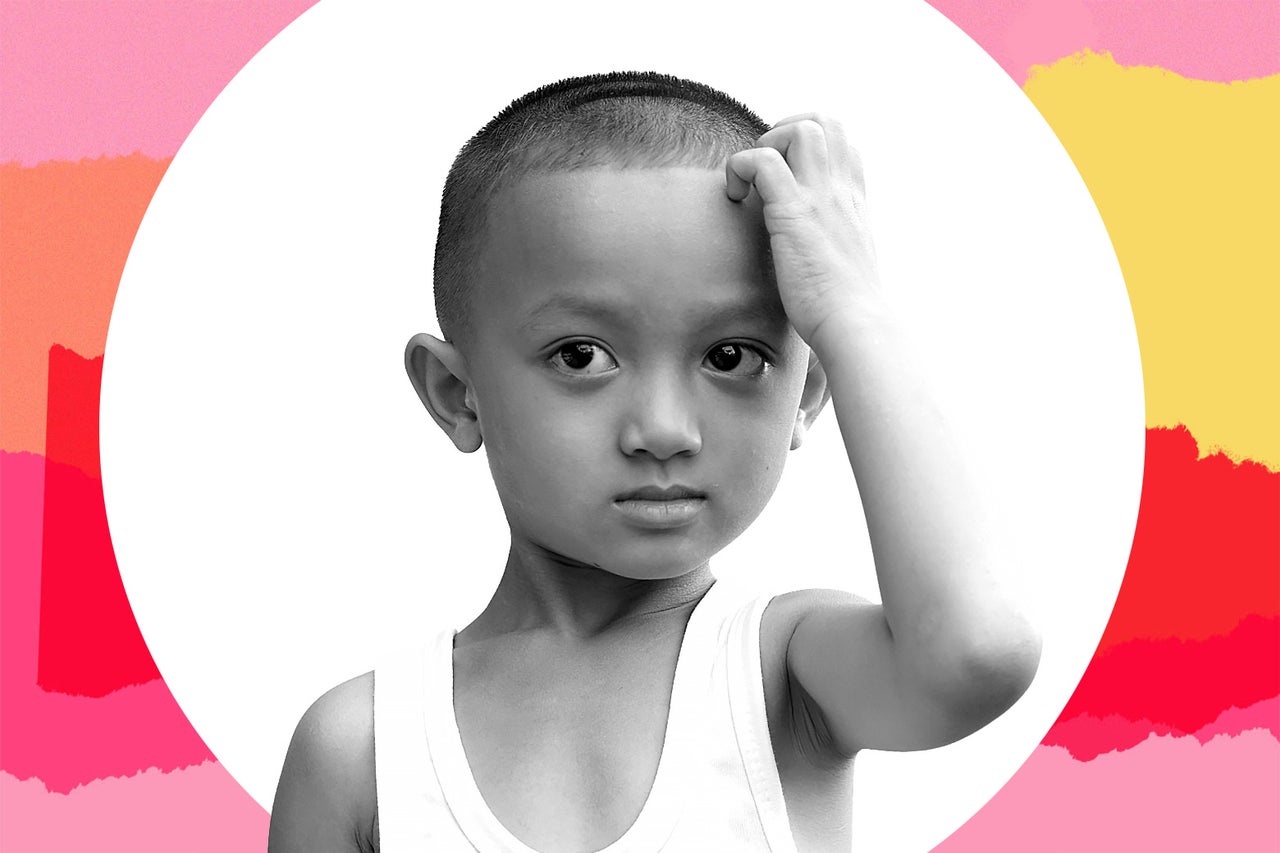 Photo illustration by Slate. Photo by buraratn/iStock/Getty Images Plus.
.
.
Click the link below for the complete article:
.
__________________________________________
March 8, 2025
Mohenjo
Business, Food For Thought, Human Interest, Political, Science, Technical
amazon, business, Business News, current-events, Future, Hotels, human-rights, medicine, mental-health, research, Science, Science News, technology, Technology News, travel, vacation
Click the link below the picture
.
When my son was three years old, he told me one day after preschool that he didn’t want to play with me because I was Black. He went on; Black people are mean, he said, and he only wanted to play with his dad because my husband was white, like him.
We were shocked and I was hurt—my child thought I was bad because I was Black. And even though my son is biracial, he characterized himself as white.
What my son said that day unfortunately reinforced what research has long shown: children absorb racial biases from their environment. I study racial socialization—the ways children learn about race and racism—and I know how early these biases form. I also know that talking about race and racism can shape how children perceive others. Yet when white parents tell me their children say things like “Black people are not nice” or “I don’t want to play with Black kids,” they also tell me they ignore what their children said or simply tell their children it was mean. Without a real conversation about why their child might think that way or how to counter those ideas, children don’t unlearn bias; they just learn not to say it out loud.
In 2022, even though research on white parents discussing racism was still emerging, my colleagues and I argued that they needed to have these conversations with their children. At the time, we pointed to the subtle ways children can absorb racial biases—the diversity (or lack thereof) of their parents’ social circles, the characters they see on TV, and the differences they notice in social class.
But, in 2025, subtlety is a thing of the past. In attacking diversity, equity and inclusion initiatives, the Trump administration is legitimizing and emboldening racism in ways that children—especially white children—undoubtedly notice. If my son, at three years old, could absorb anti-Black messages when overt racism was more widely condemned, imagine what white children today are internalizing in a climate where political leaders openly promote racism.
White parents who see themselves as egalitarian must recognize that the stakes are now higher than ever. If you want to raise children who reject racism rather than passively absorbing it, right now, today, talk with your child about race and racism.
By preschool, children start associating Black people with negative traits and white people with positive traits. These biases form as children pick up on patterns—who holds power, how groups are portrayed in media and how others interact with them. Even subtle nonverbal cues, like smiling at one group and frowning at another, influence children’s preferences. Not surprisingly, young children favor groups receiving positive signals and mimic those behaviors, reinforcing biases. These small cues accumulate, shaping how children perceive racial groups.
While most parents of color talk to their children early about race to prepare them for potential discrimination, white parents often avoid these discussions. In our research on parents of children in the age ranges of 8–12 and 13–17, less than 40 percent of white parents talked to their children about race, and many who did downplayed racism. This avoidance is concerning, given how racial attitudes develop. Without parental guidance, children interpret racial patterns on their own, often reinforcing societal biases.
.
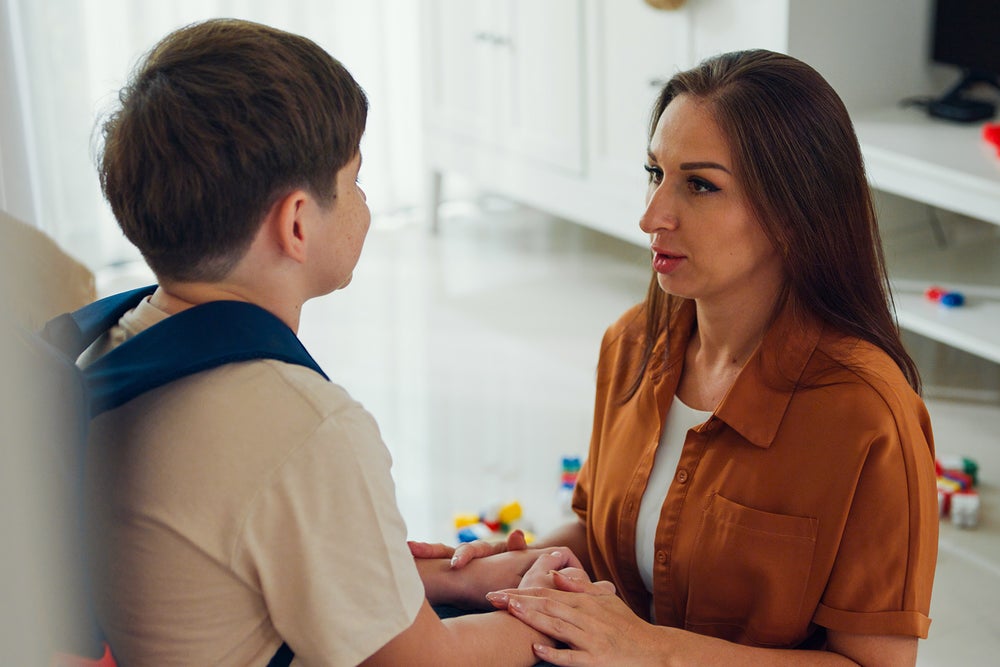
.
.
Click the link below for the complete article:
.
__________________________________________
March 8, 2025
Mohenjo
Business, Food For Thought, Human Interest, Political, Science, Technical
amazon, business, Business News, current-events, Future, Hotels, human-rights, medicine, mental-health, research, Science, Science News, technology, Technology News, travel, vacation

Click the link below the picture
.
When we picture spoiled kids, many of us think of tantrums over not getting what they want, being told to follow rules or simply facing any sort of inconvenience.
But spoiled behavior isn’t just about entitlement or parents giving in — it’s about unmet emotional needs, inconsistent boundaries and a lack of connection.
As a conscious parenting researcher and coach, I’ve studied over 200 kids, and I’ve found that spoiled behavior can sometimes indicate unmet needs. Here are the five signs of highly spoiled children — and how parents can try to undo this behavior:
1. They struggle with hearing ‘no’
A child may push back against rules not because they’re difficult, but because unclear boundaries feel confusing and frustrating. If rules feel unpredictable — or if a child feels powerless in decisions that affect them — they may act out to regain a sense of control.
Tip for parents: Instead of just saying “no” and moving on, acknowledge their feelings: “I see that you’re upset because you want to keep playing, but it’s time for bed now.” Boundaries set with kindness teach that rules aren’t about control — they’re about trust and safety.
2. They constantly seek attention
When kids demand constant attention, it often signals emotional disconnection or uncertainty about their place in the family. A child who doesn’t feel secure in their bond may ask for more: more time, more validation, more reassurance.
For example, a child who always interrupts or clings to a parent in social settings isn’t necessarily being needy, but is rather unsure of their significance when the focus isn’t on them.
Tip for parents: Set aside 10 to 20 minutes of undistracted connection each day. The more time, the better. Play, talk or just be present with your child. Use these moments tell them, “You are enough.”
When kids feel emotionally secure, their need for constant validation fades.
3. They have tantrums to get what they want
Tantrums aren’t manipulation — they’re a cry for help. Children in meltdown mode are typically overwhelmed and lack the skills to process big emotions.
Often, it happens because a child feels unheard when their emotions are dismissed, powerless when they have no say, or overstimulated by too much noise, activity or change.
Tip for parents: Stay calm, validate their feelings (“I see you’re really frustrated”) and offer comfort (“I’m here with you until you feel better”). Kids learn emotional regulation through connection, not control.
.

.
.
Click the link below for the complete article:
.
__________________________________________
March 7, 2025
Mohenjo
Business, Food For Thought, Human Interest, Political, Science, Technical
amazon, business, Business News, current-events, Future, Hotels, human-rights, medicine, mental-health, research, Science, Science News, technology, Technology News, travel, vacation
Click the link below the picture
.
Microsoft has announced that it has created the first ‘topological qubits’ — a way of storing quantum information that the firm hopes will underpin a new generation of quantum computers. Machines based on topology are expected to be easier to build at scale than competing technologies, because they should better protect the information from noise. But some researchers are sceptical of the company’s claims.
The announcement came in a 19 February press release containing few technical details — but Microsoft says it has disclosed some of its data to selected specialists in a meeting at its research centre in Santa Barbara, California. “Would I bet my life that they’re seeing what they think they’re seeing? No, but it looks pretty good,” says Steven Simon, a theoretical physicist at the University of Oxford, UK, who was briefed on the results.
At the same time, the company published intermediate results — but not the proof of the existence of topological qubits — on 19 February in Nature.
Superconducting wire
Topological states are collective states of the electrons in a material that are resistant to noise, much like how two links in a chain can be shifted or rotated around each other while remaining connected.
The Nature paper describes experiments on a superconducting ‘nanowire’ device made of indium arsenide. The ultimate goal is to host two topological states called Majorana quasiparticles, one at each end of the device. Because electrons in a superconductor are paired, an extra, unpaired electron will be introduced, forming an excited state. This electron exists in a ‘delocalized’ state, which is shared between the two Majorana quasiparticles.
The paper reports measurements suggesting that the nanowire does indeed harbour an extra electron. These tests “do not, by themselves” guarantee that the nanowire hosts two Majorana quasiparticles, the authors warn.
According to the press release, the team has carried out follow-up experiments in which they paired two nanowires and put them in a superposition of two states — one with the extra electron in the first nanowire, and the other with the electron in the second nanowire. “We’ve built a qubit and shown that you can not only measure parity in two parallel wires, but a measurement that bridges the two wires,” says Microsoft researcher Chetan Nayak.
“There’s no slam dunk to know immediately from the experiment” that the qubits are made of topological states, says Simon. (A claim of having created Majorana states, made by a Microsoft-funded team based in Delft, the Netherlands, was retracted in 2021.) The ultimate proof will come if the devices perform as expected once they are scaled up, he adds.
Early announcement
Some researchers are critical of the company’s choice to publicly announce the creation of a qubit without releasing detailed evidence. “If you have some new results not connected to this paper, why don’t you wait until you have enough material for a separate publication?” says Daniel Loss, a physicist at the University of Basel, Switzerland. “Without seeing the extra data from the qubit operation, there is not much one can comment,” says Georgios Katsaros, a physicist at the Institute of Science and Technology Austria in Klosterneuburg.
.
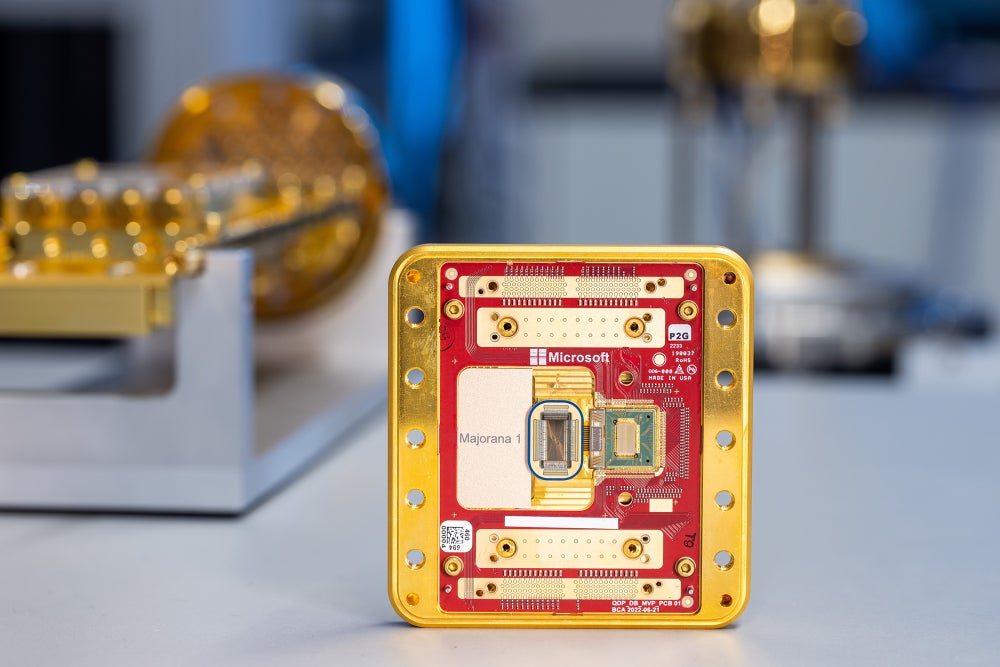
Microsoft has unveiled its Majorana 1 quantum chip. © John Brecher for Microsoft
.
.
Click the link below for the complete article:
.
__________________________________________
March 7, 2025
Mohenjo
Business, Food For Thought, Human Interest, Political, Science, Technical
amazon, business, Business News, current-events, Future, Hotels, human-rights, medicine, mental-health, research, Science, Science News, technology, Technology News, travel, vacation

Click the link below the picture
.
Roy Ayers, a legendary jazz vibraphonist, keyboardist, composer and vocalist known for his spacy, funky 1976 hit “Everybody Loves the Sunshine” that has been sampled by such R&B and rap heavyweights as Mary J. Blige, N.W.A., Dr. Dre, 2Pac, Mos Def and Ice Cube, has died. He was 84.
The Ayers family said in a Facebook post that he died Tuesday in New York City after suffering from a long illness. “He lived a beautiful 84 years and will be sorely missed,” it said.
Ayers had 12 albums land in the Billboard 200 album charts, the highest being “You Send Me” in 1978 at No. 48. His “The Best of Roy Ayers” spend 50 weeks on the Contemporary Jazz Album chart.
His music never went out of style, appearing in the 2019 “Queen & Slim: The Soundtrack.” His song “Running Away” propelled A Tribe Called Quest’s 1989 opus “Description of a Fool,” and the song was sampled by Big Daddy Kane and Common. Ayers was heard on Tyler, the Creator’s album “Cherry Bomb” and Erykah Badu’s “Mama’s Gun.”
“Well, I have more sampled hits than anybody,” he said in a 2004 interview with Wax Poetics magazine. “I might not have more samples than James Brown, but I’ve had more sampled hits. Oh, man, and there’s a few I don’t know about.”
.
 Roy Ayers
.
.
Click the link below for the complete article:
.
__________________________________________
March 7, 2025
Mohenjo
Business, Food For Thought, Human Interest, Political, Science, Technical
amazon, business, Business News, current-events, Future, Hotels, human-rights, medicine, mental-health, research, Science, Science News, technology, Technology News, travel, vacation

Click the link below the picture
.
The James Webb Space Telescope is an incredible piece of engineering and has brought some incredible images of our universe. But the intention of James Webb was to peer into the furthest reaches of the known universe, how is that going? Watch to find out.
.

The Edge of the Universe
.
.
Click the link below for the video:
.
__________________________________________
March 7, 2025
Mohenjo
Business, Food For Thought, Human Interest, Political, Science, Technical
amazon, business, Business News, current-events, Future, Hotels, human-rights, medicine, mental-health, research, Science, Science News, technology, Technology News, travel, vacation

Click the link below the picture
.
Kylie Perkins faces the camera in a pink quarter-zip, hands clasped to reveal a blue manicure. “Are you doing your best, or are you lying because it’s easier?” she asks. “If you tell the truth, you are gonna be forced to make changes.”
The 27-year-old TikTok influencer has amassed most of her 2 million followers in a matter of weeks — half of them in just the past few days — by posting motivational videos from her home in North Carolina aimed at young mothers like her who may feel behind on housework, urging them to essentially get their shit together. In some, she demonstrates her morning routine of drawing the curtains, opening the windows, and making the bed. In others, she wipes down her kitchen, folds laundry, or simply addresses the camera. In many of them, she’s yelling.
“You’re capable of so much more than just scrolling on your phone and not getting anything done,” she says. Her aim, she explains, is to help women experience clearer minds through uncluttered spaces.
Women seem to be responding to the tough love. “Kylie Perkins has yelled at me enough that I finally got up and started to do something about my depression,” a 30-year-old Kansas City woman named Heather Richard said in a voice-over for a recent video. In her post, Richard described the challenge, and ultimate relief, of deep-cleaning her home while newly sober.
“pov you introduce your teenage daughter to Kylie Perkins and this is what her room looks like this morning,” reads the text over a video from another woman, who filmed herself entering a tidy bedroom with a neatly made bed and raised blinds.
The conversation around Perkins has quickly become about more than cleaning. When, in recent days, an influencer made a video alluding to Perkins and suggesting she supported Donald Trump, conservatives quickly rallied around Perkins, following her in droves and flooding her comment sections with support. “Following you because of the way the left is trying to cancel you,” one woman wrote.
Perkins’s rapid ascendence seems to mark, if not the start of a new era, a return to an old one: “bootstraps”-style self-help is back. That means no wallowing allowed. In her videos, there’s a relentless focus on the individual as the agent of change, regardless of context. If you feel shame or guilt about your mess, you probably should, she says — that’s a message from your brain to get going and fix it. (Perkins didn’t respond to requests to speak for this story.)
Part of the reason Perkins isn’t compelled by conditions that may make it hard to be productive, like depression or ADHD, she’s suggested, is that she has overcome some difficult personal circumstances of her own. In her videos, she has mentioned parents who suffered from drug addiction, a period as a teen when she experienced homelessness, and later, as a mother, a challenging time when one of her children was having seizures and Perkins struggled with suicidal ideation.
As such, she seems to have little patience for people who point to some sort of circumstantial disadvantage as an explanation for flagging motivation or functioning. If she has come through all that, she suggests in her videos, you can get off the couch and do the dishes. “I have had to be tough my whole entire life,” Perkins says. “That’s why I come on here and I’m tough with you guys.”
.
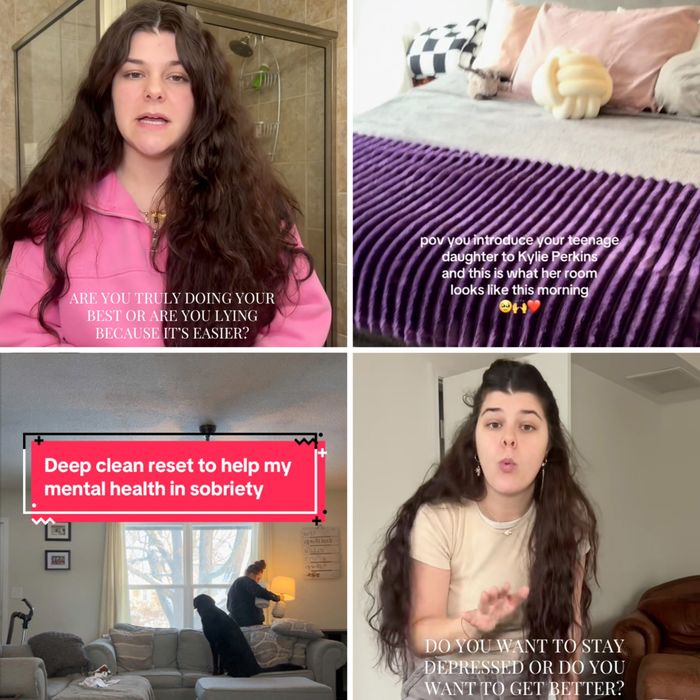 Photo-Illustration: by The Cut; Photos: @sociallykylie/TikTok, @heatheratl/TikTok, @thesoberglowwithheather/TikTok
.
.
Click the link below for the complete article:
.
__________________________________________
March 6, 2025
Mohenjo
Business, Food For Thought, Human Interest, Political, Science, Technical
amazon, business, Business News, current-events, Future, Hotels, human-rights, medicine, mental-health, research, Science, Science News, technology, Technology News, travel, vacation
Click the link below the picture
.
In the corridors of NASA buildings across the United States, Pride flags and pictures celebrating women in science are being taken down. Scientists are adding space-mission stickers to their laptops to cover ones that displayed rainbows and other symbols of LGBT+ support. Employees are stripping pronouns from their e-mail signatures and holding darkly humorous conversations in which they try to avoid saying any pronouns at all.
These and other changes are rippling through NASA, which is purging programmes involving diversity, equity and inclusion (DEI) throughout the agency. The directive to do so came from US President Donald Trump, who on 20 January issued an order to eliminate DEI initiatives across the federal government.
“I get a sinking feeling in my stomach when I have to check my [work] e-mail,” says an early-career NASA scientist, who asked to remain anonymous because of concerns about their career prospects. “Every time I reload it, it’s like, ‘oh god, will there be some new heinous missive in there?’”
Nature spoke to scientists inside and outside NASA about the impacts of its DEI changes — and heard anger, fear and confusion. Although the orders affect all federal agencies, they are keenly felt at NASA, which has a long history of working towards inclusivity. In 2020, Trump appointee Jim Bridenstine, then head of NASA, added inclusion to the agency’s list of core values, joining safety, integrity, teamwork and excellence. That fifth value has now been removed from many NASA websites.
“How do you go from something being so important that it’s a pillar [of the agency], to being so reviled that it’s off of everything?” asks Julie Rathbun, a planetary scientist at Cornell University in Ithaca, New York.
“It feels like a betrayal by NASA,” says Kas Knicely, a planetary geophysicist at the University of Alaska in Fairbanks. “It’s inefficient, it’s wasteful, and it’s also just messed up.”
In a statement, NASA said the agency “is committed to engaging the best talent to drive innovation and achieve our mission for the benefit of all. As new guidance comes in, we’re working to adhere to new requirements in a timely manner.”
A changed agency
NASA’s push towards inclusivity is one of the most visible in the US government. In the 1950s and 1960s, all of the agency’s astronauts were white men. By 1978, it had bowed to internal and external pressure and had chosen several women and people of colour to fly to space. Today, NASA’s astronauts, as well as its world-renowned scientific and engineering teams, are measurably diverse.
.
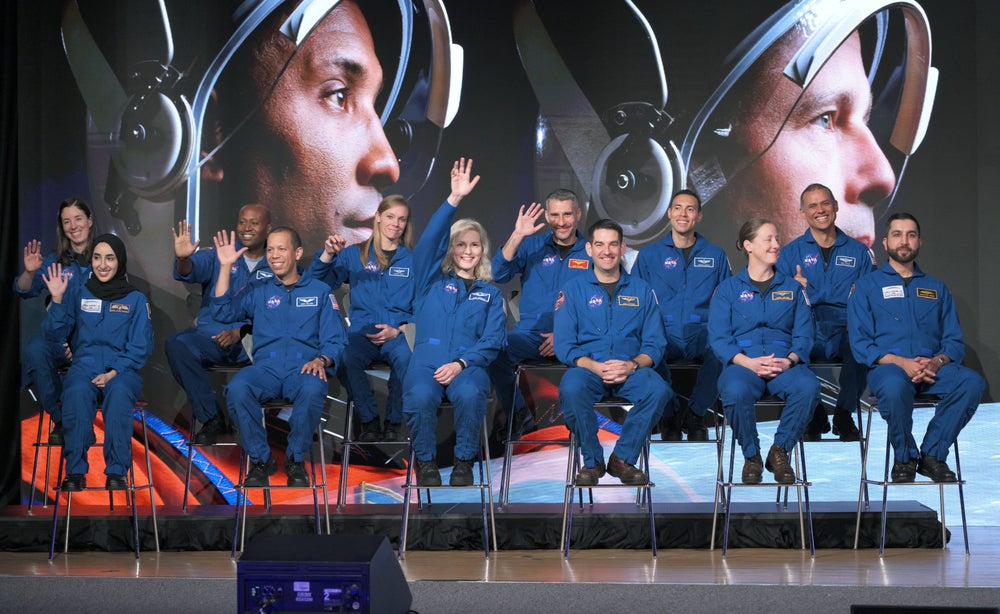
NASA’s diverse astronaut corps was an example of the agency’s support for diversity and inclusion. NASA/James Blair (CC BY-NC-ND 2.0)
.
.
Click the link below for the complete article:
.
__________________________________________
March 6, 2025
Mohenjo
Business, Food For Thought, Human Interest, Political, Science, Technical
amazon, business, Business News, current-events, Future, Hotels, human-rights, medicine, mental-health, research, Science, Science News, technology, Technology News, travel, vacation

Click the link below the picture
.
Children with a rare form of eye disorder who were born blind can now see thanks to a “remarkable” gene therapy breakthrough.
Researchers from London’s Moorfields Eye Hospital, biotech firm MeiraGTx and University College London have demonstrated that their therapy is both safe and effective in improving the vision of and slowing retinal deterioration in young patients born with “LCA-AIPL1.”
This previously untreatable genetic disorder, which affects some 2–3 of every 10 million newborns, leads to profound visual impairments and legal blindness.
In turn, this causes affected children to typically experience delayed and disrupted development in areas such as behavior, communication, and mobility.
“It’s an absolutely transformational improvement,” paper author and Moorfields ophthalmologist Michel Michaelides told Newsweek.
LCA (Leber congenital amaurosis) is the name given to a family of inherited eye disorders that affect the retina—the layer at the back of the eyeball containing light-sensitive “photoreceptor” cells.
These disorders are seen in roughly 2–3 out of every 100,000 births. There are many types of LCA and these vary depending on which of the genes involved in the development and function of the retina are affected.
At present, the only treatable form of LCA is that which involves a mutation in the gene coding for RPE65, a protein involved in the “visual cycle” that translates photons of light into electrical signals that the brain can then interpret.
Specifically, the protein helps refresh special pigments in photoreceptor cells so that they can be used over again. Without it, vision cannot be sustained.
Children with LCA-RPE65 tend to have poor night vision from birth and reduced day vision.
“They will recognize spaces and colors, and they’ll be on the vision chart,” Michaelides explains.
In 2017, the U.S. Food and Drug Administration (FDA) approved Luxturna, a gene therapy, for the treatment of RPE65-associated LCA. Gene therapies work by using a virus to install a new, healthy copy of a faulty gene into a patient’s cells to help address the underlying problem.
RPE65 mutations, however, only underlie about eight percent of LCA cases—and such are on the relatively milder end of the spectrum, in terms of not only severity but also the rate of onset and progression. Because of the latter, patients with RPE65-associated LCA can be treated from diagnosis up until their thirties or even forties.
In the new study, the researchers have focused on one of the rarest—and previously untreatable—flavors of LCA which affects the gene for AIPL1, which is essential for both the development and function of photoreceptor cells. This type of LCA is far more severe in effect, Michaelides says.
“They can’t get around in the dark. They’ve got no peripheral vision. Their central vision is virtually zero,” he explained.
“They can tell whether a light is on or off—if you shine a bright light at them, they might look towards it, for example.
“And then a smaller number of children with AIPL1 may be able to discern a large object really close up, or if it’s moving.”
Signs of AIPL1 issues in newborn children can include roving, almost shaking, eye movements; an inability to fix their eyes on anything, including their parents; and sleeping problems due to an inability to tune into the day/night cycles that normally set our bodies’ circadian rhythms.
.
 Children with a rare form of eye disorder who were born blind can now see
.
.
Click the link below for the complete article:
.
__________________________________________
Older Entries
Newer Entries
 James' World 2