Home

April stargazing guide: Pink Moon, Lyrid meteor shower and more

Leave a comment

Click the link below the picture

.

The first meteor shower in over months will unfold in the late-April sky. Plus, early risers will get to catch the crescent moon bunching up with three planets before sunrise.

Warmer spring weather is drawing more people outdoors, even after dark, to stargaze following the frigid nights of winter. April promises to be an exciting month for skywatchers, featuring a variety of celestial events, including the first meteor shower in more than three months.

Full Pink Moon: April 12-13

The first full moon of astronomical spring will shine brightly in the April sky during the second weekend of the month. It’s associated with the changing flora that arrives with the warming season.

April’s full moon is commonly called the Pink Moon — not because the moon changes color but because of the wild ground phlox, one of the first flowers to blossom in the spring across eastern North America. The plant features pink and purple petals.

Alternate nicknames for April’s full moon include the Frog Moon, the Sugar Maker Moon and the Breaking Ice Moon.

Lyrid meteor shower: April 21-22

Shooting stars will return to the night sky as the Lyrid meteor shower peaks on the night of Monday, April 21, into the early hours of Tuesday, April 22. This will be just the second moderate meteor shower of 2025, following the Quadrantids, which peaked on Jan. 3.

Up to 20 meteors per hour may be visible on peak night, with the best views expected during the second half of the night.

The next meteor shower after the Lyrids will be the Eta Aquarids, which will peak on the night of May 4 into the early morning of May 5.

Crescent moon cuddles up with Venus, Saturn, and Mercury: April 25

Early risers will be treated to a striking celestial display as four planets and the moon align in the eastern sky before sunrise on Friday, April 25.

Venus will shine brightly at the top of the formation, with Saturn appearing dimmer below and to the right, near the crescent moon. Mercury will be the most difficult to spot, sitting very low on the horizon in the pre-dawn sky.

.

https://cms.accuweather.com/wp-content/uploads/2025/03/GettyImages-1473736503.jpg?w=632Pink phlox wildflowers growing in a grassy field. (Johnathan Kana/Getty Images)


.

.

Click the link below for the complete article:

https://www.accuweather.com/en/space-news/april-stargazing-guide-pink-moon-lyrid-meteor-shower-and-more/1759362#google_vignette

.

__________________________________________

Big Banks Quietly Prepare for Catastrophic Warming

Leave a comment

Click the link below the picture

.

CLIMATEWIRE | Top Wall Street institutions are preparing for a severe future of global warming that blows past the temperature limits agreed to by more than 190 nations a decade ago, industry documents show.

The big banks’ acknowledgment that the world is likely to fail at preventing warming of more than 2 degrees Celsius above preindustrial levels is spelled out in obscure reports for clients, investors, and trade association members. Most were published after the reelection of President Donald Trump, who is seeking to repeal federal policies that support clean energy while turbocharging the production of oil, gas, and coal — the main sources of global warming.

The recent reports — from Morgan Stanley, JPMorgan Chase and the Institute of International Finance — show that Wall Street has determined the temperature goal is effectively dead and describe how top financial institutions plan to continue operating profitably as temperatures and damages soar.

“We now expect a 3°C world,” Morgan Stanley analysts wrote earlier this month, citing “recent setbacks to global decarbonization efforts.”

The stunning conclusion indicates that the bank believes the planet is hurtling toward a future in which severe droughts and harvest failures become widespread, sea-level rise is measured in feet rather than inches and tropical regions experience episodes of extreme heat and humidity for weeks at a time that would bring deadly risks to people who work outdoors.

The global Paris Agreement, from which the U.S. is withdrawing under Trump, aims to limit average temperature increases to well below 2 degrees Celsius. Scientists have warned that permanently exceeding 1.5 degrees — a threshold the world breached for the first time last year — could lead to increasingly severe climate impacts, such as the demise of coral reef ecosystems that hundreds of millions of people rely on for food and storm surge protection.

Morgan Stanley’s climate forecast was tucked into a mundane research report on the future of air conditioning stocks, which it provided to clients on March 17. A 3 degree warming scenario, the analysts determined, could more than double the growth rate of the $235 billion cooling market every year, from 3 percent to 7 percent until 2030.

“The political environment has changed, so some of them are conforming to that,” Gautam Jain, a former investment banker who is now a senior research scholar at Columbia University, said of Wall Street’s increasingly dire climate projections. “But mostly it is a rational business decision.”

The new warming estimates come as heat-trapping gases continue to rise globally and as international commitments to limit the burning of oil, gas, and coal, that’s responsible for the bulk of emissions, have stalled. Meanwhile, megabanks like Wells Fargo are backsliding on their previous climate pledges and exiting from the Net-Zero Banking Alliance, a United Nations-backed group that encouraged members to slash their emissions in line with the Paris Agreement.

Morgan Stanley, which in October watered down its climate-related lending targets, declined to comment.

Betting on potentially catastrophic global warming is both an acknowledgment of the current emissions trajectory and a politically savvy move in the second Trump era, according to Jain.

“Nobody wants to be seen as going against,” the administration’s pro-fossil-fuel energy policy, he said. “These banks are businesses, so they have to look at the risk that they have in their portfolio and the opportunities that they see in the most likely environment.”

.

https://static.scientificamerican.com/dam/m/38f0c8134835d565/original/Money_bundles_lined_up_on_red.jpg?m=1743436962.968&w=900

PM Images/Getty Images

.

.

Click the link below for the complete article:

https://www.scientificamerican.com/article/big-banks-quietly-prepare-for-catastrophic-climate-change/

.

__________________________________________

Our 15 Most Saved Soup Recipes, From Broccoli Cheddar to Coconut Curried Lentil

Leave a comment

Click the link below the picture

.

Food & Wine readers love soup. It’s one of the most saved category of dishes on MyRecipes, our online recipe box where you can save and discover thousands of recipes from Food & Wine and other trusted sites like Southern Living and EatingWell.

New to MyRecipes? Click here to create a free account, or simply tap the heart icon at the top right of this page to start saving your favorite recipes. If you already have an account, just log in and click ‘Search’ on the right-hand side of the page. You can search by ingredient, cuisine, meal type, or any keyword — your saved Food & Wine recipes will always appear first.

Here’s a look at some of the soup recipes our readers have been cooking lately, from brothy to creamy, including classic chicken and vegetarian options.

.

https://www.foodandwine.com/thmb/8JTgQrSGirCq78VttHp1UKDcbNA=/750x0/filters:no_upscale():max_bytes(150000):strip_icc()/broccoli-cauliflower-and-cheddar-soup-FT-RECIPE0125-020f7b60def34108bf4635115ade1ea0.jpegPhoto:  Food & Wine / Photo by Jen Causey / Food Styling by Margaret Monroe Dickey / Prop Styling by Priscilla Montiel

.

.

Click the link below for 15 Great Soup Recipes:

https://www.foodandwine.com/most-saved-soups-11702551?utm_source=pocket_discover

.

__________________________________________

Where Are Biblical Lands Today? 37 Ancient Sites on Modern Maps

Leave a comment

Click the link below the picture

.

The Bible maps a world of ancient places that have transformed dramatically over thousands of years. Time has reshaped these lands as empires rose and fell, languages evolved, and borders shifted. Names changed, yet the geography remains. This guide connects the dots between biblical sites and their modern counterparts, offering a bridge between sacred texts and today’s maps.

.

Where Are Biblical Lands Today? 37 Ancient Sites on Modern Maps

.

.

Click the link below for the slideshow (1 – 39) :

https://www.msn.com/en-us/news/world/where-are-biblical-lands-today-37-ancient-sites-on-modern-maps/ss-AA1AHVM5?ocid=winp2fptaskbarhover&cvid=dc89691371f34d9fb9e1a21de91f8e45&ei=6

.

__________________________________________

How Near-Death Experiences Arise in the Brain

Leave a comment

Click the link below the picture

.

Everyone dies, but what actually transpires during that process is a deep mystery that scientists are only beginning to seriously investigate. Increasingly, near-death experiences, or NDEs, are part of that growing field.

An incredible 5 to 10 percent of the general population reports memories of an NDE. Oftentimes, people’s recollections are similar: perceiving separation from the body and viewing it from above, passing through a tunnel and seeing a light, encountering deceased loved ones or compassionate entities, and being overcome by ineffable wisdom and a feeling of profound peacefulness. Many people describe these memories in crisp detail and say that they felt “more real than real.”

How a person’s faltering consciousness produces such fantastical experiences is unknown. But scientists have been piecing together hypotheses, constructed from interviews with survivors, studies in animals, and experiments in which people were given certain psychedelic drugs. Now one of the preeminent research groups investigating NDEs has published what it describes as the first comprehensive neuroscientific model for the phenomena.

“We found a very robust explanation for the generation of such a rich experience while a person is really in crisis,” says Charlotte Martial, a neuroscientist at the University of Liège in Belgium and co-lead author of the findings, published this week in Nature Reviews Neurology.

Martial and her colleagues’ model lays out a step-by-step hypothesis for the conditions that give rise to NDEs. They also propose an evolutionary theory for why these experiences occur.

To create the model, the authors undertook an exhaustive review of all the studies they could find on NDEs, which ranged from neuroscientific investigations to spiritual perspectives. They also included research on ecstatic seizures, psychedelics and the dying brain. Additional clues came from studies that showed that individuals who have certain predispositions are more likely to experience NDEs. This includes prolific daydreamers, as well as those with a propensity for rapid eye movement (REM) sleep intrusion, which occurs when REM sleep bleeds into wakefulness or non-REM sleep.

NDEs themselves are triggered by a precipitating event, such as a cardiac arrest, that causes a cascade of physiological stress. The authors propose that certain networks of neurons go into overdrive to produce high levels of specific neurotransmitters in the drastically altered brain environment. The researchers investigated several of those systems and hypothesized ways that they may contribute to distinct mental experiences as the person approaches death.

The fact that people can clearly remember NDEs, the authors write, is likely because of the activity of three main neurotransmitters: acetylcholine, which is involved in memory, learning and attention; noradrenaline, which plays a key role in the fight-or-flight response, as well as attention, focus and memory; and glutamate, another learning and memory aid that is also responsible for orchestrating overall brain function by instructing neurons to communicate with one another.

Beyond the triad of chemical culprits, the researchers linked the calm, peaceful feeling that characterizes many NDEs with activation of 5-HT1A receptors by serotonin, as well as with transient rises in endorphins—the body’s natural pain relievers and mood enhancers—and GABA, a neurotransmitter that reduces neurons’ activity. For the vivid hallucinations that oftentimes accompany NDEs, the team pointed to serotonin’s hyperactivation of 5-HT2A receptors. Dopamine likewise contributes to the altered visual experience and lends a sense of realism.

The new model calls into question a prior hypothesis that a yet-undiscovered, naturally occurring chemical in the brain plays a role in inducing NDEs by blocking the same receptors that the synthetic drug ketamine binds to. Those receptors, however, are essential for memory formation, so if they were blocked, people should not be able to recall NDEs with such clarity, says Nicolas Lejeune, senior author of the new study and a neurorehabilitation clinician and researcher at the University Hospital of Liège. “Instead of assuming the existence of an unknown neurochemical, we propose that NDEs arise from disruptions that naturally occur in response to life-threatening events,” he says.

.

https://static.scientificamerican.com/dam/m/7167c8e2d552aa79/original/artwork_depicting_a_near-death_experience.jpg?m=1743302198.357&w=900Mark Garlick/Science Photo Library/Getty Images.

.

.

Click the link below for the complete article:

https://www.scientificamerican.com/article/are-near-death-experiences-the-brains-attempt-to-survive-lethal-threats/

.

__________________________________________

In a Slump at Work? Here’s How to Motivate Yourself.

Leave a comment

Click the link below the picture

.

You’re doing fine at work. You’re working remotely, hitting your targets, and keeping things moving—but fine doesn’t really feel fulfilling.

Poor performance management, lack of visibility, repetitive routines, and restricted growth opportunities can result in feelings of frustration, stagnation, and boredom. Maybe you have a boss who doesn’t see your potential. Maybe there’s lots to do, but none of it excites you.

In an uncertain economy where layoffs loom and job opportunities feel scarce, the idea of making a career move might not feel realistic or like something you even want to pursue. And when you work remotely, there might be fewer opportunities for spontaneous career-focused conversations or organic networking opportunities where you can chat, observe, and learn. If it doesn’t feel like there’s a promotion on your horizon or immediate opportunities for growth, how do you stay motivated? What should you do if it feels like there’s nothing to look forward to?

The good news is you have more control over your career than you might think. Here are five options to reignite your motivation at work—no matter how remote you are.

Create your own mini performance review.

If you’ve been at your company for a while and have been through at least one performance review cycle, now’s a good time to go back and revisit it. In my work as a career coach, I’ve observed that most people file away their reviews and only revisit them when the next one is due. However, past conversations could hold clues about what you could be doing right now to invest in your growth.

What themes came up in your last performance review? What are your core strengths? What goals did you share in that conversation but haven’t acted on? What constructive feedback did you receive?

Goals or suggestions from your last review can serve as a springboard for thinking about specific, actionable goals to pursue in the next few months. You can also reflect on any changes in your role, team, or the company since that last performance conversation. In addition, if your company has shifted priorities since your last review, consider what you could explore to match those new needs.

Sometimes your previous performance review feedback may not give you the clarity or direction you need. I’ve coached professionals who found themselves out of sync with their supervisor’s assessment, received vague feedback, or had their review led by someone who’s no longer on the team. In these cases, it can be valuable to build relationships with senior leaders and trusted peers who can offer constructive insights on areas for growth and opportunity.

Completing your own mini performance review using past reviews and feedback from trusted peers doesn’t just mean looking back; it provides the opportunity to examine the present. Consider the next three to six months and ask yourself: What would you love to accomplish?

Seek a stretch assignment.

When you proactively seek out a stretch assignment, chances are your manager or teammates will see it as a win-win opportunity. Taking on a project that interests you and challenges you in new ways will expand your skills and has the potential to reignite your engagement. In addition, it can position you as a forward-thinking collaborator.

Think about what’s important to your leadership right now. What initiatives or priorities have they shared during all-staffs or town hall meetings? Does your company utilize cross-functional teams for internal initiatives or community programs that you could contribute to? Even in a remote environment, there may be more opportunities to collaborate across teams than you might realize.

What are your team’s or department’s objectives for this fiscal year? Where are there opportunities for you to support or add value? After surveying the landscape for opportunities, suggest ways you can contribute. Or, if you’re not sure where you could add the most value, ask your manager if there’s something they need help with. Expressing interest may open a door you didn’t know existed.

.

https://hbr.org/resources/images/article_assets/2025/03/Mar25_28_1351435144.jpgkoldunova/Getty Images

.

.

Click the link below for the complete article:

https://hbr.org/2025/03/in-a-slump-at-work-heres-how-to-motivate-yourself?ab=HP-hero-latest-2&utm_source=pocket_discover_career

.

__________________________________________

As Measles Continues to Rise, CDC Muffles Vaccine Messaging

Leave a comment

Click the link below the picture

.

As measles outbreaks have continued to spread in 19 U.S. states, leaders at the Centers for Disease Control and Prevention have buried a new assessment by their own experts that found there is a high risk of catching measles in areas where vaccination rates are low, according to an article published by ProPublica on March 28. The assessment had also called for a messaging strategy to encourage vaccination against the potentially deadly disease. But that plan was aborted, signaling a shift in how the agency may be responding to pressure from vaccine critic Robert F. Kennedy, Jr., who is now secretary of health and human services.

Why It Matters

Measles, caused by a highly contagious and dangerous virus, is very effectively prevented by the measles-mumps-rubella (MMR) vaccine. But rates of vaccination in the U.S. have been declining in recent years. Historically, the CDC’s messaging strategy for encouraging vaccination emphasized the importance of protecting both oneself and the community at large, especially vulnerable people who cannot yet get vaccinated such as young babies. What’s alarming about the CDC’s recent inaction is not just its decision to bury the news, health experts say, but also the agency’s justification for doing so: in a statement to ProPublica, a CDC spokesperson wrote, “The decision to vaccinate is a personal one,” a message that does not reflect long-standing scientific consensus but rather echoes the sentiment of vaccine critics such as Kennedy.

Why Vaccine Skepticism Remains a Big Problem

Vaccines, especially the MMR vaccine, have been a target of rampant misinformation in recent years. A single fraudulent study had claimed a connection between the MMR vaccine and autism, but that link was debunked years ago. Many other studies have searched for a connection and failed to find one. But lack of trust in vaccine safety remains a big public health issue: A recent survey conducted by the University of Pennsylvania found that the percentage of people who believed that already-approved vaccines were unsafe jumped from 9 percent all the way up to 16 percent between 2021 and 2023. Measles was declared eliminated from the U.S. in 2000, which means it does not circulate on its own. But outbreaks are becoming more common. The total number of people who have tested positive for measles so far this year is already higher than any full year since 2019.

What This means for the CDC and Public Health Messaging

Public health officials learned a lot from the COVID pandemic. Chief among those lessons was that frequent and transparent communication is key to establishing and maintaining trust with the public, say public health educators. Withholding essential updates and best practices undermines those goals. It can also prevent data and guidance from reaching local public health services in a timely manner.

What You Can Do to Protect Yourself

If you’re an adult who was vaccinated against MMR as a child, you can check to see if you’re still protected with a simple blood test. If you were born between 1957 and 1975, you likely only got one dose of the vaccine instead of the standard two doses that are given today. The second dose boosts the efficacy of the vaccine’s protection against measles from 93 percent to 97 percent. If you had only received one dose and live in an area where an outbreak is occurring or work in certain environments such as health care facilities, you might want to talk to your health care provider about your risk and consider an additional dose.

.

https://static.scientificamerican.com/dam/m/4b33f01c5902c0ac/original/measles-vaccine.jpg?m=1743451458.101&w=900

A health worker prepares a dose of the measles vaccine at a health center in Lubbock, Texas, on February 27, 2025. Ronaldo Schemidt/AFP via Getty Images

.

.

Click the link below for the complete article:

https://www.scientificamerican.com/article/as-measles-continues-to-rise-cdc-muffles-vaccine-messaging/

.

__________________________________________

I’m a lawyer who helps workers transition into retirement. Here are 7 steps to take if you’ve been pushed out of a job you loved.

Leave a comment

Click the link below the picture

.

The end of a career — especially when we’re not the ones choosing it — can bring about feelings of anger, as well as grief related to the loss of professional identity, purpose, community, and routine.

Many federal employees are now dealing with these heavy emotions and are overwhelmed from now needing to think about a retirement they once assumed to be five or 10 years away.

As a lawyer and retirement transition expert, I’ve helped many career professionals plan for what comes next when they confront an unplanned retirement.

The reality is that, forced or not, unprocessed anger and grief should never be the defining features of one’s retirement. And going into retirement without proper planning is foreshadowing disaster. Here are seven steps to take if you’re forced to retire before you’re ready.

1. Recognize feelings of anger and grief

While working through these negative emotions can seem deeply unpleasant, processing your anger and grieving these losses are important for a positive transition.

For one thing, unprocessed anger and grief can harden into a form of permanent bitterness and risk defining a rewarding multi-decade career by one moment, its endpoint.

2. Understand retirement can be stressful

Retirement is a major life change and can be a stressful experience for everyone — no matter the circumstances: Research indicates that retirement can be among life’s most stressful events.

If you’re concerned about who you will be or how your life will work in retirement, you’re not alone. It can be helpful to connect with others who have been through or are going through a similar situation.

3. Redefine your identity during retirement

I regularly see my clients struggle with what feels like the loss of their very identity as they contemplate retirement. It’s common to build your identity around the major roles that you play in life, and your career often supplies one or more of those roles.

When you have to let those go, it can feel like an existential threat.

During retirement, it’s important to explore and reconnect with enduring aspects of your identity beyond just your career roles. How can you invest more in other roles now that you have more free time? What new roles could you embrace to enrich your life?

.

https://i.insider.com/67e1d75db8b41a9673fb9445?width=500&format=jpeg&auto=webpLawyer and retirement expert Elizabeth Zelinka Parsons said that while retirement can be stressful, it can help to think of it as a graduation. Ché Wilson

.

.

Click the link below for the complete article:

https://www.businessinsider.com/take-these-steps-if-forced-to-retire-early-2025-3?utm_source=pocket_discover_career

.

__________________________________________

How ‘Qudits’ Could Boost Quantum Computing

Leave a comment

Click the link below the picture

.

Quantum computing has so far nearly always involved calculating with qubits—quantum objects that can take the value ‘0’ or ‘1,’ like ordinary computer bits, but that can also be in a range of combinations of 0 and 1. Now researchers are producing the first applications of ‘qudits:’ units of information that offer combinations of three or more simultaneous states.

In a paper published on 25 March in Nature Physics, physicists describe how they used ‘qutrits’ and ‘ququints’—qudits with three and five states respectively—to simulate how high-energy quantum particles interact through an electromagnetic field. The work follows a result published in Physical Review Letters (PRL) in September that reproduced the behaviour of another quantum field, that of the strong nuclear force, using qutrits.

Such simulations of quantum fields are seen as one of the most promising applications of quantum computers, because these machines could predict phenomena in particle colliders or chemical reactions that are beyond the abilities of ordinary computers to calculate. Qudits are naturally suited to this task, says theoretical physicist Christine Muschik, a co-author of the Nature Physics paper who also pioneered such simulations with qubits in 2016 together with colleagues at the University of Innsbruck, Austria. “If I could go back in time to my old self, I would tell her: why waste time with qubits?” says Muschik, who is now at the University of Waterloo, Canada.

“This qudit approach is not a solution to everything, but it helps you when it is suitable to the problem,” says Martin Ringbauer, an experimental physicist at the University of Innsbruck and the lead author of the paper.

More generally, qudits can help to make calculations on a quantum computer more efficient and less error-prone, at least on paper. With qudits, each computational unit that previously encoded a qubit—such as a trapped ion or a photon—can suddenly pack in more information, helping the machines to scale up faster. But the tactic is less mature than approaches based on qubits, and the devil could be in the detail. “Qudits are also more complicated to work with,” says Benjamin Brock, an experimental physicist at Yale University in New Haven, Connecticut.

System tweaks

In most types of quantum computer, the qubits that researchers use are two possible states of a system that would naturally have many more states. Such a system could therefore host qudits as well. “Existing qubit processors such as those of IBM and Google can already be operated as qutrits, and would require minor tweaks to operate as high-dimensional qudits,” says Machiel Blok, a physicist at the University of Rochester, New York. (Blok and his team have done experiments in their laboratory in which superconductors encoded qudits of up to 12 levels.)

For their quantum-field simulations, the authors of the PRL paper encoded qutrits on a superconducting quantum chip that IBM makes available to researchers, and that is normally used as a qubit machine. Ringbauer, Muschik and their colleagues used excited states of calcium ions to represent their five-level ququints. A ququint is a natural way to represent a field that can be in a lowest-energy state (with value 0) or have positive or negative values from −2 to +2 at any point in space, Muschik says.

In the future, such simulations could help to explain how quarks stick together to form protons, or how neutrinos collide with one another in the intense environment of a supernova explosion, physicists say. “There’s great hope that there’s going to be new effects that we can identify even with modest-size quantum computers,” says Martin Savage, a physicist at the University of Washington in Seattle.

Error correction

In principle, any calculation that can be done with qubits can also be done with qudits of any dimension, and vice versa: any qudit can be encoded in a set of qubits. But sharing information among multiple qubits is notoriously tricky and can introduce computational errors. Executing a quantum algorithm on qudits could require fewer steps, and therefore have a lower chance of introducing errors, says Muschik.

.

https://static.scientificamerican.com/dam/m/9b438af4beda12e/original/Quantum_Computer_Innsbruck.jpg?m=1742996613.228&w=900

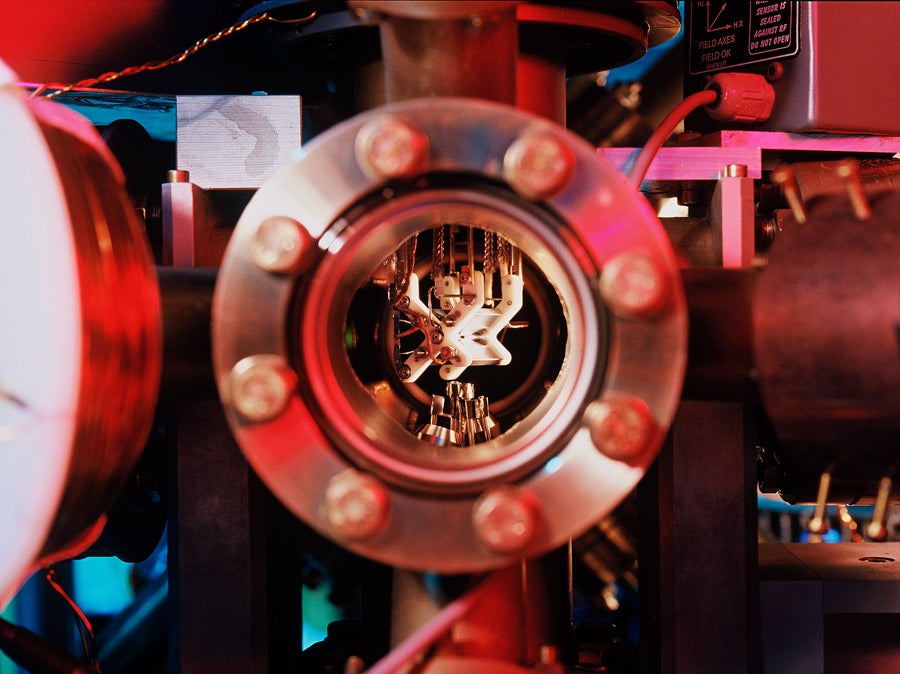
Part of the quantum computer at Innsbruck University, on which researchers did simulations using qutrits and ququints. C. Lackner/University of Innsbruck

.

.

Click the link below for the complete article:

https://www.scientificamerican.com/article/how-qudits-could-boost-quantum-computing/

.

__________________________________________

How to Build Career Resilience in Uncertain Times

Leave a comment

Click the link below the picture

.

A senior executive I worked with—let’s call her Marisol—had spent years building trust, driving impact, and delivering results, only to find her role suddenly eliminated during a company restructuring. There was no discussion, no transition plan. Just a few polite reassurances, a severance package, and a carefully worded email later, and that was it.

But instead of being paralyzed by uncertainty, Marisol took control. She reached out to trusted mentors, tapped into her network, and worked with an executive coach while giving herself space to breathe for the first time in years. Then, with a clearer sense of what she wanted next, she rebranded her expertise and pivoted into a broader HR role that recognized the full range of skills she had spent years honing.

Her story is not unique. Layoffs, stagnant wages, AI-driven automation, shifting labor laws, and evolving workplace expectations have made job security a moving target these days. Even the most dedicated professionals aren’t immune to job instability, and salaried workers feel it, too.

The real challenge today isn’t just holding onto a job or making it through another quarter—it’s building a career that won’t crumble in the face of disruption. That takes career resilience: the ability to adapt, take initiative, and stay grounded, even when the ground is shifting beneath you, much like Marisol did.

Four Ways to Build Career Resilience

Career resilience isn’t about clinging to a job out of fear; it’s about learning to adapt as circumstances shift.

Growing up in the Dominican Republic with grandparents who survived a brutal dictatorship, I was raised to be ready. My family keeps our pantry and emergency kit stocked, not out of paranoia but from a deep understanding that nothing is promised.

In work, too, uncertainty demands self-awareness and readiness. This means developing a growth mindset, even when your options feel limited, so you are always ready to pick up and go. The following four strategies can help:

1. Identify your non-negotiables.

Career longevity isn’t just about holding onto a job; it’s about knowing what matters most to you as you navigate the many roles you’ll likely take on. Having clarity on your must-haves, values, and risk tolerance can help you make tough decisions as circumstances quickly change.

Ask yourself:

Do I handle uncertainty well, or does it rattle me? If stability matters most to you, focus on building skills that keep you adaptable and in demand, regardless of industry shifts.

Would I take a pay cut for work that feels more meaningful? If purpose drives you, consider roles that align with your values, interests, or the kind of impact you want to make, even if it means a temporary financial trade-off.

Would I go back to five days in the office? If flexibility is a priority, start cultivating skills and networks that open doors to remote or hybrid opportunities.

Would I accept work that conflicts with my values? If ethical alignment is central to your career choices, seek out roles and organizations whose missions and practices you can stand behind.

Would I agree to lay off my team, knowing those remaining will be overloaded? If leading with fairness and dignity is what you value most, consider where you draw the line. Would you push for a phased approach? Fight for additional support? Or would this be the moment you step away?

Your responses aren’t just theoretical. They help you set career guardrails. Understanding your non-negotiables now enables you to navigate tough choices later before urgency forces your hand.

2. Build adaptability and agility.

Career resilience is like a muscle; you build it by strengthening your emotional intelligence, expanding your skill set, and staying ready to pivot when needed. To strengthen adaptability and agility in your current role:

Understand your role in the bigger picture. Pay attention to how your work connects to broader business functions and goals. Proactively collaborate across teams, solve recurring pain points, and take on projects that stretch your expertise and help you build new skills. Opportunities often come from stepping beyond your immediate role.

Stay steady under pressure. Clear thinking and self-regulation are essential in high-stakes, uncertain environments. Recognize your stress triggers and manage your energy before they take over. Build routines to help you reset, such as mindfulness, breathwork, reflection, or check-ins with mentors or colleagues.

Bet on your high-value skills. AI isn’t replacing leadership, creativity, or emotional intelligence—yet. Take on challenging projects, step into management opportunities, and sharpen your ability to problem-solve, read the room, and adapt in real-time. Identify your high-value skills by noticing what people consistently turn to you for, what problems you solve easily, and where your unique insight makes the biggest impact. The stronger these skills, the more career options you create.

Make learning part of the job—not a backup plan. Deloitte’s Workplace Skills 2024 survey found that 87% of professionals say adaptability and leadership are key to career growth, reinforcing that continuous learning, whether AI, industry trends, or new workplace technologies, is essential for long-term success. Treat every setback as a learning opportunity: what worked, what didn’t, and how to improve. Build learning into your workflow by setting aside time for skill-building, seeking feedback regularly, and staying curious about new tools and industry shifts. Small, consistent efforts add up over time.

.

https://hbr.org/resources/images/article_assets/2025/03/Mar25_25_200486729-001.jpgMatthias Clamer/Getty Images

.

.

Click the link below for the complete article:

https://hbr.org/2025/03/how-to-build-career-resilience-in-uncertain-times?utm_source=pocket_discover_career

.

__________________________________________

Older Entries Newer Entries

Amor Entre Estrellas

¡Bienvenido de vuelta viajero!

Heart of Loia `'.,°~

so looking to the sky ¡ will sing and from my heart to YOU ¡ bring...

Michael Ciullo

CEO and Founder of Nsight Health

Nelson MCBS

Catholic News, Prayers, HD Images, Rosary, Music, Videos, Holy Mass, Homily, Saints, Lyrics, Novenas, Retreats, Talks, Devotionals and Many More

Global geopolitics

Decoding Power. Defying Narratives.

Talk Photo

A creative collaboration introducing the art of nature and nature's art.

Movie Burner Entertainment

The Home Of Entertainment News, Reviews and Reactions

Le Notti di Agarthi

Hollow Earth Society

C r i s t i a n a' s Fine Arts ⛄️

•Whenever you are confronted with an opponent, conquer him with love.(Gandhi)

TradingClubsMan

Algotrader at TRADING-CLUBS.COM

Comedy FESTIVAL

Film and Writing Festival for Comedy. Showcasing best of comedy short films at the FEEDBACK Film Festival. Plus, showcasing best of comedy novels, short stories, poems, screenplays (TV, short, feature) at the festival performed by professional actors.

Bonnywood Manor

Peace. Tranquility. Insanity.

Warum ich Rad fahre

Take a ride on the wild side

Madame-Radio

Découvre des musiques prometteuses (principalement) dans la sphère musicale française.

Ir de Compras Online

No tiene que Ser una Pesadilla.

Kana's Chronicles

Life in Kana-text (er... CONtext)

Cross-Border Currents

Tracking money, power, and meaning across borders.

Jam Writes

Where feelings meet metaphors and make questionable choices.

emotionalpeace

Finding hope and peace through writing, art, photography, and faith in Jesus.

WearingTwoGowns.COM

The Community for Wounded Healers: Former Medical Students, Disabled Nurses, and Faith-Fueled Pivots

...

love each other like you're the lyric to their music

Luca nel laboratorio di Dexter

Comprendere il mondo per cambiarlo.

Tales from a Mid-Lifer

Mid-Life Ponderings

Creative

Travel,Tourism, Life style "Now in hundreds of languages for you."

freedomdailywriting

I speak the honest truth. I share my honest opinions. I share my thoughts. A platform to grow and get surprised.

The Green Stars Project

User-generated ratings for ethical consumerism

Cherryl's Blog

Travel and Lifestyle Blog

Sogni e poesie di una donna qualunque

Questo è un piccolo angolo di poesie, canzoni, immagini, video che raccontano le nostre emozioni

My Awesome Blog

“Log your journey to success.” “Where goals turn into progress.”

pierobarbato.com

scrivo per dare forma ai silenzi e anima alle storie che il mondo dimentica.

Thinkbigwithbukonla

“Dream deeper. Believe bolder. Live transformed.”

Vichar Darshanam

Vichar, Motivation, Kadwi Baat ( विचार दर्शनम्)

Komfort bad heizung

Traum zur Realität

Chic Bites and Flights

Savor. Style. See the world.

ومضات في تطوير الذات

معا نحو النجاح

Broker True Ratings

Best Forex Broker Ratings & Reviews

Blog by ThE NoThInG DrOnEs

art, writing and music by James McFarlane and other musicians

fauxcroft

living life in conscious reality

Srikanth’s poetry

Freelance poetry writing

JupiterPlanet

Peace 🕊️ | Spiritual 🌠 | 📚 Non-fiction | Motivation🔥 | Self-Love💕

Sehnsuchtsbummler

Reiseberichte & Naturfotografie