Home

How curiosity rewires your brain for change

Leave a comment

Click the link below the picture

.

A few years ago, I decided to retrain as a neuroscientist. It was a leap into the unknown — no roadmap, just a desire to grow. I chose to approach this time of change with curiosity, and I started a weekly newsletter to document what I learned. Suddenly, my doubts became fuel for discovery.

What I didn’t know at the time was that this systematic curiosity was actively reshaping my brain in ways that would build resilience for navigating future changes.

Curiosity is often treated as a personality quirk — something childlike and playful, maybe even optional. But neuroscience paints a different picture. When we’re curious, the brain’s dopaminergic system — the same one that lights up when we anticipate a reward — kicks into gear. Simply put, curiosity makes us feel good about the prospect of discovering something new.

It also helps us learn more efficiently, enhancing hippocampal activity and boosting our capacity to form and retain new memories. Studies show that when people are curious about a topic, they not only remember the specific information they were interested in but also retain unrelated material better.

Perhaps most importantly, curiosity promotes neuroplasticity, the brain’s ability to rewire itself in response to new experiences. This makes it an ideal cognitive state for those inevitable moments of change when we need to break established neural patterns and form new connections.

Curiosity in times of change

Change, by nature, introduces uncertainty. And the human brain typically responds to uncertainty by activating the amygdala, triggering the same stress responses as physical danger.

What curiosity does is transform that uncertainty from a threat into an invitation.

First, curiosity increases our tolerance for prediction error: the gap between what we expect and what we actually experience. This makes us more flexible in our thinking, less reactive, and better at updating our mental models.

There’s also a balancing act happening between two major brain networks: The default mode network (associated with imagination and introspection) and the executive control network (responsible for goal-oriented behavior) often take turns.

Curiosity helps synchronize these networks, allowing us to envision possibilities while also taking action — the exact balance needed to navigate change.

Emotionally, curiosity can also act as a buffer. When we view an unexpected situation through a curious lens (“what can I learn from this?”), we are less likely to spiral into anxiety or avoidance. This cognitive reframe can dramatically alter how we experience the inherent uncertainty of change.

5 ways to navigate change with curiosity

Curiosity isn’t a fixed trait you either have or lack — it’s a cognitive skill that can be developed. Here are five ways to cultivate it, especially during times of change:

1. Ask “what if?” instead of “what now?”

Reframe fear-based responses with questions that invite exploration. Instead of “I don’t know how to handle this new role,” try “What if I approached this role as a learning opportunity?” This simple shift activates your prefrontal cortex rather than your amygdala, which will help minimize stress in times of change.

https://bigthink.com/wp-content/uploads/2025/05/curiosity-rewire-brain_compressed.png?resize=480,270Credit: Sergey Novikov / Adobe Stock / Big Think


.

.

Click the link below for the complete article:

https://bigthink.com/smart-skills/how-curiosity-rewires-your-brain-for-change/

.

__________________________________________

The Sun May Be Entering an Era of Stronger 11-Year Cycles

2 Comments

Click the link below the picture

.

A year ago this weekend, the sun’s activity created some of the most spectacular auroras on record, with displays visible as far south as Florida.

The incredible spectacles last May (and another auroral outburst last October) were partly a matter of luck because several factors, some of them serendipitous, affect the appearance of aurora. But the sun had been primed to put on a show as it approached the maximum phase of its 11-year activity cycle—and that high activity continues today. This solar cycle still has the potential to cause more celestial spectacles before activity calms down. And scientists say that the coming solar cycles may be even more eventful. But it remains quite difficult to predict the sun’s behavior.

“Solar storms—it’s a probabilistic thing, so sometimes they don’t always do what you would expect,” says Lisa Upton, a heliophysicist at the Southwest Research Institute.

The Sun Right Now

The sun is essentially a massive liquid magnet. Heliophysicists gauge our star’s activity by tallying the number of sunspots—relatively “cold” knots of its magnetic field that are often the source of radiation and plasma outbursts—on its surface. (Scientists monitor this tally in real time, but they evaluate the solar cycle’s stages based on smoothed averages over many months. So the formal declaration of a cycle’s solar maximum and minimum always happens after the fact.)

The number of sunspots naturally rises and falls over about 11 years, during which the sun’s magnetic poles first strengthen, then weaken and finally flip. When the sun’s magnetic field is calmest, with one pole that is firmly positive and one that is firmly negative, activity is at its minimum, as it was most recently around December 2019, and the star is sometimes entirely free of blemishes.

For more than a year now, the sun has been in the opposite phase—the solar maximum—with a messy magnetic field, plenty of sunspots and regular outbursts. August 2024 produced the most sunspots of any recent month, with more than 200 such storms.

Sunspots have since become less numerous, but it’s still unclear whether the solar maximum is truly on its way out. “We’ve had a little bit of a slowdown in activity [during] the last couple months. That’s not too surprising,” Upton says. “A question at this point, which will be interesting, is whether or not we’re going to have another little spike in activity.”

She says that if such a spike were to happen, it would likely come within about three months, mirroring a small spike that occurred in June and July 2023. “But the sun likes to surprise us,” Upton adds, “so we’ll see if that happens.”

Long-Term Cycles

Even as scientists watch the current solar cycle unfold, they’re also working to understand what future cycles might bring.

That’s a difficult task, given that modern science is only in the 25th activity cycle, in which researchers have made plentiful sunspot observations. More sophisticated observations that help scientists understand the sun in detail, such as space-based observations and magnetic data, are even newer, with some offering insight into only a couple of solar cycles thus far. Scientists can study tree rings and ice cores to get a basic sense of solar activity before observations began, but these data are less detailed and don’t provide precise sunspot counts.

One hypothesis suggests that the sun displays a longer-term variability called the Gleissberg cycle, named for astronomer Wolfgang Gleissberg, who posited such 80-year cycles in the 1960s. (Other proposed longer-duration cycles in solar behavior include the Suess–de Vries cycle, lasting 195 to 235 years, and the Hallstatt cycle, stretching over some 2,400 years.) And a new analysis of protons trapped in the inner radiation belt that surrounds Earth suggests a new Gleissberg cycle may be beginning.

Not all heliophysicists are sold on the Gleissberg cycle, however, given the scant data scientists have to work with. “It’s kind of debatable whether or not this is a physical phenomenon versus a statistical phenomenon,” Upton says.

.

https://static.scientificamerican.com/dam/m/1fb82ed230a92a9b/original/Sun_composite-of-25-separate-images.jpg?m=1747154504.357&w=900

Massive solar flares, graceful eruptions of solar material, and an enormous sunspot make up some of the imagery captured by NASA’s Solar Dynamics Observatory in 2013 and 2014. NASA’s Goddard Space Flight Center/SDO/S. Wiessinger

.

.

Click the link below for the complete article:

https://www.scientificamerican.com/article/stronger-solar-activity-cycles-may-be-in-the-suns-forecast/

.

__________________________________________

The dark side of ambition

Leave a comment

Click the link below the picture

.

Ambition is one of the most defining forces in human affairs—a psychological engine that propels individuals beyond the realm of survival into the arena of creation, disruption, and transformation, and significantly predicts educational attainment, career success, job performance, and income.

At its core, ambition is the refusal to accept the status quo, the internal pressure to stretch personal limits and societal boundaries. In a way, the best way to understand ambition is as the inability to be satisfied with one’s accomplishments. Ambition fuels leadership by pushing individuals to take responsibility, imagine alternatives, and mobilize others toward a vision. Ambition underwrites entrepreneurship as the catalyst for risk-taking, persistence, and the stubborn belief that a better way is not only possible but necessary. Without ambition, innovation stalls; with it, people challenge orthodoxy, break conventions, and solve problems that others resign to fate. Across disciplines, from science to art to politics, history’s breakthroughs are seldom the product of complacency—they are the residue of restless, ambitious minds.

The world, to a large extent, is the output of ambitious people. It is shaped by those who couldn’t sit still, who weren’t content with inherited limitations, and who felt compelled to act on their ideas, no matter how unlikely or unpopular. From the first controlled fire to the latest generative AI models, progress has never been evenly distributed—it has been driven by individuals and groups with an outsized appetite to leave a mark. Ambition transforms dissatisfaction into momentum, and imagination into infrastructure. It explains not just who rises to lead or invent, but why civilizations expand, technologies leap forward, and cultures evolve. While it must be tempered by ethics and collective concern, ambition remains an irreplaceable force in the story of human progress.

Everything in moderation

And yet, like all powerful traits, ambition is best expressed in moderation. Too little, and individuals drift—untethered from purpose, passive in the face of opportunity. Too much, and ambition can metastasize into obsession, crowding out humility, collaboration, and even moral judgment. When ambition becomes unbounded, it stops serving the individual and begins demanding sacrifice of relationships, values, and long-term well-being. It can distort self-perception, encouraging people to see themselves not as contributors to a shared cause, but as lone heroes in a zero-sum contest. Teams suffer when ambition eclipses empathy: the pursuit of personal achievement starts to undermine trust, cooperation, and psychological safety. A competitive drive that ignores others’ needs doesn’t just alienate colleagues—it weakens the very foundation of high-functioning organizations.

Unchecked ambition often bleeds into greed, an insatiable hunger not just to succeed, but to dominate. As Gordon Gekko infamously said, “Greed is good”—a provocative mantra for the high-octane world of finance, but a dangerous philosophy when applied indiscriminately. Greed erodes the social contract. It justifies exploitation, tolerates unethical shortcuts, and treats people as a means to an end. In leadership, this can result in toxic cultures, short-term thinking, and spectacular failures. Companies driven solely by ambition without constraint may grow fast, but they often implode faster, toppling under the weight of hubris, burnout, and scandal.

The WeWork Case

Adam Neumann, cofounder and former CEO of WeWork, is a textbook example of how unbridled ambition can lead to spectacular collapse. Neumann started with a compelling vision: to “elevate the world’s consciousness” through a coworking space company that promised to redefine the way people live and work. His charisma and relentless ambition helped WeWork grow at breakneck speed, attracting billions in venture capital and inflating its valuation to nearly $47 billion at its peak. But Neumann’s ambition quickly outpaced operational reality. He expanded into housing (WeLive), education (WeGrow), and other ventures with little strategic coherence. Reports surfaced of erratic behavior, conflicts of interest, and a corporate culture driven more by Neumann’s personal mythos than sound governance.

In 2019, when WeWork attempted to go public, its financial inconsistencies and Neumann’s questionable leadership style came under scrutiny. The IPO failed, Neumann was forced to resign, and the company’s valuation plummeted. His ambition wasn’t the problem in itself—it was that it became delusional, detached from execution, and ultimately corrosive to the company’s sustainability. Neumann exemplifies how visionary drive, without discipline or humility, can become a liability rather than an asset.

In short, the healthiest ambition is grounded in purpose, tempered by self-awareness, and balanced by a commitment to collective success. It lifts everyone, not just the one climbing the fastest.

So, while it’s generally better to have than to lack ambition, here are three proven ways in which an excess of drive or motivation can harm your career and negatively impact others.

1. Ambition can inhibit people’s prosocial drive

When the desire to “get ahead” outweighs the instinct to “get along,” ambition can corrode social cohesion. In team environments, overly ambitious individuals may hoard credit, prioritize visibility over contribution, and treat colleagues as competitors rather than collaborators. This undermines trust and psychological safety—two bedrocks of effective teamwork. For example, a rising executive who constantly angles for the spotlight may alienate peers and demoralize subordinates, even if their individual output is impressive. Over time, the cost of such interpersonal friction outweighs the benefits of raw performance. In the long run, organizations thrive not on lone stars but on networks of mutual respect and cooperation, both of which ambition can quietly erode if left unchecked.

.

https://images.fastcompany.com/image/upload/f_webp,c_fit,w_750,q_auto/wp-cms-2/2025/05/p-1-91328966-the-dark-side-of-ambition-too-much-ambition.jpg[Source photo: ILYA AKINSHIN/Adobe Stock]

.

.

Click the link below for the complete article:

https://www.fastcompany.com/91328966/the-dark-side-of-ambition-too-much-ambition

.

__________________________________________

Today’s Children Face a Lifetime of Extreme Heat because of Climate Change

Leave a comment

Click the link below the picture

.

Just over half of the children born in 2020 will face unprecedented exposure to heatwaves over their lifetime, even under a conservative projection for how climate change will unfold over the next 75 years.

The figure rises to 92% of today’s five-year-olds if more pessimistic climate predictions come to pass, and compares with just 16% of people born in 1960 under any future climate scenario.

The findings, published in Nature on 7 May, highlight the disproportionate burden that climate change places on today’s young people — and the need to limit global warming to safeguard future generations.

“Many people of my age have children, young children, and it’s especially for those that the projections look very dire,” says study co-author Wim Thiery, a climate scientist at the Vrije Universiteit in Brussels, who was born in 1987.

That children and young people will bear the brunt of the climate-change burden is not a new idea. But the latest study is among the first to pinpoint the generations and numbers of people that will experience an “unprecedented life” in terms of extreme heat, says Thiery (see ‘Children facing extreme heat’).

They then used demographic data to calculate, for a series of generations born between 1960 and 2020, worldwide, the fraction of each generation that would reach that limit across their lifetimes — and how that would vary with different global-warming scenarios.

Heat on the horizon

The proportion of each generation predicted to experience ‘unprecedented lives’ in terms of heat exposure varied hugely. Of the 81 million people born worldwide in 1960, who are now in their mid-sixties, just 13 million, or 16%, would reach this exposure threshold over their lifetimes, regardless of the climate scenario. But for the 120 million children born in 2020, 58 million (around 50%) would experience this level of exposure, even in the most optimistic scenario put forward by researchers of 1.5 °C of warming above pre-industrial temperatures by 2100. The fraction of today’s five-year-olds experiencing unprecedented lifetime exposure to heatwaves rises to 92% (some 111 million people) for the more pessimistic climate scenario of 3.5 °C of warming.

.

https://static.scientificamerican.com/dam/m/44a2956f84ccce87/original/Child_heat_w-waterbottle.jpg?m=1746817037.353&w=900

Many of today’s children will experience an ‘unprecedented life’ owing to climate change. AlesVeluscek/Getty Images

.

.

Click the link below for the complete article:

https://www.scientificamerican.com/article/climate-change-will-cause-a-lifetime-of-extreme-heat-for-todays-children/

.

__________________________________________

A millennial who couldn’t find a job for 4 years revamped his family’s meal planning and childcare to make it work

Leave a comment

Click the link below the picture

.

For one, they bought a deep freezer, which allowed them to buy in bulk and freeze meals that Colflesh cooked in large batches — a purchase he believes will save them money in the long run. ​​They also grew some of their own produce in a vegetable garden and smoke-cured store-bought bacon at home to cut grocery costs. Additionally, the family decided to stop using one of their two vehicles and dropped the insurance on it — a choice that was feasible because Colflesh wasn’t commuting to work.

Colflesh added that YouTube videos helped him handle basic car maintenance himself, so he could save money on mechanic bills. And because he was home more, he was able to help care for his children, which reduced his family’s childcare expenses. Colflesh said taking these steps helped him feel less pressure during his job search.

A positive mindset helped him persevere

In 2015, when he was 34, Colflesh quit his job in the customer service industry to pursue a college degree, hoping it would help him with career growth. Six years later, he held an associate degree in physics from Holyoke Community College in Massachusetts and a bachelor’s in political science from the University of Massachusetts Amherst.

But Colflesh said the additional education didn’t seem to help him much in the job market and saddled him with student loans. Despite applying to more than 100 jobs, he struggled to find work, he said, which led him to pause his search for a few months at a time.

Colflesh said he tried common job search strategies, such as tailoring his résumé and cover letter to each role, but nothing seemed to work. Then, last year, a friend referred him for a job at a tech company that would involve answering phones, scheduling, and triaging customer support tickets. He said the referral helped him land an interview, and by May 2024, he’d accepted a job offer.

“This isn’t really what I was looking for, but it’s far from the worst job I’ve had,” he said.

During his job search, Colflesh managed stress by hanging out with friends, engaging with his hobbies, and spending time with his family. While he felt discouraged at times, he did his best to retain a positive mindset, which he said was key to staying motivated.

“Staying positive has to be a choice the person makes,” he said. “Waiting for the situation to create positivity will likely cause you to feel unmotivated and upset. You keep moving forward because what other option is there?”

.

https://i.insider.com/681b5b673fe8d39283652834?width=1000&format=jpeg&auto=webpDan Colflesh, 43, found a job after going back to school and searching for four years.  Dan Colflesh

.

.

Click the link below for the complete article:

https://www.businessinsider.com/millennial-man-found-job-after-four-years-cutting-costs-2025-5?utm_source=pocket_discover_career

.

__________________________________________

Trump Aims to Cut Program Used to Help Hospitals Evacuate during Disasters

Leave a comment

Click the link below the picture

.

CLIMATEWIRE | When the McBride wildfire erupted in New Mexico three years ago, David Merritt had a math problem.

The fire was closing in on a Lincoln County hospital with 11 admitted patients, but the ambulance drivers who would normally evacuate those patients were busy fighting the blaze. High winds ruled out air evacuations. There were also only two ways out of the town of Ruidoso, and the way leading to the next-nearest hospital was in the evacuation zone.

Merritt, who is a federal health care preparedness coordinator, needed to not only find drivers — but ones who could move the patients an hour away. And he did, by calling in people and resources throughout the state.

But the next time there’s a fire, Merritt might not be there to help.

President Donald Trump has asked Congress to eliminate funding for the Department of Health and Human Services’ Hospital Preparedness Program, which fully funds Merritt’s salary.

That could halt work Merritt is doing this year to ensure local officials have a plan to prevent measles from spreading in evacuation shelters used during wildfires.

“My whole job is to figure out all the things that are going to go wrong and figure out how to cooperatively work together to solve those problems, but I may not be here,” said Merritt. “If HPP goes away, none of that work is done now.”

The Hospital Preparedness Program isn’t just for hospitals. Created after the Sept. 11, 2001, terrorist attacks, the program also funds training for emergency managers and emergency responders to make sure every aspect of a region’s health care system has a plan for and is able to communicate during disasters, whether they are pandemics, cyberattacks, mass shootings, wildfires or hurricanes.

The program has paid for unified communications systems between hospitals and emergency responders, and chemical decontamination supplies, too. It also provides the salary for regional coordinators throughout the United States to help run trainings and respond to events.

Trump’s fiscal 2026 budget request to Congress asks lawmakers to zero out all $240 million in funding for the program, which is part of HHS’ Administration for Preparedness and Response. The budget justifies the request by saying the HPP “has been wasteful and unfocused.”

“This proposal remedies those flaws by allowing States and Territories to properly scope and fund hospital preparedness,” it says. HHS referred questions asking for more details on those “flaws” to the Office of Management and Budget, which did not respond to POLITICO’s E&E News by press time.

Coordinators who are funded by for the program say it provides critical support to states and territories.

“You’re taking down a system that brings multiple agencies together beforehand to respond to disasters, you’re cutting down a lot of networking and a lot of preparedness, a lot of training and a lot of resources that we get beforehand to allow us to be able to respond proactively to disasters,” said T.L. Davis, who was the readiness and response coordinator for the Northeast Arkansas Preparedness and Emergency Response Systems until 2022.

.

https://static.scientificamerican.com/dam/m/1d5e0fa0490ea050/original/Nursing_home_assistant_walking_through_damage.jpg?m=1746799179.358&w=900

The damaged interior of Monette Manor nursing home on Dec. 12, 2021, in Monette, Arkansas. The Hospital Preparedness Program, which President Donald Trump wants to eliminate, paid for the Ambubus that evacuated and cared for patients from two nursing homes when multiple tornadoes ripped through northeast Arkansas that year. Brandon Bell/Getty Images

.

.

Click the link below for the complete article:

https://www.scientificamerican.com/article/trump-aims-to-cut-hospital-disaster-preparedness-program/

.

__________________________________________

Think a colleague may be struggling with their mental health? 3 signs to look out for and how to support them, according to a psychologist

Leave a comment

From

Click the link below the picture

.

If you think a colleague is struggling with their mental health, it’s important to approach the issue sensitively and compassionately. Here, a psychologist shares her advice on how to do this.

If you count yourself among the quarter of the UK population who report having a mental health problem, or have supported someone through a period of poor mental health, you’ll know that working can quickly become overwhelming. In fact, your job can even be the cause of mental health issues, with research finding that over 17 million working days each year are lost to work-related stress, anxiety, and depression.

If you’re worried about a colleague, it can be hard to know how to approach this, or to know what warning signs to look out for. After all, you want to deal with the situation sensitively, while also looking out for their well-being. 

Sometimes, it isn’t always obvious when a colleague is struggling. “In today’s fast-paced work environments, mental health challenges often go unnoticed until they become severe, so it’s crucial to understand that distress can manifest in subtle ways,” explains psychologist Dr Ravi Gill.

To ensure that you can best support your colleagues’ mental health, Dr Gill recommends being aware of the following three signs that could mean someone you work with is struggling with their wellbeing. While you should be cautious about making assumptions about another person’s mental health, these signs can be used as indicators to assess the situation.

Observe how they communicate

If a colleague’s communication style changes, this could be a sign of a change in their mental health. “Your colleague’s tone might shift, becoming more curt, emotionally flat or unusually snappy,” explains Dr Gill. “Emails may lack their usual clarity or contain more errors, and they might disengage from collaborative conversations or seem distracted during meetings.

“Some workers may become overly apologetic or anxious in their interactions, seeking constant reassurance despite usually being confident.” 

Look out for changes to behaviour

Everyone acts differently at work – no two colleagues will be the same – but look out for any changes to a colleague’s regular behaviour. “You might notice they become more withdrawn, avoid meetings, team lunches, or casual conversations,” says Dr Gill. 

Watch out for workload

Whether people are struggling with their mental health or not, if a colleague can’t keep on top of their workload, this is a warning sign that things may be becoming overwhelming. “They may seem overwhelmed by tasks they previously managed with ease, procrastinate more, or become unusually disorganised,” says Dr Gill. “This can appear as missed deadlines or making more mistakes than usual.” 

.

https://d1rig8ldkblbsy.cloudfront.net/app/uploads/2025/02/people-working-in-the-office-1013x1013.jpeg?auto=format%2Ccompress&fit=max&fm=webp&monochrome=29000000&q=75&w=1400

Credit: Adobe

.

.

Click the link below for the complete article:

https://www.stylist.co.uk/health/mental-health/how-to-support-colleagues-mental-health/985735

.

__________________________________________

Happy Mother’s Day 2025 to All Mothers

Leave a comment

.

__________________________________________

India and Pakistan Remind Us We Need to Stop the Risk of Nuclear War

Leave a comment

Hmmmm….Man’s inhumanity to man, where are the silos? Thank goodness for our 3 tier power structure!

Click the link below the picture

.

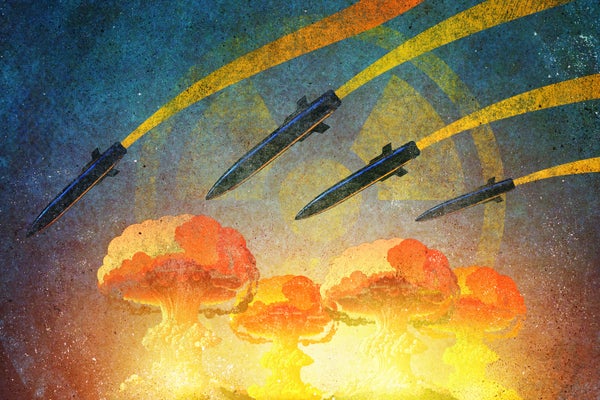
We are living in a scary time. After a terrorist attack that killed at least 26  people, mostly Indian tourists, in Kashmir in April, India blamed the attack on Pakistan, threatened to cut off that nation’s water supplies, and followed up in May with airstrikes. Pakistan has promised a “measured but forceful response,” threatening a wider war endangering everyone.

India and Pakistan each have about 170 nuclear weapons. A nuclear war between India and Pakistan would produce smoke from fires in cities and industrial areas. That smoke would rise into the stratosphere, the atmospheric layer above the troposphere where we live, which has no rain to wash out the smoke. Our research has found that the smoke would block out the sun, making it cold, dark, and dry at Earth’s surface, choking agriculture for five years or more around the world. The result would be global famine.

Like it or not, humanity still has a nuclear dagger pointed at its throat. But there is another choice that starts with the U.S. If we take our land-based missiles off their hair-trigger alerts and negotiate with Russia to reduce our nuclear arsenal, we could set an example for the rest of the world. If we eventually sign the Treaty on the Prohibition of Nuclear Weapons, the U.S. could provide an example to Iran and other nations with an interest in building their own nuclear arsenal.

The alternatives are terrifying. One of us (Robock) published an article in Scientific American 15 years ago describing how a war in South Asia, like the one now possible between India and Pakistan, could produce global climate change and threaten the world’s food supply, but we did not know how large that threat would be. In the years since then, we have calculated, for a range of smoke amounts released from nuclear war, the specific effects on agriculture in each nation. From there, we estimated how the people would fare under the assumption that their stored food was gone, trade was halted, and they kept the same agricultural activity. A nuclear war between India and Pakistan could kill one to two billion people through starvation in the two years after the war.

The U.S. and Russia have more than 8,000 nuclear weapons. A nuclear war between the U.S. and Russia could kill more than six billion people around the world in the following two years. The direct impacts of blast, radiation, and fire on those attacked by nuclear weapons would be horrific, as we know from what happened in Hiroshima and Nagasaki during World War II, but 10 to 20 times more people would die from famine.

Many people assume that there will never be another nuclear war, since it has now been 80 years and several generations since the last one. They also have been told that nuclear deterrence must be maintained to keep us safe. Yet threats to use nuclear weapons from Russia and North Korea, and even from the U.S. president, have worried many. The New START treaty, the only remaining arms control agreement between the U.S. and Russia, expires next year. China is rapidly increasing its nuclear arsenal.

President Trump just proposed a budget for the next fiscal year with a 13 percent increase for the Defense Department. This is exactly the wrong  direction for the U.S. A substantial part of the defense budget is for a “modernization” of our nuclear arsenal. Our nuclear “triad” is composed of land-based missiles, submarine missiles and nuclear bombs that could be dropped from airplanes. We already have all of these, and they cannot be used without the risk of killing almost all the people on the planet. They need to be removed, not modernized.

Deterrence is a myth. The theory is that we will not be attacked because we will attack an enemy if they attack us, thus deterring them. But in order for it to work, they have to believe that we will act as a suicide bomber. That is, that we will attack an enemy, producing so much smoke that we will be unable to grow any crops for more than five years, and thus all starve to death. This is not mutual assured destruction (the so-called “MAD” theory). It is self-assured destruction (SAD).

The upcoming Independent Study on Potential Environmental Effects of Nuclear War, a report from the U.S. National Academies of Science, Engineering, and Medicine due out this summer, the first such report since 1985, will make this danger more plain.

The rest of the world well understands the risk we all face. In 2017, after three international conferences on the humanitarian consequences of the use of nuclear weapons, including the indirect effects on food supply based on our work, the United Nations passed the Treaty on the Prohibition of Nuclear Weapons, which prohibits possession, manufacture, development and testing of nuclear weapons, stationing and installment of nuclear weapons or assistance in such activities, by its parties. The treaty came into force on January 22, 2021. There are currently 94 signatories and 73 states parties, but the nine countries, notably including the U.S., with nuclear weapons have not signed it and are trying to ignore the will of the rest of world.

The International Campaign to Abolish Nuclear Weapons (ICAN), which led the effort to get this treaty, was awarded the 2017 Nobel Peace Prize “for its work to draw attention to the catastrophic humanitarian consequences of any use of nuclear weapons and for its ground-breaking efforts to achieve a treaty-based prohibition of such weapons.”

For deterrence to succeed, there must be no use of nuclear weapons by accident, terrorists, computer malfunctions, hackers or unstable leaders. We have come close many times. As Beatrice Fihn, executive director of ICAN, said in her Nobel Peace Prize Lecture on December 10, 2017, “If only a small fraction of today’s nuclear weapons were used, soot and smoke from the firestorms would loft high into the atmosphere—cooling, darkening and drying the Earth’s surface for more than a decade. It would obliterate food crops, putting billions at risk of starvation. Yet we continue to live in denial of this existential threat.… The story of nuclear weapons will have an ending, and it is up to us what that ending will be. Will it be the end of nuclear weapons, or will it be the end of us? One of these things will happen. The only rational course of action is to cease living under the conditions where our mutual destruction is only one impulsive tantrum away.”

When Carl Sagan, a leader in early nuclear-winter research, was asked if he didn’t want to keep our nuclear weapons as a deterrent, he said: “For myself, I would far rather have a world in which the climatic catastrophe cannot happen, independent of the vicissitudes of leaders, institutions, and machines. This seems to me elementary planetary hygiene, as well as elementary patriotism.” We agree.

.

Explosive nuclear missile launch with mushroom cloudszpagistock/Getty Images

.

.

Click the link below for the complete article:

https://www.scientificamerican.com/article/india-and-pakistan-remind-us-we-need-to-stop-the-risk-of-nuclear-war/

.

__________________________________________

A Quest to Stop Fires Before They Turn Lethal

Leave a comment

Click the link below the picture

.

On November 23, 1903, the Iroquois Theatre opened in Chicago to rave reviews. “Few theaters in America can rival its architectural perfections,” applauded one commentator. The venue was “absolutely fireproof,” its playbills boasted.

Five weeks later, during a December 30 holiday matinee performance with 1,800 people in the audience, the Iroquois was engulfed in flames. Until the September 11 attack on the World Trade Center in 2001, it was the worst building disaster in the U.S.

Underwriters Laboratories, founded in 1894 to promote safety, joined the investigation into what went wrong at the Iroquois. The building didn’t have a single fire alarm. Crucial escape routes were barred with locked doors. And the one safety tool that could have stopped the fire at its initial spark, when an ​​electric light ignited a curtain backstage, didn’t work: the fire extinguisher.

“A man put 10 cents’ worth of baking soda in a 5-cent tin tube. He sold it for $3 as a fire extinguisher,” fumed UL founder William Henry Merrill, Jr., likening the contraption to a phony magic wand. “Unfortunately, there was nothing ‘make-believe’ about the fire, and the result was very real to the families and the friends of over 600 women and children, whose lives were sacrificed that a man might make a profit of $2.”

Determined to prevent such pointless tragedies in the future, Merrill created a certification operation to assure the public that products with its distinctive mark had been scientifically tested and could be used safely. More than a century later, UL is still at the forefront of fire prevention.

“What made us relevant in the late 1800s is the same thing that has us relevant today, if not more,” says Steve Kerber, vice president and executive director of the Fire Safety Research Institute (FSRI), a part of UL Research Institutes (ULRI). “We’re trying to understand these new products or behaviors or technologies when they’re a concept … to understand the impact they have before people die.”

Danger at the Edge of Town

FSRI and its partners among ULRI’s other research institutes are focused on two main issues, both born of new technological and societal developments: fires caused by lithium-ion batteries and fires that ignite where wildland and urban development meet.

Wildland-urban interface fires, as they’re called, are especially hazardous. Not only do they threaten homes and businesses but “the fuel that can burn includes many things of human origin: plastics, fuels, energy-storage systems, solar panels and more,” says Christopher J. Cramer, ULRI’s interim president and chief research officer. “The gases and particulates that are produced under these circumstances are likely to be much more dangerous.”

.

https://static.scientificamerican.com/dam/m/1eaaa8f9dc5b075e/original/2T2P0MA.jpg?m=1743089608.386&w=900

After the catastrophic August 2023 fire in Lahaina, Hawaii, the state’s attorney general selected ULRI’s Fire Safety Research Institute to analyze the fire and suggest risk-reduction strategies. Matthew Thayer/The Maui News via AP/Alamy Stock Photo

.

.

Click the link below for the complete article:

https://www.scientificamerican.com/custom-media/ul-research-institutes/a-quest-to-stop-fires-before-they-turn-lethal/

.

__________________________________________

Older Entries Newer Entries

Amor Entre Estrellas

¡Bienvenido de vuelta viajero!

Heart of Loia `'.,°~

so looking to the sky ¡ will sing and from my heart to YOU ¡ bring...

Michael Ciullo

CEO and Founder of Nsight Health

MRS. T’S CORNER

https://www.tangietwoods

Nelson MCBS

Catholic News, Prayers, HD Images, Rosary, Music, Videos, Holy Mass, Homily, Saints, Lyrics, Novenas, Retreats, Talks, Devotionals and Many More

Global geopolitics

Decoding Power. Defying Narratives.

Talk Photo

A creative collaboration introducing the art of nature and nature's art.

Movie Burner Entertainment

The Home Of Entertainment News, Reviews and Reactions

Le Notti di Agarthi

Hollow Earth Society

C r i s t i a n a' s Fine Arts ⛄️

•Whenever you are confronted with an opponent, conquer him with love.(Gandhi)

TradingClubsMan

Algotrader at TRADING-CLUBS.COM

Comedy FESTIVAL

Film and Writing Festival for Comedy. Showcasing best of comedy short films at the FEEDBACK Film Festival. Plus, showcasing best of comedy novels, short stories, poems, screenplays (TV, short, feature) at the festival performed by professional actors.

Bonnywood Manor

Peace. Tranquility. Insanity.

Warum ich Rad fahre

Take a ride on the wild side

Madame-Radio

Découvre des musiques prometteuses (principalement) dans la sphère musicale française.

Ir de Compras Online

No tiene que Ser una Pesadilla.

Kana's Chronicles

Life in Kana-text (er... CONtext)

Cross-Border Currents

Tracking money, power, and meaning across borders.

Jam Writes

Where feelings meet metaphors and make questionable choices.

emotionalpeace

Finding hope and peace through writing, art, photography, and faith in Jesus.

WearingTwoGowns.COM

The Community for Wounded Healers: Former Medical Students, Disabled Nurses, and Faith-Fueled Pivots

...

love each other like you're the lyric to their music

Luca nel laboratorio di Dexter

Comprendere il mondo per cambiarlo.

Tales from a Mid-Lifer

Mid-Life Ponderings

Creative

Travel,Tourism, Life style "Now in hundreds of languages for you."

freedomdailywriting

I speak the honest truth. I share my honest opinions. I share my thoughts. A platform to grow and get surprised.

The Green Stars Project

User-generated ratings for ethical consumerism

Cherryl's Blog

Travel and Lifestyle Blog

Sogni e poesie di una donna qualunque

Questo è un piccolo angolo di poesie, canzoni, immagini, video che raccontano le nostre emozioni

My Awesome Blog

“Log your journey to success.” “Where goals turn into progress.”

pierobarbato.com

scrivo per dare forma ai silenzi e anima alle storie che il mondo dimentica.

Thinkbigwithbukonla

“Dream deeper. Believe bolder. Live transformed.”

Vichar Darshanam

Vichar, Motivation, Kadwi Baat ( विचार दर्शनम्)

Komfort bad heizung

Traum zur Realität

Chic Bites and Flights

Savor. Style. See the world.

ومضات في تطوير الذات

معا نحو النجاح

Broker True Ratings

Best Forex Broker Ratings & Reviews

Blog by ThE NoThInG DrOnEs

art, writing and music by James McFarlane and other musicians

fauxcroft

living life in conscious reality

Srikanth’s poetry

Freelance poetry writing

JupiterPlanet

Peace 🕊️ | Spiritual 🌠 | 📚 Non-fiction | Motivation🔥 | Self-Love💕