Home

For Putin, the War in Iran Changed Everything

Leave a comment

Click the link below the picture

.

At the start of the year, the Russian economy looked to be giving way. Under the strain of war and sanctions, revenues were falling, production was shrinking, and trade was running low. With rising tariffs, credit was prohibitively expensive and borrowing all but impossible: A wave of bankruptcies was on the horizon. In late January, Russia was forced to sell oil to India at just $22 per barrel, about a third of the market rate. As a symbol of unsustainability, it was hard to beat.

President Vladimir Putin has heard such complaints throughout the war. Yet, according to those around him, he has chosen largely not to listen. Officials and business leaders, for their part, understood that the continuation of the war was his absolute priority and that the country’s economic situation was of little consequence. But in February, something shifted. Mr. Putin began, suddenly, to pay attention to the flagging economy. There were even signs he might be changing his mind on negotiations with Ukraine, perhaps seeking an exit from the conflict.

Then came the war in Iran. In one swoop, the conditions for conciliation were overturned. Amid buoyant oil prices, Western division and American overreach, the pressure on Mr. Putin to come to terms ebbed away. By a strange twist of history, the start of the war in Iran halted the prospect of ending the war in Ukraine — at the very moment when Mr. Putin appeared ready to consider it.

In February, Mr. Putin seemed ready to change course and overhaul his negotiating team. Kirill Dmitriev, the Kremlin’s chief envoy who is widely seen as an insubstantial figure with no real mandate, was reportedly on the verge of dismissal. The leading candidate to replace him was Igor Sechin, the head of the state oil giant Rosneft. Regarded as Mr. Putin’s right-hand man, Mr. Sechin previously oversaw Russia’s relationships with Latin America, as well as the cultivation of close relationships with American oil executives. Here was an indication that Mr. Putin might begin to take talks seriously.

At the same time, rumors began circulating of an imminent large-scale reshuffle of the Russian government. If Mr. Putin were to engage properly in negotiations and pursue peace with Ukraine, he would have to entirely rebuild the structure of power. According to people close to the Kremlin, that could include dismissing the current government. Clouds had already begun to gather over Prime Minister Mikhail Mishustin: Individuals close to him have recently become defendants in criminal cases.

We will never know what might have happened. On Feb. 28, Ayatollah Ali Khamenei was killed in a joint U.S.-Israeli attack; in the days that followed, everything changed. Oil prices surged above $100 a barrel and, in a major reversal, the United States lifted sanctions on Russian oil. Demand soared for Russian fertilizer as the world reeled from disruptions to food supply. All of a sudden, the economic problems bedeviling Russia seemed to evaporate.

What’s more, divisions deepened between the United States and its NATO allies, who refused to send ships to the Strait of Hormuz. President Trump called it a “very foolish mistake.” For Mr. Putin, whose foreign policy has been built around cultivating disorder in the West, this was welcome. Equally important is the absorption of America’s attention in the Middle East, pushing Ukraine far from mind. It’s not just attention that is being diverted: The United States is burning through weaponry and ammunition that could otherwise be sent to Ukraine.

In America, too, the Kremlin spies an advantage. It’s not hard to see how a protracted conflict with Iran could erode Mr. Trump’s political standing and weaken the Republican Party, making the upcoming midterm elections especially precarious. This reinforces Mr. Putin’s conviction about the transience of American politics. Mr. Trump, like any American president, is a temporary figure: A new administration will eventually arrive, potentially with a very different approach to Russia. The war in Iran may hasten that shift. In this view, concessions on Ukraine would be pointless.

These are all considerable boons for the Kremlin. But the money now flooding into Russia is by no means a guarantee that Mr. Putin will be able to continue the war indefinitely. On the contrary, some close to the government believe that the current situation will be short-lived. By May, many in Moscow expect, the war in Iran could be over, and sanctions against Russia reinstated. For the troubled Russian economy, there is no permanent salvation.

The situation inside Russia is becoming turbulent, too. Ahead of parliamentary elections this fall, the Kremlin is in a state of near-paranoid anticipation, nervously flip-flopping on plans to stuff Parliament with veterans and dealing harshly with a pro-regime blogger who publicly turned on Mr. Putin. It has moved to block Telegram, the country’s most widely used messaging platform, while internet outages are becoming increasingly frequent in Moscow and St. Petersburg. The rumors of sweeping government reshuffles have not gone away.

A level of public discontent that until recently would have been unthinkable is now part of daily life. Before too long, it seems, Mr. Putin will have to make a consequential choice: either agree to some form of de-escalation in Ukraine, potentially including an end to the war, or move in the opposite direction — tightening controls across the board, even to the point of a new mobilization. It’s impossible to predict what decision Mr. Putin will make. But a large factor will be whether America continues in its own war.

.

https://static01.nyt.com/images/2026/03/25/multimedia/25zygar-lzkp/25zygar-lzkp-superJumbo.jpg?quality=75&auto=webp

Pool photo by Alexander Zemlianichenko

.

.

Click the link below for the complete article:

https://www.nytimes.com

.

__________________________________________

Dangerous microbes could be getting a hidden boost from climate change

Leave a comment

Click the link below the picture

.

When we think of drought, we tend to think of consequences we can see—wildfires, hose bans, taps that run dry and crops that fail. But it turns out drought can have a damaging effect even on the microscopic level by promoting dangerous antibiotic resistance in bacteria.

The finding is detailed in a study published Monday in Nature Microbiology. Researchers discovered that drought conditions can boost both soil-dwelling and human-hosted bacteria’s ability to resist antibiotics. And as rising global temperatures dry out more of the world, more people may be exposed to these treatment-immune pathogens.

“We found this really surprisingly strong correlation of the aridity index and antibiotic resistance,” says Dianne Newman, senior author of the study and a microbiologist at the California Institute of Technology, who adds that the data are a “wake-up call” for people to pay attention to antibiotic resistance.

“I think [the study authors] are exploring something novel,” says Jason Burnham, an infectious diseases physician and clinical researcher who was not involved in the new research. Antibiotic resistance isn’t a new problem: first noticed soon after the discovery of antibiotics, the ability of some bacteria to evade treatment with these drugs has challenged physicians for decades and contributes to an estimated five million deaths worldwide each year. But connecting it to climate change is an emerging area of interest—and there are many unanswered questions about how a warmer world will influence disease.

Newman and her colleagues were interested in the ecological niche of phenazines, which are naturally occurring antibiotics that live in soil. When they tested the microbial population in wet and dry soil samples, they noticed that drier conditions tended to increase the concentration of antibiotics—and resistant bacteria.

“It stands to reason that if you have bacteria in the soil making antibiotics, and you start drying out the soil, those antibiotics become more concentrated,” Newman says. “The only bacteria that can withstand that are those that can resist it.”

The researchers also looked at soil data from several different ecosystems that had experienced drought and found elevated levels of antibiotic-resistant bacteria. Then they analyzed hospital data that revealed that the aridity of a hospital’s location was strongly correlated with the number of antibiotic-resistant infections.

As the planet warms, more of the world—perhaps as much as 25 percent of Earth by 2050—will experience droughts and desert-like conditions. That could translate to much higher rates of antibiotic-resistant bacterial diseases—but it could also help doctors in dry areas better prepare to fight these illnesses.

“What [the authors] are proposing, reading between the lines a little bit, is that hospitals in drier areas may need to use different antibiotics than hospitals with sort of less arid conditions,” Burnham says.

.

https://static.scientificamerican.com/dam/m/37c22127c4827e00/original/GettyImages-2215967433.jpg?m=1774280969.715&w=900

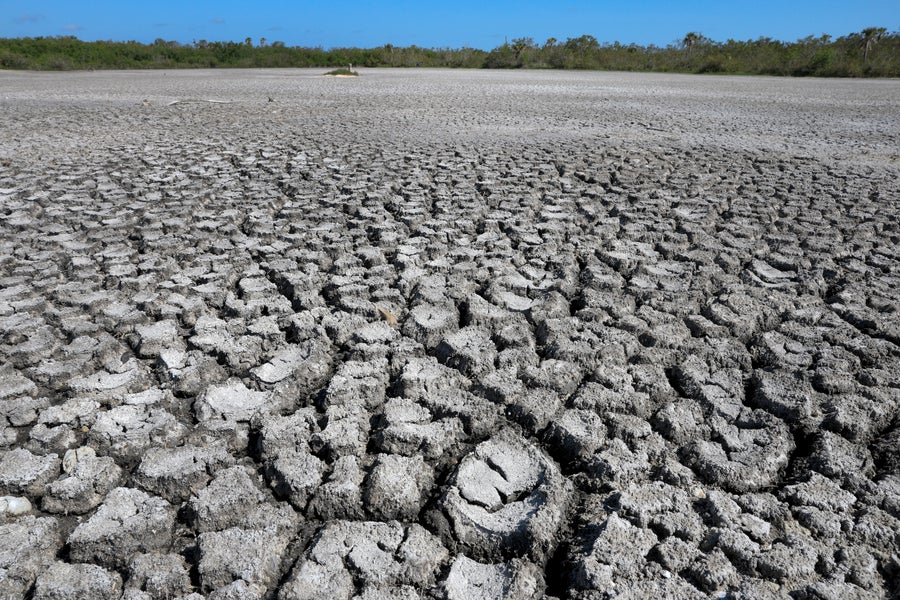
As warming temperatures dry landscapes around the world, antibiotic resistance may continue to rise. Joe Raedle/Getty Images

.

.

Click the link below for the complete article:

https://www.scientificamerican.com/article/dangerous-microbes-may-be-hiding-in-drought-stricken-soils/

.

__________________________________________

We Tested 4 Carrot Cake Recipes From Famous Chefs and Writers — Our Favorite Felt Like a Warm Hug

Leave a comment

From

Click the link below the picture

.

Carrot cake is as quintessential to an Easter table as ham or lamb. Some say it made its way to Easter’s spotlight because it’s supposedly the favorite snack of the Easter Bunny. Folklore aside, we do know that carrots harvested in the spring are especially sweet. When combined with warm spices, bright citrus, crunchy nuts, and dried fruit, carrot cake strikes the balance of bright yet cozy — perfect for the crossover from winter to spring. Whether it’s a layer cake, sheet cake, or baked in a Bundt, carrot cake is beloved in all forms. 

When considering the best desserts for Easter, we dug into the Food & Wine archives to revisit some of our favorite carrot cake recipes. We chose a classic layer cake, a citrus-scented Bundt, a simple snack cake, and a sheet cake made with loads of cardamom and ghee. The variety of carrot cakes was impressive, but only one delivered on taste and flavor while providing the nostalgic experience many crave from this classic dessert.

Experienced recipe testers from the People Inc. Food Studios got to baking, then tasted the results alongside a team of F&W food experts and editors. It was the ultimate carrot cake showdown, with one cake standing out among the rest.

Winner: Jodi Elliott’s Classic Carrot Cake with Fluffy Cream Cheese Frosting

Classic Carrot Cake with Fluffy Cream Cheese Frosting (Jodi Elliot)

Food & Wine / Photo by Victor Protasio / Food Styling by Emily Nabors Hall / Prop Styling by Priscilla Montiel

Active time: 40 minutes
Total time: 3 hours 30 minutes

Chef Jodi Elliott took home the 2013 F&W People’s Best New Pastry Chef award for her work at the award-winning restaurant Foreign & Domestic in Austin. She went on to open the now-closed Bribery Bakery, which filled its cases with classic, nostalgic desserts that featured her own creative spins. In a 2014 interview with Edible Austin, she noted, “Everyone connects with desserts that remind them of family and things they can make in their own home.” This feeling of familiarity was what our tasting team loved most about her traditional carrot cake recipe, taking it to the top of our list.

Elliott’s Classic Carrot Cake with Cream Cheese Frosting looks and tastes nostalgic. Two round cake layers pack a pound of coarsely grated carrots and loads of toasted pecans for crunch. Buttermilk keeps the layers tender and moist, while a whisper of cinnamon lends subtle spice. Layered with a simple cream cheese frosting, then garnished with more crunchy pecans, this cake looks like it belongs on a cake stand in an American-style 1950s diner. 

.

https://www.foodandwine.com/thmb/4GwlWyaniObdhycsC4LOnobjf08=/750x0/filters:no_upscale():max_bytes(150000):strip_icc()/Chef-Recipe-Face-Off-Carrot-Cake-FT-DGTL0326-590656c8cb844dee81b668aa9728baea.jpgCredit: Food & Wine / Photo by Victor Protasio / Food Styling by Emily Nabors Hall / Prop Styling by Priscilla Montiel

.

.

Click the link below for the complete article:

https://www.foodandwine.com/famous-carrot-cake-recipes-11930311

.

__________________________________________

Trump’s Ultimatum to Iran Was Almost Up. Then He Found an Offramp.

Leave a comment

Click the link below the picture

.

President Trump seized on initial contacts between Iranian and American officials to back away on Monday from his threat to strike power plants in Iran, declaring that the countries had begun “productive conversations” for the first time since the war began more than three weeks ago.

Iranian officials publicly denied that any negotiations about terms to end the war were underway, and American officials said the contacts were in a very early stage and not substantive.

But Mr. Trump used the opening of even an early dialogue as an offramp from the threat he issued Saturday to attack Iran’s power plants in retribution for the closure of the Strait of Hormuz. Iran had vowed not to capitulate, and the 48-hour deadline Mr. Trump had set would have expired on Monday.

Mr. Trump said he would now extend his deadline to Friday to give the talks time to proceed, setting off a flurry of diplomacy by a number of nations seeking to nurture the talks. It remained unclear, though, how seriously the White House was taking the potential for a breakthrough in a conflict that has seen both sides escalate for weeks.

“We’re doing a five-day period,” Mr. Trump told reporters on Monday about his pause on hitting Iranian power plants, targets that are forbidden under most circumstances under the Geneva Conventions. “We’ll see how that goes, and if it goes well, we’re going to end up with settling this. Otherwise, we’ll just keep bombing our little hearts out.”

Even as Mr. Trump retreated from one military option, U.S. and Israeli officials said they were continuing to carry out other strikes against Iran, and more American military assets were headed to the region. Officials said Mr. Trump was still weighing more aggressive operations, including one to seize Kharg Island, Iran’s main oil export hub, and another to send ground forces into Iran to secure highly enriched uranium.

Mr. Trump on Monday provided few details of the conversations with Iran beyond saying Jared Kushner, his son-in-law, and Steve Witkoff, his special envoy, were leading the negotiations. He said they were communicating directly with one of Iran’s leaders, without naming the person. American and Iranian officials familiar with the conversations, speaking on the condition of anonymity to discuss the sensitive talks, said Mr. Witkoff has had direct communication with Iran’s foreign minister, Abbas Araghchi, in recent days.

The president said the United States was still demanding an end to Iranian nuclear enrichment and elimination of all of the country’s uranium stockpiles that could be used to one day make a bomb, terms that Iran had previously rejected. It was the breakdown of diplomatic negotiations between Mr. Kushner, Mr. Witkoff, and Mr. Araghchi that led to the United States and Israel launching strikes against Iran at the end of February.

Iranian officials denied Monday that they were negotiating with the United States, and Mohammad Bagher Ghalibaf, the speaker of Iran’s Parliament, wrote on social media that Mr. Trump’s comments were an attempt to “escape the quagmire in which the US and Israel are trapped.”

In interviews, four Iranian officials said that the messages passed in the past few days through intermediaries and in direct conversations with the Americans were essentially probes on how to de-escalate the conflict, with the goal of averting a spiraling escalation, including attacks on critical energy infrastructure.

The officials said that Mr. Araghchi told Mr. Witkoff that Iran was not interested in a temporary cease-fire and wanted a sustainable peace deal, with guarantees that the United States and Israel would not attack it again. The officials said the Iranians also sought specific economic sanctions relief from Washington, a topic that, in negotiations before the war, American officials said would only happen after Iran delivered on its nuclear and other commitments in any agreement.

But Mr. Trump’s characterization of these as “productive conversations” seemed to overstate the current state of the talks.

Ali Vaez, the Iran project director at the International Crisis Group, said the Iranians would not engage in a high-level meeting before knowing that the United States was stepping away from its “maximalist” demands.

“Not attacking energy infrastructure is a low bar,” he said. “The terms of a cease-fire, or an agreement that would resolve the longer-term problems. including the fate of the stockpile or reopening of the strait — none of those things are anywhere close to the finish line right now.”

Prime Minister Benjamin Netanyahu of Israel said that he spoke with Mr. Trump on Monday and that Mr. Trump believed it was possible to “leverage” their military achievements against Iran to “realize the objectives of the war in an agreement.”

But Mr. Netanyahu, whose strategy has sometimes been at odds with Mr. Trump’s in recent weeks, made it clear he had no intention of letting up. “We are smashing the missile program and the nuclear program, and we continue to deal severe blows to Hezbollah.” He revealed that Israel recently “eliminated two more nuclear scientists” in Iran.

Arab countries in the Persian Gulf decided they did not want to act as mediators as long as Iran continued to attack their countries, but several other countries, including Pakistan, Turkey, and Egypt, have offered assistance, though it remains unclear if there are any mediating partners involved.

Turkey and Pakistan have floated ideas for in-person meetings between U.S. and Iranian officials. One proposal calls for a meeting between Mr. Araghchi, Mr. Witkoff, and Mr. Kushne,r while another suggests Vice President JD Vance meets with Mr. Ghalibaf. Officials said none of the meetings have been scheduled.

“These are sensitive diplomatic discussions and the U.S. will not negotiate through the press,” Karoline Leavitt, the White House press secretary, said in a statement. “This is a fluid situation, and speculation about meetings should not be deemed as final until they are formally announced by the White House.”

For Mr. Trump, the prospect of negotiations allows him to buy time to try reopen the Strait of Hormuz and to extract himself from a box of his own construction. On Saturday night, Mr. Trump said if Iran did not open the strait within 48 hours, the United States would “obliterate” Iran’s power plants.

After he issued his threat, it became clear that if he attacked Iran’s electrical infrastructure, the retaliation would take place against Gulf allies who are already trying to keep the war from spreading. But if he backed away from his threat, some officials around him feared he would be conveying weakness to the Iranians.

Already on Monday, Iranian officials said Mr. Trump’s announcement was evidence of the United States giving in. “Trump, out of fear of Iran’s response, backed down from his 48-hour ultimatum,” the Iranian state broadcaster, IRIB, said.

Mr. Trump is facing increasing domestic and economic pressure to reopen the Strait of Hormuz. The war’s global fallout has seen the price of oil and gas shoot up as much as 40 percent since late February, a crisis that is now worse than the oil shocks in 1973 and 1979 combined, according to the head of the International Energy Agency.

Mr. Trump’s statement about talks with Iran immediately reduced energy prices somewhat, but it was unclear how long that could last without tangible progress toward ending the war. The president has repeatedly given optimistic assessments that temporarily eased market jitters, only for prices to rise again.

Mr. Trump on Monday promised the Strait of Hormuz would be open “very soon” and would be “jointly controlled.”

“Maybe me? Maybe me,” he said when asked who would control the key waterway. “Me and the ayatollah. Whoever the ayatollah is.”

.

https://static01.nyt.com/images/2026/03/23/multimedia/23DC-PREXY-jghk/23DC-PREXY-jghk-jumbo.jpg?quality=75&auto=webpAbbas Araghchi, Iran’s foreign minister, in Tehran last year. He is said to have conveyed to the U.S. that Iran would need sanctions relief and guarantees against future attacks. Credit…Arash Khamooshi for The New York Times

.

.

Click the link below for the complete article:

https://www.nytimes.com

.

__________________________________________
A ‘charmed’ new particle is discovered at world’s largest atom smasher

2 Comments

Click the link below the picture

.

Physicists just discovered a brand-new particle that appears to be an exotic cousin to the protons and neutrons that make up atoms.

Those mundane subatomic particles are made up of even smaller building blocks of matter called “up” and “down” quarks, which are the lightest kinds of quarks. But quarks come in heavier flavors as well, including “charm,” “strange,” “bottom”, and “top” (the most massive fundamental particle known).

The new particle, discovered at the world’s largest atom smasher, the Large Hadron Collider (LHC) in Geneva, Switzerland, contains two charm quarks and a down quark. Like protons and neutrons, its total of three quarks classifies it in particle physics as a baryon, which is a type of hadron—or a particle made of quarks. The discovery brings the current tally of known hadrons discovered by LHC experiments to 80.

The new particle, which physicists are calling a doubly charmed baryon, essentially replaces the two up quarks in a proton with charm quarks, giving it about four times the mass of the more common and stable proton.

The LHC accelerates protons to more than 99 percent the speed of light and then slams them together. The protons are destroyed, and the energy of the crash gives rise to new particles in their wake. Every time a doubly charmed baryon was created within the collider, it quickly decayed into lighter particles.

The new particle was discovered by the LHCb experiment, one of nine detectors stationed around the LHC’s 17-mile-long ring. It’s the first new particle seen at the experiment since scientists upgraded LHCb in 2023.

The doubly charmed baryon is only the second baryon with two heavy quarks ever seen—the rest have all contained two up or down quarks and just one of the heavier flavors. The previous heavy baryon was discovered in 2017, also at LHCb, and consists of two charm quarks and an up quark. Despite their similarities, the newfound particle is even less stable than the other heavy baryon, with a lifetime predicted to be about six times shorter.

Finding these kinds of particles helps teach physicists about the strong force, which is the most powerful force in nature and binds hadrons together. The strong force is also the most mysterious and confusing force, governed by a complex theory called quantum chromodynamics. Physicists hope to understand how the strong force holds quarks together and how the composite particles’ properties, such as mass and spin, arise.

Physicists announced the discovery this week at the Moriond particle physics conference in Italy.


.

https://static.scientificamerican.com/dam/m/4890e7c798a3e1c0/original/Xicc-cartoon-scaled.png?m=1773775052.69&w=900

Artist’s impression of the new particle, which contains two charm quarks and one down quark. CERN

.

.

Click the link below for the complete article:

https://www.scientificamerican.com/article/physicists-discover-a-charmed-new-particle/

.

__________________________________________

Trump deploys mask-free ICE agents to patrol US airports amid TSA chaos – but their role remains unclear

2 Comments

Hmmmm … Are European immigrants scrutinized so severely?

Click the link below the picture

.

Immigration and Customs Enforcement agents have been deployed to more than a dozen airports across the U.S. after President Donald Trump’s threats to mobilize federal law enforcement during a partial government shutdown that has thinned the ranks of airport workers and snarled security lines.

Armed ICE officers wearing military-style vests moved into at least 13 major transit hubs on Monday, including airports in New York City, Houston, and Atlanta, to supplement Transportation Security Administration personnel who have been working without pay while Congress is deadlocked on a funding deal for the Department of Homeland Security, which oversees TSA as well as ICE and other immigration agencies.

What exactly ICE is doing there remains unclear. Trump says the agents are relieving TSA workers, performing immigration arrests, and providing “security like no one has ever seen before” — but ICE agents cannot perform TSA screening duties, making it unclear what impact, if any, the deployment of armed federal officers into American airports will have on wait times plaguing security checkpoints.

ICE agents, who are still being paid during the partial shutdown, were seen standing around inside several airport terminals on Monday while travelers once again faced hours-long wait times to get through security lines.

“If that’s not enough, we’ll bring in the National Guard,” Trump told reporters Monday. “ICE loves it because they’re able to now arrest illegals as they come into the country. It’s very fertile territory. But that’s not why they’re there. They’re there to help.”

Trump’s idea, which appears to have come from a right-wing radio show, has drawn mixed reactions from airline passengers who are already on edge, while civil rights groups and unions representing federal workers argue that ICE’s presence only injects unnecessary fear and potential violence into an already-tense environment.

“I guess it’s a good use of our federal money,” one traveler at Hartsfield-Jackson Atlanta International Airport told CBS News. “But other than that, I mean, hopefully, we don’t get any bad situations from it.”

Tom Charging Hawk told The New York Times that he was “rattled” by the presence of ICE agents inside Chicago’s O’Hare International Airport. He said his colleagues dropped out of attending a conference because of “ICE and security weirdness.”

“How are they going to keep us safe?” a passenger at Newark Liberty International Airport worker asked CNN.

Travelers are feeling for TSA agents who are entering another pay period without a paycheck but are questioning whether ICE — after months of scrutiny into officers’ lethal use of force and the president’s violent mass deportation efforts — is merely being used as a political tool to bully Trump’s critics.

“Are they going to handle it the way it’s supposed to be handled?” Lamar Weaver, who was traveling from Philadelphia International Airport, told CBS News. “Do they have the emotional intelligence to do it the way it’s supposed to be done?”

Roughly 60,000 TSA workers are caught in the middle of a congressional stalemate over Homeland Security’s budget, which saw a massive injection of taxpayer cash for immigration enforcement under a separate measure last year.

TSA workers, considered essential staff, have been showing up to work without a paycheck over the last month, but workers are calling out sick, and roughly 400 employees have quit. More than a third of TSA officers at Atlanta’s airport — the busiest in the U.S., handling roughly 100 million passengers annually — have called out sick.

Most airports are no longer displaying TSA wait times during the shutdown, but are instead advising travelers to show up at least four hours before their flights.

Democratic members of Congress have proposed separate funding bills to keep TSA running while lawmakers hammer out guardrails for federal immigration enforcement under DHS, but Republicans have rejected the deals.

The White House and Trump’s allies insist Democrats are the problem, and the president is now suggesting that he is no longer interested in reaching a funding deal at all unless Democrats vote with Republicans to pass the SAVE America Act, a sweeping bill to overhaul elections and further block trans Americans from public life — completely separate from the DHS debate.

The president said the SAVE Act, not funding TSA to end the weeks-long crisis, is “far more important than anything else we are doing in the Senate.”

TSA officer Darrell English, president of Chicago’s chapter of the American Federation of Government Workers, which represents TSA workers, said he’s “unaware” what role ICE is playing inside airports.

“I can’t see them doing anything as far as screening procedures, so it might be limited as far as what they can do,” he told CNN.

The union’s national president, Everett Kelley, said TSA workers “have been showing up every day, without a paycheck, because they believe in the mission of keeping the flying public safe.”

“They deserve to be paid, not replaced by untrained, armed agents who have shown how dangerous they can be,” Kelley said in a statement.

A spokesperson for the Port Authority of New York and New Jersey said the agency expects that any ICE agents assigned to New York-area airports “will be appropriately trained and focused on supporting screening operations.”

“I don’t [know] what their purpose is,” Newark airport worker Tonya Johnson told The New York Times. “They’re just standing there, and they’re in the way.”

.

Trump says ICE will go maskless at airports

.

.

Click the link below for the complete article:

https://www.the-independent.com/news/world/americas/us-politics/ice-agents-airports-trump-government-shutdown-b2943703.html

.

__________________________________________

Which Countries Depend the Most on Persian Gulf Oil and Gas

Leave a comment

Click the link below the picture

.

The war in the Middle East has halted most of the oil and gas trade from the region, forcing countries thousands of miles to contend with their energy supplies suddenly vanishing.

The Persian Gulf accounts for roughly a fifth of the world’s energy needs. As Iran effectively blocks shipments, international prices for oil and gas have shot up. That in turn has meant gasoline, jet fuel, and other products have become costlier — hurting drivers, business owners, and others from Los Angeles to Lahore, Pakistan. As the world becomes gripped by the energy crisis, some nations are feeling the loss more acutely.

In 2024, nearly 21 million barrels of oil a day crossed through the Strait of Hormuz, the narrow passageway connecting the Persian Gulf to the world. Four-fifths of that supply went to Asia.

China has long been the biggest purchaser of oil and gas from Persian Gulf nations. And with more than a third of its total supply coming from the region, the disruption is significant for Beijing. But other countries are almost entirely reliant on the region for their energy needs.

Pakistan has considered imposing a four-day workweek, and remote school and work, in order to preserve energy stockpiles. A state-led fund in Thailand, to subsidize the cost of fuel when prices surge, plunged into a deficit this month.

In India, where the economy depends on the Middle East for roughly 40 percent of the country’s oil imports and 80 percent of its gas, a shortage of cooking gas is squeezing households. And across Asia, fliers are being stranded because airlines running low on jet fuel have canceled thousands of flights.

Europe has traditionally been less reliant on the Gulf than Asia has been. It used to get most of its natural gas from Russia, but in recent years it has relied more on the United States and Norway. But the continent has had to endure one energy crisis after another in recent years, including from Russia’s war with Ukraine and the Western sanctions that followed.

Russia is the world’s third-largest producer of oil and second-largest producer of gas, and the sales of its energy products have been significantly restricted while Moscow continues its invasion of Ukraine.

This current crisis comes as European countries, confronting lackluster economic output, try to rebuild their industrial bases and fend off competition from cheaper Chinese exports.

Confronted with soaring prices since its attack with Israel on Iran, the United States temporarily lifted sanctions on Russian oil that is currently at sea, hoping to ease the global supply and markets in the process. The European Union has not made similar moves.

African nations, like many other countries in the global south, could feel the disruption unevenly. Seychelles, the island nation off the east coast of Africa, imported almost all of its energy from Gulf states in 2024. Mauritius has had a similar reliance, while Nigeria, an oil-rich state and a member of the OPEC Plus oil cartel, has traditionally imported relatively few fossil fuels from the Middle East.

But as the war continues, the impact is being felt beyond the imports of oil and gas. The Persian Gulf is a dominant source of fertilizer, partly because the region’s abundance of energy has spurred the development of factories that make the raw materials for many types of agricultural chemicals.

A sustained rise in the cost of fertilizer could force governments in South Asia and sub-Saharan Africa to subsidize the cost of growing crops or otherwise watch food prices climb. That could add to debt burdens afflicting many lower-income countries.

The United States is the world’s largest producer of oil and gas. That means the impact of halting the energy trade from the Middle East is much less severe.

But the United States and other countries in the region that do not import great quantities from the Gulf are still feeling economic strain. The jump in oil prices – to over $100 a barrel in recent weeks – has already weighed on other major economic factors.

The cost of gasoline has jumped by about a dollar a gallon nationally since the war began. American airlines have begun to cut flights because of fuel costs. Concerns about inflation have pushed mortgage rates to their highest level in three months, just weeks after they fell below 6 percent for the first time since 2022.

If the war drags on, or if oil and gas prices continue to rise, the damage will most likely grow, economists say. It is perhaps one reason why the White House has forcefully insisted that it does not need Middle Eastern oil — and is increasingly trying to use military force to stop Iran’s blockade of it.

.

Asian countries are the biggest buyers of Persian Gulf energy

Note: Only countries with energy imports from Gulf countries are shown.

.

.

Click the link below for the complete article:

https://www.nytimes.com

.

__________________________________________

An asteroid just exploded above Ohio with the force of 250 tons of TNT

Leave a comment

Click the link below the picture

.

A flashy fireball streaked across the skies above the Midwest on Tuesday, falling to Earth near Lake Erie and Ohio at around 9:00 AM EDT. Some reported hearing a boom loud enough to shake their houses.

The object appears to have been a seven-ton asteroid that spanned nearly six feet in diameter, according to NASA. When it fell, it was traveling at around 40,000 miles per hour in a southeasterly direction before “fragmenting”—blowing up—over Valley City in Ohio. The explosion had the equivalent force of 250 tons of TNT, the agency said, and “may have also shook houses north of Medina.”

The blast sent a wave of pressure toward the ground, which would have been heard by local residents. Some fragments of the meteor fell as meteorites near Medina, NASA said, but it’s unclear if there was any damage as a result of the fireball.

“What occurred this morning was a daylight fireball at least several feet across,” says Robert Lunsford, who helps coordinate fireball reports at the American Meteor Society. “This is large enough to survive down to the lower atmosphere, where the air molecules are dense enough to carry sound. Therefore, people under the path of this fireball heard a delayed sonic boom produced by this fireball.”

Early on, the object didn’t have the characteristics of a piece of space junk—another possible falling space object—astrophysicist Jonathan McDowell noted ahead of NASA’s identification. “Space debris usually has slowed to below supersonic by the time it gets low enough that it would make an audible boom,” McDowell says.

It’s also a mystery where the asteroid came from. Earth is bombarded by falling space dust and rocks all the time, but only some of these are large enough to make it close enough to the ground to be visible in the daytime without first burning up in our atmosphere. If any part of a meteor survives the journey to land on the ground, it becomes a meteorite.

“We receive several reports of daylight fireballs per month from all over the world,” Lunsford says. “If they are large and bright enough, they can be seen against the blue daytime sky. So it’s rare for an individual to see one of these but fairly common over the entire planet. Still, they make up far less than one percent of the total number of fireballs reported to us.”

.

https://static.scientificamerican.com/dam/m/65404944d0b40e7b/original/Meteor.jpg?m=1773775854.676&w=900

This image, taken with a meteorite tracking device developed by amateur astronomer George Varros, shows a meteorite as it enters Earth’s atmosphere during the Leonid meteor shower on November 19, 2002. Photo by George Varros and Dr. Peter Jenniskens/NASA/Getty Images

.

.

Click the link below for the complete article:

https://www.scientificamerican.com/article/an-asteroid-just-exploded-above-ohio-with-the-force-of-250-tons-of-tnt/

.

__________________________________________

Iran vows to destroy Middle East water and energy facilities if US attacks power plants

Leave a comment

Click the link below the picture

.

Tehran has said it will “irreversibly destroy” essential infrastructure across the Middle East, including vital water systems, if the US follows through on Donald Trump’s threat to “obliterate” Iran’s power plants unless the strait of Hormuz is fully opened within two days.

As Iranian missiles struck two southern Israeli cities overnight, injuring dozens of people, and Tehran deployed long-range missiles for the first time, the developments signalled a dangerous potential escalation of the war, now in its fourth week, with both sides threatening facilities relied on by millions of people.

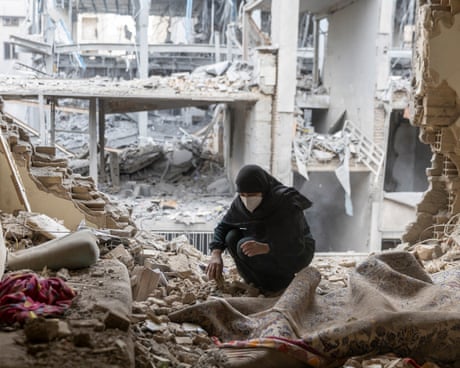
A woman wearing hijab and a facemask sifts through the rubble in her house in the Beryanak District after it was damaged by missile attacks two days before.
Iran war timeline: civilians bear brunt of US and Israel’s weeks-long campaign
Read more

The speaker of the Iranian parliament, Mohammad Bagher Ghalibaf, said on Sunday that vital infrastructure in the region – including energy and desalination facilities – would be considered a legitimate target and would be “irreversibly destroyed” if his country’s own infrastructure was attacked.

Amnesty International said this month there was a substantial risk that attacks on systems providing essential services such as electricity, heating, and running water would violate international law and “in some cases could amount to war crimes” because of the potential for “vast, predictable, and devastating civilian harm”.

The Iranian military’s operational command headquarters, Khatam al-Anbiya, said Iran would strike “all energy, information technology and desalination infrastructure” belonging to the US and Israel in the region.

The statement also said that if Trump’s threat was carried out, the strait of Hormuz would be “completely closed, and will not be reopened until our destroyed power plants are rebuilt”.

Iran’s president, Masoud Pezeshkian, said “threats and terror” were “only strengthening Iranian unity”, while theillusion of erasing Iran from the map” showed “desperation against the will of a history-making nation”.

The US president said on Saturday that he was giving Iran 48 hours – until shortly before midnight GMT on Monday – to open the Strait of Hormuz, a vital pathway for the world’s oil flows, or the US would “hit and obliterate” Iranian power plants, starting with the biggest one first”.

The US ambassador to the UN, Mike Waltz, defended Trump’s threat on Sunday, insisting that Iran’s Islamic Revolutionary Guard Corps (IRGC) controlled much of the country’s infrastructure and used it to power its war effort.

He said Trump would start by destroying one of Iran’s largest power plants, but did not identify it. “There are gas-fired thermal power plants and other type of plants,” and “the president is not messing around”, he said.

A No 10 spokesperson said Keir Starmer spoke to Trump on Sunday evening about the need to reopen the strait of Hormuz.

Iran’s representative to the International Maritime Organisation, Ali Mousavi, said on Sunday that the strait was open to all shipping except vessels linked to “Iran’s enemies”, with passage possible by coordinating security arrangements with Tehran.

Iranian attacks have in effect closed the narrow strait, which carries about a fifth of global oil and liquefied natural gas supplies, causing the world’s worst oil crisis since the 1970s and sending European gas prices surging by as much as 35% last week.

Only a relatively small number of vessels, estimated at about 5% of the prewar volume, from countries that Tehran considers friendly – including China, India, and Pakistan – have been allowed to pass.

.

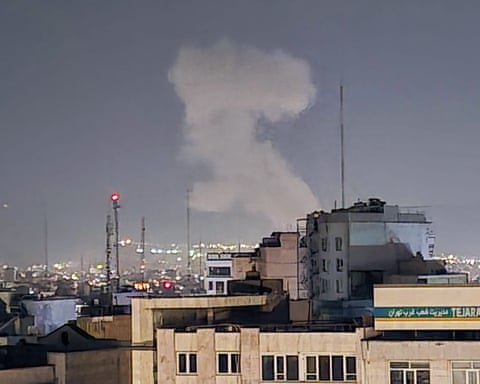
Smoke rises above Tehran after an Israeli airstrikeSmoke rises above Tehran after an Israeli airstrike on Sunday evening. Photograph: Anadolu/Getty Images

.

.

Click the link below for the complete article:

https://www.theguardian.com/world/2026/mar/22/iran-says-destroy-middle-east-infrastructure-us-energy-sites

.

__________________________________________

Israel Thought It Could Spur Rebellion Inside Iran. That Hasn’t Happened.

Leave a comment

Click the link below the picture

.

President Trump’s hopes that an Israeli plan to ignite an internal uprising against Iran’s theocratic government could bring the war to a swift end have so far been dashed.

As the United States and Israel prepared to go to war with Iran, the head of Mossad, Israel’s foreign intelligence service, went to Prime Minister Benjamin Netanyahu with a plan.

Within days of the war’s beginning, said David Barnea, the Mossad chief, his service would likely be able to galvanize the Iranian opposition — igniting riots and other acts of rebellion that could even lead to the collapse of Iran’s government. Mr. Barnea also presented the proposal to senior Trump administration officials during a visit to Washington in mid-January.

Mr. Netanyahu adopted the plan. Despite doubts about its viability among senior American officials and some officials in other Israeli intelligence agencies, both he and President Trump seemed to embrace an optimistic outlook. Killing Iran’s leaders at the outset of the conflict, followed by a series of intelligence operations intended to encourage regime change, they thought, could lead to a mass uprising that might bring about a swift end to the war.

“Take over your government: It will be yours to take,” Mr. Trump told Iranians in his initial address at the war’s start, after saying they should first seek shelter from the bombing.

Three weeks into the war, an Iranian uprising has not yet materialized. American and Israeli intelligence assessments have concluded that the theocratic Iranian government is weakened but intact, and that widespread fear of Iran’s military and police forces has dampened prospects both for nascent rebellion in the country and for ethnic militias outside of Iran to launch cross-border incursions.

The belief that Israel and the United States could help instigate widespread revolt was a foundational flaw in the preparations for a war that has spread across the Middle East. Instead of imploding from within, Iran’s government has dug in and escalated the conflict, striking blows and counterblows against military bases, cities and ships around the Persian Gulf, and against vulnerable oil and gas installations.

This account is based on interviews with more than a dozen current and former American, Israeli and other foreign officials, most of whom spoke on the condition of anonymity to discuss national security and intelligence issues during a war. The New York Times interviewed officials with a variety of views on the likelihood of an uprising.

Since Mr. Trump’s first speech, American officials have largely abandoned speaking publicly about the prospects for revolt inside of Iran, yet some remain hopeful that one could materialize. Though his rhetoric has become more tempered, Mr. Netanyahu still says the American and Israeli air campaign will be aided by forces on the ground.

“You can’t do revolutions from the air,” he said during a news conference on Thursday. He added: “There has to be a ground component as well. There are many possibilities for this ground component, and I take the liberty of not sharing with you all those possibilities.”

Mr. Netanyahu also added that “it is too early to tell if the Iranian people will exploit the conditions we are creating for them to take to the streets. I hope that will be the case. We are working toward that end, but ultimately, it will depend only on them.”

Behind the scenes, however, Mr. Netanyahu has expressed frustration that Mossad’s promises to foment revolt in Iran have not materialized. In one security meeting days after the war began, the prime minister vented that Mr. Trump might decide to end the war any day and that Mossad’s operations had yet to bear fruit.

In the run-up to the war, current and former American and Israeli officials said, Mr. Netanyahu invoked Mossad’s optimism about a possibility of an Iranian uprising to help convince Mr. Trump that bringing about the collapse of the Iranian government was a realistic goal.

Many senior American officials, as well as intelligence analysts at the Israel Defense Forces military intelligence agency, AMAN, viewed the Israeli plan for a mass uprising during the conflict with skepticism. U.S. military leaders told Mr. Trump that Iranians would not come out to protest while the United States and Israel were dropping bombs. Intelligence officials had assessed that the possibility of a mass uprising threatening the theocratic government was low, and doubted that the U.S.-Israeli attack would ignite any kind of civil war.

The White House did not respond to a request for comment. But a senior administration official noted that in Mr. Trump’s initial remarks after the beginning of the war he told Iranians to remain in their homes and urged them to take to the streets only after the air campaign was over.

“When we are finished, take over your government,” Mr. Trump said at the time.

Nate Swanson, a former State Department and White House official who was on the Trump administration’s Iran negotiating team led by Steve Witkoff until July, said he had never seen a “serious plan” to promote an uprising in Iran within the U.S. government in his many years working on Iran policy.

“A lot of protesters are not coming into the street because they’ll get shot,” said Mr. Swanson, now at the Atlantic Council. “They’re going to get slaughtered. That’s one thing. But the second thing is that there’s a good chunk of people who just want a better life, and they’re just sidelined right now. They don’t like the regime, but they don’t want to die opposing it. That 60 percent is going to stay home.”

He added, “You still have fervent anti-regime folks, but they’re not armed, and they’re not bringing the majority of the population into the streets.”

Mr. Trump appeared to have arrived at the same conclusion two weeks into the war. On March 12, he noted that Iran has security forces in the streets “machine-gunning people down if they want to protest.”

“So I really think that’s a big hurdle to climb for people that don’t have weapons,” he said on Fox News Radio. “I think that’s a very big hurdle. So it’ll happen, but it probably will be maybe not immediately.”

While many of the specifics of Mossad’s plans remain secret, one element included supporting an invasion by Iranian Kurdish militia groups based in northern Iraq.

Mossad has longstanding ties with Kurdish groups, and American officials have said that both the C.I.A. and Mossad have given arms and other support to Kurdish forces in recent years. The C.I.A. had existing authorities to support Iranian Kurdish fighters, and had provided arms and advice well before the current war.

During the first days of the war, Israeli jets and bombers pounded Iranian military and police targets in northwest Iran in part to help pave the way for the Kurdish forces.

During a telephone briefing on March 4, an Israeli military spokesman was asked whether Israel was carrying out intense bombings in western Iran to help a Kurdish invasion. The spokesman, Lt. Col. Nadav Shoshani, said, “We’ve been operating very heavily in western Iran to degrade the Iranian regime’s capabilities and to open up the way to Tehran, and to create freedom of operations. That’s been our focus there.”

ut American officials are no longer enthusiastic about their idea from well before the war of using the Kurds as a proxy force, a shift that has created tension with their Israeli counterparts.

A week into the war, on March 7, Mr. Trump said he had explicitly told Kurdish leaders not to send militias into the country. “I don’t want the Kurds going in,” he told reporters. “I don’t want to see the Kurds get hurt, get killed.”

Soon after reports emerged that Kurdish militias might join the campaign, Bafel Talabani, the president of the Patriotic Union of Kurdistan, one of the main Iraqi Kurdish political parties, said in an interview on Fox News that no such plans were in the works. A Kurdish advance, he added, might have the opposite of its intended effect.

“You could argue that that’s actually a detriment,” he said, adding that Iranians are very nationalistic. “I believe if they fear that Kurds coming in from elsewhere will cause a split or a splintering of their country, this may actually unify the people against this separatist movement.”

Turkey has warned the Trump administration not to support any Kurdish action. The message was delivered by the Turkish foreign minister, Hakan Fidan, to Secretary of State Marco Rubio in a recent conversation, a Turkish diplomat said. Turkey, a NATO ally, has long been opposed to any operations by armed Kurds since it is grappling with Kurdish separatists inside its own borders.

American officials briefed on intelligence assessments before the war said the C.I.A. evaluated a variety of possible developments inside Iran once the conflict began. Intelligence agencies considered a full collapse of the Iranian government to be a relatively unlikely outcome.

Other U.S. officials familiar with the intelligence said that even when the government is under pressure, as it was during mass protests in the country in January in which thousands of protesters were killed, it managed to quell uprisings relatively quickly.

The American intelligence assessments have suggested that armed elements of the Iranian government could turn on one another, or take action that might spark a civil war. But those factions are more likely to back rival groups of religious leaders, rather than represent any sort of democratic movement, the reports concluded.

The most likely outcome, however, was that hard-line elements of the existing government would maintain control over the levers of power, the reports said.

A spokeswoman for the C.I.A. declined to comment. The Mossad and the I.D.F. declined to comment

Israeli intelligence agencies have long examined the possibility of instigating revolt inside Iran as its own operation or shortly after the beginning of a military campaign, but until very recently dismissed the prospects.

As Israel’s main service responsible for foreign operations, Mossad was in charge of the planning.

Shahar Koifman, a former head of the Iran desk at the I.D.F.’s Military Intelligence Research Division, said Israel had explored various ideas to try to undermine or topple the Iranian government, but that in his opinion they were doomed to fail from the start. He said he did not believe that bringing down the Iranian government was an achievable goal of the current conflict.

Mr. Barnea’s predecessor at Mossad, Yossi Cohen, decided that trying to foment rebellion inside Iran was a waste of time and ordered that the resources devoted to the matter be reduced to a minimum. During Mr. Cohen’s tenure, which ended in 2021, Mossad calculated how many of the country’s citizens would need to participate in protests for them to truly threaten the Iranian government, comparing the estimates to the size of actual protests since the 1979 Iranian revolution.

“We wondered if we could bridge this gap,” Mr. Cohen said in 2018, “and we came to the conclusion that we couldn’t.”

Instead, Mossad’s strategy during that period was to try to weaken the government until it essentially surrendered to Israeli and American demands — using a combination of crippling economic sanctions and operations to assassinate Iranian nuclear scientists and military leaders and sabotage nuclear facilities.

Over the past year, as the prospect of Israeli military action against Iran became more likely, Mr. Barnea reversed Mossad’s approach, devoting the agency’s resources to plans that could lead to toppling the government in Tehran in the event of a war.

In recent months, according to officials, Mr. Barnea came to believe that Mossad could potentially begin igniting riots around Iran after several days of intense Israeli and American airstrikes and the assassination of senior Iranian leaders.

After the strikes and assassinations of the war’s earliest days, the uprising did not come. But Israeli officials say they have yet to give up hope.

“I think that we need boots on the ground, but they’ve got to be Iranian boots,” Yechiel Leiter, Israel’s ambassador to the United States, said on CNN on Sunday, when asked how the war will end. “And I think they’re coming.”

.

https://static01.nyt.com/images/2026/03/22/multimedia/22DC-IRAN-UPRISING1-zwqt/22DC-IRAN-UPRISING1-zwqt-jumbo.jpg?quality=75&auto=webpThe aftermath of U.S.-Israeli airstrikes in Tehran on Saturday. Three weeks into the war, American and Israeli intelligence assessments have concluded that the theocratic Iranian government is weakened but intact. Credit…Arash Khamooshi for The New York Times

.

.

Click the link below for the complete article:

https://www.nytimes.com

.

__________________________________________

Older Entries Newer Entries

MRS. T’S CORNER

https://www.tangietwoods

Amor Entre Estrellas

¡Bienvenido de vuelta viajero!

Heart of Loia `'.,°~

so looking to the sky ¡ will sing and from my heart to YOU ¡ bring...

Michael Ciullo

CEO and Founder of Nsight Health

Nelson MCBS

Catholic News, Prayers, HD Images, Rosary, Music, Videos, Holy Mass, Homily, Saints, Lyrics, Novenas, Retreats, Talks, Devotionals and Many More

Global geopolitics

Decoding Power. Defying Narratives.

Talk Photo

A creative collaboration introducing the art of nature and nature's art.

Movie Burner Entertainment

The Home Of Entertainment News, Reviews and Reactions

Le Notti di Agarthi

Hollow Earth Society

C r i s t i a n a' s Fine Arts ⛄️

•Whenever you are confronted with an opponent, conquer him with love.(Gandhi)

TradingClubsMan

Algotrader at TRADING-CLUBS.COM

Comedy FESTIVAL

Film and Writing Festival for Comedy. Showcasing best of comedy short films at the FEEDBACK Film Festival. Plus, showcasing best of comedy novels, short stories, poems, screenplays (TV, short, feature) at the festival performed by professional actors.

Bonnywood Manor

Peace. Tranquility. Insanity.

Warum ich Rad fahre

Take a ride on the wild side

Madame-Radio

Découvre des musiques prometteuses (principalement) dans la sphère musicale française.

Ir de Compras Online

No tiene que Ser una Pesadilla.

Kana's Chronicles

Life in Kana-text (er... CONtext)

Jam Writes

Where feelings meet metaphors and make questionable choices.

emotionalpeace

Finding hope and peace through writing, art, photography, and faith in Jesus.

WearingTwoGowns.COM

The Community for Wounded Healers: Former Medical Students, Disabled Nurses, and Faith-Fueled Pivots

...

love each other like you're the lyric to their music

Luca nel laboratorio di Dexter

Comprendere il mondo per cambiarlo.

Tales from a Mid-Lifer

Mid-Life Ponderings

Creative

Travel,Tourism, Life style "Now in hundreds of languages for you."

freedomdailywriting

I speak the honest truth. I share my honest opinions. I share my thoughts. A platform to grow and get surprised.

The Green Stars Project

User-generated ratings for ethical consumerism

Cherryl's Blog

Travel and Lifestyle Blog

Sogni e poesie di una donna qualunque

Questo è un piccolo angolo di poesie, canzoni, immagini, video che raccontano le nostre emozioni

My Awesome Blog

“Log your journey to success.” “Where goals turn into progress.”

pierobarbato.com

scrivo per dare forma ai silenzi e anima alle storie che il mondo dimentica.

Thinkbigwithbukonla

“Dream deeper. Believe bolder. Live transformed.”

Vichar Darshanam

Vichar, Motivation, Kadwi Baat ( विचार दर्शनम्)

Komfort bad heizung

Traum zur Realität

Chic Bites and Flights

Savor. Style. See the world.

ومضات في تطوير الذات

معا نحو النجاح

Broker True Ratings

Best Forex Broker Ratings & Reviews

Blog by ThE NoThInG DrOnEs

art, writing and music by James McFarlane and other musicians

fauxcroft

living life in conscious reality

Srikanth’s poetry

Freelance poetry writing

JupiterPlanet

Peace 🕊️ | Spiritual 🌠 | 📚 Non-fiction | Motivation🔥 | Self-Love💕

Sehnsuchtsbummler

Reiseberichte & Naturfotografie