Gen-Zers have become the first generation since records began to be less intelligent than their parents, and an expert has uncovered the reason.
Click the link below the picture
.
Gen-Zers have become the first generation since records began to be less intelligent than their parents, and an expert has uncovered the reason.
Dr Jared Cooney Horvath, a former teacher-turned-neuroscientist, revealed that the generation born between 1997 and the early 2010s has been cognitively stunted by their over-reliance on digital technology in school.
Since records have been kept on cognitive development in the late 1800s, Gen Z is now officially the first group to ever score lower than the generation before them, declining in attention, memory, reading, and math skills, problem-solving abilities, and overall IQ.
Horvath told the US Senate Committee on Commerce, Science, and Transportation that Gen Z intelligence dropped despite these teenagers and young adults spending more time in school than children did in the 20th century.
The cause, Horvath claimed, is directly tied to the increase in the amount of learning that is now carried out using what he called ‘educational technology’ or EdTech, which includes computers and tablets.
The neuroscientist explained that this generation has fallen behind because the human brain was never wired to learn from short clips seen online and reading brief sentences that sum up much larger books and complex ideas.
‘More than half of the time a teenager is awake, half of it is spent staring at a screen,’ Horvath told the New York Post.
‘Humans are biologically programmed to learn from other humans and from deep study, not flipping through screens for bullet point summaries.’
Gen Z, born approximately between 1997 and 2010, grew up during the age when digital devices were widely distributed in schools worldwide (stock image)
Horvath and other experts speaking to Congress explained that humans evolved to learn best through real human interaction, meaning face-to-face with teachers and peers, not from screens.
He added that screens disrupt the natural biological processes that build deep understanding, memory, and focus.
It is not about poor implementation, inadequate training, or the need for better apps in schools. Scientists said the technology itself was mismatched with how our brains naturally work, grow, and retain information.
Horvath, the director of LME Global, a group that shares brain and behavioral research with businesses and schools, said that data clearly show that cognitive abilities began to plateau and even decline around 2010.
The expert told senators that schools in general hadn’t changed much that year, and that human biology evolves too slowly for it to have been the reason.
‘The answer appears to be the tools we are using within schools to drive that learning,’ Horvath told lawmakers on January 15.
‘If you look at the data, once countries adopt digital technology widely in schools, performance goes down significantly.’
He added that the US wasn’t the only country affected by digital cognitive decline, noting that his research covered 80 countries and showed a six-decade trend of poorer learning outcomes as more tech entered classrooms.
Moreover, kids using computers for just five hours a day specifically for their schoolwork scored noticeably lower than those who rarely or never used tech in class.
In the US, data from the National Assessment of Educational Progress (NAEP) uncovered that when states rolled out widespread one-to-one device programs, meaning each student gets their own device, scores often flattened or dropped quickly.
While centuries of data have shown that Gen Z has fallen off the path of constant human development, Horvath claimed that many teens and young adults were unaware of their struggles and were actually proud of their alleged intelligence.
‘Most of these young people are overconfident about how smart they are. The smarter people think they are, the dumber they actually are,’ he told the Post.
He noted that Gen Z has become so comfortable with consuming information outside of class through short, attention-escaping sentences and video clips, on platforms such as TikTok, that many schools have given in and now teach in this same manner.
‘What do kids do on computers? They skim. So rather than determining what do we want our children to do and gearing education towards that, we are redefining education to better suit the tool. That’s not progress, that is surrender,’ Horvath warned.
Education experts at the January hearing recommended imposing delays on giving children smartphones, bringing back flip phones instead for young children when needed, and taking nationwide action to normalize limits on tech in schools.
The group called the issue plaguing Gen Z a ‘societal emergency,’ and urged federal lawmakers to consider models like Scandinavia’s EdTech bans.
.
Dr Jared Cooney Horvath (Pictured) revealed during a US Senate hearing that Gen Zers have become the first group in history to have a lower IQ than their parents.
Partial Shutdown: President Trump signed the bill ending the partial government shutdown on Tuesday afternoon, hours after it narrowly passed the House. The measure funds an array of agencies for the rest of the fiscal year but sets up crucial negotiations over the administration’s immigration crackdown. Democrats want new restrictions on federal agents, and the deal funded the Department of Homeland Security just until the end of next week. Mr. Trump and Democrats have roughly 10 days to strike a deal before regular funding for the Department of Homeland Security lapses. Read more ›
Colombian President: Mr. Trump met privately with President Gustavo Petro of Colombia at the White House. It was the first face-to-face encounter between two leaders who have spent months verbally attacking each other over the U.S. military raid in Venezuela and strikes on boats the White House said were carrying drugs. Read more ›
Clinton Testimony: Bill and Hillary Clinton asked to testify publicly in House Oversight Committee hearings on the Jeffrey Epstein investigation, escalating their fight with Republicans a day before the House was set to vote to hold them in contempt of Congress. Read more ›
Partial Shutdown
Feb. 3, 2026, 5:03 p.m. ET16 minutes ago
Chris Cameron
In the Oval Office with reporters after signing the bill to end the government shutdown, Trump was pressed on Epstein’s association with Howard Lutnick, the commerce secretary, and Elon Musk. The president suggested that he had been too busy to address it.
“I have a lot of things I’m doing,” Trump said. “You mentioned two names, I’m sure they’re fine.”
Feb. 3, 2026, 5:01 p.m. ET17 minutes ago
Chris Cameron
President Trump adjusted his false claims that he had brought down prescription drug prices by 800 or 900 percent, saying instead that the deals he has struck with pharmaceutical companies would eventually bring prices down by “about 80 percent.”
Feb. 3, 2026, 5:00 p.m. ET18 minutes ago
Chris Cameron
Continuing his long streak of trying to steer attention away from his relationship with Jeffrey Epstein, Trump said that “a lot of Democrats are very much involved with Epstein,” and then immediately pivoted to say, “I’ll be honest with you, we have to get back to running the country.”
Feb. 3, 2026, 4:59 p.m. ET19 minutes ago
Erica L. Green
White House reporter
President Trump doubled down on his assertion that the federal government should oversee state elections, even after his press secretary attempted to walk back his comments that the Republican Party should “nationalize” elections. Trump asserted that there were several cities with election irregularities, for which there was no evidence. “Look at some of the places that horrible corruption on elections, and the federal government should not allow that,” Trump said. “The federal government should get involved.”
Feb. 3, 2026, 4:45 p.m. ET33 minutes ago
Erica L. Green
White House reporter
President Trump has signed the legislation ending the partial federal government shutdown. Before he signed the bill, he lamented how a longer shutdown, like the one that ended in November that lasted 43 days, would have harmed the economy. He also listed other accomplishments that the bill achieved, including ending “taxpayer subsidies for radical far left woke programming” on NPR and PBS, slashing funding for foreign aid organizations, and continuing funds for deportation flights. He also spent a considerable amount of time promoting First Lady Melania Trump’s initiative for foster youth, which is also funded in the bill, and also praised her new documentary.
Feb. 3, 2026, 2:29 p.m. ET3 hours ago
Catie Edmondson
Congressional reporter
Most House Democrats, 193 of them, voted against the spending deal on Tuesday, a reflection of how toxic funding the Department of Homeland Security and ICE has become in the party. Twenty-one supported it.
Twenty-one Republicans opposed the Trump-backed measure.
Colombian President
Feb. 3, 2026, 5:06 p.m. ET12 minutes ago
Erica L. Green
White House reporter
President Trump, speaking with reporters in the Oval Office after signing the bill to end the government shutdown, said that his meeting with Colombia’s president, Gustavo Petro, had been good, though he has in the past accused Petro of being an “illegal drug leader.” When asked if the two came to any agreement on counternarcotic efforts, Trump said they had. “We worked on it, and we got along very well,” he said. He added that the two were “working on some other things too, including sanctions.”
Petro followed up his last post on X with a new one showing a signed copy of President Trump’s 1987 book “The Art of the Deal.” Colombia’s ambassador to the United States had been pictured carrying the book into the meeting of the two presidents in the White House earlier in the day.
In his post, Petro jokes that he doesn’t know enough English to understand what Trump said in his dedication — but what Trump wrote is quite clear and simple: “You are great.”
Petro is expected to speak to reporters soon, and Colombians are waiting in hopes that Petro says the meeting went as well as his posts seem to portray.
Colombians rally during their president’s meeting with Trump.
Thousands of Colombians rallied around the country on Tuesday to support President Gustavo Petro as he met at the White House with President Trump, a visit that appeared to have gone smoothly despite past tensions between the two leaders.
Colombian officials had stressed that the meeting would focus on cooperation between the two governments on combating drug trafficking.
Petro just posted a picture on X of a signed note he received from President Trump. The note says: “Gustavo — A great honor. I love Colombia.”The White House just posted an image on X of President Gustavo Petro of Colombia sitting beside President Trump and officials, including Vice President JD Vance.
.
President Trump at a bill signing in the Oval Office on Tuesday. Credit…Kenny Holston/The New York Times
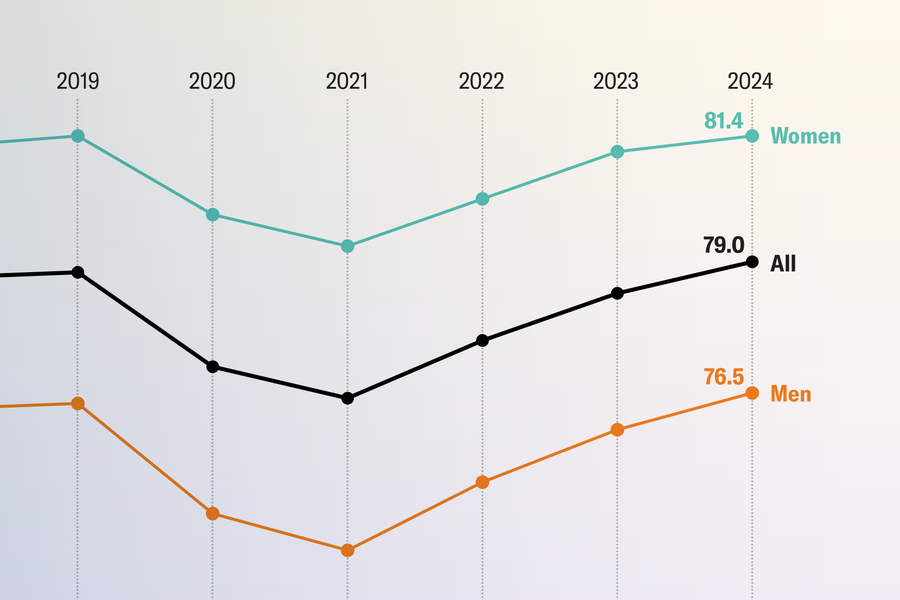
Americans are living longer than ever but still well behind the life expectancy of other developed countries
The latest death data for the U.S. are in, and they paint an optimistic picture: The average American born in 2024 is now expected to live to age 79. That life expectancy is more than a half-year longer than it was in 2023 and great than in any prior year going back to 1900. It was still lower than that of most other developed countries, however.
The projection, released on Thursday by the National Center for Health Statistics, offers a glimmer of hope after COVID and overdose deaths pushed the U.S.’s average life expectancy down to 76.4 years in 2021, a drop of 2.4 years since 2019. Even so, there were 47,539 deaths involving COVID in 2024 and about 87,000 deaths from drug overdoses between October 2023 and September 2024, according to preliminary data from the U.S. Centers of Disease Control and Prevention.
The new report also showed a decrease in age-adjusted death rates, from about 751 deaths per 100,000 Americans in 2023 to about 722 in 2024.
“The rise in life expectancy is welcome news, and it is good to see that it was widespread across race, ethnicity and gender,” says Philip Cohen, a sociologist and demographer at the University of Maryland, College Park.
By 2024, Americans were still dying in the largest numbers from heart disease, cancer, and unintentional injuries, in that order, though suicide replaced COVID as the 10th most common cause of mortality. Still, the age-adjusted death rate for all top 10 causes of death also decreased, with the biggest drop seen for unintentional injuries—from 62.3 deaths per 100,000 Americans in 2023 to 53.3 in 2024.
Though the news may be cause for celebration, there’s plenty of room for improvement. Andrew Stokes, who studies population health and mortality at Boston University, says he’s “concerned that the post-COVID recovery creates an appearance of momentum but obscures a larger story around stagnating and decelerating improvements that became apparent in the decade prior to the pandemic.” The causes of this stagnation, Stokes explains, include cardiometabolic risk factors such as high blood pressure and obesity, whose rates will likely grow.
In most other developed countries, the life expectancy in 2024 was in the low to mid-80s, according to the United Nations. “There are still critical problems in the U.S. public health profile. It should not be big news when the life expectancy rises, which happens every year in every other developed country,” Cohen says, adding that U.S. infant mortality showed no change in 2024.
“And overall…, the U.S. has a shockingly low life expectancy,” he says. “We may be back above where we were before the pandemic, but it is too little, too late, as we were already trending much lower than countries with comparable economic profiles.”
Cohen and Stokes are both worried that U.S. health care is moving in the wrong direction, “with more people losing health care coverage and less support for basic public health among the population,” Cohen says.
.
Amanda Montañez; Source: Centers for Disease Control and Prevention (data)
Sunday, February 1, marked the 68th Annual Grammy Awards, when the best and brightest in the music industry gathered in Los Angeles to fête the greatest albums and performances of the last year.
So, who walked away with hardware? Kendrick Lamar—the most-nominated artist of the night, with nine nods—was also, fittingly, the winningest, taking home five Grammys, including record of the year (for “Luther”) and best rap album (for GNX). He was followed by Bad Bunny, who claimed three awards (including album of the year, for Debí Tirar Más Fotos), and the likes of Lady Gaga and Kehlani, who won two each.
See the winners from some of the top categories—distributed during the primetime ceremony at the Crypto.com Arena and at the Grammy Awards Premiere Ceremony, where 80-something of the night’s 95 awards were announced at the Peacock Theater beforehand—right here.
Album of the Year
WINNER: Debí Tirar Más Fotos, Bad BunnySwag, Justin Bieber Man’s Best Friend, Sabrina Carpenter Let God Sort Em Out, Clipse, Pusha T, and Malice Mayhem, Lady Gaga GNX, Kendrick Lamar Mutt, Leon Thomas Chromakopia, Tyler, the CreatorRecord of the Year
Record of the Year
WINNER: “Luther,” Kendrick Lamar with SZA
“DtMF,” Bad Bunny “Manchild,” Sabrina Carpenter “Abracadabra,” Lady Gaga “Wildflower,” Billie Eilish “Anxiety,” Doechii “The Subway,” Chappell Roan “Apt.,” Rosé and Bruno Marsong of the Year
Song of the Year
WINNER: “Wildflower,” Billie Eilish
“Abracadabra,” Lady Gaga “Anxiety,” Doechii “Apt.,” Rosé and Bruno Mars “DtMF,” Bad Bunny “Golden” from KPop Demon Hunters, Huntr/x (Ejae, Audrey Nuna, and Rei Ami) “Luther,” Kendrick Lamar with SZA “Manchild,” Sabrina Carpenter
.
Photo: Getty Images
.
.
Click the link belowfor the complete list and videos.:
In November of 2024, two weeks after voters returned President Donald Trump to office, Chief Justice John G. Roberts Jr. summoned employees of the U.S. Supreme Court for an unusual announcement. Facing them in a grand conference room beneath ornate chandeliers, he requested they each sign a nondisclosure agreement promising to keep the court’s inner workings secret.
The chief justice acted after a series of unusual leaks of internal court documents, most notably of the decision overturning the right to abortion, and news reports about ethical lapses by the justices. Trust in the institution was languishing at a historic low. Debate was intensifying over whether the black box institution should be more transparent.
Instead, the chief justice tightened the court’s hold on information. Its employees have long been expected to stay silent about what they witness behind the scenes. But starting that autumn, in a move that has not been previously reported, the chief justice converted what was once a norm into a formal contract, according to five people familiar with the shift.
Over the years, journalists and authors have sought to penetrate the court, and the justices have tried varying methods to guard its secrets. Some generations of clerks, but not others, said they were asked to sign a different kind of confidentiality pledge.
The New York Times has not reviewed the new agreements. But people familiar with them said they appeared to be more forceful and understood them to threaten legal action if an employee revealed confidential information. Clerks and members of the court’s support staff signed them in 2024, and new arrivals have continued to do so, the people said.
A spokeswoman for the court declined to comment about the nondisclosure agreements. She also did not respond to a question about whether the justices have been asked to sign the contracts.
The people who described the agreements spoke on the condition of anonymity because they were not authorized to speak publicly about court matters.
The justices are accustomed to controlling what the public knows about their work, sealing nearly everything but their oral arguments and written opinions behind a high wall of secrecy. Courts are excluded from the open records laws that require many other government bodies to maintain and make available internal information.
The justices claim their papers belong to them, not the government or the public, and generally arrange to have them locked away until long after their deaths. The court releases no visitor logs to reveal who meets with the justices.
But in 2022, in a shock to many at the court, someone leaked a draft of the court’s decision overturning the federal right to abortion to Politico, which published the document weeks before the justices had intended to make it public. The court conducted an investigation of its staff but mostly spared the justices, and the source was never publicly identified.
More recently, The Times has been regularly publishing stories illuminating the court’s inner workings, including accounts of sensitive debates among the justices.
In September 2024, The Times published an article describing how the chief justice pushed to grant President Trump broad immunity from prosecution. The article quoted from confidential memos by the chief justice and other members of the court who applauded his reasoning. Weeks later, the chief justice abruptly introduced the nondisclosure agreements, after the term had begun.
Before then, the chief justice — fond of referring to court members and employees as a family — relied on softer measures to preserve confidentiality, delivering a lecture to clerks at the start of each term and distributing a written code of conduct to them.
“The law clerk owes the appointing Justice, all other Justices, and the Court as an institution, duties of complete confidentiality, accuracy and loyalty,” instructed a 2018 version obtained by The Times, in which every page is labeled “confidential — for authorized internal use only.” The final page mentioned that breaches could lead to “appropriate sanctions,” but did not specify what those might be.
Some Supreme Court clerks who served in past decades also recall being asked to sign a document agreeing to abide by the court’s rules of confidentiality. A version of the agreement was introduced in the years after a former clerk published a rare tell-all book in 1998, they said. Those clerks said the documents did not amount to legal nondisclosure agreements.
Peter Kaplan, a spokesman for the federal courts, said other judges have also used those kinds of pledges in the past though he and others did not believe they were currently in widespread use. He said the Judiciary’s code of conduct includes confidentiality requirements.
Former clerks and academics, told by The Times about the Supreme Court’s new nondisclosure agreements, said they were a sign that the justices felt they could no longer rely on more informal pledges or longstanding norms to guard their internal workings from public view.
“They feel under the microscope and are unwilling to rely simply on trust,” said Jeffrey L. Fisher, co-director of the Supreme Court litigation clinic at Stanford Law School and a former clerk to Justice John Paul Stevens.
The switch to formal contracts is “a sign of the court’s own weakness” and the erosion of an internal compact, said Mark Fenster, a law professor at the University of Florida.
Court employees see the justices’ maneuverings, their compromises, tensions, and reversals. They read the memos and draft opinions that tell the story of how the law is really shaped. That includes the secret negotiations behind so-called “shadow docket” decisions, emergency orders the court issues often with little or no public rationale. Since Mr. Trump took office, the court has repeatedly issued such emergency orders, allowing him to implement his agenda.
Legal experts said the new agreements may be more effective at scaring employees than at legally binding them. Such agreements are tricky to enforce even in typical workplaces, they say, and most likely harder at the Supreme Court.
Nondisclosure agreements are a paradox, said Mr. Fenster, because seeking to enforce them risks further exposing the very information they are designed to conceal. “If the employer has to go to court to enforce a damages claim or an injunction, you’re in public,” he said.
For the nation’s highest court to bring legal action against an employee could create its own puzzle, he and others said. “Who would represent the Supreme Court?” Mr. Fenster asked.
The agreements may complicate another Supreme Court tradition: former clerks cashing in on what they learn there. Law firms now pay clerks signing bonuses as high as $500,000. The court requires them to avoid working on its own cases for two years. But after that, former clerks often spend the rest of their careers monetizing the knowledge they gained from working directly with the justices and also reading still-secret older case files, some said in interviews. While they are not supposed to share specifics with clients, plenty of details slip out, the former clerks said.
The debate over whether the Supreme Court is too secretive has played out since the nation’s earliest days. In 1821, Thomas Jefferson wrote that the institution was “smothering evidence” and that the nation needed to know more about the character of the justices, who are appointed for life.
Now, even as some observers of the court call for it to be more transparent, judges, including the justices, generally defend the longstanding tradition of keeping their decision-making private.
“I don’t see any need on the public’s part to see the internal deliberations,” said Paul J. Watford, a retired federal judge appointed by President Barack Obama. “What you’re trying to do as a judge in interacting with your colleagues is be completely open and wrestle with the difficult questions,” he added.
Leaks discourage judges from changing their minds and “undermine the ability of the court to function as a collegial body,” he said.
Justices have long warned of the dangers of opening their private deliberations, saying it could undermine their independence and lead to “lobbying pressures,” as Chief Justice William H. Rehnquist put it in a 1977 speech arguing for secrecy.
More recently, Justice Amy Coney Barrett relayed what Justice Antonin Scalia, her own former boss, used to tell new clerks. “He would say, If you ever leak information now or any point in your lifetime about what happened in this court, I will hunt you down and destroy your career,” she said in a talk last September at the University of Notre Dame.
She said she now gives her clerks a similar warning, though in less dire terms.
But once the decisions have been announced, and as time passes, the arguments for opacity fade, said Daniel Epps, a law professor at Washington University School of Law and former clerk to Justice Anthony M. Kennedy.
“The justices have immense power — they’re not elected. That power depends on our consent as a democracy, and we have some interest in seeing how they’re using their power and making decisions,” he said.
The secrecy allows the justices to dismiss criticism on the grounds that outsiders don’t know or understand what’s happening behind the scenes, said Nikolas Bowie, a Harvard Law School professor who served as a clerk to Justice Sonia Sotomayor.
“Many of the court’s decisions are being made out of the public eye in a way that makes it difficult to assess or criticize them, or to understand what actually motivated the justices,” he said. “The lack of transparency makes it difficult for the broader public to know how to respond.”
He said it also allows the court to conceal weaknesses in its processes, including the justices’ reliance on clerks for legal reasoning and writing.
“If the public were aware of how much of the deliberations affecting millions of people are made by 27-year-olds after happy hour, they’d be shocked,” he said.
Ann E. Marimow contributed reporting. Julie Tate contributed research.
.
Chief Justice John G. Roberts Jr. in Washington last year.Credit…Eric Lee/The New York Times
Three decades ago, a famous study of Danish twins found that our genes “only moderately” influence how long we’re likely to live. Longevity, the authors estimated, was about 25 percent heritable, meaning the remaining three-quarters was determined by environmental factors and lifestyle choices, such as diet and exercise. Most subsequent studies found heritability to be somewhere in the 20 to 25 percent range, and 25 percent is now widely accepted. But a new study more than doubles it, suggesting lifespan may be more genetically fixed than we thought.
The study, which was published today in Science, arrives at this dramatic increase by reframing how scientists think about longevity. Rather than lumping all deaths together, the researchers distinguish between two kinds: “intrinsic mortality” comes from built-in biological aging processes and genetic mutations, whereas “extrinsic mortality” comes from outside causes, such as accidents and infection. Early longevity studies analyzed groups of people who were born in a time of widespread extrinsic mortality. That skewed previous estimates of heritability, says Uri Alon, a systems biologist at the Weizmann Institute of Science in Rehovot, Israel, and senior author of the new paper.
To sort out the effects of intrinsic versus extrinsic deaths on longevity heritability, he and his colleagues ran computer simulations of human mortality, calibrated using data from those previous twin studies. When they dialed extrinsic mortality down to zero, leaving only deaths caused by intrinsic aging processes, lifespan heritability roughly doubled. Surprised, the team performed a sanity check—the researchers calculated heritability in the traditional way for twins born between 1900 and 1935, an era when rapid medical advances steadily curtailed premature death. From one generation to the next, Alon says, “they have lower and lower extrinsic mortality, and we see that their heritability goes up and up.” Taken together, the results indicate that intrinsic lifespan—how long a person lives if they don’t die of an external cause—is about 55 percent heritable.
Kaare Christensen, an epidemiologist and professor at the University of Southern Denmark’s Danish Twin Research Center, who was not involved in the study, calls it “an interesting mathematical exercise” but notes that “in the real world, people die from both kinds of death.” There’s no actual discrepancy between the two heritability estimates, 25 and 55 percent, he says, because they’re measuring different things. Considering extrinsic mortality has declined so much in the past century, however, Alon argues that “the higher number is more relevant” for people born today. In reality, except for the most clear-cut cases of genetic causes (such as a genetic disease) or environmental ones (such as a lightning strike), it’s hard to separate extrinsic and intrinsic factors.
Whether or not the new estimate offers a more realistic picture of lifespan heritability, it highlights the importance of genetics in extending lives, says Sofiya Milman, a scientists who studies aging and longevity at the Albert Einstein College of Medicine. She’s one of many researchers who are trying to understand how centenarians’ unique biology protects them from age-related disease. “We’re hoping to create therapies that will mimic those intrinsic factors,” Milman says, “and make them accessible to people who didn’t win the genetic lottery.”
Most of us are unlikely to break 100 without the right set of genes—or at least drugs designed to replicate their beneficial effects. Until such treatments become available, though, a healthy lifestyle remains the best path to living longer. Even if exercise, sleep, and a balanced diet only contribute 45 percent to lifespan, evidence shows they can still add 10 years or more to a person’s life. “Those things will be helpful,” Milman says, “irrespective of your genetic makeup.”
A 5-year-old boy who became a viral symbol of the Trump administration’s immigration crackdown is back home after he and his father were released from an immigration facility in Texas on Saturday.
Liam Conejo Ramos was taken into custody with his father, Adrian Alexander Conejo Arias, on Jan. 20 after they encountered immigration agents upon returning home from Liam’s preschool in Minnesota. The case drew widespread condemnation and international headlines as the image of Liam in his blue hat and Spider-Man backpack spread online.
The father and son were transferred to a facility in Texas, where congressional representatives were able to make a visit to check on them. Democratic Rep. Joaquin Castro of Texas told PBS News on Friday that Liam hadn’t been eating well and that “he’s been very depressed.”
Castro wrote Sunday on X that he picked up the father and son on Saturday night and escorted them back to Minnesota on Sunday morning.
“Liam is now home,” Castro said. “With his hat and his backpack. Thank you to everyone who demanded freedom for Liam. We won’t stop until all children and families are home.”
Rep. Ilhan Omar, D-Minn., also posted a photo of herself with Liam, his father, and Castro on social media. She thanked Castro for traveling back to Minneapolis with them.
U.S. District Judge Fred Biery said in a scathing court order Saturday that the Trump administration must release Liam and his father by Tuesday.
“Observing human behavior confirms that for some among us, the perfidious lust for unbridled power and the imposition of cruelty in its quest know no bounds and are bereft of human decency,” Biery wrote in his order. “And the rule of law be damned.”
Marc Prokosch, the attorney representing the family, said they entered the United States in 2023 after having booked an appointment through the CBP One app, which was set up during the Biden administration to create an orderly way for migrants to enter the U.S. and reduce illegal border crossings.
“They were following all the established protocols, pursuing their claim for asylum, showing up for their court hearings, and pose no safety or flight risk. They never should have been detained,” Prokosch said.
The Department of Homeland Security said it was conducting a “targeted operation” to arrest Conejo Arias on Jan. 20 when Liam was also taken into custody. DHS spokesperson Tricia McLaughlin defended the agents’ actions, describing Liam as having been “abandoned” and saying the child’s mother refused multiple attempts to claim custody of him, even after officers assured her she would not be arrested.
Liam’s father agreed to keep his son with him, the department said.
Liam’s mother denied the Homeland Security account of events, saying federal agents tried to use her son as “bait” to get her out of the home.
Erika Ramos told Telemundo through tears that agents had her son knock on the door and tell her to come outside, but she was afraid she would be arrested, and her other child would be left alone.
“When I didn’t open the door, they took Liam to the ICE van,” she said. “It all seemed like an attempt to provoke me, as if they wanted me to run out desperately for my son so they could arrest me, as well.”
Her husband insisted she stay inside to avoid arrest and protect their family, Ramos said, “like any responsible husband and father.”
School board Chair Mary Granlund told reporters last week that she was on her way to pick up her own children that day when she saw what was happening at the home. She said she saw Liam’s mother inside and heard her husband yelling that she should not open the door, fearing immigration officers would go inside.
Granlund said someone told her that a representative from the district was present and could assume responsibility for Liam.
“There was ample opportunity to safely hand that child off to adults,” Granlund said.
.
A 5-year-old boy and father return to Minnesota after release from immigration custody
Tom Homan was livid. It was 2018, not long after Jerry Brown, then California’s governor, had signed a “sanctuary state” law that walled off the jails from Immigration and Customs Enforcement. It crippled the jail-to-ICE pipeline Mr. Homan helped perfect during the Obama administration when he oversaw deportation officers at ICE.
“There’s no sanctuary from federal law enforcement,” Mr. Homan, by that point the acting director of ICE under President Trump, told Fox News. In his characteristic persona of the gruff lawman, he pledged to “significantly increase our enforcement presence” in the state, adding, “California better hold on tight.”
Eight years later, Mr. Homan will get a chance to show that focusing on jails and public safety threats is the best way to meet President Trump’s demand to deport record numbers of migrants. But to do so, he will have to bring along Democrats who have loudly rejected calls to cooperate with ICE.
He was dispatched to Minneapolis by Mr. Trump last week to take over an operation from Gregory Bovino, a Border Patrol commander whose aggressive tactics that swept up large numbers of noncriminals on public streets had become a liability for the administration. Among Mr. Homan’s assignments is to broker an agreement for more cooperation with local law enforcement. He has said that a deal to allow ICE into more jails in the state would allow the Department of Homeland Security to draw down their forces in Minnesota.
It will be a delicate balance; he must keep up the drumbeat for Mr. Trump’s deportation agenda while repairing relations with Democratic officials in Minnesota who have likened ICE’s actions to a federal occupation and demanded agents leave the state.
“Tom is a career professional,” said Janet Napolitano, the former homeland security secretary, who worked with Mr. Homan during the Obama administration and is now a professor at the University of California, Berkeley. “He has the demeanor that will be required. The question, to me, is whether he will have the latitude from the White House to do what needs to be done to really de-escalate the situation in Minnesota.”
After starting his career as an upstate New York police officer, Mr. Homan spent decades in immigration enforcement, rising up to leadership roles before becoming acting ICE director during Mr. Trump’s first term.
He later became a regular on Fox News, slamming Democrats. He opened a consulting business and contributed to Project 2025, the conservative policy blueprint. Now, he’s Mr. Trump’s “border czar,” reporting directly to the president.
He has been particularly critical of big-city leaders who favor “sanctuary” policies out of concern that cooperating with ICE is logistically difficult and undermines relationships with residents.
“Tom Homan is an American patriot and career law enforcement officer with decades of experience effectively protecting American communities and deporting criminal illegal aliens,” said Abigail Jackson, a White House spokeswoman. “Any left-wing agitator or criminal illegal alien who thinks Tom’s presence is a victory for their cause is sadly mistaken.”
The White House did not make Mr. Homan available for an interview.
One homeland security official, discussing internal matters on the condition of anonymity, said that immigration operations on the ground had already turned to focus on criminal and public safety threats, much as Mr. Homan outlined in a news conference last week. Under Mr. Bovino, immigration authorities were known for conducting random sweeps, such as raids at Home Depot parking lots.
The official said that border agents were now integrating with ICE as part of the same team and would not be operating independently. A Trump administration official said that Mr. Homan was streamlining the operation in Minnesota and had made a central chain of command.
Some Minnesota county jails openly cooperate with federal authorities. At least one, Hennepin, which includes Minneapolis, refrains from assisting ICE agents as a matter of policy. But state officials have emphasized that the Department of Corrections, which runs the state’s prisons, transfers people to ICE once they have finished serving their sentences.
“We do cooperate with this federal administration and with previous federal administrations on keeping people safe in our city,” Jacob Frey, Minneapolis’s Democratic mayor, told The New York Times last week. He added, “But why does this have to be about immigration? Why does it have to be about whether a person has brown-colored skin or not?”
Some familiar with Mr. Homan’s record express skepticism that he can build trust on the ground, where immigration agents have swept up refugees and immigrants without criminal records, and clashed with protesters, and in recent weeks, shooting and killed two U.S. citizens.
.
Tom Homan, the border czar, at a news conference last week. After starting his career as a New York police officer, Mr. Homan spent decades in immigration enforcement, rising up to leadership roles.Credit…Jamie Kelter Davis for The New York Times
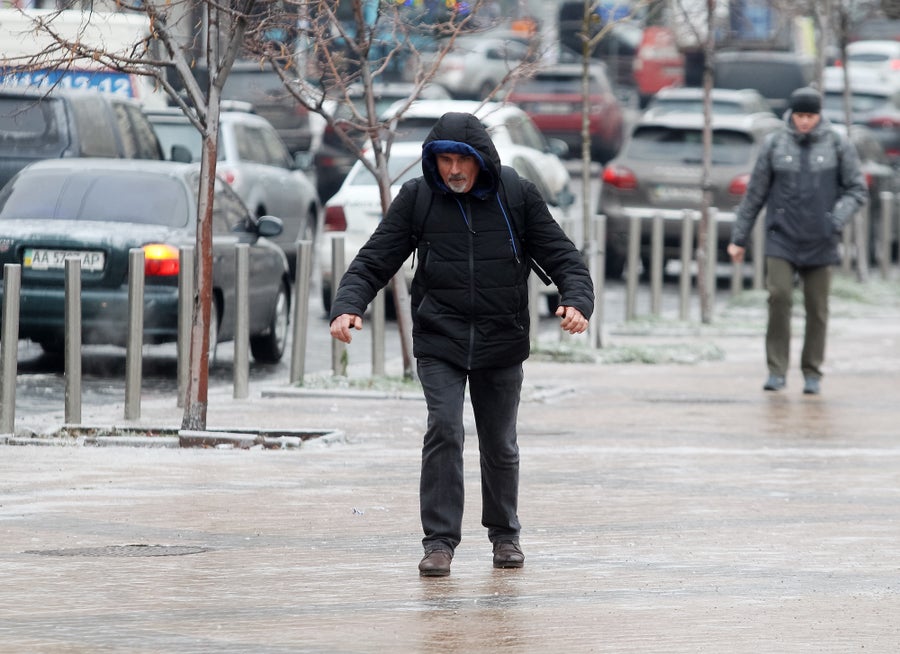
The recent snow and ice storm turned much of the nation into a winter wonderland—from the safety of a nice, cozy sofa indoors. If you step outside in such conditions, however, you’ll find a dangerous obstacle course that can turn walking the dog or checking the mailbox into an emergency room visit with just one false step.
There’s no good clearinghouse for data about injuries related to winter weather, but studies do suggest that fall rates increase with snow and ice, especially among older adults. That said, anyone can slip and tumble when sidewalks get icy. Alas, you can’t always hunker down until the thaw, so what’s to be done? Walk like a penguin, says Gabriela Murza, a health and wellness extension associate professor at Utah State University.
“You’re not really waddling literally,” she notes, but there’s enough similarity between the movements to channel everyone’s favorite Antarctic birds. “When you walk like a penguin, you keep your feet flat the entire time, and you take shorter steps,” Murza says. “You’re less likely to slip and fall.” Flat feet have more surface area in contact with the ground each time you take a step than our typical heel-to-toe gate, and smaller steps keep your weight more centered, she explains.
In addition to the small, flat-footed steps, Murza recommends keeping your knees slightly bent to reduce pressure on your lower back and increase stability.
Icy days aren’t the time to multitask while walking, either, so tuck your phone away and keep your hands free. Murza also recommends bending your arms and keeping your hands out of your pockets. If you do end up slipping, that position will leave your forearms ready to catch you, protecting your more vulnerable wrists and face.
Overnight and early morning, when temperatures are at their lowest, and the sun isn’t helping to melt ice, are the most dangerous. Keep your eyes peeled for ice hiding under snow or meltwater and for transparent “black ice” in general, Murza recommends.
.
Pavlo Gonchar/SOPA Images/LightRocket via Getty Images
Millions of new files relating to the late sex offender Jeffrey Epstein have been released by the US Department of Justice (DOJ), the largest number of documents shared by the government since a law mandated their release last year.
Three million pages, 180,000 images and 2,000 videos were posted publicly on Friday.
The release came six weeks after the department missed a deadline signed into law by US President Donald Trump that mandated all Epstein-related documents be shared with the public.
“Today’s release marks the end of a very comprehensive document identification and review process to ensure transparency to the American people and compliance,” Deputy Attorney General Todd Blanche said.
The files include details about Jeffrey Epstein’s time in prison – including a psychological report – and his death while incarcerated, along with investigative records on Ghislaine Maxwell, Epstein’s associate, who was convicted of helping him traffic underaged girls.
They also include emails between Epstein and high-profile figures.
Many of the emails and documents go back more than a decade, showcasing Epstein’s relationships amid his legal troubles. He was convicted in 2008 in Florida for soliciting sex from a 14-year-old girl after coming to a controversial plea agreement with prosecutors.
He died in August 2019 while in jail on charges in a sprawling sex trafficking case.
Epstein invited ‘The Duke’ to meet Russian woman
The documents shed light on the disgraced financier’s close association with Britain’s elite.
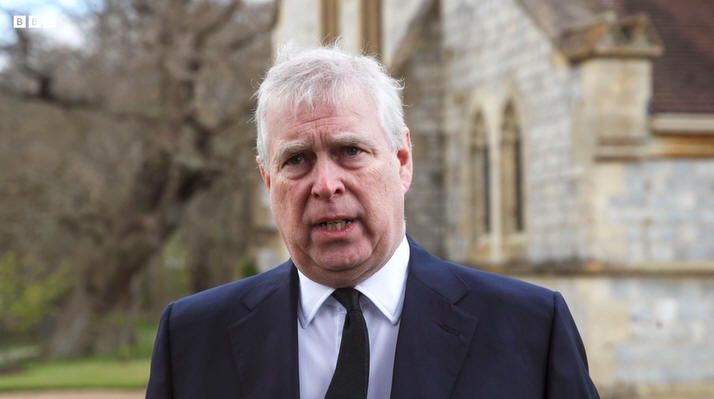
They include emails between Epstein and a person named “The Duke” – believed to be Andrew Mountbatten-Windsor – discussing having dinner at Buckingham Palace, where there was “lots of privacy”.
Another message from Epstein includes an offer to introduce “The Duke” to a 26-year-old Russian woman.
The emails are signed “A”, with a signature that appears to read “HRH Duke of York KG”. They were exchanged in August 2010, two years after Epstein pleaded guilty to soliciting a minor.
In the latest file release, there is also a photo that appears to show the former prince kneeling on all fours over a female lying on the ground.
There are also emails between Epstein and Mountbatten-Windsor dated February 2011 – putting more holes in Andrew’s assurances that he had cut off any contact with Epstein the previous year.
The emails do not indicate any wrongdoing.
The BBC has contacted Andrew, formerly known as the Duke of York, for a response. Mountbatten-Windsor has faced years of scrutiny over his past friendship with Epstein. He has repeatedly denied any wrongdoing.
Some emails in the latest release appear to be between Epstein and Sarah Ferguson, Andrew’s ex-wife.
One email dated 4 April 2009, was signed “Love, Sarah, The red Head.!!”
It says that she was going to be in Palm Beach and wanted to have tea. The email goes on to discuss ideas for Ferguson’s company, Mother’s Army. The former Duchess of York refers to Epstein as “My dear spectacular and special friend Jeffrey”.
She calls him a “legend” and says, “I am so proud of you”.
The financier was still under house arrest for his 2008 conviction when the email exchange was sent.
There are also hundreds of mentions of Richard Branson, the British founder of Virgin Group, in the files. In an email exchange from 2013, Branson appears to tell Epstein that is was “really nice” seeing him, before adding: “Any time you’re in the area would love to see you. As long as you bring your harem!”
Virgin Group has clarified that “harem” referred to three adult members of Epstein’s team, adding that “Any contact Richard and Joan Branson had with Epstein took place on only a few occasions more than twelve years ago
, and was limited to group or business settings, such as a charity tennis event”.
Epstein sent money to Mandelson’s husband
Other emails show Epstein sent £10,000 ($13,692) to Lord Peter Mandelson’s husband, Reinaldo Avila da Silva in 2009.
In an email to Epstein, da Silva sets out the costs of an osteopathy course, provides his bank details and thanks the financier for “anything you can help me with”.
Epstein replies a few hours later, saying he would wire the loan amount, and da Silva, who married Mandelson in 2023, replies with a thank you the following day.
In another batch of emails, Lord Mandelson asks to stay at one of Epstein’s properties.
The emails are from 16 June 2009, when Epstein was serving a prison sentence for soliciting prostitution from someone under the age of 18. For much of his sentence, Epstein was allowed to work from his office during the day and returned to jail each night.
In December 2024, Lord Mandelson was appointed as the UK’s ambassador to the US, but was sacked less than a year later when it emerged he had sent supportive messages to Epstein following the conviction.
Lord Mandelson has repeatedly said he regrets his past friendship with Epstein, which has long been public knowledge. He has said he never saw any wrongdoing while with Epstein and “fell for his lies”.
Trump mentioned hundreds of times
The US president is mentioned hundreds of times in the newly released files. Trump had a friendship with Epstein but he says it soured many years ago and has denied any knowledge of his sex crimes.
Among the new documents is a list compiled by the FBI last year of allegations made against Trump by callers to its national Threat Operation Center tip line. Many of these appear to be based on unverified tips received by the agency and were made without supporting evidence.
The list includes numerous allegations of sexual abuse made against Trump, Epstein and other high-profile figures.
Trump has consistently denied any wrongdoing in relation to Epstein and has not been accused of any crimes by Epstein’s victims.
When asked about the latest allegations, both the White House and justice department pointed to a line in a news release accompanying the new batch of files.
“Some of the documents contain untrue and sensationalist claims against President Trump that were submitted to the FBI right before the 2020 election,” the US Justice Department said.
“To be clear, the claims are unfounded and false, and if they have a shred of credibility, they certainly would have been weaponised against President Trump already.”
Elon Musk asked Epstein when ‘wildest party’ on his island will be
The documents also include email correspondence between Epstein and tech billionaire Elon Musk.
Musk, who has not been accused of any wrongdoing in the case, has previously said that Epstein had invited him to his island, but he had declined.
The new emails show Musk had discussed travelling there on more than one occasion – including a proposed 2012 trip – in which he asked Epstein: “What day/night will be the wildest party on your island?”
The emails from November 2012 show Epstein asked how many people Musk would need transporting on a helicopter to the island, and Musk replies that it would only be himself and his then-wife, Talulah Riley.
An email from Musk to Epstein on Christmas in 2012 includes Musk inquiring whether the financier had any parties planned because he needs to “let loose”.
“I’ve been working to the edge of sanity this year, and so, once my kids head home after Christmas, I really want to hit the party scene in St Barts or elsewhere and let loose,” he writes, adding that a “peaceful island experience” is the opposite of what he’s wanting.
In another batch of emails from the end of 2013, Musk and Epstein discuss a visit to the financier’s island and are working on logistics and dates.
There is no evidence that Musk ever did end up taking a trip to Epstein’s island.
Musk said in an X post on Saturday that he was “well aware that some email correspondence with [Epstein] could be misinterpreted and used by detractors to smear my name”.
He added: “I don’t care about that, but what I do care about is that we at least attempt to prosecute those who committed serious crimes with Epstein, especially regarding heinous exploitation of underage girls.”
Bill Gates dismisses lurid claims by Epstein as ‘absurd and false’
A spokesperson for Microsoft co-founder Bill Gates has responded to lurid allegations contained in the latest Epstein files – including that he caught a sexually-transmitted disease – calling them “absolutely absurd and completely false”.
Two emails from 18 July 2013 appear to have been drafted by Epstein, but it is unclear if they were ever sent to Gates. Both were sent from Epstein’s email account and back to the same account, while no email account associated with Gates is visible, and both emails are unsigned.
One email is written as a resignation letter from the Bill and Melinda Gates Foundation and complains about having had to procure medicine for Gates “to deal with the consequences of sex with Russian girls”.
The other, which begins “dear Bill”, complains about Gates having ended a friendship and makes more claims about Gates having tried to cover up a sexually transmitted infection, including from his then-wife, Melinda.
A spokesperson for Gates told the BBC: “These claims – from a proven, disgruntled liar – are absolutely absurd and completely false.”
They added: “The only thing these documents demonstrate is Epstein’s frustration that he did not have an ongoing relationship with Gates and the lengths he would go to entrap and defame.”
Criticism over identification of victims
Gloria Allred, a women’s rights lawyer who has represented many of Epstein’s victims, told the BBC that numerous survivors’ names had been disclosed in the latest release, including some who had not been previously identified publicly.
Many of the documents released on Friday include heavy redactions. The law mandates that redactions can only be made to protect victims or information currently under investigation. It also mandates a summary of the redactions made and the legal basis for them.
Deputy Attorney General Blanche said the redactions aimed to protect victims, and the Justice Department had hundreds of employees combing through the documents for more than two months to ensure they were released quickly.
But Allred said Blanche’s stated hope that the release would “bring closure” to the victims was “ridiculous”.
“They have devastated so many of these survivors by publicly releasing their names,” Allred said.
“In some cases… they have a line through the names, but you can still read the names.
“In other cases, they’ve shown photos of victims-survivors who have never done a public interview, never given their name publicly.”
She said that while her legal team was working to inform the department of where further redactions were needed to protect survivors’ identities, “many people have already downloaded the files”.
Allred described the situation as “an absolute mess”, saying the department “should be ashamed of themselves”.
The BBC has contacted the DOJ for further comment.
Have all the Epstein files now been released?
It is uncertain if this is the end of the road for the Epstein documents release saga.
Blanche said Friday’s drop “marks the end of a very comprehensive document identification and review process,” signalling that as far as the US justice department is concerned, it’s job over.
However, Democrats continue to argue that the department has withheld too many documents – possibly around two-and-a-half million – without proper justification.
Democratic Congressman Ro Khanna, who spearheaded the Epstein Files Transparency Act alongside Republican Congressman Thomas Massie, said he’s wary.
“The DOJ said it identified over 6 million potentially responsive pages but is releasing only about 3.5 million after review and redactions,” he said.
“This raises questions as to why the rest are being withheld. I will be reviewing closely to see if they release what I’ve been pushing for.”
The DOJ had been under heavy scrutiny after missing the 19 December deadline to release all files as mandated in the Epstein Files Transparency Act, which passed Congress and was signed into law in November.
But still, whether this saga is over remains to be seen.
Many – including within Trump’s base – have long believed there was a conspiracy to protect the rich and powerful who were connected to Epstein.
Blanche acknowledged the release of these documents would not satisfy that need for more information. He said the files don’t contain the names of specific men who abused women and that, if the department had those names, the men would be prosecuted.
“I don’t think that the public or you all are going to uncover men within the Epstein files that abused women, unfortunately.”
Film and Writing Festival for Comedy. Showcasing best of comedy short films at the FEEDBACK Film Festival. Plus, showcasing best of comedy novels, short stories, poems, screenplays (TV, short, feature) at the festival performed by professional actors.






 Amanda Montañez; Source: Centers for Disease Control and Prevention (data)


 Amr Bo Shanab/Getty Images
 A 5-year-old boy and father return to Minnesota after release from immigration custody
 Pavlo Gonchar/SOPA Images/LightRocket via Getty Images
 Andrew Mountbatten
 James' World 2
