January 31, 2025
Mohenjo
Business, Food For Thought, Human Interest, Political, Science, Technical
amazon, business, Business News, current-events, Future, Hotels, human-rights, medicine, mental-health, research, Science, Science News, technology, Technology News, travel, vacation

Click the link below the picture
.
As the new moon rises this week, it ushers in a new year on the lunar calendar used by many cultures across East and Southeast Asia. On the Chinese zodiac’s 12-year lunar cycle, 2025 is the Year of the Snake—an animal that symbolizes wisdom and change.
These limbless reptiles can be found on every populated continent, thanks to an evolutionary “big bang” some 125 million years ago. There are more than 3,000 snake species, with incredible variation among them. Some of the animals are smaller than an earthworm, while others are longer than a pickup truck. Some are harmless to humans, whereas others are venomous. And the ecological roles they play as critical pest controllers and nutrient cyclers are often underappreciated. So as we look to the year ahead, let’s give our odd, wriggly friends some appreciation.
Shimmying Serpents
Snakes’ signature move is the slither. But they can also scrunch forward like an inchworm or launch themselves from a coiled position to leap or strike. And a few years ago scientists discovered another, stranger method of snake movement: “lasso locomotion.” Researchers were testing ways to keep brown tree snakes away from birds’ nests in Guam. They put wide metal cylinders at the bottom of poles, expecting this to deter the snakes, which generally need to wrap themselves twice around a pole or tree trunk to climb it with their normal, accordionlike “concertina locomotion.”
Instead, the team found that snakes were literally tying themselves into knots to surpass the barriers. The reptiles would wrap their tail just once around the barrier and then hook the tip around their body. This created a sort of lasso shape that the snakes could use to shimmy up the pole—ever so slowly but effectively.
Thermal Vision
Pythons, boas, pit vipers, and more can hunt in total darkness. They sense prey animals not only by smell but also by the heat their quarry emanates. These snake’s so-called pit organs enable them to “see” this heat; the organs act like a thermal camera that allows the reptiles to home in on a target.
Pit organs are membrane-covered divots near a snake’s nostrils. Infrared radiation emanating from potential prey heats up the membrane, which causes it to thicken and changes the small electric charge that runs across the membrane’s outer surface. That voltage change gets passed to nerve cells, which send the information to the brain.
Open Wide
Snakes generally don’t chew their food. Instead, they swallow prey whole and slowly digest it over the course of days. Burmese pythons, for example, can spend an entire week digesting a single meal. While they normally eat smaller mammals like rodents, these pythons have also been spotted consuming comparatively enormous alligators and deer. They can open their mouth four times wider than their skull.
.

Blue Insularis snake. Ikhsan Yohanda/Getty Images
.
.
Click the link below for the complete article:
.
__________________________________________
January 31, 2025
Mohenjo
Business, Food For Thought, Human Interest, Political, Science, Technical
amazon, business, Business News, current-events, Future, Hotels, human-rights, medicine, mental-health, research, Science, Science News, technology, Technology News, travel, vacation

Click the link below the picture
.
The brain is a well-designed machine. If it’s working well—like when it’s reading the words on this page—we don’t notice it at all. At night when we sleep, the brain takes our consciousness offline so it can start its real work: sorting through the day’s information, storing the important parts, and cleaning out the gunk that accumulated.
The brain is so well-designed, in fact, that we hardly even notice when it’s breaking down.
Like the rest of our organs, the brain undergoes its own aging process. And yet the majority of adults don’t experience major cognitive decline—the kind that severely limits their ability to live independently—over time.
That’s because the brain is one of the most resilient organs in the body. Yes, dementia affects about 5.6% of the world’s population, a share that includes the devastating burden of Alzheimer’s disease. But in normal aging, even as parts of the brain shrink and neurons lose connection with each other, those changes only have a minor effect on our daily lives. It may be frustrating to forget where you put your keys, but you can still learn that you’re prone to forgetting them, and pick up the habit of writing notes for yourself.
For adults who remain neurologically healthy into their later years, the brain constantly adapts and even thrives under new conditions. But how it pulls it off is a mystery scientists are still trying to solve. The hope is that if researchers can understand how healthy brains stay resilient, they can identify what’s happening when these systems fail—often, leading to dementia.
Never Constant
The brain’s incredible resilience comes, at least in part, from its plasticity. The rest of the body’s organs carry out roughly the same job from the moment we’re born—albeit on a larger scale as we grow. The heart pumps blood, the liver and kidneys filter, and the stomach churns food.
Not the brain.
Babies’ brains are equipped with billions of neurons, but they have to be warmed up and molded to be useful. Over as many as 25 years, neurons form hundreds of thousands of connections as we learn and make memories. Some of these connections are cropped as they’re not needed; others grow stronger as we learn to reason in the abstract, mitigate impulsive and risky behavior, and plan ahead for the future.
Shortly after the brain finishes fully forming, though, it starts to wear down.
“Aging is a lifelong biological process,” says Kristin Kennedy, a neuroscientist at the University of Texas at Dallas who studies healthy cognitive aging. There’s some disagreement about exactly when the brain starts to show signs of wear and tear. Some of the limited research available suggests it happens around middle age, some suggests our 30s, and some even in our 20s. But the consensus is that some shrinkage is inevitable and normal. Specifically, the prefrontal cortex and medial lobes—areas involved with high-level functions like planning, emotional processing, learning, and memory—get a little smaller, says Elizabeth Zelinski, a neuroscientist and gerontologist at the University of Southern California.
.
 For most, the brain constantly adapts and even thrives under new conditions. Photo by Hokyoung Kim for Quartz
.
.
Click the link below for the complete article:
.
__________________________________________
January 30, 2025
Mohenjo
Business, Food For Thought, Human Interest, Political, Science, Technical
amazon, business, Business News, current-events, Future, Hotels, human-rights, medicine, mental-health, research, Science, Science News, technology, Technology News, travel, vacation
Click the link below the picture
.
CLIMATEWIRE | One week in, the Trump administration is broadening its assault on the functions of government and shifting control of the federal purse strings further away from members of Congress.
President Donald Trump’s budget office Monday ordered a total freeze on “all federal financial assistance” that could be targeted under his previous executive orders pausing funding for a wide range of priorities — from domestic infrastructure and energy projects to diversity-related programs and foreign aid.
In a two-page memo obtained by POLITICO, the Office of Management and Budget announced all federal agencies would be forced to suspend payments — with the exception of Social Security and Medicare.
“The use of Federal resources to advance Marxist equity, transgenderism, and green new deal social engineering policies is a waste of taxpayer dollars that does not improve the day-to-day lives of those we serve,” according to the memo, which three people authenticated.
The new order could affect billions of dollars in grants to state and local governments while causing disruptions to programs that benefit many households. There was also widespread confusion over how the memo would be implemented and whether it would face legal challenges.
While the memo says the funding pause does not include assistance “provided directly to individuals,” for instance, it does not clarify whether that includes money sent first to states or organizations and then provided to households.
The brief memo also does not detail all payments that will be halted. However, it broadly orders federal agencies to “temporarily” stop sending federal financial assistance that could be affected by Trump’s executive actions.
That includes the president’s orders to freeze all funding from the Democrats’ signature climate and spending law — the Inflation Reduction Act and the bipartisan infrastructure package enacted in 2021. It also imposes a 90-day freeze on foreign aid.
Senate Minority Leader Chuck Schumer in a statement decried the announcement as an example of “more lawlessness and chaos in America as Donald Trump’s Administration blatantly disobeys the law by holding up virtually all vital funds that support programs in every community across the country.”
The New York Democrat urged the administration to lift the freeze.
“They say this is only temporary, but no one should believe that,” he said. “Donald Trump must direct his Administration to reverse course immediately and the taxpayers’ money should be distributed to the people. Congress approved these investments and they are not optional; they are the law.”
.

In a two-page memo, the Office of Management and Budget ordered all federal agencies to temporarily suspend payments.
Anna Moneymaker/Getty Images
.
.
Click the link below for the complete article:
.
__________________________________________
January 30, 2025
Mohenjo
Business, Food For Thought, Human Interest, Political, Science, Technical
amazon, business, Business News, current-events, Future, Hotels, human-rights, medicine, mental-health, research, Science, Science News, technology, Technology News, travel, vacation

Click the link below the picture
.
Being a single parent is one of the hardest jobs in the world, regardless of gender. Research from the Pew Research Center shows that the rate of single-father households has grown significantly since the 1960s, and the world’s perception of a father’s role within the household is evolving.
Society no longer places the sole responsibility of providing for the family entirely on men, and their role as equal caregivers is increasingly recognized. As a result, more fathers are stepping into the role of single parenthood when their co-parent is no longer present or willing to contribute to childcare.
Today, both single moms and dads juggle work, parenting, and personal challenges, often with limited support and endless responsibilities. Yet, society doesn’t always view them through the same lens. Have you ever noticed how single dads are often celebrated as “heroes” for doing what single moms are expected to do every day without the same fanfare?
This difference isn’t just a passing observation—it reflects deeper sociocultural norms and biases that shape how we view parenthood.
Here are three reasons why single dads are often viewed more positively than single moms, according to research.
1. The Intensive Mothering Problem
As much as we’ve come a long way in our view of parenting, there are still some very obvious differences between what is expected from a mother and what is expected from a father, with mothers facing much more scrutiny.
The term “intensive mothering,” coined by Sharon Hays in the 1996 book The Cultural Contradictions of Motherhood, highlights this difference. Intensive mothering is a cultural ideology that emphasizes a child-centered, time-intensive, and emotionally absorbing approach to parenting, where mothers are expected to devote extraordinary amounts of time, energy, and resources to their children’s well-being and development.
It’s the belief that mothers are expected to prioritize their children above all else, often at the expense of their own needs. This belief disproportionately places the burden of child-rearing on women and often implies that “good” mothering requires self-sacrifice and perfection.
Society tends to expect mothers—even single moms juggling two jobs just to make ends meet—to maintain an “intensive mothering” level of parenting without question.
2. Money Helps When It Comes To Parenting
Most parents would agree that raising children tends to be expensive. Research shows that raising a child from birth to the age of 18 can cost roughly $233,610. As kids grow older, their needs and wants often become more expensive, adding extra strain to a household budget.
The challenge is even greater in a country where the gender pay gap remains significant. For single mothers, this means running a single-income household can be far more economically demanding compared to their male counterparts.
Research published in the Journal of Divorce & Remarriage states that “single fathers had better resources than single mothers. Single mothers have less education, less prestigious jobs, lower incomes and more economic strain than other parents.”
.

Being a single parent is undoubtedly hard. However, not all single parents are treated equally. Here … [+] Getty
.
.
Click the link below for the complete article:
.
__________________________________________
January 29, 2025
Mohenjo
Business, Food For Thought, Human Interest, Political, Science, Technical
amazon, business, Business News, current-events, Future, Hotels, human-rights, medicine, mental-health, research, Science, Science News, technology, Technology News, travel, vacation
Click the link below the picture
.
A skilled card player—eyes hidden by dark shades and features kept as still as possible—looks at their hand. Any small giveaway that they’re bluffing or holding great cards could lose them a painfully large sum of money. Sometimes it helps to have a “poker face.”
Yet in day-to-day life—when socializing with family, friends, and new acquaintances, for example—you might be better served letting your features fly free. Our research shows that moving your face in some way, whether you’re smiling, raising an eyebrow, or wrinkling your nose, may help people warm to you more.
In a recent study, we found that people who were more facially expressive were more liked by a new social partner, which could explain why humans have evolved to have such expressive faces. Indeed, our species is likely more facially expressive than any other. People produce, on average, 101 facial movements per minute in a typical social interaction.
To understand why facial expressivity is so beneficial, we first need to emphasize just how crucial social bonding is to human survival. Throughout most of our evolutionary history, our species has relied on tight-knit communities to keep ourselves fed, sheltered, and protected from predators and dangerous outsiders. Managing social relationships was literally a matter of life or death. Otherwise, you might have faced the tiger in the bushes alone. Any skill or behavior that improved someone’s ability to create and keep lifesaving bonds was likely to persist in our gene pool and cultural repertoires over the generations. And our research suggests that facial expressivity may fall in this category.
In our study, 52 people were filmed in an online social interaction with a researcher who posed as another participant. These dialogues played out over a video platform, so people could see one another’s face. Unbeknownst to the real participants, the researcher orchestrated various challenging social scenarios, such as telling an awful joke or demanding 80 percent of a reward in a negotiation. These situations mimicked everyday experiences, such as social conflict, embarrassment or an attempt to make a good impression.
Throughout, we observed how people’s face moved. We also obtained recordings of more than 1,300 participants in free-flowing conversations with other (real) participants online. Automated software then coded the small facial muscle movements they made during these interactions.
Interestingly, more agreeable, extraverted or neurotic people, as measured by a questionnaire, were more facially expressive. People with these personality traits may devote more time and energy to social interactions—whether because they enjoy socializing or have greater-than-average concerns about how they come across to others. And that added effort could be worthwhile, we found. After these interactions, the participants and their social partners rated how much they liked each other—as did 176 other participants who viewed video clips of these people. The pattern was clear: people who were more facially expressive were more liked by others.
But why would facial expressivity improve someone’s ability to build social bonds? Imagine meeting someone new and trying to figure out if they’re a good fit as a friend, colleague, or romantic partner. You might wonder if you can trust them, if they will help you or harm you—and whether you can even understand one another. Someone who is easier to read may seem to be a more appealing prospect than someone who is more guarded.
.
 Master1305/Getty Images
.
.
Click the link below for the complete article:
.
__________________________________________
January 29, 2025
Mohenjo
Business, Food For Thought, Human Interest, Political, Science, Technical
amazon, business, Business News, current-events, Future, Hotels, human-rights, medicine, mental-health, research, Science, Science News, technology, Technology News, travel, vacation

Click the link below the picture
.
Narcissism has been something of a mystery to psychologists. With narcissists, things tend to be extreme: the good is really good, and
the bad is really bad. Narcissism expert W. Keith Campbell compares interacting with narcissists to eating chococate cake: “When I eat chococlate cake, 20 minutes later I’m under my desk wanting to die. When I eat broccoli, in 20 minutes I feel good. But given the choice I always eat the cake.”
On the one hand, the narcissist’s charisma and self-confidence can be highly alluring. Psychologists Mitja Back and colleagues found that narcissists are indeed more popular at first acquaintance, and its due to four particular cues that make up their “charismatic air”*:
- Attractiveness (flashy, neat attire)
- Competence (self-assured behavior)
- Interpersonal Warmth (charming glances at strangers)
- Humor (witty verbal expressions)
On the other hand, research shows that the initial popularity of narcissists at the early stages of interpersonal interactions depends on the behavioral pathway that is triggered: expressive and dominant behaviors are associated with a positive evaluation, whereas arrogant and combative behaviors are associated with a negative evaluation. According to this research, narcissists may be more popular at first acquaintance because they are more likely to display behaviors that trigger a positive pathway, perhaps because they are trying to make a good first impression.
In line with this idea, W. Keith Campbell and Stacy Campbell proposed a new model of narcissism in which they argue that two particular time points are important. The “emerging zone” includes situations involving unacquainted individuals, early-stage relationships, and short-term contexts. In contrast, the “enduring zone” involves situations involving acquainted individuals, continuing relationships, and long-term consequences.
The costs of narcissism are seen primarily in the “enduring zone.” As the relationship develops, narcissists start displaying behaviors that are evaluated negatively, such as arrogance and aggression. Narcissists cyclically return to the emerging zone because they are addicted to the positive social feedback and emotional rush they get from this zone. They live in this zone. As a result, they are good at being popular, making new friends, and acquiring social status, but are really quite terrible at sustaining anything meaningful and intimate.
This handy chart shows the benefits and costs (for self and others) in both the emerging zone and the enduring zone. A landmark study by Delroy Paulhus (an expert on dark personalities) supports that model. Paulhus brought strangers together to engage in weekly 20-minute group discussion over a period of seven weeks.
They had people rate how they perceived others in the group after week one and then again at the last session (after seven weeks). He found that narcissism was initially related to positive evaluations, such as “assertive”, “confident”, “entertaining”, “exciting”, and “intelligent”. Seven weeks later, however, the same narcissists were evaluated much more negatively, receiving much higher ratings on characteristics such as “arrogant”, “tendency to brag”, and “hostile”. These findings provided some of the first evidence for narcissists’ declining popularity in social groups. But the question still remained: why the loss in popularity?
To get to the bottom of this mystery, Mitja Back and colleagues conducted a study in which they tracked changes in popularity over several time points. They drew on their new theory of narcissism, called the “Narcissistic Admiration and Rivalry Concept”. According to their theory, narcissists’ overarching goal of maintaining a grandiose self is pursued by 2 separate pathways: narcissistic admiration (assertive self-enhancement) and narcissistic rivalry (antagonistic self-protection). Despite being positively related to each other, these two different components of narcissism differentially predict interpersonal orientations,
reactions to transgressions in friendships and romantic relationships, interpersonal perceptions during group interactions, and observed behaviors in experimental observations.
Adopting this framework, the researchers had 311 college students engage in tasks with increasing levels of intimacy and self-disclosure. Participants first introduced themselves and later engaged in tasks requiring them to work together as a team and, finally, played a game in which they discussed each other’s personalities. Over a period of just three weeks, the researchers found that the association of narcissism with popularity among peers became more and more negative.
But they didn’t stop there. They were also able to pinpoint the cause of this loss in popularity. Narcissistic admiration explained initial popularity, while a decrease in narcissistic admiration and an increase in narcissistic rivalry over time was responsible for the decline in popularity. By the end of a three week period and several social interactions, narcissists were regarded as untrustworthy by their peers.
.
 Narcissists are really quite terrible at sustaining anything meaningful and intimate. Photo by francescoch/Getty Images
.
.
Click the link below for the complete article:
.
__________________________________________
January 28, 2025
Mohenjo
Business, Food For Thought, Human Interest, Political, Science, Technical
amazon, business, Business News, current-events, Future, Hotels, human-rights, medicine, mental-health, research, Science, Science News, technology, Technology News, travel, vacation
Click the link below the picture
.
Nicotine pouches—small, flavored packets placed between the gums and lips—have recently become an increasingly appealing option for people trying to avoid cigarettes and traditional “smokeless” oral tobacco products. Since the pouches were introduced to the U.S. market in 2014, they’ve found a steady following, particularly among people between the ages of 25 and 44. This month 20 products from the popular ZYN brand became the first such pouches to be “authorized” by the U.S. Food and Drug Administration. While this falls short of the FDA’s designation of being “approved” as generally safe, it allows ZYN to continue selling its three- and six-milligram nicotine pouches in 10 different flavors, including spearmint, citrus, coffee, cinnamon, and menthol.
The FDA’s decision on ZYN, whose manufacturer, Swedish Match, had applied for authorization in 2020, was “long overdue,” says Jasjit Singh Ahluwalia, a physician and public health scientist at Brown University, who
has studied nicotine addiction for more than 30 years. The agency’s ruling drew from a study facilitated by Swedish Match that suggests the pouches got people to switch from other tobacco products such as cigarettes—which can contain dozens of compounds linked to cancer or other diseases. Pouches such as ZYN contain substantially fewer harmful chemicals than cigarettes.
The FDA apparently “concluded that the public health benefits have outweighed the risks,” says Mary Hrywna, an associate professor at the Rutgers School of Public Health and a founding member of the university’s Institute for Nicotine and Tobacco Studies. “It doesn’t mean that the products are safe.”
ZYN pouches were the top-selling oral nicotine brand in the U.S. by the end of 2023; that same year Philip Morris International (PMI), the tobacco conglomerate that owns Swedish Match, reported shipping almost 385 million cans of the pouches to the U.S. More broadly, total U.S. nicotine pouch sales rose from 126 million units in the last five months of 2019 to 808 million in the first three months of 2022, according to a JAMA report. Hrywna says that the FDA’s authorization of ZYN is a good first step in cracking down on bad actors.
“The market has exploded, and some of those manufacturers are just opportunists exploiting the lack of enforcement,” Hrywna says. “Now there’s at least one authorized [pouch] product, and so at the very least, I would think that the FDA could now take more forcible action on products that have not submitted any type of application.”
Nicotine pouches’ rise in popularity—and their potentially enticing flavors and marketing—have driven up concern about underage use. In the U.S. people must be age 21 or older to legally purchase any nicotine product, but last April the FDA issued more than 100 warning letters to brick-and-mortar and online retailers that sold ZYN to people under age 21. The 2024 National Youth Tobacco Survey found that pouch use among middle and high school students was 1.8 percent, meaning approximately 480,000 students. The FDA notes this rate among youth to be relatively low—e-cigarette use was 5.9 percent (1.63 million students) in comparison—but groups are concerned about any level of use by kids. So-called ZYNfluencers on TikTok and other social media platforms have been criticized for promoting the pouches to young adults.
.
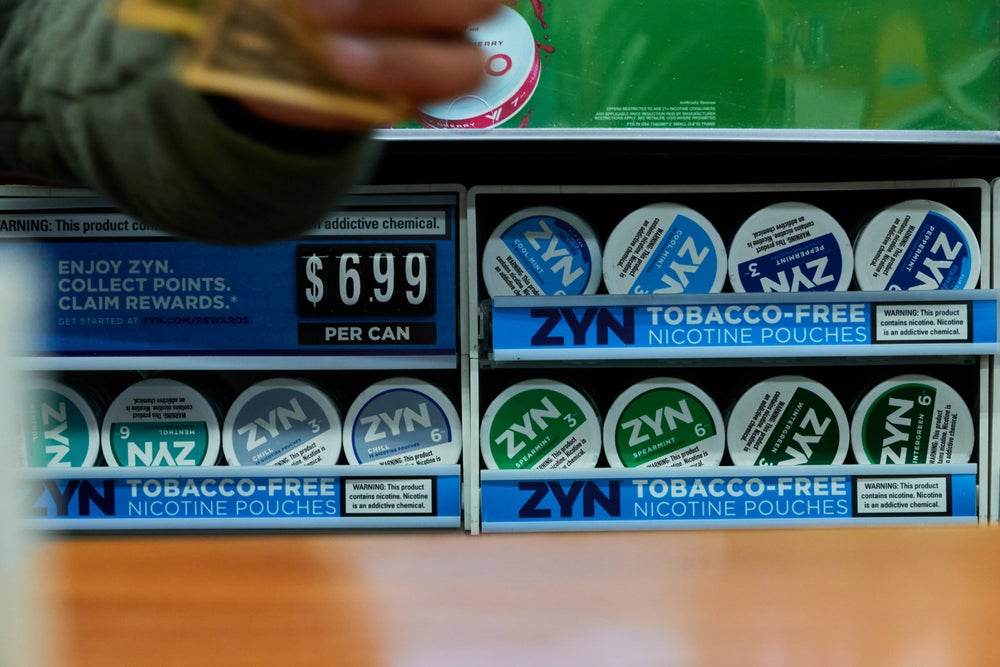
ZYN smokeless nicotine pouch containers for sale at a convenience store on January 27, 2024. Bing Guan/Bloomberg via Getty Images
.
.
Click the link below for the complete article:
.
__________________________________________
January 28, 2025
Mohenjo
Business, Food For Thought, Human Interest, Political, Science, Technical
amazon, business, Business News, current-events, Future, Hotels, human-rights, medicine, mental-health, research, Science, Science News, technology, Technology News, travel, vacation

Click the link below the picture
.
Catherine Garcia was the only one of four siblings raised by her grandmother, as opposed to her mother. Over the years, she and her abuela from Puerto Rico would often switch roles as caregivers. Ultimately, Garcia took on this role full-time until her grandmother passed away.
There is a remarkable story that transpired between the time Garcia first moved in with her grandmother and the day she laid her to rest and beyond. Not only is it inspiring and a profound example of beating the odds, but Garcia’s story echoes the journeys of many other first-generation Latines in the United States who have had to support parents and caregivers while creating a life all their own.
On average, the typical Latine caregiver in the U.S. is 43 years old — which is younger than caregivers of other races and ethnicities — and caring for parents, parents-in-law, or grandparents who average about 67 years old and have one long- or short-term physical condition.1 More often than not, these caregivers have children under the age of 18, who are also living in their home, along with a partner or spouse. While Latine caregivers take on a lot of responsibilities within their household, they have lower incomes and education than their peers.
Today, Garcia is the OB/GYN Administrative Director and Mt. Sinai Academic Coordinator for BronxCare Health System in the Bronx, NY. The road it took for her to get there was anything but a smooth ride. Still, she preserved, the strength behind her resilience from the start and still today has always been her abuela.
Multigenerational families living together is very true to Latine culture in the United States and beyond. Approximately one-third or around 32 percent of Latine households in the U.S. are considered multigenerational,
meaning they include multiple adult generations living together and translate to a significant portion of Latines likely caring for an elderly family member within their household.2 Among those caregivers in Latine familias, women are significantly more likely to take on that role.
At times, it isn’t so much about wanting to be the caregiver as much as it is about adhering to cultural influences that instill strong family values within Latine families, which often means caring for elderly family members at home.
Abuela’s Girl
“I was raised by my grandmother since kindergarten. She had three boys and always wanted a girl,” Garcia fondly recalls being raised in the Spanish Harlem neighborhood of Manhattan in New York City by her Abuela Ana Celia Alvarez from Arecibo, Puerto Rico. “She came to New York from Arecibo after she got married, seeking a better life for her children.”
.
:max_bytes(150000):strip_icc()/Parents-Money-Mental-Health-Caregiving-7e8d7843810a4bc2a7910588381c1a02.jpg) Parents / Getty Images
Parents / Getty Images
.
.
Click the link below for the complete article:
.
__________________________________________
January 27, 2025
Mohenjo
Business, Food For Thought, Human Interest, Political, Science, Technical
amazon, business, Business News, current-events, Future, Hotels, human-rights, medicine, mental-health, research, Science, Science News, technology, Technology News, travel, vacation

Click the link below the picture
.
Vivek Ramaswamy, a key member of President-elect Trump’s team, recently reignited the debate around tiger parenting, equating it with “tough love” and framing it as a surefire path to success. His comments painted tiger parenting as a deliberate strategy for raising high-achieving, resilient children, but they overlooked the deeper roots of this parenting style.
Every time “Tiger Moms” enter the cultural discourse, I chuckle. I remember reading Battle Hymn of the Tiger Mother as a young mom, and laughing as I imagined telling my deceased father that these practices are supposed to be reserved for Asian kids.
My reaction to that book seemed so much less judgmental than that of my friends—I read it as Amy Chua’s sincere desire to raise strong, healthy children. I thought her observations that nothing is fun until you attain mastery and that parents shouldn’t assume fragility in healthy children were particularly astute.
My friends seemed to see her as a one-dimensional figure: the demanding mom with her arms folded, demanding endless hours of violin practice. But I read a funny, conflicted mom who is truly struggling to figure out what her parenting practices should be in the face of a culture that believes otherwise.
Not having gotten the memo that these practices are only for Asian women, my father demanded academic excellence. He expected me to write book reports on books I had read for pleasure. If I brought home a grade that was less than 100 percent, my father wanted to know where the other two points went.
His higher education had been cut short by economic circumstances, and his chronic illness meant we relied on my mother’s job as a guidance counselor for our income. He always praised my mother’s master’s degree and stated his foregone conclusion that I’d attain a Ph.D. “Imagine…” he’d muse. “You get to write a thesis. And a dissertation.” His tone of voice made these sound like treats. (They weren’t, mostly.)
Even on his sickbed, my father expected me to write a detailed error analysis of my mistakes on tests. I protested in vain that the test was over, I got an A, even if two points were “missing,” and I really didn’t want to. He told me that disciplined scholars faced their mistakes, and he was right.
I felt loved by my father, if frustrated by him, and I read Chua’s book in the same light. I knew that he was afraid of poverty and that he saw higher education as a buffer against that fate. He also knew that he was dying. He was trying to protect—and prepare—me.
Now, Vivek Ramaswamy has brought high-demand parenting back into cultural discourse.
As someone who works with parents navigating their own post-traumatic experiences, I’d argue that tiger parenting is, at its core, a trauma response. It’s not just about wanting your kids to succeed; it’s about needing them to. And that distinction matters because it tells us something profound about how trauma shapes our parenting.
What Is Tiger Parenting?
Amy Chua described tiger parenting as a style that demands excellence. Kids are pushed to master difficult skills, often at the expense of leisure or emotional validation. While this approach can foster resilience, discipline, and achievement, it can also come with significant emotional costs—for both child and parent.
But why would a parent adopt such a rigid, high-pressure approach in the first place? Let’s explore how trauma influences parenting styles.
Trauma and the Fear of Failure
Trauma leaves an indelible mark on the way we view the world. For parents with unhealed trauma, especially trauma related to scarcity, poverty, or persecution, the stakes of “failure” can feel unbearably high. If you’ve experienced a world where not being the best meant losing opportunities—or worse, safety—it makes perfect sense that you’d do everything in your power to prevent your child from ever facing that reality.
.

Tiger parenting is often more of a trauma response than it is a parenting practice. It’s tempting to use rubrics like grades or attendance records to stand in for parenting discernment. Let’s analyze it as an attempt at protection, not a ‘parenting style.’
Source:
AI Generated Image/123RF
.
.
Click the link below for the complete article:
.
__________________________________________
January 27, 2025
Mohenjo
Business, Food For Thought, Human Interest, Political, Science, Technical
amazon, business, Business News, current-events, Future, Hotels, human-rights, medicine, mental-health, research, Science, Science News, technology, Technology News, travel, vacation
Hmmm…A president for the people?
Click the link below the picture
.
CLIMATEWIRE | President Donald Trump’s cancellation of a 31-year-old environmental justice directive threatens the health of tens of millions of people in minority or low-income communities, which have often been dumping grounds for pollution, waste sites, and heavy industry, said civil rights advocates and experts.
Revoking a 1994 executive order by President Bill Clinton removes a mandate that survived four subsequent presidencies, including Trump’s first term, and required federal agencies to address the “high and adverse” environmental and health effects of their decisions on areas with high rates of poverty or large minority populations.
“It’s turning the clock back on decades of work,” said Peggy Shepard, co-founder and executive director of WE ACT for Environmental Justice, based in New York. “They’re working to eliminate policies and programs that support equity, support environmental and climate justice, and that’s just going to have a harmful effect on the health and well-being of so many people in these disadvantaged communities.”
Clinton’s Executive Order 12898, signed in February 1994, required federal agencies to analyze environmental and public health hazards in minority or low-income communities and to avoid adding to them.
Trump, in his own executive order that repealed the Clinton-era mandate, said the policies violate federal civil rights laws, sow racial division, and “deny, discredit, and undermine the traditional American values of hard work, excellence, and individual achievement in favor of an unlawful, corrosive, and pernicious identity-based spoils system.”
Following Trump’s revocation, agencies will review each program for areas where “race and other marginalization identities are considered by the agency and how they are considered,” George Washington University law professor Emily Hammond said. Political appointees will lead the reviews and give reports to the White House Office of Management and Budget.
“It will be OMB that’s actually giving the final say to policies that are eliminated,” said Hammond, who was Energy Department deputy counsel in the Biden administration. “This process takes a while.”
Trump framed his revocation — and several others Tuesday — as an effort to end “illegal preferences and discrimination” in government.
Trump’s directive also will bar most federal grant programs from prioritizing projects that help minority or low-income communities. It also axes a 60-year-old equal employment executive order and several diversity and inclusion policies. Critics said the president’s moves ignore research about the health and financial effects of pollution on poor people.
.

A man walks along an overpass above the Cross Bronx Expressway, a notorious stretch of highway in New York City that is often choked with traffic and contributes to pollution and poor air quality on November 16, 2021, in New York City. Spencer Platt/Getty Images
.
.
Click the link below for the complete article:
.
__________________________________________
Older Entries
Newer Entries
 James' World 2