March 20, 2025
Mohenjo
Business, Food For Thought, Human Interest, Political, Science, Technical
amazon, business, Business News, current-events, Future, Hotels, human-rights, medicine, mental-health, research, Science, Science News, technology, Technology News, travel, vacation

Click the link below the picture
.
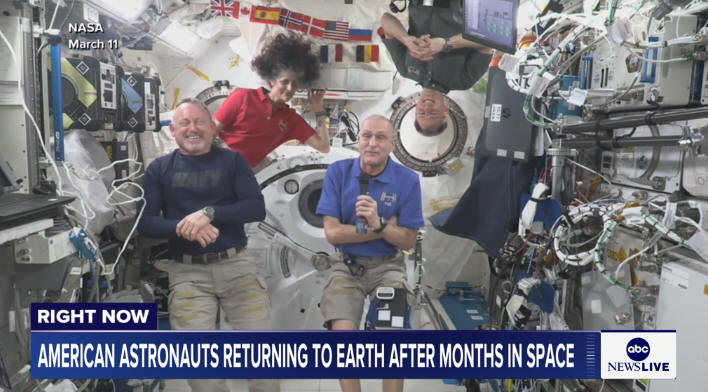
NASA astronauts Barry “Butch” Wilmore and Sunita “Suni” Williams are returning to Earth after spending an unplanned nine months in space.
The pair performed the first astronaut-crewed Boeing’s Starliner capsule flight to the International Space Station (ISS) in June 2024.
Wilmore and Williams were only supposed to spend about one week in space. However, issues with Starliner extended their mission by several months and delayed their return until early 2025.
Experts have said that spending a prolonged period in space — especially many months — can come with many changes to human physiology and psychology.
Changes due to microgravity
One of the biggest changes comes from spending time in microgravity, which allows astronauts to float inside a spacecraft or outside during spacewalks.
During this period, there is a decrease of muscle mass — due to decreased use and lack of stimulus through exercise equipment — and bone loss, according to NASA.
Without Earth’s gravity, bones that support the body’s weight can lose 1% to 1.5% of mineral density on average per month in space, the federal health agency says.
Additionally, without eating a proper diet and getting proper exercise, astronauts lose muscle mass faster in microgravity than they would on Earth.
NASA also says that in microgravity, blood, and cerebrospinal fluid often shift upward from the lower extremities to the head and eyes, which is believed to cause eye and brain structural changes.
Crews are at risk of developing kidney stones due to dehydration or excreting calcium from their bones without preventive or countermeasures.
Upon returning to Earth, astronauts are often examined by a medical team as they work to readapt to Earth’s gravity and rebalance their equilibriums for everyday tasks such as walking and standing upright.
“A mission of this length definitely poses a much greater risk of long-term muscle atrophy and strength loss, which are often impossible to fully reverse,” Dr. Shenhav Shemer, professor of Biology at the Technion – Israel Institute of Technology, told ABC News. “The first priority upon Wilmore and Williams’ return will be getting their sense of proprioception – or how the body maintains its sense of position and balance – under control. Usually, this takes only a few days, but given the length of their mission it may take longer.”
Space radiation
Space radiation is different from radiation experienced on Earth. It’s made up of three kinds of radiation: particles trapped in Earth’s magnetic field, particles from solar flares and galactic cosmic rays NASA said.
Earth is surrounded by a system of magnetic fields, called the magnetosphere, that protects people from harmful space radiation. However, the higher a person is in altitude, the higher the dose of radiation they are exposed to.
Due to prolonged exposure, astronauts can be at significant risk for radiation sickness and have a higher lifetime risk of cancer, central nervous system effects, and degenerative diseases, according to NASA.
.
.
.
Click the link below for the complete article:
.
__________________________________________
March 20, 2025
Mohenjo
Business, Food For Thought, Human Interest, Political, Science, Technical
amazon, business, Business News, current-events, Future, Hotels, human-rights, medicine, mental-health, research, Science, Science News, technology, Technology News, travel, vacation
Some content on this page was disabled on April 15, 2025 as a result of a DMCA takedown notice from Guardian Media Group. You can learn more about the DMCA here:
https://wordpress.com/support/copyright-and-the-dmca/
March 19, 2025
Mohenjo
Business, Food For Thought, Human Interest, Political, Science, Technical
amazon, business, Business News, current-events, Future, Hotels, human-rights, medicine, mental-health, research, Science, Science News, technology, Technology News, travel, vacation

Click the link below the picture
.
For decades, Keith Krehbiel took high doses of medications with a debilitating side effect—severe nausea—following his diagnosis with early-onset Parkinson’s disease at age 42 in 1997. When each dose wore off, he experienced dyskinesia—involuntary, repetitive muscle movements. In his case, this consisted of head bobbing and weaving. Krehbiel is among one million Americans who live with this progressive neurological disorder, which causes slowed movements, tremors, and balance problems.
But soon after surgery to implant electrodes into specific areas of his brain in 2020, his life dramatically improved. “My tremor went away almost entirely,” says Krehbiel, now age 70 and a professor emeritus of political science at the Stanford Graduate School of Business, whose Parkinson’s symptoms began at age 40 and were initially misdiagnosed as repetitive stress injury from computer use. “I reduced my Parkinson’s meds by more than two thirds,” he adds. “And I no longer have a sensation of a foggy brain, nor nausea or dyskinesia.”
Krehbiel was the first participant to enroll in a clinical trial testing a new form of deep-brain stimulation (DBS), a technology that gained approval from the U.S. Food and Drug Administration for Parkinson’s tremor and essential tremor in 1997 (it was later approved for other symptoms and conditions). The new adaptive system adjusts stimulation levels automatically based on the person’s individual brain signals. In late February it received FDA approval for Parkinson’s disease ‘based on results of the international multicenter trial, which involved participants at 10 sites across a total of four countries—the U.S., the Netherlands, Canada, and France.
This technology is suitable for anyone with Parkinson’s, not just individuals in clinical trials, says Helen Bronte-Stewart, the recent trial’s global lead investigator and a neurologist specializing in movement disorders at Stanford Medicine. “Like a cardiac pacemaker that responds to the rhythms of the heart, adaptive deep-brain stimulation uses a person’s individual brain signals to control the electric pulses it delivers,” Bronte-Stewart says. “This makes it more personalized, precise, and efficient than older DBS methods.”
“Traditional DBS delivers constant stimulation, which doesn’t always match the fluctuating symptoms of Parkinson’s disease,” adds neurologist Todd Herrington, another of the trial’s investigators and director of the deep-brain stimulation program at Massachusetts General Hospital. With adaptive DBS, “the goal is to adjust stimulation in real-time to provide more effective symptom control, fewer side effects and improved patient quality of life.”
Current FDA approval of this adaptive system is for the treatment of Parkinson’s only, not essential tremor, dystonia (a neurological disorder that causes excessive, repetitive, and involuntary muscle contractions) or epilepsy, which still rely on traditional, continuous DBS, Herrington says.
“Our personalized treatment can control debilitating tremors for a person living with Parkinson’s,” says Ashwini Sharan, chief medical officer of the neuromodulation operating unit at Medtronic, the Minneapolis-based medical device company that manufactures this technology. Placed under the skin of the chest, a DBS device transports electrical signals through very thin wires to an area in the brain that controls movement.
.
 Juan Gaertner/Science Photo Library/Getty Images
.
.
Click the link below for the complete article:
.
__________________________________________
March 19, 2025
Mohenjo
Business, Food For Thought, Human Interest, Political, Science, Technical
amazon, business, Business News, current-events, Future, Hotels, human-rights, medicine, mental-health, research, Science, Science News, technology, Technology News, travel, vacation
Some content on this page was disabled on April 15, 2025 as a result of a DMCA takedown notice from Guardian Media Group. You can learn more about the DMCA here:
https://wordpress.com/support/copyright-and-the-dmca/
March 18, 2025
Mohenjo
Business, Food For Thought, Human Interest, Political, Science, Technical
amazon, business, Business News, current-events, Future, Hotels, human-rights, medicine, mental-health, research, Science, Science News, technology, Technology News, travel, vacation
Click the link below the picture
.
CLIMATEWIRE | How can projects that scrub carbon dioxide from the atmosphere reduce their sky-high costs?
For a planned development in Texas, one answer is to draw power directly from a wind farm.
The innovative project, announced Monday by three European companies, could be the world’s first direct air capture development to rely primarily on so-called behind the meter electricity. That means the DAC facility would run mainly with low-cost clean power that’s generated on site, not metered out from the grid.
The facility is slated to come online in 2028 and is intended to eventually remove up to 500,000 metric tons of carbon from the atmosphere per year — more than the average annual emissions of a natural gas plant, according to EPA data. The planned facility is larger than any other direct air capture plant currently in operation, although several DAC projects under development are similarly sized.
The new Texas project is being led by Return Carbon, a Dutch project development and investment company, and Skytree, a direct air capture technology firm also based in the Netherlands, with wind power from the North American renewables subsidiary of EDF, the state-owned French utility. Carbon dioxide the facility pulls from the sky would be stored permanently underground by the Texas firm Verified Carbon.
“It is a new framework, which we have agreed with EDF,” said Martijn Verwoerd, the co-founder and managing director of Return Carbon, said in an interview before publicly revealing the deal. “That’s why we’re announcing it.”
The novel agreement would ensure that Return Carbon, which plans to own and operate the direct air capture facility, has access to consistent supply of low-cost clean energy from Texas’s windy gulf coast. Verwoerd declined to say the price per kilowatt-hour Return Carbon has locked in and said the consortium would decide on a precise location later this year.
For EDF, the deal would reduce the likelihood that it has to sell its electricity at a loss or even pay to add it to the grid, Verwoerd explained. Utilities can suffer so called negative power prices when electricity production exceeds the demand for power.
The agreement also allows EDF to redirect its electricity from Return Carbon onto the grid when there is “peak pricing in the market,” he said. In that scenario, the direct air capture facility could operate using renewable energy from a separate agreement Return Carbon has struck with other power providers or go offline until electricity prices fall to an acceptable level.
It’s a “win-win for all parties,” Verwoerd said.
To avoid the worst impacts of climate change, scientists say the world needs to immediately reduce its emissions of carbon dioxide, the main source of which is the burning of oil, gas and coal. At the same time, countries and companies need to begin deploying carbon dioxide removal technologies such as direct air capture to reduce the amount of carbon that’s already been spewed into the atmosphere.
Neither are happening quickly enough, with President Donald Trump promising to double down on oil drilling while slashing federal support for climate-related initiatives.
.
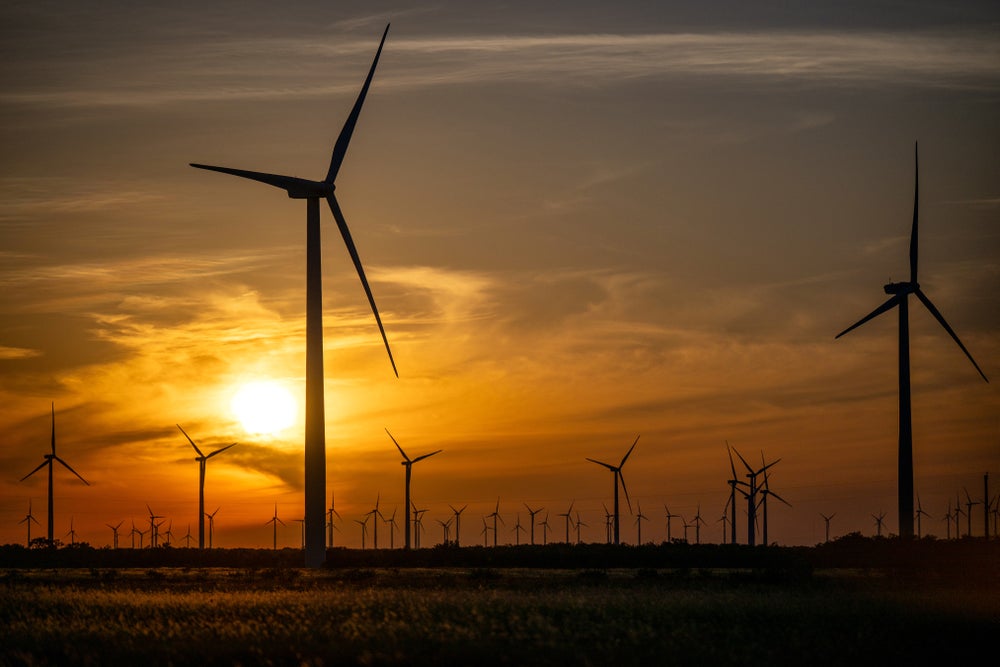
Wind turbines in a field at sunrise on June 28, 2024, in Nolan, Texas. Brandon Bell/Getty Images
.
.
Click the link below for the complete article:
.
__________________________________________
March 18, 2025
Mohenjo
Business, Food For Thought, Human Interest, Political, Science, Technical
amazon, business, Business News, current-events, Future, Hotels, human-rights, medicine, mental-health, research, Science, Science News, technology, Technology News, travel, vacation

Click the link below the picture
.
Sleepovers were mostly a nightmare for me as a child, and I mean that literally: I had nightmares every single time I slept over at a friend’s house. Too embarrassed to tote my babyish night-light from home, I’d lie awake roiled with terror. Come morning—my Rolodex of anxieties exhausted—I’d immediately begin lobbying my mother on the drive home for the exact same sleepover routine the next weekend. I loved sleepovers.
Sleepovers helped me escape my nerdy little comfort zone. They were an opportunity to be silly and a touch subversive, and to get a glimpse of how other families lived their lives. Old-school prank phone calls were usually on offer—an act of mild sociopathy I would have sooner died to avoid than try alone in my own home, or by daylight. I once got a concussion after an excitable girl hit me with a blunt object, and I had to be driven home in the middle of the night. Another time a friend and I got in trouble for deliberately pouring copious amounts of “blood” (red food coloring) on her sheets as a joke.
We occasionally snooped around family areas that were clearly off-limits, and I recall that some of the more louche parents had Playboy magazines in full view in their bathrooms. My own family home was particularly attractive as a sleepover venue because, apart from the distinction of having a “cool” mom who provided junk food, we also had access to my father’s medical journals, which featured black-and-white photos of naked adults with genital tumors and other afflictions.
My childhood spanned the era of what I’ll call, unscientifically, “Peak Sleepover,” a period from roughly the mid-1960s to the early ’80s that’s fondly remembered (by those of us with poor memories and limited insight) for its laissez-faire parenting norms. Today’s parents appear more skeptical of sleepovers. On TikTok, a father and psychiatrist got millions of views for a pair of videos in which he explains why he doesn’t let his children attend sleepovers. In 2023, The Washington Post published an article featuring parents worried about their kids being exposed to a range of concerns, including excess screen time and domestic violence.
I’m not unsympathetic to some of the no-sleepover arguments, but denying our children a chance to learn up close from other families shortchanges children’s autonomy. I think it’s fair to ask why adults can’t organize our lives better to give children reasonable and age-appropriate experiences that put them at non-zero but nonetheless, limited risk, and that benefit their maturation.
No one is suggesting—certainly I am not—that children should be entrusted to unsafe households for a night. I’m deeply aware of all that can go wrong when adults fail to protect a child. I’ve spent my professional life trying to persuade adults to take children’s needs seriously. But one badly neglected need is that of acquiring resilience and self-sufficiency.
Basic due diligence (asking about firearms in the home, or whether older siblings’ friends or a new boyfriend are visiting, for example) is essential for any interaction between kids and other families. But after the threshold for safety has been met, why does it matter if our kids eat junk food for a night, or hear unwelcome political views, or sit through the wrong kind of prayers (or no prayers) at dinnertime? Why would we want to deprive a child of the occasional strange or uncomfortable experience at another family’s house—even one that might directly conflict with our values or our preferred practices? Isn’t an understanding of human differences a bulwark against frailty and narcissism? We’re not talking about moving in with a new family, just spending the night!
.
 Lisa5201/Getty Images
.
.
Click the link below for the complete article:
.
__________________________________________
March 17, 2025
Mohenjo
Business, Food For Thought, Human Interest, Political, Science, Technical
amazon, business, Business News, current-events, Future, Hotels, human-rights, medicine, mental-health, research, Science, Science News, technology, Technology News, travel, vacation
Click the link below the picture
.
Forget the canary in a coal mine: today the danger zone is the entire U.S., and the sentinel species comprise a growing list that includes the Golden-cheeked Warbler, the Florida Scrub Jay and the Mottled Duck.
These are among 42 U.S. bird species that have been placed on “red alert” by the conservation initiative Road to Recovery—and included in State of the Birds 2025, a new report released by a separate group of governmental and nonprofit organizations called the North American Bird Conservation Initiative. The report analyzes population trends for more than 700 bird species across the U.S. and its key habitat types—and identifies a total of 229 species that experts deem to be of high or moderate conservation concern. “Bird populations are continuing to decline, and one third of species in the U.S. require urgent conservation attention,” says report co-author Amanda Rodewald, an ecologist at Cornell University.
This is bad news for humans, too, she emphasizes. The concerning declines in bird populations “indicate to us that environments are changing in ways that can have negative outcomes for people as well,” Rodewald says. “We live in the same habitats as birds, so if they’re not healthy for birds, they’re not healthy for us.” In addition, bird-related activities, such as purchasing bird seed for feeders or equipment for bird-watching and photography, contributed some $279 billion to the U.S. economy in 2022 alone.
Road to Recovery had looked at population trends for each species, identifying birds on the “tipping point” and grouping them into three color-coded categories based on total and recent trends. For example, the Greater Prairie Chicken, an eye-catching and iconic bird that has lost much of its habitat and splintered into small groups with little genetic diversity, is listed as a “red alert” tipping-point species. In contrast, a “yellow alert” tipping-point species called the Pinyon Jay has also lost its woodland habitat because of drought and insects, among other factors, but its populations are stabilizing.
The new report evaluates how birds that are reliant on particular ecosystems are faring. Those that are found only in grasslands or in arid landscapes, for example, are doing quite poorly, with populations decreasing by more than 40 percent since 1970. Among 31 species that rely on arid landscapes, none are showing population increases.
One new development raises particular concern: duck species overall have seen steep declines in the past few years, potentially because of drought, Rodewald says. “That is certainly sobering,” she says, noting that waterfowl and waterbirds overall had always been a “bright spot” in similar analyses.
Peter Marra, a conservation biologist at Georgetown University, who was not involved in the new report but conducted 2019 work showing that the U.S. had some three billion fewer birds than in 1970, says that the new findings offer a valuable look at which species need the most urgent response.
Both Rodewald and Marra highlight shorebirds as a group to be concerned about. Species in this group rely on the delicate regions where freshwater or saltwater meets land, Marra says. “We’re changing the natural landscape in multiple and complex ways, and to expect these species to persist is just crazy,” he says.
.

An increasingly uncommon Pinyon Jay perches on the top of a Pinyon Tree in a Colorado forest. Gerald DeBoer/Getty Images
.
.
Click the link below for the complete article:
.
__________________________________________
March 17, 2025
Mohenjo
Business, Food For Thought, Human Interest, Political, Science, Technical
amazon, business, Business News, current-events, Future, Hotels, human-rights, medicine, mental-health, research, Science, Science News, technology, Technology News, travel, vacation

Click the link below the picture
.
Dark chocolate is low in sugar, full of antioxidants and has been shown to be good for your heart and brain. These health benefits are likely why one-third of adults say it’s their preferred chocolate, so you might think it’s a great treat for their kids, too.
But pediatricians and nutritionists say there are a few things to know before doling out dark chocolate to your little ones.
“It would be recommended that the child not eat dark chocolate in excess and avoid providing it before bed,” Amy Reed, a registered dietitian and spokesperson for the Academy of Nutrition and Dietetics, told HuffPost.
The main reason is that dark chocolate contains caffeine, she explained.
While there’s no harm for most kids to eat some dark chocolate (and any other kind of chocolate), moderation is key, explained Anet Piridzhanyan, a clinical dietitian in the Center for Endocrinology, Diabetes and Metabolism at Children’s Hospital Los Angeles.
“All foods, including candy, have a place at the table,” she told HuffPost. But here’s what you should know about giving your kids dark chocolate.
How much caffeine is in dark chocolate — and is it too much for kids?
An ounce of dark chocolate with 60-69% cacao contains 24 mg of caffeine, according to the U.S. Department of Agriculture. That’s about the same amount as a quarter cup of coffee, Beth Natt, system medical director of pediatrics at Atlantic Health System, told HuffPost.
“Small amounts are likely to be well tolerated,” she said. But larger amounts could bring side effects similar to what adults experience when they have too much caffeine: difficulty sleeping, anxiety, diarrhea, vomiting and elevated heart rate and blood pressure.
As a stimulant, caffeine often has a bigger impact on growing bodies than on
adults, added Piridzhanyan. The Food and Drug Administration recommends that adults limit their caffeine intake to 400 mg a day — but the agency doesn’t have recommendations for kids.
The American Academy of Pediatrics suggests kids avoid caffeine, Natalie Rine, director of the Central Ohio Poison Center at Nationwide Children’s Hospital, told HuffPost. The Canadian Paediatric Society agrees with that recommendation, but since caffeine is found in many foods and beverages, Health Canada has published healthy daily caffeine limits by age:
- Kids 4-6 years: less than 45 mg (the equivalent of about 2 ounces of dark chocolate)
- Kids 7-9 years: less than 62.5 mg
- Kids 10-12 years: less than 85 mg
- Kids 13 and older: less than 2.5 mg per kilogram of body weight
- Adults: less than 400 mg
“If a child is eating dark chocolate in excess, then they could be consuming excess amounts of caffeine,” Reed said. Most likely, they’re not getting all their caffeine from dark chocolate, though, Natt added.
.

.
.
Click the link below for the complete article:
.
__________________________________________
March 16, 2025
Mohenjo
Business, Human Interest, Political, Science, Technical
amazon, business, Business News, current-events, Future, Hotels, human-rights, medicine, mental-health, research, Science, Science News, technology, Technology News, travel, vacation
Click the link below the picture
.
CLIMATEWIRE | The day after President Donald Trump won back the White House, the leaders of a climate action coalition backed by Apple and hundreds of other corporate giants put out defiant statement vowing to “fight for the future Americans demand and deserve.”
The message from the America Is All In coalition last November was a rebuke of Trump, who had campaigned on undoing the Biden administration’s historic efforts to reduce U.S. reliance on oil, gas, and coal.
But as Trump’s second administration started to take shape in the weeks after the election — with conservative firebrands picked to lead agencies like the Department of Justice and the Office of Management and Budget — the tone softened from America Is All In, and its top corporate supporters stepped back from the group.
None of the coalition’s leading technology, retail or industrial companies signed the group’s open letter in December reaffirming its commitment to the Paris Agreement, the international climate pledge the coalition was created to defend. The nonsigners included Walmart, Siemens and Apple, the world’s most valuable company, whose policy chief Lisa Jackson was co-chair of the coalition at the time. She stepped down as chair in January, the same month that Apple CEO Tim Cook attended Trump’s inauguration.
Corporate leaders’ retreat from public climate advocacy doesn’t mean companies have abandoned their environmental goals, experts said, but top executives are afraid to talk about those targets in a conservative-dominated Washington. Trump has once again moved to exit the Paris Agreement, eviscerated dozens of climate programs, fired thousands of federal workers, and rooted out diversity initiatives.
“People are pretty freaked out,” said Kaya Axelsson, an American research fellow at the United Kingdom’s University of Oxford, where she works with executives and regulators on climate targets. “Being loud and proud might be risky for companies right now.”
America Is All In didn’t answer questions about its disengaged corporate membership.
“The benefits of clean energy investments are undeniable for American communities and businesses, and America Is All In is determined to make sure they continue,” Elizabeth Lien, the coalition’s program director, said in an email. “We’re making sure the U.S. stays all in on a clean energy future.”
Apple noted that Jackson and the company remain active in the coalition.
“Lisa is proud to continue her leadership with America Is All In as part of the Leaders Circle,” Apple spokesperson Sean Redding said in a one-line statement.
Walmart and Siemens didn’t respond to requests for comment.
Who is still in?
Originally known as We Are Still In, the coalition launched in June 2017 after Trump first announced he was pulling the U.S. out of the Paris Agreement, the international deal involving nearly 200 nations that seeks to limit global warming to 1.5 degrees Celsius above preindustrial levels.
.

Apple CEO Tim Cook (center) seen behind U.S. President Donald Trump (right) and U.S. Vice President JD Vance (left) after the two were sworn into office at an inauguration ceremony in the Rotunda of the United States Capitol on January 20, 2025, in Washington, D.C. Shawn Thew-Pool/Getty Images
.
.
Click the link below for the complete article:
.
__________________________________________
March 16, 2025
Mohenjo
Business, Food For Thought, Human Interest, Political, Science, Technical
amazon, business, Business News, current-events, Future, Hotels, human-rights, medicine, mental-health, research, Science, Science News, technology, Technology News, travel, vacation

Click the link below the picture
.
After delivering a keynote to an audience of district managers and C-Suite leaders, several attendees came up to me afterward to talk about how I balance leadership responsibilities with being a parent. Interestingly, it was a group of five men, and their questions prompted me to write this entire article.
“How do your leadership philosophies shape your parenting style?” he asked me.
“It’s simple,” I replied. “The philosophies are the same.”
I shared that as both a leader and a mother, one of my greatest ambitions is to empower the people around me. To me, leadership, whether at home or at work, isn’t just about strategy and execution; it’s about fostering resilience, encouraging critical thinking and nurturing confidence.
Another leader asked, “Can you share some of the things you teach your clients and your kids?”
And this is what I shared.
The first is: Embrace mistakes as opportunities to grow
In our home, my husband and I see mistakes as learning moments. We both feel strongly about having children who feel they can run to us when they make a mistake — not run from us. To do this, we make it a point to acknowledge our own mistakes openly, demonstrating to our kids that this is a safe space and showing that taking accountability is a strength, not a weakness.
This lesson extends beyond the home — whether in the workplace or the boardroom, creating a culture where people can learn from mistakes leads to stronger, more innovative teams. I’ll never forget when a teacher told me our oldest daughter walked into school and proudly shouted to the entire class, “My mom makes a lot of mistakes!”
The second is: Be curious before you point fingers
A pivotal moment in my parenting journey was when a member of my team posted to LinkedIn announcing the launch of a new product. The only problem with that move was that we weren’t planning on announcing the product quite yet. We had a marketing plan in place, social media posts in the works, and a landing page that wasn’t live. I was in the kitchen when my phone started buzzing with all of these alerts congratulating me, and I had no idea. Then I saw the post. And my stomach dropped. I just kept saying, “Oh no… oh no…” My daughter was next to me and saw I was upset.
“Are you going to fire him?” She asked.
“No,” I said. “I need to figure out what he was thinking when he made this decision so we can talk about it.”
Before bedtime, my daughter could see I wasn’t myself.
“What are you going to do?” she asked me.
“I’m going to try to find the silver lining.”
She asked what that meant, and I explained it.
When you find the silver lining, if you find something else that’s good on top of that, will that be your gold lining?” she inquired.
“You know what? It should be,” I said. “Once I find the silver lining, I’m going to try the gold lining for sure.”
She then asked, “Did all of the people who know you see this post?”
“No,” I said.
“Then the silver lining can be that you still have a lot of people to tell.”
And she fell asleep.
In parenting, when my kids make a mistake, we don’t ask, “Why did you do that?!” We choose to take a step back and ask, “What were you thinking?” In work scenarios, I’ve found approaching situations with curiosity before blame leads to constructive conversations and deeper understanding. My team and I grew stronger from this misstep, and my daughter got to see what it looks like to take a step back and understand a mistake before making any major decisions. She also learned the valuable skill of finding the good in things — even when that feels hard.
The third is: Prioritize effort over outcome
Success isn’t defined solely by results — it’s about the dedication and perseverance behind them. When my daughter proudly presents a project she has worked on, I focus on the effort.
.
 Entrepreneur
.
.
Click the link below for the complete article:
.
__________________________________________
Older Entries
Newer Entries
 James' World 2