March 23, 2025
Mohenjo
Business, Food For Thought, Human Interest, Political, Science, Technical
amazon, business, Business News, current-events, Future, Hotels, human-rights, medicine, mental-health, research, Science, Science News, technology, Technology News, travel, vacation

Click the link below the picture
.
When Australia’s parliament passed legislation late last year banning under-16s from social media, anxious parents across the country breathed a collective sigh of relief.
“We want Australian children to have a childhood,” Prime Minister Anthony Albanese said as he introduced the legislation. We need to “get kids off phones and back on the footy field.”
Plenty of parents have echoed those sentiments to me over the past decade as I interviewed more than 250 families about the challenges of parenting in a digital age. When I started my research back in 2015, my own children were just toddlers and I had complete control over their digital devices. But as I wrapped up my book
Parenting in a Digital World last year, I found myself in the thick of all the concerns parents had raised: the hours children spend glued to screens; their failure to complete chores and homework because of devices; family arguments over technology; and a lack of knowledge about what kids are even doing online.
I empathize with the mums and dads that I’d interviewed, who were trying to balance social expectations of what it means to be a good parent with the desires and demands of their children.
From France and Norway to the UK and several US states, authorities are grasping for ways to protect kids after years of headlines about the dangers of social media. Smartphones have destroyed a generation, psychologist Jean Twenge wrote in 2017. Social media and smart phones have caused a “rewiring of childhood,” author Jonathan Haidt stated last year.
But categoric assertions about kids and technology only deepen the anxieties of parents caught between dueling narratives. On the one hand, the media tells parents that too much screen time compromises their children’s development, and by extension, their future wellbeing. On the other, a utopian narrative about the emancipating potential of digital technologies frames them as a necessary ingredient for young people’s education and success.
Media panic has a long history — successive generations raised the alarm first about comics and radio, then cinema, television, and video games. Over the years, we’ve worried that violent videos desensitize young people and increase aggression. We’ve feared that subliminal messages in heavy metal lyrics could incite youth suicide. We also have a tendency to forget these early concerns once a new form of media captures our attention, something Kirsten Drotner, a professor of media studies, refers to as “historical amnesia.”
This media-effects research tradition continues today: Many studies
have linked social media use to conditions such as depression or low self-esteem. But rarely is there evidence of direct causation. For example, does excessive social media use lead to depression, or are some young people using social media significantly more than their peers because they’re already depressed?
Where concerns about earlier media forms focused on exposure to content, today we have an added worry: how young people interact with content. Unlike the passive consumption of TV shows, for instance, digital platforms enable people to make active choices on how to behave. They can participate in online communities and activities and create and share their own content, which has benefits but also tends to increase screen time and poses additional risks. Not only are young people exposed to all manner of explicit content, but they have the tools to create and share their own — widening the challenges for parents, police, and educators.
.
 Illustration: Ibrahim Rayintakath for Bloomberg
.
.
Click the link below for the complete article:
.
__________________________________________
March 22, 2025
Mohenjo
Business, Food For Thought, Human Interest, Political, Science, Technical
amazon, business, Business News, current-events, Future, Hotels, human-rights, medicine, mental-health, research, Science, Science News, technology, Technology News, travel, vacation

Click the link below the picture
.
There’s a new sunflower in town. But it isn’t your stereotypical sunflower with cheery yellow petals.
The so-called “woolly devil” is tiny, pale, and well camouflaged amid limestone-rich rocks and look-alike plants in Texas’s Big Bend National Park, where it was discovered. “When we found it, we didn’t realize it was something new,” says Deb Manley, a park volunteer, who, with a colleague, was the first to spot the little plant. “I just figured it was another small annual that was going to be difficult to look up.”
And indeed, it was quite difficult to look up; it didn’t quite match anything in the guides for tiny, fuzzy wildflower plants. But that turned out to be for a very good reason—the flower was a species not yet known to scientists. “It was so unique that it actually needed to have its own genus, and that’s a very rare thing,” says Isaac Lichter Marck, an evolutionary biologist and a daisy taxonomist at the California Academy of Sciences. Like Manley, he’s a member of the team who published the discovery of the woolly devil in February in PhytoKeys.
Sunflowers are the part of the most diverse family among flowering plants, Asteraceae, which contains more than 30,000 formally described species. This includes, of course, the iconic, bright yellow “common sunflower,” or Helianthus annuus. All sunflower species have a strange trait in common: any one of their blooms, called a capitulum, is actually made up of two varieties of flowers—ray flowers, which make up the sunflower’s characteristic halo of petals, and disc flowers that fill the inner ring of the flower head. The woolly devil follows this plan in miniature: it sports two or three ray flowers that are white with maroon stripes, with a few unremarkable disk flowers between them.
Wild sunflowers tend to thrive in harsh environments, such as the desert conditions that characterize Big Bend National Park: lots of sunshine, extreme heat, and occasional sudden summer storms. “That’s made them really successful in the last 15 to 20 million years, in which the Earth has undergone a lot of cooling and drying,” Lichter Marck says.
The new find is formally known as Ovicula biradiata. Ovicula means “little sheep” in Latin, and the name not only describes the plant but also honors the iconic bighorn sheep that used to roam Big Bend before they were killed by hunters and diseases. (Texas began to reintroduce sheep to the region in 2010). Meanwhile the common name “woolly devil” reflects the plant’s discovery near a canyon called Devil’s Den, Manley says, as well as the hornlike appearance of plants with two ray florets—and, she admits, the frustration of distinguishing it from other tiny, fuzzy plants.
And these plants really are woolly, Lichter Marck says. Thousands of hairs fully cover the stems and leaves. “In order to extract DNA from the plant, we actually had to give the leaves a little shave,” he says. The hairs likely protect the plant from hungry animals, he notes. “Imagine you’re an herbivore—you come to chew on these leaves, but you just get a mouthful of wool,” Lichter Marck says.
This feature is surprisingly common among sunflowers in such harsh environments. It likely also protects the plant from damaging ultraviolet light or the dry desert air that sucks moisture from plants. And right now the region is in a severe drought, so woolly devils need all the protection they can get, Manley says.
The drought also makes keeping tabs on the woolly devil a challenge for Manley and anyone else looking to spot it. The plant is difficult to distinguish when not in flower—and it only flowers after it rains. “It’s frustrating,” Manley says, noting that not even she can track down the plant right now, much less newcomers to the park who have heard about the discovery. “There is not much going on in the park right now, botanically—the main event right now is there’s a lot of plants dying,” she says.
Even if the drought eases up, Lichter Marck worries about the fate of the woolly devil, which Manley and other park representatives identified last year in only a few patches of the park. “We may have documented this plant as it’s on its way out, and we’re lucky to do so,” he says. “It’s almost an urgent type of science. We need to document these things before they go extinct.”
.

A close-up view of the woolly devil sunflower. NPS/D. Manley
.
.
Click the link below for the complete article:
.
__________________________________________
March 22, 2025
Mohenjo
Business, Food For Thought, Human Interest, Political, Science, Technical
amazon, business, Business News, current-events, Future, Hotels, human-rights, medicine, mental-health, research, Science, Science News, technology, Technology News, travel, vacation

Click the link below the picture
.
NASA Perseverance rover captured stunning imagery of an area called “Airey Hill” in Jezero Crater on the Red Planet. Perseverance project scientist Ken Farley gives you a tour. Credit: NASA/JPL-Caltech/ASU/MSSS; ESA/DLR/FU-Berlin
.
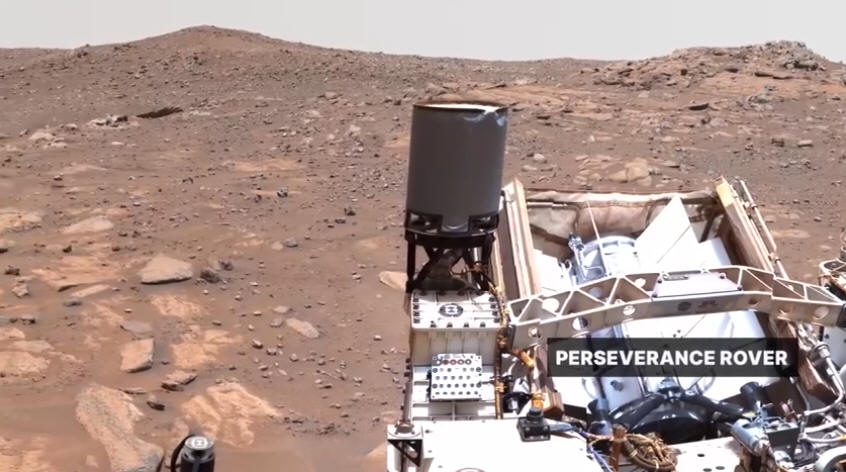 Perseverance
.
.
Click the link below for the complete video (hit play):
.
__________________________________________
March 22, 2025
Mohenjo
Business, Food For Thought, Human Interest, Political, Science, Technical
amazon, business, Business News, current-events, Future, Hotels, human-rights, medicine, mental-health, research, Science, Science News, technology, Technology News, travel, vacation

Click the link below the picture
.
A few years ago, George Lewis was driving back from performing in a comedy club when he realized he had to change his life.
He had played the same club several years earlier, also for just a few minutes and also for little more than gas money. Both times, he did what he had to do. He showed up. He made the audience laugh.
Now, though, he was a parent. He needed a more stable income, and his material felt tired. Yet the thing that filled his days — looking after his children — was a no-go for standup, older comics told him: a sure way to get pigeonholed.
“It was like: ‘Maybe when you have kids, don’t mention that you’ve got kids,’” he said, recalling their earlier advice.
“Obviously,” he continued, “now I realize it’s quite the opposite.”
In the years since that night, Mr. Lewis, now 37, has become a bard of British parenting comedy. He’s on his first tour as a headliner, and his shows keep selling out. His route to success began after the pandemic, when he began posting short online videos that gently mocked (and commiserated with) his fellow British millennial parents.
In some sketches, Mr. Lewis acts the harried grown-up. In the clip below, he’s trying to adhere to a nap schedule while driving. There’s an unseen toddler in the back who mustn’t be allowed to fall asleep. As they approach home, he gets increasingly desperate.
“Should we sing?” he asks. “Do the actions! Big energy!” he commands. Then, he tries swerving, which is more dangerous than fun. their times, he pretends to be a kid. In one long-running series, he stages conversations between toddlers who sound a lot like adults but who deadpan the baffling logic of two year olds. (The series, Two Toddlers Chatting, is his most popular, he said, with about 60 million views on Instagram alone.)
In one sketch, a toddler shares some real concerns. His father keeps covering his face — which makes him disappear. Then, his dad comes back, saying this odd, upsetting word.
“He was behaving so erratically,” the toddler tells his friend. “He just started shouting, ‘Peek-a-boo.’”
“‘Peek-a-boo?’” his friend replies. “Is he OK, like, mentally?”
It’s a low-budget effort, run almost entirely off his phone. He films in his kitchen, plays all the characters, and edits clips between school pickups and bath time. In video after video, he unspools comedy gold about the gulf between the earnest rituals of modern parenting and the essential, eternal weirdness of a small child’s inner life.
“The more mundane and frustrating, the better the sketch that comes out,” he said. “So it really is a great way of going about your day.”
.
 George Lewis, a bard of British parenting comedy, is on his first tour as a headliner, and his shows keep selling out. Credit…Andrew Testa for The New York Times
.
.
Click the link below for the complete article:
.
__________________________________________
March 21, 2025
Mohenjo
Business, Food For Thought, Human Interest, Political, Science, Technical
amazon, business, Business News, current-events, Future, Hotels, human-rights, medicine, mental-health, research, Science, Science News, technology, Technology News, travel, vacation
Click the link below the picture
.
CLIMATEWIRE | The last time President Donald Trump tried to roll back a mercury regulation, he faced a high-profile opponent: Robert F. Kennedy Jr.
Kennedy railed against EPA at an August 2017 public hearing for going along with the Trump administration’s demands to repeal wastewater limits. He warned that allowing more power plant pollution to enter waterways would poison people through mercury-contaminated fish — a problem he experienced personally after a period of eating tuna.
“It is really troublesome for those of us who will suffer from your irresponsibility,” Kennedy said at the time. “The law says the waterways of this country, the fisheries of this country, belong to the people.”
Eight years later, Kennedy has been silent as the Trump administration is again rolling back those same mercury regulations, along with at least a dozen other pollution controls announced last week in what EPA Administrator Lee Zeldin has called the agency’s “biggest deregulatory action in U.S. history.”
Before Kennedy was confirmed in January to lead the Department of Health and Human Services, he ran a presidential campaign on the promise to “make America healthy again,” in part through getting toxic chemicals out of the nation’s food.
Then, during his confirmation hearing two months ago, Kennedy touted his experience with fighting mercury pollution as an environmental attorney and as the founder of Waterkeeper, an environmental group. “The same chemicals that kill fish make people sick,” Kennedy said at the January hearing.
Kennedy didn’t respond to requests for comment or questions about whether he still believes mercury is a public health threat.
“If he really does care about the issues he used to care about when he was working at the Waterkeeper, you would think he would say something,” said Abel Russ, director of the Environmental Integrity Project’s Center for Applied Environmental Science. “EPA is doing a lot of things that are an anathema to his stated life’s mission.”
If EPA fulfills Zeldin’s promise to roll back at least a dozen pollution controls, more people could be exposed to particulate matter, smog and nitrogen oxides — pollutants that can lead to severe health consequences such as lowered IQ, asthma, increased heart attacks and premature deaths, according to EPA’s own analyses.
Among the threatened rules are two mercury reduction standards. One limits the amount of mercury that’s released into the air and is predicted to reduce emissions of the potent neurotoxin by more than 16 percent by 2028. The other reduces mercury that’s released into rivers and streams, and would help infants avoid losing an estimated 1,377 IQ points annually.
It’s not publicly known whether Kennedy weighed in on EPA’s decisions. Before the election, Trump said he would let Kennedy “make our country so healthy” but that Kennedy “can’t touch” fossil fuels like oil and gas.
“We’re not going to let him get involved,” Trump said in October.
Since then, Trump created a Make America Healthy Commission with the purpose of “ensuring United States food is the healthiest … in the world” and addressing potential contributing causes of childhood chronic disease, “including the American diet, absorption of toxic material … environmental factors [and] government policies.”
The commission, on which Kennedy and Zeldin sit, met for the first time last Tuesday, one day before EPA’s rollbacks were announced. The meeting was held behind closed doors and neither EPA or HHS responded to questions about whether Kennedy and Zeldin had discussed rolling back the rules or how the rollbacks would impact Americans’ health.
EPA spokesperson Molly Vaseliou said in a statement, “No longer will the EPA view the goals of protecting our environment and growing our economy as binary choices.”
She did not respond to a question about what specific steps EPA would take to improve American’s health, saying only that the agency “looks forward to closely collaborating on ways to fulfill President Trump’s goal of removing toxins from the environment and our food supply and keeping our children healthy and strong.”
.
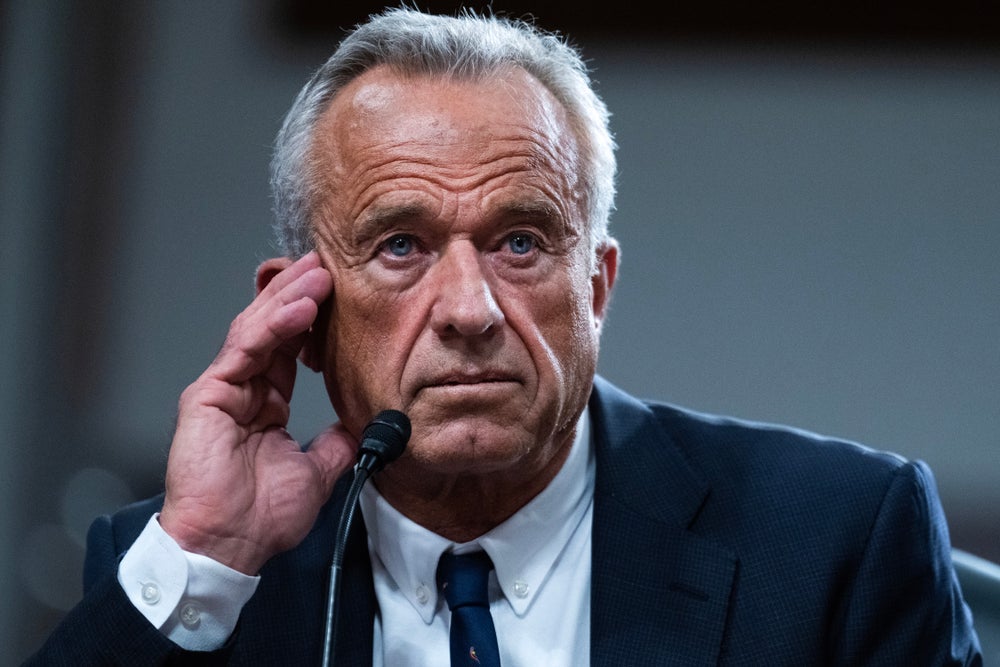
Robert F. Kennedy Jr. testifies during his Senate Finance Committee confirmation hearing in Dirksen building on Wednesday, January 29, 2025. Tom Williams/CQ-Roll Call, Inc via Getty Images
.
.
Click the link below for the complete article:
.
__________________________________________
March 21, 2025
Mohenjo
Business, Food For Thought, Human Interest, Political, Science, Technical
amazon, business, Business News, current-events, Future, Hotels, human-rights, medicine, mental-health, research, Science, Science News, technology, Technology News, travel, vacation

Click the link below the picture
.
Republican states could lose billions of dollars in medical research funding after the National Institutes of Health (NIH) announced new funding cuts amid President Donald Trump’s attempts to curb federal spending.
Newsweek reached out to the White House for comment via email.
Why It Matters
When a researcher receives a research grant, their institution will also receive additional funds known as “indirect costs” that go toward infrastructure such as utilities, maintenance or administrative costs, lessening the burden on these institutions. The exact percentage is negotiated between NIH and each institution.
NIH announced Friday it would implement a 15 percent limit on “indirect costs” on grants for research, highlighting that some institutions like Harvard University or Yale University currently enjoy rates upwards of 60 to 70 percent. In 2024, NIH spent more than $9 billion on these indirect costs, according to the Blue Ridge Institute for Medical Research, which compiles data on all NIH grants.
These costs will now be taken on by research institutes, which say the cuts will have grim ramifications for medical research across the country.
While the NIH highlighted institutions in blue states Massachusetts, Connecticut and Maryland that benefit from the indirect funds, Republican states also benefit from the indirect funding and stand to lose billions from these cuts.
What to Know
The NIH wrote the lower indirect cost rates will “save more than $4B a year effective immediately,” noting that rate is “above what many major foundations allow and much lower than the 60%+ that some institutions charge the government today.”
But the change has sparked concerns from researchers across the country who believe it will result in cuts to research for cancer and other diseases such as Alzheimer’s or diabetes.
Funding generally reflects the population of a state, not its political leaning, so the two states that received the most indirect funding and would stand to lose the most are big blue states California and New York. Texas, the third largest state and largest red state, received nearly $505 million in indirect costs.
North Carolina and Pennsylvania, battlegrounds that backed Trump, received $394 million and $601 million in indirect funding in 2024, according to Blue Ridge Institute.
This map shows how much each state would have lost in 2024 indirect funding had the 15 percent rule been in place last year.
When it came to which states received the highest indirect cost rate, there was no clear partisan distinction. Of the 10 states with the highest rate, five voted for Trump—Iowa, Kentucky, Nebraska, Ohio and South Dakota—while five voted for Vice President Kamala Harris in 2024—Connecticut, Maine, New Hampshire, New Jersey and New York.
Senator Katie Britt, an Alabama Republican, is among those raising concerns about the impact this move will have.
“While the administration works to achieve this goal at NIH, a smart, targeted approach is needed in order to not hinder life-saving, groundbreaking research at high-achieving institutions like those in Alabama,” she told AL.com.
Alabama, home to recipients such as the University of Alabama, received nearly $90 million in indirect costs in 2024, according to the Blue Ridge Institute.
What People Are Saying
Association of Public & Land Grant Universities President Mark Becker in a statement: “NIH slashing the reimbursement of research costs will slow and limit medical breakthroughs that cure cancer and address chronic diseases such as diabetes and heart disease. Let there be no mistake: this is a direct and massive cut to lifesaving medical research. We urge the administration to reconsider this self-defeating action.”
White House spokesperson Kush Desai in a statement reported by Fox News: “Contrary to the hysteria, redirecting billions of allocated NIH spending away from administrative bloat means there will be more money and resources available for legitimate scientific research, not less.”
University of Wisconsin-Madison, in a statement: “This proposed change to NIH funding – UW–Madison’s largest source of federal support – will significantly disrupt vital research activity and delay lifesaving discoveries and cures related to cancer, Alzheimer’s disease, diabetes, and much more.
.
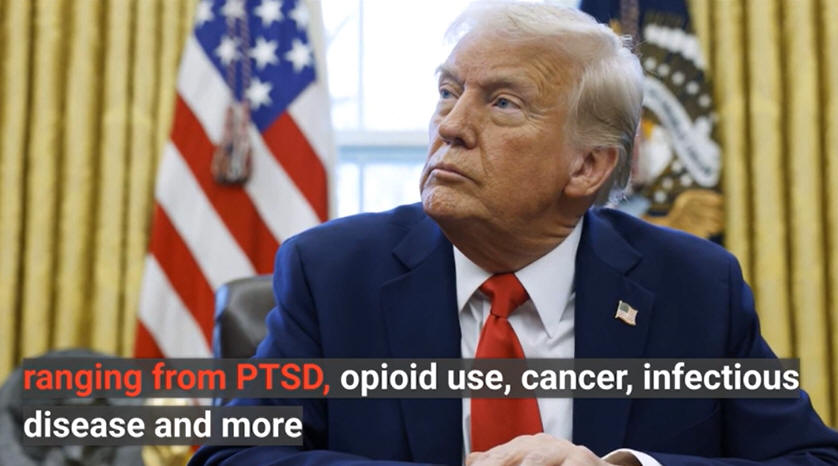

Click Map in Article for Figures!
.
.
Click the link below for the complete article:
.
__________________________________________
March 21, 2025
Mohenjo
Business, Food For Thought, Human Interest, Political, Science, Technical
amazon, business, Business News, current-events, Future, Hotels, human-rights, medicine, mental-health, research, Science, Science News, technology, Technology News, travel, vacation

Click the link below the picture
.
Early in Donald Trump’s first term, Steve Bannon met with some House Republicans who were wavering on whether to vote for a Trump-backed bill that would have slashed Medicaid, the federal-state program that today pays medical bills for about 72 million low-income Americans.
Bannon, who at the time was a senior White House adviser, read them the riot act: “This is not a debate,” he said, as Axios reported at the time. “You have no choice but to vote for this bill.”
Eight years later, Trump and the Republicans are back in power ― and maybe laying the groundwork for a similar vote. The budget proposal House Republicans voted out of committee on Thursday night envisions massive spending reductions virtually certain to include Medicaid, in part to finance the tax cuts Trump has said are his top legislative priority.
But this time around, Bannon has some different advice for the Republicans ― and the Trump White House, too.
“A lot of MAGA is on Medicaid,” Bannon said on Thursday on his “War Room” podcast. “If you don’t think so, you are dead wrong. Medicaid is going to be a complicated one. You just can’t take a meat ax to it, although I would love to.”
Bannon probably understands this better than most high-profile figures in American politics. The proposed Medicaid cuts during Trump’s first term were part of legislation to repeal the Affordable Care Act, aka Obamacare. That bill proved spectacularly unpopular ― and ultimately failed to pass ― in part because even many diehard Trump supporters would’ve stood to lose health coverage had it succeeded. Which is exactly what could happen now, as Bannon knows.
But these days, it’s not just cuts to Medicaid threatening Trump supporters.
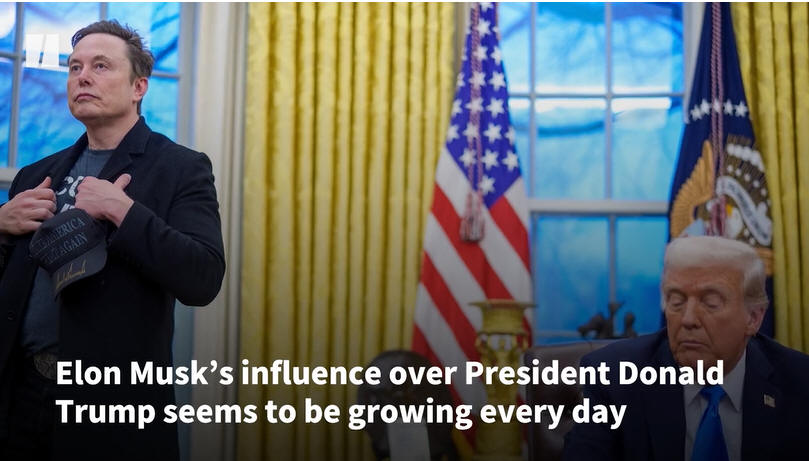
Since reassuming the presidency, Trump has issued a torrent of executive orders that seek to limit, downsize or even eliminate key federal programs and agencies. To implement all of this, Trump has deputized adviser and billionaire tech tycoon Elon Musk, whose Department of Government Efficiency has been laying off federal workers by the thousands and blocking federal spending by the billions.
Trump says the purpose of these orders and Musk’s demolition tour of the executive branch is to eliminate wasteful spending ― and, no less important, to clean out the left-wing, “woke” politics that he says have infected these federal initiatives. Which may or may not be worthwhile on the merits, depending on your perspective.
But whatever the rationale, the effect is likely to be especially strong in communities where Trump is popular. Some have already taken a hit. The question now is how quickly that realization sets in, and whether anything changes as a result.
What DOGE Looks Like In Rural America
One Republican who seems to understand is Katie Britt, the senator from Alabama. Last weekend, a reporter from AL.com asked her to react to news that the National Institutes of Health was sharply reducing its research grants. The University of Alabama-Birmingham is a top recipient of NIH grants, and also Alabama’s largest employer.
Britt said she was all for cutting waste, to make sure taxpayer dollars are “spent efficiently, judiciously and accountably.” But she added that she wanted to work with the administration on “a smart, targeted approach … in order to not hinder lifesaving, groundbreaking research at high-achieving institutions like those in Alabama.”
.
.
.
Click the link below for the complete article:
.
__________________________________________
March 21, 2025
Mohenjo
Business, Food For Thought, Human Interest, Political, Science, Technical
amazon, business, Business News, current-events, Future, Hotels, human-rights, medicine, mental-health, research, Science, Science News, technology, Technology News, travel, vacation

Click the link below the picture
.
There’s a certain universal experience that transcends age, background, and even our best intentions. It’s the subtle (or not-so-subtle) cringe, the weary sigh, the fleeting moment of “Oh, hell no” when faced with the disruptive, disobedient or destructive behavior of someone else’s child.
Whether it’s the out-of-nowhere, ear-piercing shriek in the coffee shop, the relentless toy-banging in the doctor’s waiting room or the seemingly endless stream of “Why?” questions, the feeling that other people’s children are annoying is surprisingly common. And if you’ve ever felt that way, you’re definitely not alone.
It’s not that we’re heartless monsters. But there’s something about the unbridled enthusiasm, the unfiltered honesty, and the sheer volume of some little humans that can test the patience of even the most even-keeled among us.
We may find other people’s kids annoying for various reasons, often tied to behavior, expectations or environment. Dr. Matthew Morand, a licensed psychologist, told HuffPost this topic comes up more than people think. His advice? “Minimize the negative voices in your head.”
But how, when you’re at your wit’s end?
First, keep this basic principle in mind.
Morand’s strategy is simple: “Utilize ‘the other shoe’ mentality. If I were to count how many times a child has kicked the back of my head on an airplane, I could sue their parents for traumatic brain injury. Most people’s responses typically go right for the negative and pass judgment. I ask them, and ask myself, ‘Have my children not been the difficult ones?’ How can I get angry at that child when I have literally worn the other shoe?”
Dr. Kristen Piering, a licensed clinical psychologist, agrees. “If you’re annoyed by a kid out in public, keep in mind that we need kids to experience these places to learn how to engage appropriately in society.”
She added, “Kids are people, too, and can have bad days like anyone else. If they act in a way you find ‘annoying,’ they may have had a rough day at school or a fight with a friend.”
Consider whether the source of the problem is the kid or the parent.
Parents can relate, but what about those of us without kids? Morand says, “Focus on whether the parent is cognizant of their child’s behavior. We can give credit and find a sense of calmness in respecting that parenting is hard, and if that parent is trying to address the behavior, then that is all that really matters.”
And sometimes it’s not even the kids themselves. It’s the parents. The ones who seem blissfully unaware (or just don’t care) as their little ones dismantle the local bookstore or treat public spaces as their personal playgrounds (and garbage bins). It’s the “hands-off” approach taken to an extreme, leaving the rest of us to contend with the resulting bedlam.
That said, what you see isn’t always the whole story. Piering said, “Not everyone parents the same way, and that’s OK. You have no idea what goes on in their home, and something that might seem like an odd parenting choice to you may have come from years of knowing their child and what works best for their child and their family.”
Follow a 3-step rule to keep your frustration in check.
So, how do we navigate this minefield of mini-humans without losing our marbles? Perhaps some expert-advised strategies for keeping your sanity intact (even when surrounded by the most lively of children) can help before we pull our hair out.
Shira Schwartz, a school psychologist and district administrator, has a three-step rule: 1. Ignore; 2. Redirect; 3. Resist the urge to parent.
.
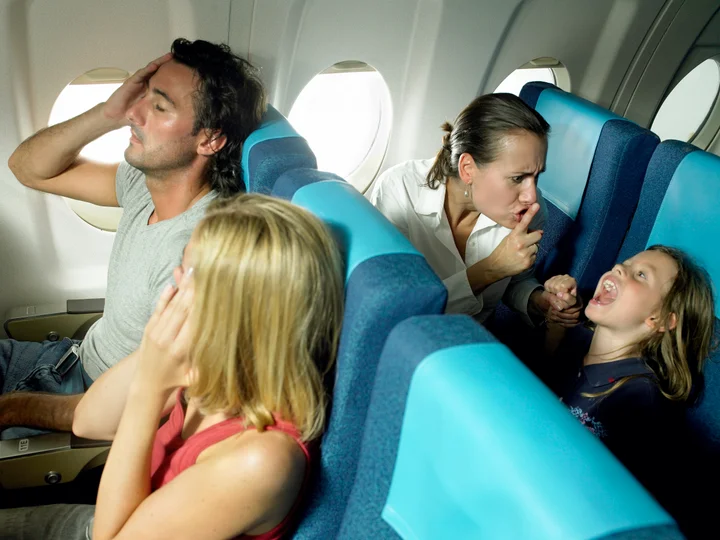 Hans Neleman via Getty Images We’ve all been here.
.
.
Click the link below for the complete article:
.
__________________________________________
March 20, 2025
Mohenjo
Business, Food For Thought, Human Interest, Political, Science, Technical
amazon, business, Business News, current-events, Future, Hotels, human-rights, medicine, mental-health, research, Science, Science News, technology, Technology News, travel, vacation
Click the link below the picture
.
I often ask my kids to help around the house. Feed our dog. Put clean dishes in cabinets and drawers. Sweep up crumbs after dinner. We are a Montessori family, so a lot of this stuff falls under Practical Life, and it’s supposed to help with motor skills, executive functioning, and caring for our spaces. We are also a Scouting family so, “How do Girl Scouts leave a place?” I ask my troop far too often. “Better than we found it!” Indeed.
But the kvetching. “Moooooommmmmm. I can’t. My legs don’t work.” “None of my friends have to do this stuff.” And my favorite: “I neeeeeeed to be a kiiiiiiid.”
The drama. But that last complaint resonates. Every family handles chores differently. Some parents hold off to “let kids be kids,” with the idea that children will eventually learn how to do laundry and clean dishes and do all the adult things. But is there any value in chores? Are the kids who do them benefiting in any way? I turned to Rebecca Scharf at the University of Virginia Medical School, a pediatrician who investigated this question in a recent study. Our conversation is below, edited lightly, as I stare down stacks and stacks of laundry that certain children might have to participate in folding. Assuming their arms don’t suddenly stop working.
The term “chore” has kind of this negative connotation, at least according to my kids. What qualifies as a chore?
Yeah, I hear that. From my perspective, it is something that a child has responsibility for that’s contributing to the household. It’s those daily tasks that we do that keep up our environment or help us participate in family life.
And you decided to study how children who do chores fare?
Yes. I’m a developmental pediatrician, and lot of the things I’ve researched come out of clinical practice. For this one, I was working with one of my colleagues, Dr. Elizabeth White, and she and I were talking about children’s sense of agency, or competence, especially girls, around science. We were looking at this dataset and came upon these questions. The surveyors asked third graders across the U.S. to rate themselves on a variety of things, like “I am good at math. I am good at science.” The sense was, “I am capable. I can do things.” So part of this dataset asked parents, “Does your child have chores?” And we found that children who were doing chores often, or very often, as the survey asked, were more likely to have a sense of capability or more of a sense of being able to do things in the future than children who were doing chores rarely or never. The chores we looked at were in kindergarten or first grade, and then we’re looking at third-grade outcomes that the children self-reported.
So by the time they were in third grade, they were like, “I’m a badass.”
Exactly. We were looking at prosocial behaviors. We were looking at peer relationships. We were looking at, “Do they feel they’re good at academics?” And you could make the case that children who are good at things are perhaps more likely to be given chores by their parents. However, we did look at this across time and hopefully that takes that into account as well.
Was it surprising that all these kids said, you know, that they were more confident?
These weren’t huge differences, but I think it was interesting that they were happier with their lives and that they felt they were better at academics, even a little bit. But it was also interesting to me that the concept of chores is not just the work you learn how to do but the contribution to the family and the household. It’s important in terms of thinking outside yourself or thinking of the ways you can make a difference in the lives of something else.
There’s also something to the technical aspect of yes, young children can learn to do dishes or help with laundry or sweep the floor and there’s the competence there, the fine motor skills that are developed, the gross motor skills, the language needed and the social negotiation needed, which is all useful for children and developing brains.
.
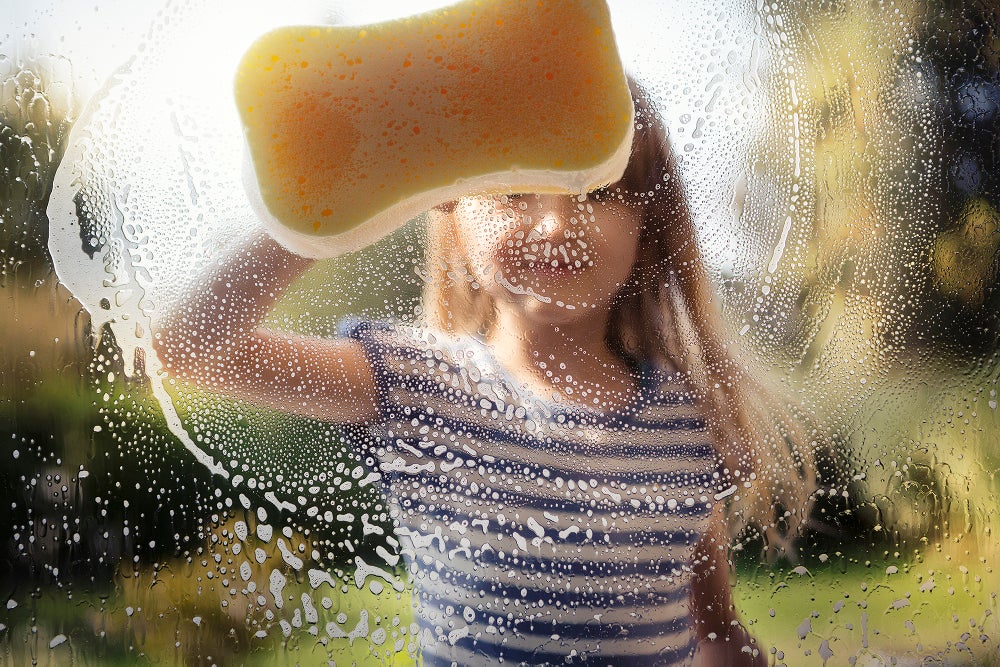 Elva Etienne/Getty Images
.
.
Click the link below for the complete article:
.
__________________________________________
March 20, 2025
Mohenjo
Business, Food For Thought, Human Interest, Political, Science, Technical
amazon, business, Business News, current-events, Future, Hotels, human-rights, medicine, mental-health, research, Science, Science News, technology, Technology News, travel, vacation

Click the link below the picture
.
Elon Musk’s attempt to unilaterally dismantle the U.S. Agency for International Development likely violated the United States Constitution, a federal judge ruled on Tuesday.
U.S. District Judge Theodore Chuang ordered Musk and his Department of Government Efficiency to immediately give USAID employees access to their “email, payment, security notification, and all other electronic systems,” and ordered a pause on any efforts to shut down USAID.
Judge Chuang wrote that Musk’s takeover “usurped the authority of the public’s elected representatives in Congress to make decisions on whether, when, and how to eliminate a federal government agency, and of Officers of the United States duly appointed under the Constitution to exercise the authority entrusted to them.”
While Judge Chuang rebuked Musk’s role within the Trump administration, the exact implications of the decision on the operations of USAID are unclear.
DOGE and Musk were also ordered to submit a written agreement within two weeks that ensures USAID can reoccupy its former headquarters in the Ronald Reagan Building in Washington, D.C.
The foreign aid agency was among the first government agencies DOGE slashed in its effort to scale back or dismantle much of the federal government. The Trump administration has laid off thousands of employees, revoked funding for more than 80% of its programs, and shed its Washington, D.C. headquarters.
Critics of the Trump administration say its efforts to nullify the agency will cripple American influence overseas and carry devastating effects for some of the most vulnerable populations in the world, which relied on U.S. funding for health care, food, and other basic needs.
.

Judge says dismantling of USAID was unconstitutional Judge ordered Elon Musk and DOGE to immediately give USAID employees access to their “email, payment, security notification, and all other electronic systems.”
Lane Pollack, center, of Rockville, Md., a senior learning advisor at USAID for 14 years, is consoled by a co-worker after having 15 minutes to clear out her belongings from the USAID headquarters, Friday, Feb. 28, 2025, in Washington. (AP Photo/Jacquelyn Martin) Jacquelyn Martin/AP
.
.
Click the link below for the complete article:
.
__________________________________________
Older Entries
Newer Entries

 James' World 2