April 4, 2025
Mohenjo
Business, Food For Thought, Human Interest, Political, Science, Technical
amazon, business, Business News, current-events, Future, Hotels, human-rights, medicine, mental-health, research, Science, Science News, technology, Technology News, travel, vacation

“When a clown moves into a palace, he doesn’t become a king; the palace instead becomes a circus. — Turkish proverb,”
Click the link below the picture
.
Temporary pacemakers can be used as a stopgap measure to regulate the heartbeat after surgery and in emergency situations. But the fact that they need to be surgically installed and removed also brings risk: moon walker Neil Armstrong famously developed fatal bleeding when surgeons removed his temporary pacemaker’s wires in 2012. Now researchers have developed a tiny temporary pacemaker that could eliminate some of that risk. Their device, just a few millimeters long, has no wires and needs minimally invasive placement. It can be injected into the body with a needle. And when its work is done, it simply dissolves.
Conventionally, temporary pacemakers comprise electrodes that are implanted in the heart muscle. These electrodes are connected to an external battery that delivers a pulse to control the heart’s rhythm and correct slow or irregular heartbeats. The new, less invasive pacemaker, which could be particularly useful in a newborn baby’s tiny heart, “consists of two electrodes—conducting metal pads—that are designed to do two things,” says Northwestern University biomedical engineer John A. Rogers, one of the co-authors of an April 2 paper in Nature that describes the device. “One is that they inject current into the cardiac tissue to stimulate contractions that lead to an overall cardiac cycle…. [The other is that they] provide a power source for driving the operation of the pacemaker.”
The mini pacemaker device does not have a separate battery. Instead, its body functions as a simple type of battery called a galvanic cell—the two electrodes, made of different combinations of magnesium, zinc, and molybdenum, react with the naturally occurring electrolytes in bodily fluids to produce an electric current.
On the side opposite of the electrodes lies a tiny light-activated switch that controls the battery’s operation. In the switch’s “on” position, an electrical pulse is delivered to the cardiac tissue; in its “off” state, nothing happens. The pacemaker is paired with a soft, flexible skin patch above the heart that monitors heart rate. When it senses an irregular or slow heartbeat, it flashes a light on and off to dictate the correct pacing. The pacemaker responds to near-infrared light—wavelengths that can penetrate deeply into biological tissues.
When the pacemaker’s job is done, it simply dissolves into the body. The device has a finite operating time of between a few days and about three weeks, Rogers says, depending on the choice of metals for the electrodes.
The current study is an advance on an earlier dissolvable pacemaker by the same team. The previous iteration used a technology called near-field communication instead of a galvanic cell; it ran on power beamed to an antenna, which made it much bigger. The extreme miniaturization is one of the advances in the new model, Rogers says. “What follows from that is that we can use multiple of these millimeter-scale pacemakers simultaneously at different locations of the heart [with the devices] operating in different wavelengths.”
The researchers are also looking at the possibility of integrating the devices with medical implants, such as replacement heart valves, that currently don’t have any kind of cardiac control mechanisms.
Thanh Nho Do, a biomedical engineer at the University of New South Wales in Australia, who wasn’t involved with the study, calls this pacemaker a breakthrough in miniaturization. It gives reliable and sustained pacing without external energy inputs, he says, and could significantly reduce procedural risks and patient discomfort.
Virginia Tech researcher Xiaoting Jia, who was also not involved in the project, says it has great potential for practical use in humans. “The team has performed comprehensive tests in animal models and in ex vivo settings [experiments outside the body]. The next important step would be to thoroughly evaluate the safety for application in humans and obtain [Food and Drug Administration] approvals for clinical use.” The researchers are working toward this via a new start-up company.
One key challenge, Do adds, is selecting suitable materials to balance functionality and safe degradation without triggering excessive immune reactions such as inflammation.
.
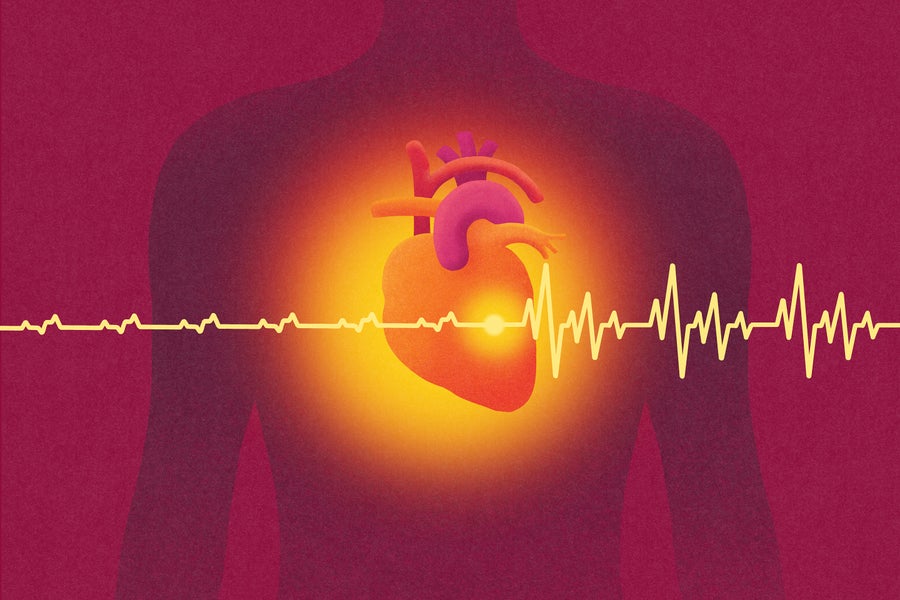
A pacemaker uses electricity to regulate heartbeats. Eugene Mymrin/Getty Images
.
.
Click the link below for the complete article:
.
__________________________________________
April 4, 2025
Mohenjo
Business, Food For Thought, Human Interest, Political, Science, Technical
amazon, business, Business News, current-events, Future, Hotels, human-rights, medicine, mental-health, research, Science, Science News, technology, Technology News, travel, vacation
Some content on this page was disabled on April 15, 2025 as a result of a DMCA takedown notice from Guardian Media Group. You can learn more about the DMCA here:
https://wordpress.com/support/copyright-and-the-dmca/
April 3, 2025
Mohenjo
Business, Food For Thought, Human Interest, Political, Science, Technical
amazon, business, Business News, current-events, Future, Hotels, human-rights, medicine, mental-health, research, Science, Science News, technology, Technology News, travel, vacation
Did Trump just create an emergency and then declare one?
Click the link below the picture
.
As anyone seeking to lose weight knows, diets come in and out of fashion. The Sexy Pineapple diet, launched by a Danish psychologist in 1970, never really took off. Kellogg’s no longer promotes the Special K diet, which swaps out two meals a day for a bowl of the breakfast cereal of that name. These days, you don’t hear much about eating according to blood type, cutting out acidic foods, or following the potato diet.
Intermittent fasting has, however, had unusual staying power for more than a decade—and has grown even more popular in the past few years. One survey found that almost one in eight adults in the United States had tried it in 2023.
The enduring popularity of intermittent fasting has been fed by celebrity endorsements, news coverage, and a growing number of books, including several written by researchers in the field. More than 100 clinical trials in the past decade suggest that it is an effective strategy for weight loss. And weight loss generally comes with related health improvements, including a reduced risk of heart disease and diabetes. What is less clear is whether there are distinct benefits that come from limiting food intake to particular windows of time. Does it protect against neurodegenerative diseases such as Alzheimer’s disease, enhance cognitive function, suppress tumours, and even extend lifespan? Or are there no benefits apart from those related to cutting back on calories? And what are the potential risks?
Neuroscientist Mark Mattson at the Johns Hopkins School of Medicine in Baltimore, Maryland, and author of the 2022 book The Intermittent Fasting Revolution, has been studying fasting for 30 years. He argues that, because ancient humans went for long periods without food as hunter-gatherers, we have evolved to benefit from taking breaks from eating. “We’re adapted to function very well, perhaps optimally, in a fasted state,” he says.
Fasting’s deep roots
Fasting is far from new. Periodic abstentions from food have long been practised in many religions. In the fifth century bc, the Greek physician and philosopher Hippocrates prescribed it for a range of medical conditions.
Recent scientific interest in fasting has its roots in questions raised by research on calorie restriction. Since the 1930s, studies have shown that putting rodents on low-calorie diets can increase their lifespans. Hypotheses proposed to explain this effect include that calorie restriction slows growth, lowers fat intake or reduces cellular damage caused by unstable free radicals.
But an observation made in 1990 by researcher Ronald Hart, who was then studying ageing, nutrition and health at the US National Center for Toxicological Research in Jefferson, Arkansas, highlighted another intriguing possibility. Calorie-restricted rodents fed once daily consumed all their food in a few hours. Perhaps the calorie-restricted rodents lived longer because they repeatedly went for 20 or so hours without eating.
In the immediate aftermath of a meal, cells use glucose from carbohydrates in food as fuel, either straight away or following storage in the liver and muscles as glycogen. Once these sources are depleted—in humans, typically around 12 hours after the last meal—the body enters a fasted state during which fat stored in adipose tissue is converted to ketone bodies for use as an alternative energy source.
‘Intermittent fasting’ generally refers to various diets that include repeated periods of zero- or very low-calorie intake that are long enough to stimulate the production of ketone bodies. The most common are time-restricted eating (TRE), which involves consuming all food in a 4- to 12-hour window, usually without calorie counting; alternate-day fasting (ADF), whereby people either abstain from food every other day or eat no more than around 500 calories on that day; and the 5:2 diet, which stipulates a 500-calorie limit on 2 days per week (see ‘Three forms of fasting’).
.
 TanyaJoy/Getty Images
.
.
Click the link below for the complete article:
.
__________________________________________
April 3, 2025
Mohenjo
Business, Food For Thought, Human Interest, Political, Science, Technical
amazon, business, Business News, current-events, Future, Hotels, human-rights, medicine, mental-health, research, Science, Science News, technology, Technology News, travel, vacation

Click the link below the picture
.
When it was all over, Amanda Cruz felt like a phoenix, a new person rising from what had been. First, though, she had to go through the fire.
Pre-caregiving Amanda was a talker. When she was 2 years old, she always waved to everyone on the bus. In her 20s, she moved to Denmark for graduate school knowing nobody and loved it. Later, she worked for city government in a job connecting with constituents. She learned to speak Spanish so she could chat with more people.
In 2023, her mom was dealing with a cancer relapse that had progressed into her spine. That July, right before Cruz’s parents moved to her neighborhood in South Carolina to be near her, her mom also had a stroke.
Cruz helped all along, but in early 2024, she took on a lot more — meal prep, meds, following up on appointments, trips to water aerobics. She still worked at a small construction company, she still went to the YMCA for yoga and Pilates. But as she became more involved in her mother’s life, Cruz began to change.
She became quieter, and she began to listen more. She was learning to hear beyond the words her mother said to understand what she really meant. Listening to judge whether her mother needed more pain meds, or to figure out what she really wanted at that moment, even if it was just a soda from the gas station. Her own words were saved for the daily rituals of bathing, medicine, questions about pain, and gently encouraging her mother to start saying her goodbyes.” I must pull myself back to put her forward,” she said to herself.
They sheltered together in this pool of quiet while the world seemed to accelerate around them. There was another stroke in November. Afterward, on the way home from the hospital, her mother fell silent. She did not speak at all during dinner that night. Cruz knew in her gut that the words were not coming back.
Now listening became a whole-body experience, to gauge her mom’s expressions and anticipate her needs. At times, her mother screamed in pain, and she had to listen to that too.
Along the way, she lost herself. “I was erased from myself by caring for this person,” she says. “I wasn’t my personality. I didn’t do things I liked anymore.” She was a people person, but there wasn’t time or space to engage with anyone besides her mother. To tell the truth, she wasn’t even interested. She found it hard to eat. The world seemed to be monochrome.
It’s well-known that family caregiving for sick or elderly adults can bring on stress, anxiety, and depression. It can also turn you into someone you don’t even recognize. Caregivers say it scrambles old habits and patterns, rearranges intimate relationships, and forces you to confront your limits. It can excavate and reorganize the soul, what one caregiver calls mind and body fracking.
Amanda Cruz felt her whole identity was shifting. She felt entwined with her mother, body and soul, but mostly all she could do is watch her suffer. She says now that God was pressing her through her fear. Only after her mother died in December would she find out what was on the other side.
The c-word
In 2009, two researchers proposed an explanation for why caregiving for an adult who is ill or disabled can be so profound. Their argument, simply called “caregiver identity theory,” is now widely accepted among psychologists and social workers who study and help caregivers.
.

Amanda Cruz took care of her mother, who died of cancer late last year. The experience changed her sense of identity. She is still sorting through what that means. Laura Bilson for NPR
.
.
Click the link below for the complete article:
.
__________________________________________
April 3, 2025
Mohenjo
Business, Food For Thought, Human Interest, Political, Science, Technical
amazon, business, Business News, current-events, Future, Hotels, human-rights, medicine, mental-health, research, Science, Science News, technology, Technology News, travel, vacation

Click the link below the picture
.
The first meteor shower in over months will unfold in the late-April sky. Plus, early risers will get to catch the crescent moon bunching up with three planets before sunrise.
Warmer spring weather is drawing more people outdoors, even after dark, to stargaze following the frigid nights of winter. April promises to be an exciting month for skywatchers, featuring a variety of celestial events, including the first meteor shower in more than three months.
The first full moon of astronomical spring will shine brightly in the April sky during the second weekend of the month. It’s associated with the changing flora that arrives with the warming season.
April’s full moon is commonly called the Pink Moon — not because the moon changes color but because of the wild ground phlox, one of the first flowers to blossom in the spring across eastern North America. The plant features pink and purple petals.
Alternate nicknames for April’s full moon include the Frog Moon, the Sugar Maker Moon and the Breaking Ice Moon.
Shooting stars will return to the night sky as the Lyrid meteor shower peaks on the night of Monday, April 21, into the early hours of Tuesday, April 22. This will be just the second moderate meteor shower of 2025, following the Quadrantids, which peaked on Jan. 3.
Up to 20 meteors per hour may be visible on peak night, with the best views expected during the second half of the night.
The next meteor shower after the Lyrids will be the Eta Aquarids, which will peak on the night of May 4 into the early morning of May 5.
Early risers will be treated to a striking celestial display as four planets and the moon align in the eastern sky before sunrise on Friday, April 25.
Venus will shine brightly at the top of the formation, with Saturn appearing dimmer below and to the right, near the crescent moon. Mercury will be the most difficult to spot, sitting very low on the horizon in the pre-dawn sky.
.
 Pink phlox wildflowers growing in a grassy field. (Johnathan Kana/Getty Images)
.
.
Click the link below for the complete article:
.
__________________________________________
April 2, 2025
Mohenjo
Business, Food For Thought, Human Interest, Political, Science, Technical
amazon, business, Business News, current-events, Future, Hotels, human-rights, medicine, mental-health, research, Science, Science News, technology, Technology News, travel, vacation
Click the link below the picture
.
CLIMATEWIRE | Top Wall Street institutions are preparing for a severe future of global warming that blows past the temperature limits agreed to by more than 190 nations a decade ago, industry documents show.
The big banks’ acknowledgment that the world is likely to fail at preventing warming of more than 2 degrees Celsius above preindustrial levels is spelled out in obscure reports for clients, investors, and trade association members. Most were published after the reelection of President Donald Trump, who is seeking to repeal federal policies that support clean energy while turbocharging the production of oil, gas, and coal — the main sources of global warming.
The recent reports — from Morgan Stanley, JPMorgan Chase and the Institute of International Finance — show that Wall Street has determined the temperature goal is effectively dead and describe how top financial institutions plan to continue operating profitably as temperatures and damages soar.
“We now expect a 3°C world,” Morgan Stanley analysts wrote earlier this month, citing “recent setbacks to global decarbonization efforts.”
The stunning conclusion indicates that the bank believes the planet is hurtling toward a future in which severe droughts and harvest failures become widespread, sea-level rise is measured in feet rather than inches and tropical regions experience episodes of extreme heat and humidity for weeks at a time that would bring deadly risks to people who work outdoors.
The global Paris Agreement, from which the U.S. is withdrawing under Trump, aims to limit average temperature increases to well below 2 degrees Celsius. Scientists have warned that permanently exceeding 1.5 degrees — a threshold the world breached for the first time last year — could lead to increasingly severe climate impacts, such as the demise of coral reef ecosystems that hundreds of millions of people rely on for food and storm surge protection.
Morgan Stanley’s climate forecast was tucked into a mundane research report on the future of air conditioning stocks, which it provided to clients on March 17. A 3 degree warming scenario, the analysts determined, could more than double the growth rate of the $235 billion cooling market every year, from 3 percent to 7 percent until 2030.
“The political environment has changed, so some of them are conforming to that,” Gautam Jain, a former investment banker who is now a senior research scholar at Columbia University, said of Wall Street’s increasingly dire climate projections. “But mostly it is a rational business decision.”
The new warming estimates come as heat-trapping gases continue to rise globally and as international commitments to limit the burning of oil, gas, and coal, that’s responsible for the bulk of emissions, have stalled. Meanwhile, megabanks like Wells Fargo are backsliding on their previous climate pledges and exiting from the Net-Zero Banking Alliance, a United Nations-backed group that encouraged members to slash their emissions in line with the Paris Agreement.
Morgan Stanley, which in October watered down its climate-related lending targets, declined to comment.
Betting on potentially catastrophic global warming is both an acknowledgment of the current emissions trajectory and a politically savvy move in the second Trump era, according to Jain.
“Nobody wants to be seen as going against,” the administration’s pro-fossil-fuel energy policy, he said. “These banks are businesses, so they have to look at the risk that they have in their portfolio and the opportunities that they see in the most likely environment.”
.

PM Images/Getty Images
.
.
Click the link below for the complete article:
.
__________________________________________
April 2, 2025
Mohenjo
Business, Food For Thought, Human Interest, Political, Science, Technical
amazon, business, Business News, current-events, Future, Hotels, human-rights, medicine, mental-health, research, Science, Science News, technology, Technology News, travel, vacation

Click the link below the picture
.
Food & Wine readers love soup. It’s one of the most saved category of dishes on MyRecipes, our online recipe box where you can save and discover thousands of recipes from Food & Wine and other trusted sites like Southern Living and EatingWell.
New to MyRecipes? Click here to create a free account, or simply tap the heart icon at the top right of this page to start saving your favorite recipes. If you already have an account, just log in and click ‘Search’ on the right-hand side of the page. You can search by ingredient, cuisine, meal type, or any keyword — your saved Food & Wine recipes will always appear first.
Here’s a look at some of the soup recipes our readers have been cooking lately, from brothy to creamy, including classic chicken and vegetarian options.
.
:max_bytes(150000):strip_icc()/broccoli-cauliflower-and-cheddar-soup-FT-RECIPE0125-020f7b60def34108bf4635115ade1ea0.jpeg) Photo: Food & Wine / Photo by Jen Causey / Food Styling by Margaret Monroe Dickey / Prop Styling by Priscilla Montiel
Photo: Food & Wine / Photo by Jen Causey / Food Styling by Margaret Monroe Dickey / Prop Styling by Priscilla Montiel
.
.
Click the link below for 15 Great Soup Recipes:
.
__________________________________________
April 2, 2025
Mohenjo
Business, Food For Thought, Human Interest, Political, Science, Technical
amazon, business, Business News, current-events, Future, Hotels, human-rights, medicine, mental-health, research, Science, Science News, technology, Technology News, travel, vacation

Click the link below the picture
.
The Bible maps a world of ancient places that have transformed dramatically over thousands of years. Time has reshaped these lands as empires rose and fell, languages evolved, and borders shifted. Names changed, yet the geography remains. This guide connects the dots between biblical sites and their modern counterparts, offering a bridge between sacred texts and today’s maps.
.

.
.
Click the link below for the slideshow (1 – 39) :
.
__________________________________________
April 1, 2025
Mohenjo
Business, Food For Thought, Human Interest, Political, Science, Technical
amazon, business, Business News, current-events, Future, Hotels, human-rights, medicine, mental-health, research, Science, Science News, technology, Technology News, travel, vacation
Click the link below the picture
.
Everyone dies, but what actually transpires during that process is a deep mystery that scientists are only beginning to seriously investigate. Increasingly, near-death experiences, or NDEs, are part of that growing field.
An incredible 5 to 10 percent of the general population reports memories of an NDE. Oftentimes, people’s recollections are similar: perceiving separation from the body and viewing it from above, passing through a tunnel and seeing a light, encountering deceased loved ones or compassionate entities, and being overcome by ineffable wisdom and a feeling of profound peacefulness. Many people describe these memories in crisp detail and say that they felt “more real than real.”
How a person’s faltering consciousness produces such fantastical experiences is unknown. But scientists have been piecing together hypotheses, constructed from interviews with survivors, studies in animals, and experiments in which people were given certain psychedelic drugs. Now one of the preeminent research groups investigating NDEs has published what it describes as the first comprehensive neuroscientific model for the phenomena.
“We found a very robust explanation for the generation of such a rich experience while a person is really in crisis,” says Charlotte Martial, a neuroscientist at the University of Liège in Belgium and co-lead author of the findings, published this week in Nature Reviews Neurology.
Martial and her colleagues’ model lays out a step-by-step hypothesis for the conditions that give rise to NDEs. They also propose an evolutionary theory for why these experiences occur.
To create the model, the authors undertook an exhaustive review of all the studies they could find on NDEs, which ranged from neuroscientific investigations to spiritual perspectives. They also included research on ecstatic seizures, psychedelics and the dying brain. Additional clues came from studies that showed that individuals who have certain predispositions are more likely to experience NDEs. This includes prolific daydreamers, as well as those with a propensity for rapid eye movement (REM) sleep intrusion, which occurs when REM sleep bleeds into wakefulness or non-REM sleep.
NDEs themselves are triggered by a precipitating event, such as a cardiac arrest, that causes a cascade of physiological stress. The authors propose that certain networks of neurons go into overdrive to produce high levels of specific neurotransmitters in the drastically altered brain environment. The researchers investigated several of those systems and hypothesized ways that they may contribute to distinct mental experiences as the person approaches death.
The fact that people can clearly remember NDEs, the authors write, is likely because of the activity of three main neurotransmitters: acetylcholine, which is involved in memory, learning and attention; noradrenaline, which plays a key role in the fight-or-flight response, as well as attention, focus and memory; and glutamate, another learning and memory aid that is also responsible for orchestrating overall brain function by instructing neurons to communicate with one another.
Beyond the triad of chemical culprits, the researchers linked the calm, peaceful feeling that characterizes many NDEs with activation of 5-HT1A receptors by serotonin, as well as with transient rises in endorphins—the body’s natural pain relievers and mood enhancers—and GABA, a neurotransmitter that reduces neurons’ activity. For the vivid hallucinations that oftentimes accompany NDEs, the team pointed to serotonin’s hyperactivation of 5-HT2A receptors. Dopamine likewise contributes to the altered visual experience and lends a sense of realism.
The new model calls into question a prior hypothesis that a yet-undiscovered, naturally occurring chemical in the brain plays a role in inducing NDEs by blocking the same receptors that the synthetic drug ketamine binds to. Those receptors, however, are essential for memory formation, so if they were blocked, people should not be able to recall NDEs with such clarity, says Nicolas Lejeune, senior author of the new study and a neurorehabilitation clinician and researcher at the University Hospital of Liège. “Instead of assuming the existence of an unknown neurochemical, we propose that NDEs arise from disruptions that naturally occur in response to life-threatening events,” he says.
.
 Mark Garlick/Science Photo Library/Getty Images.
.
.
Click the link below for the complete article:
.
__________________________________________
April 1, 2025
Mohenjo
Business, Food For Thought, Human Interest, Political, Science, Technical
amazon, business, Business News, current-events, Future, Hotels, human-rights, medicine, mental-health, research, Science, Science News, technology, Technology News, travel, vacation

Click the link below the picture
.
You’re doing fine at work. You’re working remotely, hitting your targets, and keeping things moving—but fine doesn’t really feel fulfilling.
Poor performance management, lack of visibility, repetitive routines, and restricted growth opportunities can result in feelings of frustration, stagnation, and boredom. Maybe you have a boss who doesn’t see your potential. Maybe there’s lots to do, but none of it excites you.
In an uncertain economy where layoffs loom and job opportunities feel scarce, the idea of making a career move might not feel realistic or like something you even want to pursue. And when you work remotely, there might be fewer opportunities for spontaneous career-focused conversations or organic networking opportunities where you can chat, observe, and learn. If it doesn’t feel like there’s a promotion on your horizon or immediate opportunities for growth, how do you stay motivated? What should you do if it feels like there’s nothing to look forward to?
The good news is you have more control over your career than you might think. Here are five options to reignite your motivation at work—no matter how remote you are.
If you’ve been at your company for a while and have been through at least one performance review cycle, now’s a good time to go back and revisit it. In my work as a career coach, I’ve observed that most people file away their reviews and only revisit them when the next one is due. However, past conversations could hold clues about what you could be doing right now to invest in your growth.
What themes came up in your last performance review? What are your core strengths? What goals did you share in that conversation but haven’t acted on? What constructive feedback did you receive?
Goals or suggestions from your last review can serve as a springboard for thinking about specific, actionable goals to pursue in the next few months. You can also reflect on any changes in your role, team, or the company since that last performance conversation. In addition, if your company has shifted priorities since your last review, consider what you could explore to match those new needs.
Sometimes your previous performance review feedback may not give you the clarity or direction you need. I’ve coached professionals who found themselves out of sync with their supervisor’s assessment, received vague feedback, or had their review led by someone who’s no longer on the team. In these cases, it can be valuable to build relationships with senior leaders and trusted peers who can offer constructive insights on areas for growth and opportunity.
Completing your own mini performance review using past reviews and feedback from trusted peers doesn’t just mean looking back; it provides the opportunity to examine the present. Consider the next three to six months and ask yourself: What would you love to accomplish?
When you proactively seek out a stretch assignment, chances are your manager or teammates will see it as a win-win opportunity. Taking on a project that interests you and challenges you in new ways will expand your skills and has the potential to reignite your engagement. In addition, it can position you as a forward-thinking collaborator.
Think about what’s important to your leadership right now. What initiatives or priorities have they shared during all-staffs or town hall meetings? Does your company utilize cross-functional teams for internal initiatives or community programs that you could contribute to? Even in a remote environment, there may be more opportunities to collaborate across teams than you might realize.
What are your team’s or department’s objectives for this fiscal year? Where are there opportunities for you to support or add value? After surveying the landscape for opportunities, suggest ways you can contribute. Or, if you’re not sure where you could add the most value, ask your manager if there’s something they need help with. Expressing interest may open a door you didn’t know existed.
.
 koldunova/Getty Images
.
.
Click the link below for the complete article:
.
__________________________________________
Older Entries
Newer Entries
 James' World 2