Home

Is Intensive Parenting Helping or Hurting Kids?

Leave a comment

Click the link below the picture

.

There are a lot of things to worry about as modern parents, from the impact of social media on our kids, to violence in schools. But some of us may be worrying so much that our parenting style leans toward overprotective, and even stifling.

I’m talking about intensive parenting, a term which dates back to 1996 when a sociologist named Sharon Hays coined “intensive mothering.”

The term, which has been compared to helicopter parenting, was brought into the spotlight recently through some parents on TikTok. “We’re now in a position where we have to figure out if we continue putting all of ourselves into our children to help them become better humans or if we scale it back,” one parent shares in a TikTok video talking about the parenting style.

Raquel Herrero-Arias, PhD, a researcher of kids and parents at the University of Bergen in Norway, recently also spoke of wanting to research this parenting style. She sees intensive parenting as a style where caregivers are potentially doing too much, to the detriment of the entire family.

While intensive parenting can have benefits, including building parent-child bonds through more time spent together, it can also lead to issues when taken too far.

What Does Intensive Parenting Mean?

You may practice intensive parenting if you constantly strive to keep your kids entertained, rarely leave them in the care of others, and advocate for them to the point of not respecting boundaries with teachers and coaches. 

I’ll admit to being guilty of some intensive parenting habits, such as organizing my life around my children, and investing too much of myself into their emotional state, as well as obsessing over whether I handled tricky situations well enough.

Some aspects of intensive parenting take the notion of the child-centered family further, with parents basing their entire sense of well-being upon kids’ successes in life. Parents may even attempt to live vicariously through their kids, and worry, well, intensely about their futures.

Intensive parenting typically also includes parents being heavily involved in a child’s academics, extracurricular activities, and social interactions. They may often also step in to help their kids solve problems or handle challenges.

While putting your kids first isn’t necessarily a bad thing, according to experts, intensive parenting can lead to unhealthy pressures being placed on kids, and parents who aren’t focusing on themselves to the point of leading a dangerously unbalanced life.

What’s Causing Intensive Parenting?

It’s believed parents are turning to an intensive style of child-rearing because raising our families in the modern world is more difficult and therefore requires ramped up supervision. Here’s why.

Social media pressures

Experts say social media is a huge cause of intensive parenting.

“Most of us know, on a cognitive level, that social media is a highlight reel—a small piece of what actually happens,” says Anne Welsh, PhD, a Belmont, Massachusetts-based clinical psychologist and specialist in maternal mental health. “However, that constant exposure to other ways of doing things—seemingly perfect ways—starts to have an impact on us.”

For example, a 2024 Little Sleepies survey found about 73% of moms compares themselves to other parents on social media. And 77% of moms report feeling “mom guilt” because of social media.4

Dr. Welsh reports, “I have seen clients whose mental health and parenting confidence improves significantly when they spend less time on social media.”

Lauren Canonico, LCSW, a New York City-based psychotherapist and adjunct professor at Affirmative Therapy Collective, agrees that social media plays a big role in pressuring parents.

“From showing perfectly-packed lunches to allegedly Montessori-approved activities that require hours of preparation, and presenting these as normal, daily activities, we’ve made parents feel that the baseline must be extraordinary, with no room for deviation or falling short,” she explains.

Rise in parenting expectations

Social media isn’t the only reason parenting today is so demanding. Dr. Welsh believes that overall, the expectations for parents have risen dramatically in recent years. 

“There is an expectation that we are perfectly emotionally regulated, endlessly available, and always present,” she says. “While those might be laudable goals, they also aren’t reality.”

Canonico underscores that for her, there is no question this current moment creates greater difficulty for parents.

“The world we live in is busier, more demanding, and more expensive than any time that has come before,” she says. “We’re expecting the same things from ourselves—possibly more given the pressures for perfection—with far less disposable time and income to get it done than past generations.”

Given these perspectives, it’s easy to see how parents turn to an intensive style to cope with the many seeming-requirements of raising our kids today.

A parent’s own upbringing

Outside of the demands of raising small humans at this unprecedented time, there are other factors that may drive caregivers toward intensive parenting. 

“A common theme I see in parenting styles is a pendulum swing from what came before,” says Canonico. “Gen X-ers and Millennials, the two primary groups raising children right now, both have their own unique generational baggage.”

Gen X-ers were the first latchkey kids, whose parents may have both worked, and therefore, they came home to an empty house, unsupervised, after school.

Meanwhile, as Canonico explains, “Millennials have faced crisis after crisis, often feeling unprotected and unprepared, and relying on over-work and hustle culture as guard against this.”

In her view, both generations are working to prevent their kids from going through their lived experiences. 

.

https://www.parents.com/thmb/Abg73lYzFi3JKJ2r_eezImhkgWE=/750x0/filters:no_upscale():max_bytes(150000):strip_icc()/Parents-Intensive-Parenting-6cfeefead77c4dfa8bece785c66aaeb1.jpgPhoto:  Parents/GettyImages/xavierarnau

.

.

Click the link below for the complete article:

https://www.parents.com/is-intensive-parenting-helping-or-hurting-kids-8734276

.

__________________________________________

I regret belittling men. At 63, I’ve ended up alone

2 Comments

Click the link below the picture

.

A few years ago, I went to Italy with my then-boyfriend, James. As we sat tucking into a plate of frutti di mare at a seaside restaurant, I struck up a conversation with the waiter in Italian. While I was enjoying myself, James sat glumly and fiddled awkwardly with his phone. Back in the hotel room, he asked why I had ignored him. By speaking in a language he didn’t understand, he said I had managed to make him feel small. I could see his point. I spent quite a while chatting away, oblivious to how he must be feeling. I then went on to joke that as the Italian speaker, I would order for us – after all he didn’t know what osso buco meant… I was showing off. It wasn’t the first time something like this had happened to me. I have always taken the driving seat, been determined to get the last word, and was too busy with books to master the art of charm.

.

https://img-s-msn-com.akamaized.net/tenant/amp/entityid/AA1O4oqf.img?w=800&h=435&q=60&m=2&f=jpgRegret

.

.

Click the link below for the complete article (slideshow):

https://www.msn.com/en-ca/lifestyle/lifestylegeneral/i-regret-belittling-men-at-63-i-ve-ended-up-alone/ss-AA1O4jxM?ocid=hpmsn&cvid=68e6fa97fff8435fbf280d5cef5c9a9d&ei=34#interstitial=1

.

__________________________________________

Live Updates: N.Y. Attorney General Letitia James Indicted After Trump’s Pressure Campaign

Leave a comment

Click the link below the picture

.

Here’s the latest.

A prosecutor handpicked by President Trump secured an indictment of New York’s attorney general, Letitia James, on bank fraud and false statement charges in the Eastern District of Virginia on Thursday after the president publicly demanded she be charged.

The five-page indictment accused Ms. James of falsely claiming in loan documents that she would use a home she purchased in Norfolk, Va., as a secondary residence, and using it instead as a rental investment property, allowing her to receive favorable terms that would save her close to $19,000.

Ever since President Trump took office, New York’s attorney general, Letitia James, has been suing his administration to block policies that she says threaten access to health care or violate privacy laws and the Constitution.

Just nine days ago, her office sued the Department of Homeland Security and its head, Kristi Noem, after it diverted millions in antiterrorism funds from the Metropolitan Transportation Authority, which runs New York’s subways, buses, and commuter rails. On Oct. 1, a judge temporarily blocked the transfer of money.

When Letitia James ran for New York attorney general in 2018, one of her promises was to sue Donald Trump. She called him an “illegitimate president.” She suggested that he could be criminally charged with obstruction of justice.

She said that her decision to seek office was largely “about that man in the White House who can’t go a day without threatening our fundamental rights.”

The animosity between Letitia James, New York’s attorney general, and President Trump goes back years, to Mr. Trump’s first term in office. Here is what led to Ms. James’s indictment on Thursday.

Nov. 6, 2018: Speaking to supporters in Brooklyn on the night she was elected attorney general, Ms. James announced to Mr. Trump: “We here in New York — and I, in particular — we are not scared of you.” She promised to shine “a bright light into every dark corner of his real estate dealings, and every dealing, demanding truthfulness at every turn.”

For months, high-ranking officials in the Trump administration have accused several of the president’s enemies of mortgage fraud. The two-count indictment of New York’s attorney general, Letitia James, is the first of those allegations to appear in the form of criminal charges.

The indictment refers to a home Ms. James purchased in Norfolk, Va., in 2020. It accuses her of having said in loan documents that she would use the home as a secondary residence, but instead she used the home as a rental property. That, they say, violated her mortgage agreement — which barred her from renting the property — and allowed her to receive favorable loan terms.

.


https://static01.nyt.com/images/2025/10/09/multimedia/live-blog-20251009-trump-news-header-wgvj/live-blog-20251009-trump-news-header-wgvj-jumbo.jpg?quality=75&auto=webp

President Trump demanded publicly that Attorney General Letitia James of New York be charged. Credit…Victor J. Blue for The New York Times

.

.

Click the link below for the complete article:

https://www.nytimes.com/live/2025/10/09/us/trump-news

.

__________________________________________

Lab-Made Mini Organs Could Transform Female Reproductive Medicine

Leave a comment

Click the link below the picture

.

In 2017, Ashley Moffett, a reproductive immunologist, walked to the pharmacy near her laboratory at the University of Cambridge, UK, to buy a pregnancy test. But it wasn’t for Moffett. Her postdoc, Margherita Turco, had created what she thought might be the first cluster of cells capable of mimicking the tissue of the placenta — a placental organoid. But she needed a way to be sure.

“We must do a pregnancy test on them,” Moffett said.

If Turco was correct, the miniature ball of cells she had created would secrete HCG, the hormone that triggers a positive pregnancy test. “I took the stick, put it in, and it was positive,” says Turco, now a reproductive biologist at the Friedrich Miescher Institute for Biomedical Research in Basel, Switzerland. “It was the best celebration.”

Scientists make organoids such as this by coaxing stem cells to grow in a jelly-like substance and to self-assemble into clumps of tissue. The typically hollow or solid balls of cells don’t look anything like real organs. But they do take on key aspects of the organ that they’re meant to represent — liver, brain, lung, or stomach, for instance.

The mini-organs have the advantage of being more realistic than a 2D cell culture — the conventional in vitro workhorses — because they behave more like tissue. The cells divide, differentiate, communicate, respond to their environment and, just like in a real organ, die. And, because they contain human cells, they can be more representative than many animal models. “Animals are good models in the generalities, but they start to fall down in the particulars,” says Linda Griffith, a biological engineer at the Massachusetts Institute of Technology in Cambridge.

Over the past decade, organoid research has exploded. Researchers have used them to study early brain development, test cancer therapies, and much more. And these 3D models stand to become even more crucial as US agencies, including the National Institutes of Health, the Food and Drug Administration, and the Environmental Protection Agency, aim to move away from animal testing.

Now, researchers are using organoids to study female reproduction, an area in which animal models can be especially limited. Lab mice, for example, don’t menstruate. And their placentas don’t develop in the same way as human placentas do. That challenge, along with a historical lack of funding for women’s health research, has left basic questions unanswered.

“I really see it as a powerful model to do science,” says Mirjana Kessler, a cell biologist at the Ludwig Maximilian University of Munich in Germany, who has developed an organoid that mimics the fallopian tube and a biobank of ovarian cancer organoids.

Organoids of the placenta, endometrium, ovary, and vagina could help to reveal how these organs function, and what happens when things go awry.

“There’s so much work to do to understand the normal biology,” Turco says.

The placenta invades

The placenta plays a key part in maternal health during pregnancy. Humans aren’t the only species that develops a placenta, but the “human placenta is quite different than most other species, even primates, actually, apart from apes”, says Moffett. Mice and humans, for example, both have placentas that invade the uterine lining, but the timing of development and the depth of invasion differ. Exactly what happens during the early days of placental development is still unclear, but problems at this stage can have serious consequences later.

One of the placenta’s first jobs is to create a link between the mother and the developing embryo. To do this, the placenta invades the spiral arteries that feed the uterus. The invasive cells open up the arteries, “essentially making a channel so that mom can provide what she needs through her blood supply”, says Victoria Roberts, a developmental biologist at the Oregon National Primate Research Center in Beaverton. (Nature recognizes that transgender men and non-binary people might have female reproductive organs and might become pregnant. ‘Mother’ is used in this article to reflect language used by the field.)

The process can be deadly if it goes wrong. If the placenta invades too deeply, a condition called placenta accreta, the expectant mother can lose too much blood during birth. And if the organ doesn’t invade deeply enough, then the fetus might not get enough nutrients to sustain its growth.

Shallow invasion can also impact the mother’s health. When the placenta doesn’t get enough blood, research suggests it can become inflamed and secrete harmful factors into the mother’s blood that trigger pre-eclampsia, a condition characterized by protein build-up in the blood and dangerously high blood pressure. Worldwide, 2–8% of pregnant people develop the condition. “It’s a very serious pregnancy complication that goes silent and undetected until very late into pregnancy,” says Quinton Smith, a chemical engineer at the University of California, Irvine. The only way to cure the condition is to deliver the baby, even if that means a preterm birth.

To better understand the condition, Smith, Turco, and other researchers are using organoids made of placental cells called trophoblasts to model the molecular processes involved. Turco is focused on the basic biology of how invasion is regulated, a process that seems to be controlled by both the fetus and the mother. “It’s got to be a compromise,” Moffett says. “It’s an absolute dialogue.”

That dialogue seems to be happening between the placenta and the uterine lining. As a case in point, when an embryo implants somewhere the lining doesn’t exist — on a scar left by a previous caesarean delivery or in a fallopian tube, for example — “there’s no control of the invasion at all”, Turco says.

Research suggests that immune cells called uterine natural killer cells have a key role in this conversation. The cells don’t kill but instead send out chemical signals that help to regulate the invasion of the uterine lining.

.

https://static.scientificamerican.com/dam/m/5ca078555bcb44f3/original/cell_clusters_in_hydrogel.jpg?m=1758727886.358&w=900

Cell clusters that resemble the uterine lining grow with support cells in a synthetic hydrogel.  Juan Gnecco, Linda G. Griffith

.

.

Click the link below for the complete article:

https://www.scientificamerican.com/article/lab-grown-organoids-could-transform-female-reproductive-medicine/?_gl=1*h9ai5m*_up*MQ..*_ga*NTczMjU0NjM3LjE3NTk5NjY1Mzg.*_ga_0P6ZGEWQVE*czE3NTk5NjY1MzYkbzEkZzAkdDE3NTk5NjY1MzYkajYwJGwwJGgw

.

__________________________________________

Man charged with starting Palisades fire that killed 12 people

Leave a comment

Click the link below the picture

.

A 29-year-old man has been arrested and charged with igniting the fire that days later became the devastating Palisades blaze, which killed 12 people and destroyed more than 6,800 structures in one of the most destructive wildfires in Los Angeles history.

Jonathan Rinderknecht was arrested near his Florida residence on federal charges of destruction of property by means of fire, acting US attorney for the central district of California, Bill Essayli, announced on Wednesday. No motive was presented.

The investigators allege Rinderknecht maliciously started what became the Lachman fire, shortly after midnight on New Year’s Day in the Pacific Palisades. That fire smoldered underground for nearly a week before resurfacing on 7 January amid heavy winds, spreading rapidly to become the Palisades fire, investigators say.

The Bureau of Alcohol, Tobacco, Firearms, and Explosives (ATF) said a wide-ranging investigation it conducted in past months raked in more than 13,000 items of evidence, and included hundreds of interviews – some overseas – and more than 200 leads. Investigators also documented more than 300 ATF reports, including a 200-page report detailing the origin and cause of the investigation.

According to Essayli, Rinderknecht, who was a Palisades resident before relocating to Florida, had been working as an Uber driver on New Year’s Eve and returned to the Pacific Palisades after his evening shift. Two passengers told law enforcement he appeared “agitated and angry” that night, Essayli said.

After dropping off a passenger, according to the investigators, Rinderknecht parked his car and walked up a nearby trail, taking iPhone videos at a hilltop location while listening to a rap song whose music video included objects being set alight. He had reportedly listened to the song and watched its video repeatedly in the days before the fire.

Law enforcement officials identified and interviewed Rinderknecht on 24 January. During questioning, he allegedly lied about his location when he first saw the fire, claiming he was near the bottom of a hiking trail. However, geolocation data from his 911 call showed he was standing above the fire in a clearing merely 30ft from the blaze as it rapidly grew, prosecutors said.

Among the digital evidence collected was an image Rinderknecht had generated on ChatGPT months before the fire, depicting what Essayli described as “a dystopian painting showing in part a burning forest and a crowd fleeing from it”.

The Palisades fire was one of several major blazes that encircled Los Angeles in early January. The blaze destroyed more than 6,800 structures, including homes and businesses, and damaged over 1,000 more buildings. A fire that broke out the same day in nearby Altadena killed nearly 20 people. Investigators have not yet determined the cause of that fire.

Rinderknecht faces a mandatory minimum five-year federal prison sentence if convicted, with a maximum penalty of up to 20 years. He was scheduled to make his initial appearance on Wednesday afternoon in federal court in Orlando, Florida.

“While we cannot undo the damage and destruction that was done, we hope his arrest and the charges against him bring some measure of justice to the victims of this horrific tragedy,” Essayli said.

In a statement, California Governor Gavin Newsom thanked investigators for “confirming the indisputable facts on the ground”.

“Today’s arrest of 29-year-old Florida resident Jonathan Rinderknecht marks an important step toward uncovering how the horrific Palisades fire began and bringing closure to the thousands of Californians whose lives were upended,” he said.

An outside review of Los Angeles county’s response to the blazes released last month found that critical staffing shortages, including at sheriff’s department and the office of emergency management, contributed to the emergency. The report also concluded that outdated policies for sending emergency alerts led to delays in warning residents about the need to evacuate as flames began consuming neighborhoods in Altadena and the Pacific Palisades. In addition, the report noted, information sharing between emergency responders was hampered by unreliable cellular connectivity, inconsistent field reporting methods, and the use of different communicating platforms.

The report was produced by the consulting firm McChrystal Group and was commissioned by county supervisors.

.

debris on the groundAn aerial view of homes which were destroyed in the Palisades fire, with some lots cleared of debris on 15 March 2025 in Pacific Palisades, California. Photograph: Mario Tama/Getty Images

a man looking at a camera

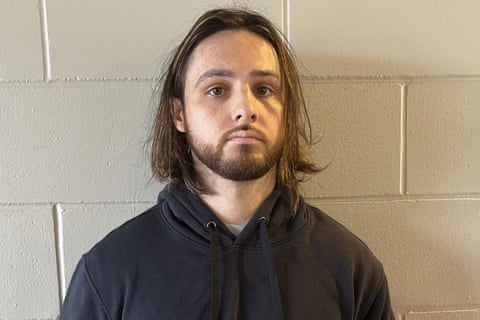
Jonathan Rinderknecht, a suspect in the Palisades fire. Photograph: AP

.

.

Click the link below for the complete article:

https://www.theguardian.com/us-news/2025/oct/08/palisades-fire-florida-arrest

.

__________________________________________

Alone During a Heart Attack? Here’s How to Survive Until Help Arrives

Leave a comment

Click the link below the picture

.

A heart attack happens when there is a buildup of cholesterol and fat, which leads to the formation of plaque in your arteries that provide blood flow to the heart. The plaque formation not only disrupts the blood flow but also damages the heart muscle. Doctors say that most heart attacks happen when people are alone, which makes them dangerous and life-threatening.

Hence, it is important to know what to do when the symptoms of a heart attack come on to save your life.

Experts say it is important to be prepared through proper awareness to save your life. It is also important to recognize the symptoms that could signal a possible heart attack.

  • Acute or heavy pain in the chest
  • Pain continuing in the arms, especially the left arm, neck, jaws, and back
  • Difficulty in breathing
  • Intense fatigue
  • Nausea and Vomiting
  • Excessive sweat

Doctors advise never to take these symptoms lightly, especially when you are living alone. Also, women may experience different symptoms, like sharp pain in their neck, arm, or back. In some cases, the first sign of a heart attack can also be sudden cardiac arrest – a medical condition where the heart stops beating unexpectedly and can be dangerous if the treatment is delayed.

Sometimes, heart attacks do not happen suddenly. Many people have warning signs hours, days, or even weeks before. Persistent chest pain or pressure that does not go away with rest could be an early warning sign of a heart attack.

What should you do in case of a heart attack?

Being alone during a medical emergency like a heart attack can be a scary experience, and so it is important to make the right moves to survive till help arrives. While you may not be able to stop a heart attack alone, prompt medical help can prevent further severe damage. Here is a list of steps to follow on how to survive a heart attack when alone:

Call emergency services immediately

Immediately dial 108 or the local emergency number. Inform the operator of the condition and follow their instructions.

Take an aspirin

Take a tablet, chew and swallow it as soon as you begin feeling symptoms of a heart attack. Doctors say the medicines thin your blood, which alleviates the severity of a heart attack.

Take rest

You must immediately sit down in a comfortable position and, if feeling lightheaded or dizzy, lie on the left side of your body with legs bent. According to experts, this position helps improve blood flow to the heart

Call someone

Until the ambulance or doctor arrives, immediately call a friend, family member, or neighbour who can provide comfort and assistance

Stay calm

Experts suggest taking long and steady breaths to help stay calm. Do not panic and remember that help is on its way.

Do not eat or drink anything.

Do not attempt to eat or drink anything, as this might complicate the situation.

.

https://img-s-msn-com.akamaized.net/tenant/amp/entityid/AA1O3cRo.img?w=768&h=432&m=6&x=565&y=131&s=104&d=104Alone during a heart attack? Here’s how to survive until help arrives

.

.

Click the link below for the complete article:

https://www.msn.com/en-ca/health/other/alone-during-a-heart-attack-here-s-how-to-survive-until-help-arrives/ar-AA1O3hXm?ocid=hpmsn&cvid=68e6fa97fff8435fbf280d5cef5c9a9d&ei=27

.

__________________________________________

Live Updates: Israel and Hamas Reach Deal on Hostage and Prisoner Exchange

Leave a comment

Click the link below the picture

.

7 hours ago

David E. SangerEphrat Livni and Aaron Boxerman

Here’s the latest.

After months of deadlock, Israel and Hamas have reached an agreement for the release of Israeli hostages in exchange for Palestinian prisoners, a long-awaited breakthrough that could point toward an end to the two-year war in Gaza.

President Trump, who helped broker the deal, announced on social media Wednesday that both sides had agreed to the first phase of his plan, including that Israel would pull back their troops to an agreed upon line. Qatar, one of the countries helping negotiate, and Hamas also indicated in statements that the deal would allow for the entry of aid into Gaza.

Isabel Kershner

7 hours ago

Isabel Kershner

Netanyahu described the agreement as “a critical turning point,” as well as “a diplomatic success and a national and moral victory” for Israel, in a new statement. He also thanked President Trump for “his unwavering commitment to the safety of Israel and the freedom of our hostages.”

Isabel Kershner

7 hours ago

Isabel Kershner

Prime Minister Benjamin Netanyahu of Israel has spoken with President Trump and thanked him for his efforts and his “world leadership,” according to a statement from Netanyahu’s office. “The two held a very emotional and warm conversation and congratulated each other on the historic achievement,” the statement said. Netanyahu has invited the U.S. president to address the Israeli Parliament, the statement added.

Yara Bayoumy

7 hours ago

Yara Bayoumy

The hostage release is expected as soon as this weekend and preparations are already underway, an official familiar with details of the deal said.

Pranav Baskar

8 hours ago

Pranav Baskar

The Hostages and Missing Families Forum said in statement pos

ted to X on Wednesday the agreement had provoked “a mix of excitement, anticipation, and concern” among its members. The group expressed “profound gratitude” to President Trump, and called on the Israeli government to “convene immediately” to approve the agreement. “Any delay could exact a heavy toll on the hostages and soldiers,” the group wrote.

Isabel Kershner

8 hours ago

Isabel Kershner

It is nearly 3 a.m. in Israel and all the main television channels here are broadcasting live, though they usually shut down for the night around midnight. Tearful relatives of hostages and former hostages were posting emotional and joyful videos on social media. “That’s it, it’s over!” Meirav Gilboa-Dalal, the mother of hostage Guy Gilboa Dallal, 24, told Channel 12 News as family members cheered in the background.

Farnaz Fassihi

8 hours ago

Farnaz Fassihi

Iran had said earlier this week in a statement from its foreign ministry that it would support any decision made by Palestinians and their “resistance groups” as they negotiated with Israel on a Trump cease-fire plan. Iran has for years armed and funded Hamas as part of a regional policy that boosted regional militant groups known as the “axis of resistance’ to fight Israel. In the past two years, Israel has decimated groups like Hezbollah in Lebanon. Now if a cease-fire holds in Gaza, and Hamas disarms or retreats, it would deliver yet another blow to Iran’s regional strategy.


.

https://static01.nyt.com/images/2025/10/08/multimedia/08israel-hamas-ceasefire-header2/08israel-hamas-ceasefire-hp-promo1-pctg-superJumbo.jpg?quality=75&auto=webpKatya Emelianova kneels beside a portrait of a loved one at a memorial to victims, soldiers, and hostages in Tel Aviv, Israel, Tuesday.Credit…David Guttenfelder/The New York Times

.

.

Click the link below for the complete article:

https://www.nytimes.com/live/2025/10/08/world/israel-hamas-gaza-ceasefire

.

__________________________________________

A Composer’s ‘Brain’ Makes Music Years after His Death

Leave a comment

Click the link below the picture

.

Rachel Feltman: For Scientific American’s Science Quickly, I’m Rachel Feltman.

Plenty of us would find it difficult to compose a new piece of music under any circumstances, even in the prime of our lives. But experimental composer Alvin Lucier is making music from beyond the grave—at least in a manner of speaking.

In a museum in Australia, a recent exhibition allowed visitors to hear sounds generated by neurons grown using the late artist’s blood. The exhibit raised questions about both consciousness and creativity and teased at what becomes possible when art meets cutting-edge neuroscience.

Here to tell us more about this musically prolific petri dish is Scientific American associate editor Allison Parshall.

Allison, so great to have you back with us.

Allison Parshall: Thank you for having me.

Feltman: So what are we gonna talk about today?

Parshall: Today, we’re going to talk about some experimental music. What do you know about experimental music? What do you think of when you think about it?

Feltman: I definitely think of John Cage first. I’m probably—I, I wouldn’t say I’m an experimental-music fan, but between having a sister who’s an opera singer and having done a little bit of modern dance in college with a teacher who loved Merce Cunningham, I guess [laughs] I probably know a little bit more than average. But yeah, I feel like John Cage is, like, the guy.

Parshall: Tell me a little bit about what you think about with John Cage.

Feltman: I mean, it’s hard not to think of 4’33” first, his piece that is simply the ambient silence of a room with an orchestra in it not playing.

Parshall: Peak experimental.

Feltman: Yeah, peak experimental. And also I feel like there’s been some great discourse and argument over, like, what constitutes a valid performance of 4’33” [laughs] and, like, what pollutes it. The sound of somebody texting—is that an okay thing to have [laughs] in a performance of 4’33”? That’s what comes to mind, for sure.

Parshall: So, like, the most experimental you can get: There is no music, or is that music …

Feltman: Right, yeah.

Parshall: Even if there is nothing? Yeah, I definitely think about 4’33”, also, the most, and he premiered that in 1952. And it was around that era that some experimental musicians were starting to probe into, like, the very nature of sound itself and what counts as music. And there was this one composer—not John Cage—whose work was so methodical it was almost scientific. He actually used his brain to make music back in the 1960s, and I have been utterly fascinated by this story for the past few months, so I’m very excited to get to tell you about it.

Feltman: I’m excited to hear about it.

Parshall: So let me set the scene for you: In Perth, Australia, there’s an art museum with a haunting musical exhibit. You start at the mouth of this dark, narrow hallway. It curves in front of you, getting wider as it goes, like the cochlea structure in your inner ear. The hallway is lined with these square-shaped brass plates that periodically vibrate with sound. The sound is a little bit different in every place that you stand in the room because the sound waves are coming from the plates and interacting with each other differently throughout the space.

No moment is the same as the last, and sitting at the center of the room is a brass plinth under a spotlight. At the top of the plinth, there’s a clear window, and you walk over, and you look down, and you see a small dish with a blob that’s just a few millimeters across.

These are brain cells, and they come from the legendary experimental composer Alvin Lucier. He’s dead; he passed away in 2021. But you’re surrounded by music that originates from this little organlike structure. It’s called an organoid.

The process of making this started with Alvin’s own blood cells, which were transformed into stem cells, which were then turned into neuronal cells like those in the brain. Those brain cells fire, sending electrical impulses that cause hammers behind each of the brass plates to strike. Microphones then pick up that sound—and any sound that you might be making while you’re in the exhibit—and feed that information as electrical signals back into Alvin’s brain organoid.

This exhibit is called Revivification for what it attempts to do: revivify Alvin—or at least some part of him.

Feltman: Wow, that’s very weird and kind of spooky, and I feel like probably has led to a lot of debate over how it fits into his portfolio as an experimental composer. I guess the first piece of information to know to get into that debate is: Did he know this was gonna happen? Did he plan for this? Did he …

Parshall: Yeah.

Feltman: Compose the situation?

Parshall: He was super aware that this was happening. In fact, it was his idea, or at least in part his idea, according to his collaborators on the project.

So I spoke with the other artists and the neuroscientists who were involved in the exhibit, as well as one of Alvin’s former colleagues. I also spoke with his daughter, Amanda Lucier; she’s a photojournalist based in Portland. And here’s what she had to say on the subject.

Amanda Lucier: There was something about the way that he was that made him think and made you think that he was never gonna die. That makes me smile, thinking about how he pulled off continuing to work and continuing to be a part of the world of experimental music quite literally after his death. I mean, if anyone was gonna pull off immortality, it was him.

Parshall: The story of Revivification, in many ways, actually starts a whole century ago with the invention of the EEG, or the electroencephalogram.

Feltman: I had one of those once. It was kind of anticlimactic because the process of preparing for it is so dramatic: you get the cap with all the electrodes, and they, like, use this weird paste to stick it to your head. Then the actual test is just you kind of sitting there existing while a computer does something that you can’t see—though I do remember that the goop does stay in your hair, so that’s a fun thing that happens [laughs].

Parshall: I imagine that’s no fun to wash out, but I’ve never had one before. But they seem kind of cool, if you said anticlimactic.

An EEG, what it does is measures the electrical activity from the brain from outside the skull, and it’s using, like you mentioned, those electrodes that are placed all over the head. And what it’s so good at is capturing real-time information from the brain. So it can capture waves of activity as networks of neurons fire in concert with one another. Those waves of activity, they travel at different speeds. So gamma waves are the fastest. They happen when you’re really focused or thinking about something. Delta are the slowest, and those happen when you’re in, like, a dreamless sleep. And alpha waves, they happen when you’re in a relaxed but awake state, like during meditation.

So when EEG was first invented, roughly a hundred years ago, it allowed for the very first recordings of the live human brain, like, living brain activity. And so, of course, neuroscientists were all over it as a tool for unpacking what is actually going on in the brain as we do different activities. Before, they just kinda had to wait for you to die, and then look what it looked like.

In the 1960s, it caught the attention of Alvin, who was then a composer on the faculty at Brandeis University. He was feeling uninspired in his work at the time, but he was totally taken by this technology.

Alpha brain waves are too low in frequency to be heard by the human ear. We can hear down to, like, 20 hertz, or 20 waves per second. And these waves, alpha brain waves, are generally, like, 10 hertz. But Alvin’s colleagues wanted him to record the waves and then manipulate them into something that humans could hear and then use that audio to create a composition. But he was not interested in that at all. What he wanted to do was far more interesting and experimental.

Parshall: He developed a piece called “Music for Solo Performer.” Alvin would sit in a chair with EEG electrodes on, in front of an audience, and try to meditate. If he was successful, the low-frequency alpha brain waves would be picked up by the electrodes, amplified and then played through speakers that are positioned throughout the room. The waves would still be inaudible, but directly in front of the speakers would be percussion instruments—such as gongs and cymbals, bass drums, timpanis—and the sound waves would cause them to vibrate along with the speakers, producing audible noise that the audience could hear.

There was something really scientific about the way that Alvin approached composition. Here’s Susan Leigh Foster. She’s a close colleague and friend of Alvin and his family. A dance professor for years, she taught with Alvin at Wesleyan University, where he spent most of his career.

Susan Leigh Foster: This would be maybe the most important thing I could say about Alvin [laughs]: he liked setting up conditions, or forces, that would then produce sound. In that way, he really bears a lot of similarity to the way that scientific work is done. Like, you have a hypothesis. You set up the experiment. You conduct the experiment.

You know, what if you take a sound and send it down a long wire and then amplify that and then watch as it changes over the hours as the room temperature keeps changing and as people come into the room and as air currents change, or what if you bury speakers underground, which is a project he did at Dartmouth.

Parshall: Alvin was always listening and observing. Here’s his daughter again.

Lucier: I remember being mortified as a middle-school student going into a Pier 1 Imports with some friends, and there was a vacuum going, and he would match the tone of the vacuum to see if he could create beading patterns. So he’d be in the corner there, going, like: [hums note]. And now, in retrospect, I think, “Oh, wow, that was really cool for me to have that experience.” And at the time, I was like, “Oh, my God, Dad, even in the Pier 1 Imports.” [Laughs.]

Parshall: Over the course of his career, Alvin became a well-known and respected experimental composer. Guy Ben-Ary, one of the artists responsible for Revivification, admired him greatly.

Guy Ben-Ary: I mean, Alvin was one of the greatest composers of the 20th century. He was not part of kind of popular culture and not part of the group of classical composers that, you know, [were] very famous. They say that he was the composer’s composer.

Parshall: When Guy first encountered Alvin’s work in the late 2000s, it inspired him to bring sound into his artwork. So then he embarked on creating what he called a sort of unconventional, quote, “self-portrait.”

.

https://static.scientificamerican.com/dam/m/62f6d95d708bc7d4/original/2509_SQ_FRI_BRAIN_MUSIC-1-1.jpeg?m=1758895018.361&w=900Jack Mitchell/Getty Images; Illustration by Scientific American

.

.

Click the link below for the complete article (sound on for Podcast):

https://www.scientificamerican.com/podcast/episode/neuroscience-and-art-collide-in-a-posthumous-composition-by-alvin-lucier-in/?_gl=1*114pifr*_up*MQ..*_ga*MjAxNDU1MDc4OS4xNzU5OTEyNzM1*_ga_0P6ZGEWQVE*czE3NTk5MTI3MzQkbzEkZzAkdDE3NTk5MTI3MzQkajYwJGwwJGgw

.

__________________________________________

4 Reasons This Government Shutdown Is Different

Leave a comment

Click the link below the picture

.

The House hasn’t been seen in weeks. The Senate is at a standstill. Bipartisan negotiations are nonexistent. And the White House seems more interested in making punitive threats against its own federal workforce than in trying to get them back to work.

This is the bleak state of Republican-controlled government under President Donald Trump on the eighth day of a government shutdown that has disrupted federal services, left thousands of federal employees on furlough, and caused ground stops at some airports due to shortages of air traffic controllers. The deepening impasse has many lawmakers in a pessimistic mood, raising fears of a protracted and painful battle that could go on for several more weeks.

“The first couple of days I was pretty sanguine about prospects of coming out of it, but it’s just gotten worse and worse and worse, and I think we’re going to be dug in for a while,” Sen. John Kennedy (R-La.) told HuffPost when asked about the state of play on Capitol Hill.

What makes this standoff over spending different from previous shutdowns — in 2019, 2018, and 2013 — is how dug in both parties are to their respective positions, how little urgency there is to reach a compromise, and how angry Democrats are about Trump’s abuse of executive powers to rescind or withhold money approved by Congress.

Democrats Are Fed Up

In March, Senate Minority Leader Chuck Schumer (D-N.Y.) faced widespread intraparty backlash after he helped pass a Republican spending bill to avert a shutdown. Since then, the Trump administration has frozen billions of dollars in federal funding, shuttered several executive agencies, deployed military troops to major U.S. cities, weaponized the Justice Department against his critics, bullied law firms and universities, and launched a widespread national crackdown on undocumented immigrants.

Democrats are now demanding that, at the least, the Trump administration agree to stop freezing or rescinding more federal funds if they vote for a bill reopening the government. What reason, Democratic lawmakers ask, do they have to support a spending bill that in effect supports Trump’s lawlessness and puts no guardrails on the executive branch?

Moreover, Democrats want to address enhanced Affordable Care Act health insurance subsidies that are due to expire at the end of the year. If Congress doesn’t act, and soon, premiums will more than double on average for over 20 million people enrolled in the health care program. Four million people are estimated to lose their insurance entirely.

A recent poll found three-quarters of the public, including a majority of Trump’s MAGA supporters, say they want Congress to extend the subsidies, stiffening Democrats’ resolve this time around.

“We need to get serious about fixing the problems here at home, starting with health care,” Schumer said in a Senate floor speech on Tuesday. “And Democrats’ position has not changed: We want the same thing that a majority, an overwhelming majority, of Americans want, which is to end this shutdown and halt the health care crisis that will send premiums spiking for tens of millions of people.”

Republicans maintain there’s nothing to negotiate until Senate Democrats vote to reopen the government, accusing them of holding hostage government funding over unrelated policy demands — a tactic the GOP also employed in previous shutdown fights. They maintain that they are willing to discuss the enhanced ACA subsidies, which Democrats passed during the pandemic, but the issue has sharply divided GOP lawmakers in both the House and Senate, and it is unclear whether they’d be willing to take it up or pass a fix by the end of the year.

“The Democrats want to have a conversation about the COVID tax credit cliff that they created, and at some point we’re happy to have that conversation, but not until the government opens up,” Senate Majority Leader John Thune (R-S.D.) told reporters on Tuesday.

Negotiations? What Negotiations?

During previous shutdowns, the president of the United States — including Trump himself — hosted congressional leaders multiple times at the White House to discuss a way to reopen the government. Bipartisan Senate groups took matters into their own hands to help move things along, holding private talks that eventually yielded a compromise.

This time around, Trump convened one meeting with all four congressional leaders at the White House, but he didn’t do so until the eve of the funding deadline of Sept. 30. It went nowhere.

n the Senate, meanwhile, there’s been no formation of a group or committee tasked with coming up with a deal. Rank-and-file members have instead held informal discussions on the floor that have made little progress. The House isn’t even in session at all and isn’t expected to return until Tuesday — three weeks after it last held votes.

“There is, you know, conglomerations of different people and groups, but it’s been very informal,” said Sen. Richard Blumenthal (D-Conn.). “The basic dichotomy here is [Speaker Mike] Johnson and Trump and [Senate GOP leader John] Thune won’t give us a vote before the shutdown is ended. It’s hard to negotiate when Johnson isn’t even having his members come back before Oct. 14.”

“They simply will not talk, which seems different from past years,” he added. “We want to sit down with Trump. We want to sit down with Johnson. They’re basically saying, vote for the bill, and then we’ll talk.”

A big reason lawmakers have struggled to reach a deal is the deep lack of trust in Washington in recent years. The Trump administration has repeatedly ripped up prior bipartisan spending agreements, controversial moves that have poisoned the well with Democrats and made it harder for them to accept a short-term funding bill, as even some Republicans have acknowledged.

“There has to be enough trust that a deal can be made,” Sen. Bill Cassidy (R-La.) told HuffPost.

He then pondered, hopefully: “Is there some condition that can be achieved, that you can have a trustless society in the sense where we can still go forward, but not necessarily trust each other?”

‘Intimidation Tactics’

In an effort to cow Democrats into submission, the White House Office of Management and Budget has threatened several punitive measures against its own government, including enacting mass firings of furloughed employees and suggesting that those on furlough won’t necessarily get paid back when the government eventually reopens.

This isn’t what happened under Trump’s first presidency after the government shut down in 2019, the longest shutdown in history, when he demanded Democrats agree to fund construction of his border wall. Trump actually signed a bill into law codifying what had been a bipartisan tradition of authorizing back pay for furloughed federal workers after government shutdowns.

But the White House threats backfired on Capitol Hill as Democrats vowed to stand firm in their demands, and even some Republican lawmakers voiced their disagreement.

“These intimidation tactics are making it clear that they are not acting in any good faith,” Sen. Chris Murphy (D-Conn.) said. “So for people who think you’re going to cut a deal with these guys and they’re going to live up to the deal, they’re showing you every single day that they’re only interested in dirty politics.”

Sen. Jeanne Shaheen (D-N.H.), a retiring moderate Democrat who has been involved in bipartisan discussions about a deal to reopen the government and address the expiring health care insurance subsidies, was even more blunt about OMB Director Russ Vought.

“It would be a lot easier to resolve the situation if Russ Vought would stop talking,” she told HuffPost.

It wasn’t just Democrats crying foul, either. Sen. Thom Tillis (R-N.C.) called the threats from the White House “bad strategy.”

“I think that if you’re talking about my staff and other staff, that’s probably not a good message to send right now to people who are not being paid,” Tillis told reporters. “I’m not an attorney, but I think it’s bad strategy to even say that sort of stuff.”

Trump’s Muddled Messaging

Prior government shutdowns garnered much more national attention than the current standoff. Part of this is because shutdowns and drama over government funding used to be rare in Washington. Nowadays, the institution is consumed with political gridlock, and it seems like the lawmakers are constantly dealing with threats of shutdown. Often, the most they can do is kick the can down the road by passing a “continuing resolution” to keep funding going at current spending levels.

n the last few weeks, however, Trump has been anything but focused on the government funding fight playing out in Washington. He’s been far more busy drawing all sorts of headlines on other fronts, including making attacks against late night TV show hosts and other nations at the United Nations General Assembly, announcing new domestic policies, launching strikes against suspected Venezuelan drug cartels, sending National Guard troops into Illinois and Oregon despite opposition from those states’ governors, and calling for Chicago’s mayor and the governor of Illinois to be jailed. On Wednesday, he’s set to hold a roundtable on antifa, a loose movement opposed to fascism.When he has addressed the situation on Capitol Hill, he has often contradicted GOP leadership, undercutting their positions by saying he is open and willing to speak to Democrats and that he’d like to pay furloughed federal workers.

Polls show most Americans don’t expect to be personally affected by the shutdown. Only 11% said they expected to be personally affected, according to a YouGov survey conducted last week. That could change as the pain of a government shutdown becomes more acute and more people are affected by airport staffing shortages. Federal workers will also begin missing paychecks on Oct. 10, and military families on Oct. 15. During the 2019 shutdown, the Pentagon was one of the few departments that was funded, which is one of the reasons it lasted so long.

“It’s a factor,” Sen. Tim Kaine (D-Va.) said of the coming soft deadlines. “I mean, we don’t like any of this. We just want them to fix the problem that they made, that’s going to cause Virginians to have to pay so much more for health care or lose health insurance. So that’s what we’re focused on.”

.

https://img.huffingtonpost.com/asset/68e65cac1800000c625d1a13.jpeg?ops=scalefit_720_noupscale&format=webp

Senate Minority Leader Chuck Schumer attends a news conference following a weekly Democratic policy luncheon Tuesday on Capitol Hill.  Andrew Harnik via Getty Images

.

.

Click the link below for the complete article:

https://www.huffpost.com/entry/government-shutdown-trump-chuck-schumer_n_68e65a73e4b0d98d3e52f5e4

.

__________________________________________

Joan Kennedy, Who Married Into a Dynasty, Dies at 89

Leave a comment

Click the link below the picture

.

Joan Kennedy, who married into one of America’s foremost political dynasties and spent much of her life wrestling with alcoholism while caught up in the tragedies and tempests that plagued the Kennedy family, died on Wednesday at her home in Boston. She was 89.

Her death was confirmed by Steve Kerrigan, the chairman of the Massachusetts Democratic Party. He did not cite a cause, saying only that she had died in her sleep.

The former wife of Senator Edward M. Kennedy, known as Ted, Ms. Kennedy was shy and reserved compared with her competitive, athletic, and often boisterous in-laws. Ill-prepared for life in the reflected glare of Kennedy klieg lights, and haunted by her own family history of alcoholism, she found herself caught up in high-stakes politics, a faithless marriage, and an on-again, off-again struggle with her own drinking.

For stretches at a time, however, she registered numerous triumphs. An accomplished pianist, she gave a recital with the Philadelphia Orchestra in 1970 that won standing ovations and stellar reviews. Under the baton of Arthur Fiedler, she narrated stories, like Prokofiev’s “Peter and the Wolf,” accompanied by the Boston Pops. She published a book, “The Joy of Classical Music: A Guide for You and Your Family” (1992), edited by her sister-in-law, Jacqueline Kennedy Onassis. And she devoted her later years to raising money for nonprofit organizations and charities in Boston.

But she was never interested in politics, the Kennedy family business. Her introduction to it came when her husband campaigned for and won a special election to the Senate in 1962, when he was just 30 and she was 27. By then, his brother John was president, and his brother Robert was attorney general.

Within a few years, though, with the assassinations of John and Robert, pressure built on Senator Kennedy to take up their mantle despite his family’s concern for his safety. He became less discreet about his infidelities and excessive drinking, and Joan, too, turned increasingly to alcohol.

She stood by her husband through considerable drama, most notably in 1969, when he drove off a one-lane bridge on Chappaquiddick Island, in Massachusetts, in an accident that killed his passenger, Mary Jo Kopechne, a 28-year-old former secretary to Robert F. Kennedy when he was a senator from New York.

Ms. Kennedy, who was pregnant at the time, had already endured two miscarriages and was on strict bed rest. With the Chappaquiddick drama threatening her husband’s political future, she accompanied him to Ms. Kopechne’s funeral and to court, where he pleaded guilty to leaving the scene of an accident.

Shortly afterward, she miscarried again. By then, she said, she had begun drinking heavily as the family rallied around Senator Kennedy.

“For a few months, everyone had to put on this show, and then I just didn’t care anymore,” Ms. Kennedy told Laurence Leamer, the author of “The Kennedy Women” (1994). “That’s when I truly became an alcoholic.”

Her drinking eventually became public, with repeated arrests on charges of drunken driving, starting in 1974, and orders to enter rehabilitation programs.

She and Mr. Kennedy had effectively separated before he ran for president unsuccessfully in 1980, but they kept up a united front during his campaign for the Democratic nomination; after he dropped out, the marriage officially dissolved.

Virginia Joan Bennett was born on Sept. 2, 1936, in New York City. She and her younger sister, Candace, were raised in upper-middle-class suburban Bronxville, N.Y., by their mother, Virginia Joan (Stead) Bennett, an amateur seamstress who made most of their clothes, and their father, Harry Wiggin Bennett Jr., an advertising executive whose ancestors had arrived in Massachusetts in the 1600s.

Joan was studious and loved playing the piano. While a student at Manhattanville College of the Sacred Heart (now Manhattanville University) in Purchase, N.Y., where she majored in English and minored in music, she worked part-time as a model and competed in beauty contests. She appeared in television commercials for Maxwell House coffee and in print ads for beauty products. She was also the Revlon Hairspray girl, appearing live on the game show “The $64,000 Question.”

She made her debut in New York society twice, first at the fifth annual Gotham Ball, then at the 19th Debutante Cotillion and Christmas Ball.

.

https://static01.nyt.com/images/2025/10/09/multimedia/00kennedy_joan-pzgh-print1/00kennedy_joan-pzgh-superJumbo.jpg?quality=75&auto=webpJoan Kennedy, with her husband at the time, Edward M. Kennedy, in Boston in 1979, when he announced his campaign for the 1980 Democratic presidential nomination. Their children, Kara Ann and Patrick, joined them for the event.  Credit…George Tames/The New York Times

.

.

Click the link below for the complete article:

https://www.nytimes.com/2025/10/08/us/joan-kennedy-dead.html?smid=nytcore-android-share

.

__________________________________________

Older Entries Newer Entries

Amor Entre Estrellas

¡Bienvenido de vuelta viajero!

Heart of Loia `'.,°~

so looking to the sky ¡ will sing and from my heart to YOU ¡ bring...

Michael Ciullo

CEO and Founder of Nsight Health

MRS. T’S CORNER

https://www.tangietwoods

Nelson MCBS

Catholic News, Prayers, HD Images, Rosary, Music, Videos, Holy Mass, Homily, Saints, Lyrics, Novenas, Retreats, Talks, Devotionals and Many More

Global geopolitics

Decoding Power. Defying Narratives.

Talk Photo

A creative collaboration introducing the art of nature and nature's art.

Movie Burner Entertainment

The Home Of Entertainment News, Reviews and Reactions

Le Notti di Agarthi

Hollow Earth Society

C r i s t i a n a' s Fine Arts ⛄️

•Whenever you are confronted with an opponent, conquer him with love.(Gandhi)

TradingClubsMan

Algotrader at TRADING-CLUBS.COM

Comedy FESTIVAL

Film and Writing Festival for Comedy. Showcasing best of comedy short films at the FEEDBACK Film Festival. Plus, showcasing best of comedy novels, short stories, poems, screenplays (TV, short, feature) at the festival performed by professional actors.

Bonnywood Manor

Peace. Tranquility. Insanity.

Warum ich Rad fahre

Take a ride on the wild side

Madame-Radio

Découvre des musiques prometteuses (principalement) dans la sphère musicale française.

Ir de Compras Online

No tiene que Ser una Pesadilla.

Kana's Chronicles

Life in Kana-text (er... CONtext)

Cross-Border Currents

Tracking money, power, and meaning across borders.

Jam Writes

Where feelings meet metaphors and make questionable choices.

emotionalpeace

Finding hope and peace through writing, art, photography, and faith in Jesus.

WearingTwoGowns.COM

The Community for Wounded Healers: Former Medical Students, Disabled Nurses, and Faith-Fueled Pivots

...

love each other like you're the lyric to their music

Luca nel laboratorio di Dexter

Comprendere il mondo per cambiarlo.

Tales from a Mid-Lifer

Mid-Life Ponderings

Creative

Travel,Tourism, Life style "Now in hundreds of languages for you."

freedomdailywriting

I speak the honest truth. I share my honest opinions. I share my thoughts. A platform to grow and get surprised.

The Green Stars Project

User-generated ratings for ethical consumerism

Cherryl's Blog

Travel and Lifestyle Blog

Sogni e poesie di una donna qualunque

Questo è un piccolo angolo di poesie, canzoni, immagini, video che raccontano le nostre emozioni

My Awesome Blog

“Log your journey to success.” “Where goals turn into progress.”

pierobarbato.com

scrivo per dare forma ai silenzi e anima alle storie che il mondo dimentica.

Thinkbigwithbukonla

“Dream deeper. Believe bolder. Live transformed.”

Vichar Darshanam

Vichar, Motivation, Kadwi Baat ( विचार दर्शनम्)

Komfort bad heizung

Traum zur Realität

Chic Bites and Flights

Savor. Style. See the world.

ومضات في تطوير الذات

معا نحو النجاح

Broker True Ratings

Best Forex Broker Ratings & Reviews

Blog by ThE NoThInG DrOnEs

art, writing and music by James McFarlane and other musicians

fauxcroft

living life in conscious reality

Srikanth’s poetry

Freelance poetry writing

JupiterPlanet

Peace 🕊️ | Spiritual 🌠 | 📚 Non-fiction | Motivation🔥 | Self-Love💕