A flashy fireball streaked across the skies above the Midwest on Tuesday, falling to Earth near Lake Erie and Ohio at around 9:00 AM EDT. Some reported hearing a boom loud enough to shake their houses.
The object appears to have been a seven-ton asteroid that spanned nearly six feet in diameter, according to NASA. When it fell, it was traveling at around 40,000 miles per hour in a southeasterly direction before “fragmenting”—blowing up—over Valley City in Ohio. The explosion had the equivalent force of 250 tons of TNT, the agency said, and “may have also shook houses north of Medina.”
The blast sent a wave of pressure toward the ground, which would have been heard by local residents. Some fragments of the meteor fell as meteorites near Medina, NASA said, but it’s unclear if there was any damage as a result of the fireball.
“What occurred this morning was a daylight fireball at least several feet across,” says Robert Lunsford, who helps coordinate fireball reports at the American Meteor Society. “This is large enough to survive down to the lower atmosphere, where the air molecules are dense enough to carry sound. Therefore, people under the path of this fireball heard a delayed sonic boom produced by this fireball.”
Early on, the object didn’t have the characteristics of a piece of space junk—another possible falling space object—astrophysicist Jonathan McDowell noted ahead of NASA’s identification. “Space debris usually has slowed to below supersonic by the time it gets low enough that it would make an audible boom,” McDowell says.
It’s also a mystery where the asteroid came from. Earth is bombarded by falling space dust and rocks all the time, but only some of these are large enough to make it close enough to the ground to be visible in the daytime without first burning up in our atmosphere. If any part of a meteor survives the journey to land on the ground, it becomes a meteorite.
“We receive several reports of daylight fireballs per month from all over the world,” Lunsford says. “If they are large and bright enough, they can be seen against the blue daytime sky. So it’s rare for an individual to see one of these but fairly common over the entire planet. Still, they make up far less than one percent of the total number of fireballs reported to us.”
.
This image, taken with a meteorite tracking device developed by amateur astronomer George Varros, shows a meteorite as it enters Earth’s atmosphere during the Leonid meteor shower on November 19, 2002. Photo by George Varros and Dr. Peter Jenniskens/NASA/Getty Images
Tehran has said it will “irreversibly destroy” essential infrastructure across the Middle East, including vital water systems, if the US follows through on Donald Trump’s threat to “obliterate” Iran’s power plants unless the strait of Hormuz is fully opened within two days.
As Iranian missiles struck two southern Israeli cities overnight, injuring dozens of people, and Tehran deployed long-range missiles for the first time, the developments signalled a dangerous potential escalation of the war, now in its fourth week, with both sides threatening facilities relied on by millions of people.
Iran war timeline: civilians bear brunt of US and Israel’s weeks-long campaign
Read more
The speaker of the Iranian parliament, Mohammad Bagher Ghalibaf, said on Sunday that vital infrastructure in the region – including energy and desalination facilities – would be considered a legitimate target and would be “irreversibly destroyed” if his country’s own infrastructure was attacked.
Amnesty International said this month there was a substantial risk that attacks on systems providing essential services such as electricity, heating, and running water would violate international law and “in some cases could amount to war crimes” because of the potential for “vast, predictable, and devastating civilian harm”.
The Iranian military’s operational command headquarters, Khatam al-Anbiya, said Iran would strike “all energy, information technology and desalination infrastructure” belonging to the US and Israel in the region.
The statement also said that if Trump’s threat was carried out, the strait of Hormuz would be “completely closed, and will not be reopened until our destroyed power plants are rebuilt”.
Iran’s president, Masoud Pezeshkian, said “threats and terror” were “only strengthening Iranian unity”, while the “illusion of erasing Iran from the map” showed “desperation against the will of a history-making nation”.
The US president said on Saturday that he was giving Iran 48 hours – until shortly before midnight GMT on Monday – to open the Strait of Hormuz, a vital pathway for the world’s oil flows, or the US would “hit and obliterate” Iranian power plants, starting with the biggest one first”.
The US ambassador to the UN, Mike Waltz, defended Trump’s threat on Sunday, insisting that Iran’s Islamic Revolutionary Guard Corps (IRGC) controlled much of the country’s infrastructure and used it to power its war effort.
He said Trump would start by destroying one of Iran’s largest power plants, but did not identify it. “There are gas-fired thermal power plants and other type of plants,” and “the president is not messing around”, he said.
A No 10 spokesperson said Keir Starmer spoke to Trump on Sunday evening about the need to reopen the strait of Hormuz.
Iran’s representative to the International Maritime Organisation, Ali Mousavi, said on Sunday that the strait was open to all shipping except vessels linked to “Iran’s enemies”, with passage possible by coordinating security arrangements with Tehran.
Iranian attacks have in effect closed the narrow strait, which carries about a fifth of global oil and liquefied natural gas supplies, causing the world’s worst oil crisis since the 1970s and sending European gas prices surging by as much as 35% last week.
Only a relatively small number of vessels, estimated at about 5% of the prewar volume, from countries that Tehran considers friendly – including China, India, and Pakistan – have been allowed to pass.
.
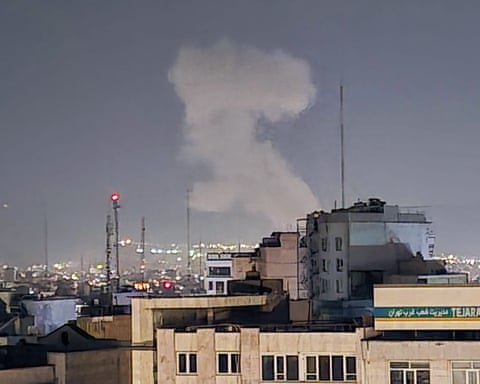
Smoke rises above Tehran after an Israeli airstrike on Sunday evening. Photograph: Anadolu/Getty Images
President Trump’s hopes that an Israeli plan to ignite an internal uprising against Iran’s theocratic government could bring the war to a swift end have so far been dashed.
As the United States and Israel prepared to go to war with Iran, the head of Mossad, Israel’s foreign intelligence service, went to Prime Minister Benjamin Netanyahu with a plan.
Within days of the war’s beginning, said David Barnea, the Mossad chief, his service would likely be able to galvanize the Iranian opposition — igniting riots and other acts of rebellion that could even lead to the collapse of Iran’s government. Mr. Barnea also presented the proposal to senior Trump administration officials during a visit to Washington in mid-January.
Mr. Netanyahu adopted the plan. Despite doubts about its viability among senior American officials and some officials in other Israeli intelligence agencies, both he and President Trump seemed to embrace an optimistic outlook. Killing Iran’s leaders at the outset of the conflict, followed by a series of intelligence operations intended to encourage regime change, they thought, could lead to a mass uprising that might bring about a swift end to the war.
“Take over your government: It will be yours to take,” Mr. Trump told Iranians in his initial address at the war’s start, after saying they should first seek shelter from the bombing.
Three weeks into the war, an Iranian uprising has not yet materialized. American and Israeli intelligence assessments have concluded that the theocratic Iranian government is weakened but intact, and that widespread fear of Iran’s military and police forces has dampened prospects both for nascent rebellion in the country and for ethnic militias outside of Iran to launch cross-border incursions.
The belief that Israel and the United States could help instigate widespread revolt was a foundational flaw in the preparations for a war that has spread across the Middle East. Instead of imploding from within, Iran’s government has dug in and escalated the conflict, striking blows and counterblows against military bases, cities and ships around the Persian Gulf, and against vulnerable oil and gas installations.
This account is based on interviews with more than a dozen current and former American, Israeli and other foreign officials, most of whom spoke on the condition of anonymity to discuss national security and intelligence issues during a war. The New York Times interviewed officials with a variety of views on the likelihood of an uprising.
Since Mr. Trump’s first speech, American officials have largely abandoned speaking publicly about the prospects for revolt inside of Iran, yet some remain hopeful that one could materialize. Though his rhetoric has become more tempered, Mr. Netanyahu still says the American and Israeli air campaign will be aided by forces on the ground.
“You can’t do revolutions from the air,” he said during a news conference on Thursday. He added: “There has to be a ground component as well. There are many possibilities for this ground component, and I take the liberty of not sharing with you all those possibilities.”
Mr. Netanyahu also added that “it is too early to tell if the Iranian people will exploit the conditions we are creating for them to take to the streets. I hope that will be the case. We are working toward that end, but ultimately, it will depend only on them.”
Behind the scenes, however, Mr. Netanyahu has expressed frustration that Mossad’s promises to foment revolt in Iran have not materialized. In one security meeting days after the war began, the prime minister vented that Mr. Trump might decide to end the war any day and that Mossad’s operations had yet to bear fruit.
In the run-up to the war, current and former American and Israeli officials said, Mr. Netanyahu invoked Mossad’s optimism about a possibility of an Iranian uprising to help convince Mr. Trump that bringing about the collapse of the Iranian government was a realistic goal.
Many senior American officials, as well as intelligence analysts at the Israel Defense Forces military intelligence agency, AMAN, viewed the Israeli plan for a mass uprising during the conflict with skepticism. U.S. military leaders told Mr. Trump that Iranians would not come out to protest while the United States and Israel were dropping bombs. Intelligence officials had assessed that the possibility of a mass uprising threatening the theocratic government was low, and doubted that the U.S.-Israeli attack would ignite any kind of civil war.
The White House did not respond to a request for comment. But a senior administration official noted that in Mr. Trump’s initial remarks after the beginning of the war he told Iranians to remain in their homes and urged them to take to the streets only after the air campaign was over.
“When we are finished, take over your government,” Mr. Trump said at the time.
Nate Swanson, a former State Department and White House official who was on the Trump administration’s Iran negotiating team led by Steve Witkoff until July, said he had never seen a “serious plan” to promote an uprising in Iran within the U.S. government in his many years working on Iran policy.
“A lot of protesters are not coming into the street because they’ll get shot,” said Mr. Swanson, now at the Atlantic Council. “They’re going to get slaughtered. That’s one thing. But the second thing is that there’s a good chunk of people who just want a better life, and they’re just sidelined right now. They don’t like the regime, but they don’t want to die opposing it. That 60 percent is going to stay home.”
He added, “You still have fervent anti-regime folks, but they’re not armed, and they’re not bringing the majority of the population into the streets.”
Mr. Trump appeared to have arrived at the same conclusion two weeks into the war. On March 12, he noted that Iran has security forces in the streets “machine-gunning people down if they want to protest.”
“So I really think that’s a big hurdle to climb for people that don’t have weapons,” he said on Fox News Radio. “I think that’s a very big hurdle. So it’ll happen, but it probably will be maybe not immediately.”
The Kurdish Option
While many of the specifics of Mossad’s plans remain secret, one element included supporting an invasion by Iranian Kurdish militia groups based in northern Iraq.
Mossad has longstanding ties with Kurdish groups, and American officials have said that both the C.I.A. and Mossad have given arms and other support to Kurdish forces in recent years. The C.I.A. had existing authorities to support Iranian Kurdish fighters, and had provided arms and advice well before the current war.
During the first days of the war, Israeli jets and bombers pounded Iranian military and police targets in northwest Iran in part to help pave the way for the Kurdish forces.
During a telephone briefing on March 4, an Israeli military spokesman was asked whether Israel was carrying out intense bombings in western Iran to help a Kurdish invasion. The spokesman, Lt. Col. Nadav Shoshani, said, “We’ve been operating very heavily in western Iran to degrade the Iranian regime’s capabilities and to open up the way to Tehran, and to create freedom of operations. That’s been our focus there.”
ut American officials are no longer enthusiastic about their idea from well before the war of using the Kurds as a proxy force, a shift that has created tension with their Israeli counterparts.
A week into the war, on March 7, Mr. Trump said he had explicitly told Kurdish leaders not to send militias into the country. “I don’t want the Kurds going in,” he told reporters. “I don’t want to see the Kurds get hurt, get killed.”
Soon after reports emerged that Kurdish militias might join the campaign, Bafel Talabani, the president of the Patriotic Union of Kurdistan, one of the main Iraqi Kurdish political parties, said in an interview on Fox News that no such plans were in the works. A Kurdish advance, he added, might have the opposite of its intended effect.
“You could argue that that’s actually a detriment,” he said, adding that Iranians are very nationalistic. “I believe if they fear that Kurds coming in from elsewhere will cause a split or a splintering of their country, this may actually unify the people against this separatist movement.”
Turkey has warned the Trump administration not to support any Kurdish action. The message was delivered by the Turkish foreign minister, Hakan Fidan, to Secretary of State Marco Rubio in a recent conversation, a Turkish diplomat said. Turkey, a NATO ally, has long been opposed to any operations by armed Kurds since it is grappling with Kurdish separatists inside its own borders.
The Uprising That Has Yet to Come
American officials briefed on intelligence assessments before the war said the C.I.A. evaluated a variety of possible developments inside Iran once the conflict began. Intelligence agencies considered a full collapse of the Iranian government to be a relatively unlikely outcome.
Other U.S. officials familiar with the intelligence said that even when the government is under pressure, as it was during mass protests in the country in January in which thousands of protesters were killed, it managed to quell uprisings relatively quickly.
The American intelligence assessments have suggested that armed elements of the Iranian government could turn on one another, or take action that might spark a civil war. But those factions are more likely to back rival groups of religious leaders, rather than represent any sort of democratic movement, the reports concluded.
The most likely outcome, however, was that hard-line elements of the existing government would maintain control over the levers of power, the reports said.
A spokeswoman for the C.I.A. declined to comment. The Mossad and the I.D.F. declined to comment
Israeli intelligence agencies have long examined the possibility of instigating revolt inside Iran as its own operation or shortly after the beginning of a military campaign, but until very recently dismissed the prospects.
As Israel’s main service responsible for foreign operations, Mossad was in charge of the planning.
Shahar Koifman, a former head of the Iran desk at the I.D.F.’s Military Intelligence Research Division, said Israel had explored various ideas to try to undermine or topple the Iranian government, but that in his opinion they were doomed to fail from the start. He said he did not believe that bringing down the Iranian government was an achievable goal of the current conflict.
Mr. Barnea’s predecessor at Mossad, Yossi Cohen, decided that trying to foment rebellion inside Iran was a waste of time and ordered that the resources devoted to the matter be reduced to a minimum. During Mr. Cohen’s tenure, which ended in 2021, Mossad calculated how many of the country’s citizens would need to participate in protests for them to truly threaten the Iranian government, comparing the estimates to the size of actual protests since the 1979 Iranian revolution.
“We wondered if we could bridge this gap,” Mr. Cohen said in 2018, “and we came to the conclusion that we couldn’t.”
Instead, Mossad’s strategy during that period was to try to weaken the government until it essentially surrendered to Israeli and American demands — using a combination of crippling economic sanctions and operations to assassinate Iranian nuclear scientists and military leaders and sabotage nuclear facilities.
Over the past year, as the prospect of Israeli military action against Iran became more likely, Mr. Barnea reversed Mossad’s approach, devoting the agency’s resources to plans that could lead to toppling the government in Tehran in the event of a war.
In recent months, according to officials, Mr. Barnea came to believe that Mossad could potentially begin igniting riots around Iran after several days of intense Israeli and American airstrikes and the assassination of senior Iranian leaders.
After the strikes and assassinations of the war’s earliest days, the uprising did not come. But Israeli officials say they have yet to give up hope.
“I think that we need boots on the ground, but they’ve got to be Iranian boots,” Yechiel Leiter, Israel’s ambassador to the United States, said on CNN on Sunday, when asked how the war will end. “And I think they’re coming.”
.
The aftermath of U.S.-Israeli airstrikes in Tehran on Saturday. Three weeks into the war, American and Israeli intelligence assessments have concluded that the theocratic Iranian government is weakened but intact. Credit…Arash Khamooshi for The New York Times
Kendra Pierre-Louis: For Scientific American’s Science Quickly, I’m Kendra Pierre-Louis, in for Rachel Feltman.
In early March, the U.S. Food and Drug Administration sent a warning letter to Novo Nordisk, the maker of Ozempic and Wegovy, saying the company had failed to disclose potential risks associated with taking these drugs. The agency alleged that Novo Nordisk failed to properly report and/or follow up on three deaths of individuals who were taking semaglutide, the key ingredient in Ozempic and Wegovy.
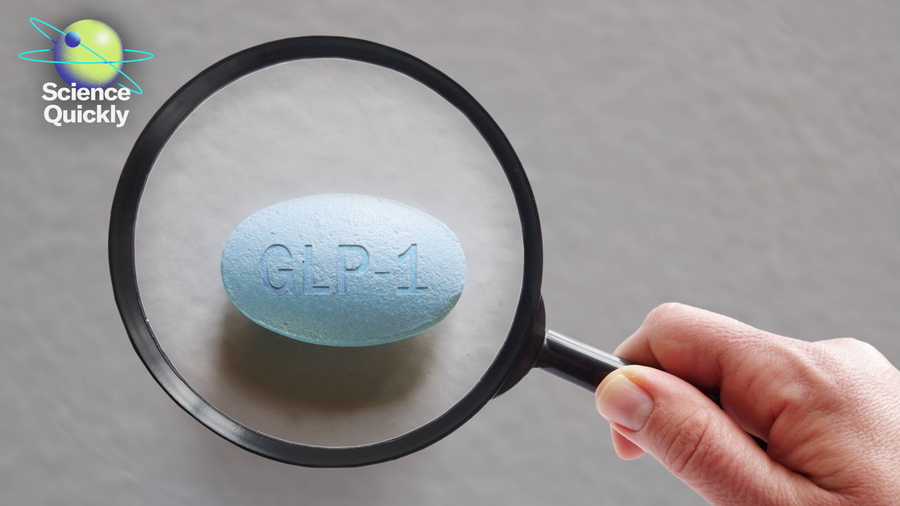
The drugs are part of a broader class of medicine known as GLP-1s that have grown wildly popular for everything from type 2 diabetes to weight loss and are increasingly seen as having potential benefits far beyond those two conditions. The popularity of these drugs has led to a sea of GLP-1 offerings flooding the market—not all of them FDA-approved.
We sat down with Lauren Young, an associate editor covering health and medicine for Scientific American, to talk about where GLP-1s go from here.
Pierre-Louis: Thank you for being here, Lauren.
Lauren Young: Thanks so much for having me.
Pierre-Louis: So, at a basic level, what is a GLP-1?
Young: Right, so GLP-1 drugs, these are the drugs that you’ve probably heard with those, like, fun advertisement chimes. They’re sold as Wegovy and Ozempic—that is the brand name for the active ingredient semaglutide. And then you’ll probably have also heard of Zepbound and Mounjaro, which are the brand name for tirzepatide. And so these were originally type 2 diabetes treatments, and now they have since moved on to become weight-loss treatments. And the reason why they’re so effective is because they mimic a hormone in the body called GLP-1, glucagonlike peptide 1—fun name.
And so what this hormone does is it, essentially kick-starts insulin production, so that’s why it makes a really great type 2 diabetes medication. But over time, researchers also noticed that, “Hey, it looks like people are eating less on this drug.” And they found out that it also influences satiety levels, people feel fuller faster, and you eat less and therefore lose weight. So that’s essentially how the hormone and also the drug work, ’cause the drug essentially mimics that hormone.
Pierre-Louis: And my understanding is, is that, in general, in our bodies, GLP-1s are kind of short-acting. But with the drug, they kind of hang out for longer.
Young: Exactly. Yes, yes. So these drug manufacturers have essentially crafted them to withstand and stay in the body longer because there’s enzymes in the body that break down the hormone at much faster rates, so they can last in the body for—stay active, essentially, for about a week.
Pierre-Louis: So there’s been this big kind of tension brewing in recent months about the rise of what we might call imitation GLP-1s, like, the compounded versions. Can you tell me: What is a compounded drug?
Young: Right, so a compounded drug, these are produced by compounded pharmacies. So, compounded pharmacies essentially create, like, bespoke medicines for individual clinical use. So people who can’t take an oral medication, for instance, might need that medication transformed into a cream or an IV drip or something like that, or kids, for instance, might need a lower dose. Same with, like, pets and zoo animals, they also sometimes take compounded medications ’cause they, you know, need a specialized recipe for, you know, specific medications.
Pierre-Louis: So, for example, I had an ankle injury a couple of years back …
Young: Yeah.
Pierre-Louis: And my doctor prescribed, like, a bespoke anti-inflammatory lotion for me to put on it …
Young: Right.
Pierre-Louis: And that was sent to me by a, a compounder.
Young: Yeah, yeah, that’s a, a perfect example of what a compounded drug is. So these compounded pharmacies do fill an important need. But it’s also important to note that no compounded drug is FDA-approved, so that means they aren’t tested or reviewed for safety or effectiveness.
Pierre-Louis: Can you talk a bit about the role that compounding pharmacies have been playing with GLP-1s?
Young: So the story of the compounded GLP-1s goes back to when these drugs first spiked in popularity for a multitude of reasons. Ozempic, for instance, was being used off-label quite often; a lot of celebrities were using it. And these medications are also originally for diabetes. But then in 2021, [semaglutide] became approved for weight loss.
That essentially exploded the popularity of these drugs, and they went under shortage in 2022. Subsequently, another popular drug, tirzepatide, which is [now] sold as Zepbound and Mounjaro, also went under shortage.
So when a drug goes under shortage, that essentially gives authority to these compounders to start producing them, you know, to fill in these access gaps. So in many ways, these compounding pharmacies filled in a really important void.
Pierre-Louis: But then they stopped being under shortage, but the compounders still kept making them, right?
Young: Yeah, tirzepatide got lifted off of the shortage list in, I think, late 2024, and then semaglutide followed in 2025. And so, how do these drugs essentially continue to be compounded? Well, the way that a lot of these companies are getting around it is, one, that they’re allowed to be compounded if people need a specific dosage. So, for instance, the Ozempic and Wegovy pens are prefilled, so if an individual, for instance, needs something higher or lower, these compounders can fill in that gap.
Additionally, a lot of these companies are putting, quote, unquote, “additives” and creating custom versions of these drugs. And these additives are very interesting. Some of ’em are—claim to help with potential muscle loss, ’cause that is something that has been noted with the GLP-1 weight-loss drugs. Another thing, too, is these drugs, the GLP-1s, have a lot of nausea and gastrointestinal side effects, so some of these, quote, unquote, “additives” are claiming to help with those effects. None of these additives have been tested for safety or effectiveness. But that’s how they’re getting around, still continuing to compound these drugs.
Pierre-Louis: And as a consumer, what’s the benefit of going through a compounder versus, you know, a pharmaceutical company’s official version?
Young: Oftentimes, these compounders are selling these drugs at vastly lower market rates than the official brand versions of the drugs, and this is because the active ingredients they’re getting are often cheaper. So that’s one of the primary reasons, is the cost. And then, you know, with people who do need different dosages, that maybe they’re in between the tiers that are designated in these pens. So there are benefits, for sure.
Pierre-Louis: In February, Novo Nordisk, the maker of Ozempic and Wegovy, sued one of the largest sellers of the compounded versions, the telehealth company Hims [&] Hers, and then dropped the lawsuit. Can you talk a bit about the origins of that lawsuit?
Young: Right, so Novo Nordisk essentially sued Hims & Hers because they were saying that, “Hey, you’re mismarketing your compounded GLP-1s as essentially a first go-to drug instead of our drug.” They also were alleging them to be, like, “copycats.” And these drugs under Novo Nordisk and similarly Eli Lilly, they’re still under patent …
Pierre-Louis: Mm-hmm.
Young: So you can’t just create a full copycat medication of these drugs. That was, like, the main impetus of the lawsuit.
Pierre-Louis: But they’ve since dropped it.
Young: Right, yes, they have dropped the lawsuit as of last week.
Pierre-Louis: So, you know, Ozempic [is] technically a diabetes drug, and Wegovy shares the same main ingredient as Ozempic, semaglutide, but at higher doses.
Young: Mm-hmm
Pierre-Louis: And since 2021, when Wegovy was approved for weight loss, we’ve seen sort of this explosion in GLP-1s—there’s tirzepatide, liraglutide, dulaglutide.
Young: [Laughs.] It’s a game, like, which of these medications are actually a real thing, ’cause it’s just fun word scramble all the time. [Laughs.]
Pierre-Louis: And over the past, you know, 15, 20 years, these drugs have been seen as useful for type 2 diabetes and weight loss. There’s growing research that GLP-1s can be useful for other things, like alcohol use disorder.
Young: Mm-hmm.
Pierre-Louis: Can you talk about some of those benefits?
Young: Yeah, there’s been, actually, several studies that have come out on the addiction side of GLP-1s. So it’s interesting because it all stems from kind of a flood of anecdotal reports from people just saying, like, “You know, I’m taking these drugs, and I’m noticing not only are some of my—you know, like, my satiety levels are different; I’m not craving, you know, snacks and food as much. But I’m also not, you know, itching to, like, pick my nails anymore. I’m not craving, like, drinks or alcohol anymore. I’m not craving nicotine anymore.”
And so this really set off, like, a wave of research in the addiction space of, you know, scientists thinking like, “Okay, you know, we know that food reward pathways are overlapped, and we know that, oftentimes, that’s what we see in addiction, too. Maybe there’s something here for a potential treatment.”
Just recently, there was a huge study in the [Veterans] Affairs health-care system. They, you know, collected data from, like, over 600,000 veterans …
Pierre-Louis: Mm-hmm.
Young: So, you know, caveating those are mostly white, male, older, you know, individuals, but it was really striking because these are also people with type 2 diabetes, and they were evaluating a variety of different GLP-1 uses. And they noticed that using a GLP-1 essentially cut down the risk of developing a substance use disorder.
And these were all different types of substance use disorders: they looked at cannabis use disorder, opioid use disorder, alcohol use disorder, and not only that—they also looked at people who already had a substance use disorder, and they found there that it cut down things like drug-related mortality by, I think, as much as 50 percent. And that’s an impressive reduction.
And so it’s very attractive to people like addiction researchers. I, you know, spoke to, for instance, a researcher who’s doing opioid addiction treatment. She’s doing trials right now, looking at GLP-1 use, potentially, to offset the use of some of the other treatments that—’cause you have to take an opioid in order to be treated for the disorder, so, you know, maybe coupling it could be appealing. But there’s a lot still to learn, but it’s a really fascinating space, for sure.
Pierre-Louis: Are there other sort of unexpected potential benefits that they’re seeing from these drugs?
Young: We already know that Wegovy, for instance, has been approved for cardiovascular-risk reduction, so we’ve seen that. I’ve been personally really interested in the reproductive-health space. And they’re also finding that the use of GLP-1s might also reduce inflammation, and that’ll—obviously could open up, you know, a variety of different treatments for so many different types of diseases. There’s a lot of interesting, different avenues of research going on.
Pierre-Louis: That said, the flip side, you know, these drugs are not a panacea, and we are finding some things that are maybe concerning.
Young: Yeah, so these drugs, while they have been around for decades, more and more people are using them. We really don’t know the long-term ramifications of these drugs. Just recently, there was a, a big analysis, and I think that found that GLP-1 drugs were linked to a higher risk of skeletal disorders, so things like osteoporosis.
Pierre-Louis: Mm-hmm.
Young: And we’ve also seen that GLP-1s might be related to a loss in muscle or lean mass. That’s been, like, another big, concerning thing among clinicians ’cause when you think about weight loss, whether it’s through a GLP-1 drug, exercise, diet or something like malnutrition, you’re losing all different, quote, unquote, “types” of weight. So yes, you’re losing fat, but you’re also losing things like muscle and bone mass, and those things are important, especially in older adults, and a lot of older adults have, you know, things like type 2 diabetes. So, you know, there’s a lot of factors to think about here.
There’s another big caveat, too: there’s a lot of people who end up quitting these drugs after about two years …
Pierre-Louis: Mm-hmm.
Young: I think, is around the average they see. So there’s a lot of studies going on of, like, “Okay, what happens to people’s health benefits that you see? Like, those changes in cardiometabolic health are improved when you go on these drugs; how quickly does that revert back?” And there was a study back in January that showed that it actually bounces back, you know, quite fast. There was a, a study that compared weight regain after quitting a GLP-1 drug in comparison to, like, physical exercise or diet …
Pierre-Louis: Mm-hmm.
Young: And they found that quitting a GLP-1 drug, you regain that weight, and you lose those health benefits much faster than those other means of weight loss.
And on top of that, I spoke to Rozalina McCoy, who’s a University of Maryland researcher. She’s been super insightful on all of this. And something she pointed out is oftentimes that weight regain …
Pierre-Louis: Mm-hmm.
Young: Particularly after, like, a drug treatment, is gonna be fat instead of muscle mass because, obviously, right, like, maybe with physical exercise, you’re still maintaining those good behaviors a little bit more with exercising more regularly, or same with eating patterns—maybe you’re still kind of, like, eating a little bit better than you were before, even if you fully stop a diet or, like, an intensive training regimen for exercise. So those are some things that researchers are concerned about.
And then the last thing I’ll note, too, is there’s a lot of serious, like, gastrointestinal side effects, and that kind of harkens back to the, you know, people quitting after two years, so.
Pierre-Louis: It really feels like, especially if you’re using these drugs for weight loss, you really should be weighing the pros and cons and really be thinking through the long term, especially within the back of your head, that you might not actually be on these drugs forever.
Young: Yeah, and I mean, that’s how these drugs are also currently being marketed, right? They’re being marketed as—and, truly, you know, prescribed, too—as a lifelong treatment. There are so many questions around access and maintaining treatment if that is truly, like, the most effective way to deliver these drugs, and we still do need those long-term studies. And I’m itching to find out more about this every day, so [Laughs] it’s been a really interesting space to be covering in health right now.
Pierre-Louis: That’s all for today! Tune in on Friday when our associate books editor, Bri Kane, sits down with Andy Weir, the author of the sci-fi novel Project Hail Mary. The book’s Hollywood adaptation, starring Ryan Gosling, hits theaters Friday.
Science Quickly is produced by me, Kendra Pierre-Louis, along with Fonda Mwangi, Sushmita Pathak, and Jeff DelViscio. This episode was edited by Alex Sugiura. Shayna Posses and Aaron Shattuck fact-check our show. Our theme music was composed by Dominic Smith. Subscribe to Scientific American for more up-to-date and in-depth science news.
For Scientific American, this is Kendra Pierre-Louis. Have a great week!
.
zimmytws/GettyImages
.
.
Click the link belowfor the complete article (sound on to listen):
The death of Chuck Norris has triggered an outpouring of memorials from fellow Hollywood tough guys and fans. The martial arts grandmaster and action star of “Walker, Texas Ranger” died Thursday, in what his family described as a “sudden passing.”
Sylvester Stallone, Jean-Claude Van Damme, and Dolph Lundgren were some contemporaries of Norris who took to social media to pay their respects.
Here’s what some are saying, in their own words:
George W. Bush
“Laura and I are saddened by Chuck Norris’s passing. He was a legend in Texas and beyond. Through his foundation and his example, he made a huge difference in the lives of young people by instilling character and discipline through martial arts. It was said that when Chuck Norris entered a room, he didn’t turn the lights on; he turned the dark off. Laura and I are fortunate to have called him a friend, and we send our sympathy to his family,” the former president said in a statement.
Jean-Claude Van Damme
“Deepest condolences on the passing of my friend, Chuck Norris. We knew each other from my early days, and I always respected the man he was. My heart and prayers are with his family. He will never be forgotten,” the actor, via Instagram.
Dolph Lundgren
“Chuck Norris is the champ. Ever since I was a young martial artist and later getting into movies, I always looked up to him as a role model. Someone who had the respect, humility, and strength it takes to be a man. We will miss you, my friend,” the actor, on Instagram.
Sylvester Stallone
“I had a great time working with Chuck. He was All American in every way. Great man and my condolences to his wonderful family,” his “Expendables 2” co-star, via Instagram.
Arnold Schwarzenegger
“Chuck was an icon. I am grateful that I was able to work with him in multiple ways over the years, from promoting fitness to sharing the screen together. He was a badass, in real life and in Hollywood. His legend will be with us forever. My thoughts are with his family,” the actor via X.
Lorenzo Lamas
“Watch out, evil world, there is an angel of consequence at the gates. Chuck Norris doesn’t just get wings, he gets even,” the actor, via X.
Lee Majors
“I know the millions of fans across the world are feeling this loss too, but for me, it’s deeply personal. I had the honor of working alongside him, sharing moments I’ll never forget. He wasn’t just a legend on screen, he was a kind, strong, and genuine soul off of it. I’m really going to miss you, my friend. Hey Chuck… maybe you can teach the good Lord a few karate moves — I know He’ll get a kick out of them,” the actor on Instagram.
Joe Piscopo
“Just heard that the Legend — The Man — Mr. Chuck Norris has passed away. I was honored to work with Chuck. It was a life-changing and treasured experience that I will hold dearly in my heart forever,” the actor, via X.
Mike Huckabee
“He was humble & kind. I’ll never forget a visit we made to a Veterans Home in New Hampshire. Chuck & Gena graciously visited with every veteran, listening & caring. Most of these veterans idolized Chuck Norris. He & Gena were patient, warm, & compassionate. When we got in the vehicle after the visit, I looked over at them & they were both weeping, having been touched by these aging US veterans & their stories,” the U.S. ambassador to Israel, via X.
Priscilla Presley
“I’m so sad to hear that my Karate instructor and friend, Chuck Norris, has passed away. He will be forever missed,” the actor on Instagram.
Morgan Fairchild
“I’m so sorry to hear of our loss of Chuck, who I considered a friend for many years. We were in Taiwan in ’87 (I think) to accept Golden Horse Awards, and we bonded there. It didn’t hurt that I loved martial arts! He was always a real gentleman every time I ran into him. My condolences to his family & friends,” the actor on X.
Geraldo Rivera
“They used to say Chuck Norris is so tough he makes onions cry. Rest in peace, my friend. Thank you for all you did in TV, movies, and life. You were a gentleman, faithful and patriotic, and I was honored to meet you,” the TV personality via X.
.
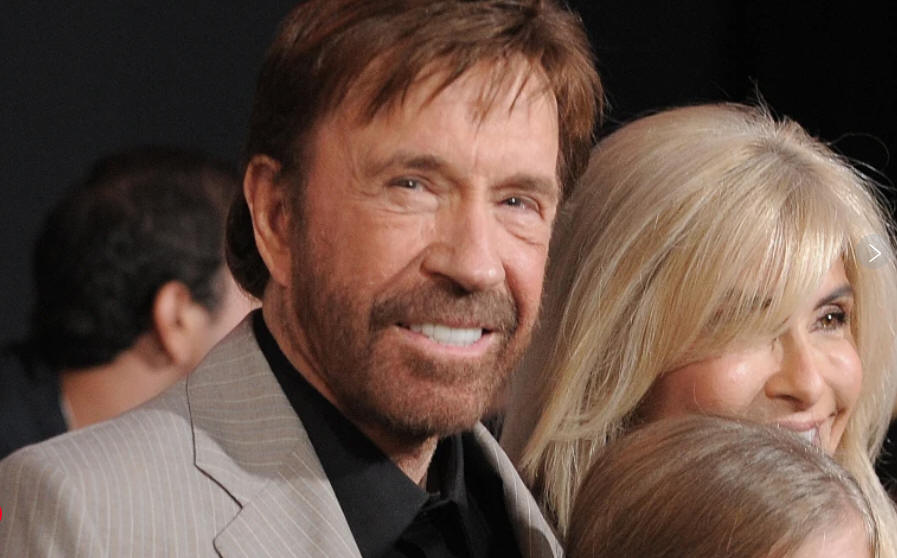
Chuck Norris, the martial arts grandmaster and action star whose roles in “Walker, Texas Ranger” and other television shows and movies made him an iconic tough guy — sparking internet parodies and adoration from presidents — has died at 86. (March 20)
Hmmmm … Thank goodness for the three-tier system of government in the USA.
Click the link below the picture
.
A federal judge ruled on Friday that the Pentagon’s restrictions on news outlets violate the First Amendment and issued an order tossing parts of the Defense Department’s policy, handing a victory to The New York Times, which filed suit in December over the restrictions.
Judge Paul Friedman, of U.S. District Court for the District of Columbia, also ordered the Pentagon to restore the press passes of seven journalists for The Times. They had surrendered those passes in October instead of signing the policy, which empowered the Pentagon to declare journalists “security risks” and revoke their press passes if they engaged in any conduct that the Pentagon believed threatened national security.
In his 40-page ruling, Judge Friedman wrote that the Pentagon’s policy rewarded reporters who were “willing to publish only stories that are favorable to or spoon-fed by department leadership.”
Siding with an argument advanced by The Times, Judge Friedman added that the Pentagon had given itself too much power to enforce its new rules. The policy also violates journalists’ due process rights under the Fifth Amendment, he said, writing that it “provides no way for journalists to know how they may do their jobs without losing their credentials.”
The ruling was a defeat for the Trump administration, which has been engaged in a multifaceted pressure campaign against the news media. ABC News and CBS News’s parent company agreed to multimillion-dollar settlements to resolve suits that President Trump brought against the networks. The ABC late-night star Jimmy Kimmel was temporarily pulled off the air last year after Mr. Trump’s top communications regulator assailed his program and suggested that he might take regulatory action against the broadcaster.
Defense Secretary Pete Hegseth, a former host on Fox News, has continued Mr. Trump’s adversarial stance toward the news media. He proposed denying access to Pentagon to a reporter from NBC News, then removed several news organizations from their on-site workstations. Months later, he curtailed the unescorted roaming privileges of journalists within the complex.
Friday’s ruling against the Pentagon followed a similarly stark decision this month from a federal judge to restore the operations of Voice of America, a government-funded news organization that Mr. Trump had ordered shuttered a year ago in an executive order.
A spokesman for The Times said Judge Friedman’s ruling “reaffirms the right of The Times and other independent media to continue to ask questions on the public’s behalf,” adding that “Americans deserve visibility into how their government is being run, and the actions the military is taking in their name and with their tax dollars.”
Sean Parnell, the chief spokesman at the Pentagon, said in an X post, “We disagree with the decision and are pursuing an immediate appeal.”
The Pentagon policy took effect in October and drew condemnations from numerous mainstream outlets for penalizing news-gathering methods long protected by the First Amendment. Dozens of journalists who had press passes to the Pentagon turned them in rather than sign the new policy. The Defense Department then welcomed a new set of credentialed media members, most of them pro-Trump commentators or influencers.
The Pentagon’s policy also required journalists to agree not to solicit information from military employees unless the employees were authorized to speak for the Pentagon. The Times had argued that the policy required the press to publish only official statements.
At a March 6 hearing, Judge Friedman signaled his frustration with the rules. A Justice Department lawyer representing the Defense Department, for instance, drew an animated response from the judge when he argued that journalists don’t have First Amendment protections when they solicit the “disclosure of unauthorized information.”
“Why not? Why not?” Judge Friedman replied, adding that department officials can simply refuse to answer such inquiries from journalists, but there is “no proscription” on journalists’ asking questions.
Judge Friedman had also appeared skeptical of a provision in the policy declaring off-limits certain journalistic tip requests. Though the Pentagon drew a bright line delineating prohibited tip requests from problematic ones, Judge Friedman said: “I don’t understand that argument. I hope that the government can explain it.”
In his ruling on Friday, Judge Friedman closed his opinion by citing his own statements from the bench during oral arguments.
“A lot of things need to be held tightly and secure,” the judge said, referring to the department’s security imperatives. “But openness and transparency allows members of the public to know what their government is doing in times of peace and, more important, in times of war and upheaval.”
In the March 6 hearing, the Justice Department asked that the court send the rules back to the Defense Department for refining — so that the Pentagon could “rehabilitate the policy” — rather than toss out the disputed provisions.
Judge Friedman on Friday instead tossed out the policy for all of the journalists who cover the Pentagon. The Pentagon Press Association, which represents journalists on the national security beat, called for the “immediate reinstatement” of all of its members.
Gabe Rottman, vice president of policy at the Reporters Committee for Freedom of the Press, said in a statement that “the court affirmed that our security and liberty rely on the press’s freedom to publish and the public’s ability to access news about government affairs free from state control.”
.
A federal judge ordered the press passes of seven journalists for The New York Times to be restored. Credit…Lucia Vazquez for The New York Times
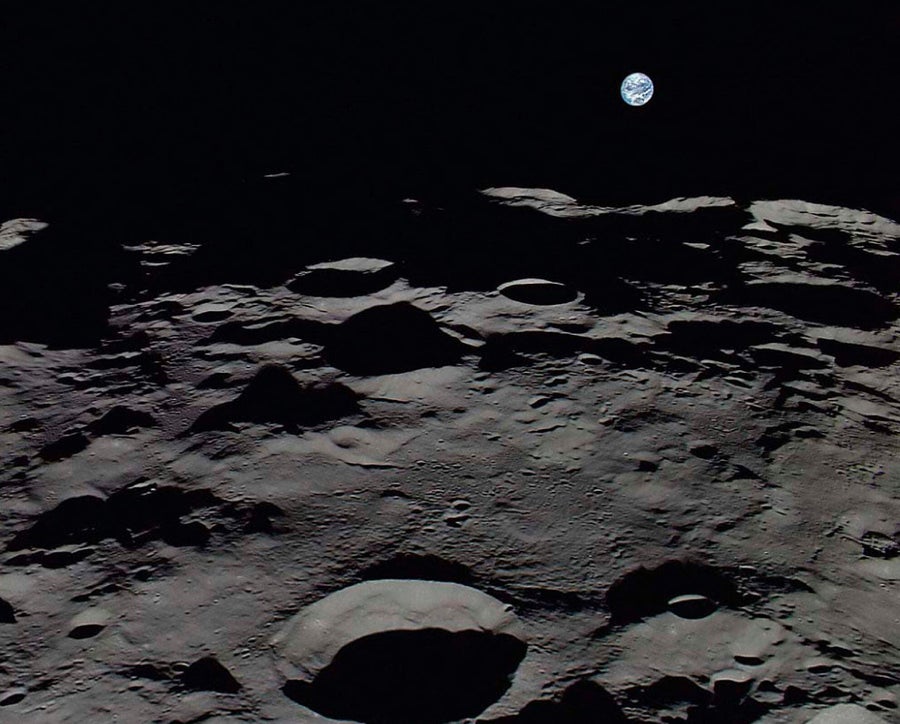
When Apollo 11 astronauts returned to Earth after accomplishing history’s first-ever crewed moon landing, they brought back nearly 50 pounds of moon dust and rocks. Researchers who initially analyzed the material’s parched composition came to an important (and flawed) conclusion: the moon was bone dry.
Undeterred, in all the decades since, some scientists kept up the search for lunar water, ultimately finding traces of it in samples returned by other moon missions. Hints of a potentially revolutionary breakthrough emerged in the 1990s, when a U.S. spacecraft, Clementine, spied tentative signs of water ice at the floors of craters called permanently shadowed regions (PSRs) around the lunar south pole. The case for water in lunar PSRs has grown across the years, but scientists are still struggling to pin down just how much might be there. Now, a new study published today in Science Advances suggests the likely answer is “not much.”
Analyzing images of the moon’s darkest areas from ShadowCam, a NASA instrument on the Korea Pathfinder Lunar Orbiter, the study’s authors determined that, in most of the moon’s darkest craters, water makes up less than about 20 to 30 percent of the material by weight—and that many may have no surface ice at all.
“I think, based on what data we have now…, we are pretty sure there is ice on the surface,” says Shuai Li, lead author of the study and a planetary geologist at the University of Hawaii at Manoa. The multibillion-dollar question remains just how abundant that ice is—and thus how much future explorers might rely on it for producing potable water, manufacturing rocket fuel, or merely studying its composition to better determine how it fits into the bigger picture of H2O’s origins and evolution on the moon.
This latter matter has scarcely influenced competing Chinese and American efforts to build a moon base but could prove crucial for efforts to learn more about water’s history throughout the entire solar system. The bulk of the moon’s water was likely delivered via asteroid and comet impacts about four billion years ago, says David Kring, leader of the Center for Lunar Science & Exploration, who was not involved in the study. So tracking that water’s abundance and distribution across the lunar surface could constrain the nature and number of the water-rich projectiles that are thought to have populated the inner solar system at that time.
Whatever water ice exists in lunar PSRs wasn’t necessarily deposited there directly by infalling asteroids and comets; rather a process called “cold trapping” could have allowed ice to accumulate on dark, frigid crater floors on the moon via whiffs of impactor- or solar-wind-derived water vapor that wafted in from elsewhere. Similar processes are at play on other celestial bodies, such as Mercury and the dwarf planet Ceres. And for their new study, the researchers used preexisting measurements of water ice abundance within Mercury’s PSRs to better calibrate their analysis of ShadowCam images of lunar PSRs.
Their result, the authors say, sets an upper limit on just how much water ice exists at the surface inside the moon’s most shadowy craters. Ice signaled its presence via the scattering and reflectance of light, as seen by ShadowCam. Because the instrument, which has a detection limit of about 20 to 30 percent ice by weight, didn’t pick up on these telltale signs in most PSRs, the research team is confident that most of these regions either lack ice or have lower concentrations of it—at least on the surface. The results are somewhat ambiguous as to how much ice may lurk unseen beneath layers of overlying ice-sparse material.
So the search will continue. Li and his colleagues say the natural next step is to build and use better instruments that could identify even minuscule amounts of water ice in lunar soil. But others argue direct exploration of the treacherously dark and cold depths of lunar PSRs will offer the best chance of solving this mystery.
“Orbital measurements like those that are reported in the current paper are fabulous in that they can provide broad regional surveys, but oftentimes what you’re looking for can only be addressed by in situ, ‘boots on the ground’ exploration activities,” Kring says. “The sooner that we get robotic and human assets on the lunar surface to investigate this particular issue, the sooner we’ll have some definitive answers.”
.
NASA’s ShadowCam photographed some of the moon’s darkest regions, including the permanently shaded regions at the bottom of craters. JAXA/NHK/ZUMAPRESS.com/Alamy
The world needs its homeroom moms, the ones who are handing out snacks at every class party and cleaning up behind every field day. And maybe you are that parent in your heart, but your 9-to-5 means you rarely (OK, never) get the opportunity to help out during school events. You love your kid’s teacher and know they’re not getting paid the very large sum they deserve. So, how can you best support your child’s teacher if you don’t have time to volunteer during the day?
If you’re wondering, just ask. There might be opportunities outside of regular school hours to pitch in, like helping decorate for special events in the evenings or joining the PTA. Don’t assume you can’t be helpful at all just because you can’t volunteer in class to help serve Thanksgiving lunch or chaperone the zoo field trip. Even if the teacher doesn’t have any needs right now, they will remember your kindness and your offer, and they’ll probably take you up on it before long. And if you’d like some concrete ideas to work with, say no more.
Supplies are always welcome.
There’s a big influx of new supplies at the beginning of the school year and then…crickets. You can message your child’s teacher to see what they need specifically, but there are some supplies that are a forever need.
“Definitely supplies, always. Expo markers, pencils in bulk, tissues, hand sanitizer, and whatever that specific teacher uses. Also, for bigger or individual supplies, send an extra. I request scientific calculators, and sometimes kids will come in with an extra to have for the room or to give to a kid who doesn’t have one or forgot theirs. That’s the best,” says Martha O’Brien, a middle school math teacher in Virginia.
To be maximally helpful with minimal effort, you could also just set some supplies to auto-ship to your child’s teacher.
Check in to see if the teacher could use a reward for their class.
“I have a parent who emails me periodically and asks if there’s anything I want to incentivize my kids with if they’re not turning in homework and stuff, and she’ll get donuts or pizza for them, and that’s so helpful,” says Anna Morgan, an English language arts teacher in Florida.
Ask if there are tasks you can help with at home.
Especially for elementary school teachers, they may be putting together projects that require a lot of cut-outs or sorting of supplies to be handed out in packets, O’Brien says. If so, the teacher can send everything home with your child for you to cut out or put together while you binge a show after dinner. It’s a great way to volunteer some time and elbow grease in the evenings when you’re available, and free that time up for your child’s teacher to do one of the other 20 tasks on their plate.
Dedicate some time to making sure your kid is actually excited about school.
Yes, this does make a teacher’s job easier.
“The biggest help is making sure every parent is fully involved in the learning process. Also, they can be verbally encouraging to their child’s teacher and make sure their child knows school is a responsibility, but is also a fun place to be. This can be as easy as telling your child that you wish you were still able to go to school and about some positive experiences you had,” says Staci Pendry, a K-8 music teacher. “Message the teacher once every few weeks just to check in on them and say a specific thing you noticed that the teacher is doing well. That little note is worth all the volunteer hours.”
Bring in snacks. They will be put to good use.
Teachers all over Reddit say they often end up buying classroom snacks out of their own paychecks. A Costco-sized carton of Goldfish will never not be appreciated. As one middle school teacher posted, “Classroom snacks make all of the difference. I provide them to every child, every day. The kids are hungrier than they have ever been in my nearly 20 years of teaching, and inflation is making this an expensive commitment. Help a teacher get snacks for the classroom.”
Help with upkeep of special areas around campus.
If you can spend some time there on a weekend occasionally, maybe there’s an opportunity to help on the school grounds. My son’s school has chickens — does their coop need any repairs or improvements? Last year, our guidance counselor asked for donated planters and flowers to beautify the school’s entrance, and parents provided the necessary items. One Reddit poster shared that a friend of theirs “took over a school’s abandoned gardening program. He fixed up the garden and kids come once a week to learn about how plants grow. He would be tending a garden at home anyway.”
Communicate with your child’s teacher if something is wrong.
Pendry also encourages parents to check in and keep teachers up to date on what their child is saying about their school experience at home. They’re one person overseeing a classroom full of kids, but you have special insight on your own child and what happens during their day. Again, helping your child want to be at school and removing any negativity keeping them from learning is a big help to teachers.
“If anything comes up that is bothering your little one, make sure you reach out to the teacher. We know a lot, but can’t always know everything. Letting us know what’s happening is a way to help make sure your child feels safe and heard and wants to come back to school,” she says.
Attend school board meetings to advocate for funds and resources your teacher needs.
Voicing your support and showing up to evening meetings shows school board leadership what really matters to parents and teachers. You may not be able to judge the science fair during the day, but you can be vocal in your support of more funding for crucial programs in your district.
.
When you can’t get there during the day, but you still want to show up.
The Trump administration has declared a wartime emergency to bypass Congress and push through more than $23 billion in weapons sales to allies in the Middle East, the second time since the start of the war with Iran that it has circumvented the normal congressional approval process.
Secretary of State Marco Rubio determined that “an emergency exists requiring the immediate approval of critical arms transfers for Middle East partners currently under attack by Iran,” the State Department said in a statement on Thursday.
The Trump administration first declared an emergency soon after the U.S. and Israel launched joint strikes on Iran, in order to bypass Congress on the sale of more than 20,000 bombs to Israel. The Biden administration had also twice used an emergency declaration to sell weapons to Israel, for use during the Gaza war.
Such a declaration, while permitted under the Arms Export Control Act, is used by the White House and State Department only on rare occasions to sidestep the House and Senate committees that review and approve arms transfers. Mr. Rubio’s skirting of that congressional review process twice in less than two weeks is the latest move by the Trump administration to sidestep congressional oversight of the war.
The new proposed sale to the United Arab Emirates, Kuwait, and Jordan encompasses 11 arms orders, according to the State Department. Some of the proposed sales had been under informal review by lawmakers, at least one of whom had yet to sign off. But the administration had not sent Capitol Hill even preliminary notice for a majority of the arms transfers it announced on Thursday, according to a U.S. official who spoke on the condition of anonymity to discuss sensitive arms transactions.
Asked for comment, Representative Brian Mast, Republican of Florida and the chairman of the House Foreign Affairs Committee, said Mr. Rubio had “wisely” decided to declare an emergency and go around Congress after the top Democrat on his panel, Representative Gregory W. Meeks of New York, had refused to approve some of the proposed exports.
“He alone is holding up sales of needed weapons to Israel, U.A.E., and others,” Mr. Mast said of his Democratic counterpart.
Mr. Meeks said in a statement that he supported “our partners’ ability to defend themselves,” but added: “That support does not give this administration a blank check to ignore the law or Congress.”
Senator Jeanne Shaheen of New Hampshire, who also is among those who review arms transfers as the top Democrat on the Foreign Relations Committee, said partners in the region were “bearing the brunt of the Trump administration’s poorly planned war,” and that the United States “must do what we can to defend them.”
But, she added in a statement, the State Department’s “rushed decision to use an emergency authority and bypass Congress to send them arms highlights the administration’s frantic state” and its “lack of preparation and inability to incorporate allies, partners, and Congress on the front end of major decisions like instigating a war.”
The informal review process for arms sales is a long-established norm that is the main vehicle for congressional oversight over weapons transfers. After the State Department sends a list of proposed sales to the House Foreign Affairs Committee and the Senate Foreign Relations Committee, the top lawmaker from each party on those panels reviews the proposals.
Any of those four lawmakers can ask questions of the State Department for weeks or months before deciding whether to sign off. Once the administration gets approval from all four, it gives formal notification to Congress of the sales. The law allows Congress to block the transfers if both the House and Senate push through resolutions to do so within 30 days, but that rarely happens.
For the Emirates, the export list includes Chinook helicopters, drones, Patriot missiles and air-to-air missiles, kits to convert unguided bombs to guided ones, a THAAD advanced missile defense system radar and other equipment, an anti-drone system and F-16 fighter jet upgrades and munitions, according to a breakdown obtained by The New York Times that was more complete than the public announcements from the State Department.
Kuwait would purchase billions of dollars of air and missile defense equipment, and for Jordan, there are F-16 fighter jet upgrades.
In 2019, the Trump administration declared a similar emergency with Iran to fast-track the sale of over $8 billion in munitions to the U.A.E. and Saudi Arabia, prompting an investigation by the State Department’s inspector general. Congress passed bipartisan resolutions to block the sales, but Mr. Trump vetoed the measures.
Several Senate Democrats have said they plan to force a similar vote next week on resolutions of disapproval for the weapons sales to Israel for which the State Department bypassed Congress in the early days of the war. Democrats have in the past split on votes to block arms to Israel.
“I would hope that my colleagues understand that it is absurd providing some 20,000 more bombs to Israel to continue the incredible destruction” in Iran and Lebanon, said Senator Bernie Sanders of Vermont, an independent who caucuses with the Democrats and is spearheading the measures.
More on the Fighting in the Middle East
Attacks on Energy Fields: Israel launched a major attack on an Iranian gas field this week, prompting retaliation by Iran against Gulf States. President Trump’s attempt to distance his administration from the strike underscored the diverging aims of the United States and Israel as their war against Iran grinds on.
Diary of War: In an online journal, the 44-year-old son of Iran’s president offers a mix of personal anecdotes and glimpses behind the scenes as Iranian leaders are picked off one after another.
Marking Nowruz During A War: As the Iranian new year begins, those in the country are reckoning with bombardment, repression, and economic misery. And the holiday has brought complicated feelings for some Iranians in New York who are fearful for their relatives in Iran.
Muted Eid Celebration: For Lebanese families displaced by Israeli airstrikes, the joy that usually marks the end of Ramadan has been replaced by uncertainty and hardship.
Saudi’s Response to Iran: Prince Faisal bin Farhan, the foreign minister, said Saudi Arabia was prepared to take military action if necessary, after waves of missile and drone attacks.
Energy Infrastructure: Attacks on oil and natural gas facilities could make it much harder for Persian Gulf countries to rebuild and restart production when the war eventually ends.
In One Image: Near the center of Beirut, a photo of a Lebanese cafe captures the aftermath of an Israeli strike.
.
Secretary of State Marco Rubio determined that “an emergency exists that requires the immediate sale” of weapons to the United Arab Emirates, Kuwait, and Jordan, according to his department. Credit…Eric Lee for The New York Times
Film and Writing Festival for Comedy. Showcasing best of comedy short films at the FEEDBACK Film Festival. Plus, showcasing best of comedy novels, short stories, poems, screenplays (TV, short, feature) at the festival performed by professional actors.
 A. R. Bernard: one of many


 Smoke rises above Tehran after an Israeli airstrike on Sunday evening. Photograph: Anadolu/Getty Images
 The aftermath of U.S.-Israeli airstrikes in Tehran on Saturday. Three weeks into the war, American and Israeli intelligence assessments have concluded that the theocratic Iranian government is weakened but intact. Credit…Arash Khamooshi for The New York Times
 zimmytws/GettyImages



 When you can’t get there during the day, but you still want to show up.

 James' World 2