Two years ago, Desmond Hughes heard so many of his favorite podcasters extolling AirPods, Apple’s tiny, futuristic $170 wireless headphones, that he decided they were worth the splurge. He quickly became a convert.
Hughes is still listening to podcasters talk about their AirPods, but now they’re complaining. The battery can no longer hold a charge, they say, rendering them functionally useless. Apple bloggers agree: “AirPods are starting to show their age for early adopters,” Zac Hall, an editor at 9to5Mac, wrote in a post in January, detailing how he frequently hears a low-battery warning in his AirPods now. Earlier this month, Apple Insider tested a pair of AirPods purchased in 2016 against a pair from 2018, and found that the older pair died after two hours and 16 minutes. “That’s less than half the stated battery life for a new pair,” the writer William Gallagher concluded.
.
Tim Cook onstage at an Apple event in 2016Beck Diefenbach / Reuters
Chile’s Easter Island (Rapa Nui) is famous for its giant monumental statues, called moai, built by early inhabitants some 800 years ago. The islanders likely chose the statues’ locations based on the availability of fresh water sources, according to a recent paper in PLOS One.
Scholars have puzzled over the moai on Easter Island for decades, pondering their cultural significance, as well as how a Stone Age culture managed to carve and transport statues weighing as much as 92 tons. They were typically mounted on platforms called ahu. According to co-author Carl Lipo, an anthropologist at Binghamton University, you can have ahu (platforms) without moai (statues) and moai without ahu, usually along the roads leading to ahu; they were likely being transported and never got to their destination.
Back in 2012, Lipo and his colleague, Terry Hunt of the University of Arizona, showed that you could transport a ten-foot, five-ton moai a few hundred yards with just 18 people and three strong ropes by employing a rocking motion. Last year Lipo proposed an intriguing hypothesis for how the islanders placed red hats on top of some moai; those can weigh up to 13 tons. He suggested the inhabitants used ropes to roll the hats up a ramp.
.
Moai statues in a row, Ahu Tongariki, Easter Island, Chile.
No one in the airline industry comes close to Virgin America Inc. on a measurement of efficiency called revenue per employee. That’s because baggage delivery, heavy maintenance, reservations, catering and many other jobs aren’t done by employees. Virgin America uses contractors.
“We will outsource every job that we can that is not customer-facing,” David Cush, the airline’s chief executive, told investors last March. In April, he helped sell Virgin America to Alaska Air Group Inc. for $2.6 billion, more than double its value in late 2014. He left when the takeover was completed in December.
Never before have American companies tried so hard to employ so few people. The outsourcing wave that moved apparel-making jobs to China and call-center operations to India is now just as likely to happen inside companies across the U.S. and in almost every industry.
.
United Parcel Service employees at a facility in Londonderry, N.H., pack jet-engine parts bound for Pratt & Whitney factories. The work used to be done by Pratt employees. Photo: Simon Simard for The Wall Street Journal
Something strange is happening at America’s colleges and universities.A movement is arising, undirected and driven largely by students, to scrub campuses clean of words, ideas, and subjects that might cause discomfort or give offense. Last December, Jeannie Suk wrote in an online article for The New Yorker about law students asking her fellow professors at Harvard not to teach rape law—or, in one case, even use the word violate (as in “that violates the law”) lest it cause students distress. In February, Laura Kipnis, a professor at Northwestern University, wrote an essay in The Chronicle of Higher Education describing a new campus politics of sexual paranoia—and was then subjected to a long investigation after students who were offended by the article and by a tweet she’d sent filed Title IX complaints against her. In June, a professor protecting himself with a pseudonym wrote an essay for Vox describing how gingerly he now has to teach. “I’m a Liberal Professor, and My Liberal Students Terrify Me,” the headline said. A number of popular comedians, including Chris Rock, have stopped performing on college campuses (see Caitlin Flanagan’s article in this month’s issue). Jerry Seinfeld and Bill Maher have publicly condemned the oversensitivity of college students, saying too many of them can’t take a joke.
The average lifespan of a U.S. S&P 500 company has fallen by 80% in the last 80 years (from 67 to 15 years), and 76% of UK FTSE 100 companies have disappeared in the last 30 years. In stark contrast, organizations in other sectors celebrate their 100th birthday and look like they’ll be here forever. How do they do it? And what can business learn from them?
To answer these questions, we identified seven celebrated Centennials who’ve outperformed their peers over the last 100 years and are admired by everyone. From the arts, we looked at the Royal Academy of Music, the Royal College of Art and the Royal Shakespeare Company (originally the Shakespeare Memorial Theatre). From education, Eton College, from science, NASA (initially part of the US Army), and from sport, the New Zealand All Blacks and British Cycling. Then, we spent five years trying to understand what they do, and how they do it. We got under the skin of each organization, to understand how they live and breathe, by interviewing people who work (or worked) with them, observing them in action and reading everything about them. Surprisingly, we found the Centennials are all very similar to each other, despite their different vocations — and behave in ways that defy conventional wisdom.
The air is getting more dangerous to breathe all over the world — and a suite of companies are hoping to capitalize with a new fashion item.
Last fall, two different wildfires destroyed huge swaths of California. The Camp Fire in Northern California covered 153,336 acres, destroyed nearly 20,000 structures, and killed 85 people; it also left a shroud of smoke and ash hovering over the area. Public schools in five Bay Area counties were closed, and residents were warned to stay inside and protect their lungs from the dangerous air quality. Stores for miles around sold out of everything from surgical masks to the recommended N95 painter’s masks — the only kind that can effectively filter 95 percent of the tiny particles that do the most damage to your lungs.
Walking around the Bay Area in the weeks following the Camp Fire felt like living in a dystopian future — the sky a matte grey, the sun a red, alien-like orb, the streets empty save a handful of souls, nearly all wearing painter’s masks or bandannas or scarves over their mouths. Those two weeks might have been not just a dark blip, but rather a glimpse into our collective future. And there are entrepreneurs poised to capitalize on it. Because in the tomorrow that the Camp Fire portends, we’re all going to need a good face mask.
.
Air filtering masks are already popular across Asia, but will they become common in the US?Sarah Lawrence for Vox
A Spotify playlist tailored to your DNA is the latest example of brands cashing in on people’s search for identity.
Genetic-ancestry tests are having a moment. Look no further than Spotify: On Thursday, the music-streaming service—as in, the service used to fill tedious workdays and DJ parties—launched a collaboration with AncestryDNA. The partnership creates custom playlists for users based on DNA results they input: Oumou Sangaré for Mali, for example, and Ed Sheeran for England.
And last May, after the U.S. men’s soccer team had embarrassingly missed the World Cup, 23andMe also saw a marketing opportunity. “What is a soccer nut to do?” the company asked in a blog post. “Here’s an idea—why not pick a team based on your genetic ancestry?”
By her second day on the job, Sarah Katz knew how jarring it can be to work as a content moderator for Facebook Inc. FB 0.69% She says she saw anti-Semitic speech, bestiality photos and video of what seemed to be a girl and boy told by an adult off-screen to have sexual contact with each other.
Ms. Katz, 27 years old, says she reviewed as many as 8,000 posts a day, with little training on how to handle the distress, though she had to sign a waiver warning her about what she would encounter. Coping mechanisms among content moderators included a dark sense of humor and swiveling around in their chairs to commiserate after a particularly disturbing post.
She worked at Facebook’s headquarters campus in Menlo Park, Calif., and ate for free in company cafeterias. But she wasn’t a Facebook employee. Ms. Katz was hired by a staffing company that works for another company that in turn provides thousands of outside workers to the social network.
.
Sarah Katz was haunted by what she saw while reviewing as many as 8,000 posts a day for Facebook.Nick Gonzales for The Wall Street Journal
Film and Writing Festival for Comedy. Showcasing best of comedy short films at the FEEDBACK Film Festival. Plus, showcasing best of comedy novels, short stories, poems, screenplays (TV, short, feature) at the festival performed by professional actors.

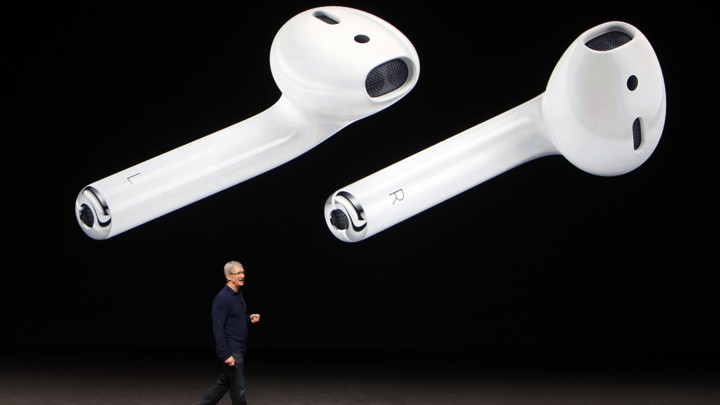 Tim Cook onstage at an Apple event in 2016Beck Diefenbach / Reuters
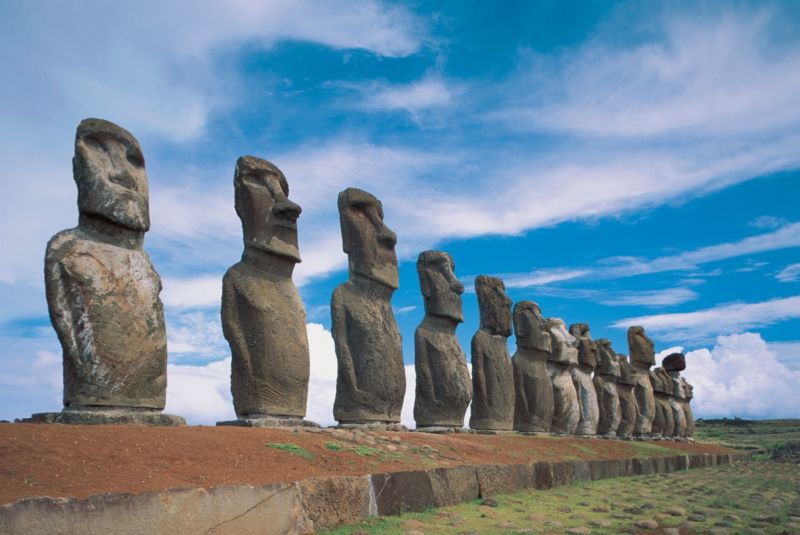 Moai statues in a row, Ahu Tongariki, Easter Island, Chile.





/cdn.vox-cdn.com/uploads/chorus_image/image/63256252/Air_Masks_2.0.png)