In the Trump administration’s ongoing race to make the U.S. poorer, sicker, and dumber, one more stomp on the accelerator comes from cuts aimed against its federal advisory committees. Whether on infectious diseases or space exploration, these panels of experts are the unpaid brains behind the brawn of the U.S. government.
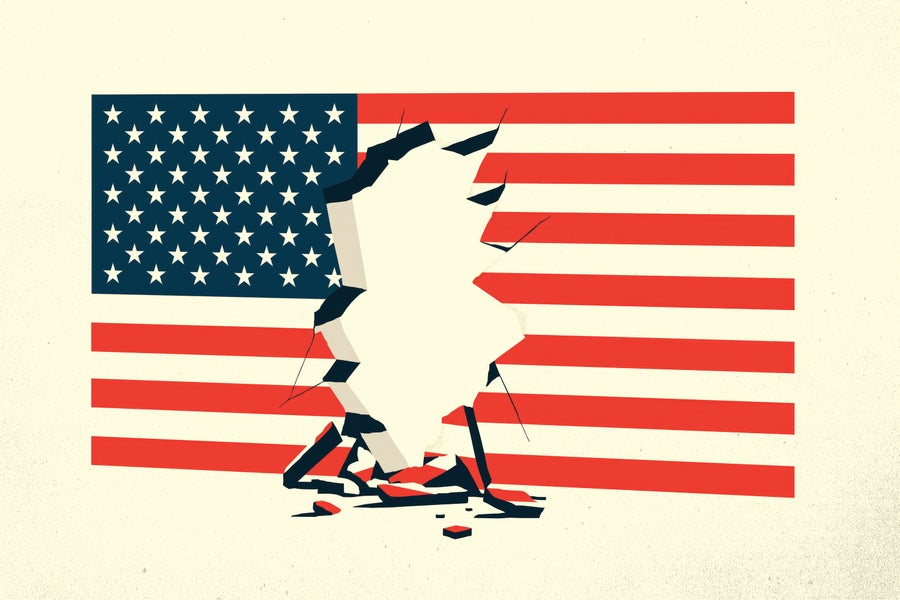
With its signature disdain for anything smacking of smarts or competence, the Trump administration now aims to destroy or neutralize them. In a February 19 executive order, Donald Trump directed his staff to compile a list of “Federal Advisory Committees that should be terminated on grounds that they are unnecessary.” The order directly terminated the HHS Advisory Committee on Long COVID (a syndrome afflicting 23 million people in the U.S. right now) and the Health Equity Advisory Committee, which sought to help underserved people access care like blood pressure medication or postpartum treatment, through Medicare and Medicaid. Since then NOAA has closed several of its advisory panels, NSF closed a dozen, NASA has consolidated its wildly disparate astrophysics, biological and physical sciences, Earth science, heliophysics and planetary sciences panels into one body, and the U.S. Geological Survey closed its new scientific integrity body, alongside five others at the Department of Interior that included a climate adaptation panel. “This means that you, the public, will be more at-risk of being harmed because the scientific integrity and misconduct issues that were prevalent before will continue to persist,” wrote integrity panel member Jacob Carter. He called the committee’s cancellation, “an indicator that this administration has no intention to uphold scientific evidence in its decisions.”He’s right; contrary to the executive order, these committees matter. Cutting away advisory panels hurts everyone and leaves the U.S. government uninformed when making critical decisions that affect millions of lives, alongside a public left in the dark about what advice agencies do receive. These advisors, a “fifth arm of the government,” have long served as a thorn in the side of polluters and lobbyists, putting them under siege for decades, and doubtless in the gunsights of the giddily for-sale Trump administration. A 2021 Ecology Law Quarterly review found past end runs around advisory committees were linked to lead pollution, fracking contamination of drinking water, and worse air quality.
Federal advisory committees operate under a 1972 law, which governs the roughly 1,000 expert committees advising federal agencies on evidence-based practices on issues like boating safety or railroad retirement benefits at a yearly cost of $400 million. The panels are a bargain, providing by law “fairly balanced” expert advice that includes disclosing financial conflicts of interest and providing information openly to the public. The best-known examples from the pandemic were those FDA and CDC panels that voted on the safety and rollout of COVID-19 vaccines to much attention.
History repeats when it comes to attacks on advisory panels. In 2019, Trump ordered a one-third cut in the number of them. The order took aim at science panels at NASA, the NSF, and the Energy Department, in particular. The first Trump administration’s sheer incompetence kept many of those kinds of closures at bay. His then EPA chief resorted to stuffing a clean air panel with industry stooges instead, and an antiabortion advocates panel lacking any scientific credibility was whipped up to eliminate fetal tissue research at NIH.
Now, however, the crush of executive orders and disregard for Congress seen in the first 100 days of the new regime make things look even more dire. The dangerous, unqualified HHS chief Robert F. Kennedy, Jr., has forced out top FDA vaccine official Peter Marks, who oversaw the vaccine panel that held steadily to public health principles during the pandemic, refusing to bend to Trump’s demand for an “October Surprise” vaccine to save himself in the 2020 election. All Department of Homeland Security advisory committees members were fired in January, halting a probe into a massive Chinese breach of U.S. telecommunications infrastructure.
The US Department of Education is resuming collection efforts on defaulted student loans starting on Monday. If you’re more than nine months behind on your student loan payments, that means your wages could be garnished as soon as this summer.
It may sound scary, but wage garnishment to pay off a debt isn’t new. Currently, some Americans have their wages garnished to pay back taxes, child support, and other debt, including student loans. It just might feel “new” since there were protections in place to allow borrowers in default time to catch up since the COVID-19 pandemic. But starting in May, payments will begin to come due.
“This is actually the norm,” said Elaine Rubin, a student loan expert and corporate communications director for Edvisors. “If a loan is in default, then actions will be taken to then collect on the default loan.”
Student loans are considered in default after you’ve missed 270 days of payments (excluding payment pauses). It’s estimated that 5 million borrowers are in default and will have their loans sent to collections next week. If you’re one of them, here’s what you need to know.
When will the government start garnishing wages for student debt?
There’s less than a week left to pull your loans out of default, with the administration indicating it plans to restart collection efforts on May 5. However, that doesn’t mean you’ll see a hit to your paycheck starting next week. The Department of Education has to notify you 30 days ahead of your wage garnishment.
Expect your defaulted student loan account to move from your current servicer to a private collections agency around the beginning of May and wage garnishment to begin about one month later, Rubin explained.
Will SAVE borrowers have their wages garnished?
There’s a lot of confusion on Reddit and social media about how wage garnishment will affect SAVE borrowers. If you’re enrolled in the Saving on a Valuable Education plan, your loans have been placed in an administrative forbearance since last summer. With SAVE on hold, millions of borrowers have not been required to make payments, which has led to some wondering if that means their loans are in default.
“It is confusing, because they haven’t been making a payment and believe that it could be at risk of defaulting,” said Rubin. “If you’re not required to make a payment because you’re in an approved forbearance, a deferment, or you actually have a $0 IDR payment, technically, you’re making a payment in that situation.”
The best way to check if your loans are in default is to visit StudentAid.gov or your loan servicer’s website to check your loan standing.
How will I know if my wages are being garnished?
You can check to see your current loan standing on the StudentAid.gov website or by logging into your loan servicer’s website. If your loans are in default and the Department of Education begins the collections process on your debt, you’ll receive a letter in the mail from the department 30 days in advance. This letter will contain your options, including the ability to voluntarily reenter repayment or object to having your wages offset.
How much can the government pull from my paycheck?
The federal government will pull a percentage of your take-home pay (the amount you receive after deductions) to put toward your student loan debt — up to 15%. It won’t take all of your paycheck. Your tax refund or Social Security benefits could also be garnished.
Can I prevent my wages from being garnished?
Yes, there are steps you can take to avoid wage garnishment, but they may not be feasible for everyone.
“As far as 100% preventing it, not everyone is going to be able to do that,” Rubin said. The two best options for most borrowers will be applying for a loan rehabilitation or direct loan consolidation. The third is to pay your loan in full, which Rubin acknowledged will not be possible for most borrowers.
CLIMATEWIRE | Time magazine selected Elon Musk as its “person of the year” in 2021 after the billionaire entrepreneur upended the car market, reinvigorated the space industry, and funded a $100 million competition for climate technologies that would remove carbon dioxide from the air and sea.
But Musk won’t attend Time’s event in New York City on Wednesday to fete the winners of that groundbreaking contest. The $50 million grand prize will go to Mati Carbon, a Houston-based startup founded three years ago that works with crushed rocks and subsistence farmers to soak up climate pollution.
It’s unclear why Musk, an environmental hero turned MAGA diehard, is skipping the capstone event for a climate contest bankrolled via his eponymous foundation. Neither he nor Time responded to requests for comment. The XPrize will be announced at the Time100 Summit, the magazine’s annual event featuring 100 influential people.
In addition to running electric-vehicle-maker Tesla and the aerospace firm SpaceX, Musk is leading President Donald Trump’s effort to downsize the federal government. The Department of Government Efficiency has slashed climate funding for research, projects and agencies.
“We live in very complicated times,” said Nikki Batchelor, who led the Musk-funded carbon removal competition at the XPrize Foundation. Prior to joining the nonprofit, she worked as an innovation adviser for the U.S. Agency for International Development — the first federal bureau effectively shuttered by Musk. (Musk has no ties to the three-decade-old foundation aside from being a donor.)
“He was one of the leading voices trying to push clean energy forward and think about innovative solutions to tackling climate change,” she said of Musk, the world’s richest person. “We’ve continued on with that.”
Batchelor spoke with POLITICO’s E&E News before XPrize publicly announced the final carbon removal contest winners, each of which removed at least 1,000 tons of CO2 in a year and provided a business plan for how they’ll reach 1 million tons annually. Since 2019, carbon removal companies have locked away about 650,000 tons in total, less than the annual emissions of two natural gas power plants.
The runners-up were NetZero, Vaulted Deep, and Undo Carbon, which netted prizes of $15 million, $8 million, and $5 million, respectively. Undo Carbon uses an enhanced rock weathering approach similar to Mati to remove CO2 from the air faster than the natural carbon cycle. NetZero and Vaulted Deep both lock away CO2 by preventing carbon-rich organic matter from biodegrading.
Commercializing carbon removal technologies is important because the world is unlikely to reduce the burning of oil, gas, and coal quickly enough to prevent the buildup of dangerous levels of heat-trapping carbon dioxide in the atmosphere and oceans. As a result, climate scientists have concluded that it will be necessary in the coming decades to increase the Earth’s carbon removal capacity by billions of metric tons annually.
.
Tesla CEO Elon Musk went from an environmental hero to a MAGA hardliner. Toby Melville/AFP via Getty Images
The U.S. Department of Education announced on April 21 that the Office of Federal Student Aid (FSA) will restart its student debt collections on May 5.
The announcement marks the first time in five years that the federal government may penalize Americans who fall behind on their student loan payments. Part of that penalization includes the resumption of “involuntary collections,” which can lead to the garnishing of wages. According to the announcement, borrowers will begin receiving collection notices through the U.S. Treasury Offset Program before any further action is taken.
“The Department will also authorize guaranty agencies that they may begin involuntary collections activities on loans under the Federal Family Education Loan Program,” per the press release. There is the disclaimer, though, that “all FSA collection activities are required under the Higher Education Act and conducted only after student and parent borrowers have been provided sufficient notice and opportunity to repay their loans under the law.”
Involuntary collections are “one of the harshest consequences borrowers can face when federal student loans fall into default,” says Ken Ruggiero, co-founder and CEO of Ascent Funding, an education loan provider. This occurs typically after 270 days, or close to nine months, of missed payments.
“It’s an aggressive, automated system that often catches borrowers off guard and deepens their financial hardship,” says Ruggiero. “In addition to the financial hardship, the student borrower is often embarrassed when their employer is notified and then implements wage garnishments.”
Here is what student borrowers should know about involuntary collections, and the advice experts offer:
What can be withheld under involuntary collections?
Through involuntary collections, the government can garnish wages, withhold tax refunds, and seize portions of Social Security checks and other benefit payments to go toward paying back the federal loan.
According to the Treasury Department, for those who have defaulted on their federal loans, the Treasury Offset Program can withhold to 100% of federal tax refunds, up to 15% of federal salaries, up to 15% of Social Security and Railroad Retirement benefits, up to 25% of federal retirement payments, 100% of payments to vendors, and 100% of travel payments for federal employees
Wage garnishment, which the Education Department’s announcement said will begin late in the summer, is when your loan holder can order your employer to withhold up to 15% of your disposable pay to collect your defaulted debt, without taking you to court.
What have Trump officials said about involuntary collections?
Department of Education Secretary Linda McMahon wrote an opinion piece in the Wall Street Journal in conjunction with the announcement of collections restarting, in which she articulated the department’s outlook.
“Borrowers who don’t make payments on time will see their credit scores go down, and in some cases, their wages automatically garnished,” she wrote. “Why? Not because we want to be unkind to student borrowers. Borrowing money and failing to pay it back isn’t a victimless offense.”
Jonathan Collins, assistant professor of political science and education at Teachers College, Columbia University, says that though this is a pre-2020 system, there is a difference here with the Trump Administration.
“Usually, standard practice for the federal government is to work with the borrowers, and if there are issues with repayment, they usually grant forbearance periods, and you can apply for extension on forbearance periods,” Collins says. “But, what [The Trump Administration is] trying to do is get rid of, if not drastically reduce, the amount of people who are in this forbearance zone.”
.
Students studying in a library.Maskot—Getty Images
Thirty-five years ago today, a revolutionary new era of astronomy began when the Hubble Space Telescope, tucked onboard the space shuttle Discovery, blasted off Earth into history. The next day, a robotic arm tipped the telescope into orbit from the shuttle’s cargo bay. Within a month, Hubble had truly begun its mission, gazing out at the cosmos for NASA and the European Space Agency with its 2.4-meter-wide starlight-gathering mirror—the largest ever launched to space at the time.
In the years since, Hubble has gathered more than 1.6 million observations and 430 terabytes of data. The telescope has revealed that supermassive black holes nestle at the heart of most large galaxies, Jupiter’s icy moon Europa may be shooting plumes of water out into space, and, in the distant future, our Milky Way galaxy will likely collide with our neighbor, Andromeda.
But the mission almost flopped.
The Hubble Space Telescope was decades in the works, even making a cameo appearance in a Superman comic in 1972, before it reached space in 1990. But after Hubble’s deployment, as the telescope began operations, astronomers realized its vision was blurry and traced the issue to a tiny imperfection in the telescope’s mirror.
Astoundingly, that mirror is still in use today aboard the observatory. Fortunately, Hubble was uniquely designed to be serviced in orbit by astronauts. NASA’s first (and most urgent) servicing mission flew in December 1993; during five separate spacewalks, astronauts installed a new primary camera able to counteract Hubble’s blurred vision, as well a bulky new apparatus that corrected the light that fed into the observatory’s original suite of instruments.
Additional shuttle missions in 1997, 1999, 2002, and 2009 also visited the observatory, extending its lifetime and expanding its view each time with new hardware and better instruments.
The results have been nothing short of breathtaking. Hubble’s position well above most of Earth’s atmosphere allows it to see the cosmos unhindered by the tempests and turbulence that all ground-based observatories face. That privileged vantage point has profoundly shaped our understanding of the solar system and universe around us.
In our own neighborhood, Hubble has studied the changing weather on the outer planets, discovered moons orbiting Pluto, and watched the once-in-a-lifetime impact of Comet Shoemaker-Levy 9 on Jupiter scar the giant planet with dark spots as big as Earth. It has even glimpsed the sun, in a feat it was most definitely not designed to attempt.
.
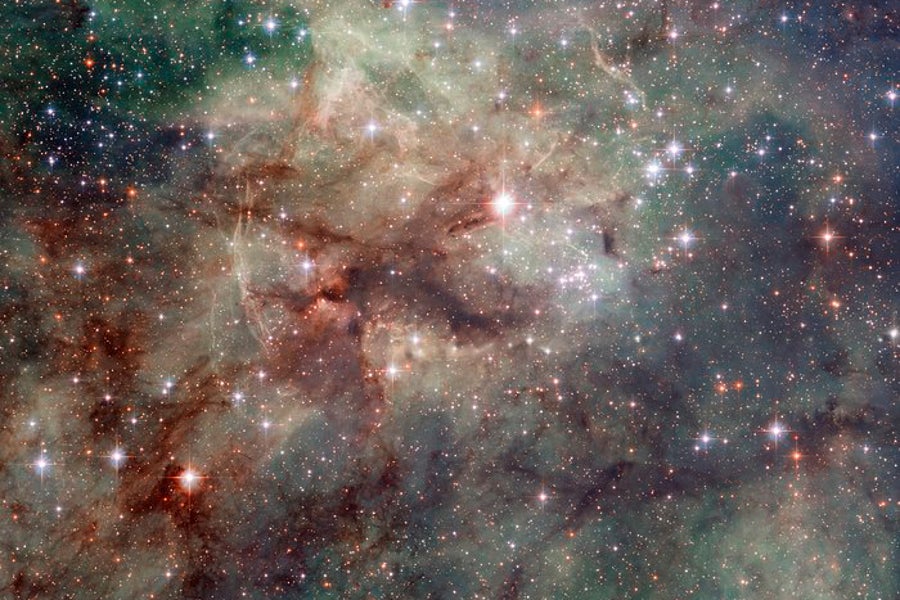
The Tarantula Nebula, located about 161,000 light-years away in the Large Magellanic Cloud bordering our Milky Way, is packed with ionized hydrogen gas dotted by supernova remnants. NASA/ESA (CC BY 4.0)
.
.
Click the link belowfor the complete article and more photographs:
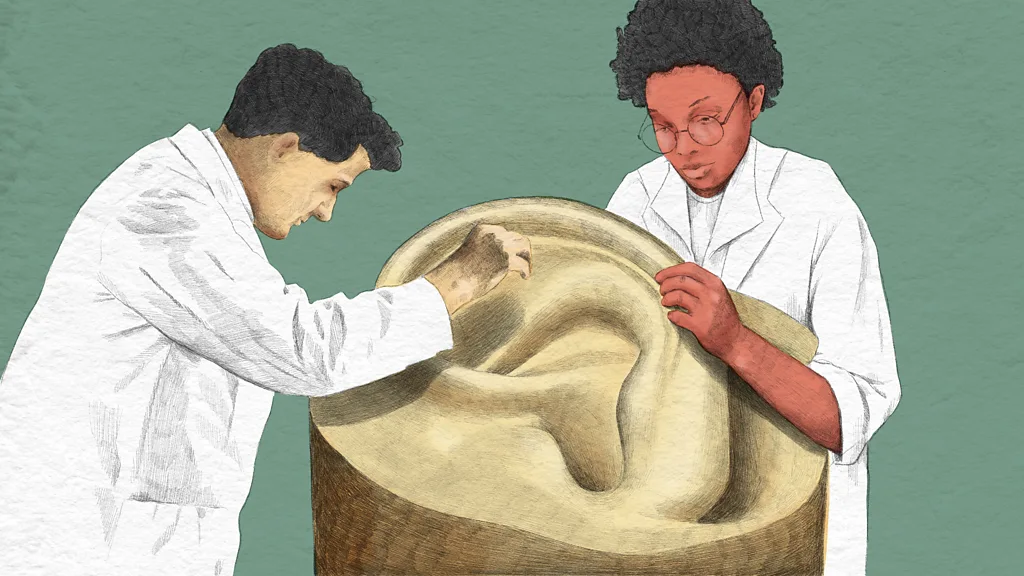
From Alzheimer’s to cancer, earwax can contain valuable indicators to a person’s health. Now scientists are analysing its chemistry in the hope of finding new ways of diagnosing diseases.
It’s orange, it’s sticky, and it’s probably the last thing you want to talk about in polite conversation. Yet earwax is increasingly attracting the attention of scientists, who want to use it to learn more about diseases and conditions like cancer, heart disease, and metabolic disorders such as type 2 diabetes.
The proper name for the gloopy stuff is cerumen, and it’s a mix of secretions from two types of glands that line the outer ear canal: the ceruminous and sebaceous glands. The resulting goo is mixed with hair, dead skin flakes, and other bodily debris until it reaches the waxy consistency we all know and try our best not to think about.
Once formed in the ear canal, the substance is transported by a kind of conveyer belt mechanism, clinging on to skin cells as they travel from the inside of the ear to the outside, which they do at a speed of approximately one 20th of a millimetre every day.
The primary purpose of earwax is debated, but the most likely function is to keep the ear canal clean and lubricated. However, it also serves as an effective trap, preventing bacteria, fungi and other unwelcome guests such as insects from finding their way into our heads. So far, so gross. And yet, possibly due to its unpalatable appearance, earwax has been somewhat overlooked by researchers when it comes to bodily secretions.
That’s now starting to change, however, thanks to a slew of surprising scientific discoveries. The first is that a person’s earwax can actually convey a surprising amount of information about them, both trivial and important.
For example, the vast majority of people of European or African descent have wet earwax, which is yellow or orange in colour and sticky. However, 95% of East Asian people have dry earwax, which is grey and non-sticky. The gene responsible for producing either wet or dry earwax is called ABCC11, which also happens to be responsible for whether a person has smelly armpits. Around 2% of people, mostly those in the dry earwax category, have a version of this gene, which means their armpits have no odour.
However, perhaps the most useful earwax-related discoveries relate to what the sticky stuff in our ears can reveal about our health.
Important clues
In 1971, Nicholas L Petrakis, a professor of medicine at University of California, San Francisco, found that Caucasian, African-American and German women in the USA, who all had “wet earwax”, had an approximately four-fold higher chance of dying from breast cancer than Japanese and Taiwanese women with “dry” earwax.
More recently, in 2010, researchers from the Tokyo Institute of Technology took blood samples from 270 female patients with invasive breast cancer, and 273 female volunteers who acted as controls. They found that Japanese women with breast cancer were up to 77% more likely to have the gene coding for wet earwax than healthy volunteers.
Nevertheless, the finding remains controversial, and large-scale studies in Germany, Australia and Italy have found no difference in breast cancer risk between people with wet and dry earwax, although the number of people in these countries with dry earwax is very small.
What is more established is the link between some systemic illnesses and the substances found in earwax. Take maple syrup urine disease, a rare genetic disorder that prevents the body from breaking down certain amino acids found in food. This leads to a buildup of volatile compounds in the blood and urine, giving urine the distinctive odour of maple syrup.
The exercise is all over social media: A trainer will kneel on a bench, then slowly lower himself forward at the knees until head and chest are within inches of the floor. Then he’ll somehow power back up, having completed the full “Nordic curl.”
The popularity of the move has inspired a new class of gym equipment—specialized benches made for Nordic curls—and sparked a new love affair with an oft-neglected muscle group: your hamstrings. These are the main muscles worked during the full Nordic.
Building them up can insulate you against injuries, power you to run faster, and complete your physique, too. “Hamstrings are very aesthetic,” says Dr. Mike Israetel, a strength training expert and content creator. “And they actually require very little volume to train effectively if you use good technique.”
Interest in those hamstrings has helped push leg day back into prominence. For most gym-goers, leg day has long been a day to dread, filled with vicious exercises, like squats and deadlifts, that torch your entire body. “It hurts at a deep, systemic level,” Israetel says. “It’s malaise writ large.”
That’s due to the sheer size of the muscles involved: The quadriceps (front thigh), adductors (inner thigh), and hamstrings are among your largest muscle groups, demanding huge amounts of oxygen during any session. They also need large loads to challenge them, so your spine and core are heavily recruited, too. Moves like squats and lunges are the equivalent of an “all units” alarm for your entire nervous system.
It’s the stuff that “I survived #legday” memes are made of—but gutting out these sessions will fuel total-body gains. All those heavy lunges, for example, are like a free workout for your abs. And any set of deadlifts not only builds your glutes but also hones forearm strength and layers muscle onto your back. Plus, you’ll burn major calories on leg day, in part because of the sheer weight you’re moving.
It all makes leg day worthwhile, no matter your fitness goal, even if you never attempt the Nordic curl.
Must-Do Hamstring Moves
Stiff-Legged Deadlift
How To Do It: Meet the finest hamstring exercise out there. Stand holding a barbell at your hips, knees bent just slightly, then push your butt back and lower your torso until it’s nearly parallel to the floor. Keep the bar near your shins as you do this. Pause, then stand back up.
Nestled in the Heritage Foundation’s Project 2025, the slash-and-burn playbook for the federal government that the Trump administration is following while saying it isn’t, is a call for American “science dominance.”
There is no such thing. And what the project means by the term—turning the Department of Energy into a handmaiden of the coal, oil and natural gas industry—betrays not only the taxpayer but science itself.
Science isn’t a winner-take-all, zero-sum game of flag football. Whether during the cold war or the era of Sir Francis Bacon’s New Atlantis, the bedrock of science has been international cooperation. People pursue scientific knowledge not solely for the sake of lording our spoils over everyone else. The monetary value of research is not the only reason why humans engage in asking why of the world around us.
Science breeds diplomacy. It counters division. It tells us what is, not what we want things to be. Science enables democracy. The way the Trump administration is approaching it, by cutting funds for projects that run afoul of conservative values, such as ones related to diversity, or calling for research into claims that have already been debunked, which is the case for the idea that vaccines are linked to autism, defies all this. If that approach succeeds, it will make us a poorer nation in every sense of the word.
By halting federal funds to scientific research, canceling university grants and threatening to deport immigrant scientists, the Trump administration is restricting the flow of ideas. By trying to legitimize debunked scientific ideas and allocating taxpayer dollars to research into those debunked ideas, the administration sows discord and undermines the role of public health in preventing sickness and disease. By canceling global aid for public health projects, the administration is shunning the U.S. role in global health. And in their push for energy dominance, Trump and his allies are kicking years of negotiation over climate change to the curb.
By becoming insular, by cutting out the world, we stand to lose our best and brightest minds in science and the exchange of ideas that leads to innovation. Our country is a scientific and economic powerhouse precisely because we have been so open and collaborative for so long. China’s academic scientific output, as measured by publications in Nature journals, has surpassed that of the U.S. How can cutting federal science funding help the administration’s intellectual war with China? How can the U.S. further its national interests if we shut out ideas and people? How does democracy survive if we stop research and the flow of information?
In setting the stage for the role of the U.S. government in science, Vannevar Bush told President Harry Truman in 1945 that “scientific progress is one essential key to our security as a nation, to our better health, to more jobs, to a higher standard of living, and to our cultural progress.” He noted the federal government’s role in supporting agricultural research and said, “The time has come when such support should be extended to other fields.”
From the 1950s on, the U.S. government has been the largest funder of scientific research in the nation, not to mention the world. Those dollars have helped develop countless drugs, and a wide assortment of military and domestic machinery, and they have paid the salaries of millions of researchers. Those dollars have saved people and helped industrialize nations the world over.
CLIMATEWIRE | One of the biggest mysteries surrounding President Donald Trump’s EPA is how it plans to revoke the endangerment finding — the lifeblood of most climate regulations.
Hints about its strategy may have been hiding in plain sight for a month now, ever since EPA announced a slew of deregulatory actions in a single afternoon.
Experts said EPA may be betting that it can upend the scientific finding, which paved the way for the nation’s rules on climate pollution on cars, power plants, and across other sectors, without taking direct aim at the overwhelming evidence that greenhouse gases are driving up global temperatures.
Instead, EPA Administrator Lee Zeldin and other officials whom the president tasked in January with undoing the finding could raise questions about whether a sector — or even the whole country — contributes enough climate pollution globally to warrant regulation.
They may also try to redefine how air pollution can harm the public — a necessary predicate for regulating greenhouse gases under the Clean Air Act.
“Maybe they’ll change their mind, but they seem to have an idea of how they want to go about revoking the finding,” said Jeff Holmstead, who served as EPA’s air chief under President George W. Bush.
Jettisoning the endangerment finding could allow the Trump administration to tear out U.S. climate rules by the roots, helping it avoid years of painstaking work to finalize replacement rules that would likely be weaker, according to experts. It would also make it harder for future presidents to regulate other sectors that are contributing to climate change, because the scientific finding would have to be resurrected first.
Experts see hints of that strategy in a relatively detailed press release the agency issued last month, when it announced a barrage of steps it plans to take to roll back climate rules.
Holmstead called the document “very telling.”
He and other experts say the administration may take aim at the cost increases that regulations have on energy and other pillars of Americans’ lives, not at atmospheric science directly. That could allow EPA to skip the cumbersome process of assembling panels of contrarian scientists to build an alternative record on the indisputable link between human emissions and global warming
“They can probably get it out in the next few months,” Holmstead said of a proposed endangerment finding that focuses on regulatory costs. “They won’t need to spend a lot of time — and Federal Register pages — reviewing the science.”
EPA did not respond to requests for comment for this story, but Zeldin offered new details in a combative press conference last week about how he intends to revise the finding. He said the agency plans to undertake a formal rulemaking process with public comment.
“There isn’t a set timeline here,” Zeldin said, in response to a question by POLITICO’s E&E News. “As we go through the process with regards to the dozens of different actions that we are going to start rulemakings on, they each will follow the Administrative Procedures Act, and we’ll make sure that the actions that we take on everything are as durable as possible.”
That indicates the endangerment finding won’t be killed overnight using an executive order, as Trump effectively did earlier this month on rules requiring showerheads to use less water.
But EPA could still move quickly to revoke the finding.
“It’s going to get done,” said Michael McKenna, an energy lobbyist who led Trump’s transition team at the Department of Energy in 2017. “It’s just a question of when and what it looks like, and how long is it going to take.”
McKenna noted that some people in Trump’s orbit have been thinking about how to revise the endangerment finding for more than 15 years, since it was finalized under President Barack Obama, who issued the first rules based on it.
.
The Environmental Protection Agency flag flies outside the EPA headquarters in Washington on Thursday, February 6, 2025. EPA Administrator Lee Zeldin’s strategy for unraveling a key finding that underpins climate rules is taking shape. Bill Clark/CQ-Roll Call, Inc via Getty Images
Spoiler alert: washing your hair once a week may not be a good idea. And yes, even when it feels clean.
The debate around how regularly you should wash your hair is a heated one, but we’re hoping to settle it finally. While some experts say that washing your hair once a week is fine as long as you use a good shampoo and your hair responds well to that frequency, there’s another side to the argument. If your hair is extremely dry and not washed often enough, it can lose its natural moisture with age. According to stylist Rosi Fernandez, director of Ananda Ferdi, it is not advisable to go for more than a week without washing hair, as “follicles become clogged and do not get oxygenated,” she explains.
When it looks clean, but it’s not
As someone who washes my hair every day, I’ve always been a bit envious of people who can go for several days without. For example, the Kardashians’ stylist, Jen Atkin, said in an interview with Allure that she could go up to four or five days without washing, and that it was only on the last day she would resort to an updo with a sharp center parting as that’s when it started to get dirty. But the reality is that although the hair may appear to be clean, pollution (one of the major aggressors of hair in 2023) has dirtied it without you realizing it. “It may look like the hair is clean, but with pollution, sweat, tobacco smoke… the hair becomes saturated,” explains Fernandez.
The consequences of pollution (and not enough washing)
According to Fernandez, when hair is washed less than twice a week, the follicles become clogged, and this can cause a range of problems: scalp flaking, itching, sensitivity, dandruff, and even hair loss. These small particles, which are invisible to the eye, prevent the hair from oxygenating well, which is why it is advisable to wash it more often, even with thick, dry hair that you might not feel the need to wash so frequently. The effects that pollution has on hair were studied all the way back in 1994, by the Industrial Toxicology Research Centre in Lucknow. “At that time, it was shown that suspended particles, smoke, and pollutant gases were deposited on the hair and scalp, causing inflammatory and irritative reactions that can even lead to hair loss,” explains Adolfo Remartínez, founder of Nuggela & Sulé.
Washing it twice a week
There is no universal rule for the frequency of washing hair because, as Fernandez points out, you also have to take into account the place where you live or the lifestyle you lead. “It is not the same living in a city with a lot of pollution as living in the countryside,” she says. “The climate, riding a motorcycle or a car, playing sports, the quality of the water used for washing, et cetera, also play a role.” However, even when hair is dry and thick, experts advise washing at least twice a week to remove all the residues that can accumulate on the scalp, and that saturate and weaken the hair. Fernandez also recalls the importance of emulsifying shampoo in your hands before applying it, especially if it’s an organic product. “A good rinse gives hair its shine,” she concludes.
Film and Writing Festival for Comedy. Showcasing best of comedy short films at the FEEDBACK Film Festival. Plus, showcasing best of comedy novels, short stories, poems, screenplays (TV, short, feature) at the festival performed by professional actors.

 Rob Dobi/Getty Images





 (Credit: Emmanuel Lafont/ BBC)

 Rob Dobi/Getty Images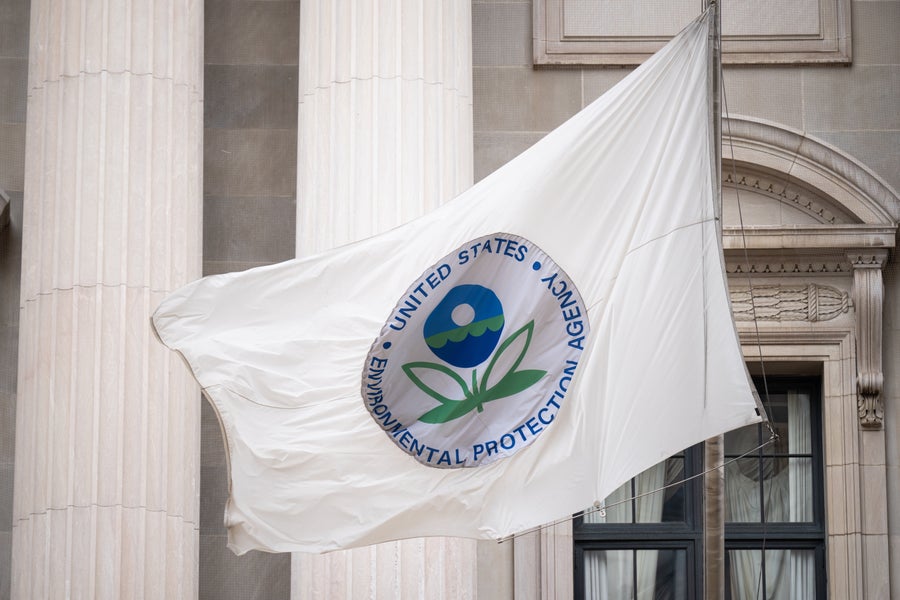


 James' World 2