Home

Minneapolis Live Updates: Videos Appear to Contradict Federal Account of Killing

Leave a comment

Hmmmm … MAGA is next lookout!

Click the link below the picture

.

Here’s the latest.

Federal officials sought to portray a 37-year-old Minneapolis resident killed by Border Patrol agents on Saturday as a domestic terrorist, saying he wanted to “massacre” law enforcement, even as videos emerged that appeared to directly contradict their account.

The man, Alex Jeffrey Pretti, was an intensive-care nurse described by the Minneapolis police chief as a U.S. citizen with no criminal record. Federal officials said he was armed, but there is no sign in videos analyzed by The New York Times that he pulled his weapon, or that agents even knew he had one until he was already pinned on the sidewalk.

An agent had already removed Mr. Pretti’s gun when two other agents opened fire, shooting him in the back and as he lay on the ground. At least 10 shots were fired, killing him. Mr. Pretti had a legal permit to carry a firearm, said the police chief, Brian O’Hara.

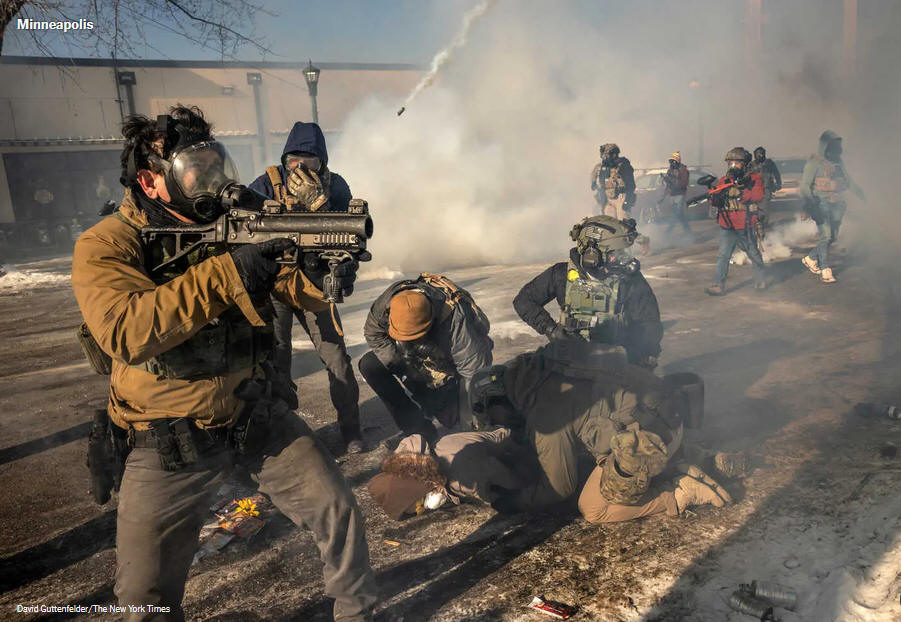
The shooting on a frigid morning in Minneapolis’s Whittier neighborhood renewed protests and clashes with law enforcement in a city where tensions have reached a breaking point after weeks of aggressive federal immigration action. Federal agents deployed tear gas and flash bangs to drive demonstrators away from the shooting scene as they demanded that local police officers arrest the agents who killed Mr. Pretti.

Officials said protests in Minneapolis had remained mostly peaceful, with a few exceptions. But as dusk fell, officials deployed the National Guard to ensure that demonstrations did not turn violent. At least 1,000 people turned out for a vigil for Mr. Pretti in Whittier Park on Saturday night, despite subzero temperatures.

A colleague of Mr. Pretti, Dimitri Drekonja, said he had worked as a nurse at the Veterans Affairs hospital in Minneapolis. “He was a really great colleague and a really great friend,” Mr. Drekonja said. “The default look on his face was a smile.”

Here’s what we’re covering:

  • Video analysis: Video footage posted to social media and verified by The Times shows Mr. Pretti stepping between a woman and an agent who is pepper-spraying her. Other agents then pepper-spray Mr. Pretti, who is holding a phone in one hand and nothing in the other. His weapon remains concealed until federal agents find and take it from him. Concealed or open carry is legal for permit holders in Minnesota.

  • Federal claims: President Trump and administration officials declared without evidence that Mr. Pretti intended to attack federal agents. Gregory Bovino, the official in charge of the president’s Border Patrol operations, said that Mr. Pretti was intent on a “massacre.” Kristi Noem, the Homeland Security secretary, said, “This looks like a situation where an individual arrived at the scene to inflict maximum damage.” Their accounts directly contradict video evidence of the encounter. Read more ›

  • Investigators blocked: Drew Evans, who heads the Minnesota Bureau of Criminal Apprehension, said federal agents had initially barred state investigators from the scene of Saturday’s shooting. Mr. Evans said his agency took the rare step of obtaining a search warrant for access to a public sidewalk, but were still stymied. Federal officials eventually left the scene after clashing with protesters, but the demonstrations had grown large enough by that point to prevent state agents from investigating.

  • Self-investigation: Federal authorities said the Department of Homeland Security, which includes ICE and Border Patrol, would lead the federal shooting investigation, with assistance from the F.B.I. But senior Homeland Security and Justice Department officials said it was already clear that Mr. Pretti and local officials were to blame.

  • Minneapolis outrage: Mayor Jacob Frey accused the Trump administration of terrorizing his city. “How many more Americans need to die or get badly hurt for this operation to end?” he asked. At least two other people have been shot there by federal agents this month, including Renee Good, 37, who was killed on Jan. 7.

  • “Force of good”: Accolades poured in for Mr. Pretti from those who knew him. Ruth Anway, another nurse who worked with him, described Mr. Pretti as a passionate colleague and kind friend with a sharp sense of humor. “He wanted to be helpful, to help humanity, and have a career that was a force of good in the world,” she said. 

Alex Jeffrey Pretti, the nurse who was fatally shot by federal agents in Minneapolis on Saturday, graduated from Preble High School, a public school in Green Bay, Wis., in 2006, a spokeswoman for the school district said in an email. Mr. Pretti attended the University of Minnesota’s College of Liberal Arts and graduated in 2011, a spokeswoman for the university said.

Mary Moriarty, the elected prosecutor in Hennepin County, which includes Minneapolis, said in a video statement that her office, along with state officials, was “committed to conducting an objective investigation into this case.” She encouraged people with information that might help that investigation to submit materials through an online portal.

Five Twin Cities suburbs filed a legal brief on Saturday asking a federal judge to impose limits on how federal immigration agents carry out their work. The brief is part of a lawsuit filed by the state of Minnesota and the cities of Minneapolis and St. Paul that challenges the legality of the ICE surge and the tactics of federal agents. A hearing in the case is set for Monday.

Senator Chuck Schumer of New York, the Democratic leader, said in a statement that Senate Democrats would vote to block a bipartisan spending package that would fund the Department of Homeland Security and other parts of the government. The Senate is set to take up the measure, which includes $10 billion for ICE, ahead of a shutdown deadline at the end of January. “Senate Democrats will not provide the votes to proceed to the appropriations bill if the DHS funding bill is included,” he said.

The civil rights division of the Justice Department, which has historically investigated shootings involving federal law enforcement officials, is not expected to investigate the shooting of Alex Pretti in Minneapolis, according to two senior law enforcement officials who spoke to discuss internal decision-making. Todd Blanche, the No. 2 official in the department, made the same decision after Renee Good was killed.“This is not another vigil,” one speaker said at a large protest in Whittier Park in Minneapolis. “This is the damn turning point.” Many of the protesters marched in downtown Minneapolis on Friday and were protesting in subzero temperatures again on Saturday night.

https://static01.nyt.com/images/2026/01/24/multimedia/24minneapolis-ice-bclf/24minneapolis-ice-bclf-jumbo.jpg?quality=75&auto=webp

David Guttenfelder/The New York Times

.
.

.

Click the link below for the complete article:

https://www.nytimes.com/live/2026/us/minneapolis-shooting-ice

.

__________________________________________

How CDC’s Vaccine Rollback Will Affect Winter Respiratory Virus Season

Leave a comment

Click the link below the picture

.

Cases of winter viruses in the U.S. have exploded in recent months—and soon kids may be less protected from them, thanks to new vaccine guidelines.

Amid a worsening respiratory illness season, the Centers for Disease Control and Prevention recently rolled back its universal childhood vaccine recommendations from addressing 17 diseases to just 11. The CDC no longer recommends that all children be vaccinated against influenza and rotavirus—instead, it recommends these vaccines based on individual discussions with doctors only. And the agency recommends that vaccines that protect against meningococcal bacteria and hepatitis A and B be given to children in high-risk groups only.

All of these vaccines remain available to parents who want their kids to receive them, and they are fully covered by both private and public insurance. Nevertheless, public health experts warn that the changes will reduce vaccination rates and increase disease rates.

Concerningly, the changes prominently affect seasonal diseases that spike during the winter and are notorious for causing high rates of pediatric hospitalizations and even deaths—most notably, influenza. The timing couldn’t be worse: nationwide health care visits for flu-like symptoms recently hit a record high in nearly 30 years of tracking.

“The speed at which the flu season is ramping up in terms of total cases is quite impressive,” says Andrew Pekosz, a virologist at the Johns Hopkins Bloomberg School of Public Health. And he anticipates the numbers will only grow. “We’re closer to the beginning than the end of the flu season,” Pekosz says.

It’s still too early to understand whether certain age groups are being hit worse this year than others, he adds, although the CDC has already reported 17 pediatric deaths this season. But the 2024–2025 flu season was remarkably deadly for kids—289 children were reported to have died of the virus, the highest number of pediatric deaths from flu since the CDC started tracking pediatric flu deaths in 2004. Of those who died that had a known vaccination status, only one in 10 was fully vaccinated—a testament to the flu shot’s protection.

Children are more likely than those in any other age group to catch the flu. Yet only slightly more than half of two-year-old children in the U.S. were fully vaccinated against the flu in 2023, the latest year for which full data are available. Until this month the CDC recommended annual shots beginning at six months of age. “Uptake for the flu vaccine has been relatively low and dropping,” says Flor Muñoz, a pediatric infectious diseases specialist at Baylor College of Medicine. So far this flu season, childhood vaccination is at less than 43 percent. More children may still get vaccinated, but for comparison, the pediatric uptake rate at this point in the 2019–2020 season, before COVID truly hit, was 54 percent.

The CDC’s new policy entirely removes the formal recommendation for the influenza vaccine for kids, leaving discussions of the vaccine entirely in the hands of parents and care providers. “To me, it doesn’t really make much sense to take away that recommendation when you know, scientifically, that there’s a benefit,” Pekosz says.

Instead, decisions about flu vaccination will be made through shared clinical decision-making—having health care providers discuss the risks and benefits of a medical intervention with the patient or their family.

But providers already routinely have these discussions with parents, says Kathryn Edwards, a pediatric infectious disease specialist and vaccinologist, now emerita at Vanderbilt University School of Medicine. “Parents are always part of the decision for vaccines to be administered.”

Shared clinical decision-making now applies to vaccines for three key infections; the COVID vaccine received the designation this summer, and the new guidelines extended it to the rotavirus vaccine, as well as influenza. Rotavirus causes a diarrheal infection that spreads year-round but is most common in the winter and spring. The disease has largely flown under the radar because vaccines introduced in 2006 starkly reduced hospitalization rates from the virus. This vaccine is administered orally and has had a relatively high uptake—vaccination rates have hovered between about 70 percent and 75 percent since the 2010s. Muñoz fears that the move away from a universal recommendation to shared clinical decision-making could result in increasing cases of and hospitalizations from rotavirus as soon as this year.

Experts worry the CDC’s new approach to vaccines will erode other recent victories for children’s health as well. Respiratory syncytial virus, or RSV, is another “big hitter” winter infection, alongside flu, Edwards says. Traditionally, nine in 10 children have caught the virus within their first two years, and it sends more than 58,000 kids younger than five years old to the hospital every year in the U.S. The disease is the leading cause of hospitalization in babies.

An RSV vaccine for pregnant people and a protective antibody shot for babies were both approved for general use in 2023. In the 2024–2025 season, the prevention efforts caused “a remarkable reduction in the burden of RSV,” Edwards says. The new guidelines don’t change RSV vaccinations for either pregnant people or babies, but Secretary of Health and Human Services Robert F. Kennedy, Jr., has questioned the antibody shots’ safety despite evidence from clinical trials.

Other standard childhood vaccines—including against polio, measles, whooping cough, and chickenpox—remain fully recommended for all children, but experts still worry that the broad hits to the vaccine schedule will ultimately reduce those vaccines’ usage as well.

In addition, reducing pediatric vaccine coverage for very contagious infections will increase overall cases for everyone as children spread illness among their peers and older family members. And for seasonal illnesses, the risk runs highest during the winter. “We are really surrounded by a sea of viral infections,” Edwards says.

.

https://static.scientificamerican.com/dam/m/7a1928600370f847/webimage-GettyImages-1404362796_web.png?m=1768344991.33&w=900Fajrul Islam/Getty Images

.

.

Click the link below for the complete article:

https://www.scientificamerican.com/article/rfk-jr-s-new-kids-vaccine-guidelines-will-worsen-flu-and-other-winter/

.

__________________________________________

The Trump administration has a Nazi problem

Leave a comment

Click the link below the picture

.

Which way, western man?

That was the title of a racist tract published in 1978 by William Gayley Simpson, a former leftist Christian pastor turned one of the most influential neo-Nazi ideologues in American history. The book helped radicalize an entire generation of white supremacists in the US, with its vicious antisemitism, opposition to all forms of immigration, and open praise for Hitler. The purpose of the book, wrote Simpson, was “to reveal organized Jewry as a world power entrenched in every country of the white man’s world, operating freely across every nation’s frontiers, and engaged in a ruthless war for the destruction of them all”.

In recent decades, Which way, western man? has become a popular meme – but only on the far-right fringes of the internet.

Until, that is, the return of Donald Trump to the White House. Last August, the X account of Trump’s Department of Homeland Security (DHS) posted an ICE recruitment poster featuring an Uncle Sam figure holding a “law and order” sign while standing by a crossroads post featuring arrows reading “invasion” and “cultural decline”. The DHS caption? “Which way, American man?”

We ran high-level US civil war simulations. Minnesota is exactly how they start

Shocking? Yes. Coincidence? Nope. Earlier this month, the official White House Twitter account posted a cartoon of Greenlandic huskies with Danish flags on their sleds facing a choice between the White House on one side and China’s Great Wall and Russia’s Red Square on the other. The White House’s caption? “Which way, Greenland man?”

It should be one of the biggest stories in the United States, if not the world. Eighty years after the death of Hitler and the defeat of Nazi Germany, the US government, in the form of the Trump administration, has a Nazi problem.

Think I’m exaggerating? Consider the copious amounts of evidence. On social media, as recent investigations by CNN, NBC News and PBS NewsHour have all confirmed, official government accounts can’t stop posting Nazi imagery and memes, using dehumanizing language about migrants, and leaning heavily into fascist aesthetics.

The Department of Labor posted a video with the caption “One Homeland. One People. One Heritage”, recalling the Nazi slogan “Ein Volk, ein Reich, ein Führer” (“one people, one realm, one leader”). Another tweet from the Department of Labor announced that “America is for Americans,” which sounds a lot like another notorious Nazi slogan: “Deutschland den Deutschen (“Germany for Germans”).

And the Nazi rhetoric goes far beyond internet memes. Earlier this month, DHS secretary Kristi Noem stood behind a podium which said “One of ours, all of yours” – a phrase that “seems related to the practice (although not the explicit policy) of collective punishment used by the Nazis against their enemies”, according to Holocaust historian Page Herrlinger. Last year, the White House deputy chief of staff, Stephen Miller, gave a demagogic speech at Charlie Kirk’s memorial service that sounded like it had been plagiarized from Nazi propaganda minister Joseph Goebbels’s 1932 speech The Storm is Coming. Even the myth-busting website Snopes could not help but “observe the similarities” between Miller and Goebbels’s fascist rhetoric.

Then there is the staffing issue. In February 2025, it emerged that James Rodden, an ICE prosecutor in Texas, had been running a social media account praising Hitler and declaring that “America is a white nation”. This is a federal prosecutor – not a teenager or a troll – pushing Nazi ideology. He was pulled from his post after the story first broke, but this month it appears he returned to work. When the Texas Observer, which broke the story, called Rodden for comment, he had none, and referred reporters to his press office.

Then there’s Paul Ingrassia, the former White House liaison to the DHS now serving as acting general counsel at the General Services Administration, who once allegedly declared in a group chat: “I do have a Nazi streak in me from time to time, I will admit it.” In June 2024, he was also spotted at a rally in Detroit headlined by Holocaust denier Nick Fuentes. (In a statement to Politico, Ingrassia’s attorney said about alleged leaked text messages: “Looks like these texts could be manipulated or are being provided with material context omitted. However, arguendo, even if the texts are authentic, they clearly read as self-deprecating and satirical humor making fun of the fact that liberals outlandishly and routinely call MAGA supporters ‘Nazis’.”)

There’s also Ed Martin, the pardon attorney at the Trump DoJ, who appeared at multiple events with a 6 January rioter called Timothy Hale-Cusanelli and referred to him as an “amazing guy”, “extraordinary leader”, and “great friend”. Hale-Cusanelli was described by federal prosecutors as a “Nazi sympathizer” who went to work in a “Hitler mustache”. (Martin has since gone on to distance himself from Hale-Cusanelli after scrutiny and has condemned his views.)

How does this rhetoric and behavior from Trump administration officials and social media accounts not amount to the normalization of Nazis and Nazism? And how are the rest of us supposed to be OK with any of this?

As ever, the rot of course starts at the top with Trump himself. His own vice-president once suggested he might be “America’s Hitler” (regarding his vocal critiques of Trump, he has since said “I was wrong”). Trump’s first wife said he kept a book of Hitler’s speeches in a cabinet by his bed. (Trump said he was “given the book by a friend”.) Trump has repeatedly used language lifted straight out of the pages of Mein Kampf, denouncing his political opponents as “vermin” and accusing immigrants of “poisoning the blood” of the nation.

In 2022, he hosted Ye, a Hitler admirer, and Fuentes, the Holocaust denier, for dinner at Mar-a-Lago. (While Trump has reportedly distanced himself from Fuentes, he stopped short of condemning or denouncing him.) During his first term, the president’s own former chief of staff claimed Trump spoke admiringly of Hitler and said he did “some good things”. (In a lawsuit against CNN, Trump alleged that any suggestion that he “would be Hitler-like in any future political role” is “false and incendiary”, as it is to suggest any association between [himself] and Hitler”. The lawsuit was dismissed.)

To be clear: this isn’t about calling everyone the left disagrees with a Nazi, as Trump administration spokespersons like to claim; it’s about recognizing when actual Nazis are not just right in front of us but in power. So here’s a simple rule for Trump and his friends: if you don’t want to be called Nazis, stop hiring Nazis, quoting Nazis, and posting Nazi imagery.

But don’t expect any of that to stop any time soon. In his first term, the president praised neo-Nazis as “very fine people,” and then his acolytes spent years desperately denying he had ever done so. Today, there is very little denial, shame, or contrition. The United States government under Trump has made a deliberate, calculated, and shameful decision to embolden and enable Nazi-glorifying elements within his party; to elevate and amplify Nazi messaging.

Don’t take my word for it. Last year, Dalton Henry Stout, founder of the neo-Nazi Aryan Freedom Network, said the quiet part out loud: “[Trump] awakened a lot of people to the issues we’ve been raising for years. He’s the best thing that’s happened to us.”

Stout went even further: “Our side won the election.”

  • Mehdi Hasan is the editor-in-chief and CEO of Zeteo

.

Think I’m exaggerating? Consider the copious amounts of evidence

Donald Trump

‘Eighty years after the death of Hitler and the defeat of Nazi Germany, the US government, in the form of the Trump administration, has a Nazi problem.’ Photograph: Evan Vucci/AP

.

.

Click the link below for the complete article:

https://www.theguardian.com/commentisfree/2026/jan/22/trump-administration-nazi-problem?CMP=oth_b-aplnews_d-1

.

__________________________________________

Sexual Health

Leave a comment


Note: There are links in Delayed Orgasm, Sober Sex, S.T.I. Decline, and Romantasy.

Click each link read the associated article then click the next link etc.. The set of links appears after each article.

Give yourself a Gold Star if you can read all of the articles. Have fun!

.

What to Know About Your Sexual Health

Sexual health can be an important part of personal well-being. The information below can help you demystify this often misunderstood topic.


  • How to Improve Libido: Experts say scheduling sex is fine, but there are even more effective ways to cultivate intimacy.

  • Delayed Orgasm: The condition affects one in 10 men over 40, and can make sex difficult.

  • Sober Sex: For those who rely on alcohol to loosen up, getting intimate without it can be tricky. But there are big payoffs, experts say.

  • S.T.I. Decline: After decades of unrelenting increases, rates of sexually transmitted infections in the United States are showing hints of a downturn.

  • Romantasy: Books in this genre have helped some readers talk openly about yearning, sex, and desire. And it’s spilling over into their bedrooms.

.

__________________________________________

Does String Theory Explain the Wiring of the Brain?

Leave a comment

Click the link below the picture

.

Does string theory—the controversial “theory of everything” from physics—tell us anything about consciousness and the human brain?

Outside of the theory itself being devised by conscious humans using their brains, there’s scant reason to think so. In a nutshell, string theory is a sprawling realm of theoretical physics that assumes that tiny vibrating strings are the fundamental basis of reality. If valid, it offers ways for unifying the quantum mechanics that govern the universe on small scales with the gravitational force that shapes the cosmos at larger scales. But the proposed strings are so unimaginably minuscule, and their associated math is so difficult and diverse, that the theory is widely considered to be experimentally unverifiable. Consciousness, meanwhile, is a notoriously slippery and ill-defined thing, but it generally seems to be an emergent property of biology, such as assemblages of neurons within our brains.

No meaningful overlap exists between these vastly disparate domains. Or does it? A new paper, published last week in Nature, posits that some of the arcane math of string theory actually helps explain the wiring of a brain’s neurons—as well as the branching of other “physical networks” such as tree limbs, blood vessels, and anthills. “The work,” trumpets one institutional press release, “represents the first time string theory … has successfully described real biological structures.”

Senior author Albert-László Barabási, a distinguished professor and network scientist at Northeastern University, emphasizes that the paper isn’t claiming any profound, direct relationship between string theory and neuroscience. Rather, it’s showing how mathematical techniques that have been developed in string theory can be used to better describe how physical networks organize themselves. But even so, using string theory’s math to understand neural wiring would be a surprisingly practical feat, given that the theory is so tenuously tethered to physical reality that skeptical physicists have called it “not even wrong.”

The potential linkage, Barabási says, springs from the fact that “physical networks are physically costly and thus try to optimize themselves,” even if we don’t yet know what exactly they optimize. The simplest approach would be a “wiring diagram” following the shortest routes between any two nodes to minimize length, but detailed three-dimensional scans and maps of physical networks have revealed more complex branching geometries and connections that show that some different optimization must be occurring. So instead Barabási and his team sought to explain how the structure of physical networks optimizes for minimal surface area rather than other factors such as length or volume.

“For many of these networks, like the vascular system that carries blood or the neurons that use ion channels to pump out neurotransmitters, you’re really talking about a tube, and the greatest cost is to build the surface,” he says. “But modeling surface minimization is a hell of a mathematical problem because you need to create locally smooth surfaces that patch into each other in a continuous way.”

Barabási’s former postdoc and the study’s first author, Xiangyi Meng, now an assistant professor at Rensselaer Polytechnic Institute, realized that the seemingly intractable calculation was essentially identical to one for which string theorists had already developed sophisticated tools.

“While the mathematics of minimal surfaces has deep historical roots, our work relies on a specific advancement that classical geometry does not offer,” Meng says—namely, a subtype of string theory called “covariant closed string field theory,” which was developed by Massachusetts Institute of Technology physicist Barton Zwiebach and others in the 1980s.

Covariant closed string field theory allows physicists to compute the smoothest, most efficient interactions—akin to minimal surfaces—between certain types of strings by treating them as vertices (corners) and edges; this approach is important for string-theory-based attempts to unify gravity and quantum mechanics. In the case of physical networks, Meng says, it offers a way to represent their growth as a series of sleevelike surfaces that are smoothly sewn together. “Crucially, classical minimization tends to collapse sleevelike surfaces into trivial wires,” he says. “Zwiebach’s formulation prevents this, maintaining a finite thickness for every link. This fundamental insight is what allows us to model the three-dimensional reality of physical networks, such as of neurons or veins, which must retain volume to function.”

The team then tested its approach against high-resolution 3D scans of physical networks, including those of neurons, blood vessels, tree branches, and corals. In each case, they found that the string theory model produced a closer match than simpler classical predictions. In particular, the team’s model more accurately replicated the observed numbers and alignments of branches. “So what we were seeing is a behavior that’s not specific to the brain but universal across physical networks,” Barabási says. “It’s a very important step, I think, in understanding the mechanisms of how brains and other physical networks wire themselves and why they’re unusual.”

“This paper nicely shows that if you think [of physical networks] in terms of surface-area costs rather than wire length, things start to make more sense,” says Michael Winding, a systems neuroscientist at the Francis Crick Institute in England, who was not involved with the work. “That’s genuinely interesting. People usually think about surface area in terms of its effect on electrical properties—like how fast signals move within a neuron, rather than as a construction cost to build a neuron.”

As for whether comprehending the wiring of the brain really demands techniques from the frontiers of theoretical physics, questions remain. Bona fide experts in both domains are few and far between. But one, Vijay Balasubramanian, a string theorist and brain-focused biophysicist at the University of Pennsylvania, is skeptical.

“I’m not sure that this study marks a critical breakthrough in our understanding of physical networks, and many experts may find the claimed relationship to string theory unconvincing,” he says. “So any assertion of revolutionary importance here seems premature. That said, this effort to apply physical principles to understanding biological networks makes a welcome addition to the scholarship in biophysics and neuroscience and will hopefully inspire further investigations.”

.

https://static.scientificamerican.com/dam/m/28ba81187f14683a/original/GettyImages-2227909158-WEB.jpg?m=1768404571.94&w=900

An artist’s rendition of a multibranched network of neurons. koto_feja/Getty Images

.

.

Click the link below for the complete article:

https://www.scientificamerican.com/article/does-string-theory-solve-the-mystery-of-the-brain/

.

__________________________________________

How to get satisfaction from an unfulfilling job

Leave a comment

Click the link below the picture

.

If you’re in an unfulfilling job or are dissatisfied with your work, it’s possible to get a fresh start no matter what the season. In fact, there are a few strategies that can help you find meaning and enhance your experience even as you slog forward.

A lack of fulfillment in your job can have intense effects. It can derail your motivation, your energy, and even your performance. And these, in turn, get in the way of your happiness at work and can impact your overall happiness outside of work too.

For many people, it’s hard to find meaning at work. In fact, half of workers in the U.S. reported that they lacked satisfaction in their work, and 38% said their job was just a way to get by, according to the Pew Research Center. In addition, half of people globally say their job fails to give them a sense of meaning, based on a survey by PwC.

So how do you create meaning when you lack it? And how do you set up the conditions for fulfillment in your work? Here are a handful of strategies that will make a difference.

Stay dedicated

One of the key ways to improve your experience at work is to stay dedicated to it. It’s tempting to check out, and it can be tough to devote yourself emotionally to a job that isn’t satisfying. Still, do your best to perform well, participate in meetings, show up on time, and follow through on your work.

Sometimes we wait to feel satisfied with our jobs before we get motivated to perform well, but research published by the Association for Psychological Science shows that employees who approach their work with optimism, dedication, and focus are more productive and more engaged. Their positivity ends up creating an upward spiral.

When you repeatedly behave with dedication, it will become a habit, with each action taking less conscious effort. You’ll also send yourself a message that your work matters. And even more importantly, that you matter.

.

https://images.fastcompany.com/image/upload/f_webp,c_fit,w_750,q_auto/wp-cms-2/2026/01/p-1-914743250-how-to-get-satisfaction-from-an-unfulfilling-job.jpg

.

.

Click the link below for the complete article:

https://www.fastcompany.com/91474325/how-to-get-satisfaction-from-an-unfulfilling-job

.

__________________________________________

5 Things Doctors Wish Men Knew About Sexual Health

Leave a comment

Click the link below the picture

.

Sexual health problems are common among men, even if they don’t want to admit it. And while many conditions are preventable or treatable, experts say men are often too embarrassed to bring them up with friends, family or even physicians.

No one wants to seem weak or less virile, explained Dr. Raevti Bole, a urologist at the Cleveland Clinic in Ohio. “Part of the job of a reproductive urologist is giving the reassurance that you are definitely not alone,” she added.

As a result, doctors say, many men resort to the internet, only to find misinformation — like the supposed benefits of semen retention or horny goat weed.

“I wish more young men would take the time to speak to their primary care physician about health questions rather than get their advice from A.I. or social media,” said Dr. Tony Chen, a urologist at Stanford Medicine in California.

To help start the conversation, we asked experts what they wished men knew about their sexual organs. Here’s what they said.

Around 50 percent of men over 40 will suffer from erectile dysfunction at some point, and the issue can represent broader problems with circulation.

Good blood flow is essential for achieving and maintaining an erection, and that is only possible with a healthy heart. A 2008 Dutch study of 1,248 men ages 50 to 75 found that those who said they had erectile dysfunction were at least 60 percent more likely to have a heart attack or stroke in the six years after the study concluded.

“Think of the penis as a barometer of somebody’s overall cardiovascular health,” said Dr. Matthew Ziegelmann, a urologist at the Mayo Clinic in Minnesota.

Difficulties with physical arousal may be a sign of Type 2 diabetes or high cholesterol, for instance, both of which damage the lining of arteries and elevate the risk of a stroke or heart attack.

“Ignoring erectile dysfunction means you are missing a really valuable opportunity to prevent cardiovascular disease,” said Dr. Vaibhav Modgil, a urologist and researcher at the University of Manchester in England.

The pelvic floor muscles in both men and women lie above the perineum, the area between the anus and genitals, and act as a hammock to support the bladder, bowel, and sexual organs.

Strengthening these muscles can improve bladder control, which is why Kegel exercises, done correctly, are often recommended to women during pregnancy and after childbirth. They can also help some men suffering from incontinence after prostate surgery and reduce premature ejaculation.

But more often men suffer from the opposite problem: The muscles are too tense, which can cause pain during intercourse, erectile dysfunction or difficulty emptying the bladder or bowel.

“They rhythmically contract at certain points during the sexual cycle,” Dr. Ziegelmann explained. “And if they’re already tense and tight, it’s a cramped muscle that you’re then trying to move really fast, which can be painful.”

Gently stretching your hips, glutes and hamstrings can help relax those muscles — as can diaphragmatic breathing. If you are experiencing serious long-term symptoms, however, Dr. Ziegelmann suggests seeking a pelvic floor physical therapist who can advise the best ways to loosen up.

Multiple experts said they wished more men knew how age could affect sperm quality.

“There’s a misconception that if you can get an erection and ejaculate, you’re fertile,” said Dr. Michael Carroll, a reproductive scientist at Manchester Metropolitan University in England.

Sperm quality tends to deteriorate with age, affecting how well they swim, damaging the DNA they carry and even increasing the chances of complications during pregnancy, Dr. Chen said. There’s no clear cutoff age, since DNA damage accumulates throughout a man’s life. One study found that the risk of miscarriage was 43 percent higher when the father was older than 45, compared to someone in their late 20s. Urologists urged men to consider their age when planning a family, much as many women already do.

“Fertility is a team sport,” Dr. Chen said. “And men have increasingly more to do with outcomes than what we previously thought.”

Smoking, alcohol consumption and nutrition also play a large role in sexual function. A high-fat, high-sugar diet results in an increase in certain chemicals — known as reactive oxygen species — that cause wear and tear on cells, including those within the testes. Dr. Carroll pointed out that the Mediterranean diet, which includes foods with higher levels of antioxidants, was associated with healthier sperm.

Obesity is another important risk factor, said Dr. Channa Jayasena, a reproductive endocrinologist at Imperial College London. Fat cells produce an enzyme called aromatase, which converts testosterone to estrogen. Lower testosterone makes it harder to maintain an erection and slows sperm production. Every inch increase in a man’s waistline has been associated with an approximately 3 percent drop in sperm concentration, according to a study from the Harvard T.H. Chan School of Public Health. Numerous studies have shown that weight loss programs can raise sperm count in obese people.

Experts also said to avoid testosterone therapy unless you have a medical test confirming that you have a deficiency.

Gently stretching your hips, glutes, and hamstrings can help relax those muscles — as can diaphragmatic breathing. If you are experiencing serious long-term symptoms, however, Dr. Ziegelmann suggests seeking a pelvic floor physical therapist who can advise the best ways to loosen up.

Multiple experts said they wished more men knew how age could affect sperm quality.

“There’s a misconception that if you can get an erection and ejaculate, you’re fertile,” said Dr. Michael Carroll, a reproductive scientist at Manchester Metropolitan University in England.

Sperm quality tends to deteriorate with age, affecting how well they swim, damaging the DNA they carry and even increasing the chances of complications during pregnancy, Dr. Chen said. There’s no clear cutoff age, since DNA damage accumulates throughout a man’s life. One study found that the risk of miscarriage was 43 percent higher when the father was older than 45, compared to someone in their late 20s. Urologists urged men to consider their age when planning a family, much as many women already do.

“Fertility is a team sport,” Dr. Chen said. “And men have increasingly more to do with outcomes than what we previously thought.”

Smoking, alcohol consumption and nutrition also play a large role in sexual function. A high-fat, high-sugar diet results in an increase in certain chemicals — known as reactive oxygen species — that cause wear and tear on cells, including those within the testes. Dr. Carroll pointed out that the Mediterranean diet, which includes foods with higher levels of antioxidants, was associated with healthier sperm.

Obesity is another important risk factor, said Dr. Channa Jayasena, a reproductive endocrinologist at Imperial College London. Fat cells produce an enzyme called aromatase, which converts testosterone to estrogen. Lower testosterone makes it harder to maintain an erection and slows sperm production. Every inch increase in a man’s waistline has been associated with an approximately 3 percent drop in sperm concentration, according to a study from the Harvard T.H. Chan School of Public Health. Numerous studies have shown that weight loss programs can raise sperm count in obese people.

Experts also said to avoid testosterone therapy unless you have a medical test confirming that you have a deficiency.

“It’s marketed to younger men as, ‘If you want big muscles, if you want erections that will last forever, if you want to look like a real man, then take testosterone,’” Dr. Modgil said. Yet few are aware that it can also interrupt sperm production and potentially reduce fertility.

Regular physical activity can enhance your fertility, but avoid extreme training regimens if you are trying to conceive.

Some evidence suggests that high-intensity exercise can cause a stress response that interrupts testosterone production, reducing sperm production, Dr. Carroll said. Pushing the body to its limits may also increase the production of the chemicals that damage DNA, he said.

Cycling may come with additional risks, Dr. Bole said. “You get scrotal compression for a long period of time, and you have tight clothing, which has the potential to elevate the temperature of the testes.” Short recreational rides aren’t likely to do much harm, she added, but longer training might cause problems.

That doesn’t mean you have to give up your bike touring. But if you are concerned about your fertility, practice more moderate exercise, Dr. Carroll said. Keep in mind it takes about two months for newly produced sperm to fully mature, so don’t expect lifestyle changes to have an immediate effect.

Experts said that a reluctance to discuss their private parts can prevent men from visiting a urologist and being screened for things like testicular cancer.

“When caught early, it has nearly a 98 percent cure rate,” said Dr. Juan Andino, a urologist at UCLA Health who urges men to make a habit of checking their anatomy regularly.

One common reason some men avoid screening is the size or shape of their penis, experts said. These worries can contribute to anxiety, depression, and sexual dysfunction. In extreme cases, they can become a form of body dysmorphia that significantly impairs daily life, Dr. Carroll said.

He noted that pornography can set unrealistic standards that leave many people feeling inadequate. It often reassures men, Dr. Carroll said, to know the average erect length is smaller than many assume: around 5.2 inches.

He also warned against treatments claiming to enhance penis size and said simply trimming pubic hair could leave some men feeling more confident.

Remember that your urologist has seen it all before, Dr. Ziegelmann said. And a frank conversation can go a long way to assuaging fears.

.

https://static01.nyt.com/images/2026/01/21/well/21WELL-MENS-SEXUAL-HEALTH-image/21WELL-MENS-SEXUAL-HEALTH-image-superJumbo.jpg?quality=75&auto=webpClaire Merchlinsky/The New York Times; Photographs by Getty

.

.

Click the link below for the complete article:

https://www.nytimes.com/2026/01/21/well/live/mens-sexual-urologists-advice.html

.

__________________________________________

NASA Commits to Plan to Build a Nuclear Reactor on the Moon by 2030

Leave a comment

Click the link below the picture

.

The moon is going nuclear. On Tuesday, NASA and the U.S. Department of Energy announced a commitment to build a fission reactor on the lunar surface.

NASA has been exploring nuclear power for the moon for years, but the endeavor got a boost late last year in an order from President Donald Trump to build one to ensure “American space superiority.”

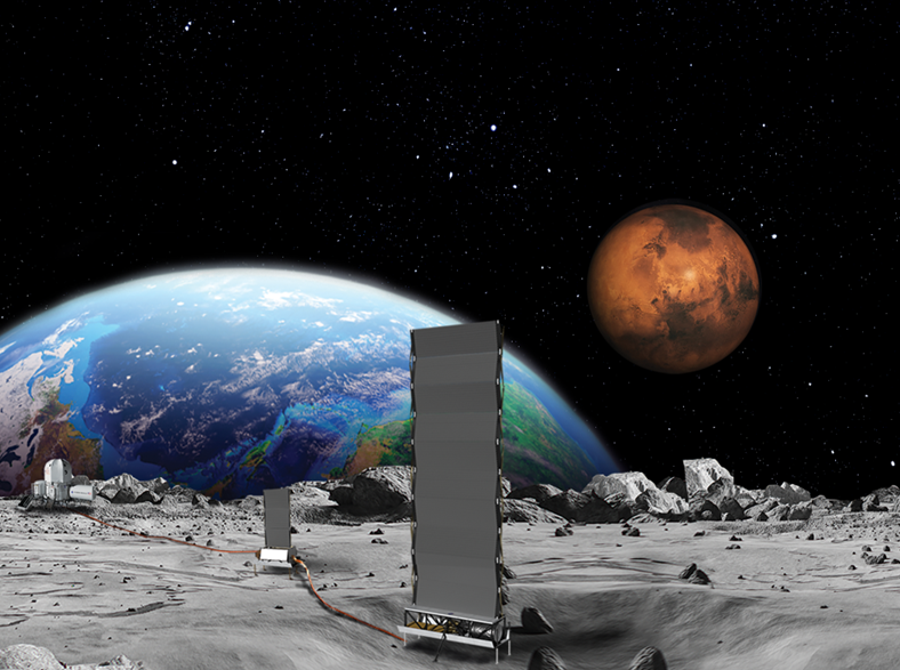
The reactor will be capable of operating “for years without the need to refuel,” according to NASA. It will provide power for the agency’s Artemis program, which seeks to establish a long-term human presence on the moon—and eventually Mars.

“America is committed to returning to the Moon, building the infrastructure to stay, and making the investments required for the next giant leap to Mars and beyond,” said NASA Administrator Jared Isaacman in a statement.

Nuclear power may be an ideal fuel source in the sometimes dark, cold moon environment. While many lunar landers are equipped with batteries and solar panels to keep them running for the length of their mission, they ultimately run out of fuel—either because of a lack of sunlight as the moon turns on its axis or because their batteries die.

The space agency’s partnership with the DOE could help speed NASA’s efforts to build moon-ready reactors. Aside from any technical hurdles, putting a nuclear reactor on the moon will require a significant amount of engineering to make sure it works as desired on the lunar surface.

.

https://static.scientificamerican.com/dam/m/34bc2660cd64855e/original/NASA-Moon-Fission.webp?m=1768407184.096&w=900

A 2024 concept image of NASA’s fission surface power system for the moon. NASA

.

.

Click the link below for the complete article:

https://www.scientificamerican.com/article/nasa-commits-to-plan-to-build-a-nuclear-reactor-on-the-moon-by-2030/

.

__________________________________________

How a solar radiation storm created January 2026’s aurora

Leave a comment

Click the link below the picture

.

Key Takeaways
  • The Sun is by far the dominant body in our Solar System in many ways: in terms of size, mass, and energy, but also for generating the effects of space weather through the rapid motion of many charged particles.

  • Most commonly, we learn about solar flares and coronal mass ejections, and those events do indeed create the majority of auroral displays that occur here on Earth: the Aurora Borealis and the Aurora Australis, in particular.

  • However, there’s a third class of space weather event that is much rarer: solar radiation storms. The last major one was in 2003, but a new one in January of 2026 just triggered a spectacular auroral show. Here’s why.

Starting on the night of January 19, 2026, planet Earth was treated to a global show that had only been seen once before in the 21st century: a spectacular auroral display that wasn’t triggered by a solar flare or by a coronal mass ejection, but instead by a completely different form of space weather known as a solar radiation storm. Whereas solar flares normally involve the ejection of plasma from the Sun’s photosphere and coronal mass ejections typically involve accelerated plasma particles from the Sun’s corona, a solar radiation storm is simply an intensification of the charged ions normally emitted by the Sun as part of the solar wind. Only, in a radiation storm, both the density and speed of the emitted particles get greatly enhanced.

We’re currently still in the peak years of our current sunspot cycle: the 11-year solar cycle that’s been tracked for centuries, where “peak years” see 100+ sunspots on the Sun while “valley years” see a largely featureless Sun. While several notable auroral displays have graced Earth in recent years, there’s only been one other severe (S4 or higher-class) solar radiation storm this century: back in 2003. Whereas most space weather events take around 3-4 days to traverse the Sun-Earth distance, the particles ejected from the Sun early on January 19, 2026 (UTC) were already triggering spectacular auroral displays less than 24 hours later. Here’s the science of how it all happened, and what dangers — and displays — such events hold in store for our world.

solar corona during eclipse

The solar corona, as shown here, is imaged out to 25 solar radii during the 2006 total solar eclipse. The longer the duration of a total solar eclipse, the darker the sky becomes, and the better the corona and background astronomical objects can be seen. In truth, the Sun’s atmosphere even encompasses the Earth and the entirety of the Solar System. The solar wind, as well as many other Sun-driven features, extend out beyond the orbit of Pluto.

Credit: Martin Antoš, Hana Druckmüllerová, Miloslav Druckmüller

The first thing you should understand — and not only people, but even most physicists, don’t fully appreciate this — is that the Earth, and all of the planets in the Solar System, are actually inside the atmosphere of the Sun. We usually think about the Sun as being a ball of plasma with a wispy, extended atmosphere and a halo-like corona surrounding it, but those are only the locations where the plasma density is the greatest. In reality, the Sun is a powerful enough, hot enough engine that it fills everything inside our heliosphere, which extends out to beyond the orbits of Neptune and Pluto, with that hot, ionized plasma.

While we typically only view the extended atmosphere of the Sun under favorable viewing conditions, like during a total solar eclipse from Earth, or from up in space with the advent of a Sun-blocking coronagraph, we’ve been able to track a wide variety of its effects. We know that it produces light, sure, but it also consistently produces a stream of ions, mostly protons but also electrons, heavier atomic nuclei, and even small amounts of antimatter, known as the solar wind. That solar wind is guided by the Sun’s magnetic field, which is driven by internal processes inside the Sun, and particularly energetic outbursts come when magnetic field lines “snap” and reconnect at, near, just outside, or even fully inside the Sun’s photosphere.

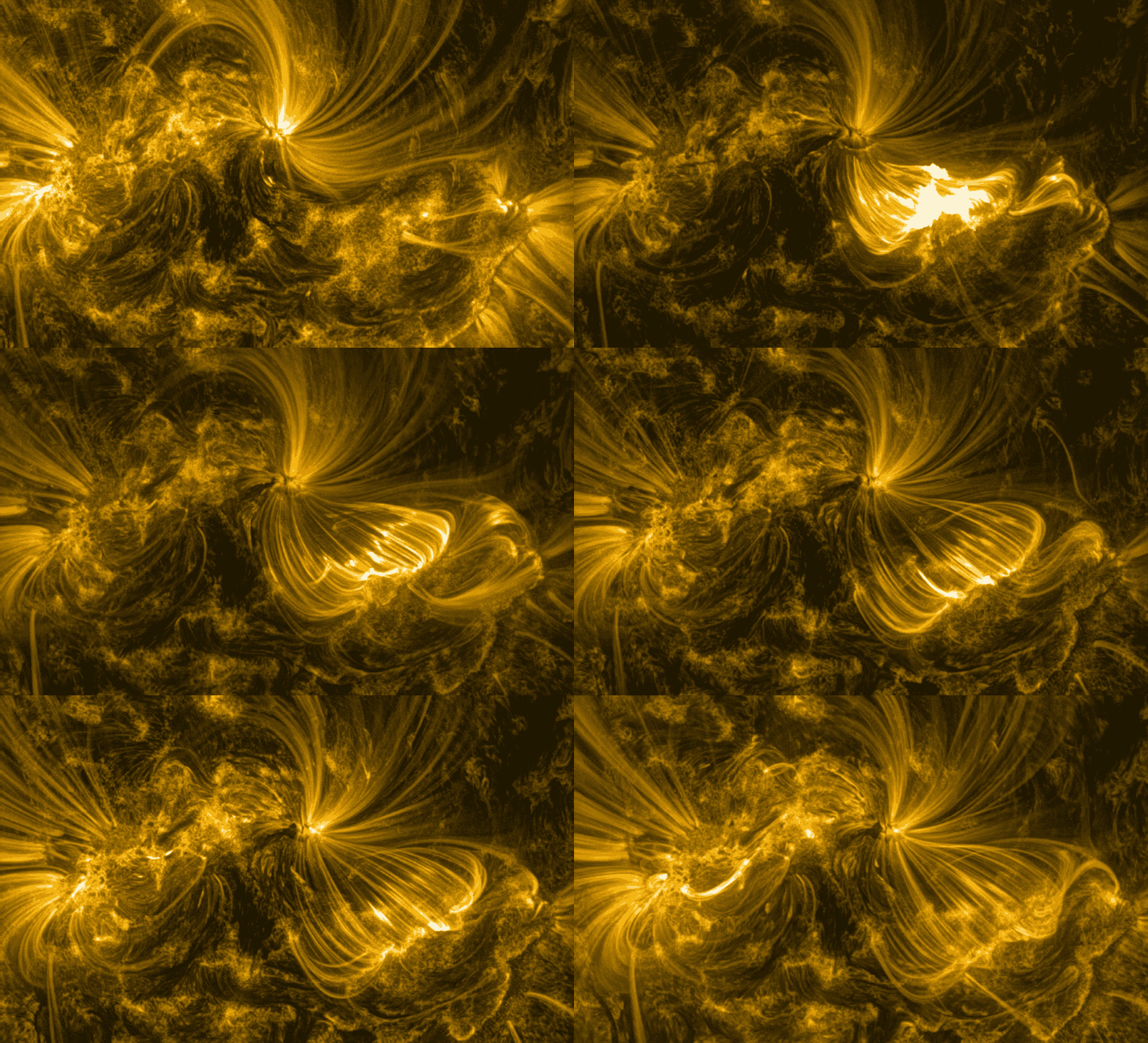
Solar coronal loops, such as those observed by NASA’s Solar Dynamics Observatory (SDO) satellite here in 2014, follow the path of the magnetic field on the Sun. When these loops ‘break’ in just the right way, they can emit coronal mass ejections, which have the potential to impact Earth. The connection between the solar corona just above the photosphere and the outer phenomena that pervade the rest of the Solar System relies on spacecraft throughout the Solar System, with the Stereo A and B spacecraft, the Parker Solar Probe, and an array of Sun-facing spacecraft located at the L1 Lagrange point (between the Earth and Sun) playing roles of paramount importance.

Credit: NASA/SDO

When those magnetic reconnection events occur internally, normally where sunspots are located, a solar flare often results. When those reconnection events occur externally, fully outside of the Sun’s photosphere, a coronal mass ejection often results. But when those reconnection events occur outside the surface but before you reach the corona, it typically just rapidly accelerates the charged particles that exist in that region outside of the photosphere. That creates the conditions for what’s known as a solar radiation storm, which can then be accompanied — usually afterwards — by either a solar flare (if the reconnection propagates backwards to the Sun’s interior) or a coronal mass ejection (if the reconnection propagates forwards to the Sun’s corona).

The 2003 event, known as the Halloween solar storms because they peaked from mid-October to early November, included both solar flares and coronal mass ejections, including the strongest solar flare ever recorded by the GOES (Geostationary Operational Environmental Satellite) system, and that was the last severe solar radiation storm that affected the Earth. On January 19, 2026, another one occurred, and it indeed was also followed up by an X-class solar flare and a coronal mass ejection. However, solar flares and coronal mass ejections are common; what was highly uncommon was the solar radiation storm, and the ultra-fast (and large flux of) solar wind particles that came towards Earth.

Above, you can see a graph of the solar wind speed just prior to the start of the solar outburst that created the radiation storm. Note that, prior to the initiation of the storm, the solar wind speed was relatively stable and typical: at around 250-300 km/s, or about 0.1% the speed of light. Under these conditions, it takes the solar wind approximately 5-7 days to traverse the Earth-Sun distance. During normal circumstances, we don’t see a major auroral event, and that’s due to the combined facts that:

  • The Sun’s magnetic field is weak,

  • The Earth’s magnetic field (at least close to Earth’s surface) is strong,

  • There’s only a low density of solar wind particles, and they move at relatively slow speeds,

  • making Earth’s magnetic field effective at diverting the majority of solar wind particles away from the planet.

.

https://bigthink.com/wp-content/uploads/2026/01/Loch-Calder-1-19.jpg?lb=1536,864This photograph shows the Aurora Borealis as taken over Loch Calder in northern Scotland on the night of January 19, 2026. Although this was the largest solar radiation storm experienced on Earth since 2003, the aurora appeared brilliantly for only brief periods of time, due to the alignment of the Earth’s and Sun’s magnetic field only being favorable for a period of approximately two hours during the event. Credit: David Proudfoot/BlueSky

.

.

Click the link below for the complete article:

https://bigthink.com/starts-with-a-bang/solar-radiation-storm-2026-aurora/

.

__________________________________________

There’s Much More at Stake in the Fed Case Than Interest Rates

Leave a comment

Click the link below the picture

.

On Wednesday, the Supreme Court will consider whether President Trump violated the Federal Reserve Act when he tried to fire Lisa Cook, a member of the Federal Reserve’s Board of Governors. Economists have raised the alarm, and Wall Street is watching, because presidential control of monetary policy would likely put upward pressure on inflation and interest rates.

But there is something far more fundamental at stake: Will the president be able to escape one of the central constraints on executive power in our constitutional system?

The Constitution is built on an Anglo-American tradition of checks and balances. It separates control of the sword from control of the purse. To check the chief executive, who holds the sword, the framers vested in an elected legislature the “power of the purse.” Congress controls spending not merely to ensure popular consent to taxation, but also to protect liberty. As James Madison wrote in Federalist No. 58, the purse is “the most complete and effectual weapon” the people’s representatives possess to secure “a redress of every grievance” and to enact “every just and salutary measure.”

Presidential control of the central bank would threaten this design. A president with effective command of the monetary levers could impose a de facto “inflation tax,” reducing the real value of money and the federal debt while sidestepping the ordinary process of taxation. And there are other, more pressing dangers.

The White House could also direct the use of central bank tools to advance its policy priorities while evading congressional control over appropriations. The Federal Reserve today possesses authorities to buy financial assets and extend credit to banks and other depository institutions and, in unusual and exigent circumstances, nonbank entities. Because the Fed can expand its balance sheet without a hard budget constraint (it creates money at the stroke of a key), the White House could press Fed officials to repurpose its powers to confer financial benefits on favored actors or to impose costs on political opponents nearly without limit.

As abuses of these authorities would be difficult to challenge in court, de facto presidential control of the central bank balance sheet might lead to large-scale lending to private sector enterprises or foreign governments that commit to acting favorably on the president’s agenda. And because the Fed operates critical payments infrastructure — the rails that settle trillions of dollars daily — the White House could move to politicize access in ways that would chill dissent and disrupt civil society.

Although it may not look it at first glance, those issues are directly before the court in the Cook case. The court, having never addressed a presidential attempt to remove a Fed governor before, must decide for the first time what the law means when it says that a president can remove a Fed governor only “for cause.” How the justices read those two words now will determine whether the board becomes an arm of the White House.

The law, the constitutional implications, and our history provide guideposts. “For cause” is a legal term of art that Congress imported from state law. The idea was to enlist the judiciary to police removals so that the executive could not replace officials for political reasons, but for only serious misconduct or failure in office.

President Trump’s position is that courts should defer to virtually any stated grounds short of an explicit policy dispute. That approach would drain “for cause” of content and convert judicial review into a rubber stamp. Worse, a ruling adopting that theory would put the monetary levers within easy presidential reach.

Alternatively, the president could prevail if the court finds the asserted grounds against Ms. Cook meet the “for cause” standard. But the case rests on unproven allegations of private misconduct that took place before she joined the Fed. And the president afforded Ms. Cook no formal process — no formal notice, no formal opportunity to respond. The factual record is therefore skewed and incomplete. If presidents can fire Fed governors based on unproven allegations, the barrier between the White House and the central bank would effectively collapse.

If the president can dominate the central bank, Congress’s “power of the purse” is diluted, and the incentives for abuse multiply. The result would be precisely the concentration of power that the Constitution was designed to prevent.

We don’t have to use our imagination to see how things could go wrong. The administration has already shown a willingness to politicize foreign lending and weaponize tariffs. Just last week, we learned that the Justice Department is threatening Jerome Powell, the Fed’s chair, with a criminal prosecution. Meanwhile, World Liberty Financial, a cryptocurrency business co-founded by the president, applied for a national trust bank charter, which could allow direct access to Federal Reserve payment services. If World Liberty Financial or other cryptocurrency firms run into trouble, do we want the White House deciding whether the Fed loosens the purse strings?

The court must not lose sight of the larger constitutional stakes present in this statutory scheme.

.


https://static01.nyt.com/images/2026/01/20/multimedia/20menand-mfvw/20menand-mfvw-superJumbo.jpg?quality=75&auto=webpPhoto Illustration by Philotheus Nisch for The New York Times

.

.

Click the link below for the complete article:

https://www.nytimes.com/2026/01/20/opinion/trump-federal-reserve-independence.html

.

__________________________________________

Older Entries Newer Entries

Adam Rogers - Comedian

Finding The Funny in Life’s Everyday Chaos

Global geopolitics

Decoding Power. Defying Narratives.

Talk Photo

A creative collaboration introducing the art of nature and nature's art.

Movie Burner Entertainment

The Home Of Entertainment News, Reviews and Reactions

Le Notti di Agarthi

Hollow Earth Society

C r i s t i a n a' s Fine Arts ⛄️

•Whenever you are confronted with an opponent, conquer him with love.(Gandhi)

TradingClubsMan

Algotrader at TRADING-CLUBS.COM

Comedy FESTIVAL

Film and Writing Festival for Comedy. Showcasing best of comedy short films at the FEEDBACK Film Festival. Plus, showcasing best of comedy novels, short stories, poems, screenplays (TV, short, feature) at the festival performed by professional actors.

Bonnywood Manor

Peace. Tranquility. Insanity.

Warum ich Rad fahre

Take a ride on the wild side

Madame-Radio

Découvre des musiques prometteuses dans la sphère musicale française (principalement, mais pas que...).

Ir de Compras Online

No tiene que Ser una Pesadilla.

Kana's Chronicles

Life in Kana-text (er... CONtext)

Cross-Border Currents

Tracking money, power, and meaning across borders.

Jam Writes

Where feelings meet metaphors and make questionable choices.

emotionalpeace

Finding hope and peace through writing, art, photography, and faith in Jesus.

WearingTwoGowns.COM

MOVING FORWARD...That's how WINNING is done!”-Rocky Balboa

...

love each other like you're the lyric to their music

Luca nel laboratorio di Dexter

Comprendere il mondo per cambiarlo.

Tales from a Mid-Lifer

Mid-Life Ponderings

Hunza

Travel,Tourism, precious story "Now in hundreds of languages for you."

freedomdailywriting

I speak the honest truth. I share my honest opinions. I share my thoughts. A platform to grow and get surprised.

The Green Stars Project

User-generated ratings for ethical consumerism

Cherryl's Blog

Travel and Lifestyle Blog

Sogni e poesie di una donna qualunque

Questo è un piccolo angolo di poesie, canzoni, immagini, video che raccontano le nostre emozioni

My Awesome Blog

“Log your journey to success.” “Where goals turn into progress.”

pierobarbato.com

scrivo per dare forma ai silenzi e anima alle storie che il mondo dimentica.

Thinkbigwithbukonla

“Dream deeper. Believe bolder. Live transformed.”

Vichar Darshanam

Vichar, Motivation, Kadwi Baat ( विचार दर्शनम्)

Komfort bad heizung

Traum zur Realität

Chic Bites and Flights

Savor. Style. See the world.

ومضات في تطوير الذات

معا نحو النجاح

Broker True Ratings

Best Forex Broker Ratings & Reviews

Blog by ThE NoThInG DrOnEs

art, writing and music by James McFarlane and other musicians

fauxcroft

living life in conscious reality

Srikanth’s poetry

Freelance poetry writing

JupiterPlanet

Peace 🕊️ | Spiritual 🌠 | 📚 Non-fiction | Motivation🔥 | Self-Love💕

Sehnsuchtsbummler

Reiseberichte & Naturfotografie

Spotlight Choices

astrology - life coaching - optimistic reality

INFINITE ENERGY

"قوتك تبدأ من هنا"