March 15, 2024
Mohenjo
Business, Food For Thought, Human Interest, Political, Science, Technical
amazon, business, Business News, current-events, Future, Hotels, human-rights, medicine, mental-health, research, Science, Science News, technology, Technology News, travel, vacation

Click the link below the picture
.
If you take it for granted that nobody can listen in on your innermost thoughts, I regret to inform you that your brain may not be private much longer.
You may have heard that Elon Musk’s company Neuralink surgically implanted a brain chip in its first human. Dubbed “Telepathy,” the chip uses neurotechnology in a medical context: It aims to read signals from a paralyzed patient’s brain and transmit them to a computer, enabling the patient to control it with just their thoughts. In a medical context, neurotech is subject to federal regulations.
But researchers are also creating noninvasive neurotech. Already, there are AI-powered brain decoders that can translate into text the unspoken thoughts swirling through our minds, without the need for surgery — although this tech is not yet on the market. In the meantime, you can buy lots of devices off Amazon right now that would record your brain data (like the Muse headband, which uses EEG sensors to read patterns of activity in your brain, then cues you on how to improve your meditation). Since these aren’t marketed as medical devices, they’re not subject to federal regulations; companies can collect — and sell — your data.
With Meta developing a wristband that would read your brainwaves and Apple patenting a future version of AirPods that would scan your brain activity through your ears, we could soon live in a world where companies harvest our neural data just as 23andMe harvests our DNA data. These companies could conceivably build databases with tens of millions of brain scans, which can be used to find out if someone has a disease like epilepsy even when they don’t want that information disclosed — and could one day be used to identify individuals against their will.
Luckily, the brain is lawyering up. Neuroscientists, lawyers, and lawmakers have begun to team up to pass legislation that would protect our mental privacy.
In the US, the action is so far happening on the state level. The Colorado House passed legislation this month that would amend the state’s privacy law to include the privacy of neural data. It’s the first state to take that step. The bill had impressive bipartisan support, though it could still change before it’s enacted.
.
:format(webp)/cdn.vox-cdn.com/uploads/chorus_image/image/73153787/V1_GettyImages_1349695388.0.png) Getty/Paige Vickers for Vox
Getty/Paige Vickers for Vox
.
.
Click the link below for the article:
.
__________________________________________
March 15, 2024
Mohenjo
Business, Food For Thought, Human Interest, Political, Science, Technical
amazon, business, Business News, current-events, Future, Hotels, human-rights, medicine, mental-health, research, Science, Science News, technology, Technology News, travel, vacation

Click the link below the picture
.
A network of white supremacist fitness clubs is spreading across the US, recruiting men to prepare for what they believe will be a race war.
The groups, known as “active clubs,” target disaffected white men by offering a sense of community, with members regularly meeting to practice martial arts or work out.
But the groups have a much darker agenda that’s rooted in white supremacist ideology.
Their Telegram channels reveal their extreme views — they are filled with neo-Nazi iconography, racist and antisemitic memes, and negative news articles about people of color and LGBTQ+ people.
“They are quickly becoming one of the most prominent vectors for white terrorist radicalization in the United States in recent years,” Jon Lewis, a Research Fellow at the Program on Extremism at George Washington University, told Business Insider.
“They’re training for what they view to be this kind of inevitable race war, this inevitable violent clash for the future of civilization,” he added.
One former member of an active club told Vice News last year that the group would slowly introduce extremist ideology to new members by making racist jokes and talking about stories in the news in which ethnic minorities attacked white people.
“They believe that there’s an inevitable cultural war that’ll come and because they tie culture directly to race, a culture war means race war,” they said.
.
 A fighter in a ring. Getty Images
.
.
Click the link below for the article:
.
__________________________________________
March 14, 2024
Mohenjo
Business, Food For Thought, Human Interest, Political, Science, Technical
amazon, business, Business News, current-events, Future, Hotels, human-rights, medicine, mental-health, research, Science, Science News, technology, Technology News, travel, vacation

Click the link below the picture
.
In 15th-century Germany, there was an expression for a chronic complainer: Greiner, Zanner, which can be translated as “whiner-grumbler.” It was not a complimentary term. A popular tavern song at the time (which the great renaissance composer Heinrich Finck also arranged as an instrumental piece) had lyrics that ran, by my rough translation, “Greiner, Zanner, you know what? I’ll sit at your table and kiss your wife on the mouth! How do you like that?” In other words, quit your whining, or I’ll give you something to whine about.
.
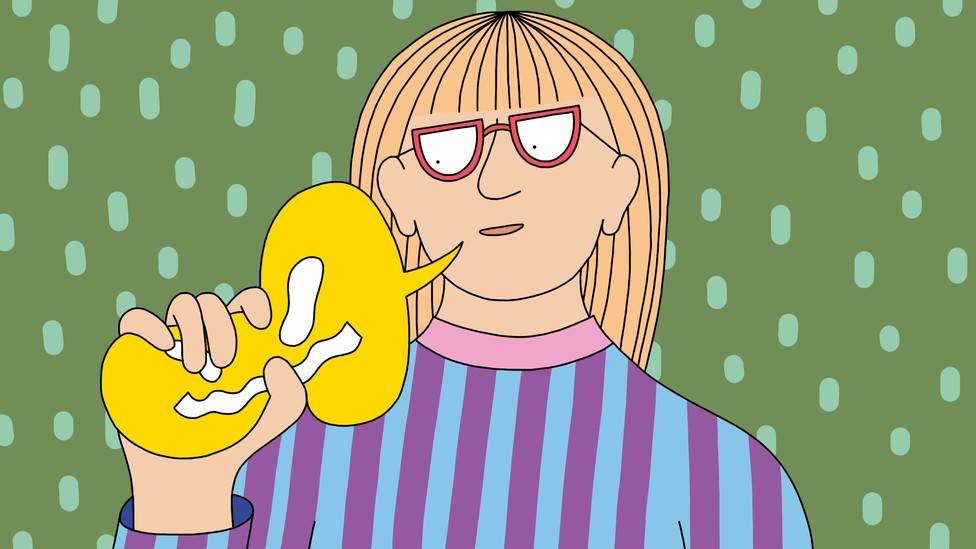 Illustration by Jan Buchczik
.
.
Click the link below for the article:
.
__________________________________________
March 14, 2024
Mohenjo
Business, Food For Thought, Human Interest, Political, Science, Technical
amazon, business, Business News, current-events, Future, Hotels, human-rights, medicine, mental-health, research, Science, Science News, technology, Technology News, travel, vacation

Click the link below the picture
.
If you haven’t yet clocked that gut health is one of the most important aspects of a healthy life, then sit down and order some sauerkraut because what’s going on in there has a monumental effect on who you are, how you feel, and what you look like.
According to a landmark international study, our diet, the microbes in our guts, and our overall health are intricately connected. Incredibly, what’s in our guts offers a stronger indication of our risk of diabetes, heart disease, and obesity than even our genetic predispositions. This builds on a 2019 study demonstrating “profound implications” in the link between diet and disease.
There’s no wonder that longevity experts focus on gut health, including Dr. Mark Hyman, who recently told GQ, “If you have a million-dollar racehorse, you’re going to make sure you know how to train it and feed it and take care of it so it’s fully optimized… We don’t do that with our bodies. We feed it all kinds of crap. We eat fries and junk and sugar, and we don’t think about the consequences of how we feel now or how we’re going to feel as we get older.”
If you didn’t get the memo, it’s cool to care about gut health. We aren’t talking about weight loss here, but rather an intricate system that—if kept in balance—drastically impacts your general health, mental well-being, and ability to get fit.
What is ‘gut health’ and why should we care?
“‘Gut health’ refers to the overall wellness of our gastrointestinal tract. This encompasses the region between one’s mouth and bottom,” says Gregory Thomas, a consultant colorectal surgeon at The Princess Grace Hospital.
.
 Gut health
.
.
Click the link below for the article:
.
__________________________________________
March 13, 2024
Mohenjo
Food For Thought, Human Interest, missed News, Political, Science, Technical
amazon, business, Business News, current-events, Future, Hotels, human-rights, medicine, mental-health, research, Science, Science News, technology, Technology News, travel, vacation

.
News You might have missed!
Use your browser or smartphone back arrow (<-) to return to this table for your next selection.
.
__________________________________________
March 13, 2024
Mohenjo
Business, Food For Thought, Human Interest, Political, Science, Technical
amazon, business, Business News, current-events, Future, Hotels, human-rights, medicine, mental-health, research, Science, Science News, technology, Technology News, travel, vacation

Click the link below the picture
.
It may have been a warmer than usual winter in Maine, but that doesn’t mean it hasn’t gotten mighty cold. In mid-January in Farmingdale, a town outside Augusta where Kaylie McLaughlin lives, the temperature dipped to 6 degrees Fahrenheit. “The kind of cold that hurts,” she said.
But this winter, Ms. McLaughlin’s bungalow is toasty, thanks to two heat pumps she installed to replace her oil furnace. “I’m just so comfortable,” said Ms. McLaughlin, a pharmaceutical sales representative. She’s also saving money, no longer paying $400 every four weeks for an oil delivery.
Unlike a space heater, a heat pump extracts heat from outside air, even in subzero temperatures, and then runs it through a compressor, which makes it even hotter, before pumping it indoors. In the summer, it can operate in reverse, pulling heat from inside a building and pumping it outside, cooling the indoor spaces.
In 2023 heat pumps outsold gas furnaces in the United States for the second year running, a climate win. Electrical heat pumps are the cheapest and most energy-efficient way to heat and cool homes, and they do not emit the carbon pollution that is overheating the planet.
.
 Kaylie McLaughlin, at home with her daughter, Emilie, switched from heating oil to electric heating when heat pumps were installed in her home in November. Credit…Tristan Spinski for The New York Times
.
.
Click the link below for the article:
.
__________________________________________
March 13, 2024
Mohenjo
Business, Food For Thought, Human Interest, Political, Science, Technical
amazon, business, Business News, current-events, Future, Hotels, human-rights, medicine, mental-health, research, Science, Science News, technology, Technology News, travel, vacation

Click the link below the picture
.
While plenty of health conditions make you painfully aware of their presence via any number of impossible-to-ignore symptoms, high blood pressure (a.k.a. hypertension) can be a sneakier beast. You can literally walk around all day, every day, without a clue that your blood pressure numbers are higher than they should be—many people don’t have physical symptoms that they can feel. Although people who have high blood pressure (which is nearly half of adults in the US) might not have any discomfort from it most of the time, it’s really serious. High blood pressure significantly ups your risk of heart attack and stroke, makes you more likely to develop kidney disease, and can even mess with your sex drive.
Rampant as high blood pressure is, getting it under control can be a tricky business. Kathryn Harris, MD, a cardiology fellow and the fellows representative for the Association of Black Cardiologists, tells SELF that more than half of people treated for high BP don’t have it under control, meaning that it stays high despite treatment like medication. While the ideal reading is less than 120/80 mmHg (the top number is your systolic pressure and the bottom number is your diastolic pressure), BP that lingers above 140/90 mmHg typically requires both medication and lifestyle changes to rein it in, according to the American Heart Association (AHA).
If you’re one of the many people struggling to keep the beast of high blood pressure on a leash, let us make one thing crystal clear: Significantly lowering blood pressure is tough—and often requires taking medication (in many cases, more than one) and making some pretty serious changes to your lifestyle. It’s complicated stuff, and can take some trial and error.
Finding the right balance of medications and switching up your behaviors around food, exercise, and other key parts of the way you live your life can feel challenging for even those who can afford any prescriptions they need, shop at the health food store, and try out the latest fitness studio in town. And yet, many of the people with the greatest risk of high BP and its downstream effects live with limited access to heart-healthy food or medication that’s within their budgets, Estelle Darlyse Jean, MD, a board-certified non-invasive cardiologist with MedStar Heart & Vascular Institute, tells SELF.
.
.png)
.
.
Click the link below for the article:
.
__________________________________________
March 12, 2024
Mohenjo
Business, Food For Thought, Human Interest, Political, Science, Technical
amazon, business, Business News, current-events, Future, Hotels, human-rights, medicine, mental-health, research, Science, Science News, technology, Technology News, travel, vacation
Some content on this page was disabled on April 15, 2025 as a result of a DMCA takedown notice from Guardian Media Group. You can learn more about the DMCA here:
https://wordpress.com/support/copyright-and-the-dmca/
March 12, 2024
Mohenjo
Business, Food For Thought, Human Interest, Political, Science, Technical
amazon, business, Business News, current-events, Future, Hotels, human-rights, medicine, mental-health, research, Science, Science News, technology, Technology News, travel, vacation
Some content on this page was disabled on April 15, 2025 as a result of a DMCA takedown notice from Guardian Media Group. You can learn more about the DMCA here:
https://wordpress.com/support/copyright-and-the-dmca/
March 11, 2024
Mohenjo
Business, Food For Thought, Human Interest, Political, Science, Technical
amazon, business, Business News, current-events, Future, Hotels, human-rights, medicine, mental-health, research, Science, Science News, technology, Technology News, travel, vacation

Click the link below the picture
.
COVID-19 is becoming more like the flu and, as such, no longer requires its own virus-specific health rules, the Centers for Disease Control and Prevention said Friday alongside the release of a unified “respiratory virus guide.”
In a lengthy background document, the agency laid out its rationale for consolidating COVID-19 guidance into general guidance for respiratory viruses—including influenza, RSV, adenoviruses, rhinoviruses, enteroviruses, and others, though specifically not measles. The agency also noted the guidance does not apply to health care settings and outbreak scenarios.
“COVID-19 remains an important public health threat, but it is no longer the emergency that it once was, and its health impacts increasingly resemble those of other respiratory viral illnesses, including influenza and RSV,” the agency wrote.
The most notable change in the new guidance is the previously reported decision to no longer recommend a minimum five-day isolation period for those infected with the pandemic coronavirus, SARS-CoV-2. Instead, the new isolation guidance is based on symptoms, which matches long-standing isolation guidance for other respiratory viruses, including influenza.
“The updated Respiratory Virus Guidance recommends people with respiratory virus symptoms that are not better explained by another cause stay home and away from others until at least 24 hours after both resolution of fever AND overall symptom are getting better,” the document states. “This recommendation addresses the period of greatest infectiousness and highest viral load for most people, which is typically in the first few days of illness and when symptoms, including fever, are worst.”
“Residual risk”
The CDC acknowledged that the eased isolation guidance will create “residual risk of SARS-CoV-2 transmission,” and that most people are no longer infectious only after 8 to 10 days. As such, the agency urged people to follow additional interventions—including masking, testing, distancing, hygiene, and improving air quality—for five additional days after their isolation period.
.
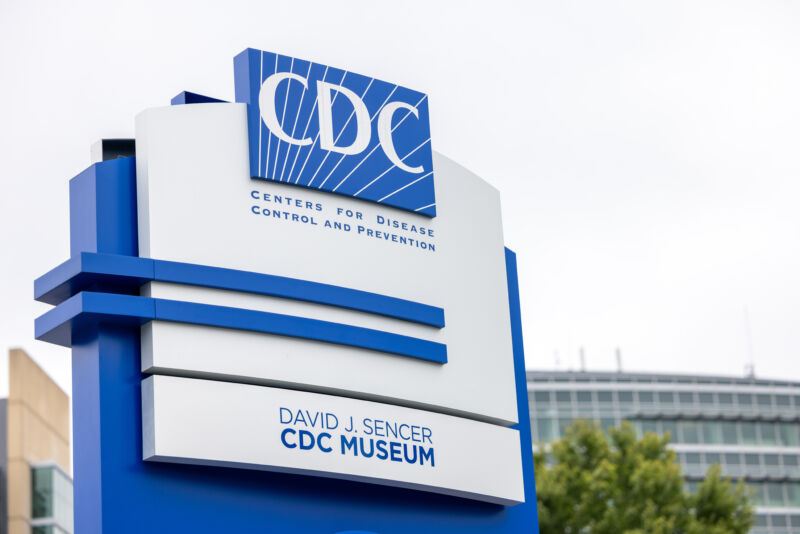 A view of the Centers for Disease Control and Prevention headquarters in Atlanta.
.
.
Click the link below for the article:
.
__________________________________________
Older Entries
Newer Entries
 James' World 2