 .
.
__________________________________________
Assorted human interest posts.
March 31, 2024
Business, Food For Thought, Human Interest, Political, Science, Technical amazon, business, Business News, current-events, Future, Hotels, human-rights, medicine, mental-health, research, Science, Science News, technology, Technology News, travel, vacation 1 Comment
.
__________________________________________
March 31, 2024
Business, Food For Thought, Human Interest, Political, Science, Technical amazon, business, Business News, current-events, Future, Hotels, human-rights, medicine, mental-health, research, Science, Science News, technology, Technology News, travel, vacation Leave a comment

Click the link below the picture
.
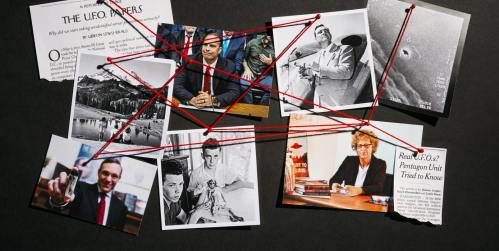
There has never been a worse time to be a UFO skeptic. Last month, Sean Kirkpatrick, the head of the Pentagon office responsible for investigating unexplained aerial events, stepped down. He said he was tired of being harassed and accused of hiding evidence, and he lamented an erosion in “our capacity for rational, evidence-based critical thinking.”
He may have been pushed over the edge by a pair of events from the past summer. In June of last year, Avi Loeb, an astronomer at Harvard, announced that he had found some tiny blobs of metal by dragging a magnetic sled over the bottom of the Pacific near Papua New Guinea. He claimed that these blobs were metallic droplets that had melted off an interstellar object that might have been “a technological gadget with artificial intelligence” — the product of beings from another star system.
In July, David Grusch, a former intelligence officer, stepped out of the shadows to announce that the U.S. military Establishment currently possesses a small fleet of nonhuman pre-owned flying saucers. He didn’t call them saucers; he called them UAPs, or “unidentified anomalous phenomena,” which used to be called UFOs. But basically, we’re talking saucers.
Grusch’s story first reached the public via a journalist named Leslie Kean (pronounced Kane), who had co-written a hugely influential article about UFOs that appeared on the front page of the New York Times in 2017. She and Helene Cooper, a Pentagon correspondent for the paper, along with a writer named Ralph Blumenthal, revealed that Senator Harry Reid had gotten the Pentagon to create a secret, “mysterious” $22 million program to study UFOs. A few years later, Kean was the subject of a long profile in The New Yorker by staff writer Gideon Lewis-Kraus with the web title “How the Pentagon Started Taking U.F.O.s Seriously.”
Thoughtful, sensible-seeming, non-crankish people at Harvard, at The New Yorker, at the New York Times, and at the Pentagon seemed to be drifting ever closer to the conclusion that alien spaceships had visited Earth. Everyone was being appallingly open-minded. Yet even after more than 70 years of claimed sightings, there was simply no good evidence. In an age of ubiquitous cameras and fancy scopes, there was no footage that wasn’t blurry and jumpy and taken from far away. There was just this guy Grusch telling the world that the government had a “crash-retrieval and reverse-engineering program” for flying saucers that was totally supersecret and that only people in the program knew about the program. Grusch said he had learned about it while serving on a UAP task force at the Pentagon. He interviewed more than 40 people, and they told him wild things. He said he couldn’t reveal the names of the people he interviewed. He shared no firsthand information and showed no photos. He said the program went back decades, back to the saucer crash that happened in Roswell, New Mexico.
Grusch seems sincere and polite and cheerful. In interviews, he has said he’s on the autism spectrum, which helps him focus. He uses military buzzwords sometimes, like near-peer adversaries and asymmetric national-defense advantages, but not in an off-putting way. He says when he came to learn about the existence of the secret saucers, he was troubled and felt it was highly unethical for their existence to be kept from the public. He also says he has at times wondered whether he was being deceived: “Was this some kind of ruse against me? Am I being used in any kind of way?” No, he decided.
.
.
.
Click the link below for the article:
.
__________________________________________
March 31, 2024
Business, Food For Thought, Human Interest, Political, Science, Technical amazon, business, Business News, current-events, Future, Hotels, human-rights, medicine, mental-health, research, Science, Science News, technology, Technology News, travel, vacation Leave a comment

Click the link below the picture
.
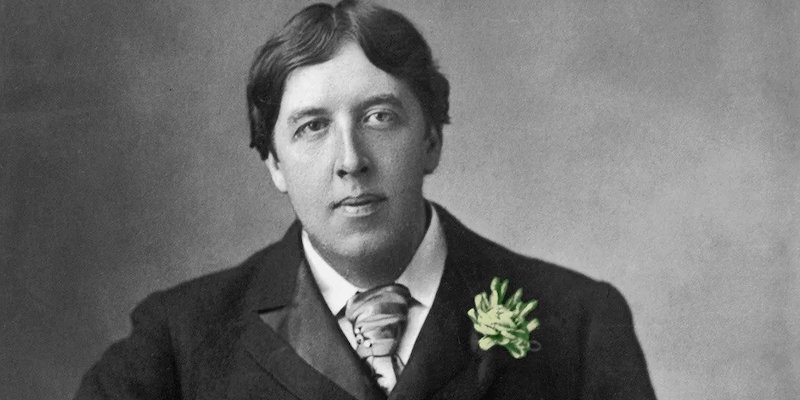
On the evening of January 2, 1882, five men rowed out over the choppy gray waters of New York’s Upper Bay to the SS Arizona, a transatlantic steamer anchored at quarantine a quarter mile off Staten Island. They clambered up an icy rope ladder and spilled onto the deck. Following the directions of the ship’s bemused passengers, they elbowed their way to a twenty-seven year old Irishman clad in a bottle-green ulster, a low-necked white shirt, and a billowing blue silk tie.
“How do you like America, Mr. Wilde?” asked one of the men.
Oscar Wilde burst out laughing in a succession of broad “haw, haw, haws.” He didn’t think it politic to answer: all he had seen of the country was an oil lamp flickering on the horizon.
Wilde was in America to lecture on art. But the main reason his managers had brought him across the Atlantic was to cross-promote a comic opera by W. S. Gilbert and Arthur Sullivan. Patience; or, Bunthorne’s Bride parodied London’s “aesthetes”—followers of an artistic craze for blue-and-white china, sunflowers, and peacock feathers. Wilde was a prominent aesthete, so Gilbert and Sullivan’s manager hit upon the idea of using Wilde to educate Americans about the fad. Wilde would create a demand for tickets for Patience, and audiences for Patience would rush to see the genuine article.
The scheme worked. Wilde became a phenomenon. His photographs and book of poems sold in stacks. A constant stream of stories about him flooded the press. Newspaper readers wanted to know more about the real Oscar Wilde, and to meet this desire editors sought interviews with the “Apostle of Aestheticism.”
In the early 1880s interviewing was a peculiarly American custom, and one for which Wilde was unprepared. He confided in the magazine proprietor (and his future sister-in-law) Mrs. Frank Leslie that he had “turned his back” on New York’s “horrible reporters”; she reminded him that it was their business to interview as it was his to lecture, and that he would be better off giving them something to print, else they would be liable to turn on him. Wilde was usually averse to good advice, but he took Leslie’s.
Aware that controversy made the best copy, he steered interviewers away from dull subjects (his favorite color, his definition of aestheticism) and instead slammed what he saw as the architectural travesties of America. The marble mansions of New York’s Fifth Avenue were “so depressing and monotonous”; Chicago’s gothic water-tower, “really too absurd.” He insisted that “a police force for the protection of art ought to be established to prevent the residents of Long Branch from painting their fences in such awful reds and greens.”
.
 Oscar Wilde
.
.
Click the link below for the article:
.
__________________________________________
March 30, 2024
Business, Food For Thought, Human Interest, Political, Science, Technical amazon, business, Business News, current-events, Future, Hotels, human-rights, medicine, mental-health, research, Science, Science News, technology, Technology News, travel, vacation Leave a comment

Click the link below the picture
.
When Dennis Cunningham was diagnosed with terminal cancer, he wanted his death to reflect the values he lived by. As a civil rights lawyer, Cunningham defended the Black Panthers, AIDS protestors, and later, environmental activists from Earth First.
“He was a profound environmentalist,” his son, Joe Mellis, said.
In his spare time, Cunningham built sculptures out of driftwood, bottle caps, and rusted car parts in his backyard studio in San Francisco. He wanted his body to be part of that same cycle of decay and regeneration.
He instructed his kids to have him composted after he died.
“It was totally in keeping with who he was to not make waste, but to use waste,” said Cunningham’s daughter, Miranda Mellis.
To Cunningham, being turned into soil and spread on the forest floor to fertilize new trees was much more appealing than being burned to ash or entombed in a concrete vault underground.
A growing number of Americans are likewise eager to see more environmentally friendly alternatives to conventional burial and cremation. Human composting is the latest option.
But not everywhere, or even in most states. When Cunningham died on March 5, 2022, at his son’s house in Los Angeles, it wasn’t an option there.
“It’s literally illegal to compost a body in the state of California,” said his son Joe Mellis. “We had to transport his body from California to Washington to do this.”
Seven states have legalized human composting to date, including Washington, Oregon, Colorado, Nevada, Vermont, and New York. It took California lawmakers three tries to pass a law to do the same, but it won’t take effect until 2027.
.
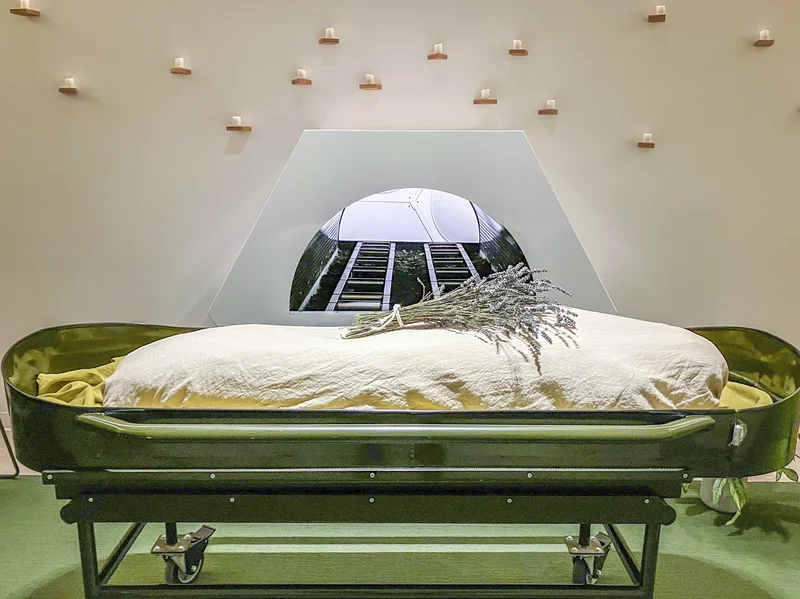
At Recompose in Seattle, families can hold a funeral ceremony known as a laying-in before the body is prepared for human composting. In this photo, a demonstration mannequin stands in for the body. Afterwards, the body is moved into a composting vessel in the adjacent building and surrounded with wood chips, alfalfa, and straw to start the 30-40 day process. April Dembosky/KQED
.
.
Click the link below for the article:
.
__________________________________________
March 30, 2024
Business, Food For Thought, Human Interest, Political, Science, Technical amazon, business, Business News, current-events, Future, Hotels, human-rights, medicine, mental-health, research, Science, Science News, technology, Technology News, travel, vacation Leave a comment

Click the link below the picture
.
Artificial intelligence isn’t just a niche tool for cheating on homework or generating bizarre and deceptive images. It’s already humming along in unseen and unregulated ways that are touching millions of Americans who may never have heard of ChatGPT, Bard, or other buzzwords.
A growing share of businesses, schools, and medical professionals have quietly embraced generative AI, and there’s really no going back. It is being used to screen job candidates, tutor kids, buy a home, and dole out medical advice.
The Biden administration is trying to marshal federal agencies to assess what kind of rules make sense for the technology. But lawmakers in Washington, state capitals, and city halls have been slow to figure out how to protect people’s privacy and guard against echoing the human biases baked into much of the data AIs are trained on.
“There are things that we can use AI for that will really benefit people, but there are lots of ways that AI can harm people and perpetuate inequalities and discrimination that we’ve seen for our entire history,” said Lisa Rice, president and CEO of the National Fair Housing Alliance.
While key federal regulators have said decades-old anti-discrimination laws and other protections can be used to police some aspects of artificial intelligence, Congress has struggled to advance proposals for new licensing and liability systems for AI models and requirements focused on transparency and kids’ safety.
“The average layperson out there doesn’t know what are the boundaries of this technology?” said Apostol Vassilev, a research team supervisor focusing on AI at the National Institute of Standards and Technology. “What are the possible avenues for failure and how these failures may actually affect your life?”
.
 Illustrations by Anna Kim for POLITICO
.
.
Click the link below for the article:
.
__________________________________________
March 29, 2024
Business, Food For Thought, Human Interest, Political, Science, Technical amazon, business, Business News, current-events, Future, Hotels, human-rights, medicine, mental-health, research, Science, Science News, technology, Technology News, travel, vacation 2 Comments

Click the link below the picture
.
Move over, modern-day billionaires — the wealthiest person of all time lived seven centuries ago. Musa I of Mali was a 14th-century king (called a “mansa”) who came into power in 1312 CE. He greatly expanded the Mali Empire, culminating in a large swath of West Africa, from the Atlantic Ocean to Timbuktu and beyond. The empire had significant reserves of salt and gold (nearly half of the world’s supply of gold at the time), and it became incredibly wealthy. Mansa Musa also controlled some of the biggest trade centers in Africa, establishing Timbuktu as a major hub. Some sources speculate that Musa’s wealth was equivalent to roughly $400 billion today — by comparison, the wealthiest modern billionaires have net worths of around $200 billion. Though an exact figure is impossible to calculate, many historians believe Musa to be the wealthiest person in history.
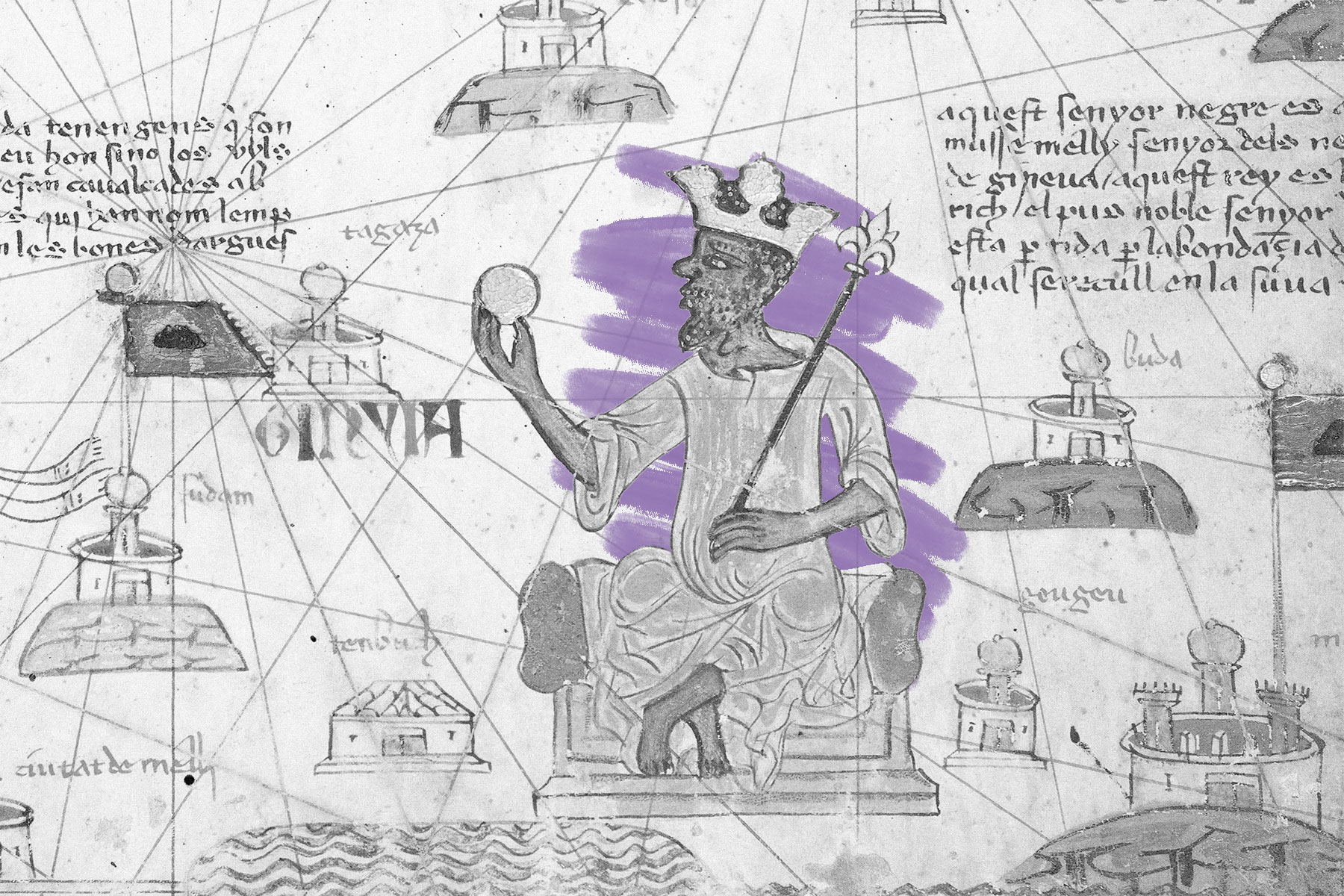
In 1324, the Muslim ruler decided to make a pilgrimage to Mecca. He traversed the Sahara Desert with tens of thousands of followers dressed in Persian silk (including soldiers, enslaved people, merchants, and the entire royal court). Adding to the spectacle, 100 camels carrying hundreds of pounds of gold were also in tow. The caravan reportedly spent three months in Cairo, Egypt, where Musa handed out gold as if it were candy. In fact, Musa’s trek through the Middle East caused the price of gold to plummet in Egypt due to the sheer amount of treasure he brought into the region. Although Musa died sometime in the 1330s, his legacy continued. He made Mali a well-known empire, and it was added to the Catalan Atlas (one of the most popular medieval maps) for the first time in 1375. On the map, a golden-crowned Musa is depicted holding a scepter and a gold nugget.
.
.
.
Click the link below for the article:
.
__________________________________________
March 29, 2024
Business, Food For Thought, Human Interest, Political, Science, Technical amazon, business, Business News, current-events, Future, Hotels, human-rights, medicine, mental-health, research, Science, Science News, technology, Technology News, travel, vacation 2 Comments

Click the link below the picture
.
Have you ever talked about a product, and then suddenly got an ad for it on your phone? We’ve all been there, and then skeptically looked over our shoulders for the advertiser lurking in the shadow. But there’s no one there, so we all simply conclude that our phone must be listening to our conversations. You wouldn’t be crazy for thinking that, but it is flat-out wrong. Your phone is not listening to you.
The myth that your phone’s microphone is constantly on, and is listening to your conversations and selling that data to advertisers, is one of the most pervasive myths about technology. It didn’t help when a local advertising company falsely claimed, “It’s true. Your devices are listening to you,” in December. It was a complete lie, that CMG Local Solutions took off their site after 404 Media caught them red-handed. However, this myth originated a long time ago.
Origins of the Myth
“So a lot of people are pretty freaked out about this item from Facebook where they can listen in on your conversations,” said reporter Melanie Michael to thousands of viewers in Tampa Bay on live TV. The news segment ran on May 23rd, 2016, with an article coming out a few days earlier.
“So, be careful what you say in the presence of your phone,” said the 2016 article. “Facebook is not only watching but also listening to your cell phone.”
That article has since been removed from WFLA News Channel 8’s website, but it’s the first instance Gizmodo can find of a major publication reporting this myth. The impact is still felt today, roughly eight years later. The article quotes University of South Florida professor of communications, Kelli Burns. However, Burns never actually said that Facebook was listening to you.
The article quotes Burns as saying “Facebook is watching” and that “I don’t think that people realize how much Facebook is tracking every move we’re making online.”
Burns published a blog post weeks after WFLA’s story went viral, noting that she never actually said that Facebook was listening to you. “Watching, not listening,” said Burns in the post. “Never said listening. And by watching I mean tracking.”
.
 Photo: Max Kegfire (Shutterstock)
.
.
Click the link below for the article:
https://gizmodo.com/your-phone-is-not-listening-to-you-1851220787?utm_source=pocket_collection_story
.
__________________________________________
March 29, 2024
Business, Food For Thought, Human Interest, Political, Science, Technical amazon, business, Business News, current-events, Future, Hotels, human-rights, medicine, mental-health, research, Science, Science News, technology, Technology News, travel, vacation 1 Comment

Click the link below the picture
.
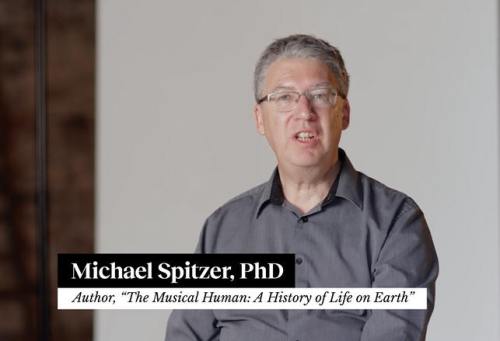
Humans are not the only species with music, but we are the only ones who had to make music completely from scratch.
According to Michael Spitzer, Professor of Music at the University of Liverpool, humans are not inherently musical. In fact, we come from a lineage less musically inclined than birds or even insects. This means that when it comes to our musical abilities, we had to rely on both cultural and biological evolution to make music a fundamental aspect of human life.
Our ability to create music is also partially due to how our bodies have developed over time. Contrary to our ape-like ancestors, we have dexterous fingers that allow us to use instruments, and a descended larynx that allows for a wider variety of vocal sounds. These developments paved the path toward human musicality, which eventually distinguished itself from animal vocalizations, transitioning into an art form that serves as a medium for social connection and identity expression.
Spitzer explores the emotional resonance of music, which tends to set us apart from other music-making species, emphasizing its power to express and evoke deep sensations through patterns and rhythms that mirror human experiences. This connection between music, emotion, and human identity highlights music’s role as its own universal yet deeply personal language.
.
 .
.
.
Click the link below for the article:
.
__________________________________________
March 29, 2024
Food For Thought, Human Interest, missed News, Political, Science, Technical amazon, business, Business News, current-events, Future, Hotels, human-rights, medicine, mental-health, research, Science, Science News, technology, Technology News, travel, vacation Leave a comment

.
.
__________________________________________
March 28, 2024
Business, Food For Thought, Human Interest, Political, Science, Technical amazon, business, Business News, current-events, Future, Hotels, human-rights, medicine, mental-health, research, Science, Science News, technology, Technology News, travel, vacation Leave a comment

Click the link below the picture
.
It was the first day of spring break in 1992 in Phoenix, and 12-year-old Heather Smith was excited for her family’s upcoming ski trip.
But before Smith and her family had even packed their snow pants, she realized she didn’t feel good. “I woke up feeling just a little bit nauseous, and I wasn’t sure why. Throughout the course of the day, I started to feel worse and worse and started to develop pain in the abdomen,” she says.
By about midafternoon, her father took her to urgent care. She ended up getting emergency surgery to have her appendix out.
Smith still has a small scar from the appendectomy. And after the surgery, she found herself intrigued by the part of her body she had so suddenly lost. “It inspired me to wonder: Why do we have this weird little organ in the first place? What does it do? Why does it get inflamed?”
Smith grew up to be a professor of anatomy at Midwestern University and editor-in-chief of a journal called The Anatomical Record. And all these decades later, Smith has made a mark in the field by studying the very organ that threw off her family’s vacation plans in 1992.
She acknowledges that the appendix has a bad rap as a useless organ that can cause you pain and require emergency surgery. “But it turns out recent research shows it does have functions that can help us,” she says.
NPR’s Short Wave spoke to Smith about what the appendix is good for and how a future where appendicitis can be prevented or treated without emergency surgery could be on the way.
What and where is the appendix?
The type of appendix that humans and some primates and rodents have looks like a little worm. It’s about the size of your pinky finger, and it projects off the cecum, which is the first part of the large intestine.
.

As an evolutionary anatomist, Heather Smith studies the fossil record of extinct species. A sudden appendectomy as a child made her curious about what the appendix is for and why it gets inflamed. Heather Smith
.
.
Click the link below for the article:
.
__________________________________________
https://www.tangietwoods
¡Bienvenido de vuelta viajero!
so looking to the sky ¡ will sing and from my heart to YOU ¡ bring...
CEO and Founder of Nsight Health
Catholic News, Prayers, HD Images, Rosary, Music, Videos, Holy Mass, Homily, Saints, Lyrics, Novenas, Retreats, Talks, Devotionals and Many More
Decoding Power. Defying Narratives.
A creative collaboration introducing the art of nature and nature's art.
The Home Of Entertainment News, Reviews and Reactions
Hollow Earth Society
•Whenever you are confronted with an opponent, conquer him with love.(Gandhi)
Algotrader at TRADING-CLUBS.COM
Film and Writing Festival for Comedy. Showcasing best of comedy short films at the FEEDBACK Film Festival. Plus, showcasing best of comedy novels, short stories, poems, screenplays (TV, short, feature) at the festival performed by professional actors.
Peace. Tranquility. Insanity.
Take a ride on the wild side
Découvre des musiques prometteuses (principalement) dans la sphère musicale française.
No tiene que Ser una Pesadilla.
Life in Kana-text (er... CONtext)
Where feelings meet metaphors and make questionable choices.
Finding hope and peace through writing, art, photography, and faith in Jesus.
Eyasu
The Community for Wounded Healers: Former Medical Students, Disabled Nurses, and Faith-Fueled Pivots
love each other like you're the lyric to their music
Comprendere il mondo per cambiarlo.
Mid-Life Ponderings
Travel,Tourism, Life style "Now in hundreds of languages for you."
I speak the honest truth. I share my honest opinions. I share my thoughts. A platform to grow and get surprised.
User-generated ratings for ethical consumerism
Travel and Lifestyle Blog
Questo è un piccolo angolo di poesie, canzoni, immagini, video che raccontano le nostre emozioni
“Log your journey to success.” “Where goals turn into progress.”
scrivo per dare forma ai silenzi e anima alle storie che il mondo dimentica.
“Dream deeper. Believe bolder. Live transformed.”
Vichar, Motivation, Kadwi Baat ( विचार दर्शनम्)
Traum zur Realität
Savor. Style. See the world.
معا نحو النجاح
Best Forex Broker Ratings & Reviews
art, writing and music by James McFarlane and other musicians
living life in conscious reality
Freelance poetry writing
Peace 🕊️ | Spiritual 🌠 | 📚 Non-fiction | Motivation🔥 | Self-Love💕
Reiseberichte & Naturfotografie
 James' World 2