May 3, 2024
Mohenjo
Business, Food For Thought, Human Interest, Political, Science, Technical
amazon, business, Business News, current-events, Future, Hotels, human-rights, medicine, mental-health, research, Science, Science News, technology, Technology News, travel, vacation

Click the link below the picture
.
Optometry researchers estimate that about half of the global population will need corrective lenses to offset myopia by 2050 if current rates continue – up from 23% in 2000 and less than 10% in some countries.
The associated health care costs are huge. In the United States alone, spending on corrective lenses, eye tests, and related expenses may be as high as US$7.2 billion a year.
What explains the rapid growth in myopia?
I’m a vision scientist who has studied visual perception and perceptual defects. To answer that question, first, let’s examine what causes myopia – and what reduces it.
How myopia develops
While having two myopic parents does mean you’re more likely to be nearsighted, there’s no single myopia gene. That means the causes of myopia are more behavioral than genetic.
Optometrists have learned a great deal about the progression of myopia by studying visual development in infant chickens. They do so by putting little helmets on baby chickens. Lenses on the face of the helmet cover the chicks’ eyes and are adjusted to affect how much they see.
Just like in humans, if visual input is distorted, a chick’s eyes grow too large, resulting in myopia. And it’s progressive. Blur leads to eye growth, which causes more blur, which makes the eye grow even larger, and so on.
Two recent studies featuring extensive surveys of children and their parents provide strong support for the idea that an important driver of the uptick in myopia is that people are spending more time focusing on objects immediately in front of our eyes, whether a screen, a book or a drawing pad. The more time we spend focusing on something within arm’s length of our faces, dubbed “near work,” the greater the odds of having myopia.
.
 DawnPoland/Getty Images
.
.
Click the link below for the article:
.
__________________________________________
May 2, 2024
Mohenjo
Business, Food For Thought, Human Interest, Political, Science, Technical
amazon, business, Business News, current-events, Future, Hotels, human-rights, medicine, mental-health, research, Science, Science News, technology, Technology News, travel, vacation

Click the link below the picture
.
In 1956, my uncle John F. Kennedy, then a U.S. senator, wrote a book that is probably more famous for its great title than its contents. It was called Profiles in Courage. And it was about eight U.S. senators who JFK felt had made particularly courageous contributions to American history.
For a while now, I have been thinking about what courage means to me. While growing up with my father, Ted Kennedy, in the Senate, and then serving in the House of Representatives myself for many years, I saw quite a bit of bravery in politics. But the truth is, the most courageous people I know qualify not for what they do in public, but what they are able to endure and rise above in private. This is especially true of people who struggle every day with mental illness, or addiction, or both, or who help loved ones or family members in their struggles.
The details and daily dramas of these struggles usually remain private, hidden. And even when people discuss them publicly, it’s often in a brief or very cautious way—enough to admit to having a diagnosis or a problem, or “issues,” in order to support advocacy, but rarely enough to inform a public that wants and needs to understand what living with these illnesses is like every day. When I was younger, and first outed for substance use disorder treatment in the tabloids by someone I was in rehab with, I thought this was all harder for people in the public eye. But I have since learned better: we all live with the same stigma, and pay the same price for our silence.
We often quote the statistic that, at any given time, at least a quarter of all Americans struggle with mental illness, substance use disorder, or both. And while these are still sometimes viewed as two separate illnesses—because two distinct worlds developed to address them—I can tell you as someone who has them both that they are best understood and treated together as one complex continuum of diseases of the brain and mind.
.

Then Senator John F. Kennedy autographs a copy of his book ‘Profiles in Courage’ for a group of young men and women. Corbis—Getty Images
.
.
Click the link below for the article:
.
__________________________________________
May 2, 2024
Mohenjo
Business, Food For Thought, Human Interest, Political, Science, Technical
amazon, business, Business News, current-events, Future, Hotels, human-rights, medicine, mental-health, research, Science, Science News, technology, Technology News, travel, vacation
Click the link below the picture
.
The strongest force in the universe is called, aptly, the strong force. We never get to witness its fearsome power because it works only across subatomic distances, where it binds quarks together inside protons and neutrons and joins those nucleons into atomic nuclei. Of the four basic forces of nature, the strong force is by far the most potent—it’s 100 trillion trillion trillion times stronger than the force of gravity. It’s also the most mysterious.
Despite knowing roughly how it compares with the other forces, scientists don’t know precisely how strong the strong force is. The other three forces—gravity, the electromagnetic force, and the weak nuclear force (responsible for some radioactivity)—are much better measured. The strength of electromagnetism, for example, denoted by its “coupling constant,” has been measured with the same precision as the distance between New York and Los Angeles, to within a few hair breadths. Yet the strong force’s coupling constant, called αs (“alpha s”), is by far the least understood of these quantities. The precision of the best measurements of αs is 100 million times worse than that of the electromagnetic measurement.
Even this level of (un)certainty is known only in the simplest domain of the strong force theory, at very high energies involved only in some of the rarest and most extreme events in nature. At the lower energies relevant to the world around us, the strong force earns its name by becoming truly intense, and concrete information on αs in this range is scarce. Until recently, no one had made any experimental measurements of αs at this scale. Theoretical predictions for its value were unhelpful, covering the entire span from zero to infinity.
The strong force’s might makes it difficult to study in lots of ways. The theory describing how it works, called quantum chromodynamics, is so complicated we can’t use it to make direct calculations or precise predictions. One of the reasons for this complexity is that the carrier of the strong force—a particle called the gluon—interacts with itself. Electromagnetism, in comparison, is simple because its carrier, the photon, is chargeless. But the gluon carries the strong force’s version of charge, called color, and its self-interactions quickly get out of hand. So despite its importance to nuclear physics and building the material world, the strong force is not unconditionally loved by researchers. Instead many look at the domain where the strong force is truly strong as a “Terra Damnata,” a realm to avoid at all costs.
.
 Deena So’oteh
.
.
Click the link below for the article:
.
__________________________________________
May 1, 2024
Mohenjo
Food For Thought, Human Interest, missed News, Political, Science, Technical
amazon, business, Business News, current-events, Future, Hotels, human-rights, medicine, mental-health, research, Science, Science News, technology, Technology News, travel, vacation

.
News You might have missed!
Use your browser or smartphone back arrow (<-) to return to this table for your next selection.
.
__________________________________________
May 1, 2024
Mohenjo
Food For Thought, Human Interest, missed News, Political, Science, Technical
amazon, business, Business News, current-events, Future, Hotels, human-rights, medicine, mental-health, research, Science, Science News, technology, Technology News, travel, vacation
.
News You might have missed!
Use your browser or smartphone back arrow (<-) to return to this table for your next selection.
.
__________________________________________
May 1, 2024
Mohenjo
Business, Food For Thought, Human Interest, Political, Science, Technical
amazon, business, Business News, current-events, Future, Hotels, human-rights, medicine, mental-health, research, Science, Science News, technology, Technology News, travel, vacation
Some content on this page was disabled on April 15, 2025 as a result of a DMCA takedown notice from Guardian Media Group. You can learn more about the DMCA here:
https://wordpress.com/support/copyright-and-the-dmca/
May 1, 2024
Mohenjo
Business, Food For Thought, Human Interest, Political, Science, Technical
amazon, business, Business News, current-events, Future, Hotels, human-rights, medicine, mental-health, research, Science, Science News, technology, Technology News, travel, vacation

Click the link below the picture
.
In October 2022 a bird with the code name B6 set a new world record that few people outside the field of ornithology noticed. Over the course of 11 days, B6, a young Bar-tailed Godwit, flew from its hatching ground in Alaska to its wintering ground in Tasmania, covering 8,425 miles without taking a single break. For comparison, there is only one commercial aircraft that can fly that far nonstop, a Boeing 777 with a 213-foot wingspan and one of the most powerful jet engines in the world. During its journey, B6—an animal that could perch comfortably on your shoulder—did not land, did not eat, did not drink, and did not stop flapping, sustaining an average ground speed of 30 miles per hour 24 hours a day as it winged its way to the other end of the world.
Many factors contributed to this astonishing feat of athleticism—muscle power, a high metabolic rate, and a physiological tolerance for elevated cortisol levels, among other things. B6’s odyssey is also a triumph of the remarkable mechanical properties of some of the most easily recognized yet enigmatic structures in the biological world: feathers. Feathers kept B6 warm overnight while it flew above the Pacific Ocean. Feathers repelled rain along the way. Feathers formed the flight surfaces of the wings that kept B6 aloft and drove the bird forward for nearly 250 hours without failing.
One might expect that considering all the time humans have spent admiring, using, and studying feathers, we would know all their tricks by now. Yet insights into these marvelous structures continue to emerge. Over the past decade, other researchers and I have been taking a fresh look at feathers. Collectively we have made surprising new discoveries about almost every aspect of their biology, from their evolutionary origins to their growth, development, and aerodynamics.
Among the creatures we share the planet with today, only birds have feathers. It makes sense, then, that for centuries scientists considered feathers a unique feature of birds. But starting in the 1990s, a series of bombshell fossil finds established that feathers were widespread among several lineages of the bipedal, carnivorous dinosaurs known as theropods and that birds had inherited these structures from their theropod ancestors. The discovery of feathered nonbird dinosaurs sent researchers scrambling to understand the origin and evolution of feathers, especially their role in the dawn of flight. We now know many dinosaurs had feathers, and protofeathers probably go all the way back to the common ancestor of dinosaurs and their flying reptile cousins, the pterosaurs. Bristles, fuzzy coverings, and other relatively simple featherlike structures probably decorated a wide array of dinosaurs—many more than we have been lucky enough to find preserved as fossils.
.
 Bar-tailed Godwits undertake the longest nonstop migration of any land bird in the world. rockptarmigan/Getty Images
.
.
Click the link below for the article:
.
__________________________________________
April 30, 2024
Mohenjo
Business, Food For Thought, Human Interest, Political, Science, Technical
amazon, business, Business News, current-events, Future, Hotels, human-rights, medicine, mental-health, research, Science, Science News, technology, Technology News, travel, vacation

Click the link below the picture
.
The Federal Trade Commission (FTC) today announced that it has issued a final rule banning noncompete clauses. The rule will render the vast majority of current noncompete clauses unenforceable, according to the agency.
“In the final rule, the Commission has determined that it is an unfair method of competition and therefore a violation of Section 5 of the FTC Act, for employers to enter into noncompetes with workers and to enforce certain noncompetes,” the FTC said.
The US Chamber of Commerce said it will sue the FTC in an effort to block the rule, claiming the ban is “a blatant power grab that will undermine American businesses’ ability to remain competitive.”
The FTC proposed the rule in January 2023 and received over 26,000 public comments on its proposal. Over 25,000 of the comments supported the proposed ban, the FTC said. The final rule announced today will take effect 120 days after it is published in the Federal Register, unless opponents of the rule secure a court order blocking it.
The FTC said that “noncompetes are a widespread and often exploitative practice, imposing contractual conditions that prevent workers from taking a new job or starting a new business. Noncompetes often force workers to either stay in a job they want to leave or bear other significant harms and costs, such as being forced to switch to a lower-paying field, being forced to relocate, being forced to leave the workforce altogether, or being forced to defend against expensive litigation.”
Noncompete clauses currently bind about 30 million workers in the US, the agency said. “Under the FTC’s new rule, existing noncompetes for the vast majority of workers will no longer be enforceable after the rule’s effective date,” the FTC said.
FTC: “Noncompete clauses keep wages low”
The only existing noncompetes that won’t be nullified are those for senior executives, who represent less than 0.75 percent of workers, the FTC said. The rule defines senior executives as people earning more than $151,164 a year and who are in policy-making positions.
“The final rule allows existing noncompetes with senior executives to remain in force because this subset of workers is less likely to be subject to the kind of acute, ongoing harms currently being suffered by other workers subject to existing noncompetes and because commenters raised credible concerns about the practical impacts of extinguishing existing noncompetes for senior executives,” the FTC said.
.
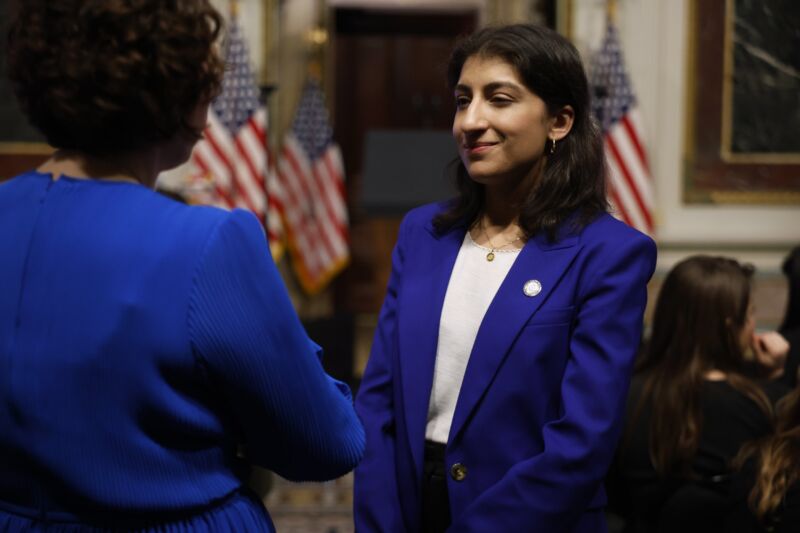 Federal Trade Commission Chair Lina Khan talks with guests during an event in the Eisenhower Executive Office Building on April 03, 2024
.
.
Click the link below for the article:
.
__________________________________________
April 30, 2024
Mohenjo
Business, Food For Thought, Human Interest, Political, Science, Technical
amazon, business, Business News, current-events, Future, Hotels, human-rights, medicine, mental-health, research, Science, Science News, technology, Technology News, travel, vacation

Click the link below the picture
.
The abandoned fieldstone walls of New England are every bit as iconic to the region as lobster pots, town greens, sap buckets, and fall foliage. They seem to be everywhere, a latticework of dry, lichen-crusted stone ridges separating a patchwork of otherwise moist soils.
Stone walls can be found here and there in other states, but only in New England are they nearly ubiquitous. That’s due to a regionally unique combination of hard crystalline bedrock, glacial soils, and farms with patchworks of small land parcels.
Nearly all were built by European settlers and their draft animals, who scuttled glacial stones from agricultural fields and pastures outward to fencelines and boundaries, then tossed or stacked them as lines. Though the oldest walls date to 1607, most were built in the agrarian century between the American Revolution and the cultural shift toward cities and industry after the Civil War.
The mass of stone that farmers moved in that century staggers the mind: an estimated 240,000 miles (400,000 kilometers) of barricades, most stacked thigh-high and similarly wide. That’s long enough to wrap our planet 10 times at the equator, or to reach the Moon on its closest approach to Earth.
Natural scientists have been working to quantify this phenomenon, which is larger in volume than the Great Wall of China, Hadrian’s Wall in Britain, and the Egyptian pyramids at Giza combined. This work began in 1870 and generated the U.S. government’s 1872 Census of Fences. Today, scientists are using a technique called lidar, or light detection and ranging, to measure and map stone walls across New England.
Being a geologist, I’m interested in walls as landforms that are distinctive to the region, created during the lead-up to the Anthropocene epoch, a time when human agency dominates all others. I’ve written about the history of stone walls and how to interpret them in the field, and developed the Stone Wall Initiative to draw public attention to their importance in New England. Now, I’m working with students and colleagues to develop a formal interdisciplinary science of stone walls that will help researchers understand and preserve them.
.

A stone wall stretches into the distance in Harpswell, Maine, one of thousands that together, by volume, are larger than the Great Wall of China, Hadrian’s Wall, and the Pyramids of Giza combined. Paul VanDerWerf, CC BY 2.0 DEED/Flickr
.
.
Click the link below for the article:
.
__________________________________________
April 29, 2024
Mohenjo
Business, Food For Thought, Human Interest, Political, Science, Technical
amazon, business, Business News, current-events, Future, Hotels, human-rights, medicine, mental-health, research, Science, Science News, technology, Technology News, travel, vacation
Click the link below the picture
.
Maharani Mahansar Heritage Liquor is the modern manifestation of a nine-generation family tradition that has spanned monarchy, colonization, and independence in India’s northern state of Rajasthan. The Shekhawat family descended from a prominent baron—or thikanedar—of Jaipur State in the early 1700s, began distilling liquor in 1768. Now, for the first time since Indian independence, the family has returned to distilling old recipes in their ancestral village of Mahansar. Not only do these heritage liquors contain the spiced aromas of India, they also hold lessons in the history of power in Rajasthan.
The earliest renditions of Rajasthan’s liquors would not have been liquors at all, but fermented herbal infusions used for dosing Ayurvedic natural medicines called asava. But by the 15th and 16th centuries, Rajasthan’s ruling class was largely from the Rajput caste system, which allowed drinking alcohol (whereas elites in other regions were often of the Brahmin caste, which discouraged the practice). As a result, royal physicians who served the local maharajas concocted new herbaceous medicines in high-proof spirits, which they came to call asaav. Reserved only for the ruling class, intriguing medicinal recipes called for potent ingredients like mutton, rabbit’s blood, and fluid from the skulls of male sparrows.
As distinct liquors emerged, the operation of darukhana, or distilleries, was outsourced to a class of feudal lords known as jagirdars and thikanedars. Surendra Pratap Singh Shekhawat’s ancestors were among these noble distillers to the kings. “It was quite old and traditional, using clay pots and fermenting with ingredients like jaggery,” says Shekhawat, who now serves as managing director of the Shekhawati Heritage Herbal private distillery, which makes Maharani Mansar’s liquor. “You add your different ingredients depending on your recipe and you ferment it for so many days, and then you distill it, and you distill it again, and you distill it again to bring out the finest form of liquor.” Only then was it ready for the royal families. In Mahansar, his family produced spirits on behalf of rulers in Bikaner, Jaipur, Jodhpur, and Jaisalmer (and kept some for themselves).
The spirits they distilled would have had concentrations of alcohol that rival today’s absinthe, around 80 percent. Tales suggest that a cotton ball dipped in the liquor could get anyone drunk. According to Anil K. Singh, the former general manager of Rajasthan’s official state-run distillery and author of a forthcoming book on Heritage Liquors, the recipes ranged from a minimum of 20 to over 75 herbs and spices. These flavors encompassed traditional Indian staples like cardamom and fennel, as well as more distinct aromatics such as safed musli root and sandalwood.
.
 A fresco from a mansion, or haveli, depicting the sharing of a drink. In Rajput culture, the munawwar piyala meaning “cup of request” is liquor offered to guests during gatherings, especially marriages. All Photos by Author Unless Otherwise Noted
.
.
Click the link below for the article:
.
__________________________________________
Older Entries
Newer Entries
 James' World 2