I turn away from my husband and his snoring, using my back to try to block out the light from my phone. It is my favorite time of day: 10 p.m., in bed, secretly scrolling my favorite app, NYTimes Recipes. Looking at all the beautiful pictures, I feel myself getting excited, hopeful even. I click on family-friendly dinners, and my heart drops instantly: It reads like a list of rejection letters. Fajitas. Chili. Tortellini soup. Lasagna. I swipe, faster and faster, rejecting things left and right (though I still think of left swipe as rejection), and I am reminded of the years I spent swiping on other apps, picky in a different way. Back then, I rejected men for being too square, too edgy, too comfortable with typos. Now I swipe and make the rejections on my children’s behalf: This recipe looks too spicy. Too cheesy. Too saucy. Too meat-y, too bean-y.
It took me years to admit my family, happy in almost every way, would completely implode if asked to live on what the Internet tells me are “Family-Friendly Dinners.” I read other families’ meal plans like other moms read romance novels, fascinated but incredulous, sure no one is being whisked off to Paris or that people’s kids are eating fish tacos in real life.
It wasn’t always this way. For years, I persisted, an acolyte in Ellyn Satter’s church of feeding, sure that if I just put certain foods (namely, healthy home-cooked ones) on the table 10, 20, 50, 5,000 times, my kids would eventually be called “good eaters,” Internet code for adventurous, polite, nonpicky dinner companions, basically little 45-year-olds in children’s bodies. But after years of this, years of heroic dinnertime effort met with routine, resounding rejection, it finally happened. I broke.
The scene that played out in our dining room last fall was a familiar one to anyone with kids. I had spent Sunday meal planning the week’s meals, my cookbooks around me on the living room floor, avoiding the allergens (avocado, tomatoes, peppers) and preferences (no broccoli, fish, “saucy” food, spice) of my family members. I’d found some that threaded the very fine needle of food preferences and time allowances I’d have to cook during the week. I grocery shopped, labeled what food should not be eaten before it was made for dinner (“DO NOT TOUCH!” the egg carton said, as they were destined for pad Thai), and got to cooking.
And so, on that night last September, I cooked. Chicken shawarma — a recipe that promised, literally, to “change my life.” I grilled, roasted, and diced. I minced the dill, considered whether to peel the cucumber. (I split the difference, peeling it in strips.) I set the table, our cloth napkins over our placemats, the food all on the table to serve family style (Ellyn Satter insists!!!), and my family sat down. And of course, nobody ate. My husband muscled out a “Thanks for dinner” as my son slid down in his chair, horrified at the very sight of cooked vegetables. My daughter declared she didn’t eat meat. (She does.)
I did not flip the kitchen table, but only because our dog, Larry, would have immediately made off with the chicken bones, but I did suddenly understand Teresa Giudice in a way I never had before. What was I doing with my one wild and precious life? I loved cooking because it brought people together. And yet my cooking for my family was doing anything but that. We were miserable.
So, I decided I was done. I would no longer cook for my family.
Over the next few days, I came up with my new rule: I would prepare food for my family, but I would not cook. The fine details are such: There are no recipes allowed, whether from a cookbook or online (Bye, NYTimes Recipes! See ya, Smitten Kitchen!!) and food should be prepared in 30 minutes or less. Practically, it means a lot of quesadillas, frozen food (Trader Joe’s frozen aisle is our meal plan for weeks), and pizza. We eat the most basic of tacos (ground turkey, spice packet, pre-shredded cheese). Baked potatoes and bagged salads are go-tos. There are lots of repeat meals.
This doesn’t mean I don’t cook ever; I just no longer cook for my family. I save my cooking for other adults. In fact, the space this no-cooking thing opened up for me inspired me to institute something we call Sunday suppers: a regular time to cook for friends we invite over. At which, of course, my kids eat food that they would normally reject — maybe it’s because they’re surrounded by friends’ children who compliment my pulled pork?
But beyond that, our dinners have now become pleasant. No tables are flipped; no tears are shed onto the scrambled eggs and pancakes we are eating. (Breakfast for dinner is about as fancy as we get now.) My son makes jokes as my daughter tells us the “cuckoo banana pants” thing that happened at school each day. To be clear, we aren’t all eating the same thing. My husband often works late, and I batch cook a big soup or salad for me or us to eat all week alongside the kids. The mealtimes I dreamed of are happening, just over different kinds of food than the fantasy includes.
.
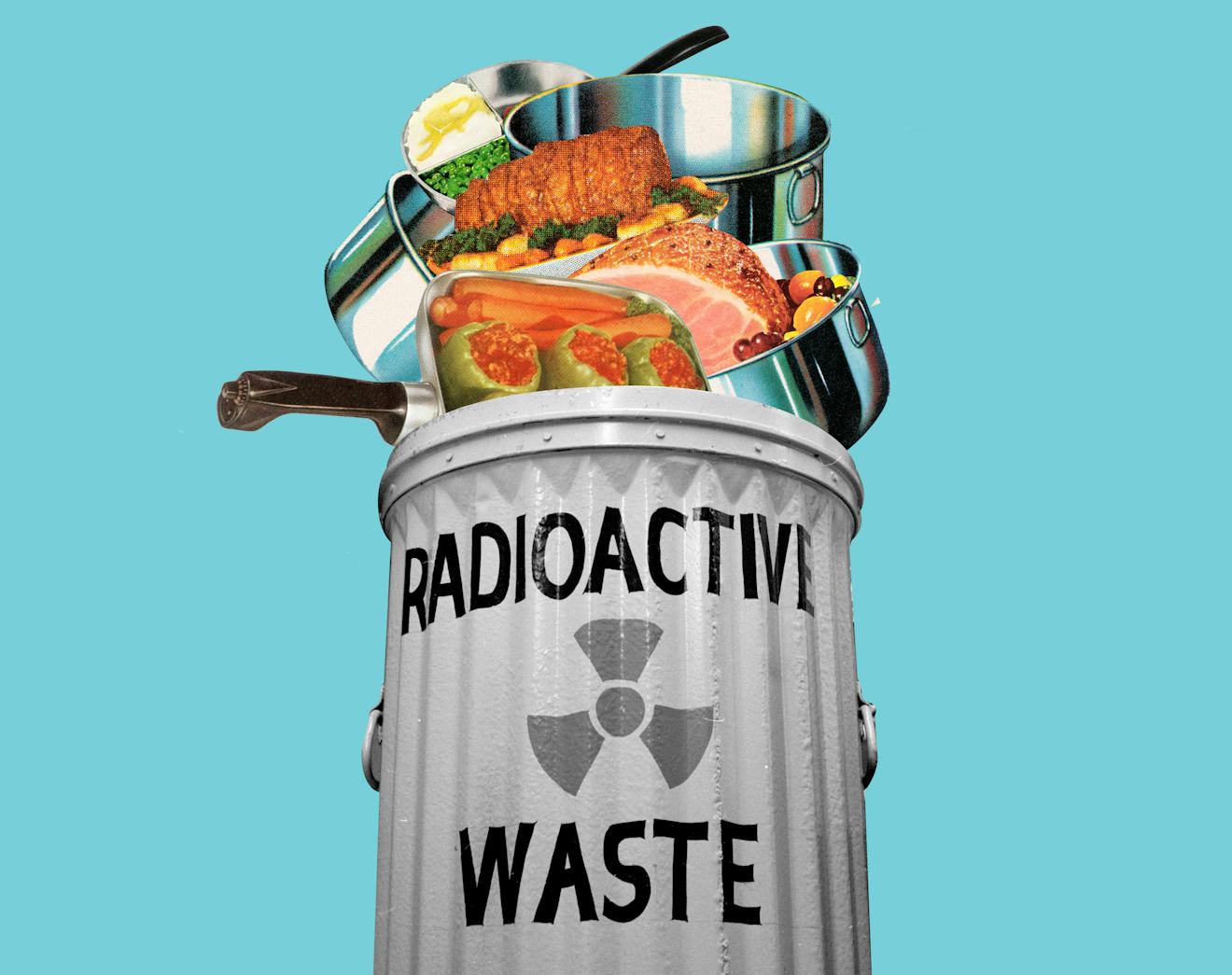
The mealtimes I dreamed of are happening, just over different kinds of food than the fantasy includes.
When wildfire smoke is in the air, doctors urge people to stay indoors to avoid breathing in harmful particles and gases. But what happens to trees and other plants that can’t escape from the smoke?
They respond a bit like us, it turns out: Some trees essentially shut their windows and doors and hold their breath.
As atmospheric and chemical scientists, we study the air quality and ecological effects of wildfire smoke and other pollutants. In a study that started quite by accident when smoke overwhelmed our research site in Colorado, we were able to watch in real time how the leaves of living pine trees responded.
How plants breathe
Plants have pores on the surface of their leaves called stomata. These pores are much like our mouths, except that while we inhale oxygen and exhale carbon dioxide, plants inhale carbon dioxide and exhale oxygen.
Both humans and plants inhale other chemicals in the air around them and exhale chemicals produced inside them – coffee breath for some people, pine scents for some trees.
Unlike humans, however, leaves breathe in and out at the same time, constantly taking in and releasing atmospheric gases.
Clues from over a century of research
In the early 1900s, scientists studying trees in heavily polluted areas discovered that those chronically exposed to pollution from coal-burning had black granules clogging the leaf pores through which plants breathe. They suspected that the substance in these granules was partly created by the trees, but due to the lack of available instruments at the time, the chemistry of those granules was never explored, nor were the effects on the plants’ photosynthesis.
Most modern research into wildfire smoke’s effects has focused on crops, and the results have been conflicting.
For example, a study of multiple crop and wetland sites in California showed that smoke scatters light in a way that made plants more efficient at photosynthesis and growth. However, a lab study in which plants were exposed to artificial smoke found that plant productivity dropped during and after smoke exposure – though those plants did recover after a few hours.
There are other clues that wildfire smoke can impact plants in negative ways. You may have even tasted one: When grapes are exposed to smoke, their wine can be tainted.
What makes smoke toxic, even far from the fire
When wildfire smoke travels long distances, the smoke cooks in sunlight and chemically changes.
Mixing volatile organic compounds, nitrogen oxides and sunlight will make ground-level ozone, which can cause breathing problems in humans. It can also damage plants by degrading the leaf surface, oxidizing plant tissue, and slowing photosynthesis.
While scientists usually think about urban regions as being large sources of ozone that effect crops downwind, wildfire smoke is an emerging concern. Other compounds, including nitrogen oxides, can also harm plants and reduce photosynthesis.
Taken together, studies suggest that wildfire smoke interacts with plants, but in poorly understood ways. This lack of research is driven by the fact that studying smoke effects on the leaves of living plants in the wild is hard: Wildfires are hard to predict, and it can be unsafe to be in smoky conditions.
.
Giant Sequoia trees are shrouded in a yellow tinge of smoke from a wildfire in the Sequoia National Forest in California, in on September 23, 2021. Patrick T. Fallon/AFP via Getty Images
It’s hard to avoid giving your child a smartphone in this new digital age, but some parents around the world are looking to buck the trend and seek out guidance on how to protect their kids from the harms of smartphone use.
Smartphone Free Childhood, a recently founded U.K. organization, is aimed at uniting parents who are not giving their kids smartphones. It has since expanded internationally as research around the topic grows.
Young people who acquired a phone before the age of 10 reported worse mental health outcomes than those who acquired a phone over the age of 15, a Sapien Labs study of 27,969 18–24-year-olds from 41 countries last year found.
Meanwhile, at least 42% of children in the U.S. had a smartphone by the age of 10, according to a Common Sense report in 2021.
Some parents give their children smartphones for safety reasons, including being able to contact them and track their location when they’re outside the home, but this may lead to mental health harms.
“The analogy that I often have in mind with the cell phone and technologies today is the automobile and when the automobile was first invented people were thrown from their cars and the number of fatalities was dramatic,” Kathleen Pike, CEO of One Mind at Work and psychology professor at Columbia University Irving Medical Center, told CNBC Make It in an interview.
“There were no seatbelts, there were no airbags. The construction of the chassis made people vulnerable and in recognizing the vulnerabilities that came along with this tremendous technological innovation, we instituted regulations and better design and policies that protected the health and wellbeing of drivers and passengers. We’re in the earliest days with cell phones and technology broadly where we need to do the same,” she said.
Columbia’s Pike and Zach Rausch, a research scientist at New York University Stern School of Business and lead researcher for Jonathon Haidt’s number one New York Times bestseller “The Anxious Generation,” shared five tips on how to avoid giving your kids a smartphone.
Organize with other parents
Being the only parent refusing to give your child a smartphone can be isolating for both you and your kid, Rausch said.
“Before you act on your own, find a couple of your kid’s friends, three to five of them. Talk with their parents, and if you all together decide to delay smartphones till high school, then it’s going to be much easier because then you can say ’Well, Johnny is also not getting his smartphone till 14,” he said, adding that this will make the conversation “much more digestible” for the child.
Pike also advised working with other parents. She shared an anecdote about a parent whose child’s fifth grade class formed a parent-teacher association.
“The class parents, as a collective, agreed that they would postpone giving their kids cell phones until they entered middle school. So when nobody else in the classroom has a cell phone, it makes it a whole lot easier for your child not to have a cellphone,” Pike said.
“If your child is the only one without a smartphone, that may present a whole additional set of stressors for your child,” she added.
Phone-based childhood versus play-based childhood
Children who don’t have a smartphone will need to replace that behavior with other forms of entertainment, the experts said.
“As this new phone-based childhood has come in, we’ve taken away what we call the play-based childhood, where kids used to have much more time being independent outdoors, playing, taking risks, and that is really crucial for human development,” Rausch explained.
He said it’s not enough to just remove the technology, parents have to give your child a new outlet for creativity.
.
siblings have fun on trampoline under blue sky Golero | E+ | Getty Images
Sharks swimming off the cost of Brazil have something a little startling coursing through their systems: cocaine.
The drug had never previously been found in wild sharks. But that doesn’t mean these fish are unique; scientists just hadn’t previously tested any shark for coke. The effort was a slam dunk, with the 13 sharks that were examined all testing positive for the drug in their muscles and liver, according to a new study in Science of the Total Environment.
What this means for the sharks is an open question, say the study co-authors Enrico Mendes Saggioro and Rachel Ann Hauser-Davis, an ecotoxicologist and a biologist, respectively, at Brazil’s Oswaldo Cruz Foundation. No one has ever studied the behavioral or physiological impacts of cocaine in sharks, Hauser-Davis says, but her ongoing research on environmental contamination in these apex predators suggests the notorious drug is only one of the animals’ worries.
“We detected high levels of metals and also detected ‘forever chemicals’ [perfluoroalkyl and polyfluoroalkyl substances, or PFASs], pesticides and polycyclic aromatic hydrocarbons, PCBs, and PBDEs in over 30 shark and ray species,” Hauser-Davis says. PCBs, or polychlorinated biphenyls, are carcinogenic chemicals banned by the U.S. in 1976 and by signatories of the United Nations’ Stockholm Convention in 2001. PBDEs, or polybrominated diphenyl ethers, are flame retardants that can disrupt brain development and hormones.
The researchers became interested in drug testing sharks after Mendes Saggioro detected cocaine while researching river water contaminants in Brazil’s state of Rio de Janeiro. Brazil has an estimated 1.5 million cocaine users, according to the World Drug Report 2020 And many areas in the country lack sewage treatment, meaning drug-contaminated urine goes right into waterways. Drug runners may also sometimes dump loads of cocaine into the ocean to avoid a bust. A Discovery Channel Shark Week special in 2023 explored the notion that sharks might take bites of floating cocaine bales, and it found that sharks did investigate dummy packages dropped near the Florida Keys. But researchers don’t think that’s the main way drugs enter sharks’ system. A 2007 study in Florida found that bull sharks have been contaminated with prescription medications via failed sewage systems. Other fish, which are a very common prey for sharks, have also been shown to be contaminated—so sharks may be exposed directly in the water or take on these compounds from their diet. Given the ubiquity of legal pharmaceuticals showing up in aquatic animals, “to think that you wouldn’t find cocaine or other illegal drugs in sharks is kind of crazy,” says Chris Lowe, a marine biologist and director of the Shark Lab at California State University,, Long Beach, who was not involved in the new study.
The researchers in this study tested Brazilian sharpnose sharks (Rhizoprionodon lalandii), a small species that lives near coastlines, from the waters off Rio de Janeiro. They found an average cocaine concentration of 23 micrograms per kilogram in the sharks’ tissue, as well as an average concentration of seven micrograms per kilogram of benzoylecgonine (the compound that cocaine breaks down into as it is metabolized). This is a fairly low level: studies on the impact of cocaine in humans tend to use doses of around 0.4 milligram per kilogram of body weight (one milligram equals 1,000 micrograms). Female sharks had higher concentrations of cocaine than males, however, and half of the females that were caught were pregnant. Previous research on stingrays, which are relatives of sharks, suggests they can pass on environmental contamination to developing fetuses.
“Adults may have better developed immune systems or enzyme systems to metabolize some of those things, but a developing fetus may not,” Lowe says. “We really don’t know what the developmental impacts could be.”
Mendes Saggioro plans to continue drug testing sharks in the area and to expand this to rays that live in the nearby estuary to see how far the contamination extends. He and his team also want to look at cocaine concentrations in migratory fish that spend less of their life near coastlines.
While researchers unravel the consequences of cocaine-contaminated sharks, there are two major takeaways. One comes from Mendes Saggioro and Hauser-Davis: don’t eat sharks because the animals are both overfished and full of compounds you don’t want in your body.
David Shiffman, a marine conservation biologist at Arizona State University, notes the other takeaway, which focuses on the health of the sharks themselves: “Please don’t dump your trash, including illegal drugs, into the water,” he says.
.
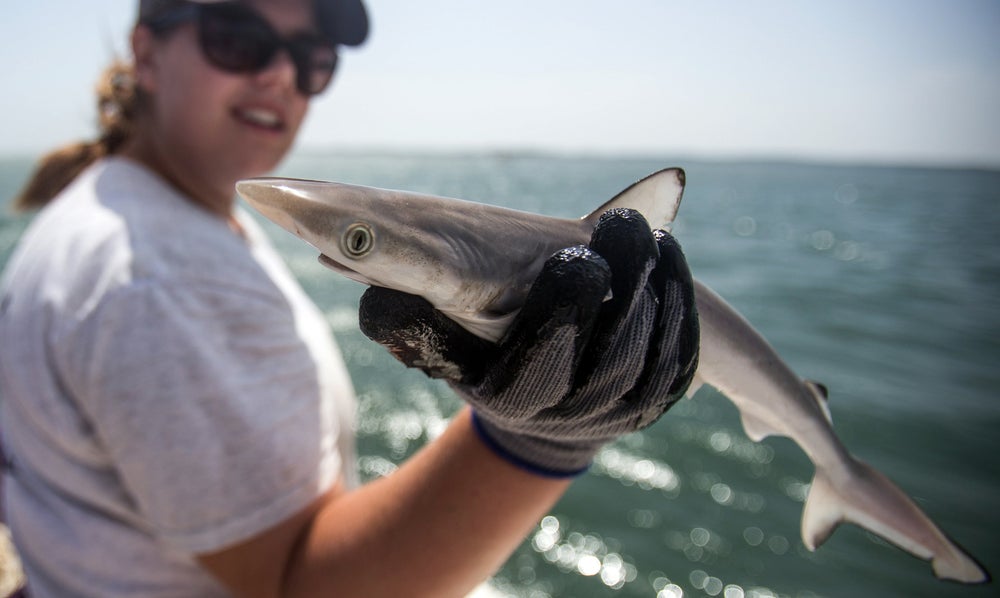
Researchers found cocaine in sharpnose sharks off Brazil. These sharks are in the same genus as the Atlantic sharpnose shark, shown here with a student researcher near Cape Lookout in the Outer Banks of North Carolina. Tegan Johnston/Raleigh News & Observer/Tribune News Service via Getty Images
A large clinical trial in South Africa and Uganda has shown that a twice-yearly injection of a new pre-exposure prophylaxis drug gives young women total protection from HIV infection.
The trial tested whether the six-month injection of lenacapavir would provide better protection against HIV infection than two other drugs, both daily pills. All three medications are pre-exposure prophylaxis (or PrEP) drugs.
Physician-scientist Linda-Gail Bekker, principal investigator for the South African part of the study, tells Nadine Dreyer what makes this breakthrough so significant and what to expect next.
Tell us about the trial and what it set out to achieve
The Purpose 1 trial with 5,000 participants took place at three sites in Uganda and 25 sites in South Africa to test the efficacy of lenacapavir and two other drugs.
Lenacapavir (Len LA) is a fusion capside inhibitor. It interferes with the HIV capsid, a protein shell that protects HIV’s genetic material and enzymes needed for replication. It is administered just under the skin, once every six months.
The randomized controlled trial, sponsored by the drug developers Gilead Sciences, tested several things.
The first was whether a six-monthly injection of lenacapavir was safe and would provide better protection against HIV infection as PrEP for women between the ages of 16 and 25 years than Truvada F/TDF, a daily PrEP pill in wide use that has been available for more than a decade.
Secondly, the trial also tested whether Descovy F/TAF, a newer daily pill, was as effective as F/TDF. The newer F/TAF has superior pharmacokinetic properties to F/TDF. Pharmacokinetic refers to the movement of a drug into, through, and out of the body. F/TAF is a smaller pill and is in use among men and transgender women in high-income countries.
The trial had three arms. Young women were randomly assigned to one of the arms in a 2:2:1 ratio (Len LA: F/TAF oral: F/TDF oral) in a double blinded fashion. This means neither the participants nor the researchers knew which treatment participants were receiving until the clinical trial was over.
In eastern and southern Africa, young women are the population who bear the brunt of new HIV infections. They also find a daily PrEP regimen challenging to maintain, for a number of social and structural reasons.
During the randomized phase of the trial, none of the 2,134 women who received lenacapavir contracted HIV. There was 100 percent efficiency.
By comparison, 16 of the 1,068 women (or 1.5%) who took Truvada (F/TDF) and 39 of 2,136 (1.8%) who received Descovy (F/TAF) contracted the HIV virus.
The results at a recent independent data safety monitoring board review led to the recommendation that the trial’s “blinded” phase should be stopped, and all participants should be offered a choice of PrEP.
This board is an independent committee of experts who are put in place at the start of a clinical trial. They see the unblinded data at stipulated times during the trial to monitor progress and safety. They ensure that a trial does not continue if there is harm or a clear benefit in one arm over others.
What is the significance of these trials?
This breakthrough gives great hope that we have a proven, highly effective prevention tool to protect people from HIV.
.
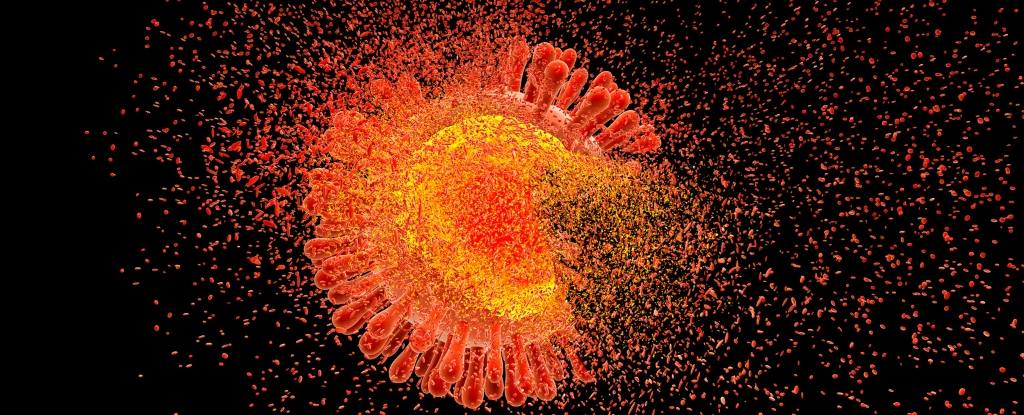
Computer illustration depicting destruction of HIV particle.(Kateryna Kon/Science Photo Library/Getty Images)
Most people probably don’t think of mathematics when they hear “busy beavers.” But these eager little animals symbolize one of the most amazing concepts of the knotty field: not everything can be calculated, no matter how hard you try (or how busy of a beaver you are). The busy beaver function is the first example of a noncalculable mathematical expression. The function itself is easy to explain: it refers to the largest number of steps a computer program can take before stopping if the program has n states, where states refer to the complexity of the problem. But its values, called BB(n), will never be known for all quantities of n. Mathematicians and theoretical computer scientists have long pondered at which n mathematical tools fail: Where exactly is the limit of what can be calculated?
For more than 40 years, many experts assumed that BB(5) could lie beyond this limit of computability and would therefore be unattainable. But now an international collaborative project called the Busy Beaver Challenge has succeeded in determining the value of BB(5), and its calculation was formally verified by a computer-aided proof assistant. According to the new research, the magic number for BB(5) is 47,176,870, meaning that a program with five states can take a maximum of 47,176,870 steps before halting—or it will never halt at all. The last big “busy beaver” achievement occurred in 1983, when the late computer scientist Allen Brady proved that BB(4) equals 107.
Busy beavers are deeply rooted in the foundations of mathematics. In the 20th century, many experts dreamed of finding a foundation on which all mathematical truths could be proven. But in 1931 logician Kurt Gödel, aged just 25 at the time, dashed their hopes. He proved that there are inevitably unprovable statements in mathematics—statements that can neither be proven nor disproven. Initially, experts hoped this was an abstract result with no significant applications. But they were wrong.
Mathematicians now know of many unprovable problems. One of the first examples is the halting problem, which deals with the execution of algorithms. In the 1930s Alan Turing figured out that there is no algorithm that can predict whether a computer program with certain inputs will run forever or will stop at some point. At the time, Turing was working on the theoretical model of such a computer, now called the Turing machine. This theoretical machine consists of an infinitely long tape labeled with 1’s and 0’s and a head that reads the tape, describes it, and shifts it to the right or left. Such a machine can theoretically perform any kind of calculation—just like a computer.
Suppose you want to program a Turing machine to multiply two numbers. The 1’s and 0’s on the tape then correspond to the two numbers. Before the calculation, you define a certain number of states, or rules, for the machine, such as A, B, C, and D, as well as HALT. These states determine how the Turing machine acts with each input. For example: If the five-state machine reads a 1 on the tape in state A, it overwrites this with a 0, moves the tape to the left, and switches to state C. Two instructions are therefore required for each of the states A to D, depending on whether the machine finds a 1 or a 0 on the tape. Under certain circumstances (for example, state B when reading a 1), the machine can switch to the HALT state. In this case, the Turing machine stops, and the calculation is complete. The result would then be the numbers on the tape at that point.
As Turing proved, there is no Turing machine that can determine, for all possible configurations of Turing machines, meaning all algorithms, whether they will stop at some point. And this is where the industrious beavers come into play.
The Halting Problem
In the “busy beaver game,” developed in 1962, Hungarian mathematician Tibor Radó searched for the most diligent Turing machine of a certain size: What is the maximum number of calculation steps that a Turing machine with n states, which comes to a halt at some point, can perform?
.
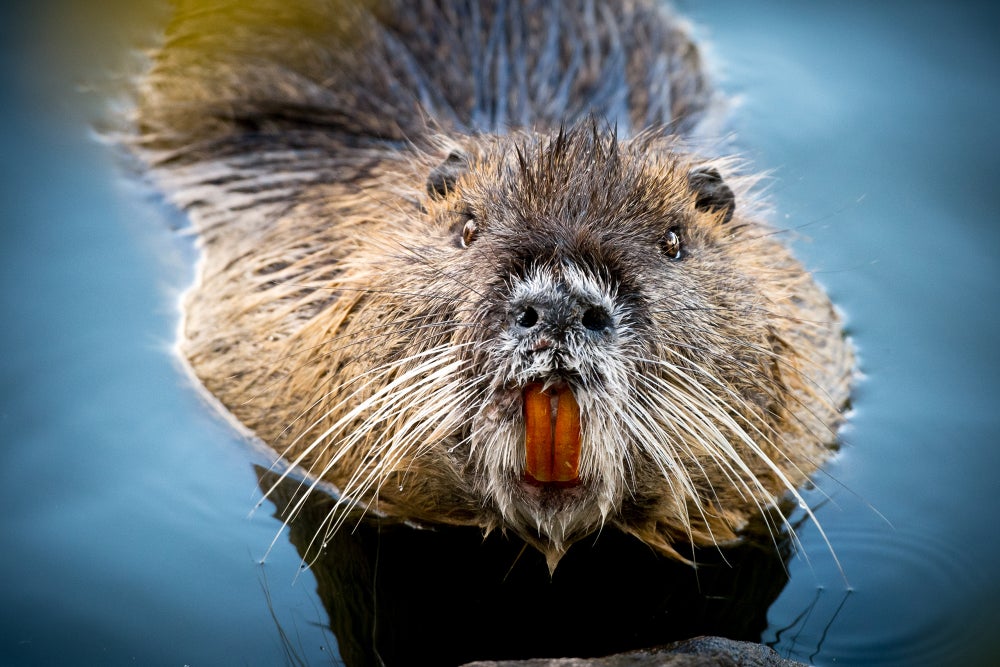
In mathematics, a busy beaver represents a noncalculable expression. Michael Wittig/500px/Getty Images
Your kids might hate your corny jokes, but those same bad jokes might be the key to making them love you forever.
OK, that might be a slight exaggeration. But a fascinating new study recently published in the journal PLOSOne indicates that using humor in our parenting might have a bigger impact than we realize.
The authors of the pilot study found that while there was a lot of existing research on how parents can use play in their child-rearing efforts, there was very little information about humor, specifically.
So, they asked a selection of adult respondents about if and how their own parents used humor at home and how those people viewed those childhood experiences years later.
The results were decisive. Funny parents were viewed more positively, had stronger relationships with their adult kids, and were perceived as better and more effective parents.
Before you go draining your life savings to enroll in clown college, it’s worth noting that the study is only a starting point. It didn’t feature a large or diverse group of respondents (a majority were white males) and it relied on self-reporting many years after the fact.
Still, the findings offer a really reassuring and optimistic view of parenting. Along with cooking, cleaning, and doing endless laundry—plus those little things like being a good person and role model—taking time to make your kids laugh is always a worthwhile task.
Why Humor Is an Important Parenting Tool
Laughing together as a family is obviously fun, but the researchers were particularly interested in humor as a tool and how it can be used in everyday parenting situations.
“Notably, humor can induce frameshifts (i.e., changes in perspective) that alter how we interpret an event or response, and thereby open new possibilities for children and parents alike,” the study says.1
In other words, joking around can change the dynamic of situations that are headed for conflict in a way that few other parenting techniques can.
One example in the study notes how, when all efforts to soothe a toddler tantrum fail, a parent might try playfully throwing a tantrum of their own. It may get their child laughing and feeling better, with the added bonus of helping to prevent the parent from growing overly frustrated.1
I absolutely love this idea. I’m naturally extremely silly and goofy with my kids, especially in high-pressure moments. I can tell when I’m getting nowhere with a lesson or admonishment and it’s time to break the tension with a joke or a game. But I had never considered using humor as an opportunity to reframe my own reaction to a situation when I feel myself losing patience or getting frustrated.
It may also have lasting effects too. Reena Patel, LEP, BCBA, positive psychologist and parenting expert, says that learning how to joke around in stressful scenarios from watching you is a highly beneficial lifelong skill for kids to pick up. “It can really help kids’ perspective and help with seeing things in a positive light,” says Patel.
Easy Tips To Add Humor To Parenting
But what if being silly or goofy with the kids doesn’t come as easy to you? What if you’re…not funny?
Patel says that playing is often close enough, if you’re a total beginner to the comedy game. “Get on your child’s level and just purely enjoy time with them,” she says. “The laughs will come when you are playing and enjoying time together.”
Humans and dogs have been close companions for perhaps 30,000 years, according to anthropological and DNA evidence. So it would make sense that dogs would be uniquely qualified to interpret human emotion. They have evolved to read verbal and visual cues from their owners, and previous research has shown that with their acute sense of smell, they can even detect the odor of stress in human sweat. Now researchers have found that not only can dogs smell stress—in this case represented by higher levels of the hormone cortisol—they also react to it emotionally.
For the new study, published Monday in Scientific Reports, scientists at the University of Bristol in England recruited 18 dogs of varying breeds, along with their owners. Eleven volunteers who were unfamiliar to the dogs were put through a stress test involving public speaking and arithmetic while samples of their underarm sweat were gathered on pieces of cloth. Next, the human participants underwent a relaxation exercise that included watching a nature video on a beanbag chair under dim lighting, after which new sweat samples were taken. Sweat samples from three of these volunteers were used in the study.
Participating canines were put into three groups and smelled sweat samples from one of the three volunteers. Prior to doing so, the dogs were trained to know that a food bowl at one location contained a treat and that a bowl at another location did not. During testing, bowls that did not contain a treat were sometimes placed in one of three “ambiguous” locations. In one testing session, when the dogs smelled the sample from a stressed volunteer, compared with the scent of a cloth without a sample, they were less likely to approach the bowl in one of the ambiguous locations, suggesting that they thought this bowl did not contain a treat. Previous research has shown that an expectation of a negative outcome reflects a down mood in dogs.
The results imply that when dogs are around stressed individuals, they’re more pessimistic about uncertain situations, whereas proximity to people with the relaxed odor does not have this effect, says Zoe Parr-Cortes, lead study author and a Ph.D. student at Bristol Veterinary School at the University of Bristol. “For thousands of years, dogs have learned to live with us, and a lot of their evolution has been alongside us. Both humans and dogs are social animals, and there’s an emotional contagion between us,” she says. “Being able to sense stress from another member of the pack was likely beneficial because it alerted them of a threat that another member of the group had already detected.”
The fact that the odor came from an individual who was unfamiliar to the dogs speaks to the importance of smell for the animals and to the way it affects emotions in such practical situations, says Katherine A. Houpt, a professor emeritus of behavioral medicine at Cornell University’s College of Veterinary Medicine. Houpt, who was not involved in the new study, suggests that the smell of stress may have reduced the dogs’ hunger because it’s known to impact appetite. “It might not be that it’s changing their decision-making but more that it’s changing their motivation for food,” she says. “It makes sense because when you’re super stressed, you’re not quite as interested in that candy bar.”
This research, Houpt adds, shows that dogs have empathy based on smell in addition to visual and verbal cues. And when you’re stressed, that could translate into behaviors that your dog doesn’t normally display, she says. What’s more, it leaves us to wonder how stress impacts the animals under the more intense weight of an anxious owner. “If the dogs are responding to more mild stress like this, I’d be interested to see how they responded to something more serious like an impending tornado, losing your job or failing a test,” Houpt says. “One would expect the dog to be even more attuned to an actual threat.”
On Friday afternoon, my bosses asked if I’d like to test out and explain Noplace, a new social media platform that shot to the top of the Apple Store charts when it switched from referral-only to free-for-all. When they asked me to do that with BeReal two years ago, I ended up falling in love with the app and using it with my friends all summer long, so I was excited. Maybe Noplace, billed as “MySpace for Gen Z,” would turn out the same—a fun platform for my friends and me to play with for the rest of the warm months. I downloaded it, impressed by its commitment to the customizable themes and colors that defined my social media use when I was a kid coding pet pages on Neopets and learning HTML so my LiveJournal could reflect on the outside how I felt on the inside. Here’s what I found.
What is Noplace?
Noplace is bright and colorful, promising to connect people with similar interests. You get a profile page, which you’re able to customize by changing the colors and even the bezels around the text boxes. Like old-timey Facebook, there’s a “wall” where your friends can post public messages to you. Like LiveJournal, there are sections built into your profile where you can announce what you’re eating, listening to, or doing. Like MySpace, you can publicly rank your top friends. Like any other platform, there is a direct-messaging component. And like X, there’s a tab where you can post what you’re thinking or feeling and strangers can respond.
I messed around on the app for three days, but never quite figured out how it connects people with similar interests. On Noplace, your interests are called “stars,” so I selected a few stars from the categories it offered up: Fortnite under “video games,” for instance. I noticed a lot of the possible stars were vague—”astrology,” “LGBTQ,” “reading”—so I created my own in the search bar. I went with baseball and the Minnesota Twins, then added spin class, too. But there was never a way to find other people who chose those stars or connect with them. They just appeared on my profile. It was a little sad, but I’m not ruling out the possibility that I just couldn’t figure it out.
How does Noplace work?
I started posting on the public, feed-style forum right away after quickly throwing together a profile that was all purple, featured a picture of me, and alerted any potential new friends to the fact that I was listening to “Whenever, Wherever” by Shakira while eating a package of dried seaweed snacks. It really did feel very 2004. I couldn’t believe I used to spend so much time on real-time updates back then, especially considering I was doing it all from a desktop computer, tethered to a giant monitor in my basement in the era before smartphones.
I inquired about how to raise my “level” and someone kindly responded to let me know I had to be more interactive on the app to accomplish that. I tapped their profile. They were a young teen. I started tapping more profiles I found in the feed. Everyone appeared to be between 14 and 20. It made me uncomfortable. I felt like an interloper at best and a creep at worst. Not ideal. I decided to force my friends to join, so I could at least be among some peers. That part was easy: I just had to tap an “invite friends” button in the search tab, then send them all a text. Further proof that I was way too old to be doing this came when I noticed that even after I imported my contacts, no one from the list appeared to already be on the app. Matters became more dire when two of my best friends who use Android phones told me there was no Android app at all. It was up to me and my iPhone-using pals to infiltrate on our own.
Since 2020, the condition known as long COVID-19 has become a widespread disability affecting the health and quality of life of millions of people across the globe and costing economies billions of dollars in reduced productivity of employees and an overall drop in the work force.
The intense scientific effort that long COVID sparked has resulted in more than 24,000 scientific publications, making it the most researched health condition in any four years of recorded human history.
Long COVID is a term that describes the constellation of long-term health effects caused by infection with the SARS-CoV-2 virus. These range from persistent respiratory symptoms, such as shortness of breath, to debilitating fatigue or brain fog that limits people’s ability to work, and conditions such as heart failure and diabetes, which are known to last a lifetime.
I am a physician scientist, and I have been deeply immersed in studying long COVID since the early days of the pandemic. I have testified before the U.S. Senate as an expert witness on long COVID, have published extensively on it, and was named as one of Time’s 100 most influential people in health in 2024 for my research in this area.
Over the first half of 2024, a flurry of reports and scientific papers on long COVID added clarity to this complex condition. These include, in particular, insights into how COVID-19 can still wreak havoc in many organs years after the initial viral infection, as well as emerging evidence on viral persistence and immune dysfunction that last for months or years after initial infection.
How long COVID affects the body
A new study that my colleagues and I published in the New England Journal of Medicine on July 17, 2024, shows that the risk of long COVID declined over the course of the pandemic. In 2020, when the ancestral strain of SARS-CoV-2 was dominant and vaccines were not available, about 10.4% of adults who got COVID-19 developed long COVID. By early 2022, when the omicron family of variants predominated, that rate declined to 7.7% among unvaccinated adults and 3.5% of vaccinated adults. In other words, unvaccinated people were more than twice as likely to develop long COVID.
While researchers like me do not yet have concrete numbers for the current rate in mid-2024 due to the time it takes for long COVID cases to be reflected in the data, the flow of new patients into long COVID clinics has been on par with 2022.
We found that the decline was the result of two key drivers: availability of vaccines and changes in the characteristics of the virus – which made the virus less prone to cause severe acute infections and may have reduced its ability to persist in the human body long enough to cause chronic disease.
Despite the decline in risk of developing long COVID, even a 3.5% risk is substantial. New and repeat COVID-19 infections translate into millions of new long COVID cases that add to an already staggering number of people suffering from this condition.
.
Researchers are gaining key insights into the ways that the SARS-CoV-2 virus can lead to long COVID symptoms. smartboy10/Getty Images
Film and Writing Festival for Comedy. Showcasing best of comedy short films at the FEEDBACK Film Festival. Plus, showcasing best of comedy novels, short stories, poems, screenplays (TV, short, feature) at the festival performed by professional actors.

 The mealtimes I dreamed of are happening, just over different kinds of food than the fantasy includes.




:max_bytes(150000):strip_icc():format(webp)/GettyImages-1298559542-30a4195625fa46a5abdacac6efacfe45.jpg)


 James' World 2