February 22, 2025
Mohenjo
Business, Food For Thought, Human Interest, Political, Science, Technical
amazon, business, Business News, current-events, Future, Hotels, human-rights, medicine, mental-health, research, Science, Science News, technology, Technology News, travel, vacation

Click the link below the picture
.
The day my mom moved in, my 3-year-old spun in circles, singing, thrilled that her Gigi was back for what she assumed was just another visit. My newly walking 1-year-old wobbled after her, babbling, unaware of the shift that was about to redefine our home. In the center of the chaos, my mother smiled, her face and body not yet bearing the visible evidence of the lung cancer that was killing her. She had moved across the country to live with us, preparing to start treatment at our local hospital.
I had imagined this as a time of reconnection — a chance for her to become a steady presence in her grandchildren’s lives, for us to truly know each other as adults after years spent living so far apart. Instead, my days blurred into an exhausting cycle of diaper changes, nap battles, and doctor’s appointments, torn between being the mother my children needed and the daughter my mother deserved. I thought there would be space to simply be with her — to talk, to reminisce, to connect. But caregiving was never still. It was crisis management, the constant triage of needs.
Focusing on both my mom and my kids as much as I wanted to was nearly impossible
When I was focused on my mom, I worried I was neglecting my children; when I was with my children, I felt I was abandoning my mother. Guilt was the main feeling in those days; I never felt like I was fully taking care of or helping anyone who needed me in the capacity they needed. And certainly, I was not taking care of myself.
As the chemo took its toll and my mother grew weaker, my life slowed — necessarily, but unexpectedly. Even as she became less able to care for herself, she found ways to remain present for my children. From her bed, she read to them, her voice softer yet steady. She taught my daughter sign language and helped my son stack blocks into towers, cheering and laughing with him when they toppled over. Though I was busier than ever, life took on a new rhythm, one I had never allowed before. We moved at her pace, sitting longer, staying present.
Then, something would happen that demanded immediate attention. A broken plate. A toddler’s stomach bug. My mom’s fever. Decisions had to be made — should I call her doctor? Should I call 911? In addition to worrying about my children’s sleep, health, and development, I now had to consider what side effects of my mother’s treatment warranted an emergency. What should I do if she stops eating?
I was still trying to make sense of everything when I found myself upstairs, cleaning crayon off the walls, only to realize my mom needed to be rushed to the hospital, where they diagnosed her with sepsis. Why hadn’t I noticed how sick she was earlier? How did I not notice? These questions haunted me for a long time.
.
 The author (not pictured) was a stay-at-home mom with two toddlers while also caregiving for her mom. Ray Kachatorian/Getty Images
.
.
Click the link below for the complete article:
.
__________________________________________
February 21, 2025
Mohenjo
Business, Food For Thought, Human Interest, Political, Science, Technical
amazon, business, Business News, current-events, Future, Hotels, human-rights, medicine, mental-health, research, Science, Science News, technology, Technology News, travel, vacation

Click the link below the picture
.
CLIMATEWIRE | The National Science Foundation went beyond the staff cuts demanded by the Trump administration in a move that set off a frenzied backlash at the science funding agency.
NSF fired about 10 percent of its staff at the end of Tuesday, removing 168 people who included most of the agency’s probationary employees and all of its experts, a class of contract workers who are specialists in niche scientific fields.
The agency didn’t have to fire its experts but decided to in the interest of fairness, a top NSF official told staffers in an emotionally charged hybrid meeting Tuesday morning at its Alexandria, Virginia, headquarters.
“The removal of experts was completely at the agency’s discretion. Because if we’re asked to remove probationers, then we also need to remove at-will employees,” Micah Cheatham, NSF’s chief management officer, said at the tense and tearful hour-long meeting, according to a transcript obtained by POLITICO’s E&E News.
“This is the first of many forthcoming workforce reductions,” he added.
NSF was created by Congress in 1950 to ensure U.S. leadership in science and engineering. The agency now provides roughly a quarter of federal support to America’s colleges and universities for basic research.
E&E News previously reported that NSF expects to cut up to half of its 1,500-person workforce. Scientists and Democratic lawmakers fear that staff losses of that scale could effectively break the nation’s research and innovation pipeline, with disastrous consequences for the U.S. economy and American citizens.
The mass firing at one of the nation’s leading funders of scientific research comes as Elon Musk, the head of the Department of Government Efficiency established by President Donald Trump, races to slash federal spending with the help of the Office of Personnel Management. Musk’s group has initially targeted foreign aid and racial diversity efforts, but nearly all agencies have been impacted by cuts, or expect them to come soon.
A few probationary employees whose work NSF leaders determined was essential were spared from the firings.
“We asked who was mission critical and more than half of people were identified,” Cheatham said. “That was too many.”
Fired NSF staffers were instructed to stop working by 1 p.m. Tuesday, at which point they would be locked out of the agency’s computer network. They had until the end of the day to clean out their desks.
To avoid having the stain of a firing on their resumes, staffers were told they could resign. But then they would not be eligible for unemployment payments.
The announcement prompted outrage, confusion, and concern from people at the meeting, resulting in a string of scathing all-staff emails from impacted workers.
.
National Science Foundation headquarters shown outside Washington. JHVEPhoto/Alamy Stock Photo
.
.
Click the link below for the complete article:
.
__________________________________________
February 21, 2025
Mohenjo
Business, Food For Thought, Human Interest, Political, Science, Technical
amazon, business, Business News, current-events, Future, Hotels, human-rights, medicine, mental-health, research, Science, Science News, technology, Technology News, travel, vacation

Click the link below the picture
.
On Saturday, August 19, 2023, two weeks after I turn seventy-one, I become a new father, again.
I’m not expecting, nor is Lisa, who’s sixty-seven. And while I’m pleased to say that thirty years on we still savor each other head to toe and in several other positions, our reproductive job was over with when Judah was born in 1999, and we knew it. We had started late (I was married once before: ten years, no kids) and Lisa and I were past forty and craving it all—parenthood, love, redemption. Judah was our last shot.
Imagine that pressure—not on us, on him. Lisa and I were ready. I don’t know if any child is ready, but Judah caught on right away to the basics—cry, suckle, piss, shit—and took it from there. When I was the age he is now, in 1976, I was a geek in search of a carnival, drinking hard, writing poetry, welcoming my worst instincts every day. Judah’s working on a Ph.D. in chemistry at UCLA.
We followed him out to Los Angeles instead of aging out alone in New Jersey because we love him and he loves us. He comes by every Saturday for lunch, usually with Greta, his girlfriend. He arrives alone today, which in itself signifies nothing much, but his smile’s tight. There’s a . . . vibe. A doting, aging father feels these things.
We kiss, we hug, we sit. Lisa’s behind him, standing with her back to us, dishing red-lentil dal, grabbing spoons, asking how Greta’s doing.
“So?” I say once Lisa’s at the table.
“What?”
I see it in his eyes, steel blue, flecked with black.
He knows I see it. He favors the Brennans, Lisa’s people: lean, long-muscled, free of my flat feet and back hair, and quiet—but in one room, we share one brain.
I raise my brows.
He lifts his.
Of course. Like Lisa, he wants me to ask. Information withheld is power. Bad news he’d have dumped by now.
“Bub,” I say.
“Bub?” he says.
Not once has he ever called me Dad. We’re not pals, either. We are men and Bub works fine.
“Buhhhhb,” I croak, low. “What is up?”
He grins, eyes wide and wet. It’s not the jalapeños in his mama’s dal. He’s feeling . . . something. A lot.
“So I heard from this woman yesterday,” he says. “She’s pretty sure I’m her brother.”
Lisa, Judah, and me, the nuclear family stripped to its minimum with little space for secrets—we all know how this has happened. Over the years, I’d talked lightheartedly about my time as a sperm donor in the early 1990s and the possibility that my seed had spread without my knowledge.
It was during my first marriage, to a wonderful woman who didn’t want to be a mother any more than I cared about becoming a father. She earned a medical resident’s paltry stipend, and I raked in forty dollars a pop when a local alternative weekly found my columns to its taste. I was writing short fiction, too, and working on a novel and putting too many basics on credit cards.
A different man might’ve thought about getting a job. Fk that. I’ve known since age twelve that I was alive to write. It was a calling, not a career. I was about to turn forty, my wife had her medical degree and would soon make real money, so no, I wasn’t going back to selling shoes.
.
 COLLAGE BY JENS WORTMANN
.
.
Click the link below for the complete article:
.
__________________________________________
February 20, 2025
Mohenjo
Business, Food For Thought, Human Interest, Political, Science, Technical
amazon, business, Business News, current-events, Future, Hotels, human-rights, medicine, mental-health, research, Science, Science News, technology, Technology News, travel, vacation
Click the link below the picture
.
In the wake of the Second World War, US leaders adopted the view that scientific progress is an “essential key to our security as a nation, to our better health, to more jobs, to a higher standard of living, and to our cultural progress”. And for the next eight decades, government officials on both sides of the political aisle agreed to invest in US science. Just one month into the second administration of Republican President Donald Trump, scientists fear that that long-time consensus is disintegrating.
Acting with unprecedented speed, the administration has laid off thousands of employees at US science agencies and announced reforms to research-grant standards that could drastically reduce federal financial support for science. The cuts form part of a larger effort to radically reduce the government’s spending and downsize its workforce.
Although US courts have intervened in some cases, Republicans in both chambers of the US Congress — which largely blocked Trump’s efforts to cut science funding during his first term as president from 2017 to 2021 — have mostly fallen in line with the agenda for Trump 2.0. For many researchers, this first month signals a realignment of priorities that could affect science and society for decades to come.
These actions are all “unprecedented”, says Harold Varmus, a former director of the US National Institutes of Health (NIH) who is now a cancer researcher at Weill Cornell Medicine in New York City. “No one has ever seen a [presidential] transition in which one of the most valuable parts of our government enterprise is being taken apart.”
The Trump White House did not respond to Nature’s request for comment.
Here, Nature unpacks the Trump team’s blazing-fast actions on science so far (scroll to bottom to see timeline ‘Science impacts: one month of Trump 2.0’) and talks to policy watchers about what’s next.
Fast and furious
The overhaul of US science kicked off within hours of Trump’s inauguration on 20 January, when he signed dozens of executive orders, which are presidential directives on how the government should operate inside existing laws.
Some of those orders had been anticipated, including pulling the United States out of the 2015 Paris agreement to rein in global climate emissions and terminating the nation’s membership in the World Health Organization. Others had surprising and immediate ripple effects through the scientific community.
One order erroneously attempted to define only two biological sexes, male and female, and banned federal actions “that promote or otherwise inculcate gender ideology”. Biomedical-research agencies such as the US Centers for Disease Control and Prevention (CDC) scrambled to respond by, among other things, taking down data sets from their websites and pulling back manuscript submissions from scientific journals to purge terms including ‘gender’ and ‘transgender.’
Another executive order banned what Trump called “illegal and immoral discrimination programs, going by the name ‘diversity, equity, and inclusion’ (DEI)”. Any federal employee who did not report colleagues defying the DEI orders would face “adverse consequences”, according to an e-mail sent to government workers. To many scientists’ dismay, agencies began terminating DEI programs, including environmental-justice efforts, which are programs aimed at protecting low-income communities vulnerable to pollution and climate change. Even some scientific societies and private research organizations scrubbed DEI mentions from their websites. In one of Trump’s orders, he called for the investigation of foundations, non-profit organizations, and other private entities not in compliance.
On 27 January, just one week into the new administration, Trump’s budget office froze all federal grants and loans, saying that it needed to review government spending to ensure that it aligned with the executive orders. Chaos erupted as agencies, including the NIH and the US National Science Foundation (NSF) — both major funders of basic science — halted grant payments, canceled review panels for research-grant funding, and paused communications. A federal judge temporarily blocked the order, but disruptions and confusion continue.
Principal investigators who lead research teams are suffering in this environment, says a university scientist who requested anonymity because their research is funded by multiple US agencies. “Everything is on you to manage your grants and your team,” they say, adding that “there’s a lot of fear of people not wanting to say or do the wrong thing” and therefore lose financial support for their work. “It’s completely chaotic; I’m losing sleep.”
.

U.S. President Donald Trump looks at an executive order on halting federal funds for schools and universities that impose coronavirus vaccine mandates before signing in the Oval Office of the White House on February 14, 2025. Demetrius Freeman/The Washington Post via Getty Images
.
.
Click the link below for the complete article:
.
__________________________________________
February 20, 2025
Mohenjo
Business, Food For Thought, Human Interest, Political, Science, Technical
amazon, business, Business News, current-events, Future, Hotels, human-rights, medicine, mental-health, research, Science, Science News, technology, Technology News, travel, vacation

Click the link below the picture
.
Parents who claim to never lie to their children are liars. It begins with Santa Claus and the Tooth Fairy. Then it’s, “Yes, all kindergartners go to bed at 7 o’clock” and “No, the chickens on the farm and the chicken on your plate are not the same kind of chicken.” Most of these untruths are harmless — white lies, we call them. But there are some lies we tell as parents, however well intentioned, that do more harm than good.
I learned that lesson the hard way.
When I was 11, I underwent a complex procedure to correct a
discrepancy in the length of my legs. Surgeons spent 13 hours drilling through my bones and attaching an external metal frame from my hip to my toe. It took them the next two years to stretch my leg three inches. The pain was so severe that morphine, other opioids, Valium, and muscle relaxants were all standard protocol. Yet, before the surgery, when I asked if it would hurt, the only thing I remember being told was “Don’t worry, we have ways to manage any unpleasantness.” The difference between what I was told and what I experienced shattered my faith in doctors and left me questioning whether I could trust adults at all. Now, as a parent — and through my years working in health care — I’ve made the conscious decision never to lie to people about pain. Even with something as small as a routine vaccination, even before they see the needle coming toward them. Yes, I say, it may hurt.
Many parents opt instead to reassure their children. Since they can’t stop the needle from hurting, they believe the next best thing is to offer comfort. But when the pain does inevitably come, it’s accompanied by a heaping side of betrayal. Lies that mislead children about their experiences are not white lies. Though they may appear innocuous, they erode the fabric of the fundamental
and necessary trust between parent and child. They create an emotional wound not easily healed. The pain of discovering you have been deceived by a trusted adult can cut deeper and last longer than the pain of an unavoidable medical intervention.
In any case, although sugarcoating might make us feel better, it doesn’t help our children — it can actually intensify their discomfort. In an experiment on how parents communicate with children before immunizations, children showed more fear and had to be restrained more after their parents reassured them. Children fared better when their parents were randomly assigned to distract them, or even do nothing. Before the shots, the parents who provided reassurance felt the least upset and the most helpful. But afterward, they felt the most distressed; they realized their attempts to help had actually hurt.
Researchers advise against statements like “This won’t hurt,” “There is nothing to worry about” and “Don’t cry” because they can backfire. Children may interpret them as a warning sign, and they may end up experiencing more distress and pain than they would have otherwise. Lying to children robs them of the opportunity to learn to express difficult emotions in healthy ways and can contribute to future anxiety.
.
 Alma Haser
.
.
Click the link below for the complete article:
.
__________________________________________
February 19, 2025
Mohenjo
Business, Food For Thought, Human Interest, Political, Science, Technical
amazon, business, Business News, current-events, Future, Hotels, human-rights, medicine, mental-health, research, Science, Science News, technology, Technology News, travel, vacation
Click the link below the picture
.
Inside a laboratory nestled in the foothills of the Rocky Mountains, amid a labyrinth of lenses, mirrors, and other optical machinery bolted to a vibration-resistant table, an apparatus resembling a chimney pipe rises toward the ceiling. On a recent visit, the silvery pipe held a cloud of thousands of supercooled cesium atoms launched upward by lasers and then left to float back down. With each cycle, a maser—like a laser that produces microwaves—hit the atoms to send their outer electrons jumping to a different energy state.
The machine, called a cesium fountain clock, was in the middle of a two-week measurement run at a National Institute of Standards and Technology (NIST) research facility in Boulder, Colo., repeatedly fountaining atoms. Detectors inside measured photons released by the atoms as they settled back down to their original states. Atoms make such transitions by absorbing a specific amount of energy and then emitting it in the form of a specific frequency of light, meaning the light’s waves always reach their peak amplitude at a regular, dependable cadence. This cadence provides a natural temporal reference that scientists can pinpoint with extraordinary precision.
By repeating the fountain process hundreds of thousands of times, the instrument narrows in on the exact transition frequency of the cesium atoms. Although it’s technically a clock, the cesium fountain could not tell you the hour. “This instrument does not keep track of time,” says Vladislav Gerginov, a senior research associate at NIST and the keeper of this clock. “It’s a frequency reference—a tuning fork.” By tuning a beam of light to match this resonance frequency, metrologists can “realize time,” as they phrase it, counting the oscillations of the light wave.
The signal from this tuning fork—about nine gigahertz—is used to calibrate about 18 smaller atomic clocks at NIST that run 24 hours a day. Housed in egg incubators to control the temperature and humidity, these clocks maintain the official time for the U.S., which is compared with similar measurements in other countries to set Coordinated Universal Time, or UTC.Gerginov, dressed casually in a short-sleeve plaid shirt and sneakers, spoke of the instrument with an air of pride. He had recently replaced the clock’s microwave cavity, a copper passageway in the middle of the pipe where the atoms interact with the maser. The instrument would soon be christened NIST-F4, the new principal reference clock for the U.S. “It’s going to be the primary standard of frequency,” Gerginov says, looking up at the metallic fountain, a three-foot-tall vacuum chamber with four layers of nickel-iron-alloy magnetic shielding. “Until the definition of the second changes.”
Since 1967 the second has been defined as the duration of 9,192,631,770 cycles of cesium’s resonance frequency. In other words, when the outer electron of a cesium atom falls to the lower state and releases light, the amount of time it takes to emit 9,192,631,770 cycles of the light wave defines one second. “You can think of an atom as a pendulum,” says NIST research fellow John Kitching. “We cause the atoms to oscillate at their natural resonance frequency. Every atom of cesium is the same, and the frequencies don’t change. They’re determined by fundamental constants. And that’s why atomic clocks are the best way of keeping time right now.”
But cesium clocks are no longer the most accurate clocks available. In the past five years, the world’s most advanced atomic clocks have reached a critical milestone by taking measurements that are more than two orders of magnitude more accurate than those of the best cesium clocks. These newer instruments, called optical clocks, use different atoms, such as strontium or ytterbium, that transition at much higher frequencies. They release optical light, as opposed to the microwave light given out by cesium, effectively dividing the second into about 50,000 times as many “ticks” as a cesium clock can measure.
.

A strontium optical clock produces about 50,000 times more oscillations per second than a cesium clock, the basis for the current definition of a second. Andrew Brookes/National Physical Laboratory/Science Source
.
.
Click the link below for the complete article:
.
__________________________________________
February 19, 2025
Mohenjo
Business, Food For Thought, Human Interest, Political, Science, Technical
amazon, business, Business News, current-events, Future, Hotels, human-rights, medicine, mental-health, research, Science, Science News, technology, Technology News, travel, vacation

Click the link below the picture
.
It’s only natural to want the best for your kid, but sometimes high expectations can lead parents to overcorrect their child’s behaviors. Some parents can strike a balance, but for others, it’s more challenging to notice that their parenting style may be more authoritarian and strict than necessary.
To gain a better understanding of what strict parenting looks like, the psychological impacts it can have, and how to employ strategies for balanced parenting, we spoke with two psychologists.
Common Misconceptions About Strict Parenting
It’s a common belief among parents that being strict or authoritarian with your child is the most effective way to change their behavior. A 2022 poll found that around 36% of parents find their parenting style stricter than most.1
“To be fair, it can be very effective, in the short term,” says Dylan Ochal, MD, FAAP, pediatrician at Ocean Pediatrics, Orange County, California. Often, parents that tend to use more authoritarian strategies gain control in the short term, while sacrificing emotional connection in long run.
It’s common for children to quickly adjust their behavior when they’re scared or worried about consequences, which can lead parents to believe that employing a strict stance with rigid consequences is an effective way to modify a child’s behavior.
Some parents are motivated to employ stricter parenting methods due to parental shaming, a form of criticism that over 61% of mothers report experiencing.2 “You might have heard things like: ‘Are you really going to let him get away with throwing his food?’ or ‘Can you believe she’s letting her son scream like that in the grocery store? He’s out of control!’ That pressure can be overwhelming, but parenting based on external judgement won’t help you or your child,” says Dr. Ochal.
9 Signs You’re Being Too Hard On Your Kid
-
Your tone is consistently harsh.
-
You find yourself yelling regularly or resorting to threats when your child misbehaves.
-
Your child is withdrawing from activities they once enjoyed.
-
You are concerned that without having certain rules in place your child would have an emotional outburst or not respect your authority.
-
You don’t consider your child’s perspective.
-
You have an excessive amount of rules, including rules for virtually everything in your home from meal time to bath time.
-
You consistently point out your child’s mistakes.
-
You only show love or positivity when your child is exhibiting good behavior.
-
Your child shows physical signs of stress like frequent headaches, stomachaches, or changes in appetite.
.
:max_bytes(150000):strip_icc()/Parents-SignsYoureBeingTooHardOnYourKid-7f9ea63f68fc4f96b43937cb23aa62ac.jpg) PARENTS/ GETTY IMAGES
PARENTS/ GETTY IMAGES
.
.
Click the link below for the complete article:
.
__________________________________________
February 18, 2025
Mohenjo
Business, Food For Thought, Human Interest, Political, Science, Technical
amazon, business, Business News, current-events, Future, Hotels, human-rights, medicine, mental-health, research, Science, Science News, technology, Technology News, travel, vacation
Click the link below the picture
.
Our brains are full of plastic.
This was the fun news I read earlier this week while picking up dinner take-out, packed in plastic containers, crammed in a plastic bag, and accompanied by Styrofoam cups. Great, I thought, convenience culture is killing us.
But is it? This is the problem with the slew of research finding microscopic shards of plastic in our arteries, kidneys, and livers, the findings that our oceans, food, soil, and air are teeming with tiny bits of Tupperware. Scientists still don’t know what this plastic is doing to us. And because research takes time, while scientists are trying to answer question, we just keep inhaling, eating, and drinking tiny pieces of plastic.
Why? Regulatory action has never really stopped the U.S. plastics industry from cranking out more plastic, even as clean air and water advocates try to fight the industry’s pollution problems in court and locals wage grassroots wars to slow the permitting of more plants that spew all those toxic chemicals. And now, back in office, is a president beholden to fossil fuel interests (where petroleum and natural gas are plastics precursors), a leader who uses his new powers to demand the use of plastic straws, and an administration that is hell-bent on crippling EPA’s mission to keep us safe rather than empowering it.
Meanwhile, we do not know what all this plastic is doing to us. And no one currently in charge seems to care.
Everything that goes into our bodies gets filtered through our livers and kidneys, so maybe it’s not a big surprise that bits of plastic find their way into those organs. Same with our hearts; microplastics end up in our blood and can get stuck in our clogged arteries. But our brains are designed to keep things out, through something called the blood-brain barrier. The researchers behind the brain plastics study think the tiny shards of plastic hitch a ride on fat molecules to get inside brain cells. And what’s worse is how much microplastics the researchers think might be in a whole human brain: 10 grams. Imagine 2.5 teaspoons of sugar. Now sub in plastic. Gross.
They looked at preserved brains from about a decade ago and compared them to brains from last year. The fresher brains had more plastic in them than the older brains. And yes, they accounted for all the plastic needed to hold and manipulate the brains in their study, just in case those tubes and such were leaching plastic. So, year after year, surrounded by more and more plastic, our bodies are at minimum, storage tanks, and at worst, under an unrelenting attack.
How is this even happening? Chemistry. Capitalism. Convenience culture. To make plastic, petroleum refineries isolate hydrocarbons and then crack those hydrocarbons into even smaller compounds like ethylene or propylene. They then do a little chemistry to stick those smaller compounds into repeating structures called polymers. These polymers then juiced with other chemicals that give them different properties, to mold them into plastics that are bendy, plastics that are hard, plastics that are resistant to heat and other things.
.
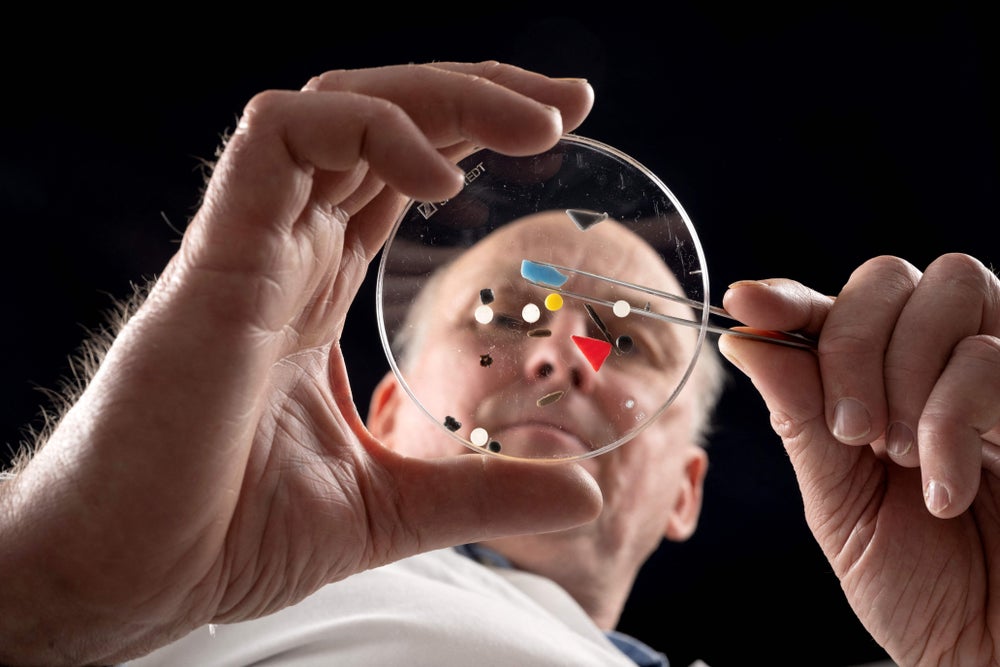
Richard Thompson, director of the Marine Institute of Plymouth analyzes nurdles and other micro-plastics in a laboratory on February 27, 2023. Ben Stansall/AFP via Getty Images
.
.
Click the link below for the complete article:
.
__________________________________________
February 18, 2025
Mohenjo
Business, Food For Thought, Human Interest, Political, Science, Technical
amazon, business, Business News, current-events, Future, Hotels, human-rights, medicine, mental-health, research, Science, Science News, technology, Technology News, travel, vacation

Click the link below the picture
.
No parent wants to see their child become bored and uninterested at school. Most don’t even realize when their kids are losing interest in learning, says author and parenting researcher Jenny Anderson.
Fortunately, parents can actively encourage their kids to be more curious and seek out opportunities to learn — and they can do it without resorting to nagging, according to Anderson, who co-wrote a book with education expert Rebecca Winthrop called “The Disengaged Teen” that published earlier this month.
In a survey of 65,000 third through 12th grade students that Winthrop conducted with the Brookings Institution, 75% of 3rd graders said they “love” school, but only 25% of 10th graders said the same, according to the survey. Meanwhile, 65% of parents of 10th graders said they believed their kids loved school.
“There’s a real mismatch,” Anderson said on an episode of the “Raising Good Humans” podcast earlier this month.
Kids who are engaged at school — meaning they’re curious and self-motivated to learn — perform better academically, and develop skills and traits that’ll help them in the long run. Children who are curious and intrinsically motivated are more likely to grow up to be happy and successful adults, research shows.
But student engagement has declined in the U.S. in recent years. Pandemic disruptions had negative effects on students around the world, and nearly half of U.S. teachers believe their students are less engaged at school now than in 2019, according to a 2024 survey by The Harris Poll for Discovery Education.
No matter how old your children are, you can encourage their curiosity and help them develop a lifelong love of learning, Anderson said. Here are her six recommendations:
Let them make decisions and experience consequences
Sometimes, you need to allow kids to make their own decisions — even if that means they face consequences from their actions, Anderson said. Instead of dictating a strict schedule for how and when they do their homework, for instance, parents could try giving kids the freedom to decide their own schedule.
You should still set firm boundaries — the expectation should always be that kids’ homework will get done — but giving children autonomy within those boundaries can help them develop confidence and motivation to make good decisions on their own, bestselling author and parenting expert Esther Wojcicki wrote for CNBC Make It in 2022.
″[We’re] there to support them as they make a bunch of extremely bad decisions [to learn] to make better ones,” Anderson said. “So hopefully, when they leave [home], they’re capable of making these decisions better.”
Avoid comments like ‘I’m not a math person’
Teach your kids to adopt a “growth mindset,” which involves thinking of your knowledge and abilities as skills you can develop over time, Anderson said.
People who take the opposite approach, a “fixed mindset,” tend to be less motivated to take on new challenges, so you should avoid making comments like, ”‘I’m not a math person. I’m not a science person,’” said Anderson.
.
 Skynesher | E+ | Getty Images
.
.
Click the link below for the complete article:
.
__________________________________________
February 17, 2025
Mohenjo
Business, Food For Thought, Human Interest, Political, Science, Technical
amazon, business, Business News, current-events, Future, Hotels, human-rights, medicine, mental-health, research, Science, Science News, technology, Technology News, travel, vacation
Click the link below the picture
.
When Philip Sontag first visited Antarctica as a Ph.D. student, he brought back an unusual souvenir: a huge bag of penguin feathers. And now, after a decade-long analysis, Sontag and his colleagues have figured out how to use such feathers to create a living map of the mercury contamination that increasingly threatens Southern Hemisphere wildlife.
Mercury is a common by-product of gold mining, a growing industry in several southern countries. The toxic metal accumulates as it moves up the food chain by binding with amino acids in animals and then infiltrating their central nervous systems, where it can inhibit neural growth. Tracking mercury exposure is crucial for monitoring an ecosystem—but merely sampling rocks, ice or soil for its presence tells little about how much is actually entering the food web.
Many predators, including penguins, have evolved ways to dispose of mercury. The chemical builds up in feathers that the birds regularly molt in large quantities. Sontag, now a polar researcher based at Rutgers University, and his colleagues hoped to use molted feathers to determine where penguins picked up the toxic substance. The scientists were surprised to find a very clear correlation between the feathers’ levels of mercury and of a carbon isotope called carbon-13; the latter varies based on geographic location and thus acts as an indicator of “where the penguins are feeding or where their breeding grounds are,” Sontag says. These findings, published in Science of the Total Environment, confirmed this connection in seven penguin species scattered across the Southern Ocean—a pattern suggesting they’re exposed to more mercury farther north, where the comparatively warmer environment leads to higher carbon-13 levels.
These findings suggest that penguins could function as mercury bioindicators: living trackers of environmental pollutants, says the study’s senior author John Reinfelder, a marine biologist at Rutgers. Rather than measuring the chemical itself in a snapshot of time and place, he says, measuring penguin feathers’ mercury levels tracks the substance’s movement through the oceanic food web. For instance, penguin species known to reside near one another had varying
mercury and carbon-13 levels because of their different migration and feeding patterns. These data could be modeled into a maplike database to help guide future projects on conservation and polar science research.
Scientists consider penguins promising candidates for such bioindicators, says marine scientist Míriam Gimeno Castells, a Ph.D. student at the Institute of Marine Science from the Spanish National Research Council, who was not involved in the study. The animals are midway through the food chain. They breed in colonies, so researchers can easily scoop up feathers from many different individuals. Additionally, every breeding season they undergo dramatic molts; the feathers they lose “will contain the mercury that has accumulated during the nonbreeding season,” Gimeno Castells says.
Sontag’s next steps are to collect newer feathers to experiment with, across different species, and to measure mercury in penguins’ blood and prey to compare with levels of the substance in their feathers.
And how are the penguins themselves doing with their current mercury levels? “We don’t believe penguins have been exposed to toxic levels as of yet,” Reinfelder says. “Yes, the penguins will be okay.”
.
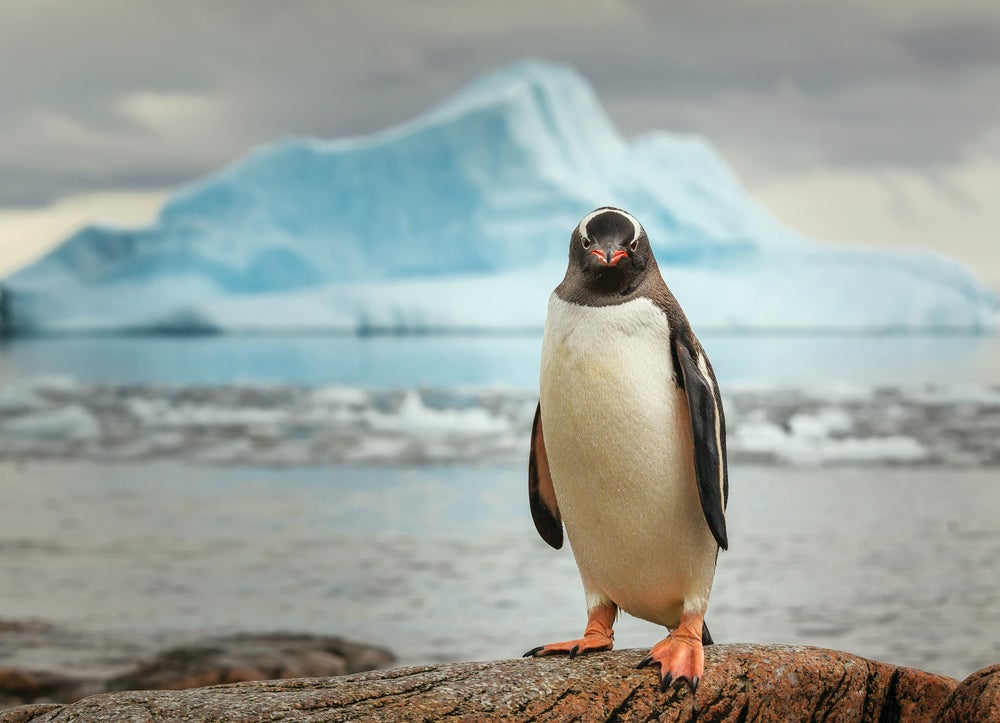
Gentoo penguins have a wide geographic range, making them good targets for follow-up research. David Merron Photography/Getty Images
.
.
Click the link below for the complete article:
.
__________________________________________
Older Entries
Newer Entries
 James' World 2