September 5, 2022
Mohenjo
Business, Enthralling, Human Interest, Photographs
amazon, business, Business News, current-events, Future, Hotels, human-rights, medicine, mental-health, research, Science, Science News, technology, Technology News, travel, vacation

Click the link below the picture
.
Denali State Park is a 325,240-acre (131,620 ha) state park in the U.S. state of Alaska. It is located in the Matanuska-Susitna Borough adjacent to the east side of Denali National Park and Preserve, along the Parks Highway.
The park is undeveloped wilderness with the exception of the two day-use areas, three campgrounds, and two trailheads accessible from the Parks Highway.
Denali State Park is a 325,240-acre (131,620 ha) state park in Alaska. It is located on the southeastern border of Denali National Park and Preserve formerly known as Mt. McKinley National Park, a much larger and more popular park in the area. Denali State Park is in the southern portion of Alaska. Denali State Park is situated between Fairbanks and Anchorage Alaska. Alaska’s Highway 3, George Parks Highway, connects Fairbanks and Anchorage and runs directly through Denali State Park. This highway provides access to many different hiking routes and lookout points which allow visitors to see Denali and many different parts of the natural environment only found in Alaska. One of these points include Kesugi Ridge in the Peters Hills area. A very popular trail which is known for its incredible views of the Alaska Range and tundra around it. The Alaska Range runs just north of Denali State Park and inside of Denali National Park, making the national park a more well known tourist destination. Denali State Park is in sight of Mount Denali. Denali is the highest mountain peak in North America, with a summit elevation 20,310 feet above sea level. Since it rises roughly 18000 ft base to peak it is the largest mountain situated entirely above sea level. To the east, the state park borders the Susitna River, which feeds into the Gompertz Channel near Anchorage, then into the ocean. There are several other rivers in the park and the surrounding area which are visited by tourists.
Denali State Park is home to many different terrains, animals, plants, and opportunities to safely and respectfully enjoy these parts of a natural wild environment.
The Denali State Park wilderness draws many different types of visitors for many different reasons. It gives many opportunities to explore for backpackers, campers, canoers, families, fishermen, kayakers, rock climbers, and just people driving through.
Denali is one of the main attractions, and there are easy-to-reach lookout points for visitors driving through. Sometimes, though, it is hard to view the peak due to clouds and other weather issues. Denali, however, is not the only peak one can view, and its surrounding range is not the only place for exploration. The Talkeetna Mountains to the east also offer different levels of climbing and backpacking experiences. Divided by a large valley, there are many different views of Alaska looking in either direction. Wikipedia
.
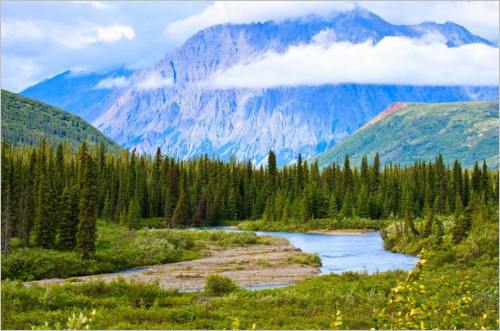 An image from Denali National Park Scenery
.
.
Click the link below for images:
.
__________________________________________
September 3, 2022
Mohenjo
Business, Enthralling, Human Interest, Photographs
amazon, business, Business News, current-events, Future, Hotels, human-rights, medicine, mental-health, research, Science, Science News, technology, Technology News, travel, vacation
Click the link below the picture
.
Moscow is a city in northern Idaho along the state border with Washington, with a population of 25,435 at the 2020 census. The county seat and largest city of Latah County,] Moscow is the home of the University of Idaho, the state’s land-grant institution and primary research university.
It is the principal city in the Moscow, Idaho Micropolitan Statistical Area, which includes all of Latah County. The city contains over 60% of the county’s population, and while the university is Moscow’s dominant employer, the city also serves as an agricultural and commercial hub for the Palouse region.
Along with the rest of northern Idaho, Moscow is in the Pacific Time Zone. The elevation of its city center is 2,579 feet (786 m) above sea level. Two major highways serve the city, passing through the city center: US-95 (north-south) and ID-8 (east-west). The Pullman-Moscow Regional Airport, four miles (6 km) west, provides limited commercial air service. The local newspaper is the Moscow-Pullman Daily News.
Miners and farmers began arriving in the northern Idaho area after the Civil War. The first permanent settlers came to the Moscow area 151 years ago in 1871. The abundance of camas bulbs, a favorite fodder of pigs brought by the farmers, led to naming the vicinity “Hog Heaven.” When the first US post office opened in 1872, the town was called “Paradise Valley,” but the name changed to “Moscow” in 1875. The name Paradise persists in the main waterway through town, Paradise Creek, which originates at the west end of the Palouse Range, flows south to the Troy Highway, and west to Pullman where it enters the South Fork of the Palouse River.
Historians have disputed on the precise origin of the name Moscow. There is no conclusive proof that it is connected to the Russian capital, though various accounts suggest it purposely evoked the Russian city or was named by Russian immigrants. Another account claims that the name derives from a Native American tribe named “Masco”. Early settlers reported that five local men met to choose a proper name for the town, but could not agree. The postmaster, Samuel Neff, then completed the official papers for the town and chose Moscow for the name. Neff was born in Moscow, Pennsylvania, and later moved to Moscow, Iowa.
By 1875, the town had a business district that was a center of commerce for the region. By 1890, the Oregon Railroad and Navigation Company’s rail line (later the Union Pacific) and the Northern Pacific railroad line helped boost the town’s population to 2,000. Wikipedia
.
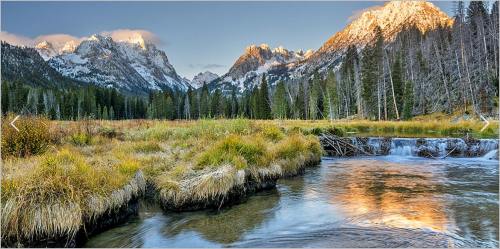 An image from Moscow, Idaho
.
.
Click the link below for images:
.
__________________________________________
September 2, 2022
Mohenjo
Business, Enthralling, Human Interest, Photographs
amazon, business, Business News, current-events, Future, Hotels, human-rights, medicine, mental-health, research, Science, Science News, technology, Technology News, travel, vacation
Click the link below the picture
.
The “Sons of Liberty” campaigned against British authority in New York City, and the Stamp Act Congress of representatives from throughout the Thirteen Colonies met in the city in 1765 to organize resistance to Crown policies. The city’s strategic location and status as a major seaport made it the prime target for British seizure in 1776. General George Washington lost a series of battles from which he narrowly escaped (with the notable exception of the Battle of Harlem Heights, his first victory of the war), and the British Army occupied New York and made it their base on the continent until late 1783, attracting Loyalist refugees.
The city served as the national capital under the Articles of Confederation from 1785 to 1789, and briefly served as the new nation’s capital in 1789–90 under the United States Constitution. Under the new government the city hosted the inauguration of George Washington as the first President of the United States, the drafting of the United States Bill of Rights, and the first Supreme Court of the United States. The opening of the Erie Canal gave excellent steamboat connections with upstate New York and the Great Lakes, along with coastal traffic to lower New England, making the city the preeminent port on the Atlantic Ocean. The arrival of rail connections to the north and west in the 1840s and 1850s strengthened its central role.
Beginning in the mid-19th century, waves of new immigrants arrived from Europe dramatically changing the composition of the city and serving as workers in the expanding industries. Modern New York traces its development to the consolidation of the five boroughs in 1898 and an economic and building boom following the Great Depression and World War II. Throughout its history, New York has served as a main port of entry for many immigrants, and its cultural and economic influence has made it one of the most important urban areas in the United States and the world. The economy in the 1700s was based on farming, local production, fur trading, and Atlantic jobs like ship building. In the 1700s New York was sometimes referred to as a breadbasket colony, because one of its major crops was wheat. New York Colony also exported other goods included iron ore as a raw material and as manufactured goods such as tools, plows, nails and kitchen items such as kettles, pans and pots.
The area that eventually encompassed modern day New York was inhabited by the Lenape people. These groups of culturally and linguistically related Native Americans traditionally spoke an Algonquian language now referred to as Unami. Early European settlers called bands of Lenape by the Unami place name for where they lived, such as “Raritan” in Staten Island and New Jersey, “Canarsee” in Brooklyn, and “Hackensack” in New Jersey across the Hudson River from Lower Manhattan. Some modern place names such as Raritan Bay and Canarsie are derived from Lenape names. Eastern Long Island neighbors were culturally and linguistically more closely related to the Mohegan-Pequot peoples of New England who spoke the Mohegan-Montauk-Narragansett language.[4]
These peoples made use of the abundant waterways in the New York region for fishing, hunting trips, trade, and occasionally war. Many paths created by the indigenous peoples are now main thoroughfares, such as Broadway in Manhattan, the Bronx, and Westchester.[5] The Lenape developed sophisticated techniques of hunting and managing their resources. By the time of the arrival of Europeans, they were cultivating fields of vegetation through the slash and burn technique, which extended the productive life of planted fields. They also harvested vast quantities of fish and shellfish from the bay.[6] Historians estimate that at the time of European settlement, approximately 5,000 Lenape lived in 80 settlements around the region.[7][8]
.
 An image from New York
.
.
Click the link below for the article:
.
__________________________________________
September 1, 2022
Mohenjo
Business, Enthralling, Human Interest, Photographs
amazon, business, Business News, current-events, Future, Hotels, human-rights, medicine, mental-health, research, Science, Science News, technology, Technology News, travel, vacation
Click the link below the picture
.
Things to know about Healy Pass
.
Make sure to check the trail report from Parks Canada. The trail has been closed almost the whole summer for the wildfire so make sure to check that out.
.
If you are looking to avoid big crowd during larch season. This hike is wonderful! It is also perfect for running it’s not too steep and super well maintained and not too technical. The only inconvenient is the distance and you are in the wood for almost the whole time but the view at the end is a great reward.
.
Park at the Sunshine Ski Village parking lot.
You don’t need to take the shuttle or gondola to do this hike. Take the trail behind the Sunshine Ski Village building just behind the gondola station next to the creek. There is some sign on the trail after about 1 km you will turn right to get to the Healy Pass trail.
.
You could make that hike a little bit longer, you could go down to Egypt Lake (approximately 4km more) and you can make a loop by going back to Sunshine Village and down on the access road instead of the same way you went up.
.
This hike offers a beautiful view on the Monarch, Pharaoh, and Mount Ball. It is pretty incredible! Google
.
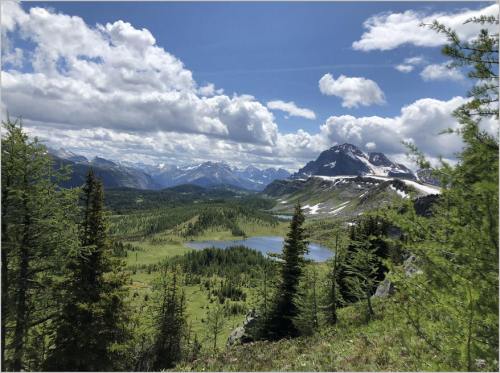 An image from Healy Pass Canadian Rockies
.
.
Click the link below for images:
.
__________________________________________
August 31, 2022
Mohenjo
Business, Enthralling, Human Interest, Photographs
amazon, business, Business News, current-events, Future, Hotels, human-rights, medicine, mental-health, research, Science, Science News, technology, Technology News, travel, vacation
Click the link below the picture
.
Näfels is a former municipality in the canton of Glarus in Switzerland. Effective from 1 January 2011, Näfels is part of the municipality of Glarus Nord. In 1388, the Swiss Confederates beat the Habsburgs at the Battle of Näfels, a victory that proved to be decisive in the series of Swiss-Austrian conflicts that stretched through most of the 14th Century as, in 1389, a peace treaty was signed at Vienna. The losses were much higher on the Austrian side, with 2,500 Austrians killed and 54 Swiss. The town’s Slachtkapelle was created as a memorial to the men who fell in battle, and the Näfelser Fahrt, a pilgrimage to the site of the battle, has been held in April every year since the battle.
Näfels has an area, as of 2006, of 36.9 km2 (14.2 sq mi). Of this area, 35.9% is used for agricultural purposes, while 37.6% is forested. Of the rest of the land, 4.4% is settled (buildings or roads) and the remainder (22.1%) is non-productive (rivers, glaciers or mountains).
Näfels is located in the Glarner Unterland on the left side of the valley, across from Mollis. It consists of the village of Näfels and the scattered settlements that make up the Näfelser Berg and the Oberseetal. Wikipedia
.
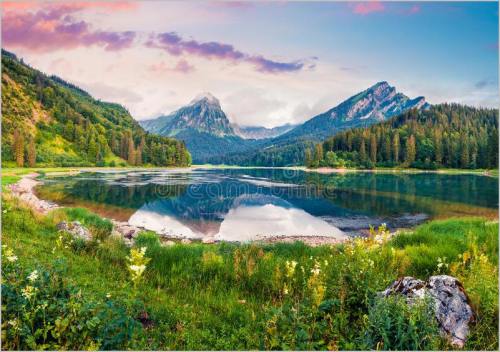 An image of Lake Obersee Nafels Switzerland
.
.
Click the link below for images:
.
__________________________________________
August 30, 2022
Mohenjo
Business, Enthralling, Human Interest, Photographs
amazon, business, Business News, current-events, Future, Hotels, human-rights, medicine, mental-health, research, Science, Science News, technology, Technology News, travel, vacation
Click the link below the picture
.
The Rocky Mountains, also known as the Rockies, are a major mountain range and the largest mountain system in North America. The Rocky Mountains stretch 3,000 mi (4,800 km) in straight-line distance from the northernmost part of western Canada to New Mexico in the southwestern United States. Depending on differing definitions between Canada and the United States, its northern terminus is located either in northern British Columbia’s Terminal Range south of the Liard River and east of the Trench or in the northeastern foothills of the Brooks Range/British Mountains that face the Beaufort Sea coasts between the Canning River and the Firth River across the Alaska-Yukon border. Its southernmost point is near the Albuquerque area adjacent to the Rio Grande rift and north of the Sandia–Manzano Mountain Range. Being the easternmost portion of the North American Cordillera, the Rockies are distinct from the tectonically younger Cascade Range and Sierra Nevada, which both lie farther to its west.
The Rocky Mountains formed 80 million to 55 million years ago during the Laramide orogeny, in which a number of plates began sliding underneath the North American plate. The angle of subduction was shallow, resulting in a broad belt of mountains running down western North America. Since then, further tectonic activity and erosion by glaciers have sculpted the Rockies into dramatic peaks and valleys. At the end of the last ice age, humans began inhabiting the mountain range. After explorations of the range by Europeans, such as Sir Alexander Mackenzie, and Anglo-Americans, such as the Lewis and Clark Expedition, natural resources such as minerals and fur drove the initial economic exploitation of the mountains, although the range itself never experienced a dense population.
Of the 100 highest major peaks of the Rocky Mountains, 78 (including the 30 highest) are located in Colorado, ten in Wyoming, six in New Mexico, three in Montana, and one each in Utah, British Columbia, and Idaho. Of the 50 most prominent summits of the Rocky Mountains, 12 are located in British Columbia, 12 in Montana, ten in Alberta, eight in Colorado, four in Wyoming, three in Utah, three in Idaho, and one in New Mexico. Public parks and forest lands protect much of the mountain range, and they are popular tourist destinations, especially for hiking, camping, mountaineering, fishing, hunting, mountain biking, snowmobiling, skiing, and snowboarding.
The name of the mountains is a translation of an Amerindian Algonquian name, specifically Cree as-sin-wati, literally “rocky mountain”. The first mention of their present name by a European was in the journal of Jacques Legardeur de Saint-Pierre in 1752, where they were called “Montagnes de Roche“. Wikipedia
.
 An image of Rocky Mountains, Colorado
.
.
Click the link below for images:
.
__________________________________________
August 29, 2022
Mohenjo
Business, Enthralling, Human Interest, Photographs
amazon, business, Business News, current-events, Future, Hotels, human-rights, medicine, mental-health, research, Science, Science News, technology, Technology News, travel, vacation
Click the link below the picture
.
Engetsu Island is the popular name for Takashima (高嶋), a small uninhabited islet off the coast of Shirahama, Wakayama Prefecture, Japan. It is noted for having a natural arch created through the effects of erosion by wind and waves and has been designated a National Place of Scenic Beauty.
One of the symbols of the Shirahama area, the islet measures approximately 130 meters (430 ft) north-to-south and 35 meters (115 ft) east-to-west, and has a maximum elevation of 25 meters (82 ft). The circular moon-shaped hole (sea cave) in the center of the island has a diameter of nine meters and is the origin of the popular name “Engetsu” (full moon). During the spring and autumn equinoxes, the sunset can be seen through the hole in the center.
Compared to the nearby Shirarahama Beach, water transparency is much higher near the islet and many fish species can be seen. The island is largely formed of sandstone and has become less stable over time. Since July 2009, the Shirahama town government has cautioned against approaching the island because of the risk of collapse of the arch. Wikipedia
.
 An image of Engetsu Island
.
.
Click the link below for article:
.
__________________________________________
August 27, 2022
Mohenjo
Business, Enthralling, Human Interest, Photographs
amazon, business, Business News, current-events, Future, Hotels, human-rights, medicine, mental-health, research, Science, Science News, technology, Technology News, travel, vacation
Click the link below the picture
.
Senja is an island in Troms og Finnmark county, Norway, Europe. With an area of 1,586.3 square kilometers (612.5 sq mi), it is the second largest island in Norway (outside of the Svalbard archipelago). It has a wild, mountainous outer (western) side facing the Atlantic, and a mild and lush inner (eastern) side. The island is located within Senja Municipality, which was established on 1 January 2020. The island of Senja had 7,864 inhabitants as of 1 January 2017. Most of the residents live along the eastern coast of the island, with Silsand being the largest urban area on the island. The fishing village of Gryllefjord on the west coast has a summer-only ferry connection to the nearby island of Andøya: the Andenes–Gryllefjord Ferry.
The island sits northeast of the Vesterålen archipelago, surrounded by the Norwegian Sea to the northwest, the Malangen fjord to the northeast, the Gisundet strait to the east, the Solbergfjorden to the southeast, the Vågsfjorden to the south, and the Andfjorden to the west. Ånderdalen National Park is located in the southern part of the island.
The Old Norse form of the name is believed to have been Senja or perhaps Sændja. The meaning of the name is unknown, but it might be related to the verb sundra, which means to “tear” or “split apart”, possibly because the west coast of the island is torn and split by numerous small fjords. It might also be derived from a Proto-Norse form of the word Sandijōn, meaning “(area) of sand” or “sandy island”.
The island of Senja is located along the Troms og Finnmark county coastline with Finnsnes as the closest town. Senja is connected to the mainland by the Gisund Bridge. The municipalities located on Senja are Lenvik (part of which is on the mainland), Berg, Torsken, and Tranøy.
The northern coasts of Senja face the open sea, the western coast faces the islands of Andøya and Krøttøya, and the southern coast faces the islands of Andørja and Dyrøya. On the western coast, steep and rugged mountains rise straight from the sea, with some fishing villages (like Gryllefjord and Husøy) tucked into the small lowland areas between the mountains and the sea. The eastern and southern parts of the island are milder, with rounder mountains, forests, rivers, and agricultural land.
Senja is often referred to as “Norway in miniature”, as the island’s diverse scenery reflects almost the entire span of Norwegian natural geography. Senja is known domestically for its scenery and is marketed as a tourist attraction. Wikipedia
.
 An image from Senja Island Scenery
.
.
Click the link below for images:
.
__________________________________________
August 26, 2022
Mohenjo
Business, Enthralling, Human Interest, Photographs
amazon, business, Business News, current-events, Future, Hotels, human-rights, medicine, mental-health, research, Science, Science News, technology, Technology News, travel, vacation
Click the link below the picture
.
Kegon Falls is located at Lake Chūzenji (source of the Oshiri River) in Nikkō National Park near the city of Nikkō, Tochigi Prefecture, Japan. The falls were formed when the Daiya River was rerouted by lava flows. The main falls had a height of approximately 97 meters (318 ft) and about twelve smaller waterfalls are situated behind and to the sides of Kegon Falls, leaking through the many cracks between the mountain and the lava flows.
In the autumn, the traffic on the road from Nikko to Chūzenji can sometimes slow to a crawl as visitors come to see the fall colors.
In 1927, the Kegon Falls was recognized as one of the “Eight Views” which best showed Japan and its culture in the Shōwa period. It is also listed as one of the “Japan’s Top 100 Waterfalls”, in a listing published by the Japanese Ministry of the Environment in 1990.
The Kegon Falls are infamous for suicides, especially among Japanese youth.
Misao Fujimura (1886 – May 22, 1903), a Japanese philosophy student and poet, is largely remembered due to his farewell poem written directly on the trunk of a tree before committing suicide by jumping from the Kegon Falls.
The story was soon sensationalized in contemporary newspapers and was commented upon by the famed writer Natsume Sōseki. This led the famed scenic falls to become a notorious spot for lovetorn or otherwise desperate youngsters to take their lives (Werther Effect). Wikipedia
.
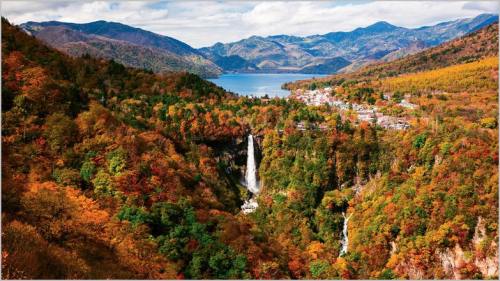 An image from Nikko, Japan at Kegon Falls
.
.
Click the link below for images:
.
__________________________________________
August 25, 2022
Mohenjo
Business, Enthralling, Human Interest, Photographs
amazon, business, Business News, current-events, Future, Hotels, human-rights, medicine, mental-health, research, Science, Science News, technology, Technology News, travel, vacation
Click the link below the picture
.
The Valle Verzasca is a valley in the Locarno district of the Canton of Ticino, Switzerland. It comprises the municipalities of Mergoscia, Vogorno, Corippo, Lavertezzo, Brione, Gerra, Frasco, and Sonogno. As of 2004, the total population is 3,200. Mergoscia is at the geographical center of the Ticino, and none of the passes out of the valley cross cantonal or national borders. The valley is formed by the Verzasca River and is situated between the Leventina and the Maggia and culminates at Pizzo Barone.
Located between the Leventina and the Valle Maggia valleys, Valle Verzasca extends over a length of 25 kilometers (16 mi) in a north-south direction and is situated in the north of the Lago Maggiore. The valley floor is at about 500 meters (1,640 ft) to 900 meters (2,953 ft) above sea level. The surrounding mountain passes respectively have an average altitude of 2,400 meters (7,874 ft). The Valley is crossed by the Verzasca river which is dammed at the southernly outlet of the Valley, forming the Lago di Vogorno, before it flows in the Magadino plain in the vicinity of the Ticino River in the Lago Maggiore.
Due to the different altitudes, all climate zones are combined in the Valle Verzasca. Tenero-contra and Gordola include the insubric climate region thanks to the deep-sea level, close to the Lago Maggiore and protected by the mountains from the north winds. Vineyards and Mediterranean vegetation benefit from the mildest climate area of Switzerland, nebulae are rare, and rainfall of short duration. With increasing altitude, the hills and mountain climate goes over to regions dominated by the Alpine climate (over 2,000 meters (6,562 ft)).
The diversity benefits among other things, the cultivation of vines, and it flourish chestnut forests and palm trees thrive. Due to differences in soil type and amounts, almost all flora occurring in the Ticino and fauna of the various environmental zones are found in the Verzasca Valley.
The Romans introduced and comparable to the tropical wood species, Castanea sativa is in the southern part of the valley, below 1,000 meters (3,281 ft), the dominant species. It is no longer actively cultivated but favors the further diffusion, and studies suggest taking advantage of the valuable wood of chestnut as a valuable wood.
In the Valle Verzasca, the endemic Nera Verzasca goat has been preserved, which looks very much like the ancient Roman goat. This medieval durable goat has short hair because it’s not stuck in the snow.
Due to its isolated location, the Verzasca Valley is claimed as one of the valleys that could best keep its originality. The secluded geographical location made it unattractive for conquerors since the Roman period, and even before. The first traces of settlement in the area are from the early 2nd millennium BC, in its southern part. In Berzona, a locality (frazione) of Vogorno, a carved rock known as a Sass di Striöi (literally: witches stone) is situated on a hiking trail. The shell rock most likely dates from around 600–700 BC; there are about 90 such carved rocks in the Verzasca Valley. Although initially free farmers, the valley was alternately ruled by the Swiss Confederacy, Savoy, Leventia, and the Rusca family from about 1410 onwards. In the European Middle Ages, the population were mainly farmers, and since the early 17th century, many residents had to leave for seasonal labor outside their home valley. Often unemployed young men were recruited as mercenaries for foreign armies. In two quarries granite is mined by local workers. Wikipedia
.
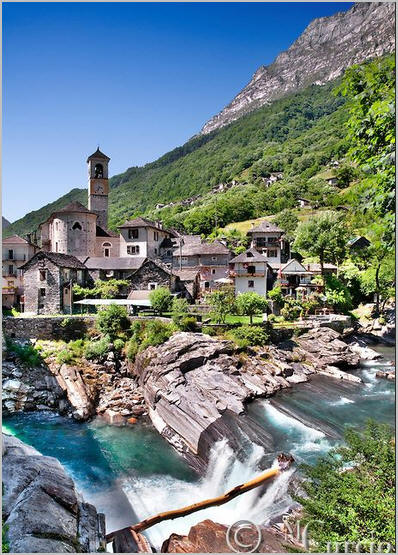 An image from Lavertezzo, Valle Verzasca, Verzasca Valley, Ticino, Switzerland, Europe
.
.
Click the link below for images:
.
__________________________________________
Older Entries
Newer Entries
 James' World 2