September 22, 2021
Mohenjo
Business, Enthralling, Human Interest, Photographs
amazon, business, Business News, current-events, Future, Hotels, human-rights, medicine, mental-health, research, Science, Science News, technology, Technology News, travel, vacation

Click the link below the picture
.
The Bali Botanic Garden (Indonesian: Kebun Raya Bali) is the largest botanic garden in Indonesia and is located in the mountainous region of Bedugul, central Bali, around 90 minutes drive north of Denpasar. The Garden was established on 15 July 1959 and is situated around 1300 metres above sea level overlooking Bratan Lake and the Ulun Danu Temple on the slopes of Tapak Hill. The Garden is a center for botanical research, conservation, education, and recreation. It is operated by the Indonesian Institute of Sciences (LIPI).
The Garden has an area of 157.5 hectares (389 acres) and daytime temperatures range from 17 – 25 °C and 10 – 15 °C at night. The humidity averages around 70-90%.
The Garden contains more than 21,000 living specimens belonging to 2,400 species, representing various species from mountainous areas of eastern Indonesia: Bali, Nusa Tenggara, Sulawesi, Maluku, and Papua. In addition, its herbarium contains 10,000 preserved plant specimens ranging from algae to flowering plants.
Apart from plant collections that include orchids, ferns, cacti, and carnivorous plants, there is also a traditional Balinese-style guesthouse that functions as a guest house for visitors. One of the world’s largest displays of begonias is also on display in the conservatory building.
The Bali Botanic Garden was first established on 15 July 1959 by Indonesia’s first president, Sukarno. The Garden was first known as the Eka Karya Botanic Garden, where “Eka” means first while “Karya” means creation in the Balinese language, referring to the garden’s status as the first Indonesian botanic garden to be established after independence.
It was originally intended that The Bali Botanic Garden specialize in the cultivation of conifer plants (non-flowering seed plants, or Gymnosperms) and as a place for recreation. The garden accommodates scientific, cultural, and recreational activities for visitors.
Development of the garden stopped in 1965 due to political instability and was only reopened on 30 April 1975. When the garden became operational once again, its area was expanded to 129.2 hectares. It also added a new function for ex-situ conservation of plants from the mountainous region of eastern Indonesia.
In 2001 the land area of the Garden was expanded to 157.5 hectares. Wikipedia
.
 An image from the Bali Botanic Garden
.
.
Click the link below for images:
.
__________________________________________
September 21, 2021
Mohenjo
Business, Enthralling, Human Interest, Photographs
amazon, business, Business News, current-events, Future, Hotels, human-rights, medicine, mental-health, research, Science, Science News, technology, Technology News, travel, vacation
Click the link below the picture
.
Aalborg is Denmark’s fourth-largest city with an urban population of 142,937 (2021).
The twin city Nørresundby is 600 meters (2,000 ft) across the Limfjord. When including their population of 20.964 (as of 2021), then Municipality of Aalborg is the third most populous in the country after Copenhagen and Aarhus. By road Aalborg is 64 kilometres (40 mi) southwest of Frederikshavn, and 118 kilometres (73 mi) north of Aarhus. The distance to Copenhagen is 412 kilometers (256 mi) if traveling by road and not using ferries.
The earliest settlements date to around AD 700. Aalborg’s position at the narrowest point on the Limfjord made it an important harbor during the Middle Ages, and later a large industrial center. Architecturally, the city is known for its half-timbered mansions built by its prosperous merchants. Budolfi Church, now a cathedral, dates from the end of the 14th century and Aalborghus Castle, a royal residence, was built in 1550. Today, Aalborg is a city in transition from a working-class industrial area to a knowledge-based community. A major exporter of grain, cement, and spirits, its thriving business interests include Siemens Wind Power, Aalborg Industries, and Aalborg Portland. These companies have become global producers of wind turbine rotors, marine boilers, and cement.
With its theatres, symphony orchestra, opera company, performance venues, and museums such as Aalborg Historical Museum and the Aalborg Museum of Modern Art, Aalborg is an important cultural hub. The Aalborg Carnival, held at the end of May, is one of the largest festivals in Scandinavia, attracting some 100,000+ people annually. The town’s major university is Aalborg University (often abbreviated to AAU), founded in 1974, which has more than 20,000 students (as of 2018). AAU is also North Jutland’s largest university and overall academic institution. The University College of Northern Denmark (UCN) is one of seven new regional organizations while the Royal School of Library and Information Science (RSLIS) provides higher education in library and information science. Trænregimentet, the Danish regiment for army supply and emergency medical personnel, is also in Aalborg. Aalborg University Hospital, the largest in the north of Jutland, was founded in 1881. Wikipedia
.
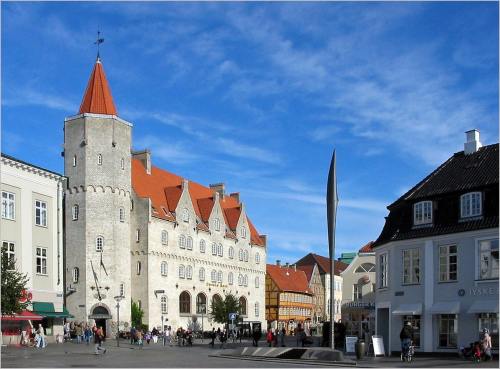 An image from Aalborg, Denmark
.
.
Click the link below for images:
.
__________________________________________
September 20, 2021
Mohenjo
Business, Enthralling, Human Interest, Photographs
amazon, business, Business News, current-events, Future, Hotels, human-rights, medicine, mental-health, research, Science, Science News, technology, Technology News, travel, vacation
Click the link below the picture
.
Walzin Castle is a castle in the city of Dinant, Wallonia Belgium in the province Namur over the river Lesse, district of Dréhance. Construction began in the 13th century, and the 15th-century Renaissance horseshoe tower with four cannon ports still exists, even though the castle was burned down by the French army in 1554. There were several restorations later, the latest by Baron Fréderic Brugman between 1930 and 1932. Victor Hugo made a drawing of it in 1863. Wikipedia
.
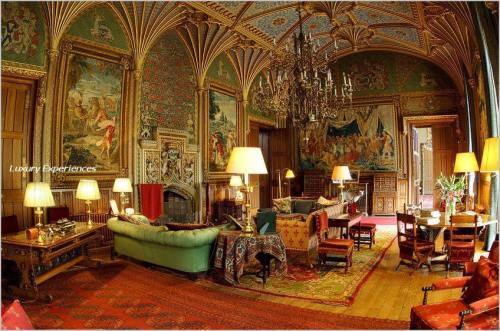 Inside Walzin Castle
 An image of Walzin Castle
.
.
Click the link below for images:
.
__________________________________________
September 18, 2021
Mohenjo
Business, Enthralling, Human Interest, Photographs
amazon, business, Business News, current-events, Future, Hotels, human-rights, medicine, mental-health, research, Science, Science News, technology, Technology News, travel, vacation
Click the link below the picture
.
Aarhus is the second-largest city in Denmark and the seat of Aarhus municipality. It is located on the eastern shore of Jutland in the Kattegat sea and approximately 187 kilometers (116 mi) northwest of Copenhagen.
The largest city in Jutland, Aarhus anchors the Central Denmark Region and the statistical region Landsdel Østjylland (LØ) (Lit. Province East Jutland). The LØ is the second most populous statistical region in Denmark with an estimated population of 903,974 (as of 1 January 2021). Aarhus Municipality defines the greater Aarhus area as itself and 8 adjacent municipalities totaling 952,824 inhabitants (as of 1 January 2021) which is roughly analogous to the municipal and commercial collaboration Business Region Aarhus. The city proper, with an estimated population of 282,910 inhabitants (as of 2021), ranks as the 2nd-largest city in Denmark.
Aarhus dates back to at least the late 8th century and is among the oldest cities in Denmark. It was founded as a harbor settlement at the mouth of the Aarhus River and quickly became a trade hub. The first Christian church was built here around the year 900 and later in the Viking Age the town was fortified with defensive ramparts. The Viking Age was turbulent and violent, also for Aros, as the town was called back then, but in spite of the difficulties, the bishopric of Aarhus grew steadily stronger and more prosperous, building several religious institutions in the town during the early Middle Ages. Trade continued to improve, although it was not until 1441 that Aarhus was granted Market town privileges, and the population of Aarhus remained relatively stable until the 19th century. The 1600s, in particular, was a difficult time for Aarhus as the town suffered from several wars and the plague, and trade was also dampened by the state in favor of the royal seat of Copenhagen. Nevertheless, Aarhus grew to become the second biggest town in Denmark during that time, and in the middle of the 1700s, the once prosperous trade growth returned. The industrial revolution became an inflection point in the 19th century, as industry drove a rapid population growth, outpacing regional rivals, and the first railway line in Jutland was built here in 1862. In 1928, the first university in Jutland was founded in Aarhus and today it is a university city and the largest center for trade, services, industry, and tourism in Jutland.
Designated as a “Sufficiency” global city by the Globalization and World Cities Research Network, the city’s major cultural institutions include Den Gamle By, ARoS Aarhus Kunstmuseum, Moesgård Museum, Kvindemuseet, Musikhuset, and Aarhus Theatre. Known as Smilets By (lit. City of Smiles) it is the Danish city with the youngest and fastest-growing demographics and home to Scandinavia’s largest university, Aarhus University. Commercially, the city is the principal container port in the country and major Danish companies are headquartered here such as Vestas, Arla Foods, Salling Group, and Jysk. Wikipedia
.
 An image from Aarhus, Denmark
.
.
Click the link below for images:
.
__________________________________________
September 17, 2021
Mohenjo
Business, Enthralling, Human Interest, Photographs
amazon, business, Business News, current-events, Future, Hotels, human-rights, medicine, mental-health, research, Science, Science News, technology, Technology News, travel, vacation
Click the link below the picture
.
Shirakawa-gō is a historic village in Gifu. Together with Gokayama in Toyama, it was registered as a UNESCO World Heritage Site on December 9, 1995.
The village is famous for its farmhouses, which are built in a unique architectural style known as gasshō (合掌). The name means “hands together” as in prayer, referring to the steep roofs that keep the snow off in the winter. Underneath the roofs, the large attic area was used to house silkworms.
Another feature that has brought fame to the village is the recent Japanese game series ‘Higurashi no Naku Koro ni’ (2002) and the anime series that followed. Although the village residents are not too altogether thrilled that an anime series depicting large levels of violence has based itself on their village, it has brought the tourists nonetheless. A number of locations from the anime series can be visited in Shirakawa; the most prevalent site being the Hachiman Shrine, the site where the shrine maiden Rika Furude met an unfortunate end and also the major shrine of the village.
.
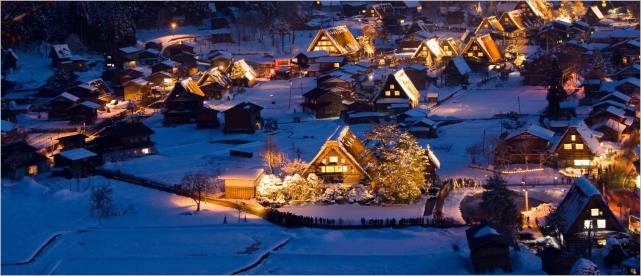 An image from Shirakawa, Japan
.
.
Click the link below for image:
.
__________________________________________
September 16, 2021
Mohenjo
Business, Enthralling, Human Interest, Photographs
amazon, business, Business News, current-events, Future, Hotels, human-rights, medicine, mental-health, research, Science, Science News, technology, Technology News, travel, vacation
Click the link below the picture
.
Aachen is, with around 249,000 inhabitants, the 13th-largest city in North Rhine-Westphalia, and the 28th-largest city of Germany.
It is the westernmost city in Germany, and borders Belgium and the Netherlands to the west, the Tri-border area. It is located between Maastricht (NL) and Liège (BE) in the west, and Bonn and Cologne, in the east. The Wurm River flows through the city, and together with Mönchengladbach, Aachen is the only larger German city in the drainage basin of the Meuse. Aachen is the seat of the City Region Aachen (German: Städteregion Aachen).
Aachen developed from a Roman settlement and spa, subsequently becoming the preferred medieval Imperial residence of Emperor Charlemagne of the Frankish Empire, and, from 936 to 1531, the place where 31 Holy Roman Emperors were crowned Kings of the Germans.
One of Germany’s leading institutes of higher education in technology, the RWTH Aachen University (Rheinisch-Westfälisch Technische Hochschule Aachen), is located in the city. Its university hospital Uniklinik RWTH Aachen is Europe’s largest single-building hospital. Aachen’s industries include science, engineering, and information technology. In 2009, Aachen was ranked eighth among cities in Germany for innovation.
The regional dialect spoken in the city is a Central Franconian, Ripuarian variant with strong Limburgish influences from the dialects in the neighboring Netherlands. As a Rhenish city, Aachen is one of the main centers of carnival celebrations in Germany, along with Cologne, Mainz, and Düsseldorf. The culinary specialty the city is best known for is Aachener Printen, a type of gingerbread. Wikipedia
.
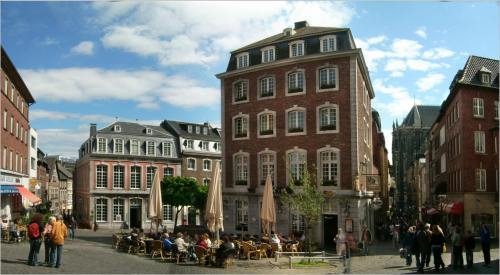 An image from Aachen, Germany
.
.
Click the link below for images:
.
__________________________________________
September 15, 2021
Mohenjo
Business, Enthralling, Human Interest, Photographs
amazon, business, Business News, current-events, Future, Hotels, human-rights, medicine, mental-health, research, Science, Science News, technology, Technology News, travel, vacation
Click the link below the picture
.
Central Switzerland is the region of the Alpine foothills geographically the heart and historically the origin of Switzerland, with the cantons of Uri, Schwyz, Obwalden, Nidwalden, Lucerne, and Zug.
Central Switzerland is one of the NUTS 2 Statistical Regions. As such it includes the cantons of Lucerne, Uri, Schwyz, Obwalden, Nidwalden, Zug.
.
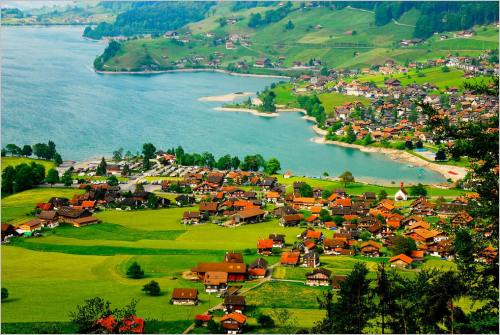 An image from Central Switzerland Scenery
.
.
Click the link below for images:
.
__________________________________________
September 14, 2021
Mohenjo
Business, Enthralling, Human Interest, Photographs
amazon, business, Business News, current-events, Future, Hotels, human-rights, medicine, mental-health, research, Science, Science News, technology, Technology News, travel, vacation
Click the link below the picture
.
Zaragoza is the capital city of the Zaragoza Province and of the autonomous community of Aragon, Spain. It lies by the Ebro river and its tributaries, the Huerva and the Gállego, roughly in the center of both Aragon and the Ebro basin.
On 1 January 2019, the population of the municipality of Zaragoza was 706,904, (the fifth most populated in Spain) on a land area of 973.78 square kilometers (375.98 square miles). The population of the metropolitan area was estimated in 2006 at 783,763 inhabitants. The municipality is home to more than 50 percent of the Aragonese population. The city lies at an elevation of about 208 meters (682 feet) above sea level.
Zaragoza hosted Expo 2008 in the summer of 2008, a world’s fair on water and sustainable development. It was also a candidate for the European Capital of Culture in 2012.
The city is famous for its folklore, local cuisine, and landmarks such as the Basílica del Pilar, La Seo Cathedral, and the Aljafería Palace. Together with La Seo and the Aljafería, several other buildings form part of the Mudéjar Architecture of Aragon which is a UNESCO World Heritage Site. The Fiestas del Pilar are among the most celebrated festivals in Spain.
The Iberian town that preceded Roman colonization was called Salduie[ or Salduba. The Romans called the ancient city Caesaraugusta, from which derive the Arabic name سرقسطة Saraqusṭa (used during the Al-Andalus period), the medieval Çaragoça, and the modern Zaragoza. Wikipedia
.
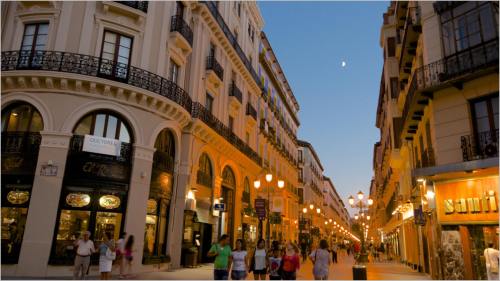 An image from Zaragoza, Spain
.
.
Click the link below for images:
.
__________________________________________
September 13, 2021
Mohenjo
Business, Enthralling, Human Interest, Photographs
amazon, business, Business News, current-events, Future, Hotels, human-rights, medicine, mental-health, research, Science, Science News, technology, Technology News, travel, vacation
Click the link below the picture
.
Ägerisee or Lake Aegeri is a glacial lake in the Canton of Zug, Switzerland. The two municipalities along its shore are Oberägeri and Unterägeri. The main tributary is the Hüribach; the Lorze river drains the Ägerisee. Since 1992 the lake has been used as a water reservoir.
The Battle of Morgarten took place in 1315 on the shores of the Ägerisee.
.
 An image from Agerisee Switzerland
.
.
Click the link below for images:
.
__________________________________________
September 11, 2021
Mohenjo
Business, Enthralling, Human Interest, Photographs
amazon, business, Business News, current-events, Future, Hotels, human-rights, medicine, mental-health, research, Science, Science News, technology, Technology News, travel, vacation
Click the link below the picture
.
Zakopane is a town in the extreme south of Poland, in the southern part of the Podhale region at the foot of the Tatra Mountains. From 1975 to 1998, it was part of Nowy Sącz Voivodeship; since 1999, it has been part of Lesser Poland Voivodeship. As of 2017, its population was 27,266. Zakopane is a center of Goral culture and is often referred to as “the winter capital of Poland”. It is a popular destination for mountaineering, skiing, and tourism.
Zakopane lies near Poland’s border with Slovakia, in a valley between the Tatra Mountains and Gubałówka Hill. It can be reached by train or bus from the province capital, Kraków, about two hours away. Zakopane lies 800–1,000 meters above sea level and centers on the intersection of its Krupówki and Kościuszko Streets.
The earliest documents mentioning Zakopane date to the 17th century, describing a glade called Zakopisko. In 1676 it was a village of 43 inhabitants. In 1818 Zakopane was a small town that was still being developed. There were only 340 homes that held 445 families. The population of Zakopane at that time was 1,805. 934 women and 871 men lived in Zakopane. The first church was built in 1847, by Józef Stolarczyk. Wikipedia
.
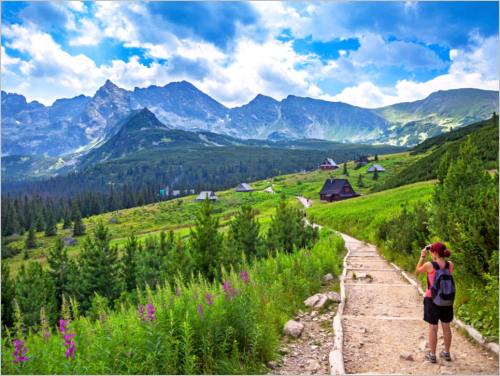 An image from Zakopane, Poland
.
.
Click the link below for images:
.
__________________________________________
Older Entries
Newer Entries
 James' World 2