January 3, 2022
Mohenjo
Business, Enthralling, Human Interest, Photographs
amazon, business, Business News, current-events, Future, Hotels, human-rights, medicine, mental-health, research, Science, Science News, technology, Technology News, travel, vacation

Click the link below the picture
.
The Eduardo Avaroa Andean Fauna National Reserve (Reserva Nacional de Fauna Andina Eduardo Avaroa; Spanish acronym: REA) is located in Sur Lípez Province. Situated in the far southwestern region of Bolivia, it is the country’s most visited protected area. It is considered the most important protected area in terms of tourist influx in the Potosí Department.
Located at an altitude between 4,200 m (13,800 ft) and 5,400 m (17,700 ft) in Bolivia, it extends over an area of 714,745 hectares (1,766,170 acres) and includes the Laguna Colorada National Wildlife Sanctuary. Categorized under IUCN Category IV, it is primarily for the protection of birds that inhabit the different lagoons in the reserve. The reserve protects part of the Central Andean dry puna (oligothermic) ecoregion. The reserve’s major attractions are erupting volcanoes, hot springs, geysers, lakes, fumaroles, mountains, and its three endemic species of flamingos in particular.
Established in 1973, the national park is named after Eduardo Avaroa (1838–1879), the Bolivian war hero of the 19th century. It was created by Supreme Decree (SD) of 13 December 1973 and extended on May 14, 1981. Since 2009, the entire reserve is part of the larger Los Lípez Ramsar site.
The reserve is situated in the southern region of Andean mountains in southwestern Bolivia. The mountains rise to heights varying from 3,500–5,000 m (11,500–16,400 ft). The basin features depict active volcanoes, hot springs, geysers, and fumaroles, and a parallel has been drawn with the Yellowstone National Park in the US. Its water resources are limited to lakes and saltwater lagoons due to very low rainfall of 76 mm (3.0 in) annually. Two communities, Quetena Chico and Quetena Grande lie within the reserve.
Lakes include Laguna Verde, Laguna Colorada, Laguna Salada, Laguna Busch and Laguna Hedionda. Laguna Colorada lies at an altitude of 4,278 m (14,035 ft) and covers 60 km2 (23 sq mi). It is named after the effect of wind and sun on the micro-organism that live in it. The lake is very shallow, less than 1 m (3 ft 3 in) deep, and supports some 40 bird species, providing pink algae to population of rare James’s flamingoes who can walk across it. Wikipedia
.
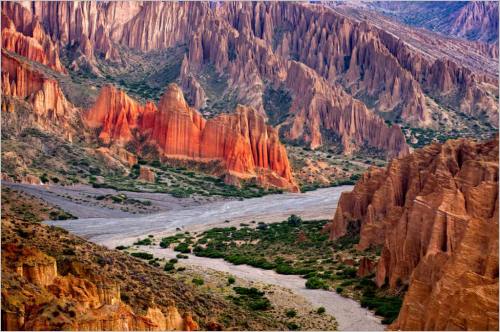 An image from Eduardo Avaroa National Reserve Bolivia
.
.
Click the link below for images:
.
__________________________________________
January 2, 2022
Mohenjo
Business, Enthralling, Human Interest, Photographs
amazon, business, Business News, current-events, Future, Hotels, human-rights, medicine, mental-health, research, Science, Science News, technology, Technology News, travel, vacation
Click the link below the picture
.
Gobustan State Reserve located west of the settlement of Gobustan, about 40 miles (64 km) southwest of the center of Baku was established in 1966 when the region was declared as a national historical landmark of Azerbaijan in an attempt to preserve the ancient carvings, mud volcanoes and gas-stones in the region.
Gobustan State Reserve is very rich in archeological monuments, the reserve has more than 6,000 rock carvings, which depict people, animals, battle-pieces, ritual dances, bullfights, boats with armed oarsmen, warriors with lances in their hands, camel caravans, pictures of sun and stars, on the average dating back to 5,000-20,000 years.
Gobustan State Historical and Cultural Reserve acquired national status in 2006 and were added to the UNESCO World Social Legacy List in 2007.
The rock carvings and petroglyphs at the site display mesmerizing images of prehistoric life in the Caucasus. The well-preserved sketches display ancient populations traveling on reed boats; men hunting antelope and wild bulls, and women dancing. The controversial Norwegian anthropologist Thor Heyerdahl returned many times to Azerbaijan between 1961 and his death in 2002 to study the site in his “Search for Odin”.
The language of the ancient population of Gobustan is disputed, but the petroglyphs still give information about the lives of prehistoric people who lived there. More than 4,000 pictures of animals, humans, natural life experiences, hunting, and dancing were carved over a span of thousands of years. Most of the petroglyphs are on large cliffs, divided among multiple ancient residences, and in some cases, they have been carved over older images. The first carvings depicted natural human and animal figures, often irregularly, but over time they began to more closely resemble the measurements and proportions of their subjects, including such details as the foot muscles of people in hunting scenes. The heads of the human figures tend to be small and carved without noses, mouths, eyes, or ears. However, experts do not interpret this lack of facial features as an indication that the Gobustan artists lacked technical skill, since some of the carvings demonstrate a higher degree of complexity and detail. Many scenes from tribal life are depicted among the petroglyphs, and images from the Seven Beauties cave suggest that women may have participated in hunting.
It’s estimated that 300 of the planet’s estimated 700 mud volcanoes sit in Gobustan, Azerbaijan, and the Caspian Sea. Many geologists as well as locals and international mud tourists trek to such places as the Firuz Crater, Gobustan, Salyan and end up happily covered in mud which is thought to have medicinal qualities. Wikipedia
.
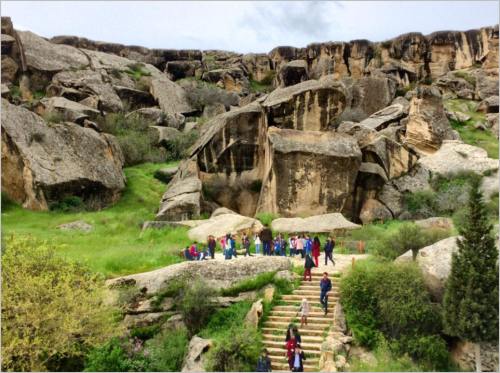 An image from Gobustan National Park
.
.
Click the link below for images:
.
__________________________________________
January 1, 2022
Mohenjo
Business, Enthralling, Human Interest, Photographs
amazon, business, Business News, current-events, Future, Hotels, human-rights, medicine, mental-health, research, Science, Science News, technology, Technology News, travel, vacation
Click the link below the picture
.
The Sámi people are an indigenous Finno-Ugric-speaking people inhabiting the region of Sápmi (formerly known as Lapland), which today encompasses large northern parts of Norway, Sweden, Finland, and of the Murmansk Oblast, Russia, most of the Kola Peninsula in particular. The Sámi have historically been known in English as Lapps or Laplanders, but these terms are regarded as offensive by some Sámi people, who prefer the area’s name in their own languages, e.g. Northern Sami Sápmi. Their traditional languages are the Sámi languages, which are classified as a branch of the Uralic language family.
Traditionally, the Sámi have pursued a variety of livelihoods, including coastal fishing, fur trapping, and sheep herding. Their best-known means of livelihood is semi-nomadic reindeer herding. Currently, about 10% of the Sámi are connected to reindeer herding, which provides them with meat, fur, and transportation. 2,800 Sámi people are actively involved in reindeer herding on a full-time basis in Norway. For traditional, environmental, cultural, and political reasons, reindeer herding is legally reserved for only Sámi people in some regions of the Nordic countries.
Speakers of Northern Sámi refer to themselves as Sámit (the Sámis) or Sápmelaš (of Sámi kin), the word Sápmi being inflected into various grammatical forms. Other Sámi languages use cognate words. As of around 2014, the current consensus among specialists was that the word Sámi was borrowed from the Proto-Baltic word *žēmē, meaning ‘land’ (cognate with Slavic zemlja (земля), of the same meaning).
The word Sámi has at least one cognate word in Finnish: Proto-Baltic *žēmē was also borrowed into Proto-Finnic, as *šämä. This word became modern Finnish Häme (Finnish for the region of Tavastia; the second ä of *šämä is still found in the adjective Hämäläinen). The Finnish word for Finland, Suomi, is also thought probably to derive ultimately from Proto-Baltic *žēmē, though the precise route is debated and proposals usually involve complex processes of borrowing and reborrowing. Suomi and its adjectival form suomalainen must come from *sōme-/sōma-. In one proposal, this Finnish word comes from a Proto-Germanic word *sōma-, itself from Proto-Baltic *sāma-, in turn borrowed from Proto-Finnic *šämä, which was borrowed from *žēmē.
The Sámi institutions — notably the parliaments, radio and TV stations, theatres, etc. — all use the term Sámi, including when addressing outsiders in Norwegian, Swedish, Finnish, or English. In Norwegian and Swedish, the Sámi are today referred to by the localized form Same. Wikipedia
.
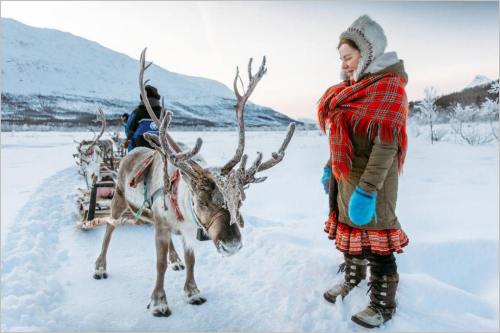 An image of Sami from Norway
.
.
Click the link below for images:
.
__________________________________________
December 31, 2021
Mohenjo
Business, Enthralling, Human Interest, Photographs
amazon, business, Business News, current-events, Future, Hotels, human-rights, medicine, mental-health, research, Science, Science News, technology, Technology News, travel, vacation
Click the link below the picture
.
Old City or Inner City is the historical core of Baku, the capital of Azerbaijan. The Old City is the most ancient part of Baku, which is surrounded by walls which were easily defended. In 2007, the Old City had a population of about 3000 people. In December 2000, the Old City of Baku, including the Palace of the Shirvanshahs and Maiden Tower, became the first location in Azerbaijan to be classified as a UNESCO World Heritage Site.
It is widely accepted that the Old City, including its Maiden Tower, date at least to the 12th century, with some researchers contending that construction dates as far back as the 7th century. The question has not been completely settled.
During this medieval period of Baku, such monuments as the Synyg Gala Minaret (11th century), the fortress walls and towers (11th–12th centuries), the Maiden Tower, the Multani Caravanserai and Hajji Gayyib bathhouse (15th century), the Palace of the Shirvanshahs (15th–16th centuries), the Bukhara Caravanserai and Gasimbey bathhouse (16th century) were built.
In 1806, when Baku was occupied by the Russian Empire during the Russo-Persian War (1804–13), there were 500 households and 707 shops, and a population of 7,000 in the Old City (then the only neighborhood of Baku) whom were almost all ethnic Tats. Between 1807 and 1811, the city walls were repaired and the fortifications extended. The city had two gates: the Salyan Gates and the Shemakha Gates. The city was protected by dozens of cannons set on the walls. The port was re-opened for trade, and in 1809 a customs office was established.
It was during this period that Baku started to extend beyond the city walls, and new neighborhoods emerged. Thus the terms Inner City (Azerbaijani: İçəri Şəhər) and Outer City (Azerbaijani: Bayır Şəhər) came into use. Referring to the early Russian rule, Bakuvian actor Huseyngulu Sarabski wrote in his memoirs: Wikipedia
.
 An image from Old City (Baku)
.
.
Click the link below for images:
.
__________________________________________
December 30, 2021
Mohenjo
Business, Enthralling, Human Interest, Photographs
amazon, business, Business News, current-events, Future, Hotels, human-rights, medicine, mental-health, research, Science, Science News, technology, Technology News, travel, vacation
Click the link below the picture
.
The castle of Berlanga de Duero is located in the town of the same name, it belongs to the province of Soria and was built between the 15th century when it served as a stately castle, and in the 16th when it was transformed into an artillery fortress. Previously, in the 10th and 11th centuries, there was a Muslim fortress that, in the 12th, after the Castilian conquest, was expanded with the walled outer belt that is preserved.
Bordered by the Escalote river and embraced by the Duero, it is crowned by the imposing silhouette of the castle that watches over it from the Coborrón. The monumental complex is made up of the remains of the late medieval fortress (15th century), the artillery fortress from the Renaissance period (16th century), the wall that surrounds the hill at its base (12th century), and the Palace of the Dukes of Frías ( century XVI).
The set began between the years 1460 and 1480 by order of D. Luis Tovar and Mrs. María de Guzmán, who ordered the erection of the manor house, to serve as a defensive fortress and family residence, on a previous castle located on top of the hill, where the primitive town of Berlanga was located, protected by the wall located at the foot of the hill.
In the year 1512 the new castle, configured as an artillery fortress, was designed and began to be executed for military purposes. This new fortress was adapted both to the steep topography of the terrain and to the previous construction (the stately medieval castle).
The construction program of the Tovar and the Dukes of Frías lineages also included the erection of the palace in the interior enclosure of the 12th-century wall, adapted to new ways of life. This palace and its intramural gardens structured on various levels suffered, in 1811, a fire and destruction by Napoleonic troops, so that today only its main facade remains. Second.Wiki
.
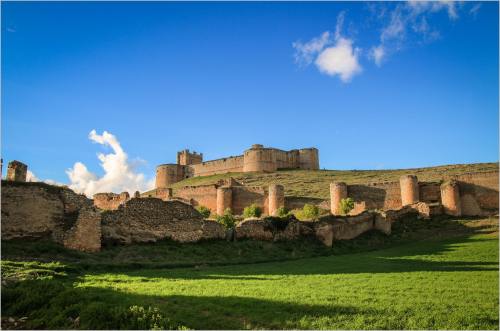 An image of Berlanga De Duero Castle
.
.
Click the link below for images:
.
__________________________________________
December 29, 2021
Mohenjo
Business, Enthralling, Human Interest, Photographs
amazon, business, Business News, current-events, Future, Hotels, human-rights, medicine, mental-health, research, Science, Science News, technology, Technology News, travel, vacation
Click the link below the picture
.
Austria, officially the Republic of Austria, is a landlocked country in the southern part of Central Europe, located on the Eastern Alps. It is composed of nine federated states, one of which is Vienna, Austria’s capital and largest city. Austria is bordered by Germany to the northwest, the Czech Republic to the north, Slovakia to the northeast, Hungary to the east, Slovenia and Italy to the south, and Switzerland and Liechtenstein to the west. Austria occupies an area of 83,879 km2 (32,386 sq mi) and has a population of nearly 9 million people. While Austrian German is the country’s official language, many Austrians communicate informally in a variety of Bavarian dialects.
Austria initially emerged as a margraviate around 976 and developed into a duchy and archduchy. In the 16th century, Austria started serving as the heart of the Habsburg Monarchy and the junior branch of the House of Habsburg – one of the most influential royal dynasties in history. As an archduchy, it was a major component and administrative center of the Holy Roman Empire. Early in the 19th century, Austria established its own empire, which became a great power and the leading force of the German Confederation, but pursued its own course independently of the other German states following its defeat in the Austro-Prussian War in 1866. In 1867, in compromise with Hungary, the Austria-Hungary Dual Monarchy was established.
Austria was involved in World War I under Emperor Franz Joseph following the assassination of Archduke Ferdinand, the presumptive successor to the Austro-Hungarian throne. After the defeat and the dissolution of the Monarchy, the Republic of German-Austria was proclaimed with the intent of union with Germany, but the Allied Powers did not support the new state and it remained unrecognized. In 1919 the First Austrian Republic became the legal successor of Austria. In 1938, the Austrian-born Adolf Hitler, who became the Chancellor of the German Reich, achieved the annexation of Austria by the Anschluss. Following the defeat of Nazi Germany in 1945 and an extended period of Allied occupation, Austria was re-established as a sovereign and self-governing democratic nation known as the Second Republic.
Austria is a parliamentary representative democracy with a directly elected Federal President as head of state and a Chancellor as head of the federal government. Major urban areas of Austria include Vienna, Graz, Linz, Salzburg, and Innsbruck. Austria is consistently ranked in the top 20 richest countries in the world by GDP per capita terms. The country has achieved a high standard of living and in 2018 was ranked 20th in the world for its Human Development Index. Vienna consistently ranks in the top internationally on quality-of-life indicators.
The Second Republic declared its perpetual neutrality in foreign political affairs in 1955. Austria has been a member of the United Nations since 1955 and joined the European Union in 1995. It plays host to the OSCE and OPEC and is a founding member of the OECD and Interpol. Austria also signed the Schengen Agreement in 1995 and adopted the euro currency in 1999. Wikipedia
.
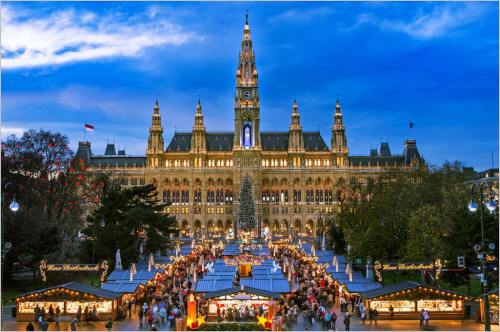 An image from Austria
.
.
Click the link below for images:
.
__________________________________________
December 28, 2021
Mohenjo
Business, Enthralling, Human Interest, Photographs
amazon, business, Business News, current-events, Future, Hotels, human-rights, medicine, mental-health, research, Science, Science News, technology, Technology News, travel, vacation
Click the link below the picture
.
Soria (Spanish pronunciation: [ˈsoɾja]) is a municipality and a Spanish city, located on the Douro River in the east of the autonomous community of Castile and León and capital of the province of Soria. Its population is 38,881 (INE, 2017), 43.7% of the provincial population. The municipality has a surface area of 271,77 km2,[2] with a density of 144.97 inhabitants/km2. Situated at about 1065 meters above sea level, Soria is the second-highest provincial capital in Spain.
Although there are remains of settlements from the Iron Age and Celtiberian times, Soria itself enters history with its repopulation between 1109 and 1114, by the Aragonese king Alfonso I the Battler. A strategic enclave due to the struggles for territory between the kingdoms of Castile, Navarre, and Aragon, Soria became part of Castile definitively in 1134, during the reign of Alfonso VII. In Soria was born Alfonso VIII, and Alfonso X had his court established when he received the offer to the throne of the Holy Roman Empire. In Soria, the deposed King James IV of Mallorca died, and John I of Castile married. Booming during the Late Middle Ages thanks to its border location and its control over the bovine industry, Soria went into a slow decline over the next few centuries. It was seriously damaged during the Peninsular War.
The city preserves an important architectural heritage (extensive medieval walls, Renaissance palaces, and architecturally distinctive Romanesque churches) and is home to the Numantine Museum (with pieces from the nearby Celtiberian city of Numantia). Soria’s football team CD Numancia is named after this city. It is one of the smallest cities to ever have had a team in Spain’s top division La Liga.
Today, its population of 38,881 makes Soria the least populated provincial capital of Castile and León and the second least populated in Spain (after Teruel). Particularly important in its economy is the agri-food industry, while an increasing number of tourists are attracted by its cultural heritage. Soria was mentioned by UNESCO as a good example when including the Mediterranean diet in its Representative List of the Intangible Cultural Heritage of Humanity. Wikipedia
.
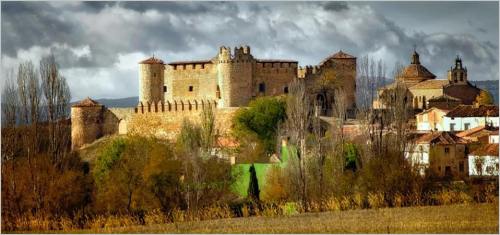 An image of Soria Spain Castle
.
.
Click the link below for images:
.
__________________________________________
December 27, 2021
Mohenjo
Business, Enthralling, Human Interest, Photographs
amazon, business, Business News, current-events, Future, Hotels, human-rights, medicine, mental-health, research, Science, Science News, technology, Technology News, travel, vacation
Click the link below the picture
.
The koala or, inaccurately, koala bear (Phascolarctos cinereus), is an arboreal herbivorous marsupial native to Australia. It is the only extant representative of the family Phascolarctidae and its closest living relatives are the wombats, which are members of the family Vombatidae. The koala is found in coastal areas of the mainland’s eastern and southern regions, inhabiting Queensland, New South Wales, Victoria, and South Australia. It is easily recognizable by its stout, tailless body and large head with round, fluffy ears, and large, spoon-shaped nose. The koala has a body length of 60–85 cm (24–33 in) and weighs 4–15 kg (9–33 lb). Fur color ranges from silver grey to chocolate brown. Koalas from the northern populations are typically smaller and lighter in color than their counterparts further south. These populations possibly are separate subspecies, but this is disputed.
Koalas typically inhabit open eucalypt woodlands, and the leaves of these trees make up most of their diet. Because this eucalypt diet has limited nutritional and caloric content, koalas are largely sedentary and sleep up to 20 hours a day. They are asocial animals, and bonding exists only between mothers and dependent offspring. Adult males communicate with loud bellows that intimidate rivals and attract mates. Males mark their presence with secretions from scent glands located on their chests. Being marsupials, koalas give birth to underdeveloped young that crawl into their mothers’ pouches, where they stay for the first six to seven months of their lives. These young koalas, known as joeys, are fully weaned around a year old. Koalas have few natural predators and parasites but are threatened by various pathogens, such as Chlamydiaceae bacteria and the koala retrovirus.
Koalas were hunted by indigenous Australians and depicted in myths and cave art for millennia. The first recorded encounter between a European and a koala was in 1798, and an image of the animal was published in 1810 by naturalist George Perry. Botanist Robert Brown wrote the first detailed scientific description of the koala in 1814, although his work remained unpublished for 180 years. Popular artist John Gould illustrated and described the koala, introducing the species to the general British public. Further details about the animal’s biology were revealed in the 19th century by several English scientists. Because of its distinctive appearance, the koala is recognized worldwide as a symbol of Australia. Koalas are listed as a vulnerable species by the International Union for Conservation of Nature. The animal was hunted heavily in the early 20th century for its fur, and large-scale cullings in Queensland resulted in a public outcry that initiated a movement to protect the species. Sanctuaries were established, and translocation efforts moved to new regions koalas whose habitat had become fragmented or reduced. Among the many threats to their existence are habitat destruction caused by agriculture, urbanization, droughts, and associated bushfires, some related to climate change.
.
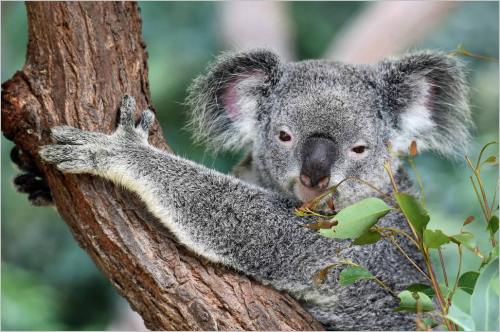 An image of a Koala
.
.
Click the link below for images:
.
__________________________________________
December 25, 2021
Mohenjo
Business, Enthralling, Human Interest, Photographs
amazon, business, Business News, current-events, Future, Hotels, human-rights, medicine, mental-health, research, Science, Science News, technology, Technology News, travel, vacation
Click the link below the picture
.
Victor Harbor is a town in the Australian state of South Australia located within the City of Victor Harbor on the south coast of the Fleurieu Peninsula, about 82 kilometers (51 mi) south of the state capital of Adelaide. The town is the largest population center on the peninsula, with an economy based upon agriculture, fisheries, and various industries. It is also a highly popular tourist destination, with the area’s population greatly expanded during the summer holidays, usually by Adelaide locals looking to escape the summer heat.
It is a popular destination with South Australian high school graduates for their end-of-year celebrations, known colloquially as schoolies.
Victor Harbor lies in the traditional lands of the Ramindjeri clan of the Ngarrindjeri people.
Matthew Flinders in HMS Investigator visited the bay on 8 April 1802 while on the first circumnavigation of the continent, mapping the unsurveyed southern Australian coast from the west. He encountered Nicolas Baudin in Le Geographe near the Murray Mouth several kilometers to the east of the present-day location of Victor Harbor. Baudin was surveying the coast from the east for Napoleonic France. Although their countries were at war, each captain was given documents by the other nation’s government, stating that the ships were on scientific missions, and were therefore not to be regarded as ships of war. Together, the ships returned to the bay and sheltered, while the captains compared notes. Flinders named the bay Encounter Bay after the meeting.
In 1837 Captain Richard Crozier who was en route from Sydney to the Swan River Colony in command of HMS Victor, anchored just off Granite Island and named the sheltered waters in the lee of the island ‘Victor Harbor’ after his ship. About the same time two whaling stations were established, one at Rosetta Head (popularly known as “the Bluff”) and the other near the point opposite Granite Island. Whale oil became South Australia’s first export. From 1839 the whaling station was managed for a time by Captain John Hart, a later Premier of South Australia. The town of Port Victor was laid out on the shores of Victor Harbor in 1863 when the horse-drawn tramway from Goolwa was extended to the harbor. The last whale was caught off Port Victor in 1872.
The municipality of the town of Victor Harbor was proclaimed on 7 May 1914, with Oliver Alexander Baaner appointed as the first mayor.
On 26 December 1936, a one-off motor race meeting was held to the east of the town to commemorate the centenary of South Australia – the “South Australian Centenary Grand Prix”. The circuit was made of public roads, measured 12.6 kilometers in length, and featured two long straights, two short straights, and several corners, including the banked Nangawooka Hairpin. Winner of the 240-mile Grand Prix, which was held as a handicap, was Les Murphy in an MG P-type, from Tim Joshua in another P-type and Bob Lea-Wright in a Terraplane Special.
The beaches of Victor Harbour and nearby Port Elliot have been facing rising seas and more has to be done to stop this. . Wikipedia
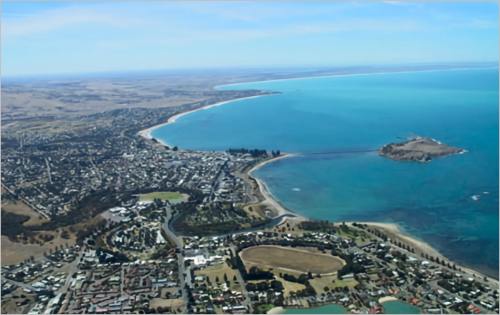 An image from Victor Harbor, South Australia
.
.
Click the link below for images:
.
__________________________________________
December 24, 2021
Mohenjo
Business, Enthralling, Human Interest, Photographs
amazon, business, Business News, current-events, Future, Hotels, human-rights, medicine, mental-health, research, Science, Science News, technology, Technology News, travel, vacation
Click the link below the picture
.
Sydney is the capital city of the state of New South Wales, and the most populous city in Australia and Oceania. Located on Australia’s east coast, the metropolis surrounds Port Jackson and extends about 70 km (43.5 mi) on its periphery towards the Blue Mountains to the west, Hawkesbury to the north, the Royal National Park to the south, and Macarthur to the south-west. Sydney is made up of 658 suburbs, spread across 33 local government areas. Residents of the city are known as “Sydneysiders”. As of June 2020, Sydney’s estimated metropolitan population was 5,367,206, meaning the city is home to approximately 66% of the state’s population. Nicknames of the city include the ‘Emerald City’ and the ‘Harbour City’.
Indigenous Australians have inhabited the Sydney area for at least 30,000 years, and thousands of engravings remain throughout the region, making it one of the richest in Australia in terms of Aboriginal archaeological sites. Around 29 clan groups of the Eora Nation inhabited the region at the time of European contact. During his first Pacific voyage in 1770, Lieutenant James Cook and his crew became the first Europeans to chart the eastern coast of Australia, making landfall at Botany Bay and inspiring British interest in the area. In 1788, the First Fleet of convicts, led by Arthur Phillip, founded Sydney as a British penal colony, the first European settlement in Australia. Phillip named the settlement after Thomas Townshend, 1st Viscount Sydney. Penal transportation to New South Wales ended soon after Sydney was incorporated as a city in 1842. A gold rush occurred in the colony in 1851, and over the next century, Sydney transformed from a colonial outpost into a major global cultural and economic center. After World War II, it experienced mass migration and became one of the most multicultural cities in the world. At the time of the 2011 census, more than 250 different languages were spoken in Sydney. In the 2016 Census, about 35.8% of residents spoke a language other than English at home. Furthermore, 45.4% of the population reported having been born overseas, and the city has the third-largest foreign-born population of any city in the world after London and New York City. Between 1971 and 2018, Sydney lost a net number of 716,832 people to the rest of Australia but its population has continued to grow, largely due to immigration.
Despite being one of the most expensive cities in the world, Sydney frequently ranks in the top ten most liveable cities in the world. It is classified as an Alpha Global City by Globalization and World Cities Research Network, indicating its influence in the region and throughout the world. Ranked eleventh in the world for economic opportunity, Sydney has an advanced market economy with strengths in finance, manufacturing, and tourism. There is a significant concentration of foreign banks and multinational corporations in Sydney and the city is promoted as Australia’s financial capital and one of Asia Pacific’s leading financial hubs. Established in 1850, the University of Sydney was Australia’s first university and is regarded as one of the world’s leading universities. Sydney is also home to the oldest library in Australia, the State Library of New South Wales, opened in 1826. Wikipedia
.
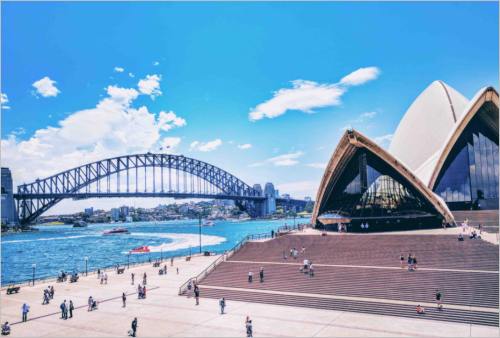 An image from Sydney, Australia
.
.
Click the link below for images:
.
__________________________________________
Older Entries
Newer Entries
 James' World 2