February 21, 2022
Mohenjo
Business, Enthralling, Human Interest, Photographs
amazon, business, Business News, current-events, Future, Hotels, human-rights, medicine, mental-health, research, Science, Science News, technology, Technology News, travel, vacation

Click the link below the picture
.
Ottawa is the capital city of Canada. Located on the south bank of the Ottawa River in the southern portion of the province of Ontario, Ottawa borders Gatineau, Quebec, and forms the core of the Ottawa–Gatineau census metropolitan area (CMA) and the National Capital Region (NCR). As of 2021, Ottawa had a city population of 1,017,449 and a metropolitan population of 1,488,307, making it the fourth-largest city and fourth-largest metropolitan area in Canada.
Founded in 1826 as Bytown, and incorporated as Ottawa in 1855, the city has evolved into the political center of Canada. Its original boundaries were expanded through numerous annexations and were ultimately replaced by a new city incorporation and amalgamation in 2001 which significantly increased its land area.
Ottawa has the most educated population among Canadian cities and is home to a number of colleges and universities, research and cultural institutions, including the University of Ottawa, Carleton University, the National Arts Centre, the National Gallery of Canada, and numerous national museums.
The city name Ottawa was chosen in reference to the Ottawa River, the name of which is derived from the Algonquin Odawa, meaning “to trade”. The city’s modern name in Algonquin language is Odàwàg. Ottawa is built on unceded Algonquin Anishinaabe territory, as Canada has never signed any treaty with the Algonquin Nation.
With the draining of the Champlain Sea around ten thousand years ago, the Ottawa Valley became habitable. Local populations used the area for wild edible harvesting, hunting, fishing, trade, travel, and camps for over 6,500 years. Ottawa is situated on the traditional land of the Algonquins, Indigenous peoples who are closely related to the Odawa and Ojibwe peoples. The Algonquins call the Ottawa River Kichi Sibi or Kichissippi meaning “Great River” or “Grand River”. The Ottawa River valley has archeological sites with arrowheads, pottery, and stone tools. Three major rivers meet within Ottawa, making it an important trade and travel area for thousands of years. Wikipedia
.
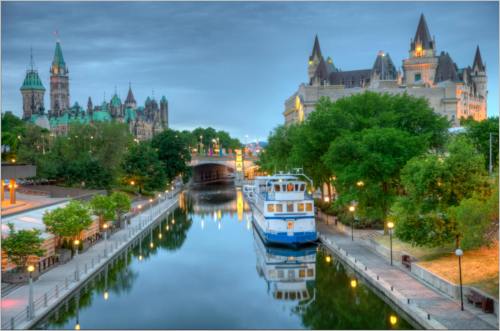 An image from Ottawa, Canada
.
.
Click the link below for images:
.
__________________________________________
February 19, 2022
Mohenjo
Business, Enthralling, Human Interest, Photographs
amazon, business, Business News, current-events, Future, Hotels, human-rights, medicine, mental-health, research, Science, Science News, technology, Technology News, travel, vacation
Click the link below the picture
.
Pitstone Windmill is a Grade II* listed windmill in England which is thought to date from the early 17th century. It stands in the northeast corner of a large field near the parish boundary of Ivinghoe and Pitstone in Buckinghamshire and belongs today to the National Trust.
It is thought to have been first built circa 1627 as this date is carved on part of the framework. This is the earliest date to be found on any windmill in the British Isles. It should be remembered that such a structure would have had to have frequent repairs made to it, so it is quite possible the mill predates 1627. It was dendrochronologically dated in 2004 by Dr. Martin Bridge of the Oxford Dendrochronology Laboratory when the oldest pieces in the buck were found to be from trees felled in winter 1595/96 and spring 1597. The ‘new’ crown tree was made from a tree felled in spring 1670, while the quarter bars of the trestle were from trees felled between 1824 and 1826, so like most mills, it is a mix of old timbers variously recycled or hanging on from their original use.
For many hundreds of years, grain grown in the two adjoining villages was ground at the mill into flour. In 1874 the mill was bought by Adelbert Wellington Brownlow Cust, 3rd Earl Brownlow who owned the nearby Ashridge Estate. He subsequently let it to a local farmer, who ran a successful milling business from the mill.
In 1902 the mill was seriously damaged during an enormous gale, damaging it beyond the price of economic repair. Around 1922 the derelict ruined mill was bought from the Ashridge Estate by a farmer whose land was close to the mill. In 1937 he donated it to the National Trust. However, it was not until 1963 that a band of volunteers began to carry out renovations at their own expense. The mill appeared in an episode of The Champions titled The Invisible Man which was filmed in 1967. In 1970, after an interlude of 68 years, the mill once again ground corn.
Today the windmill is open to the public on Summer Sunday afternoons.
.
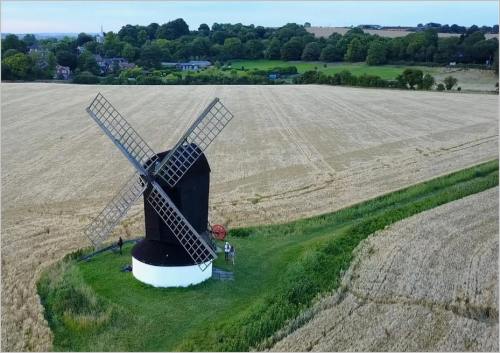 An image of the Pitstone Windmill Buckinghamshire England
.
.
Click the link below for images:
.
__________________________________________
February 18, 2022
Mohenjo
Business, Enthralling, Human Interest, Photographs
amazon, business, Business News, current-events, Future, Hotels, human-rights, medicine, mental-health, research, Science, Science News, technology, Technology News, travel, vacation
Click the link below the picture
.
Hungary is a landlocked country in Central Europe. Spanning 93,030 square kilometers (35,920 sq mi) of the Carpathian Basin, it is bordered by Slovakia to the north, Ukraine to the northeast, Romania to the east and southeast, Serbia to the south, Croatia and Slovenia to the southwest, and Austria to the west. Hungary has a population of nearly 10 million, mostly ethnic Hungarians and a significant Romani minority. Hungarian, the official language, is the world’s most widely spoken Uralic language and among the few non-Indo-European languages widely spoken in Europe. Budapest is the country’s capital and largest city; other major urban areas include Debrecen, Szeged, Miskolc, Pécs, and Győr.
The territory of present-day Hungary has for centuries been a crossroads for various peoples, including Celts, Romans, Germanic tribes, Huns, West Slavs, and the Avars. The foundations of the Hungarian state were established in the late ninth century AD with the conquest of the Carpathian Basin by Hungarian grand prince Árpád. His great-grandson Stephen I ascended the throne in 1000, converting his realm to a Christian kingdom. By the 12th century, Hungary became a regional power, reaching its cultural and political height in the 15th century. Following the Battle of Mohács in 1526, it was partially occupied by the Ottoman Empire (1541–1699). Hungary came under Habsburg rule at the turn of the 18th century, later joining with the Austrian Empire to form Austria-Hungary, a major power into the early 20th century.
Austria-Hungary collapsed after World War I, and the subsequent Treaty of Trianon established Hungary’s current borders, resulting in the loss of 71% of its territory, 58% of its population, and 32% of ethnic Hungarians. Following the tumultuous interwar period, Hungary joined the Axis Powers in World War II, suffering significant damage and casualties. Postwar Hungary became a satellite state of the Soviet Union, leading to the establishment of the Hungarian People’s Republic. Following the failed 1956 revolution, Hungary became a comparatively freer, though still repressive, member of the Eastern Bloc. The removal of Hungary’s border fence with Austria accelerated the collapse of the Eastern Bloc, and subsequently the Soviet Union. On 23 October 1989, Hungary became a democratic parliamentary republic. Hungary joined the European Union in 2004 and has been part of the Schengen Area since 2007.
Hungary is a middle power in international affairs, owing mostly to its cultural and economic influence. It is considered a developed country with a high-income economy and ranks 40th in the Human Development Index, with citizens enjoying universal health care and free-tuition secondary education. Hungary has a long history of significant contributions to arts, music, literature, sports, science, and technology. It is the thirteenth-most popular tourist destination in Europe, drawing 15.8 million international tourists in 2017. It is a member of numerous international organizations, including the United Nations, NATO, WTO, World Bank, IIB, the AIIB, the Council of Europe, and the Visegrád Group. Wikipedia
.
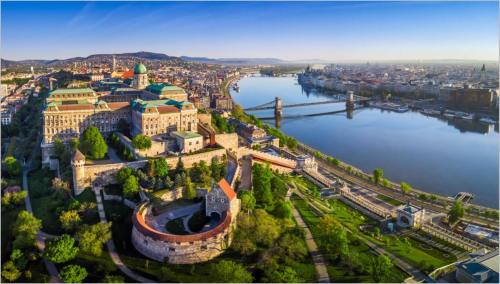 An image from Hungary
.
.
Click the link below for images:
.
__________________________________________
February 17, 2022
Mohenjo
Business, Enthralling, Human Interest, Photographs
amazon, business, Business News, current-events, Future, Hotels, human-rights, medicine, mental-health, research, Science, Science News, technology, Technology News, travel, vacation
Click the link below the picture
.
Punta Gorda is a city in Charlotte County, Florida, United States. As of the 2010 U.S. Census, the city had a population of 16,641. It is the county seat of Charlotte County and the only incorporated municipality in the county. Punta Gorda is the principal city of the Punta Gorda, Florida Metropolitan Statistical Area and is also in the Sarasota-Bradenton-Punta Gorda Combined Statistical Area.
Punta Gorda was the scene of massive destruction after Charley, a Category 4 hurricane, came through the city on August 13, 2004. Charley was the strongest tropical system to hit Florida since Hurricane Andrew in 1992, and the first hurricane since Hurricane Donna in 1960 to make a direct hit on Florida’s southwest coast. In the immediate years following the storm, buildings were restored or built to hurricane-resistant building codes. The new buildings, restorations, and amenities concurrently preserved the city’s past while showcasing newer facilities. During this time, Laishley Park Municipal Marina was built and the Harborwalk, Linear Park, and various trails were created throughout the city for bicycle and pedestrian traffic.
Before the arrival of European explorers and settlers, the region centered on present-day Punta Gorda was home to the Calusa people. The name Punta Gorda (“Fat Point”) has been on maps at least since 1851, referring to a point of land that juts into Charlotte Harbor, an estuary off the Gulf of Mexico. It was in the late 1800s that early white settlers began to arrive in what is the present-day Punta Gorda area.
Frederick and Jarvis Howard, Union Army veterans, homesteaded an area south of the Peace River near present-day Punta Gorda about a decade after the close of the Civil War. In 1876, James and Josephine Lockhart bought land and built a house on property which is now at the center of the city. Approximately two years later Lockhart sold his claim to James Madison Lanier, a hunter and trapper, who lived there two years.
In 1879, a charter for a railroad with termini at Charlotte Harbor and Lake City, Florida was established under the name Gainesville, Ocala, and Charlotte Harbor Railroad. It was taken over by the Florida Southern Railroad, which reaffirmed Charlotte Harbor as a terminus in its own charter. 30.8 acres (12.5 ha) Then in 1883, Lanier sold his land to Isaac Trabue, who purchased additional property along the harbor and directed the platting of a town (by Kelly B. Harvey) named “Trabue”. Harvey recorded the plat on February 24, 1885. At the time, Isaac was in Kentucky, and his cousin, John Trabue, was in charge of selling lots. To insure success of his development, Trabue convinced the Florida Southern Railway to bring their road to his town on the south side of Charlotte Harbor. Wikipedia
.
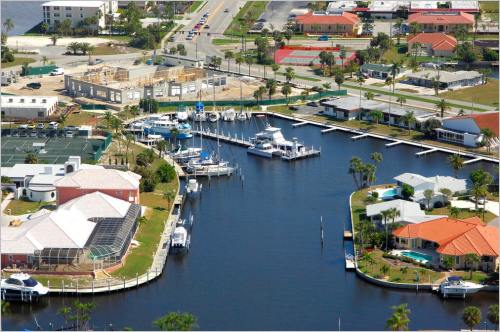 An image from Punta Gorda, Florida
.
.
Click the link below for article:
.
__________________________________________
February 17, 2022
Mohenjo
Business, Enthralling, Food For Thought, Human Interest, Photographs, Political, Technical
amazon, business, Business News, current-events, Future, Hotels, human-rights, medicine, mental-health, research, Science, Science News, technology, Technology News, travel, vacation

Click the link below the picture
.
I remember the moment the world got its first look at Kate Middleton’s Alexander McQueen lace gown like it was yesterday. On the day of her wedding to Prince William, the future king of England, I was in a conference room in the middle of the night breathlessly covering the event for the magazine website I was in charge of at the time. My team and I, quite literally, squealed when we saw it and then rushed to get our post up as quickly as possible.
Seven years later, I woke up in Los Angeles, where I was vacationing, to watch an American feminist/former Suits star marry my longest-term fictional boyfriend, my ginger prince, Henry Albert Charles David, a.k.a Harry. I was giddy with excitement for both if only being paid to wake up for one.
I truly won’t soon forget these iconic wedding images: of Meghan and her mother, Doria Ragland, driving to the church. Or, the vision of Pippa Middleton fixing her sister’s dress with their father by her side, not knowing she was about to make global headlines herself.
But my royal obsession goes back even further than that—to Princess Diana, who wed William and Harry’s father in 1981, and Grace Kelly, who married Prince Rainier III of Monaco in 1956. It didn’t matter that I was very young for Diana’s nuptials—and not even close to alive for Grace’s—they are part of our collective cultural memory for all time. Thanks to a weekly dose of People magazine, these bridal moments (and dresses) burned into my brain as a pop culture and royalty-obsessed child.
.
 Royal Weddings
.
.
Click the link below for the article:
.
__________________________________________
February 16, 2022
Mohenjo
Business, Enthralling, Human Interest, Photographs
amazon, business, Business News, current-events, Future, Hotels, human-rights, medicine, mental-health, research, Science, Science News, technology, Technology News, travel, vacation
Click the link below the picture
.
Vietnam, officially the Socialist Republic of Vietnam, is a country in Southeast Asia. Located at the eastern edge of mainland Southeast Asia, it covers 311,699 square kilometers. With a population of over 96 million, it is the world’s fifteenth-most populous country. Vietnam borders China to the north, Laos, and Cambodia to the west, and shares maritime borders with Thailand through the Gulf of Thailand, and the Philippines, Indonesia, and Malaysia through the South China Sea. Its capital is Hanoi and its largest city is Ho Chi Minh City.
Vietnam was inhabited as early as the Paleolithic age. The first known Vietnamese nation during the first millennium BC centered on the Red River Delta, located in modern-day northern Vietnam. The Han dynasty annexed and put the Vietnamese under Chinese rule from 111 BC until the first independent dynasty emerged in 939. Successive monarchical dynasties absorbed Chinese influences through Confucianism and Buddhism and expanded southward to the Mekong Delta. The Nguyễn—the last imperial dynasty—fell to French colonization in 1887. Following the August Revolution, the nationalist Viet Minh under the leadership of communist revolutionary Ho Chi Minh proclaimed independence from France in 1945.
Vietnam went through prolonged warfare through the 20th century. After World War II, France returned to reclaim colonial power in the First Indochina War, from which Vietnam emerged victorious in 1954. The Vietnam War began shortly after, during which the nation was divided into communist North supported by the Soviet Union and China, and anti-communist South supported by the United States. Upon North Vietnamese victory in 1975, Vietnam reunified as a unitary socialist state under the Communist Party of Vietnam in 1976. An ineffective planned economy, trade embargo by the West, and wars with Cambodia and China crippled the country. In 1986, the Communist Party initiated economic and political reforms, transforming the country to a market-oriented economy.
The reforms facilitated Vietnamese integration into global economy and politics. A developing country with a lower-middle-income economy, Vietnam is one of the fastest-growing economies of the 21st century. It is part of international and intergovernmental institutions including the United Nations, the ASEAN, the APEC, the CPTPP, the Non-Aligned Movement, the Organisation internationale de la Francophonie, and the World Trade Organization. It has assumed a seat on the United Nations Security Council twice. Contemporary issues in Vietnam include corruption and a poor human rights record.
.
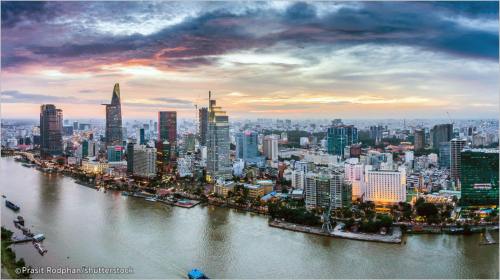 An image from Vietnam
.
.
Click the link below for images:
.
__________________________________________
February 15, 2022
Mohenjo
Business, Enthralling, Human Interest, Photographs
amazon, business, Business News, current-events, Future, Hotels, human-rights, medicine, mental-health, research, Science, Science News, technology, Technology News, travel, vacation
Click the link below the picture
.
Machu Picchu is a 15th-century Inca citadel located in the Eastern Cordillera of southern Peru on a 2,430-meter (7,970 ft) mountain ridge. It is located in the Machupicchu District within Urubamba Province above the Sacred Valley, which is 80 kilometers (50 mi) northwest of Cuzco. The Urubamba River flows past it, cutting through the Cordillera and creating a canyon with a tropical mountain climate.
For most speakers of English or Spanish, the first ‘c’ in Picchu is silent. In English, the name is pronounced or , in Spanish as [ˈmatʃu ˈpitʃu] or [ˈmatʃu ˈpiktʃu], and in Quechua (Machu Pikchu) as [ˈmatʃʊ ˈpɪktʃʊ].
The Incas, in contrast with the Mayans, had no written language, and no European visited the site until the 19th century, so far as is known. There are, therefore, no written records of the site while it was in use. The names of the buildings, their supposed uses, and their inhabitants are all the product of modern archeologists, on the basis of physical evidence, including tombs at the site.
Most recent archaeologists (2021) believe that Machu Picchu was constructed as an estate for the Inca emperor Pachacuti (1438–1472). Often mistakenly referred to as the “Lost City of the Incas”, it is the most familiar icon of Inca civilization. The Incas built the estate around 1450 but abandoned it a century later, at the time of the Spanish conquest. According to the new AMS radiocarbon dating, it was occupied from c. 1420-1532.
Machu Picchu was built in the classical Inca style, with polished dry-stone walls. Its three primary structures are the Intihuatana, the Temple of the Sun, and the Room of the Three Windows. Most of the outlying buildings have been reconstructed in order to give visitors a better idea of how they originally appeared. By 1976, 30% of Machu Picchu had been restored and restoration continues.
Machu Picchu was declared a Peruvian Historic Sanctuary in 1981 and a UNESCO World Heritage Site in 1983. In 2007, Machu Picchu was voted one of the New Seven Wonders of the World in a worldwide internet poll. Wikipedia
.
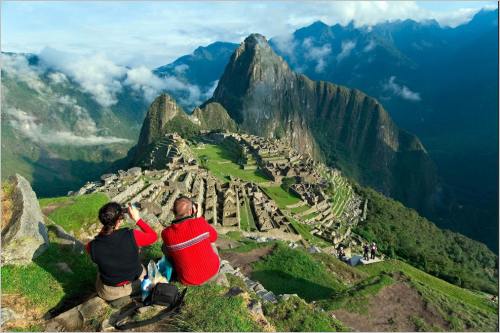 An image of Machu Picchu Peru
.
.
Click the link below for images:
.
__________________________________________
February 14, 2022
Mohenjo
Business, Enthralling, Human Interest, Photographs
amazon, business, Business News, current-events, Future, Hotels, human-rights, medicine, mental-health, research, Science, Science News, technology, Technology News, travel, vacation
Click the link below the picture
.
Ontario is one of the thirteen provinces and territories of Canada. Located in Central Canada, it is Canada’s most populous province, with 38.3 percent of the country’s population, and is the second-largest province by total area (after Quebec). Ontario is Canada’s fourth-largest jurisdiction in total area when the territories of the Northwest Territories and Nunavut are included. It is home to the nation’s capital city, Ottawa, and the nation’s most populous city, Toronto, which is also Ontario’s provincial capital.
Ontario is bordered by the province of Manitoba to the west, Hudson Bay and James Bay to the north, and Quebec to the east and northeast, and to the south by the U.S. states of (from west to east) Minnesota, Michigan, Ohio, Pennsylvania, and New York. Almost all of Ontario’s 2,700 km (1,678 mi) border with the United States follows inland waterways: from the westerly Lake of the Woods, eastward along the major rivers and lakes of the Great Lakes/Saint Lawrence River drainage system. These include Rainy River, Pigeon River, Lake Superior, St. Marys River, Lake Huron, St. Clair River, Lake St. Clair, Detroit River, Lake Erie, Niagara River, Lake Ontario, and the St. Lawrence River from Kingston, to the Quebec boundary just east of Cornwall. There is only about 1 km (0.6 mi) of land border, made up of portages including Height of Land Portage on the Minnesota border.
Ontario is sometimes divided into two geographic regions, Northern Ontario and Southern Ontario. The great majority of Ontario’s population and arable land is in the south. In contrast, the larger, northern part of Ontario is sparsely populated with cold winters and heavy forestation.
Ontario is a term thought to be derived from Indigenous origins, either Ontarí:io, a Huron (Wyandot) word meaning “great lake”, or possibly skanadario, which means “beautiful water” or “sparkling water” in the Iroquoian languages. Ontario has about 250,000 freshwater lakes. The first mention of the name Ontario was in 1641 when “Ontario” was used to describe the land on the north shore of the easternmost part of the Great Lakes. It was adopted as the official name of the new province at Confederation in 1867. Wikipedia
.
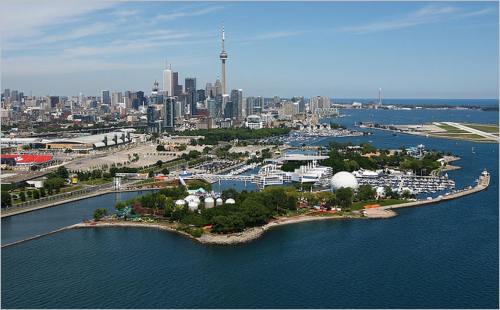 An image from Ontario
.
.
Click the link below for images:
.
__________________________________________
February 12, 2022
Mohenjo
Business, Enthralling, Human Interest, Photographs
amazon, business, Business News, current-events, Future, Hotels, human-rights, medicine, mental-health, research, Science, Science News, technology, Technology News, travel, vacation
Click the link below the picture
.
A dehesa is a multifunctional, agrosylvopastoral system (a type of agroforestry) and cultural landscape of southern and central Spain and southern Portugal; in Portugal, it is known as a montado. Its name comes from the Latin ‘defensa’ (fenced) referring to land that was fenced, and usually destined for pasture. Dehesas may be private or communal property (usually belonging to the municipality). Used primarily for grazing, they produce a variety of products, including non-timber forest products such as wild game, mushrooms, honey, cork, and firewood. They are also used to raise the Spanish fighting bull and the Iberian pig. The main tree component is oaks, usually holm (Quercus rotundifolia) and cork (Quercus suber). Other oaks, including melojo (Quercus pyrenaica) and quejigo (Quercus faginea), may be used to form dehesa, the species utilized depending on geographical location and elevation. Dehesa is an anthropogenic system that provides not only a variety of foods but also wildlife habitat for endangered species such as the Spanish imperial eagle.
By extension, the term can also be used for this style of rangeland management on estates.
The dehesa is derived from the Mediterranean forest ecosystem, consisting of grassland featuring herbaceous species, used for grazing cattle, goats, and sheep, and tree species belonging to the genus Quercus (oak), such as the holm oak (Quercus ilex sp. ballota), although other tree species such as beech and pine trees may also be present. Oaks are protected and pruned to produce acorns, which the famous black Iberian pigs feed on in the fall during the montanera. Ham produced from Iberian pigs fattened with acorns and air-dried at high elevations is known as Jamón ibérico (“presunto ibérico”, or “pata negra” in Portuguese), and sells for premium prices, especially if only acorns have been used for fattening.
In a typical dehesa, oaks are managed to persist for about 250 years. If cork oaks are present, the cork is harvested about every 9 to 12 years, depending on the productivity of the site. The understory is usually cleared every 7 to 10 years to prevent the takeover of the woodland by shrubs of the rock rose family (Cistaceae), often referred to as “jara“, or by oak seedlings. Oaks are spaced to maximize overall productivity by balancing light for the grasses in the understory, water use in the soils, and acorn production for pigs and game.
There is debate about the origins and maintenance of the dehesa, and whether or not the oaks can reproduce adequately under the grazing densities now prevailing. Wikipedia
.
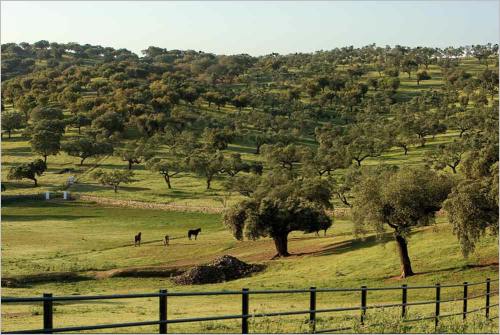 An image from Spain’s Dehesa System
.
.
Click the link below for images:
.
__________________________________________
February 11, 2022
Mohenjo
Business, Enthralling, Human Interest, Photographs
amazon, business, Business News, current-events, Future, Hotels, human-rights, medicine, mental-health, research, Science, Science News, technology, Technology News, travel, vacation
Click the link below the picture
.
Sofia is the capital and largest city of Bulgaria. It is situated in the Sofia Valley at the foot of the Vitosha mountain in the western parts of the country. The city is built west of the Iskar river and has many mineral springs, such as the Sofia Central Mineral Baths. It has a humid continental climate. Being in the center of the Balkans, it is midway between the Black Sea and the Adriatic Sea, and closest to the Aegean Sea.
Known as Serdica in Antiquity and Sredets in the Middle Ages, Sofia has been an area of human habitation since at least 7000 BC. The recorded history of the city begins with the attestation of the conquest of Serdica by the Roman Republic in 29 BC from the Celtic tribe Serdi. During the decline of the Roman Empire, the city was raided by Huns, Visigoths, Avars, and Slavs. In 809 Serdica was incorporated into the Bulgarian Empire by Khan Krum and became known as Sredets. In 1018, the Byzantines ended Bulgarian rule until 1194, when it was reincorporated by the reborn Bulgarian Empire. Sredets became a major administrative, economic, cultural, and literary hub until its conquest by the Ottomans in 1382. From 1530 to 1826, Sofia was the regional capital of Rumelia Eyalet, the Ottoman Empire’s key province in Europe. Bulgarian rule was restored in 1878. Sofia was selected as the capital of the Third Bulgarian State in the next year, ushering a period of intense demographic and economic growth.
Sofia is the 14th largest city in the European Union. It is surrounded by mountainsides, such as Vitosha by the southern side, Lyulin by the western side, and the Balkan Mountains by the north, which makes it the third-highest European capital after Andorra la Vella and Madrid. Being Bulgaria’s primate city, Sofia is home of many of the major local universities, cultural institutions, and commercial companies. The city has been described as the “triangle of religious tolerance”. This is due to the fact that three temples of three major world religions—Christianity, Islam, and Judaism—are situated within one square: Sveta Nedelya Church, Banya Bashi Mosque, and Sofia Synagogue. This triangle was recently expanded to a “square” and includes the Catholic Cathedral of St Joseph.
Sofia has been named one of the top ten best places for start-up businesses in the world, especially in information technologies. It was Europe’s most affordable capital to visit in 2013. In 1979, the Boyana Church in Sofia was included onto the World Heritage List, and it was deconstructed in the Second Bulgarian Empire, holding much patrimonial symbolism to the Bulgarian Orthodox Church. With its cultural significance in Southeast Europe, Sofia is home to the National Opera and Ballet of Bulgaria, the National Palace of Culture, the Vasil Levski National Stadium, the Ivan Vazov National Theatre, the National Archaeological Museum, and the Serdica Amphitheatre. The Museum of Socialist Art includes many sculptures and posters that educate visitors about the lifestyle in communist Bulgaria.
The population of Sofia declined from 70,000 in the late 18th century, through 19,000 in 1870, to 11,649 in 1878, after which it began increasing. Sofia hosts some 1.24 million residents within a territory of 492 km2, a concentration of 17.9% of the country population within the 200th percentile of the country territory. The urban area of Sofia hosts some 1.54 million residents within 5723 km2, which comprises Sofia City Province and parts of Sofia Province (Dragoman, Slivnitsa, Kostinbrod, Bozhurishte, Svoge, Elin Pelin, Gorna Malina, Ihtiman, Kostenets) and Pernik Province (Pernik, Radomir), representing 5.16% of the country territory. The metropolitan area of Sofia is based upon one hour of car travel time, stretches internationally and includes Dimitrovgrad in Serbia. The metropolitan region of Sofia is inhabited by a population of 1.67 million. Wikipedia
.
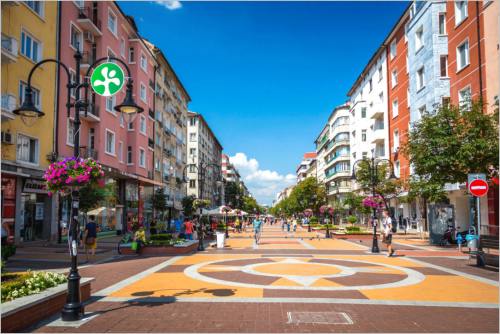 An image from Sofia, Bulgaria
.
.
Click the link below for images:
.
__________________________________________
Older Entries
Newer Entries
 James' World 2