March 4, 2022
Mohenjo
Business, Enthralling, Human Interest, Photographs
amazon, business, Business News, current-events, Future, Hotels, human-rights, medicine, mental-health, research, Science, Science News, technology, Technology News, travel, vacation

Click the link below the picture
.
Albania, officially the Republic of Albania (Albanian: Republika e Shqipërisë), is a country in Southeastern Europe. It is located on the Adriatic and Ionian Sea within the Mediterranean Sea and shares land borders with Montenegro to the northwest, Kosovo to the northeast, North Macedonia to the east, and Greece to the south. Tirana is its capital and largest city, followed by Durrës, Vlorë, and Shkodër.
Albania displays varied climatic, geological, hydrological, and morphological conditions, defined in an rea of 28,748 km2 (11,100 sq mi). It possesses significant diversity with the landscape ranging from the snow-capped mountains in the Albanian Alps as well as the Korab, Skanderbeg, Pindus, and Ceraunian Mountains to the hot and sunny coasts of the Albanian Adriatic and Ionian Sea along the Mediterranean Sea.
Albania has been inhabited by different civilizations over time, such as the Illyrians, Thracians, Greeks, Romans, Byzantines, Venetians, and Ottomans. The Albanians established the autonomous Principality of Arbër in the 12th century. The Kingdom of Albania and Principality of Albania formed between the 13th and 14th centuries. Prior to the Ottoman conquest of Albania in the 15th century, the Albanian resistance to Ottoman expansion into Europe led by Gjergj Kastrioti Skanderbeg won them acclaim over most of Europe. Albania remained under Ottoman rule for nearly five centuries, during which many Albanians (known as Arnauts) attained high-ranking offices in the empire, especially in the Southern Balkans and Egypt. Between the 18th and 19th centuries, cultural developments, widely attributed to Albanians having gathered both spiritual and intellectual strength, conclusively led to the Albanian Renaissance. After the defeat of the Ottomans in the Balkan Wars, the modern nation-state of Albania declared independence in 1912. In the 20th century, the Kingdom of Albania was invaded by Italy which formed Greater Albania before becoming a protectorate of Nazi Germany. Enver Hoxha formed the People’s Socialist Republic of Albania after World War II, modeled under the terms of Hoxhaism. The Revolutions of 1991 concluded the fall of communism in Albania and eventually the establishment of the current Republic of Albania.
Albania is a unitary parliamentary constitutional republic and a developing country with an upper-middle income economy dominated by the service sector, followed by manufacturing. It went through a process of transition following the end of communism in 1990, from centralized planning to a market-based economy. Albania provides universal health care and free primary and secondary education to its citizens. Albania is a member of the United Nations, World Bank, UNESCO, NATO, WTO, COE, OSCE, and OIC. It is an official candidate for membership in the European Union since 2014. It is one of the founding members of the Energy Community, including the Organization of the Black Sea Economic Cooperation and Union for the Mediterranean. Wikipedia
.
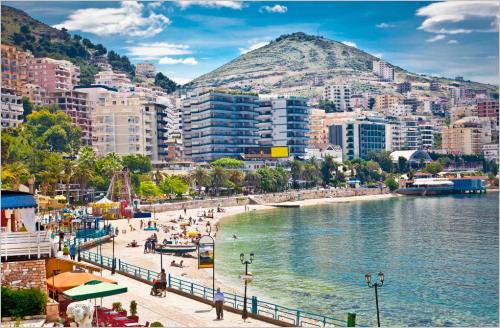 An image from Albania
.
.
Click the link below for images:
.
__________________________________________
March 3, 2022
Mohenjo
Business, Enthralling, Human Interest, Photographs
amazon, business, Business News, current-events, Future, Hotels, human-rights, medicine, mental-health, research, Science, Science News, technology, Technology News, travel, vacation
Click the link below the picture
.
The Eurasian brown bear is one of the most common subspecies of the brown bear and is found in much of Eurasia. It is also known as the European brown bear, common brown bear, common bear, and colloquially by many other names. The genetic diversity of present-day brown bears (Ursus arctos) has been extensively studied over the years and appears to be geographically structured into five main clades based upon analysis of the mtDNA.
The Eurasian brown bear has brown fur, which ranges from yellowish-brown to dark brown, red-brown, and almost black in some cases; albinism has also been recorded. The fur is dense to varying degrees and the hair can grow up to 10 cm in length. The head normally is quite round in shape and has relatively small rounded ears, a wide skull, and a mouth equipped with 42 teeth, including predatory teeth. It has a powerful bone structure and large paws equipped with claws that can grow up to 10 cm in length. The weight varies depending on habitat and the time of the year. A full-grown male weighs on average between 250 and 300 kilograms (550 and 660 lb) and reaches a maximum weight of 481 kg (1,058 lb) and length of nearly 2.5 m (8.2 ft). Females typically range between 150 and 250 kg (330 and 550 lb). They have a lifespan of 20 to 30 years in the wild.
Brown bears were present in Britain until no later than AD 1000 when they had been exterminated through over-hunting.
Eurasian brown bears were used in Ancient Rome for fighting in arenas. The strongest bears apparently came from Caledonia and Dalmatia. Wikipedia
.
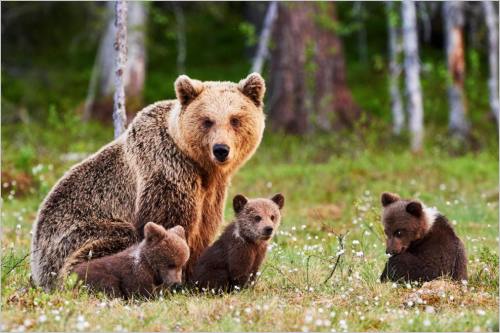 An image of Bears In Finland
.
.
Click the link below for images:
.
__________________________________________
March 2, 2022
Mohenjo
Business, Enthralling, Human Interest, Photographs
amazon, business, Business News, current-events, Future, Hotels, human-rights, medicine, mental-health, research, Science, Science News, technology, Technology News, travel, vacation
Click the link below the picture
.
Thailand, historically known as Siam, officially the Kingdom of Thailand, is a country in Southeast Asia. It is located at the center of the Indochinese Peninsula, spanning 513,120 square kilometers (198,120 sq mi), with a population of almost 70 million people. It is bordered to the north by Myanmar and Laos, to the east by Laos and Cambodia, to the south by the Gulf of Thailand and Malaysia, and to the west by the Andaman Sea and Myanmar. Thailand also shares maritime borders with Vietnam in the Gulf of Thailand to the southeast, and Indonesia and India (Andaman and Nicobar Islands) on the Andaman Sea to the southwest. Nominally, Thailand is a constitutional monarchy and parliamentary democracy; however, in recent history, its government has experienced multiple coups and periods of military dictatorships. Bangkok is the nation’s capital and largest city.
Tai peoples migrated from southwestern China to mainland Southeast Asia from the 11th century; the oldest known mention of their presence in the region by the exonym Siamese dates to the 12th century. Various Indianised kingdoms such as the Mon kingdoms, Khmer Empire, and Malay states ruled the region, competing with Thai states such as the Kingdoms of Ngoenyang, Sukhothai, Lan Na, and Ayutthaya, which also rivaled each other. Documented European contact began in 1511 with a Portuguese diplomatic mission to Ayutthaya, which became a regional power by the end of the 15th century. Ayutthaya reached its peak during cosmopolitan Narai’s reign, gradually declining thereafter until being ultimately destroyed in the 1767 Burmese–Siamese War. Taksin quickly reunified the fragmented territory and established the short-lived Thonburi Kingdom. He was succeeded in 1782 by Buddha Yodfa Chulaloke, the first monarch of the current Chakri dynasty.
Throughout the era of Western imperialism in Asia, Siam remained the only nation in the region to avoid being colonized by foreign powers, although it was often forced to cede both territory and trade concessions in unequal treaties. The Siamese system of government was centralized and transformed into a modern unitary absolute monarchy in the reign of Chulalongkorn. In World War I, Siam sided with the Allies, a political decision made in order to amend the unequal treaties. Following a bloodless revolution in 1932, it became a constitutional monarchy and changed its official name to Thailand, which was an ally of Japan in World War II. In the late 1950s, a military coup under Field Marshal Sarit Thanarat revived the monarchy’s historically influential role in politics. Thailand became a major ally of the United States and played an anti-communist role in the region as a member of the failed SEATO, but since 1975, had sought to improve relations with Communist China and Thailand’s neighbors. Apart from a brief period of parliamentary democracy in the mid-1970s, Thailand has periodically alternated between democracy and military rule. Since the 2000s, it has been caught in a series of bitter political conflict between supporters and opponents of Thaksin Shinawatra, which culminated in two coups, most recently in 2014 and the establishment of its current and 20th constitution and faces the ongoing pro-democracy protests.
Thailand is a middle power in global affairs, and a founding member of ASEAN; ranking high in the Human Development Index. It has the second-largest economy in Southeast Asia, and the 22nd-largest in the world by PPP. Thailand is classified as a newly industrialized economy; manufacturing, agriculture, and tourism are leading sectors of the economy.
Thailand, officially the Kingdom of Thailand, was formerly known as the exonym Siam by outsiders prior to 1949. According to George Cœdès, the word Thai (ไทย) means ‘free man’ in the Thai language, “differentiating the Thai from the natives encompassed in Thai society as serfs”. According to Chit Phumisak, Thai (ไท) simply means ‘people’ or ‘human being’, his investigation shows that some rural areas used the word “Thai” instead of the usual Thai word khon (คน) for people. According to Michel Ferlus, the ethnonyms Thai-Tai (or Thay-Tay) would have evolved from the etymon *k(ə)ri: ‘human being’. Wikipedia
.
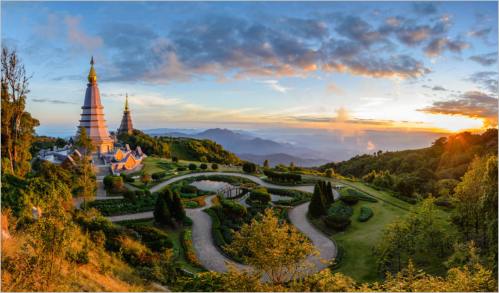 An image from Thailand
.
.
Click the link below for images:
.
__________________________________________
March 1, 2022
Mohenjo
Business, Enthralling, Human Interest, Photographs
amazon, business, Business News, current-events, Future, Hotels, human-rights, medicine, mental-health, research, Science, Science News, technology, Technology News, travel, vacation
Click the link below the picture
.
Mars is the fourth planet from the Sun and the second-smallest planet in the Solar System, being larger than only Mercury. In English, Mars carries the name of the Roman god of war and is often referred to as the “Red Planet”. The latter refers to the effect of the iron oxide prevalent on Mars’s surface, which gives it a striking reddish appearance in the sky. Mars is a terrestrial planet with a thin atmosphere, with surface features such as impact craters, valleys, dunes, and polar ice caps.
The days and seasons are comparable to those of Earth, because the rotation period, as well as the tilt of the rotational axis relative to the ecliptic plane, are similar. Mars is the site of Olympus Mons, the largest volcano and highest known mountain on any planet in the Solar System, and of Valles Marineris, one of the largest canyons in the Solar System. The smooth Borealis basin in the Northern Hemisphere covers 40% of the planet and may be a giant impact feature. Mars has two moons, Phobos and Deimos, which are small and irregularly shaped.
Mars has been explored by several uncrewed spacecraft. Mariner 4 was the first spacecraft to visit Mars; launched by NASA on 28 November 1964, it made its closest approach to the planet on 15 July 1965. Mariner 4 detected the weak Martian radiation belt, measured at about 0.1% that of Earth, and captured the first images of another planet from deep space. The latest spacecraft to successfully land on Mars are CNSA’s Tianwen-1 lander and Zhurong rover landed on 14 May 2021. The Zhurong rover was successfully deployed on 22 May 2021, which makes China the second country to successfully deploy a rover on Mars, after the United States.
There are investigations assessing the past habitability of Mars, as well as the possibility of extant life. Astrobiology missions are planned, such as the European Space Agency’s Rosalind Franklin rover. Liquid water on the surface of Mars cannot exist due to low atmospheric pressure, which is less than 1% of the atmospheric pressure on Earth. Both of Mars’s polar ice caps appear to be made largely of water.
Mars can easily be seen from Earth with the naked eye, as can its reddish coloring. Its apparent magnitude reaches −2.94, which is surpassed only by Venus, the Moon, and the Sun. Optical ground-based telescopes are typically limited to resolving features about 300 kilometers (190 mi) across when Earth and Mars are closest because of Earth’s atmosphere.
Mars is approximately half the diameter of Earth, with a surface area only slightly less than the total area of Earth’s dry land. Mars is less dense than Earth, having about 15% of Earth’s volume and 11% of Earth’s mass, resulting in about 38% of Earth’s surface gravity. The red-orange appearance of the Martian surface is caused by iron(III) oxide or rust. It can look like butterscotch; other common surface colors include golden, brown, tan, and greenish, depending on the minerals present. Wikipedia
.
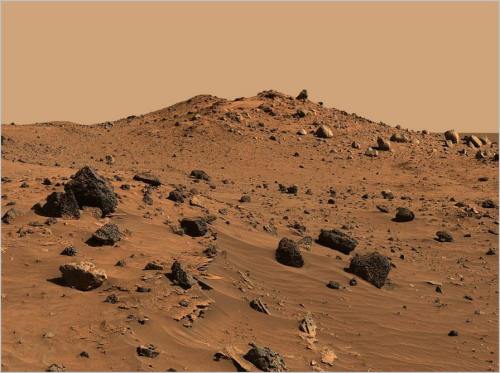 An image of Mars Surface
.
.
Click the link below for images:
.
__________________________________________
February 28, 2022
Mohenjo
Business, Enthralling, Human Interest, Photographs
amazon, business, Business News, current-events, Future, Hotels, human-rights, medicine, mental-health, research, Science, Science News, technology, Technology News, travel, vacation
Click the link below the picture
.
Quebec is one of the thirteen provinces and territories of Canada. It is the largest province by area and the second-largest by population. Much of the population lives in urban areas along the St. Lawrence River, between the most populous city, Montreal, and the provincial capital, Quebec City. Quebec is the home of the Québécois nation. Located in Central Canada, the province shares land borders with Ontario to the west, Newfoundland, and Labrador to the northeast, New Brunswick to the southeast, and a coastal border with Nunavut; in the south, it borders Maine, New Hampshire, Vermont, and New York in the United States.
Between 1534 and 1763, Quebec was called Canada and was the most developed colony in New France. Following the Seven Years’ War, Quebec became a British colony: first as the Province of Quebec (1763–1791), then Lower Canada (1791–1841), and lastly Canada East (1841–1867), as a result of the Lower Canada Rebellion. It was confederated with Ontario, Nova Scotia, and New Brunswick in 1867, beginning the Canadian Confederation. Until the early 1960s, the Catholic Church played a large role in the social and cultural institutions in Quebec. However, the Quiet Revolution of the 1960s to 1980s increased the role of the Government of Quebec in l’État québécois (state of Quebec).
The Constitution Act, 1867 created the present-day Government of Quebec, which functions within the context of a Westminster system and is both a liberal democracy and a constitutional monarchy with a parliamentary system. The Premier of Quebec, presently François Legault, acts as head of government. Québécois political culture mostly differs on a nationalist-vs-federalist continuum, rather than a left-vs-right continuum. Quebec independence debates have played a large role in politics. Quebec society’s cohesion and specificity is based on three of its unique statutory documents: the Quebec Charter of Human Rights and Freedoms, the Charter of the French Language, and the Civil Code of Quebec. Furthermore, unlike elsewhere in Canada, law in Quebec is mixed: private law is exercised under a civil-law system, while public law is exercised under a common-law system.
Quebec’s official language is French; Québécois French is the local variety. The economy of Quebec is diversified and post-industrial. Quebec’s substantial natural resources, notably exploited in hydroelectricity, forestry, and mining, have also long been a mainstay. Quebec is well known for producing maple syrup, for its comedy, and for making hockey one of the most popular sports in Canada. It is also renowned for its culture; the province produces literature, music, films, TV shows, festivals, folklore, and more.
The name Québec comes from an Algonquin word meaning ‘narrow passage’ or ‘strait’. The name originally referred to the area around Quebec City where the Saint Lawrence River narrows to a cliff-lined gap. Early variations in the spelling included Québecq and Kébec. French explorer Samuel de Champlain chose the name Québec in 1608 for the colonial outpost he would use as the administrative seat for New France. Wikipedia
.
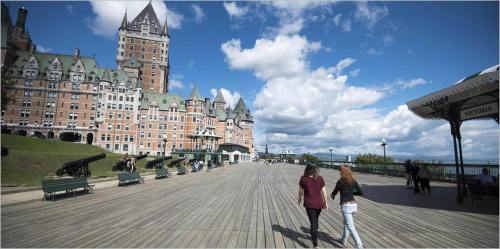 An image from Québec
.
.
Click the link below for images:
.
__________________________________________
February 26, 2022
Mohenjo
Business, Enthralling, Human Interest, Photographs
amazon, business, Business News, current-events, Future, Hotels, human-rights, medicine, mental-health, research, Science, Science News, technology, Technology News, travel, vacation
Click the link below the picture
.
Ceroxylon quindiuense, often called Quindío wax palm, is a palm native to the humid montane forests of the Andes in Colombia and northern Peru.
This palm species can grow to a height of 45 m (148 ft) —or rarely, even as high as 60 m (200 ft). It is the tallest recorded monocot in the world. The trunk is cylindrical, smooth, light-colored, covered with wax; leaf scars forming dark rings around the trunk. The leaves are dark green and grayish, 185–540 cm (6.1–17.7 ft) long, with a petiole up to 80 cm (31 in). Fruits are globose and orange-red when ripe, 1.6–2 cm (0.6–0.8 in) in diameter. Ceroxylon quindiuense was described by Gustav Karl Wilhelm Hermann Karsten and published in Bonplandia (Hannover) 8: 70. (1860).
Ceroxylon: generic name composed of the Greek words: kèròs = “wax” and xγlon = “wood”, in reference to the thick white wax found on the trunks.
quindiuense: geographical epithet alluding to its location in Quindío.
It grows in large and dense populations along the central and eastern Andes of Colombia (rarely in the western Colombian Andes), with a disjunct distribution in the Andes of northern Peru. The elevational range of this species is between 2,000 and 3,100 m (6,600 and 10,200 ft) above sea level. It achieves a minimum reproductive age at 80 years. Wax palms provide habitats for many unique life forms, including endangered species such as the yellow-eared parrot (Ognorhynchus icterotis). Populations of Ceroxylon quindiuense are threatened by habitat disturbance, overharvesting, and diseases. The fruit was used as feed for cattle and pigs. The leaves were extensively used in the Catholic celebrations of Palm Sunday; such leaves coming from young individuals which were damaged to death. That activity has been reduced severely in recent years due to law enforcement and widespread campaign. Felling of Ceroxylon quindiuense palms to obtain wax from the trunk also is an activity still going on in Colombia and Peru. The palm is recognized as the national tree of Colombia, and since the implementation of Law 61 of 1985, it is legally a protected species in that country. Wikipedia
.
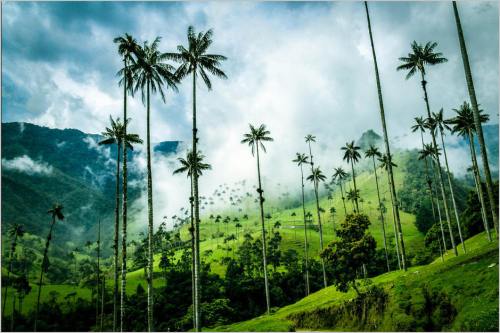 An image of Wax Palm Trees Colombia
.
.
Click the link below for images:
.
__________________________________________
February 25, 2022
Mohenjo
Business, Enthralling, Human Interest, Photographs
amazon, business, Business News, current-events, Future, Hotels, human-rights, medicine, mental-health, research, Science, Science News, technology, Technology News, travel, vacation
Click the link below the picture
.
Greece, officially the Hellenic Republic, is a country located in Southeastern Europe. Its population is approximately 10.7 million as of 2021; Athens is its largest and capital city, followed by Thessaloniki. Situated on the southern tip of the Balkans, Greece is located at the crossroads of Europe, Asia, and Africa. It shares land borders with Albania to the northwest, North Macedonia and Bulgaria to the north, and Turkey to the northeast. The Aegean Sea lies to the east of the mainland, the Ionian Sea to the west, the Cretan Sea, and the Mediterranean Sea to the south. Greece has the longest coastline on the Mediterranean Basin and the 11th longest coastline in the world at 13,676 km (8,498 mi) in length, featuring many islands, of which 227 are inhabited. Eighty percent of Greece is mountainous, with Mount Olympus being the highest peak at 2,918 meters (9,573 ft). The country consists of nine traditional geographic regions: Macedonia, Central Greece, the Peloponnese, Thessaly, Epirus, the Aegean Islands (including the Dodecanese and Cyclades), Thrace, Crete, and the Ionian Islands.
Greece is considered the cradle of Western civilization, being the birthplace of democracy, Western philosophy, Western literature, historiography, political science, major scientific and mathematical principles, theatre, and the Olympic Games. From the eighth century BC, the Greeks were organized into various independent city-states, known as poleis (singular polis), which spanned the Mediterranean and the Black Sea. Philip II of Macedon united most of present-day Greece in the fourth century BC, with his son Alexander the Great rapidly conquering much of the ancient world, from the eastern Mediterranean to India. The subsequent Hellenistic period saw the height of Greek culture and influence in antiquity. Greece was annexed by Rome in the second century BC, becoming an integral part of the Roman Empire and its continuation, the Byzantine Empire, which was culturally and linguistically predominantly Greek. The Greek Orthodox Church, which emerged in the first century AD, helped shape modern Greek identity and transmitted Greek traditions to the wider Orthodox world. After falling under Ottoman rule in the mid-15th century, Greece emerged as a modern nation-state in 1830 following a war of independence. The country’s rich historical legacy is reflected in part by its 18 UNESCO World Heritage Sites.
Greece is a unitary parliamentary republic, and a developed country, with an advanced high-income economy, and a high quality of life, ranking simultaneously very high in the Human Development Index. Its economy is the largest in the Balkans, where it is an important regional investor. A founding member of the United Nations, Greece was the tenth member to join the European Communities (precursor to the European Union) and has been part of the Eurozone since 2001. It is also a member of numerous other international institutions, including the Council of Europe, the North Atlantic Treaty Organization (NATO), the Organisation for Economic Co-operation and Development (OECD), the World Trade Organization (WTO), the Organization for Security and Co-operation in Europe (OSCE), and the Organisation internationale de la Francophonie (OIF). Greece’s unique cultural heritage, large tourism industry, prominent shipping sector and geostrategic importance classify it as a middle power. Wikipedia
.
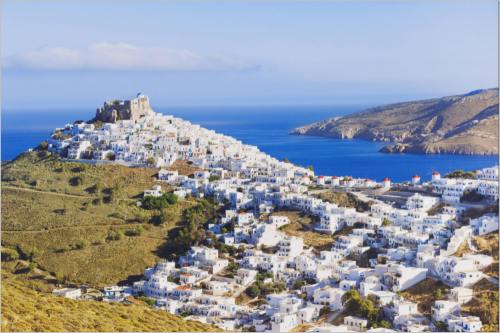 An image from Greece
.
.
Click the link below for images:
.
__________________________________________
February 24, 2022
Mohenjo
Business, Enthralling, Human Interest, Photographs
amazon, business, Business News, current-events, Future, Hotels, human-rights, medicine, mental-health, research, Science, Science News, technology, Technology News, travel, vacation
Click the link below the picture
.
Montrouis is a coastal communal section in Haiti, located in the department of Artibonite, south of Saint-Marc. Montrouis is one of the most important beach tourism destinations in Haiti, with several well-renowned hotels and resorts, including the Moulin-sur-Mer. The town is located on the Côtes-des-Arcadins, one of Haiti’s longest stretches of pure white sand beaches. It is also an exceptional place for sailing and fishing. Wikipedia
.
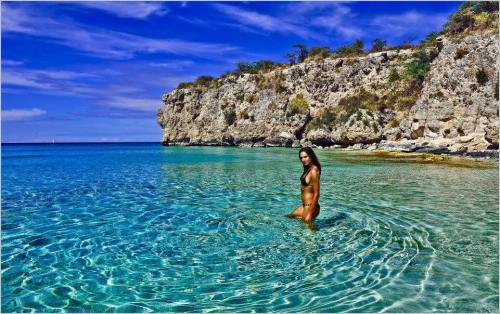 An image from Montrouis, Haiti
.
.
Click the link below for images:
.
__________________________________________
February 23, 2022
Mohenjo
Business, Enthralling, Human Interest, Photographs
amazon, business, Business News, current-events, Future, Hotels, human-rights, medicine, mental-health, research, Science, Science News, technology, Technology News, travel, vacation
Click the link below the picture
.
Phnom Penh is the capital and most populous city of Cambodia. It has been the national capital since the French protectorate of Cambodia and has grown to become the nation’s economic, industrial, and cultural center.
Phnom Penh was founded in 1434 to succeed Angkor Thom as the capital of the Khmer nation but was abandoned several times before being reestablished in 1865 by King Norodom. The city formerly functioned as a processing center, with textiles, pharmaceuticals, machine manufacturing, and rice milling. Its chief assets, however, were cultural. Institutions of higher learning included the Royal University of Phnom Penh (established in 1960 as Royal Khmer University), with schools of engineering, fine arts, technology, and agricultural sciences, the latter at Chamkar Daung, a suburb. Also located in Phnom Penh were the Royal University of Agronomic Sciences and the Agricultural School of Prek Leap.
Once known as the “Pearl of Asia”, it was considered one of the loveliest French-built cities in Indochina in the 1920s. Phnom Penh, along with Siem Reap and Sihanoukville, are significant global and domestic tourist destinations for Cambodia. Founded in 1372, the city is noted for its historical architecture and attractions. It became the national capital in 1434 following the fall of Angkor and remained so until 1497. It regained its capital status during the French colonial era in 1865. There are a number of surviving colonial-era buildings scattered along the grand boulevards.
On the banks of the Tonlé Sap, Mekong, and Bassac Rivers, Phnom Penh is home to more than 2 million people, approximately 14% of the Cambodian population. The Greater Phnom Penh area includes the nearby Ta Khmau city and some districts of Kandal province.
Phnom Penh (lit. ‘Penh’s Hill’) takes its name from the present Wat Phnom (lit. ‘Hill Temple’) or from the former Funan Kingdom, an ancient kingdom that existed from 1st to 6th century AD in Southeast Asia and the forerunner of the current Cambodian monarchy. Legend has it that in 1372, a wealthy widow named Penh found a Koki tree floating down the Tonlé Sap river after a storm. Inside the tree were four bronze Buddha statues and a stone statue of Vishnu. Penh ordered villagers to raise the height of the hill northeast of her house and used the Koki wood to build a temple on the hill to house the four Buddha statues, and a shrine for the Vishnu image slightly lower down. The temple became known as Wat Phnom Daun Penh, which is now known as Wat Phnom, a small hill 27 meters (89 ft) in height.
.
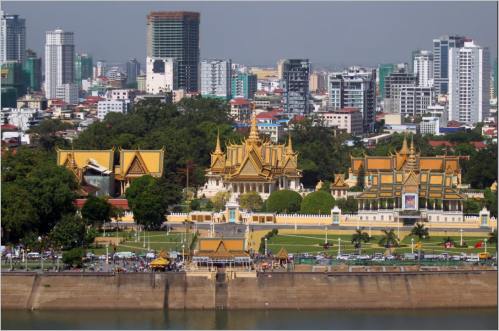 An image from Phnom Penh
.
.
Click the link below for images:
.
__________________________________________
February 22, 2022
Mohenjo
Business, Enthralling, Human Interest, Photographs
amazon, business, Business News, current-events, Future, Hotels, human-rights, medicine, mental-health, research, Science, Science News, technology, Technology News, travel, vacation
Click the link below the picture
.
The Bactrian camel, also known as the Mongolian camel or domestic Bactrian camel, is a large even-toed ungulate native to the steppes of Central Asia. It has two humps on its back, in contrast to the single-humped dromedary camel. Its population of two million exists mainly in the domesticated form. Their name comes from the ancient historical region of Bactria.
Domesticated Bactrian camels have served as pack animals in inner Asia since ancient times. With its tolerance for cold, drought, and high altitudes, it enabled the travel of caravans on the Silk Road. Bactrian camels, whether domesticated or feral, are a separate species from the wild Bactrian camel, which is the only truly wild (as opposed to feral) species of camel in the world.
The Bactrian camel shares the genus Camelus with the dromedary (C. dromedarius) and the wild Bactrian camel (C. ferus). The Bactrian camel belongs to the family Camelidae. The ancient Greek philosopher Aristotle was the first European to describe the species of Camelus: in his 4th-century-BC History of Animals, he identified the one-humped Arabian camel and the two-humped Bactrian camel. The Bactrian camel was given its current binomial name Camelus bactrianus by Swedish zoologist Carl Linnaeus in his 1758 publication Systema Naturae.
In 2007, Peng Cui (of the Chinese Academy of Sciences) and colleagues carried out a phylogenetic study of the evolutionary relationships between the two tribes of Camelidae: Camelini—consisting of the three Camelus species (the study considered the wild Bactrian camel as a subspecies of the Bactrian camel)—and Lamini—consisting of the alpaca (Vicugna pacos), the guanaco (Lama guanicoe), the llama (L. glama) and the vicuña (V. vicugna). The study revealed that the two tribes had diverged 25 million years ago (early Miocene), notably earlier than what had been previously estimated from North American fossils. Speciation began first in Lamini as the alpaca came into existence 10 million years ago. Nearly two million years later, the Bactrian camel and the dromedary emerged as two independent species. However, the fossil record suggests a far more recent divergence between the Bactrian camel and the dromedary because, despite a moderately rich fossil record of camelids, no fossil that fits within this divergence is older than middle Pleistocene (about 0.8 Ma). Wikipedia
.
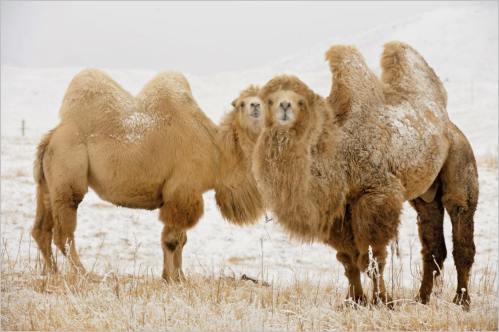 An image of Bactrian Camels
.
.
Click the link below for images:
.
__________________________________________
Older Entries
Newer Entries
 James' World 2