April 20, 2022
Mohenjo
Business, Enthralling, Human Interest, Photographs
amazon, business, Business News, current-events, Future, Hotels, human-rights, medicine, mental-health, research, Science, Science News, technology, Technology News, travel, vacation

Click the link below the picture
.
Montreal officially Montréal, is the second-most populous city in Canada and most populous city in the Canadian province of Quebec. Founded in 1642 as Ville-Marie, or “City of Mary” it is named after Mount Royal, the triple-peaked hill around which the early city of Ville-Marie is built. The city is centered on the Island of Montreal, which obtained its name from the same origin as the city, and a few much smaller peripheral islands, the largest of which is Île Bizard. The city is situated 196 km (122 mi) east of the national capital Ottawa, and 258 km (160 mi) southwest of the provincial capital, Quebec City.
As of 2021, the city had a population of 1,762,949, and a metropolitan population of 4,291,732, making it the second-largest city, and second-largest metropolitan area in Canada. French is the city’s official language and in 2016 was the only home language of 53.7% of the population, while 18.2% spoke only English and 18.7% spoke neither French nor English at home. 9.4% spoke a mix of French, English, and a foreign language at home. In the larger Montreal Census Metropolitan Area, 71.2% of the population spoke at least French at home, compared to 19.0% who spoke English. Still, in 2016, 87.4% of the population of the city of Montreal considered themselves fluent in French while 91.4% could speak it in the metropolitan area. Montreal is one of the most bilingual cities in Quebec and Canada, with 57.4% of the population able to speak both English and French. Montreal is the second-largest primarily French-speaking city in the developed world, after Paris.
Historically the commercial capital of Canada, Montreal was surpassed in population and in economic strength by Toronto in the 1970s. It remains an important center of commerce, aerospace, transport, finance, pharmaceuticals, technology, design, education, art, culture, tourism, food, fashion, video game development, film, and world affairs. Montreal has the second-highest number of consulates in North America, serves as the location of the headquarters of the International Civil Aviation Organization, and was named a UNESCO City of Design in 2006. In 2017, Montreal was ranked the 12th-most liveable city in the world by the Economist Intelligence Unit in its annual Global Liveability Ranking, although it slipped to rank 40 in the 2021 index, primarily due to stress on the healthcare system from the COVID-19 pandemic. It is regularly ranked as a top ten city in the world to be a university student in the QS World University Rankings.
Montreal has hosted multiple international conferences and events, including the 1967 International and Universal Exposition and the 1976 Summer Olympics. It is the only Canadian city to have held the Summer Olympics. In 2018, Montreal was ranked as a global city. The city hosts the Canadian Grand Prix of Formula One since 1978, as well as the Montreal International Jazz Festival, the largest jazz festival in the world, the Just for Laughs festival, the largest comedy festival in the world, and Les Francos de Montréal, which is the largest event devoted exclusively to French-language music anywhere in the world. It is also home to ice hockey team Montreal Canadiens, the franchise with the most Stanley Cup wins. Wikipedia
.
 An image from Montreal Quebec Canada
.
.
Click the link below for images:
.
__________________________________________
April 19, 2022
Mohenjo
Business, Enthralling, Human Interest, Photographs
amazon, business, Business News, current-events, Future, Hotels, human-rights, medicine, mental-health, research, Science, Science News, technology, Technology News, travel, vacation
Click the link below the picture
.
Mount Rainier National Park is an American national park located in southeast Pierce County and northeast Lewis County in Washington state. The park was established on March 2, 1899, as the fourth national park in the United States, preserving 236,381 acres (369.3 sq mi; 956.6 km2) including all of Mount Rainier, a 14,410-foot (4,390 m) stratovolcano. The mountain rises abruptly from the surrounding land with elevations in the park ranging from 1,600 feet to over 14,000 feet (490–4,300 m). The highest point in the Cascade Range, Mount Rainier is surrounded by valleys, waterfalls, subalpine meadows, and 91,000 acres (142.2 sq mi; 368.3 km2) of old-growth forest. More than 25 glaciers descend the flanks of the volcano, which is often shrouded in clouds that dump enormous amounts of rain and snow.
Mount Rainier is circled by the Wonderland Trail and is covered by glaciers and snowfields totaling about 35 square miles (91 km2). Carbon Glacier is the largest glacier by volume in the contiguous United States, while Emmons Glacier is the largest glacier by area. Mount Rainier is a popular peak for mountaineering with some 10,000 attempts per year with approximately 50% making it to the summit.
The purpose of Mount Rainier National Park is to protect and preserve unimpaired the majestic icon of Mount Rainier, a glaciated volcano, along with its natural and cultural resources, values, and dynamic processes. The park provides opportunities for people to experience, understand, and care for the park environment, and also provides for wilderness experiences and sustains wilderness values. Ninety-seven percent of the park is preserved as wilderness under the National Wilderness Preservation System as Mount Rainier Wilderness, a designation it received in 1988. It is abutted by the Tatoosh, Clearwater, Glacier View, and William O. Douglas Wildernesses. The park was designated a National Historic Landmark on February 18, 1997, as a showcase for the National Park Service Rustic style architecture of the 1920s and 1930s, exemplified by the Paradise Inn and a masterpiece of early NPS master planning. As a Historic Landmark district, the park was administratively listed on the National Register of Historic Places. Wikipedia
.
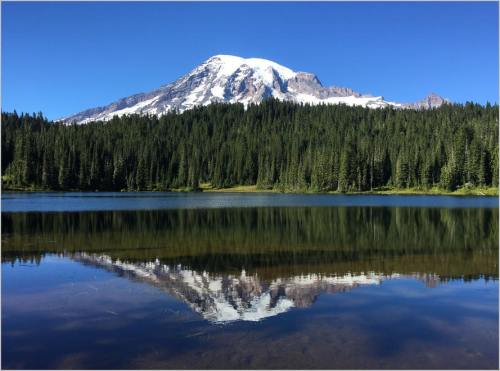 An image from Mount rainier national park washington state
.
.
Click the link below for article:
.
__________________________________________
April 18, 2022
Mohenjo
Business, Enthralling, Human Interest, Photographs
amazon, business, Business News, current-events, Future, Hotels, human-rights, medicine, mental-health, research, Science, Science News, technology, Technology News, travel, vacation
Click the link below the picture
.
Slovakia, officially the Slovak Republic, is a landlocked country in Central Europe. It is bordered by Poland to the north, Ukraine to the east, Hungary to the south, Austria to the southwest, and the Czech Republic to the northwest. Slovakia’s mostly mountainous territory spans about 49,000 square kilometers (19,000 sq mi), with a population of over 5.4 million. The capital and largest city is Bratislava, while the second-largest city is Košice.
The Slavs arrived in the territory of present-day Slovakia in the fifth and sixth centuries. In the seventh century, they played a significant role in the creation of Samo’s Empire. In the ninth century, they established the Principality of Nitra, which was later conquered by the Principality of Moravia to establish Great Moravia. In the tenth century, after the dissolution of Great Moravia, the territory was integrated into the Principality of Hungary, which would then become the Kingdom of Hungary in 1000. In 1241 and 1242, after the Mongol invasion of Europe, much of the territory was destroyed. The area was recovered largely thanks to Béla IV of Hungary, who also settled Germans, leading them to become an important ethnic group in the area, especially in what are today parts of central and eastern Slovakia.
After World War, I and the dissolution of the Austro-Hungarian Empire, the state of Czechoslovakia was established. It was the only country in central and eastern Europe to remain a democracy during the interwar period. Nevertheless, local fascist parties gradually came to power in the Slovak lands, and the first Slovak Republic existed during World War II as a partially-recognized client state of Nazi Germany. At the end of World War II, Czechoslovakia was re-established as an independent country. After a coup in 1948, Czechoslovakia came under communist administration and became a part of the Soviet-led Eastern Bloc. Attempts to liberalize communism in Czechoslovakia culminated in the Prague Spring, which was crushed by the Warsaw Pact invasion of Czechoslovakia in August 1968. In 1989, the Velvet Revolution peacefully ended the Communist rule in Czechoslovakia. Slovakia became an independent state on 1 January 1993 after the peaceful dissolution of Czechoslovakia, sometimes known as the Velvet Divorce.
Slovakia is a developed country with an advanced high-income economy, ranking very high in the Human Development Index. It also performs favorably in measurements of civil liberties, press freedom, internet freedom, democratic governance, and peacefulness. The country maintains a combination of a market economy with a comprehensive social security system, providing citizens with a universal health care, free education, and one of the longest paid parental leaves in the OECD. Slovakia is a member of the European Union, the Eurozone, the Schengen Area, the United Nations, NATO, CERN, the OECD, the WTO, the Council of Europe, the Visegrád Group, and the OSCE. Slovakia is also home to eight UNESCO World Heritage Sites. It is the world’s largest per-capita car producer; it manufactured a total of 1.1 million cars in 2019, representing 43% of its total industrial output. Wikipedia
.
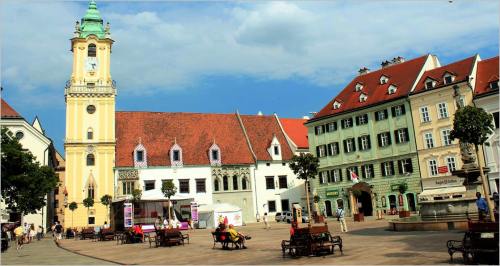 An image from Slovakia Country
.
.
Click the link below for images:
.
__________________________________________
April 16, 2022
Mohenjo
Business, Enthralling, Human Interest, Photographs
amazon, business, Business News, current-events, Future, Hotels, human-rights, medicine, mental-health, research, Science, Science News, technology, Technology News, travel, vacation
Click the link below the picture
.
Sardinia is the second-largest island in the Mediterranean Sea, after Sicily, and one of the 20 regions of Italy. It is located west of the Italian Peninsula, north of Tunisia, and immediately south of the French island of Corsica.
It is one of the five Italian regions with some degree of domestic autonomy being granted by a special statute. Its official name, Autonomous Region of Sardinia, is bilingual in Italian and Sardinian. It is divided into four provinces and a metropolitan city. The capital of the region of Sardinia — and its largest city — is Cagliari.
Sardinia’s indigenous language and Algherese Catalan are referred to by both the regional and national law as two of Italy’s twelve officially recognized linguistic minorities, albeit gravely endangered, while the regional law provides some measures to recognize and protect the aforementioned as well as the island’s other minority languages (the Corsican-influenced Sassarese and Gallurese, and finally Tabarchino Ligurian).
Owing to the variety of Sardinia’s ecosystems, which include mountains, woods, plains, stretches of largely uninhabited territory, streams, rocky coasts, and long sandy beaches, Sardinia has been metaphorically described as a micro-continent. In the modern era, many travelers and writers have extolled the beauty of its long-untouched landscapes, which retain vestiges of the Nuragic civilization.
The name Sardinia has pre-Latin roots. It comes from the pre-Roman ethnonym *s(a)rd-, later romanised as sardus (feminine sarda). It makes its first appearance on the Nora Stone, where the word ŠRDN, or *Šardana, testifies to the name’s existence when the Phoenician merchants first arrived.
According to Timaeus, one of Plato’s dialogues, Sardinia (referred to by most ancient Greek authors as Sardṓ, Σαρδώ) and its people as well might have been named after a legendary woman going by Sardṓ (Σαρδώ), born in Sardis (Σάρδεις), capital of the ancient Kingdom of Lydia. There has also been speculation that identifies the ancient Nuragic Sards with the Sherden, one of the Sea Peoples. It is suggested that the name had a religious connotation from its use also as the adjective for the ancient Sardinian mythological hero-god Sardus Pater (“Sardinian Father” or “Father of the Sardinians”), as well as being the stem of the adjective “sardonic”. Wikipedia
.
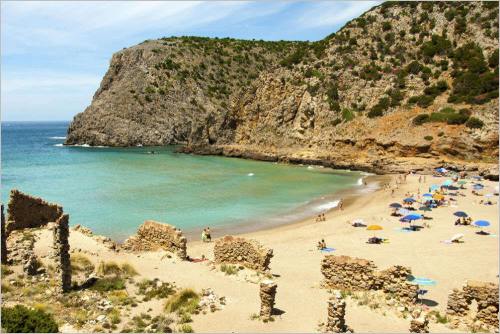 An image from Punta Molentis Sardinia
.
.
Click the link below for images:
.
__________________________________________
April 15, 2022
Mohenjo
Business, Enthralling, Human Interest, Photographs
amazon, business, Business News, current-events, Future, Hotels, human-rights, medicine, mental-health, research, Science, Science News, technology, Technology News, travel, vacation
Click the link below the picture
.
The muskox also spelled musk ox and musk-ox, plural muskoxen or musk oxen, is a hoofed mammal of the family Bovidae. Native to the Arctic, it is noted for its thick coat and for the strong odor emitted by males during the seasonal rut, from which its name derives. This musky odor has the effect of attracting females during mating season. Its Inuktitut name “umingmak” translates to “the bearded one”. Its Woods Cree names “mâthi-môs” and “mâthi-mostos” translate to “ugly moose” and “ugly bison”, respectively. Muskoxen primarily live in Greenland and the Canadian Arctic of the Northwest Territories and Nunavut, with reintroduced populations in the American state of Alaska, the Canadian territory of Yukon, and Siberia, and an introduced population in Norway, part of which emigrated to Sweden, where a small population now lives.
The muskox is in the subtribe Ovibovina (or tribe Ovibovini) in the tribe Caprini (or subfamily Caprinae) of the subfamily Antilopinae in the family Bovidae. It is more closely related to sheep and goats than to oxen; it is placed in its own genus, Ovibos (Latin: “sheep-ox”). It is one of the two largest extant members of the caprines, along with the similarly sized takin. While the takin and muskox were once considered possibly closely related, the takin lacks common ovibovine features, such as the muskox’s specialized horn morphology, and genetic analysis shows that their lineages actually separated early in caprine evolution. Instead, the muskox’s closest living relatives appear to be the gorals of the genus Naemorhedus, nowadays common in many countries of central and east Asia. The vague similarity between takin and muskox is therefore an example of convergent evolution. Wikipedia
.
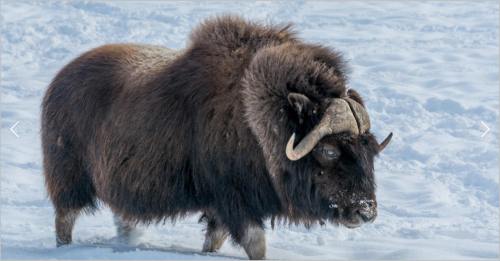 An image of a Muskox
.
.
Click the link below for images:
.
__________________________________________
April 14, 2022
Mohenjo
Business, Enthralling, Human Interest, Photographs
amazon, business, Business News, current-events, Future, Hotels, human-rights, medicine, mental-health, research, Science, Science News, technology, Technology News, travel, vacation
Click the link below the picture
.
The Seward Peninsula is a large peninsula on the western coast of the U.S. state of Alaska whose westernmost point is Cape Prince of Wales. The peninsula projects about 200 mi (320 km) into the Bering Sea between Norton Sound, the Bering Strait, the Chukchi Sea, and Kotzebue Sound, just below the Arctic Circle. The entire peninsula is about 210 mi (330 km) long and 90–140 mi (145–225 km) wide. Like Seward, Alaska, it was named after William H. Seward, the United States Secretary of State who fought for the U.S. purchase of Alaska.
The Seward Peninsula is a remnant of the Bering land bridge, a roughly thousand-mile-wide swath of land connecting Siberia with mainland Alaska during the Pleistocene Ice Age. This land bridge aided in the migration of humans, as well as plant and animal species, from Asia to North America. Excavations at sites such as the Trail Creek Caves and Cape Espenberg in the Bering Land Bridge National Preserve as well as Cape Denbigh to the south have provided insight into the timeline of prehistorical migrations from Asia to the Seward Peninsula.
Other locations on the Seward Peninsula include the mining towns of Council, Solomon, Candle, Haycock, and Taylor. While still frequented by locals of neighboring communities, there are no longer year-round residents in these locations. There is a United States Coast Guard LORAN station at Port Clarence. The U.S. Air Force operates a radar station at the “Tin City” site, 7 mi (11 km) southeast of Wales. The Seward Peninsula has several distinct geologic features. The Devil Mountain Lakes on the northern portion of the peninsula are the largest maar lakes in the world and part of the Espenberg volcanic field. They were formed over 21,000 years ago as the result of an underground steam explosion. The Killeak Lakes and White Fish Lake are also volcanic maar lakes of notable size on the northern Seward Peninsula. Four mountain ranges line the southern side of the peninsula, the most prominent being the Kigluaik (or Sawtooth) Mountains. The highest point in the range and the peninsula is the peak of 4,714 ft (1,437 m) Mount Osborn. Other mountain ranges on the Seward Peninsula include the Bendeleben Mountains, Darby Mountains, and York Mountains. The Bendeleben Mountains exhibit evidence of recent faulting in the late Cenozoic, with the majority of tectonic deformation and mountain formation occurring in the Cretaceous, which is attributed to regional tectonic block rotation of the Bering plate in the Arctic. The Lost Jim Lava Flow north of Kuzitrin Lake is a lava field formed roughly 1,000 to 2,000 years ago, which covers roughly 88 sq mi (230 km2). Wikipedia
.
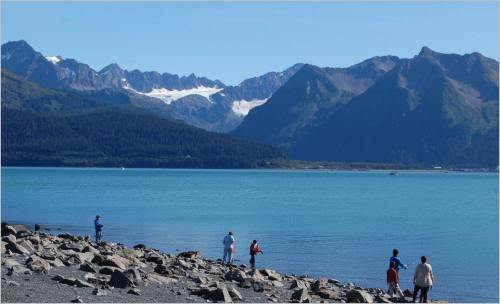 An image from Seward Peninsula Alaska
.
.
Click the link below for images:
.
__________________________________________
April 13, 2022
Mohenjo
Business, Enthralling, Human Interest, Photographs
amazon, business, Business News, current-events, Future, Hotels, human-rights, medicine, mental-health, research, Science, Science News, technology, Technology News, travel, vacation
Click the link below the picture
.
Vancouver is a major city in western Canada, located in the Lower Mainland region of British Columbia. As the most populous city in the province, the 2021 census recorded 662,248 people in the city, up from 631,486 in 2016. The Greater Vancouver area had a population of 2,642,825 in 2021, making it the third-largest metropolitan area in Canada. Vancouver has the highest population density in Canada, with over 5,400 people per square kilometer. Vancouver is one of the most ethnically and linguistically diverse cities in Canada: 52 percent of its residents are not native English speakers, 48.9 percent are native speakers of neither English nor French, and 50.6 percent of residents belong to visible minority groups.
Vancouver is one of the most livable cities in Canada and in the world. In terms of housing affordability, Vancouver is also one of the most expensive cities in Canada and in the world. Vancouver plans to become the greenest city in the world. Vancouverism is the city’s urban planning design philosophy.
Indigenous settlement of Vancouver began more than 10,000 years ago, and the city is on the traditional and unceded territories of the Squamish, Musqueam, and Tsleil-Waututh (Burrard) peoples. The beginnings of the modern city, which was originally named Gastown, grew around the site of a makeshift tavern on the western edges of Hastings Mill that was built on July 1, 1867, and owned by proprietor Gassy Jack. The original site is marked by the Gastown steam clock. Gastown then formally registered as a townsite dubbed Granville, Burrard Inlet. The city was renamed “Vancouver” in 1886, through a deal with the Canadian Pacific Railway (CPR). The Canadian Pacific transcontinental railway was extended to the city by 1887. The city’s large natural seaport on the Pacific Ocean became a vital link in the trade between Asia-Pacific, East Asia, Europe, and Eastern Canada.
Vancouver has hosted many international conferences and events, including the 1954 Commonwealth Games, UN-Habitat I, Expo 86, APEC Canada 1997, the World Police and Fire Games in 1989 and 2009; several matches of 2015 FIFA Women’s World Cup including the finals at BC Place in Downtown Vancouver, and the 2010 Winter Olympics and Paralympics which were held in Vancouver and Whistler, a resort community 125 km (78 mi) north of the city. In 1969, Greenpeace was founded in Vancouver. The city became the permanent home to TED conferences in 2014.
As of 2016, Port Metro Vancouver is the fourth-largest port by tonnage in the Americas, the busiest and largest in Canada, and the most diversified port in North America. While forestry remains its largest industry, Vancouver is well known as an urban center surrounded by nature, making tourism its second-largest industry. Major film production studios in Vancouver and nearby Burnaby have turned Greater Vancouver and nearby areas into one of the largest film production centers in North America, earning it the nickname “Hollywood North”. Wikipedia
.
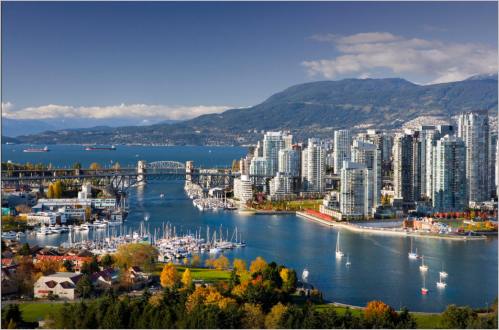 An image from Vancouver Canada
.
.
Click the link below for images:
.
__________________________________________
April 12, 2022
Mohenjo
Business, Enthralling, Human Interest, Photographs
amazon, business, Business News, current-events, Future, Hotels, human-rights, medicine, mental-health, research, Science, Science News, technology, Technology News, travel, vacation
Click the link below the picture
.
Gold Harbour is a small bay 5 miles (8 km) south-southwest of Cape Charlotte, with Bertrab Glacier at its head, along the east end of South Georgia. During the early 1900s, the feature was variously called “Anna’s Bay”, “Gold-Hafen” or “Sandwich Bay”; the latter name has also been used for Iris Bay. The approved name appears to have taken root through common usage by sealers and whalers and is now well established.
Gold Harbour is so-called because the sun’s rays make the cliffs yellow with their light in the morning and evening. There is no particular historical or geological reason to give Gold Harbour its mineral name, which was in common use among the early sealers. Perhaps they were inspired by the sunsets.
The area is a breeding ground for penguins include King penguins and Gentoo penguins, and Southern elephant seals also breed here, especially at the west end of the beach, where a glacial stream flows. Light-mantled albatrosses also breed here. Wikipedia
.
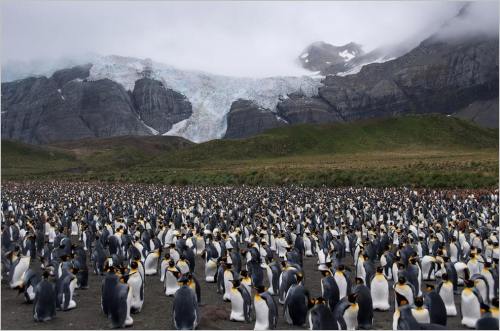 An image from Gold Harbour South Georgia Island
.
.
Click the link below for images:
.
__________________________________________
April 11, 2022
Mohenjo
Business, Enthralling, Human Interest, Photographs
amazon, business, Business News, current-events, Future, Hotels, human-rights, medicine, mental-health, research, Science, Science News, technology, Technology News, travel, vacation
Click the link below the picture
.
Austria, officially the Republic of Austria, is a country in the southern part of Central Europe. It is a federation of nine states, one of which is the capital Vienna, the largest city and state by population. The country is bordered by Germany to the northwest, the Czech Republic to the north, Slovakia to the northeast, Hungary to the east, Slovenia and Italy to the south, and Switzerland and Liechtenstein to the west. It occupies a landlocked area of 83,879 km2 (32,386 sq mi) and has a population of roughly 9 million people.
Austria emerged from the remnants of the Eastern and Hungarian March at the end of the first millennium. Originally a margraviate of Bavaria, it later developed into a duchy of the Holy Roman Empire in 1156, and then an archduchy in 1453. As of the 16th century, Vienna began serving as the administrative imperial capital and Austria thus became the heartland of the Habsburg monarchy. Following the Empire’s dissolution in 1806, Austria established its own empire, which became a great power and the dominant member of the German Confederation. The Austrian Empire’s defeat in the Austro-Prussian War of 1866 lead to the end of the Confederation and paved the way for the establishment of Austria-Hungary a year later.
Following the assassination of Archduke Franz Ferdinand in 1914, Emperor Franz Joseph declared war on Serbia, which ultimately escalated into World War I. The Empire’s defeat and subsequent collapse led to the proclamation of the Republic of German-Austria in 1918 and later the First Austrian Republic in 1919. During the interwar period, anti-parliamentarian sentiments culminated in the formation of an Austrofascist dictatorship under Engelbert Dollfuss in 1934. A year before the outbreak of World War II, Austria was annexed into Nazi Germany by Adolf Hitler, and it became a sub-national division. Following its liberation in 1945 and an extended period of Allied occupation, the country regained its sovereignty and declared its perpetual neutrality in 1955.
Austria is a parliamentary representative democracy with a popularly elected president as head of state and a chancellor as head of government and chief executive. Major urban areas include Vienna, Graz, Linz, Salzburg, and Innsbruck. Austria is consistently listed as one of the richest countries in the world by GDP per capita, one of the countries with the highest standard of living, and was ranked 18th in the world for its Human Development Index in 2020.
Austria has been a member of the United Nations since 1955 and of the European Union since 1995. It plays host to the OSCE and OPEC and is a founding member of the OECD and Interpol. It also signed the Schengen Agreement in 1995 and adopted the euro currency in 1999. Wikipedia
.
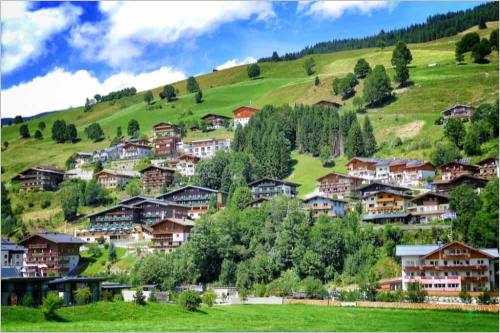 An image from Austria
.
.
Click the link below for images:
.
__________________________________________
April 9, 2022
Mohenjo
Business, Enthralling, Human Interest, Photographs
amazon, business, Business News, current-events, Future, Hotels, human-rights, medicine, mental-health, research, Science, Science News, technology, Technology News, travel, vacation
Click the link below the picture
.
A geopark is a unified area that advances the protection and use of geological heritage in a sustainable way, and promotes the economic well-being of the people who live there. There are global geoparks and national geoparks.A UNESCO definition of global geopark is a unified area with a geological heritage of international significance. Geoparks use that heritage to promote awareness of key issues facing society in the context of our dynamic planet. Many geoparks promote awareness of geological hazards, including volcanoes, earthquakes and tsunamis and many help prepare disaster mitigation strategies with local communities. Geoparks embody records of past climate changes and are indicators of current climate changes as well as demonstrating a “best practise” approach to using renewable energy and employing the best standards of “green tourism”. Tourism industry promotion in geoparks, as a geographically sustainable and applicable tourism model, aims to sustain, and even enhance, the geographical character of a place.
Geoparks also inform about the sustainable use and need for natural resources, whether they are mined, quarried or harnessed from the surrounding environment while at the same time promoting respect for the environment and the integrity of the landscape. Geoparks are not a legislative designation though the key heritage sites within a geopark are often protected under local, regional or national legislation. The multidisciplinary nature of the concept of geopark and tourism promotion in geoparks differentiates itself from other models of sustainable tourism. In fact, sustainable tourism promotion within geoparks encompasses many of the features of sustainable tourism including geo-tourism (geo-site tourism: as a basic factor), community-based tourism and integrated rural tourism (as a vital need), ecotourism, and cultural heritage tourism.
The Global Geoparks Network (GGN) is supported by United Nations Educational, Scientific and Cultural Organization (UNESCO). Many national geoparks and other local geoparks projects also exist which are not included in the Global Geoparks Network.
The geoparks initiative was launched by UNESCO in response to the perceived need for an international initiative that recognizes sites representing an earth science interest. Global Geoparks Network aims at enhancing the value of such sites while at the same time creating employment and promoting regional economic development. The 195 Member States of UNESCO ratified the creation of a new label, the UNESCO Global Geoparks, on 17 November 2015. This expressed governmental recognition of the importance of managing outstanding geological sites and landscapes in a holistic manner. This new designation formalized UNESCO’s relationship with the Global Geoparks Network. The Global Geoparks Network works in synergy with UNESCO’s World Heritage Centre and Man and the Biosphere (MAB) World Network of Biosphere Reserves. Wikipedia
.
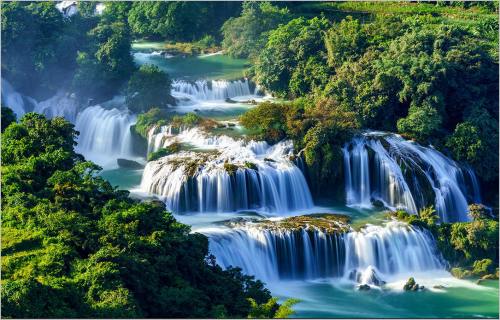 An image of a Waterfall
.
.
Click the link below for images:
.
__________________________________________
Older Entries
Newer Entries
 James' World 2