May 2, 2022
Mohenjo
Business, Enthralling, Human Interest, Photographs
amazon, business, Business News, current-events, Future, Hotels, human-rights, medicine, mental-health, research, Science, Science News, technology, Technology News, travel, vacation

Click the link below the picture
.
Colombia, officially the Republic of Colombia, is a transcontinental country spanning South America and an insular region in North America. It is bordered by the Caribbean Sea to the north, Venezuela to the east, Brazil to the southeast, Ecuador and Peru to the south, the Pacific Ocean to the west, and Panama to the northwest. Colombia comprises 32 departments and the Capital District of Bogotá, the country’s largest city. It covers an area of 1,141,748 square kilometers (440,831 sq mi), with a population of 50 million. Colombia’s rich cultural heritage reflects influences by various Amerindian civilizations, European settlement, African slaves, and immigration from Europe and the Middle East. Spanish is the nation’s official language, besides which over 70 languages are spoken.
Colombia has been inhabited by various indigenous peoples since at least 12,000 BCE, including the Muisca, Quimbaya, and the Tairona. The Spanish landed first in La Guajira in 1499 and by the mid-16th century colonized parts of the region, establishing the New Kingdom of Granada, with Santa Fé de Bogotá as its capital. Independence from the Spanish Empire was achieved in 1819, with what is now Colombia emerging as the United Provinces of New Granada. The new nation experimented with federalism as the Granadine Confederation (1858), and then the United States of Colombia (1863), before the Republic of Colombia was finally declared in 1886. Panama seceded in 1903, leading to Colombia’s present borders. Beginning in the 1960s, the country has suffered from an asymmetric low-intensity armed conflict and political violence, both of which escalated in the 1990s. Since 2005, there has been significant improvement in security, stability, and rule of law, as well as unprecedented economic growth and development.
Colombia is one of the world’s seventeen megadiverse countries and has the second-highest level of biodiversity in the world. Its territory encompasses Amazon rainforest, highlands, grasslands, and deserts, and it is the only country in South America with coastlines and islands along both Atlantic and Pacific oceans.
Colombia is a member of major global and regional organizations including the United Nations, the WTO, the OECD, the OAS, the Pacific Alliance, the Andean Community, and a NATO Global Partner. Its diversified economy is the third-largest in South America, with macroeconomic stability and favorable long-term growth prospects.
The name “Colombia” is derived from the last name of the Italian navigator Christopher Columbus (Italian: Cristoforo Colombo, Spanish: Cristóbal Colón). It was conceived as a reference to all of the New World. The name was later adopted by the Republic of Colombia of 1819, formed from the territories of the old Viceroyalty of New Granada (modern-day Colombia, Panama, Venezuela, Ecuador, and northwest Brazil).
When Venezuela, Ecuador, and Cundinamarca came to exist as independent states, the former Department of Cundinamarca adopted the name “Republic of New Granada”. New Granada officially changed its name in 1858 to the Granadine Confederation. In 1863 the name was again changed, this time to United States of Colombia, before finally adopting its present name – the Republic of Colombia – in 1886.
To refer to this country, the Colombian government uses the terms Colombia and República de Colombia. Wikipedia
.
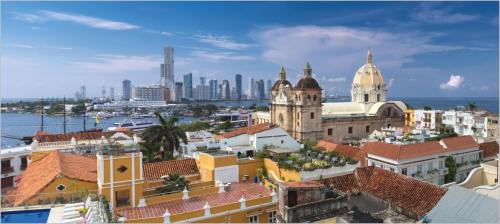 An image of Cartagena Colombia
.
.
Click the link below for images:
.
__________________________________________
April 30, 2022
Mohenjo
Business, Enthralling, Human Interest, Photographs
amazon, business, Business News, current-events, Future, Hotels, human-rights, medicine, mental-health, research, Science, Science News, technology, Technology News, travel, vacation
Click the link below the picture
.
The Alaska Peninsula brown bear or “peninsular grizzly” is a colloquial nomenclature for a brown bear that lives in the coastal regions of southern Alaska, although according to other sources, it is a population of the mainland grizzly bear subspecies (Ursus arctos horribilis), or the Kodiak bear subspecies (U. a. middendorffi).
Alaska Peninsula brown bears are very large, usually ranging in weight from 800 to 1,200 lb (360 to 540 kg). They are found in high densities along the southern Alaskan coast due not only to the large amount of clams and sedge grass but also to the annual salmon runs; this allows them to attain huge sizes, some of the biggest in the world. They may gather in large numbers at feeding sites, such as Brooks Falls and McNeil Falls, both in Katmai National Park near King Salmon. Biologists maintain that coastal ones are truly brown bears. However, it is considered correct to place all North American members of U. arctos in the subspecies horribilis except the giant Kodiak bears of Kodiak Island. To avoid confusion, many simply refer to all North American members, including Kodiaks, as “brown bears.”
Prized by hunters for their skulls and hides, up to 500 of Alaska’s 1,500 brown bears killed yearly by hunters come from the Alaska Peninsula. To hunt this large bear, hunters must follow a variety of regulations, including bear bag limits, hunting fees, and proper rifles.
The Alaska Peninsula brown bear’s name most likely arose because, until 1975, it was considered a different species from the inland grizzly bear. It was never considered closer to European brown bears than inland grizzlies but was given a different name, due to the size and color differences of coastal browns and inland grizzlies. From 1975 onward, it was considered to be the same species, but coastal ones retained the name “brown bear.” When mentioning Brown bears or Grizzly bears, they are the same animal living in different areas. Coastal bears tend to be larger because of a diet high in salmon. The total number of Brown bears in the U.S. is estimated at 32,000 with approximately 95% (30,400) living in Alaska. Around 4000 of these are coastal bears. Alaska Peninsula brown bears are among the largest types of brown bear in the world. They usually measure 8 ft (2.4 m) in length, usually have a shoulder height of about 4 to 4 1/2ft or 1.22 to 1.37 meters (137 cm), and a hindfoot length of 11 in (28 cm). One study found that the average weight for a coastal male was around 408 kg (899 lb), and 227 kilograms (500 pounds) for a female. On the other hand, an occasional huge male brown has been recorded which greatly exceeds ordinary size, with weights reported up to 680 kg (1,500 lb). A large coastal male of this size may stand up to 3 meters (9.8 ft) tall on its hind legs, and be up to 1.5 meters (4.9 ft) at the shoulder. The biggest individual on record was shot in 1948 near Cold Bay. Its weight was estimated at 725 to 771 kg (1,598 to 1,700 lb). This bear just came out of hibernation and carried little or no fat; that means the animal would have weighed around 839 kg (1,850 lb) at the end of the summer. Although variable from blonde to nearly black, grizzly bear fur is typically brown in color with white tips. A pronounced hump appears on their shoulders; the hump is a good way to distinguish a black bear from a grizzly bear, as black bears do not have this hump. Wikipedia
.
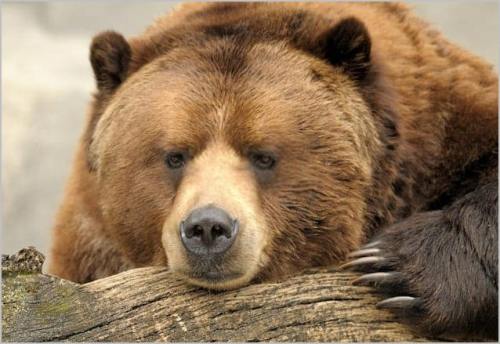 An image of an Alaska Peninsula Big Brown Bear
.
.
Click the link below for images:
.
__________________________________________
April 29, 2022
Mohenjo
Business, Enthralling, Human Interest, Photographs
amazon, business, Business News, current-events, Future, Hotels, human-rights, medicine, mental-health, research, Science, Science News, technology, Technology News, travel, vacation
Click the link below the picture
.
West Africa or Western Africa is the westernmost region of Africa. The United Nations defines Western Africa as the 16 countries of Benin, Burkina Faso, Cape Verde, The Gambia, Ghana, Guinea, Guinea-Bissau, Ivory Coast, Liberia, Mali, Mauritania, Niger, Nigeria, Senegal, Sierra Leone, and Togo as well as Saint Helena, Ascension, and Tristan da Cunha. The population of West Africa is estimated at about 381 million people as of 2018, and at 381,981,000 as of 2017, of which 189,672,000 are female and 192,309,000 male. The region is demographically and economically one of the fastest-growing on the African continent.
Early history in West Africa included a number of prominent regional powers, that dominated different parts of both the coast and internal trade networks, such as the Mali and Gao Empires. West Africa sat the intersection of trade routes between Arab-dominated North Africa and specialized goods from further south on the continent, including gold, advanced iron-working, and products like ivory. After European exploration encountered a rich local economies and kingdoms, the European slave trade exploited previous slave systems to provide labor for colonies in the Americas. After the end of the slave trade in the early 19th century, Europeans, especially France and Britain, continued to exploit the region through colonial relationships—exporting a number of extractive goods, including labor-intensive agricultural crops like cocoa and coffee, forestry products like tropical timber, and minerals like gold. Since independence, many of the West African countries, like Ivory Coast, Ghana, Nigeria, and Senegal, play important roles in the regional and global economies.
West Africa has a rich ecology, with strong biodiversity and several distinct regions. The climate and ecology are heavily influenced by the dry Sahara to the North and East, which provides dry winds during the Harmattan, and the west and humid climate to the south and of the Atlantic which provides seasonal monsoons. This mix of ecologies, mean that there is both biodiversity-rich tropical forest and drylands that support a number of rare or endangered fauna, such as pangolin, rhinoceros, and elephant. Because of the pressure for economic development, many of these ecologies are threatened by processes like deforestation, biodiversity loss, overfishing, pollution from mining, plastic, and other economic processes, and the extreme changes that will result from climate change in West Africa.
The history of West Africa can be divided into five major periods: first, its prehistory, in which the first human settlers arrived, developed agriculture, and made contact with peoples to the north; the second, the Iron Age empires that consolidated both intra-Africa, and extra-Africa trade, and developed centralized states; third, major polities flourished, which would undergo an extensive history of contact with non-Africans; fourth, the colonial period, in which Great Britain and France controlled nearly the entire region; and fifth, the post-independence era, in which the current nations were formed. Wikipedia
.
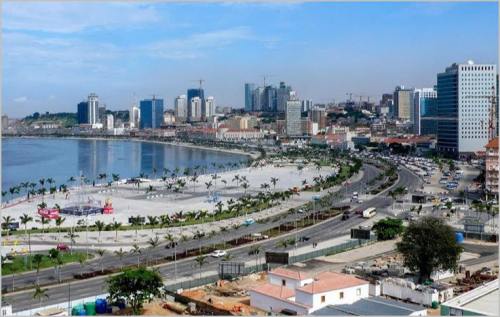 An image of a Modern West African City
.
.
Click the link below for images:
.
__________________________________________
April 28, 2022
Mohenjo
Business, Enthralling, Human Interest, Photographs
amazon, business, Business News, current-events, Future, Hotels, human-rights, medicine, mental-health, research, Science, Science News, technology, Technology News, travel, vacation
Click the link below the picture
.
Sani Pass is a mountain pass located in the West of KwaZulu-Natal, South Africa on the road between Underberg, KwaZulu-Natal, and Mokhotlong, Lesotho. The route up Sani Pass starts at 1,544 metres (5,066 ft), and climbs 1,332 m (4,370 ft) to an altitude of 2,876 m (9,436 ft). The steep gravel road has gradients up to 1:3, which can be difficult to drive in bad weather and may be covered with snow and ice in winter. By South African law, only 4×4 vehicles are allowed on the road. Several tour operators run guided tours up and down the pass. The pass lies between the border controls of both countries and is approximately 9 km in length. Caution must be exercised and motorists must be alert while navigating the pass as it has claimed many lives. Occasionally the remains of vehicles that did not succeed in navigating the pass’s steep gradients and poor traction surfaces can be seen.
The Sani Pass dirt road will be upgraded in two phases; phase 1 extending for 14 km from the P318 (Sani Pass) turnoff and finishing at the old Good Hope Trading Post, and phase 2 extending from kilometer 14 to kilometer 33, the summit of Sani Pass. Construction work for the first phase commenced in December 2006 and was completed in September 2012.
An economic impact study for phase 2 was compiled in August 2011. and its environmental impact assessment was compiled in October 2011. On 2 July 2013, the South African Department of Environmental Affairs and Tourism approved the execution of phase 2 of the project, with the ultimate objective to re-gravel the final 5 km of the pass. The department also authorized plans to upgrade the storm-water drainage system and retaining walls along the route to reduce sand and gravel erosion.
On 21 May 2014 the South African Environmental Affairs Minister, Edna Molewa, approved the execution of phase 2. Tarring was planned to start within five months following the announcement and would bring the total cost of the project to R887-million. In July 2015 it was stated that phase 2 shall be completed in 2019. As of August 2018, there was no timeline for phase 3.
As of May 2021, the third phase had yet to start, and the finishing of phase 2 was largely, but not entirely complete.
While South African emigration at the bottom of the pass prohibits vehicles deemed unsuitable for the journey, the Lesotho border agents at the summit generally allow vehicles of all types to attempt the descent. The pass is often closed due to adverse weather conditions, especially during winter. Wikipedia
.
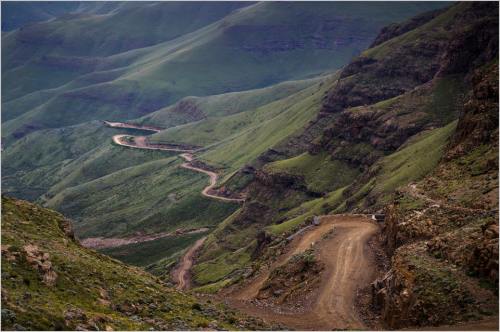 An image of Sani Pass SouthAfrica
.
.
Click the link below for images:
.
__________________________________________
April 27, 2022
Mohenjo
Business, Enthralling, Human Interest, Photographs
amazon, business, Business News, current-events, Future, Hotels, human-rights, medicine, mental-health, research, Science, Science News, technology, Technology News, travel, vacation
Click the link below the picture
.
Argentines are people identified with the country of Argentina. This connection may be residential, legal, historical, or cultural. For most Argentines, several (or all) of these connections exist and are collectively the source of their being Argentine.
Argentina is a multiethnic and multilingual society, home to people of various ethnic, religious, and national origins, with the majority of the population made up of Old World immigrants and their descendants. As a result, Argentines do not equate their nationality with ethnicity, but with citizenship and allegiance to Argentina. Aside from the indigenous population, nearly all Argentines or their ancestors immigrated within the past five centuries. Among countries in the world that have received the most immigrants in modern history, Argentina, with 6.6 million, ranks second to the United States (27 million), and ahead of other immigrant destinations such as Canada, Brazil, and Australia.
Argentina is a multiethnic society, which means that it is home to people of many different ethnic backgrounds. Argentina is a melting pot of different peoples.
In the mid-19th century a large wave of immigration started to arrive in Argentina due to new Constitutional policies that encouraged immigration, and issues in the countries the immigrants came from, such as wars, poverty, hunger, and famines. The main immigration sources were from Europe, the countries from the Near and the Middle East, Russia, and Japan. Eventually, Argentina became the country with the second-largest number of immigrants in the period, with 6.6 million, second only to the United States with 27 million.
Therefore, most Argentines are of European descent (with a significant Native component), and are either descendants of colonial-era settlers and/or of the 19th and 20th-century immigrants from Europe, with about 65% of the population being of ethnic European descent.
The most common ethnic groups are a mix between Spanish (including Galicians and Basques), Italian and Native American. It is estimated that up to 30 million Argentines, up to 62.5% of the total population, have Italian ancestry, wholly or in part. There are also some Germanic, Slavic, Irish, and French populations. Smaller Jewish, Arab, Asian, Romani, and African communities contribute to the melting pot.
Immigration of recent decades includes mainly Paraguayans, Bolivians, and Peruvians, among other Latin Americans, Eastern Europeans, Africans, and Asians. Wikipedia
.
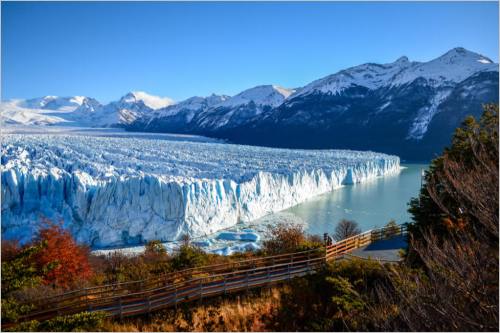 An image from Argentina
.
.
Click the link below for images:
.
__________________________________________
April 26, 2022
Mohenjo
Business, Enthralling, Human Interest, Photographs
amazon, business, Business News, current-events, Future, Hotels, human-rights, medicine, mental-health, research, Science, Science News, technology, Technology News, travel, vacation
Click the link below the picture
.
The Bavarian Rhön Nature Park straddles the junction of the German states of Bavaria, Hesse, and Thuringia. 70 km2 of the total 125 km2 area of the nature park has been recognized by UNESCO as part of the Rhön Biosphere Reserve. The organization for the promotion of the Bavarian Rhön Nature Park (Zweckverband Naturpark Bayerische Rhön) was founded in 1967. On 26 November 1982 the regulation for the Naturpark Bayerische Rhön was issued and, in 1997, the Zweckverband became the Society for the Bavarian Rhön Nature Park and Biosphere Reserve (Naturpark und Biosphärenreservat Bayer. Rhön e.V.).
The nature park lies between the Spessart, Vogelsberg, Thuringian Forest, Haßberge and Steigerwald forest. It is characterized by mixed forests, streams of flowing water, moors, grassland, and arid habitats. Wikipedia
.
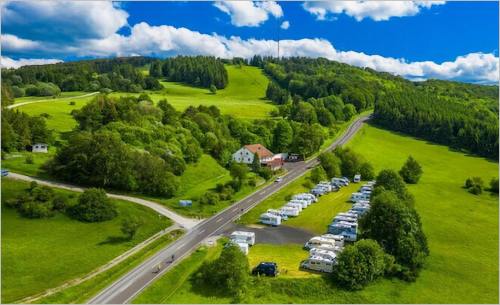 An image from Bavarian Rhön Nature Park
.
.
Click the link below for images:
.
__________________________________________
April 25, 2022
Mohenjo
Business, Enthralling, Human Interest, Photographs
amazon, business, Business News, current-events, Future, Hotels, human-rights, medicine, mental-health, research, Science, Science News, technology, Technology News, travel, vacation

Click the link below the picture
.
South Africa, officially the Republic of South Africa (RSA), is the southernmost country in Africa. With over 60 million people, the country is the world’s 23rd-most populous nation and covers an area of 1,221,037 square kilometers (471,445 square miles). South Africa has three capital cities, with the executive, judicial and legislative branches of government based in Pretoria, Bloemfontein, and Cape Town respectively. The largest city is Johannesburg. About 80% of the population are Black South Africans. The remaining population consists of Africa’s largest communities of European (White South Africans), Asian (Indian South Africans and Chinese South Africans), and Multiracial (Coloured South Africans) ancestry.
South Africa is bounded to the south by 2,798 kilometers (1,739 mi) of coastline that stretch along the South Atlantic and Indian Oceans; to the north by the neighboring countries of Namibia, Botswana, and Zimbabwe; and to the east and northeast by Mozambique and Eswatini and it surrounds the enclaved country of Lesotho. It is the southernmost country on the mainland of the Old World, and the most populous country located entirely south of the equator. South Africa is a biodiversity hotspot, with a diversity of unique biomes and plant and animal life.
South Africa is a multiethnic society encompassing a wide variety of cultures, languages, and religions. Its pluralistic makeup is reflected in the constitution’s recognition of 11 official languages, the fourth-highest number in the world. According to the 2011 census, the two most spoken first languages are Zulu (22.7%) and Xhosa (16.0%). The two next ones are of European origin: Afrikaans (13.5%) developed from Dutch and serves as the first language of most Coloured and White South Africans; English (9.6%) reflects the legacy of British colonialism and is commonly used in public and commercial life. The country is one of the few in Africa never to have had a coup d’état, and regular elections have been held for almost a century. However, the vast majority of black South Africans were not enfranchised until 1994.
During the 20th century, the black majority sought to claim more rights from the dominant white minority, which played a large role in the country’s recent history and politics. The National Party imposed apartheid in 1948, institutionalizing previous racial segregation. After a long and sometimes violent struggle by the African National Congress (ANC) and other anti-apartheid activists both inside and outside the country, the repeal of discriminatory laws began in the mid-1980s. Since 1994, all ethnic and linguistic groups have held political representation in the country’s liberal democracy, which comprises a parliamentary republic and nine provinces. South Africa is often referred to as the “rainbow nation” to describe the country’s multicultural diversity, especially in the wake of apartheid.
South Africa is an upper-middle power in international affairs; it maintains significant regional influence and is a member of both the Commonwealth of Nations and G20. It is a developing country, ranking 114th on the Human Development Index. It has been classified by the World Bank as a newly industrialized country, with the second-largest economy in Africa, and the 33rd-largest in the world. South Africa also has the most UNESCO World Heritage Sites in Africa. Since the end of apartheid, government accountability and quality of life have substantially improved in South Africa. However, crime, poverty, and inequality remain widespread, with about a quarter of the population unemployed and living on less than US$1.25 a day as of 2008. Wikipedia
.
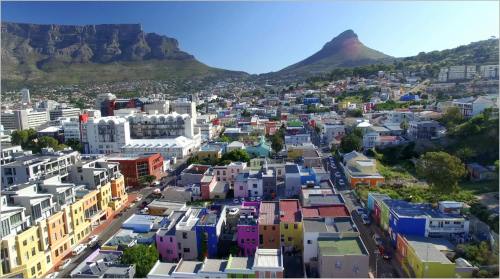 An image of Cape Town South Africa
.
.
Click the link below for images:
.
__________________________________________
April 23, 2022
Mohenjo
Business, Enthralling, Human Interest, Photographs
amazon, business, Business News, current-events, Future, Hotels, human-rights, medicine, mental-health, research, Science, Science News, technology, Technology News, travel, vacation
Click the link below the picture
.
In botany, a tree is a perennial plant with an elongated stem, or trunk, usually supporting branches and leaves. In some usages, the definition of a tree may be narrower, including only woody plants with secondary growth, plants that are usable as lumber or plants above a specified height. In wider definitions, the taller palms, tree ferns, bananas, and bamboos are also trees. Trees are not a taxonomic group but include a variety of plant species that have independently evolved a trunk and branches as a way to tower above other plants to compete for sunlight. The majority of tree species are angiosperms or hardwoods; of the rest, many are gymnosperms or softwoods. Trees tend to be long-lived, some reaching several thousand years old. Trees have been in existence for 370 million years. It is estimated that there are some three trillion mature trees in the world.
A tree typically has many secondary branches supported clear of the ground by the trunk. This trunk typically contains woody tissue for strength, and vascular tissue to carry materials from one part of the tree to another. For most trees, it is surrounded by a layer of bark which serves as a protective barrier. Below the ground, the roots branch and spread out widely; they serve to anchor the tree and extract moisture and nutrients from the soil. Above ground, the branches divide into smaller branches and shoots. The shoots typically bear leaves, which capture light energy and convert it into sugars by photosynthesis, providing the food for the tree’s growth and development.
Trees usually reproduce using seeds. Flowers and fruit may be present, but some trees, such as conifers, instead have pollen cones and seed cones. Palms, bananas, and bamboos also produce seeds, but tree ferns produce spores instead.
Trees play a significant role in reducing erosion and moderating the climate. They remove carbon dioxide from the atmosphere and store large quantities of carbon in their tissues. Trees and forests provide a habitat for many species of animals and plants. Tropical rainforests are among the most biodiverse habitats in the world. Trees provide shade and shelter, timber for construction, fuel for cooking and heating, and fruit for food as well as having many other uses. In parts of the world, forests are shrinking as trees are cleared to increase the amount of land available for agriculture. Because of their longevity and usefulness, trees have always been revered, with sacred groves in various cultures, and they play a role in many of the world’s mythologies.
Although “tree” is a term of common parlance, there is no universally recognized precise definition of what a tree is, either botanically or in common language. In its broadest sense, a tree is any plant with the general form of an elongated stem, or trunk, which supports the photosynthetic leaves or branches at some distance above the ground. Trees are also typically defined by height, with smaller plants from 0.5 to 10 m (1.6 to 32.8 ft) being called shrubs, so the minimum height of a tree is only loosely defined. Large herbaceous plants such as papaya and bananas are trees in this broad sense. Wikipedia
.
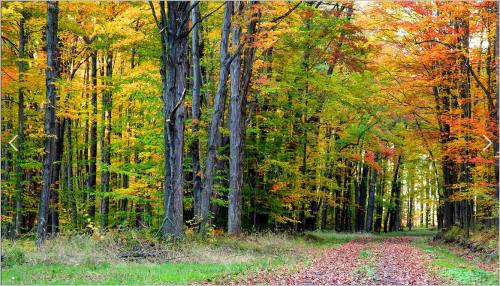 An image of Forest Trees
.
.
Click the link below images:
.
__________________________________________
April 22, 2022
Mohenjo
Business, Enthralling, Human Interest, Photographs
amazon, business, Business News, current-events, Future, Hotels, human-rights, medicine, mental-health, research, Science, Science News, technology, Technology News, travel, vacation
Click the link below the picture
.
Bangladesh officially the People’s Republic of Bangladesh is a country in South Asia. It is the eighth-most populous country in the world, with a population exceeding 163 million people in an area of either 148,460 square kilometers (57,320 sq mi) or 147,570 square kilometers (56,980 sq mi), making it one of the most densely populated countries in the world. Bangladesh shares land borders with India to the west, north, and east, and Myanmar to the southeast; to the south, it has a coastline along the Bay of Bengal. It is narrowly separated from Nepal and Bhutan by the Siliguri Corridor, and from China by 100 km of the Indian state of Sikkim in the north. Dhaka, the capital and largest city, is the nation’s economic, political, and cultural hub. Chittagong, the largest seaport, is the second-largest city. The official language is Bengali, one of the most eastern branches of the Indo-European language family.
Bangladesh forms the sovereign part of the historic and ethnolinguistic region of Bengal, which was divided during the Partition of British India in 1947. The country has a Bengali Muslim majority. Ancient Bengal was an important cultural center in the Indian subcontinent as the home of the states of Vanga, Pundra, Gangaridai, Gauda, Samatata, and Harikela. The Mauryan, Gupta, Pala, Sena, Chandra, and Deva dynasties were the last pre-Islamic rulers of Bengal. The Muslim conquest of Bengal began in 1204 when Bakhtiar Khalji overran northern Bengal and invaded Tibet. Becoming part of the Delhi Sultanate, three city-states emerged in the 14th century with much of eastern Bengal being ruled from Sonargaon. Sufi missionary leaders like Sultan Balkhi, Shah Jalal, and Shah Makhdum Rupos helped in spreading Muslim rule. The region was unified into an independent, unitary Bengal Sultanate. Under Mughal rule, eastern Bengal continued to prosper as the melting pot of Muslims in the eastern subcontinent and attracted traders from around the world. Mughal Bengal became increasingly assertive and independent under the Nawabs of Bengal in the 18th century. In 1757, the betrayal of Mir Jafar resulted in the defeat of Nawab Siraj-ud-Daulah to the British East India Company and eventual British dominance across South Asia. The Bengal Presidency grew into the largest administrative unit in British India. The creation of Eastern Bengal and Assam in 1905 set a precedent for the emergence of Bangladesh. In 1940, the first Prime Minister of Bengal supported the Lahore Resolution with the hope of creating a state in eastern South Asia. Prior to the partition of Bengal, the Prime Minister of Bengal proposed a Bengali sovereign state. A referendum and the announcement of the Radcliffe Line established the present-day territorial boundary of Bangladesh.
In 1947, East Bengal became the most populous province in the Dominion of Pakistan. It was renamed as East Pakistan with Dhaka becoming the country’s legislative capital. The Bengali Language Movement in 1952; the East Bengali legislative election, 1954; the 1958 Pakistani coup d’état; the Six point movement of 1966; and the 1970 Pakistani general election resulted in the rise of Bengali nationalism and pro-democracy movements in East Pakistan. The refusal of the Pakistani military junta to transfer power to the Awami League led by Sheikh Mujibur Rahman led to the Bangladesh Liberation War in 1971, in which the Mukti Bahini aided by India waged a successful armed revolution. The conflict saw the 1971 Bangladesh genocide and the massacre of pro-independence Bengali civilians, including intellectuals. The new state of Bangladesh became the first constitutionally secular state in South Asia in 1972. Islam was declared the state religion in 1988. In 2010, the Bangladesh Supreme Court reaffirmed secular principles in the constitution.
Bangladesh is a unitary parliamentary constitutional republic based on the Westminster system. Bengalis make up 98% of the total population of Bangladesh,[4] and the large Muslim population of Bangladesh makes it the third-largest Muslim-majority country. The country consists of eight divisions, 64 districts, and 495 subdistricts. It maintains the third-largest military in South Asia after India and Pakistan; and has been a major contributor to UN peacekeeping operations. A middle power in the Indo-Pacific, Bangladesh is an emerging economy ranked as the 33rd-largest in the world by nominal GDP, and the 29th-largest by PPP. It hosts one of the largest refugee populations in the world due to the Rohingya genocide. Bangladesh faces many challenges, including the adverse effects of climate change, poverty, illiteracy, corruption, authoritarianism, and human rights abuses. However, the poverty rate has halved since 2011 and the country is expected to become a middle-income country in this decade. Once a historic center of the muslin cloth trade, Bangladesh is now one of the world’s largest modern garment exporters. Wikipedia
.
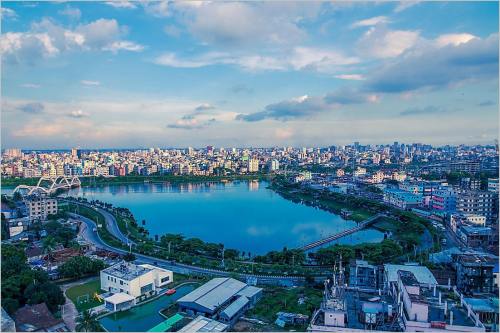 An image from Bangladesh
.
.
Click the link below for images:
.
__________________________________________
April 21, 2022
Mohenjo
Business, Enthralling, Human Interest, Photographs
amazon, business, Business News, current-events, Future, Hotels, human-rights, medicine, mental-health, research, Science, Science News, technology, Technology News, travel, vacation
Click the link below the picture
.
The reddish egret is a medium-sized heron. It is a resident breeder in Central America, The Bahamas, the Caribbean, the Gulf Coast of the United States, and Mexico. There is post-breeding dispersal to well north of the nesting range. In the past, this bird was a victim of the plume trade.
According to the Texas Parks and Wildlife Department, there are only 1,500 to 2,000 nesting pairs of reddish egrets in the United States — and most of these are in Texas. They are classified as “threatened” in Texas and receive special protection.
This species reaches 68–82 cm (27–32 in) in length, with a 116–125 cm (46–49 in) wingspan.Body mass in this species can range from 364–870 g (0.802–1.918 lb). Among standard linear measurements, the wing chord is 29–34.3 cm (11.4–13.5 in), the tail is 8.8–13 cm (3.5–5.1 in), the bill is 7.3–9.2 cm (2.9–3.6 in) and the tarsus is 11.7–14.7 cm (4.6–5.8 in). It is a medium-sized, long-legged, long-necked heron with a long pointed pinkish bill with a black tip. It is distinctly larger than other co-existing members of the genus Egretta but smaller than the great blue heron and great egret. The legs and feet are bluish-black. While the sexes are similar, there are two distinct color morphs. The adult dark morph has a slate blue body and reddish head and neck with shaggy plumes. The adult white morph has entirely white body plumage. Young birds have a brown body, head, and neck. During mating, the male’s plumage stands out in a ruff on its head, neck, and back. The reddish egret is considered one of the most active herons and is often seen on the move. It stalks its prey visually in shallow water far more actively than other herons and egrets, frequently running energetically and using the shadow of its wings to reduce glare on the water once it is in position to spear a fish; the result is a fascinating dance. Due to its bold, rapacious yet graceful feeding behavior, author Pete Dunne nicknamed the reddish egret “the Tyrannosaurus rex of the Flats”. It eats fish, frogs, crustaceans, and insects. The bird’s usual cry is a low, guttural croak. Wikipedia
.
 An image of a Reddish Egret RDR2
.
.
Click the link below for images:
.
__________________________________________
Older Entries
Newer Entries
 James' World 2