May 12, 2022
Mohenjo
Business, Enthralling, Human Interest, Photographs
amazon, business, Business News, current-events, Future, Hotels, human-rights, medicine, mental-health, research, Science, Science News, technology, Technology News, travel, vacation

Click the link below the picture
.
The Great Wall of China is a series of fortifications that were built across the historical northern borders of ancient Chinese states and Imperial China as protection against various nomadic groups from the Eurasian Steppe. Several walls were built from as early as the 7th century BC, with selective stretches later joined together by Qin Shi Huang (220–206 BC), the first emperor of China. Little of the Qin wall remains. Later on, many successive dynasties built and maintained multiple stretches of border walls. The best-known sections of the wall were built by the Ming dynasty (1368–1644).
Apart from defense, other purposes of the Great Wall have included border controls, allowing the imposition of duties on goods transported along the Silk Road, regulation or encouragement of trade, and the control of immigration and emigration. Furthermore, the defensive characteristics of the Great Wall were enhanced by the construction of watchtowers, troop barracks, garrison stations, signaling capabilities through the means of smoke or fire, and the fact that the path of the Great Wall also served as a transportation corridor.
The frontier walls built by different dynasties have multiple courses. Collectively, they stretch from Liaodong in the east to Lop Lake in the west, from the present-day Sino–Russian border in the north to Tao River (Taohe) in the south; along an arc that roughly delineates the edge of the Mongolian steppe; spanning 21,196.18 km (13,170.70 mi) in total. Today, the defensive system of the Great Wall is generally recognized as one of the most impressive architectural feats in history. Wikipedia
.
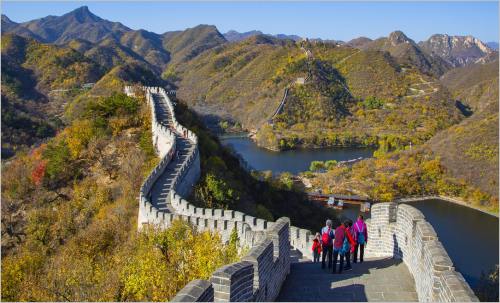 An image of the Great Wall Of China
.
.
Click the link below for images:
.
__________________________________________
May 11, 2022
Mohenjo
Business, Enthralling, Human Interest, Photographs
amazon, business, Business News, current-events, Future, Hotels, human-rights, medicine, mental-health, research, Science, Science News, technology, Technology News, travel, vacation
Click the link below the picture
.
Venezuela, officially the Bolivarian Republic of Venezuela, is a country on the northern coast of South America, consisting of a continental landmass and many islands and islets in the Caribbean Sea. It has a territorial extension of 916,445 km2 (353,841 sq mi), and its population was estimated at 28 million in 2019. The capital and largest urban agglomeration is the city of Caracas.
The continental territory is bordered on the north by the Caribbean Sea and the Atlantic Ocean, on the west by Colombia, Brazil on the south, Trinidad and Tobago to the northeast and on the east by Guyana. The Venezuelan government maintains a claim against Guyana to Guayana Esequiba. Venezuela is a federal presidential republic consisting of 23 states, the Capital District, and federal dependencies covering Venezuela’s offshore islands. Venezuela is among the most urbanized countries in Latin America; the vast majority of Venezuelans live in the cities of the north and in the capital.
The territory of Venezuela was colonized by Spain in 1522 amid resistance from indigenous peoples. In 1811, it became one of the first Spanish-American territories to declare independence from the Spanish and to form part, as a department, of the first federal Republic of Colombia (historiographically known as Gran Colombia). It separated as a full sovereign country in 1830. During the 19th century, Venezuela suffered political turmoil and autocracy, remaining dominated by regional military dictators until the mid-20th century. Since 1958, the country has had a series of democratic governments, as an exception where most of the region was ruled by military dictatorships, and the period was characterized by economic prosperity. Economic shocks in the 1980s and 1990s led to major political crises and widespread social unrest, including the deadly Caracazo riots of 1989, two attempted coups in 1992, and the impeachment of a President for embezzlement of public funds charges in 1993. The collapse in confidence in the existing parties saw the 1998 Venezuelan presidential election, the catalyst for the Bolivarian Revolution, which began with a 1999 Constituent Assembly, where a new Constitution of Venezuela was imposed. The government’s populist social welfare policies were bolstered by soaring oil prices, temporarily increasing social spending, and reducing economic inequality and poverty in the early years of the regime. The 2013 Venezuelan presidential election was widely disputed leading to widespread protest, which triggered another nationwide crisis that continues to this day.
Venezuela is a developing country and ranks 113th on the Human Development Index. It has the world’s largest known oil reserves and has been one of the world’s leading exporters of oil. Previously, the country was an underdeveloped exporter of agricultural commodities such as coffee and cocoa, but oil quickly came to dominate exports and government revenues. The excesses and poor policies of the incumbent government led to the collapse of Venezuela’s entire economy. The country struggles with record hyperinflation, shortages of basic goods, unemployment, poverty, disease, high child mortality, malnutrition, severe crime, and corruption. These factors have precipitated the Venezuelan migrant crisis where more than three million people have fled the country. By 2017, Venezuela was declared to be in default regarding debt payments by credit rating agencies. The crisis in Venezuela has contributed to a rapidly deteriorating human rights situation, including increased abuses such as torture, arbitrary imprisonment, extrajudicial killings, and attacks on human rights advocates. Venezuela is a charter member of the UN, Organization of American States (OAS), Union of South American Nations (UNASUR), ALBA, Mercosur, Latin American Integration Association (LAIA), and Organization of Ibero-American States (OEI). Wikipedia
.
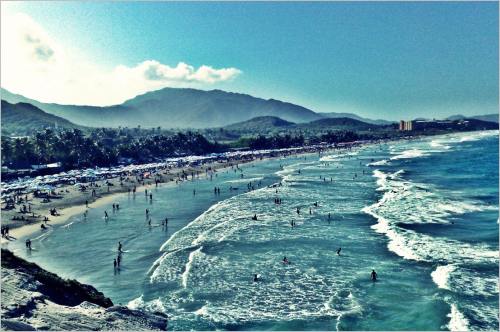 An image of a Venezuela Beach
.
.
Click the link below for images:
.
__________________________________________
May 10, 2022
Mohenjo
Business, Enthralling, Human Interest, Photographs
amazon, business, Business News, current-events, Future, Hotels, human-rights, medicine, mental-health, research, Science, Science News, technology, Technology News, travel, vacation
Click the link below the picture
.
The New York metropolitan area, also commonly referred to as the Tri-State area, is the largest metropolitan area in the world by urban landmass, at 4,669.0 sq mi (12,093 km2), and one of the most populous urban agglomerations in the world. The metropolitan area includes New York City (the most populous city in the United States), Long Island, and the Mid and Lower Hudson Valley in New York State; the six largest cities in New Jersey: Newark, Jersey City, Paterson, Elizabeth, Lakewood, and Edison, and their vicinities; and six of the seven largest cities in Connecticut: Bridgeport, New Haven, Stamford, Waterbury, Norwalk, and Danbury, and their vicinities. The New York metropolitan area sits within the larger Northeast Megalopolis.
The New York metropolitan area is the most populous in the United States, as defined by both the Metropolitan Statistical Area (20.1 million residents in 2020) and the Combined Statistical Area (23.6 million residents in 2020). The metropolitan area is home to approximately 6% of the United States’ population. It is the tenth-largest urban agglomeration in the world. The New York metropolitan area continues to be the premier gateway for legal immigration to the United States, with one of the largest foreign-born populations of any metropolitan region in the world. The MSA covers 6,720 sq mi (17,405 km2), while the CSA area is 13,318 sq mi (34,493 km2), encompassing an ethnically and geographically diverse region. The New York metropolitan area’s population is larger than that of the state of New York, and the metropolitan airspace accommodated over 130 million passengers in 2016.
As a center of many industries, including finance, fintech, international trade, news, and traditional media, real estate, education, fashion, entertainment, tourism, biotechnology, law, and manufacturing, the New York metropolitan region is one of the most important economic regions in the world. Indeed, New York City has been described as the cultural, financial, diplomatic, and media capital of the world. As of 2019, the New York metropolitan area is estimated to produce a gross metropolitan product (GMP) of $1.7 trillion. If the New York metropolitan area were a sovereign state, it would have the eighth largest economy in the world. Metropolitan New York is home to the highest number of billionaires of any metropolis in the world. According to Forbes, in 2014, the New York metropolitan area was home to eight of the top ten ZIP codes in the United States by median housing price, with six in Manhattan alone. The New York metropolitan area also houses five of the top ten richest places in America, according to Bloomberg. These are Scarsdale, New York; Short Hills, New Jersey; Old Greenwich, Connecticut; Bronxville, New York; and Darien, Connecticut.
The New York metropolitan region’s higher education network comprises hundreds of colleges and universities, including New York University and three Ivy League universities: Columbia, Yale, and Princeton.
The U.S. Office of Management and Budget utilizes two definitions of the area: the metropolitan statistical area (MSA) and the combined statistical area (CSA). The MSA definition is titled the New York-Newark-Jersey City, NY-NJ-PA Metropolitan Statistical Area, and includes a population of 20.3 million people by 2017 Census estimates, roughly 1 in 16 Americans and nearly 7 million more than the second-place Los Angeles metropolitan area in the United States. The MSA is further subdivided into four metropolitan divisions. The 23-county MSA includes 10 counties in New York State (coextensive with the five boroughs of New York, the two remaining counties of Long Island, and three counties in the Lower Hudson Valley); 12 counties in Northern and Central New Jersey; and one county in northeastern Pennsylvania. The largest urbanized area in the United States is at the heart of the metropolitan area, the New York–Newark, NY–NJ–CT Urbanized Area (which had a land area of 3,450 square miles in 2010 according to the 2010 census). The New York state portion of the metropolitan area (the Five Boroughs, the lower Hudson, and Long Island) accounts for over 65 percent of the state’s population. Wikipedia
.
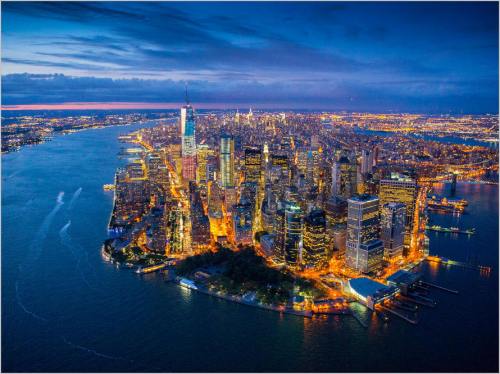 An image of New York City
.
.
Click the link below for article:
.
__________________________________________
May 9, 2022
Mohenjo
Business, Enthralling, Human Interest, Photographs
amazon, business, Business News, current-events, Future, Hotels, human-rights, medicine, mental-health, research, Science, Science News, technology, Technology News, travel, vacation
Click the link below the picture
.
North Africa or Northern Africa is a region encompassing the northern portion of the African continent. There is no singularly accepted scope for the region, and it is sometimes defined as stretching from the Atlantic shores of Mauritania in the west, to Egypt’s Suez Canal.
Varying sources limit it to the countries of Algeria, Libya, Morocco, and Tunisia, a region that was known by the French during colonial times as “Afrique du Nord” and is known by Arabs as the Maghreb (“West”, The western part of Arab World).
The United Nations definition includes Morocco, Algeria, Tunisia, Libya, Egypt, Sudan, and the Western Sahara, the territory disputed between Morocco and the Sahrawi Republic.
The African Union definition includes the Western Sahara and Mauritania but not Sudan. When used in the term Middle East and North Africa (MENA), it often refers only to the countries of the Maghreb.
North Africa includes the Spanish cities of Ceuta and Melilla, and plazas de soberanía and can also be considered to include other Spanish, Portuguese and Italian regions such as Canary Islands, Madeira, Lampedusa, and Lampione.
The countries of North Africa share a lot of ethnic, cultural, and linguistic identity with the Middle East.
Northwest Africa has been inhabited by Berbers since the beginning of recorded history, while the eastern part of North Africa has been home to the Egyptians. Between the A.D. 600s and 1000s, Arabs from the Middle East swept across the region in a wave of Muslim conquest. These peoples formed a single population in many areas, as Berbers and Egyptians merged into Arabic and Muslim culture. This process of Arabization and Islamization has defined the cultural landscape of North Africa ever since. Wikipedia
.
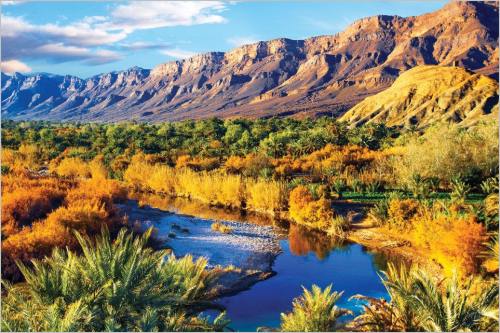 An image from North Africa Landscape
.
.
Click the link below for images:
.
__________________________________________
May 7, 2022
Mohenjo
Business, Enthralling, Human Interest, Photographs
amazon, business, Business News, current-events, Future, Hotels, human-rights, medicine, mental-health, research, Science, Science News, technology, Technology News, travel, vacation
Click the link below the picture
.
Coron is the third-largest island in the Calamian Islands in northern Palawan in the Philippines. The island is part of the larger municipality of the same name. It is about 170 nautical miles (310 km) southwest of Manila and is known for several Japanese shipwrecks of World War II vintage. Because of its unique ecological features, the entire area is protected by several legal proclamations.
The island and surrounding fishing grounds are part of the ancestral domain of the indigenous Tagbanwa people, officially designated such on June 5, 1998. Known as Calis among the Tagbanwas and Coronians, its tribal chieftain is Rodolfo Aguilar I.
The island comprises two barangays of the municipality of Coron: Banuang Daan and Cabugao.
Partially between Busuanga and Culion islands, Coron Island faces the Sulu Sea and forms the eastern side of Coron Bay. It is about 20 kilometers (12 mi) long from north to south, and 9 kilometers (5.6 mi) at its widest point.
It is a wedge-shaped mountainous island, dominated by steep cliffs and Karst rock formations made of Permian limestone of Jurassic origin that comprises about 70% of its area. Another 25% is rolling hills, while only 5% is relatively flat. There are 11 lakes nestled in the rugged terrain, of which three have underground connections to the sea. There are a few mangroves in coastal areas.
The area around the wrecks has rock formations which provide for snorkeling opportunities, with underwater visibility extending up to 80 feet (24 m). The water is often calm. Coron is one of the most visited destinations for wreck diving in the Philippines. Wreck dive sites are found in depths as shallow as 10–30 feet (3.0–9.1 m) and as deep as 120–140 feet (37–43 m). Most are in the range of about 60–80 feet (18–24 m).
Dive sites around Coron include many different reef dive sites and “Günter’s Cave”, also known as Cathedral Cave because, during a certain time of the day, the sun throws a beam of light through a hole in the cave ceiling, illuminating the inside. It is possible to surface in the cave, as the hole in the cave ceiling allows fresh air to enter. The cave is named after Günther Bernert, who was part of the first dive group to explore the cave, after hearing from local fishermen about its existence. Wikipedia
.
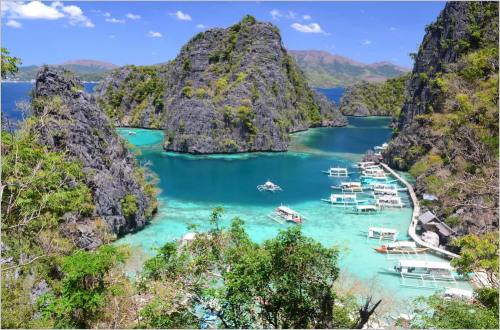 An image from Coron Island
.
.
Click the link below for images:
.
__________________________________________
May 6, 2022
Mohenjo
Business, Food For Thought, Human Interest, Made Me Laugh, Photographs, Political, Technical
amazon, business, Business News, current-events, Future, Hotels, human-rights, medicine, mental-health, research, Science, Science News, technology, Technology News, travel, vacation

Click the link below the picture
.
The latest political cartoons
.
 Provided by Tribune Content Agency Editorial
.
.
Click the link below for cartoons:
.
__________________________________________
May 6, 2022
Mohenjo
Business, Enthralling, Human Interest, Photographs
amazon, business, Business News, current-events, Future, Hotels, human-rights, medicine, mental-health, research, Science, Science News, technology, Technology News, travel, vacation
Click the link below the picture
.
Peru, officially the Republic of Peru, is a country in western South America. It is bordered in the north by Ecuador and Colombia, in the east by Brazil, in the southeast by Bolivia, in the south by Chile, and in the south and west by the Pacific Ocean. Peru is a megadiverse country with habitats ranging from the arid plains of the Pacific coastal region in the west to the peaks of the Andes mountains extending from the north to the southeast of the country to the tropical Amazon basin rainforest in the east with the Amazon River. Peru has a population of 34 million, and its capital and largest city is Lima. At 1.28 million km2 (0.5 million mi2), Peru is the 19th largest country in the world and the third-largest in South America.
Peruvian territory was home to several ancient cultures. Ranging from the Caral-Supe civilization starting in 3500 BCE, the oldest civilization in the Americas and one of the five cradles of civilization, to the Inca Empire, the largest known state in the pre-Columbian Americas, the territory now including Peru has one of the longest histories of civilization of any country, tracing its heritage back to the 10th millennium BCE.
The Spanish Empire conquered the region in the 16th century and established a viceroyalty that encompassed most of its South American territories, with its capital in Lima. Higher education started in the Americas with the official establishment of the National University of San Marcos in Lima in 1551. Peru formally proclaimed independence in 1821, and following the foreign military campaigns of José de San Martín and Simón Bolívar, and the decisive battle of Ayacucho, Peru completed its independence in 1824. In the ensuing years, the country first suffered of political instability until a period of relative economic and political stability begun due to the exploitation of guano. Later, the War of the Pacific (1879–1884) with Chile brought Peru to a state of crisis from which the oligarchy seized power through the Civilista Party. In the 20th century, the country endured coups, social unrest, and internal conflicts, as well as periods of stability and economic upswing. In the 1990s, the country implemented a neoliberal economic model which is still in use to this day. As the 2000s commodities boom took place, Peru experienced a period of constant economic growth and a decrease in poverty.
The sovereign state of Peru is a representative democratic republic divided into 25 regions. Peru has a high level of human development with an upper middle income level ranking 82nd on the Human Development Index. It is one of the region’s most prosperous economies with an average growth rate of 5.9% and it has one of the world’s fastest industrial growth rates at an average of 9.6%. Its main economic activities include mining, manufacturing, agriculture, and fishing, along with other growing sectors such as telecommunications and biotechnology. The country forms part of The Pacific Pumas, a political and economic grouping of countries along Latin America’s Pacific coast that share common trends of positive growth, stable macroeconomic foundations, improved governance, and an openness to global integration. Peru ranks high in social freedom; it is an active member of the Asia-Pacific Economic Cooperation, the Pacific Alliance, the Trans-Pacific Partnership, and the World Trade Organization; and is considered as a middle power.
Peru has a population that includes Mestizos, Amerindians, Europeans, Africans, and Asians. The main spoken language is Spanish, although a significant number of Peruvians speak Quechuan languages, Aymara, or other Indigenous languages. This mixture of cultural traditions has resulted in a wide diversity of expressions in fields such as art, cuisine, literature, and music. Wikipedia
.
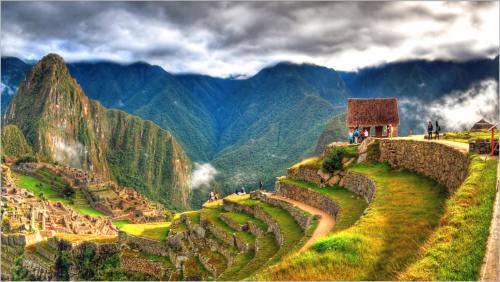 An image from Peru
.
.
Click the link below for images:
.
__________________________________________
May 5, 2022
Mohenjo
Business, Enthralling, Human Interest, Photographs
amazon, business, Business News, current-events, Future, Hotels, human-rights, medicine, mental-health, research, Science, Science News, technology, Technology News, travel, vacation
Click the link below the picture
.
El Nido, officially the Municipality of El Nido, is a 1st class municipality in the province of Palawan, Philippines. According to the 2020 census, it has a population of 50,494 people.
It is about 420 kilometers (260 mi) southwest of Manila, and about 238 kilometers (148 mi) northeast of Puerto Princesa, Palawan’s capital. A managed resource-protected area, it is known for its white-sand beaches, coral reefs, limestone cliffs, and as the gateway to the Bacuit archipelago.
El Nido has been inhabited by humans as early 2680 BC, or even up to 22,000 years ago. This was confirmed by the fossils and burial sites, dating back to the Late Neolithic Age, that can be found in many caves and excavation sites surrounding the municipality, particularly in Dewil Valley’s Ille Cave in New Ibajay. Chinese traders had been regularly visiting the area of Palawan for its edible birds’ nests during the Song Dynasty (960-1279). The island was mentioned in Chinese records of 1225. Chau Ju-Kua, a trade commissioner of the port of Chuan wrote about the island, Pa-Lao-Yu or Land of Beautiful Harbors in his book Chu Fan Chi.
The town traces its roots from a small Tagbanwa village called Talindak. Sometime in the 16th century, waves of migrants from Cuyo Islands came here to settle. In the 1800s, the Spaniards arrived, and they moved to the part where the present-day Población and Mabini are located. The first Spanish families were the Canovas, Vázquez, Ríos and Rey. In 1890, the Spaniards renamed it as Bacuit. At the time, the center of the town was Cabigsing, then known as Inventario. Chinese families moved into the area about the same period, first settling in Langeblangeban. The first Chinese settlers were named Lim, Chin, Liao, Edsan, Ambao, Que-Ke, Lim Piao, Yu His, Pe Phan, and Pe Khen.
During the Spanish colonization of the Philippines, the town was under the jurisdiction of the Municipality of Taytay, which was the capital of the former Province of Calamianes from 1818, and the Province of Castilla, the area of what is now known as northern Palawan, from 1858. It remained part of Taytay until 1916 when it formally became an independent municipality. The new municipality was then known as Bacuit. Wikipedia
.
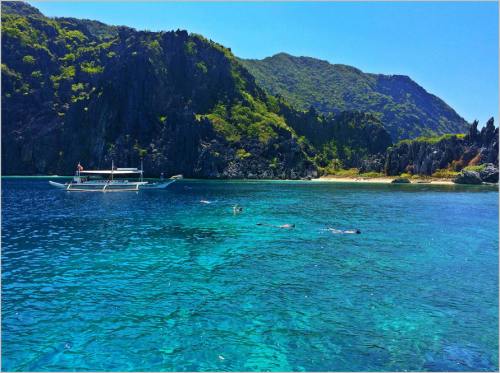 An image from El Nido Palawan
.
.
Click the link below for images:
.
__________________________________________
May 4, 2022
Mohenjo
Business, Enthralling, Human Interest, Photographs
amazon, business, Business News, current-events, Future, Hotels, human-rights, medicine, mental-health, research, Science, Science News, technology, Technology News, travel, vacation
Click the link below the picture
.
Nigeria, officially the Federal Republic of Nigeria, is a country in West Africa. It is the most populous country in Africa. It is geographically situated between the Sahel to the north and the Gulf of Guinea to the south in the Atlantic Ocean. It covers an area of 923,769 square kilometers (356,669 sq mi), with a population of over 211 million. Nigeria borders Niger in the north, Chad in the northeast, Cameroon in the east, and Benin in the west. Nigeria is a federal republic comprising 36 states and the Federal Capital Territory, where the capital, Abuja, is located. The largest city in Nigeria is Lagos, one of the largest metropolitan areas in the world and the second-largest in Africa.
Nigeria has been home to several indigenous pre-colonial states and kingdoms since the second millennium BC, with the Nok civilization in the 15th century BC marking the first internal unification in the country. The modern state originated with British colonialization in the 19th century, taking its present territorial shape with the merging of the Southern Nigeria Protectorate and Northern Nigeria Protectorate in 1914 by Lord Lugard. The British set up administrative and legal structures while practicing indirect rule through traditional chiefdoms in the Nigeria region. Nigeria became a formally independent federation on October 1, 1960. It experienced a civil war from 1967 to 1970, followed by a succession of democratically elected civilian governments and military dictatorships, until achieving a stable democracy in the 1999 presidential election; the 2015 election was the first time an incumbent president had lost re-election.
Nigeria is a multinational state inhabited by more than 250 ethnic groups speaking 500 distinct languages, all identifying with a wide variety of cultures. The three largest ethnic groups are the Hausa in the north, Yoruba in the west, and Igbo in the east, together comprising over 60% of the total population. The official language is English, chosen to facilitate linguistic unity at the national level. Nigeria’s constitution ensures freedom of religion and it is home to some of the world’s largest Muslim and Christian populations, simultaneously. Nigeria is divided roughly in half between Muslims, who live mostly in the north, and Christians, who live mostly in the south; indigenous religions, such as those native to the Igbo and Yoruba ethnicities, are in the minority.
Nigeria is a regional power in Africa, a middle power in international affairs, and is an emerging global power. Nigeria’s economy is the largest in Africa, the 25th-largest in the world by nominal GDP, and 25th-largest by PPP. Nigeria is often referred to as the Giant of Africa owing to its large population and economy and is considered to be an emerging market by the World Bank. However, the country ranks very low in the Human Development Index and remains one of the most corrupt nations in the world. Nigeria is a founding member of the African Union and a member of many international organizations, including the United Nations, the Commonwealth of Nations, NAM, the Economic Community of West African States, and OPEC. It is also a member of the informal MINT group of countries and is one of the Next Eleven economies. Wikipedia
.
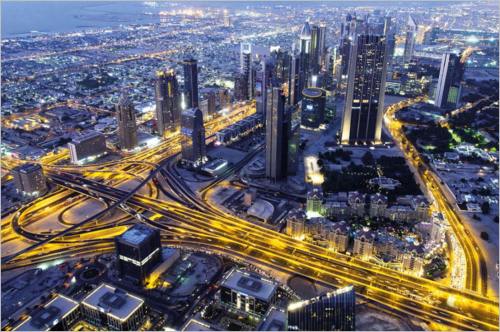 An image from Abuja City Nigeria
.
.
Click the link below for images:
.
__________________________________________
May 3, 2022
Mohenjo
Business, Enthralling, Human Interest, Photographs
amazon, business, Business News, current-events, Future, Hotels, human-rights, medicine, mental-health, research, Science, Science News, technology, Technology News, travel, vacation
Click the link below the picture
.
Martha’s Vineyard is an island located south of Cape Cod in Massachusetts in the United States in North America that is known for being a popular, affluent summer colony. Martha’s Vineyard includes the smaller adjacent Chappaquiddick Island, which is usually connected to the Vineyard. The two islands have sometimes been separated by storms and hurricanes, which last occurred from 2007 to 2015. It is the 58th largest island in the United States, with a land area of about 96 square miles (250 km2), and the third-largest on the East Coast of the United States, after Long Island and Mount Desert Island. Martha’s Vineyard constitutes the bulk of Dukes County, Massachusetts, which also includes the Elizabeth Islands and the island of Nomans Land.
The Vineyard was home to one of the earliest known deaf communities in the United States; consequently, a sign language, the Martha’s Vineyard Sign Language, emerged on the island among both deaf and hearing islanders. The 2010 census reported a year-round population of 16,535 residents, although the summer population can swell to more than 100,000 people. About 56 percent of the Vineyard’s 14,621 homes are seasonally occupied.
Martha’s Vineyard is primarily known as a summer colony. However, its year-round population has considerably increased since the 1960s. The island’s year-round population increased about a third each decade from 1970 to 2000, for a total of 145 percent or about 3 percent to 4 percent per year (46 percent, 30 percent, and 29 percent in each respective decade). The population of the Vineyard was 14,901 in the 2000 Census and was estimated at 15,582 in 2004. (Dukes County was 14,987 in 2000 and 15,669 in 2004). Dukes County includes the six towns on Martha’s Vineyard and Gosnold; it increased by more than 10 percent between 2000 and 2010, according to Census data released in 2011, gaining nearly 1,548 residents. The Island’s population increased from 14,987 to 16,535.
A study by the Martha’s Vineyard Commission found that the cost of living on the island is 60 percent higher than the national average, and housing prices are 96 percent higher. A study of housing needs by the Commission found that the average weekly wage on Martha’s Vineyard was “71 percent of the state average, the median home price was 54 percent above the state’s and the median rent exceeded the state’s by 17 percent,” all leading to a stark example of severe income inequalities between year-round residents and their seasonal counterparts.
There is no definitive source for “Martha’s Vineyard” but it is thought to be named for the mother-in-law or daughter, both named Martha, of the English explorer Bartholomew Gosnold, who led the first recorded European expedition to Cape Cod in 1602. A smaller island to the south was first to be named “Martha’s Vineyard” but this later became associated with this island. It is the eighth-oldest surviving English place name in the United States. The island was subsequently known as Martin’s Vineyard (perhaps after the captain of Gosnold’s ship, John Martin); many islanders up to the 18th century called it by this name.
When the United States Board on Geographic Names worked to standardize placename spellings in the late 19th century, apostrophes were dropped. Thus for a time, Martha’s Vineyard was officially named Marthas Vineyard, but the Board reversed its decision in the early 20th century, making Martha’s Vineyard one of the five placenames in the United States that take a possessive apostrophe.
According to historian Henry Franklin Norton, the island was known by Native Americans as Noepe or Capawock. It is referred to in the 1691 Massachusetts Charter (which transferred the island from Province of New York during the breakup of the Dominion of New England) as Cappawock. Wikipedia
.
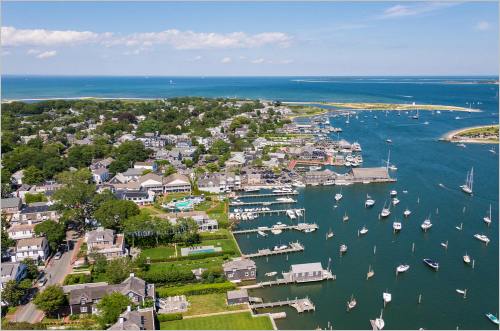 An image from Martha’s Vineyard Massachusetts
.
.
Click the link below for images:
.
__________________________________________
Older Entries
Newer Entries
 James' World 2