May 24, 2022
Mohenjo
Business, Enthralling, Human Interest, Photographs
amazon, business, Business News, current-events, Future, Hotels, human-rights, medicine, mental-health, research, Science, Science News, technology, Technology News, travel, vacation

Click the link below the picture
.
Lake Atitlán is a lake in the Guatemalan Highlands of the Sierra Madre mountain range. It is in the Sololá Department of southwestern Guatemala. It is the deepest lake in Central America.
The lake has a maximum depth of about 340 meters (1,120 ft) and an average depth of 220 meters (720 ft). Its surface area is 130.1 km2 (50.2 sq mi). It is approximately 18 km × 8 km (11.2 mi × 5.0 mi) with around 20 km3 (4.8 cu mi) of water. Atitlán is technically an endorheic lake, feeding into two nearby rivers rather than draining into the ocean. It is shaped by deep surrounding escarpments and three volcanoes on its southern flank. The lake basin is volcanic in origin, filling an enormous caldera formed by an eruption 84,000 years ago. The culture of the towns and villages surrounding Lake Atitlán is influenced by the Maya people. The lake is about 50 kilometers (31 mi) west-northwest of Antigua. It should not be confused with the smaller Lake Amatitlán.
Lake Atitlán is renowned as one of the most beautiful lakes in the world and is one of Guatemala’s most important national and international tourist attractions. German explorer and naturalist Alexander von Humboldt called it “the most beautiful lake in the world,” and Aldous Huxley famously wrote of it in his 1934 travel book Beyond the Mexique Bay: “Lake Como, it seems to me, touches on the limit of permissibly picturesque, but Atitlán is Como with additional embellishments of several immense volcanoes. It really is too much of a good thing.”
The area around San Marcos has particularly tall cliffs abutting the lake and in recent years has become renowned for cliff diving. Wikipedia
.
 An image from Lake Atitlan
.
.
Click the link below for images:
.
__________________________________________
May 23, 2022
Mohenjo
Business, Enthralling, Human Interest, Photographs
amazon, business, Business News, current-events, Future, Hotels, human-rights, medicine, mental-health, research, Science, Science News, technology, Technology News, travel, vacation
Click the link below the picture
.
Chongqing, alternately romanized as Chungking (), is a municipality in southwest China.
Administratively, it is one of the four municipalities under the direct administration of the central government of the People’s Republic of China (the other three are Beijing, Shanghai, and Tianjin), and the only such municipality located deep inland. The municipality of Chongqing, roughly the size of Austria, includes the city of Chongqing as well as various discontiguous cities. Due to a classification technicality, Chongqing municipality can claim to be the largest city proper in the world—though it does not have the world’s largest urban area. Chongqing Jiangbei International Airport, a major aviation hub serving Chongqing metropolitan areas and Western China, is one of the top 50 busiest airports in the world, and the city’s monorail system is the world’s longest and busiest monorails system with the greatest number of stations (70).
During the Republic of China (ROC) era, Chongqing was a municipality located within Sichuan Province. It served as its wartime capital during the Second Sino-Japanese War (1937–1945). The current municipality was separated from Sichuan province on 14 March 1997 to help develop the central and western parts of China. The Chongqing administrative municipality has a population of over 30 million. The city of Chongqing, comprising nine urban and suburban districts, has a population of 8,750,000 as of the 2018 estimation. According to the 2010 census, Chongqing is the most populous Chinese municipality, and also the largest direct-controlled municipality in China, containing 26 districts, eight counties, and four autonomous counties.
The official abbreviation of the city, “Yú” (渝), was approved by the State Council on 18 April 1997. This abbreviation is derived from the old name of a part of the Jialing River that runs through Chongqing and feeds into the Yangtze River.
Chongqing has an extensive history and a rich culture. As one of China’s National Central Cities, it serves as a financial center of the Sichuan Basin and the upstream Yangtze. It is a major manufacturing and transportation center; a July 2012 report by the Economist Intelligence Unit described it as one of China’s “13 emerging megalopolises”. Chongqing is ranked as a Beta (global second-tier) city. Chongqing is one of the top 100 cities in the world by scientific research outputs as tracked by the Nature Index, and home to several notable universities, including Chongqing University, Southwest University, Chongqing University of Posts and Telecommunications, Southwest University of Political Science and Law, and Chongqing Normal University. Wikipedia
.
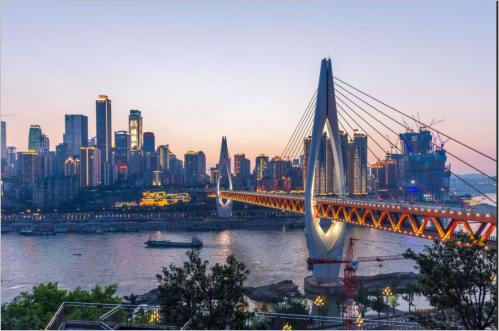 An image from Chongqing, China
.
.
Click the link below for images:
.
__________________________________________
May 21, 2022
Mohenjo
Business, Enthralling, Human Interest, Photographs
amazon, business, Business News, current-events, Future, Hotels, human-rights, medicine, mental-health, research, Science, Science News, technology, Technology News, travel, vacation
Click the link below the picture
.
Behrensdorf is a municipality in the district of Plön, in Schleswig-Holstein, Germany. It lies on the western shore of Hohwacht Bay on the Baltic Sea coast. About one kilometer to the north is the eighty-year-old Neuland Lighthouse. Wikipedia
.
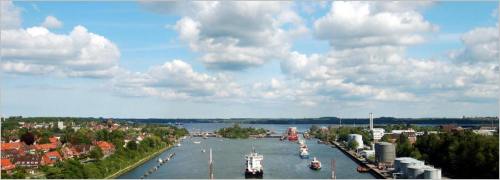 An image from Behrensdorf Germany
.
.
Click the link below for images:
.
__________________________________________
May 20, 2022
Mohenjo
Business, Enthralling, Human Interest, Photographs
amazon, business, Business News, current-events, Future, Hotels, human-rights, medicine, mental-health, research, Science, Science News, technology, Technology News, travel, vacation
Click the link below the picture
.
Ethiopia, officially the Federal Democratic Republic of Ethiopia, is a landlocked country in the Horn of Africa. It shares borders with Eritrea and Djibouti to the north, Somalia to the east and northeast, Kenya to the south, South Sudan to the west, and Sudan to the northwest. Ethiopia has a total area of 1,100,000 square kilometers (420,000 sq mi). It is home to 117 million inhabitants and is the 12th-most populous country in the world and the 2nd-most populous in Africa after Nigeria. The national capital and largest city, Addis Ababa, lies several kilometers west of the East African Rift that splits the country into the African and Somali tectonic plates.
Anatomically modern humans emerged from modern-day Ethiopia and set out to the Near East and elsewhere in the Middle Paleolithic period. Prehistoric Ethiopia was the home of various Afroasiatic and Nilotic tribes and cultures. In antiquity, the Kingdom of D’mt was established in the north frontier of Ethiopia, while the Kingdom of Aksum maintained a unified civilization in the region. Christianity arrived in the 4th-century and Islam was introduced in the 7th-century. After the collapse of Aksum, a variety of kingdoms thrived in what is known as Ethiopia. The Zagwe dynasty ruled the north-central parts until being overthrown by Yekuno Amlak in 1270; inaugurating the Ethiopian Empire and its Solomonic line dynasty claimed descent from the Biblical Solomon and Queen of Sheba under their son Menelik I. By the 14th century, the empire grew in prestige through territorial expansion until the mid-18th century decentralization known as Zemene Mesafint, and Ethiopia was reunified and modernized by Emperor Tewodros II in 1855.[24]
Ethiopia in its current border and multinational state was formed under conquests of Emperor Menelik II. Externally, Menelik defeated the Italian colonists in 1896 during the Scramble for Africa, leaving Ethiopia and Liberia as independent African nations. In 1935, Ethiopia was occupied by Fascist Italy and annexed with Italian-possessed Eritrea and Somaliland, later forming Italian East Africa. In 1941, the British army together with the Ethiopian Arbegnoch unit liberated Ethiopia amidst the Second World War. The Derg, a Soviet-backed military junta, took power in 1974 after deposing Emperor Haile Selassie and the Solomonic dynasty, ruled the country nearly 17 years with a vicious civil war. After the collapse of Derg in 1991, the Ethiopian People’s Revolutionary Democratic Front (EPRDF) dominated the country with a new constitution and ethnic-based federalism. Since then, Ethiopia suffered from prolonged and unsolved inter-ethnic clashes and political instability marked by democratic backsliding.
Ethiopia is a multi-ethnic state with over 80 different ethnic groups. Christianity and Islam are the main faiths observed in Ethiopia. This sovereign state is a founding member of the UN, the Group of 24 (G-24), the Non-Aligned Movement, the G77, and the Organisation of African Unity. Addis Ababa is the headquarters of the African Union, the Pan African Chamber of Commerce and Industry, the United Nations Economic Commission for Africa, the African Standby Force, and many of the global NGOs focused on Africa. Ethiopia is considered an emerging power and developing country. It experienced 9.4% economic growth from 2010 to 2020. The country is regarded as poor in terms of per capita income and the Human Development Index, with high rates of poverty, poor respect for human rights, and a literacy rate of only 49%. Agriculture is the largest sector in Ethiopia; it accounted for nearly half of the national GDP and over 80% of the nation’s workforce as of 2015. Wikipedia
.
 An image from Ethiopia
.
.
Click the link below for images:
.
__________________________________________
May 19, 2022
Mohenjo
Business, Enthralling, Human Interest, Photographs
amazon, business, Business News, current-events, Future, Hotels, human-rights, medicine, mental-health, research, Science, Science News, technology, Technology News, travel, vacation
Click the link below the picture
.
Estonia, officially the Republic of Estonia, is a country in Northern Europe. It is bordered to the north by the Gulf of Finland across from Finland, to the west by the Baltic Sea across from Sweden, to the south by Latvia, and to the east by Lake Peipus and Russia. The territory of Estonia consists of the mainland, the larger islands of Saaremaa and Hiiumaa, and over 2,200 other islands and islets on the eastern coast of the Baltic Sea, covering a total area of 45,339 square kilometres (17,505 sq mi). The capital city Tallinn and Tartu are the two largest urban areas of the country. The Estonian language is the autochthonous and the official language of Estonia; it is the first language of the majority of its population, as well as the world’s second most spoken Finnic language.
The land of what is now modern Estonia has been inhabited by humans since at least 9,000 BC. The medieval indigenous population of Estonia was one of the last “pagan” civilisations in Europe to adopt Christianity following the Papal-sanctioned Livonian Crusade in the 13th century. After centuries of successive rule by the Teutonic Order, Denmark, Sweden, and the Russian Empire, a distinct Estonian national identity began to emerge in the mid-19th century. This culminated in the 24 February 1918 Estonian Declaration of Independence from the then warring Russian and German Empires, and, after the end of World War I, in the 1918–1920 War of Independence where Estonians were able to repel the Bolshevik Russian invasion and successfully defended their newborn freedom. Democratic throughout most of the interwar period, Estonia declared neutrality at the outbreak of World War II, but the country was repeatedly contested, invaded and occupied, first by Stalinist Soviet Union in 1940, then by Nazi Germany in 1941, and ultimately reoccupied in 1944 by, and annexed into, the USSR as an administrative subunit (Estonian SSR). After the loss of its de facto independence to the Soviet Union, Estonia’s de jure state continuity was preserved by diplomatic representatives and the government-in-exile. Following the bloodless Estonian “Singing Revolution” of 1988–1990, the nation’s de facto independence was restored on 20 August 1991.
Estonia is a developed country, with a high-income advanced economy; ranking very high in the Human Development Index. The sovereign state of Estonia is a democratic unitary parliamentary republic, administratively subdivided into 15 maakond (counties). With a population of just over 1.3 million, it is one of the least populous members of the European Union, the Eurozone, the OECD, the Schengen Area, and NATO. Estonia has consistently ranked highly in international rankings for quality of life, education, press freedom, digitalisation of public services and the prevalence of technology companies. Wikipedia
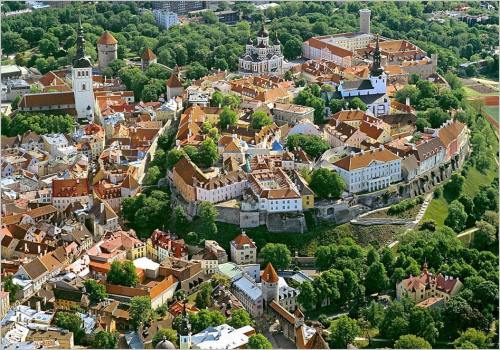 An image from Estonia Scenery
.
.
Click the link below for images:
.
__________________________________________
May 18, 2022
Mohenjo
Business, Enthralling, Human Interest, Photographs
amazon, business, Business News, current-events, Future, Hotels, human-rights, medicine, mental-health, research, Science, Science News, technology, Technology News, travel, vacation
Click the link below the picture
.
Chile, officially the Republic of Chile, is a country in the western part of South America. It occupies a long, narrow strip of land between the Andes to the east and the Pacific Ocean to the west. Chile covers an area of 756,096 square kilometers (291,930 sq mi), with a population of 17.5 million as of 2017. Chile is the southernmost country in the world, the closest to Antarctica, and shares land borders with Peru to the north, Bolivia to the north-east, Argentina to the east, and the Drake Passage in the far south. Chile also controls the Pacific islands of Juan Fernández, Isla Salas y Gómez, Desventuradas, and Easter Island in Oceania. It also claims about 1,250,000 square kilometers (480,000 sq mi) of Antarctica under the Chilean Antarctic Territory. The country’s capital and largest city is Santiago, and its national language is Spanish.
Spain conquered and colonized the region in the mid-16th century, replacing Inca rule, but failing to conquer the independent Mapuche who inhabited what is now south-central Chile. In 1818, after declaring independence from Spain, Chile emerged in the 1830s as a relatively stable authoritarian republic. In the 19th century, Chile saw significant economic and territorial growth, ending Mapuche resistance in the 1880s and gaining its current northern territory in the War of the Pacific (1879–83) after defeating Peru and Bolivia. In the 20th century up to the 1970s, Chile saw a process of democratization, rapid population growth, urbanization, and increasing reliance on exports from copper mining for its economy. During the 1960s and 1970s, the country experienced severe left-right political polarization and turmoil. This development culminated with the 1973 Chilean coup d’état that overthrew Salvador Allende’s democratically elected left-wing government and instituted a 16-year right-wing military dictatorship of Augusto Pinochet that left more than 3,000 people dead or missing. The regime ended in 1990 after a referendum in 1988 and was succeeded by a center-left coalition which ruled until 2010.
Chile is a developing country[ with a high-income economy and ranks 43rd in the Human Development Index. It is among the most economically and socially stable nations in South America, leading Latin America in rankings of competitiveness, per capita income, globalization, state of peace, and economic freedom. Chile also ranks high regionally in sustainability of the state, democratic development, and has the lowest homicide rate in the Americas after Canada. It is a founding member of the United Nations, the Community of Latin American and Caribbean States (CELAC), and the Pacific Alliance, and joined the OECD in 2010. Wikipedia
.
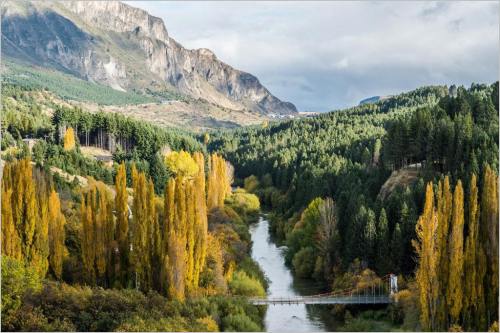 An image from Chile
.
.
Click the link below for images:
.
__________________________________________
May 17, 2022
Mohenjo
Business, Enthralling, Human Interest, Photographs
amazon, business, Business News, current-events, Future, Hotels, human-rights, medicine, mental-health, research, Science, Science News, technology, Technology News, travel, vacation
Click the link below the picture
.
Nusa Dua is a resort area built in the 1970s in the southern part of Bali, Indonesia. Known as an enclave of large five-star resorts, it covers 350 hectares of land and encloses more than 20 resorts. It is located 22 kilometers from Denpasar, the provincial capital of Bali, and is administered under South Kuta District, Badung Regency. Nusa Dua means two islands (nusa ‘island’, dua ‘two’) because there are two islands in the bay of Bali Tourism Development Corporation area. On the southern side lies Peninsula Island, and on the northern side lies Nusa Dharma Island, which is smaller but shadier, and contains the Pura/Temple Nusa Dharma.
Geger Beach is located in Sawangan, about 3 kilometers from the southern area of Nusa Dua. The sea there is calm, which allows farmers to grow seaweed in the area, as well as being an attractive place for tourists to swim. Water Blow is located in the Indonesia Tourism & Development Corporation (ITDC) district where large waves of seawater from the Indian Ocean continually crash against jagged limestone edges of a cliff. The water blow is the outcome of the narrowing crag below the cliff face that channels a surge of water up to 30 meters high from its base following strong currents. This phenomenon results in giant, irregular splashes of waves that can reach several meters high. The area provides a 240-degree lookout of dramatic seascape that is bordered by guardrails.
Immediately north of the Nusa Dua enclave is the peninsula of Tanjung Benoa, which includes cheaper hotels as well as Benoa village. A multi-denominational area, it includes a mosque and Chinese and Hindu temples close to each other. Much of the beach’s sand was eroded away following the mining of the nearby barrier reef for construction materials.
Benoa Port, also located there, was previously used for yachts and small ships. In December 2012, it became the Benoa Cruise International Terminal’s turnaround port, serving as both embarkation and debarkation point for cruise passengers. As a turnaround port, tourists can arrive or leave Benoa Port by either plane or cruise ship.
On December 26, 2012, the Bali Governor signed a permit to utilize, develop and manage the Benoa Bay area. 838 hectares reclaimed by PT Tirta Wahana Bali International will be used for luxury tourist facilities such as hotels, villas, apartments, an international hospital, and entertainment centers such as a Disneyland-like theme park. Wikipedia
.
 An image from Nusa Dua
.
.
Click the link below for images:
.
__________________________________________
May 16, 2022
Mohenjo
Business, Enthralling, Human Interest, Photographs
amazon, business, Business News, current-events, Future, Hotels, human-rights, medicine, mental-health, research, Science, Science News, technology, Technology News, travel, vacation
Click the link below the picture
.
Shanghai is one of the four direct-administered municipalities of the People’s Republic of China. The city is located on the southern estuary of the Yangtze River, with the Huangpu River flowing through it. With a population of 24.89 million as of 2021, Shanghai is the most populous urban area in China and the most populous city proper in the world. It is the only city in East Asia with a GDP greater than its corresponding capital. As of 2018, the Greater Shanghai metropolitan area, which includes Suzhou, Wuxi, Nantong, Ningbo, Jiaxing, Zhoushan, and Huzhou, was estimated to produce a gross metropolitan product (nominal) of nearly 9.1 trillion RMB ($1.33 trillion). Shanghai has been one of the world’s major centers for finance, business and economics, research, education, science and technology, manufacturing, tourism, culture, dining, art, fashion, sports, and transportation, and the Port of Shanghai is the world’s busiest container port. In 2019, the Shanghai Pudong International Airport was one of the world’s 10 busiest airports by passenger traffic, and one of the two international airports serving the Shanghai metropolitan area, the other one being the Shanghai Hongqiao International Airport.
Originally a fishing village and market town, Shanghai grew in importance in the 19th century due to both domestic and foreign trade and its favorable port location. The city was one of five treaty ports forced to open to European trade after the First Opium War. The Shanghai International Settlement and the French Concession were subsequently established. The city then flourished, becoming a primary commercial and financial hub of Asia in the 1930s. During the Second Sino-Japanese War, the city was the site of the major Battle of Shanghai. After the war, with the communists’ takeover of the mainland in 1949, trade was limited to other socialist countries and the city’s global influence declined.
By the 1990s, economic reforms introduced by Deng Xiaoping a decade earlier resulted in an intense redevelopment of the city, especially the Pudong New Area, aiding the return of finance and foreign investment. The city has since re-emerged as a hub for international trade and finance; it is the home of the Shanghai Stock Exchange, one of the largest stock exchanges in the world by market capitalization, and the Shanghai Free-Trade Zone, the first free-trade zone in mainland China. As of 2020, Shanghai was classified as an Alpha+ (global first-tier) city by the GaWC and ranked as having the 3rd most competitive and largest financial center in the world behind New York City and London by the Global Financial Centres Index. It has the largest metro network of any city in the world, the fifth-highest number of billionaires of any city in the world, the fifth-largest number of skyscrapers of any city in the world, the fifth-largest scientific research output of any city in the world, and highly ranked educational institutions including Fudan, Shanghai Jiao Tong, Tongji, East China Normal, Shanghai, Donghua, Shanghai University of Finance and Economics, East China University of Science and Technology, and University of Shanghai for Science and Technology.
Shanghai has been described as the “showpiece” of the booming economy of China. Featuring several architectural styles such as Art Deco and shikumen, the city is renowned for its Lujiazui skyline, museums, and historic buildings including the City God Temple, Yu Garden, the China Pavilion, and buildings along the Bund, which includes Oriental Pearl TV Tower. Shanghai is also known for its sugary cuisine, distinctive local language, and vibrant international flair. As an important international city, Shanghai is the seat of the New Development Bank, a multilateral development bank established by the BRICS states, and the city hosts more than 70 foreign representatives and numerous national and international events every year, such as Shanghai Fashion Week, the Chinese Grand Prix and ChinaJoy. Shanghai is the highest-earning tourist city in the world, with the seventh most five-star hotels in the world, and the third tallest building in the world, the Shanghai Tower. In 2018, Shanghai hosted the first China International Import Expo (CIIE), the world’s first import-themed national-level expo. Wikipedia
.
 An image of Shanghai City
.
.
Click the link below for images:
.
__________________________________________
May 14, 2022
Mohenjo
Business, Enthralling, Human Interest, Photographs
amazon, business, Business News, current-events, Future, Hotels, human-rights, medicine, mental-health, research, Science, Science News, technology, Technology News, travel, vacation
Click the link below the picture
.
The Bukit Peninsula is at the southern end of the island of Bali, Indonesia. It is traditionally considered to be the entire area south of Jimbaran beach. Unlike the bulk of Bali, it features a dry, arid, and stony landscape. It is administered under Kuta South District. Bukit means ‘hill’ in Indonesian.Wikipedia
.
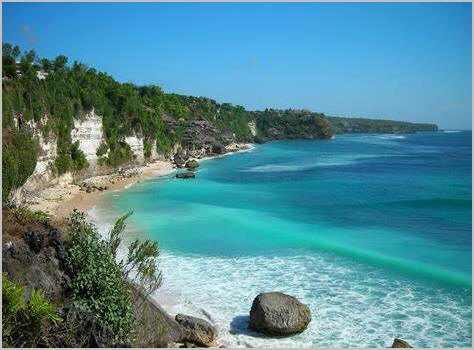 An image from the Bukit Peninsula
.
.
Click the link below for images:
.
__________________________________________
May 13, 2022
Mohenjo
Business, Enthralling, Human Interest, Photographs
amazon, business, Business News, current-events, Future, Hotels, human-rights, medicine, mental-health, research, Science, Science News, technology, Technology News, travel, vacation
Click the link below the picture
.
Kenya, officially the Republic of Kenya, is a country in Eastern Africa. At 580,367 square kilometers (224,081 sq mi), Kenya is the world’s 48th largest country by area. With a population of more than 47.6 million in the 2019 census, Kenya is the 29th most populous country in the world. Kenya’s capital and largest city is Nairobi, while its oldest, currently second-largest city, and first capital is the coastal city of Mombasa. Kisumu City is the third-largest city and also an inland port on Lake Victoria. Other important urban centers include Nakuru and Eldoret. As of 2020, Kenya is the third-largest economy in sub-Saharan Africa after Nigeria and South Africa. Kenya is bordered by South Sudan to the northwest, Ethiopia to the north, Somalia to the east, Uganda to the west, Tanzania to the south, and the Indian Ocean to the southeast. Its geography, climate, and population vary widely, ranging from cold snow-capped mountaintops (Batian, Nelion, and Point Lenana on Mount Kenya) with vast surrounding forests, wildlife, and fertile agricultural regions to temperate climates in western and rift valley counties and dry less fertile arid and semi-arid areas and absolute deserts (Chalbi Desert and Nyiri Desert).
Kenya’s earliest inhabitants were hunter-gatherers, like the present-day Hadza people. According to archaeological dating of associated artifacts and skeletal material, Cushitic speakers first settled in Kenya’s lowlands between 3,200 and 1,300 BC, a phase known as the Lowland Savanna Pastoral Neolithic. Nilotic-speaking pastoralists (ancestral to Kenya’s Nilotic speakers) began migrating from present-day South Sudan into Kenya around 500 BC.Bantu people settled at the coast and the interior between 250 BC and 500 AD. European contact began in 1500 AD with the Portuguese Empire, and effective colonization of Kenya began in the 19th century during the European exploration of the interior. Modern-day Kenya emerged from a protectorate established by the British Empire in 1895 and the subsequent Kenya Colony, which began in 1920. Numerous disputes between the UK and the colony led to the Mau Mau revolution, which began in 1952, and the declaration of independence in 1963. After independence, Kenya remained a member of the Commonwealth of Nations. The current constitution was adopted in 2010 to replace the 1963 independence constitution.
Kenya is a presidentialrepresentative democratic republic, in which elected officials represent the people and the president is the head of state and government. Kenya is a member of the United Nations, Commonwealth of Nations, World Bank, International Monetary Fund, COMESA, International Criminal Court, and other international organizations. With a GNI of 1,840, Kenya is a lower-middle-income economy. Kenya’s economy is the largest in eastern and central Africa, with Nairobi serving as a major regional commercial hub. Agriculture is the largest sector: tea and coffee are traditional cash crops, while fresh flowers are a fast-growing export. The service industry is also a major economic driver, particularly tourism. Kenya is a member of the East African Community trade bloc, though some international trade organizations categorize it as part of the Greater Horn of Africa. Africa is Kenya’s largest export market, followed by the European Union. Wikipedia
.
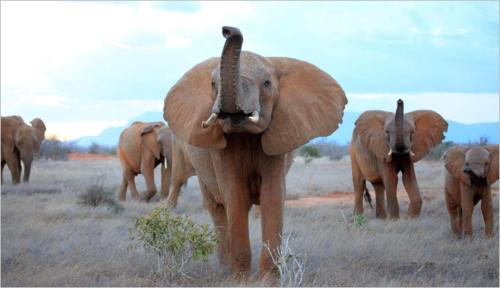 An image from Kenya
.
.
Click the link below for images:
.
__________________________________________
Older Entries
Newer Entries
 James' World 2