June 4, 2022
Mohenjo
Business, Enthralling, Human Interest, Photographs
amazon, business, Business News, current-events, Future, Hotels, human-rights, medicine, mental-health, research, Science, Science News, technology, Technology News, travel, vacation

Click the link below the picture
.
Uxmal is an ancient Maya city of the classical period located in present-day Mexico. It is considered one of the most important archaeological sites of Maya culture, along with Palenque, Chichen Itza, and Calakmul in Mexico, Caracol and Xunantunich in Belize, and Tikal in Guatemala. It is located in the Puuc region of the eastern Yucatán Peninsula and is considered one of the Maya cities most representative of the region’s dominant architectural style. It has been designated a UNESCO World Heritage Site in recognition of its significance.
Uxmal is located 62 km south of Mérida, capital of Yucatán state in Mexico. Its buildings are noted for their size and decoration. Ancient roads called sacbes connect the buildings, and also were built to other cities in the area such as Chichén Itzá in modern-day Mexico, Caracol and Xunantunich in modern-day Belize, and Tikal in modern-day Guatemala.
Its buildings are typical of the Puuc style, with smooth low walls that open on ornate friezes based on representations of typical Maya huts. These are represented by columns (representing the reeds used for the walls of the huts) and trapezoidal shapes (representing the thatched roofs). Entwined snakes and, in many cases two-headed snakes are used for masks of the rain god, Chaac; its big noses represent the rays of the storms. Feathered serpents with open fangs are shown leaving from the same human beings. Also seen in some cities are the influences of the Nahua peoples, who followed the cult of Quetzalcoatl and Tlaloc. These were integrated with the original elements of the Puuc tradition.
The buildings take advantage of the terrain to gain height and acquire important volumes, including the Pyramid of the Magician, with five levels, and the Governor’s Palace, which covers an area of more than 1,200 m2 (12,917 sq ft).
The present name seems to derive from Uxmal, meaning “three times built.” This seems to refer to the site’s antiquity and the times it had to rebuild. The etymology is disputed; another possibility is Uchmal which means “what is to come, the future.” By tradition, this was supposed to be an “invisible city,” built-in one night by the magic of the dwarf king. While much work has been done at the popular tourist destination of Uxmal to consolidate and restore buildings, little in the way of serious archeological excavation and research has been done. The city’s dates of occupation are unknown and the estimated population (about 15,000 people) is a rough guess. Most of the city’s major construction took place while Uxmal was the capital of a Late Classic Maya state around 850-925 AD. After about 1000 AD, Toltec invaders took over, and most building ceased by 1100 AD. Wikipedia
.
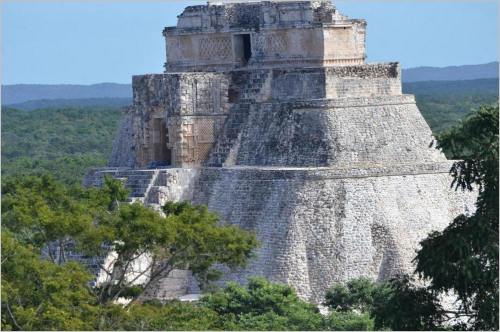 An image from Uxmal
.
.
Click the link below for images:
.
__________________________________________
June 3, 2022
Mohenjo
Business, Enthralling, Human Interest, Photographs
amazon, business, Business News, current-events, Future, Hotels, human-rights, medicine, mental-health, research, Science, Science News, technology, Technology News, travel, vacation
Click the link below the picture
.
Nairobi is the capital and largest city of Kenya. The name comes from the Maasai phrase Enkare Nyorobi, which translates to “place of cool waters”, a reference to the Nairobi River which flows through the city. The city proper had a population of 4,397,073 in the 2019 census, while the metropolitan area has a population of 9,354,580. The city is popularly referred to as the Green City in the Sun.
Nairobi was founded in 1899 by the colonial authorities in British East Africa, as a rail depot on the Uganda – Kenya Railway. The town quickly grew to replace Mombasa as the capital of Kenya in 1907. After independence in 1963, Nairobi became the capital of the Republic of Kenya. During Kenya’s colonial period, the city became a center for the colony’s coffee, tea, and sisal industry. The city lies in the south-central part of Kenya, at an elevation of 1,680 meters (5,510 ft).
According to the 2019 census, in the administrative area of Nairobi, 4,397,073 inhabitants lived within 696 km2 (269 sq mi).
Nairobi is home of the Kenyan Parliament Buildings and hosts thousands of Kenyan businesses and over 100 major international companies and organizations, including the United Nations Environment Programme (UN Environment) and the United Nations Office at Nairobi (UNON). Nairobi is an established hub for business and culture. The Nairobi Securities Exchange (NSE) is one of the largest in Africa and the second-oldest exchange on the continent. It is Africa’s fourth-largest exchange in terms of trading volume, capable of making 10 million trades a day. It also has the Nairobi National Park with a large game reserve. Nairobi is currently under the Nairobi Metropolitan Service.
Nairobi is found within the Greater Nairobi Metropolitan region, which consists of 5 out of 47 counties in Kenya, which generates about 60% of the entire nation’s GDP. Wikipedia
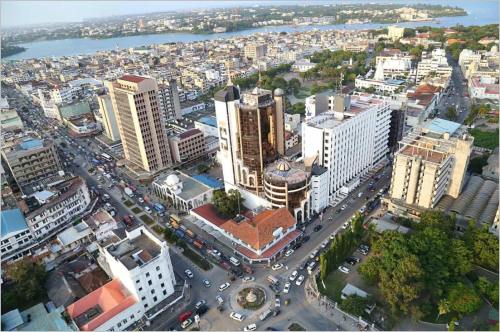 An image from Nairobi
.
.
Click the link below for images:
.
__________________________________________
June 2, 2022
Mohenjo
Business, Enthralling, Human Interest, Photographs
amazon, business, Business News, current-events, Future, Hotels, human-rights, medicine, mental-health, research, Science, Science News, technology, Technology News, travel, vacation
Click the link below the picture
.
Northern Ireland is a part of the United Kingdom that is variously described as a country, province, territory, or region. Located in the northeast of the island of Ireland, Northern Ireland shares a border to the south and west with the Republic of Ireland. In 2011, its population was 1,810,863, constituting about 30% of the island’s population and about 3% of the UK’s population. The Northern Ireland Assembly (colloquially referred to as Stormont after its location), established by the Northern Ireland Act 1998, holds responsibility for a range of devolved policy matters, while other areas are reserved for the UK Government. Northern Ireland cooperates with the Republic of Ireland in several areas.
Northern Ireland was created in 1921, when Ireland was partitioned by the Government of Ireland Act 1920, creating a devolved government for the six northeastern counties. The majority of Northern Ireland’s population were unionists, who wanted to remain within the United Kingdom. They were generally the Protestant descendants of colonists from Great Britain. Meanwhile, the majority in Southern Ireland (which became the Irish Free State in 1922), and a significant minority in Northern Ireland, were Irish nationalists and Catholics who wanted a united independent Ireland. Today, the former generally see themselves as British and the latter generally see themselves as Irish, while a Northern Irish or Ulster identity is claimed by a large minority from all backgrounds.
The creation of Northern Ireland was accompanied by violence both in defence of and against partition. During 1920–22, the capital Belfast saw major communal violence, mainly between Protestant unionist and Catholic nationalist. More than 500 were killed and more than 10,000 became refugees, mostly Catholics. For the next fifty years, Northern Ireland had an unbroken series of Unionist Party governments. There was informal mutual segregation by both communities, and the Unionist governments were accused of discrimination against the Irish nationalist and Catholic minority. In the late 1960s, a campaign to end discrimination against Catholics and nationalists was opposed by loyalists, who saw it as a republican front. This unrest sparked the Troubles, a thirty-year conflict involving republican and loyalist paramilitaries and state forces, which claimed over 3,500 lives and injured 50,000 others. The 1998 Good Friday Agreement was a major step in the peace process, including paramilitary disarmament and security normalization, although sectarianism and segregation remain major social problems, and sporadic violence has continued.
The economy of Northern Ireland was the most industrialized in Ireland at the time of Partition of Ireland but declined as a result of the political and social turmoil of the Troubles. Its economy has grown significantly since the late 1990s. The initial growth came from the “peace dividend” and increased trade with the Republic of Ireland, continuing with a significant increase in tourism, investment, and business from around the world. Unemployment in Northern Ireland peaked at 17.2% in 1986, dropping to 6.1% for June–August 2014 and down by 1.2 percentage points over the year, similar to the UK figure of 6.2%.
Cultural links between Northern Ireland, the rest of Ireland, and the rest of the UK are complex, with Northern Ireland sharing both the culture of Ireland and the culture of the United Kingdom. In many sports, the island of Ireland fields a single team, with the Northern Ireland national football team being an exception to this. Northern Ireland competes separately at the Commonwealth Games, and people from Northern Ireland may compete for either Great Britain or Ireland at the Olympic Games. Wikipedia
.
 An image from Northern Ireland, UK
.
.
Click the link below for images:
.
__________________________________________
June 1, 2022
Mohenjo
Business, Enthralling, Human Interest, Photographs
amazon, business, Business News, current-events, Future, Hotels, human-rights, medicine, mental-health, research, Science, Science News, technology, Technology News, travel, vacation
Click the link below the picture
.
Bolivia, officially the Plurinational State of Bolivia, is a country located in western-central South America. The seat of government and executive capital is La Paz, while the constitutional capital is Sucre. The largest city and principal industrial center is Santa Cruz de la Sierra, located on the Llanos Orientales (tropical lowlands), a mostly flat region in the east of the country.
The sovereign state of Bolivia is a constitutionally unitary state, divided into nine departments. Its geography varies from the peaks of the Andes in the West to the Eastern Lowlands, situated within the Amazon basin. It is bordered to the north and east by Brazil, to the southeast by Paraguay, to the south by Argentina, to the southwest by Chile, and to the northwest by Peru. One-third of the country is within the Andean mountain range. With 1,098,581 km2 (424,164 sq mi) of area, Bolivia is the fifth largest country in South America, after Brazil, Argentina, Peru, and Colombia (and alongside Paraguay, one of the only two landlocked countries in the Americas), the 27th largest in the world, the largest landlocked country in the Southern Hemisphere, and the world’s seventh-largest landlocked country, after Kazakhstan, Mongolia, Chad, Niger, Mali, and Ethiopia.
The country’s population, estimated at 11 million, is multiethnic, including Amerindians, Mestizos, Europeans, Asians, and Africans. Spanish is the official and predominant language, although 36 indigenous languages also have official status, of which the most commonly spoken are Guarani, Aymara, and Quechua languages.
Before Spanish colonization, the Andean region of Bolivia was part of the Inca Empire, while the northern and eastern lowlands were inhabited by independent tribes. Spanish conquistadors arriving from Cusco and Asunción took control of the region in the 16th century. During the Spanish colonial period, Bolivia was administered by the Real Audiencia of Charcas. Spain built its empire in large part upon the silver that was extracted from Bolivia’s mines. After the first call for independence in 1809, 16 years of war followed before the establishment of the Republic, named for Simón Bolívar. Over the course of the 19th and early 20th century, Bolivia lost control of several peripheral territories to neighboring countries including the seizure of its coastline by Chile in 1879. Bolivia remained relatively politically stable until 1971 when Hugo Banzer led a CIA-supported coup d’état which replaced the socialist government of Juan José Torres with a military dictatorship headed by Banzer. Banzer’s regime cracked down on left-wing and socialist opposition and other forms of dissent, resulting in the torture and deaths of a number of Bolivian citizens. Banzer was ousted in 1978 and later returned as the democratically elected president of Bolivia from 1997 to 2001. Under the 2006–2019 presidency of Evo Morales, the country saw significant economic growth and political stability.
Modern Bolivia is a charter member of the UN, IMF, NAM, OAS, ACTO, Bank of the South, ALBA, and USAN. Bolivia remains the second poorest country in South America, though it has slashed poverty rates and has the fastest growing economy in South America (in terms of GDP). It is a developing country, with a high ranking in the Human Development Index. Its main economic activities include agriculture, forestry, fishing, mining, and manufacturing goods such as textiles, clothing, refined metals, and refined petroleum. Bolivia is very rich in minerals, including tin, silver, lithium, and copper. Wikipedia
.
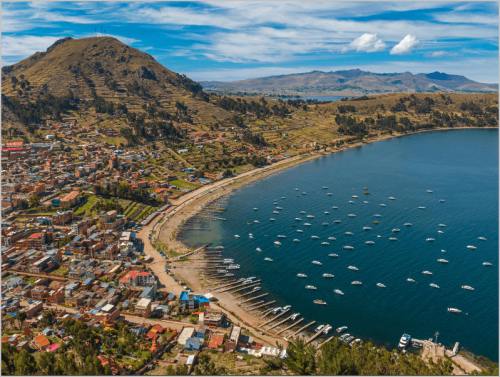
 Images from Beautiful Bolivia
.
.
Click the link below for images:
.
__________________________________________
May 31, 2022
Mohenjo
Business, Enthralling, Human Interest, Photographs
amazon, business, Business News, current-events, Future, Hotels, human-rights, medicine, mental-health, research, Science, Science News, technology, Technology News, travel, vacation
Click the link below the picture
.
Kegon Falls is located at Lake Chūzenji (source of the Oshiri River) in Nikkō National Park near the city of Nikkō, Tochigi Prefecture, Japan. The falls were formed when the Daiya River was rerouted by lava flows. The main falls had a height of approximately 97 meters (318 ft) and about twelve smaller waterfalls are situated behind and to the sides of Kegon Falls, leaking through the many cracks between the mountain and the lava flows.
In the autumn, the traffic on the road from Nikko to Chūzenji can sometimes slow to a crawl as visitors come to see the fall colors.
In 1927, the Kegon Falls was recognized as one of the “Eight Views” which best showed Japan and its culture in the Shōwa period. It is also listed as one of the “Japan’s Top 100 Waterfalls”, in a listing published by the Japanese Ministry of the Environment in 1990.
The Kegon Falls are infamous for suicides, especially among Japanese youth.
Misao Fujimura (1886 – May 22, 1903), a Japanese philosophy student and poet, is largely remembered due to his farewell poem written directly on the trunk of a tree before committing suicide by jumping from the Kegon Falls.
The story was soon sensationalized in contemporary newspapers and was commented upon by the famed writer Natsume Sōseki. This led the famed scenic falls to become a notorious spot for lovetorn or otherwise desperate youngsters to take their lives (Werther Effect). Wikipedia
.
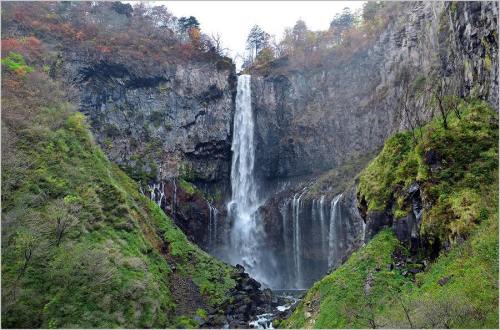 An image from Nikko, Japan at Kegon Falls
.
.
Click the link below for images:
.
__________________________________________
May 30, 2022
Mohenjo
Business, Enthralling, Human Interest, Photographs
amazon, business, Business News, current-events, Future, Hotels, human-rights, medicine, mental-health, research, Science, Science News, technology, Technology News, travel, vacation
Click the link below the picture
.
Beijing; Mandarin pronunciation: [pèɪ.tɕíŋ], alternatively romanized as Peking is the capital of the People’s Republic of China. It is the world’s most populous national capital city, with over 21 million residents within an administrative area of 16,410.5 km2 (6336 sq. mi.). Nevertheless, its built-up area, the third-largest in China after Guangzhou and Shanghai, is slightly bigger, including 3 districts in Hebei (Sanhe, Dachang Hui, and Zhuozhou) being conurbated but with Miyun and Pinggu Districts in Beijing not agglomerated yet. It is located in Northern China and is governed as a municipality under the direct administration of the State Council with 16 urban, suburban, and rural districts. Beijing is mostly surrounded by Hebei Province with the exception of neighboring Tianjin to the southeast; together, the three divisions form the Jingjinji megalopolis and the national capital region of China.
Beijing is a global city and one of the world’s leading centers for culture, diplomacy, politics, finance, business and economics, education, research, language, tourism, media, sport, science and technology, and transportation. A megacity, Beijing is the second largest Chinese city by urban population after Shanghai and is the nation’s cultural, educational, and political center. It is home to the headquarters of most of China’s largest state-owned companies and houses the largest number of Fortune Global 500 companies in the world, as well as the world’s four biggest financial institutions by total assets. Beijing is the “billionaire capital of the world” with the highest number of billionaires living in the city. It is also a major hub for the national highway, expressway, railway, and high-speed rail networks. The Beijing Capital International Airport has been the second busiest in the world by passenger traffic (Asia’s busiest) since 2010, and, as of 2016, the city’s subway network is the busiest and longest in the world. The Beijing Daxing International Airport, a second international airport in Beijing, is the largest single-structure airport terminal in the world.
Combining both modern and traditional style architectures, Beijing is one of the oldest cities in the world, with a rich history dating back over three millennia. As the last of the Four Great Ancient Capitals of China, Beijing has been the political center of the country for most of the past eight centuries and was the largest city in the world by population for much of the second millennium CE. With mountains surrounding the inland city on three sides, in addition to the old inner and outer city walls, Beijing was strategically poised and developed to be the residence of the emperor and thus was the perfect location for the imperial capital. The city is renowned for its opulent palaces, temples, parks, gardens, tombs, walls, and gates. Beijing is one of the most important tourist destinations of the world. In 2018, Beijing was the second highest-earning tourist city in the world after Shanghai. Beijing is home to many national monuments and museums and has seven UNESCO World Heritage Sites—the Forbidden City, Temple of Heaven, Summer Palace, Ming Tombs, Zhoukoudian, and parts of the Great Wall and the Grand Canal—all of which are popular tourist locations. Siheyuans, the city’s traditional housing style, and hutongs, the narrow alleys between siheyuans, are major tourist attractions and are common in urban Beijing.
Many of Beijing’s 91 universities consistently rank among the best in the Asia-Pacific and the world. Beijing is home to the two best C9 League universities (Tsinghua and Peking) in the Asia-Pacific and emerging countries. Beijing CBD is a center for Beijing’s economic expansion, with the ongoing or recently completed construction of multiple skyscrapers. Beijing’s Zhongguancun area is a world-leading center of scientific and technological innovation as well as entrepreneurship. Beijing has been ranked the No.1 city in the world with the largest scientific research output by the Nature Index since 2016. The city has hosted numerous international and national sporting events, the most notable being the 2008 Summer Olympics and 2008 Summer Paralympics Games. In 2022, Beijing became the first city ever to host both the Summer and Winter Olympics and also the Summer and Winter Paralympics. Beijing hosts 175 foreign embassies as well as the headquarters of many organizations, including the Asian Infrastructure Investment Bank (AIIB), the Shanghai Cooperation Organisation (SCO), the Silk Road Fund, the Chinese Academy of Sciences, the Chinese Academy of Engineering, the Chinese Academy of Social Sciences, the Central Academy of Fine Arts, the Central Academy of Drama, the Central Conservatory of Music, and the Red Cross Society of China. Wikipedia
.
 An image from Beijing
.
.
Click the link below for images:
.
__________________________________________
May 28, 2022
Mohenjo
Business, Enthralling, Human Interest, Photographs
amazon, business, Business News, current-events, Future, Hotels, human-rights, medicine, mental-health, research, Science, Science News, technology, Technology News, travel, vacation
Click the link below the picture
.
Amami Guntō National Park is a national park in Kagoshima Prefecture, Japan. Established in 2017, the park comprises a land area of 42,181 ha (104,230 acres) and a sea area of 33,082 ha (81,750 acres). The national park includes areas of these islands: Tokunoshima, Kikai, Amami, Yoron, Okinoerabujima, Uke Island, Kakeromajima, and Yoroshima.
On 15 February 1974, the Amami Guntō Quasi-National Park was founded on Amami Ōshima. On 7 March 2017, the Amami Guntō National Park was established and it subsumed the former Amami Guntō Quasi-National Park. The Amami Guntō National Park includes parts of the municipalities of Amagi, Amami, China, Isen, Kikai, Setouchi, Tatsugō, Tokunoshima, Uken, Wadomari, Yamato, and Yoron.
The designation of the new National Park, alongside that of Yanbaru National Park, is part of the movement to have Amami-Oshima Island, Tokunoshima Island, the northern part of Okinawa Island, and Iriomote Island inscribed on the UNESCO World Heritage List.
The Amami Wildlife Center is managed by Japan’s Ministry of the Environment to protect and preserve the natural ecosystem of the Amami Islands.
Total designated area is 75,263 ha (185,980 acres) (land: 42,181 ha, water: 33,082 ha). It is a World Heritage Site candidate. The national park consists of areas from these islands: Tokunoshima, Kikai, Amami, Yoron, Okinoerabujima, Uke Island, Kakeromajima and Yoroshima. This national park features coral reefs, mangrove forests, and tidal flats. A unique ecosystem has developed with endemic species such as the Amami rabbit, Ryukyu spiny rat, birds: Amami’s jay, Ryukyu robin. There are also snakes such as Habu and amphibians such as Ishikawa’s frog, Japanese warty newt, and the Ryūkyū scops owl. Wikipedia
.
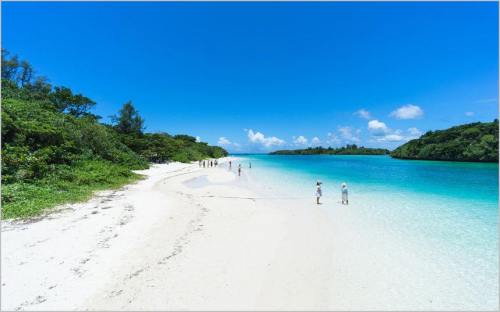 An image from Amami Gunto National Park
.
.
Click the link below for images:
.
__________________________________________
May 27, 2022
Mohenjo
Business, Enthralling, Human Interest, Photographs
amazon, business, Business News, current-events, Future, Hotels, human-rights, medicine, mental-health, research, Science, Science News, technology, Technology News, travel, vacation
Click the link below the picture
.
Guyana, officially the Co‑operative Republic of Guyana, is a country on the northern mainland of South America. The capital city is Georgetown. Guyana is bordered by the Atlantic Ocean to the north, Brazil to the south and southwest, Venezuela to the west, and Suriname to the east. With 215,000 square kilometers (83,000 sq mi), Guyana is the third-smallest sovereign state by area in mainland South America after Uruguay and Suriname, and is the second-least populous sovereign state in South America after Suriname; it is also one of the least densely populated countries on Earth. It has a wide variety of natural habitats and very high biodiversity.
The region known as “the Guianas” consists of the large shield landmass north of the Amazon River and east of the Orinoco River known as the “land of many waters”. There are nine indigenous tribes residing in Guyana: the Wai Wai, Macushi, Patamona, Lokono, Kalina, Wapishana, Pemon, Akawaio, and Warao. Historically dominated by the Lokono and Kalina tribes, Guyana was colonized by the Dutch before coming under British control in the late 18th century. It was governed as British Guiana, with a mostly plantation-style economy until the 1950s. It gained independence in 1966 and officially became a republic within the Commonwealth of Nations in 1970. The legacy of British rule is reflected in the country’s political administration and diverse population, which includes Indian, African, Amerindian, Chinese, Portuguese, other European, and various multiracial groups. In 2017, 41% of the population of Guyana lived below the poverty line.
Guyana is the only South American nation in which English is the official language. However, the majority of the population speak Guyanese Creole, an English-based creole language, as a first language. Guyana is part of the Anglophone Caribbean. It is part of the mainland Caribbean region maintaining strong cultural, historical, and political ties with other Caribbean countries as well as serving as the headquarters for the Caribbean Community (CARICOM). In 2008, the country joined the Union of South American Nations as a founding member.
The name “Guyana” derives from Guiana, the original name for the region that formerly included Guyana (British Guiana), Suriname (Dutch Guiana), French Guiana, and parts of Colombia, Venezuela, and Brazil. According to the Oxford English Dictionary, “Guyana” comes from an indigenous Amerindian language and means “land of many waters”. The Co‑operative Republic in the official name referred to co-operative socialism. Wikipedia
.
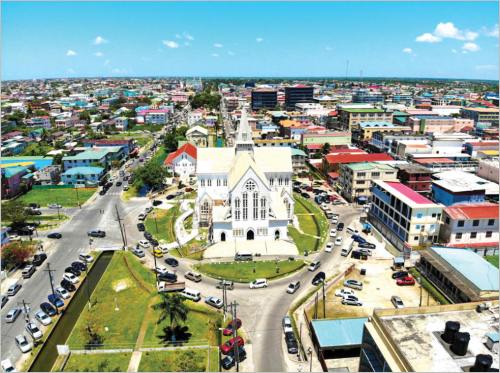 An image from Guyana
.
.
Click the link below for images:
.
__________________________________________
May 26, 2022
Mohenjo
Business, Enthralling, Human Interest, Photographs
amazon, business, Business News, current-events, Future, Hotels, human-rights, medicine, mental-health, research, Science, Science News, technology, Technology News, travel, vacation
Click the link below the picture
.
Cape Le Grand National Park is a national park in Western Australia, 631 km (392 mi) south-east of Perth and 56 km (35 mi) east of Esperance. The park covers an area of 31,801 hectares (78,580 acres) The area is an ancient landscape which has been above sea level for well over 200 million years and remained unglaciated. As a result, the area is home to many primitive relict species. Established in 1966, the park is managed by the Department of Parks and Wildlife. The name Le Grand is from one of the officers on L’Espérance, one of the ships in the 1792 expedition of Bruni d’Entrecasteaux.
The largely granite shoreline and white sand beaches are picturesque features of the area. The park is a used for fishing, off-roading, tourism, and hiking. Beaches within the Park include those at Lucky Bay, Rossiter Bay, Hellfire Bay, Le Grand Beach, and Thistle Cove. The islands and waters to the south of the park are known as the Recherche Archipelago Nature Reserve, another protected area of the Recherche Archipelago and nearby coastal regions. The Cape Arid National Park is located to the east. The southwest section of the park is dominated by rock outcrops of gneiss and granite. These form a distinctive chain of peaks including Mount Le Grand (345 m), Frenchman Peak (262 m), and Mississippi Hill (180 m, named after the Mississippi, a French whaler). Further inland, the park comprises mostly heath-covered sandplain, interspersed with swamps and pools of freshwater.
The sandplains support dense stands of banksias.
Other flora that can be found around the park include species of Melaleuca, Grevillea, sheoak, Christmas tree and grass trees. Wildflower blooms peak in the austral spring, lasting until October and species such as blue china orchid Cyanicula gemmata, Diuris corymbosa, Hakea laurina, Thysanotus sparteus and Thelymitra macrophylla are represented within the park.
Fauna that are commonly found within the park include bandicoots, pygmy honey possums, ring tailed possums, quenda and western grey kangaroos. Some of the relict species with gondwanan links that are found within the park include species of legless lizard, like the common scaly-foot Pygopus lepidopodus, and Delma fraseri, Delma australis and Aprasia striolata. The ancient, although non-gondwanan, blind snake Ramphotyphlops australis is also found within the park. Endemic frogs found within the area include the |quacking frog Crinia georgiana, the banjo frog Limnodynastes dorsalis and the humming frog Neobatrachus pelobatoides. Wikipedia
.
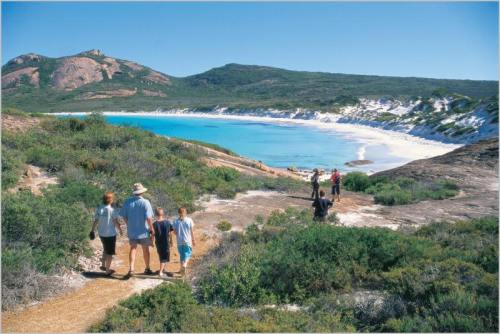 An image from Cape Le Grand National Park
.
.
Click the link below for images:
.
__________________________________________
May 25, 2022
Mohenjo
Business, Enthralling, Human Interest, Photographs
amazon, business, Business News, current-events, Future, Hotels, human-rights, medicine, mental-health, research, Science, Science News, technology, Technology News, travel, vacation
Click the link below the picture
.
Lesotho, officially the Kingdom of Lesotho, is a landlocked country enclaved by South Africa. It is a mountainous country situated in the Maloti Mountains and contains the highest mountains in Southern Africa. Lesotho has an area of just over 30,000 km2 (11,600 sq mi) and has a population of about 2 million. Its capital and largest city is Maseru. The official languages are Sesotho and English.
Lesotho was previously the British Crown Colony of Basutoland, but it declared independence from the United Kingdom on 4 October 1966. It is now a fully sovereign state and is a member of the United Nations, the Commonwealth of Nations, the African Union, and the Southern African Development Community (SADC). The name Lesotho roughly translates to “land of the Sotho”.
The original inhabitants of Lesotho were the San people. Examples of their rock art can be found in the mountains throughout the area.
Modern Lesotho, then called Basutoland, emerged as a single polity under King Moshoeshoe I in 1822. Moshoeshoe, a son of Mokhachane, a minor chief of the Bakoteli lineage, formed his own clan and became a chief around 1804. Between 1820 and 1823, he and his followers settled at the Butha-Buthe Mountain, joining with former adversaries in resistance against the Lifaqane associated with the reign of Shaka Zulu from 1818 to 1828.
The Basuto pony, one of the unique species of horse breed, arrived in Basutoland in 1825. In rural areas of Lesotho, the horse-like species has existed as a popular mode of transport.
Further evolution of the state emerged from conflicts between British and Dutch colonists leaving the Cape Colony following its seizure from the French-allied Dutch by the British in 1795, and also from the Orange River Sovereignty and subsequent Orange Free State. Missionaries Thomas Arbousset, Eugène Casalis, and Constant Gosselin from the Paris Evangelical Missionary Society, invited by Moshoeshoe I, were placed at Morija, developing Sesotho orthography and printed works in the Sesotho language between 1837 and 1855. Casalis, acting as translator and providing advice on foreign affairs, helped set up diplomatic channels and acquire guns for use against the encroaching Europeans and the Griqua people. Wikipedia
.
 An image from Lesotho Capital
.
.
Click the link below for images:
.
__________________________________________
Older Entries
Newer Entries
 James' World 2