June 16, 2022
Mohenjo
Business, Food For Thought, Human Interest, Photographs, Science, Technical
amazon, business, Business News, current-events, Future, Hotels, human-rights, medicine, mental-health, research, Science, Science News, technology, Technology News, travel, vacation

Click the link below the picture
.
Key Takeaways
- Here on Earth, our entire planet is a little under 13,000 kilometers in diameter, or about seven orders of magnitude greater than the size of a human.
- But as we go up, to larger and larger scales, we find that stars, stellar systems, star clusters, galaxies, clusters of galaxies, and more show us how insignificant human, and even planetary, scales truly are.
- Even with all we know, the vast abyss of the unobservable Universe is larger than the cumulative suite of all we can see. These images show how big the cosmic scale truly is.
Within this Universe, we’re merely a drop in the cosmic ocean.
.
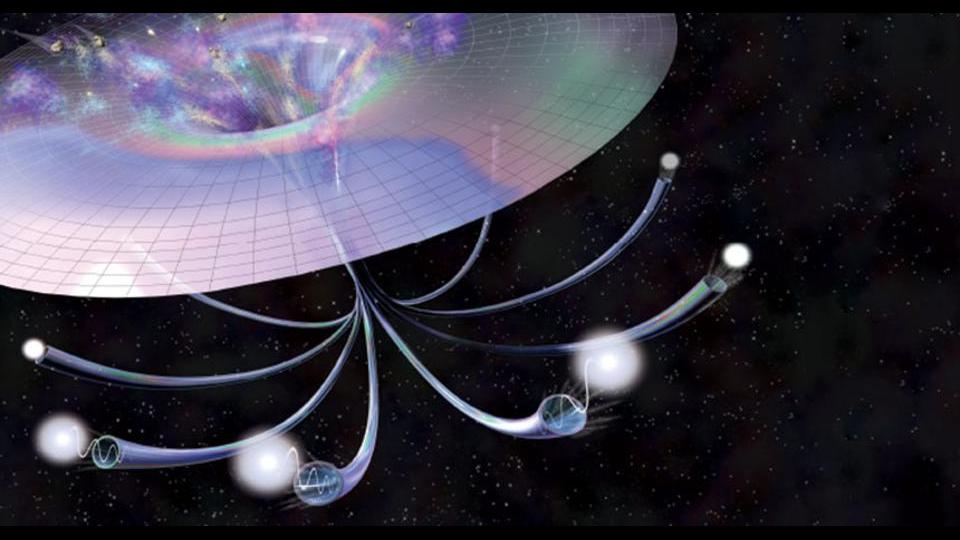 From a pre-existing state, inflation predicts that a series of universes will be spawned as inflation continues, with each one being completely disconnected from every other one, separated by more inflating space. One of these “bubbles,” where inflation ended, gave birth to our Universe some 13.8 billion years ago, where our entire visible Universe is just a tiny portion of that bubble’s volume. Each individual bubble is disconnected from all of the others (Credit: Nicolle Rager Fuller)
.
.
Click the link below for the article:
.
__________________________________________
June 15, 2022
Mohenjo
Business, Enthralling, Human Interest, Photographs
amazon, business, Business News, current-events, Future, Hotels, human-rights, medicine, mental-health, research, Science, Science News, technology, Technology News, travel, vacation

Click the link below the picture
.
Botswana, officially the Republic of Botswana, is a landlocked country in Southern Africa. Botswana is topographically flat, with up to 70 percent of its territory being the Kalahari Desert. It is bordered by South Africa to the south and southeast, Namibia to the west and north, and Zimbabwe to the northeast. It is connected to Zambia across the short Zambezi River border by the Kazungula Bridge.
A country of slightly over 2.3 million people, Botswana is one of the most sparsely populated countries in the world. About 11.6 percent of the population lives in the capital and largest city, Gaborone. Formerly one of the world’s poorest countries—with a GDP per capita of about US$70 per year in the late 1960s—it has since transformed itself into an upper-middle-income country, with one of the world’s fastest-growing economies.
Modern-day humans first inhabited the country over 200,000 years ago. The Tswana ethnic group were descended mainly from Bantu-speaking tribes who migrated southward of Africa to modern Botswana around 600 AD, living in tribal enclaves as farmers and herders. In 1885, the British colonized the area and declared a protectorate under the name of Bechuanaland. As decolonization occurred, Bechuanaland became an independent Commonwealth republic under its current name on 30 September 1966. Since then, it has been a representative republic, with a consistent record of uninterrupted democratic elections and the lowest perceived corruption ranking in Africa since at least 1998.
The economy is dominated by mining, cattle, and tourism. Botswana has a GDP (purchasing power parity) per capita of about $18,113 as of 2021, one of the highest in Africa. Botswana is the world’s biggest diamond-producing country. Its relatively high gross national income per capita (by some estimates the fourth-largest in Africa) gives the country a relatively high standard of living and the highest Human Development Index of continental Sub-Saharan Africa. Botswana is the first African country to host Forbes 30 Under 30 and 2017 Netball World Youth Cup.
Botswana is a member of the African Union, the Southern African Customs Union, the Southern African Development Community, the Commonwealth of Nations, and the United Nations. The country has been adversely affected by the HIV/AIDS epidemic. Despite the success in programmes to make treatments available, and to educate the populace about how to stop the spread of HIV/AIDS, the number of people with AIDS rose from 290,000 in 2005 to 320,000 in 2013. As of 2014, Botswana has the third-highest prevalence rate for HIV/AIDS, with roughly 20% of the population infected. Wikipedia
.
 An image from Botswana
.
.
Click the link below for images:
.
__________________________________________
June 14, 2022
Mohenjo
Business, Enthralling, Human Interest, Photographs
amazon, business, Business News, current-events, Future, Hotels, human-rights, medicine, mental-health, research, Science, Science News, technology, Technology News, travel, vacation
Click the link below the picture
.
The Bavarian Rhön Nature Park (Naturpark Bayerische Rhön) straddles the junction of the German states of Bavaria, Hesse and Thuringia. 70 km2 of the total 125 km2 area of the nature park has been recognized by UNESCO as part of the Rhön Biosphere Reserve.
The organisation for the promotion of the Bavarian Rhön Nature Park (Zweckverband Naturpark Bayerische Rhön) was founded in 1967. On 26 November 1982 the regulation for the Naturpark Bayerische Rhön was issued and, in 1997, the Zweckverband became the Society for the Bavarian Rhön Nature Park and Biosphere Reserve (Naturpark und Biosphärenreservat Bayer. Rhön e.V.).
The nature park lies between the Spessart, Vogelsberg, Thuringian Forest, Haßberge and Steigerwald forest. It is characterized by mixed forests, streams of flowing water, moors, grassland, and arid habitats. Wikipedia
.
 An image from Bavarian Rhön Nature Park
.
.
Click the link below for article:
.
__________________________________________
June 13, 2022
Mohenjo
Business, Enthralling, Human Interest, Photographs
amazon, business, Business News, current-events, Future, Hotels, human-rights, medicine, mental-health, research, Science, Science News, technology, Technology News, travel, vacation
Click the link below the picture
.
Uruguay, officially the Oriental Republic of Uruguay, is a country in South America. It shares borders with Argentina to its west and southwest and Brazil to its north and northeast; while bordering the Río de la Plata to the south and the Atlantic Ocean to the southeast. It is part of the Southern Cone region of South America. Uruguay covers an area of approximately 181,034 square kilometers (69,898 sq mi) and has a population of an estimated 3.51 million, of whom 2 million live in the metropolitan area of its capital and largest city, Montevideo.
The area that became Uruguay was first inhabited by groups of hunter-gatherers 13,000 years ago. The predominant tribe at the moment of the arrival of Europeans was the Charrúa people, when the Portuguese first established Colónia do Sacramento in 1680; Uruguay was colonized by Europeans late relative to neighboring countries. The Spanish founded Montevideo as a military stronghold in the early 18th century because of the competing claims over the region. Uruguay won its independence between 1811 and 1828, following a four-way struggle between Portugal and Spain, and later Argentina and Brazil. It remained subject to foreign influence and intervention throughout the 19th century, with the military playing a recurring role in domestic politics. A series of economic crises and the political repression against left-wing guerrilla activity in the late 1960s and early 1970s put an end to a democratic period that had begun in the early 20th century, culminating in the 1973 coup d’état, which established a civic-military dictatorship. The military government persecuted leftists, socialists, and political opponents, resulting in several deaths and numerous instances of torture by the military; the military relinquished power to a civilian government in 1985. Uruguay is today a democratic constitutional republic, with a president who serves as both head of state and head of government.
Uruguay is a developing country with a high-income economy and is ranked first in Latin America in democracy, peace, low perception of corruption, and e-government. It is first in South America when it comes to press freedom, size of the middle class, and prosperity. On a per-capita basis, Uruguay contributes more troops to United Nations peacekeeping missions than any other country. It is the lowest ranking South American nation in the Global Terrorism Index and ranks second in the continent on economic freedom, income equality, per-capita income, and inflows of FDI. Uruguay is the third-best country on the continent in terms of Human Development Index, GDP growth, innovation, and infrastructure. Uruguay is regarded as one of the most socially progressive countries in Latin America. It ranks high on global measures of personal rights, tolerance, and inclusion issues, including its acceptance of the LGBT community. The country has legalized cannabis, same-sex marriage, and abortion. Uruguay is a founding member of the United Nations, OAS, and Mercosur. Wikipedia
.
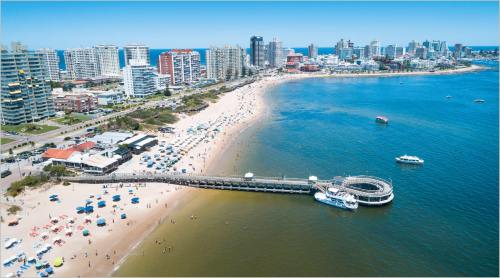 An image from Uruguay
.
.
Click the link below for images:
.
__________________________________________
June 11, 2022
Mohenjo
Business, Enthralling, Human Interest, Photographs
amazon, business, Business News, current-events, Future, Hotels, human-rights, medicine, mental-health, research, Science, Science News, technology, Technology News, travel, vacation
Click the link below the picture
.
The Rhön Biosphere Reserve includes the entire central area of the Rhön Mountains, a low mountain range in the German states of Hesse, Bavaria, and Thuringia.
In 1991 the Rhön was recognized at international level by UNESCO as a biosphere reserve. The aim of this biosphere reserve is, taking account of local agriculture, nature protection, tourism, and trade, to ensure the variety and quality of habitats in the whole Rhön region. This involves creating a long-term, economic environment for agriculture and trade that is in tune with the protection and care of nature and the local landscape. People are at the heart of the Rhön Biosphere Reserve. The idea is to have a so-called sustainable development, which harmonizes economic and social issues as far as possible with environmental issues.
The Biosphere Reserve currently has a total area of 184,939 hectares (714.05 sq mi), of which 72,802 ha are in Bavaria, 63,564 ha in Hesse, and 48,573 ha in Thuringia. From 1991-1995 a “Concept for the Protection, Care and Development” for the Rhön with objectives and measures was drawn up in conjunction with the districts, communes, authorities, and societies. Following the UNESCO zoning system, 4,199 ha (2.27%) of land were designated as a core areas that are not allowed to be directly used for any purpose e.g. agriculture or forestry. A further 67,483 ha (36.49%) are designated as buffer zones where there should only be careful use of land compatible with nature. The remaining areas are the zones of cooperation in which the villages and towns of the Rhön are situated.
.
 An image from the Rhön Biosphere Reserve Germany
.
.
Click the link below for images:
.
__________________________________________
June 10, 2022
Mohenjo
Business, Enthralling, Human Interest, Photographs
amazon, business, Business News, current-events, Future, Hotels, human-rights, medicine, mental-health, research, Science, Science News, technology, Technology News, travel, vacation
Click the link below the picture
.
Guangzhou, also known as Canton () and alternatively romanized as Kwongchow or Kwangchow, is the capital and the largest city of Guangdong province in southern China. Located on the Pearl River about 120 km (75 mi) north-northwest of Hong Kong and 145 km (90 mi) north of Macau, Guangzhou has a history of over 2,200 years and was a major terminus of the maritime Silk Road, and continues to serve as a major port and transportation hub, as well as one of China’s three largest cities. For a long time the only Chinese port accessible to most foreign traders, Guangzhou was captured by the British during the First Opium War. No longer enjoying a monopoly after the war, it lost trade to other ports such as Hong Kong and Shanghai but continued to serve as a major transshipment port. Due to a high urban population and large volumes of port traffic, Guangzhou is classified as a Large-Port Megacity, the largest type of port city in the world. Due to worldwide pandemic-related restrictions on traveling in 2020, Guangzhou Baiyun International Airport, the major airport of Guanghou, became the world’s busiest airport by passenger traffic.
Guangzhou is at the heart of the most-populous built-up metropolitan area in the world, which extends into the neighboring cities of Foshan, Dongguan, Zhongshan, Shenzhen, and part of Jiangmen, Huizhou, Zhuhai, and Macao, forming the largest urban agglomeration on Earth with approximately 65,594,622 residents and part of the Pearl River Delta Economic Zone. Administratively, the city holds subprovincial status and is one of China’s nine National Central Cities. In the late 1990s and early 2000s, nationals of sub-Saharan Africa who had initially settled in the Middle East and Southeast Asia moved in unprecedented numbers to Guangzhou in response to the 1997/98 Asian financial crisis. The domestic migrant population from other provinces of China in Guangzhou was 40% of the city’s total population in 2008. Together with Shanghai, Beijing, and Shenzhen, Guangzhou has one of the most expensive real estate markets in China. As of the 2020 census, the registered population of the city’s expansive administrative area was 18,676,605 individuals (up to 47% from the previous census in 2010) whom 16,492,590 lived in 9 urban districts (all but Conghua and Zengcheng).
In modern commerce, Guangzhou is best known for its annual Canton Fair, the oldest and largest trade fair in China. For three consecutive years (2013–2015), Forbes ranked Guangzhou as the best commercial city in mainland China. Guangzhou is highly ranked as an Alpha- (global first-tier) city together with San Francisco and Stockholm. It is a leading financial center in the Asia-Pacific region and ranks 21st globally in the 2020 Global Financial Centres Index. As an important international city, Guangzhou has hosted numerous international and national sporting events, the most notable being the 2010 Asian Games, the 2010 Asian Para Games, and the 2019 FIBA Basketball World Cup. The city hosts 65 foreign representatives, making it the third major city to host more foreign representatives than any other cities in China after Beijing and Shanghai. As of 2020, Guangzhou ranks 10th in the world and 5th in China (after Beijing, Shanghai, Hong Kong, and Shenzhen) for the number of billionaire residents by the Hurun Global Rich List.
Guangzhou is a major center of research and innovation in the Asia-Pacific with a high level of scientific research output, ranking 14th globally, 6th in the Asia-Pacific, and 4th in China (after Beijing, Shanghai and Nanjing), and is home to many of China’s most prestigious universities, including Sun Yat-sen University, South China University of Technology, Jinan University, South China Normal University, South China Agricultural University, Guangzhou University, Southern Medical University, Guangdong University of Technology, Guangzhou Medical University, Guangzhou University of Chinese Medicine. Wikipedia
.
 An image from Guangzhou, China
.
.
Click the link below for images:
.
__________________________________________
June 9, 2022
Mohenjo
Business, Enthralling, Human Interest, Photographs
amazon, business, Business News, current-events, Future, Hotels, human-rights, medicine, mental-health, research, Science, Science News, technology, Technology News, travel, vacation
Click the link below the picture
.
Qingdao also spelled Tsingtao; is a major city in eastern Shandong Province. The city’s name in Chinese characters literally means “azure island”. Located on China’s Yellow Sea coast, it is a major nodal city of the One Belt, One Road (OBOR) Initiative that connects Asia with Europe. It has the highest GDP of any city in the province. Administered at the sub-provincial level, Qingdao has jurisdiction over seven districts and three county-level cities (Jiaozhou, Pingdu, Laixi). As of the 2020 census, Qingdao built-up (or metro) area made of the 7 urban Districts (Shinan, Shibei, Huangdao, Laoshan, Licang, Chengyang, and Jimo) was home to 7,172,451 inhabitants. Lying across the Shandong Peninsula and looking out to the Yellow Sea, it borders the prefecture-level cities of Yantai to the northeast, Weifang to the west, and Rizhao to the southwest.
Qingdao is a major seaport and naval base, as well as a commercial and financial center. It is home to electronics multinationals such as Haier and Hisense. The Jiaozhou Bay Bridge, links the main urban area of Qingdao with Huangdao district, straddling the Jiaozhou Bay sea areas. Its historic, German-style architecture and Tsingtao Brewery, the second largest brewery in China are legacies of the German occupation (1898-1914).
In the 2020 Global Financial Centers Index, Qingdao ranked 47th; the index is published by the Z/Yen Group and China Development Institute, the other Chinese cities on the list being Shanghai, Hong Kong, Beijing, Shenzhen, Guangzhou, Chengdu, Nanjing, Xi’an, Tianjin, Hangzhou, Dalian, and Wuhan. In 2007, Qingdao was named as one of China’s top ten cities by the Chinese Cities Brand Value Report, which was released at the 2007 Beijing Summit of China Cities Forum. In 2009, Qingdao was named China’s most livable city by the Chinese Institute of City Competitiveness. In 2018, Qingdao held the Shanghai Cooperation Organisation summit. In 2020, Qingdao was rated as a Gamma+ level global city by the Globalization and World Cities Research Network.
Qingdao is also one of the world’s top 100 cities for global scientific research as tracked by the Nature Index. The city is home to several notable universities, including the Ocean University of China, China University of Petroleum, Shandong University of Science and Technology, Qingdao University, Qingdao University of Science and Technology Qingdao University of Technology, and Qingdao Agricultural University. Wikipedia
.
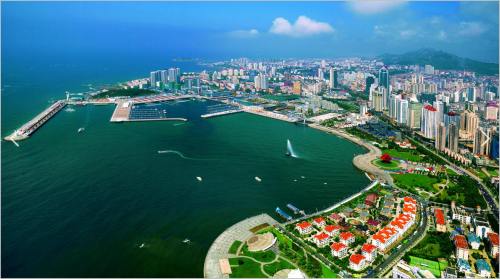 An image from Qingdao, Shandong, China
.
.
Click the link below for images:
.
__________________________________________
June 8, 2022
Mohenjo
Business, Enthralling, Human Interest, Photographs
amazon, business, Business News, current-events, Future, Hotels, human-rights, medicine, mental-health, research, Science, Science News, technology, Technology News, travel, vacation
Click the link below the picture
.
Namibia, officially the Republic of Namibia, is a country in Southern Africa. Its western border is the Atlantic Ocean. It shares land borders with Zambia and Angola to the north, Botswana to the east, and South Africa to the south and east. Although it does not border Zimbabwe, less than 200 meters (660 feet) of the Botswanan right bank of the Zambezi River separates the two countries. Namibia gained independence from South Africa on 21 March 1990, following the Namibian War of Independence. Its capital and largest city is Windhoek. Namibia is a member state of the United Nations (UN), the Southern African Development Community (SADC), the African Union (AU), and the Commonwealth of Nations.
The driest country in sub-Saharan Africa, Namibia has been inhabited since prehistoric times by the San, Damara, and Nama people. Around the 14th century, immigrating Bantu people arrived as part of the Bantu expansion. Since then, the Bantu groups, the largest being the Ovambo, have dominated the population of the country; since the late 19th century, they have constituted a majority.
In 1878, the Cape of Good Hope, then a British colony, annexed the port of Walvis Bay and the offshore Penguin Islands; these became an integral part of the new Union of South Africa at its creation in 1910. In 1884, the German Empire established rule over most of the territory, forming a colony known as German Southwest Africa. It developed farming and infrastructure. Between 1904 and 1908, it perpetrated a genocide against the Herero and Nama people. German rule ended in 1915 with a defeat by South African forces. In 1920, after the end of World War I, the League of Nations mandated administration of the colony to South Africa. As Mandatory power, South Africa imposed its laws, including racial classifications and rules. From 1948, with the National Party elected to power, this included South Africa applying apartheid to what was then known as South West Africa.
In the later 20th century, uprisings and demands for political representation by native African political activists seeking independence resulted in the UN assuming direct responsibility over the territory in 1966, but South Africa maintained de facto rule. In 1973, the UN recognized the South West Africa People’s Organisation (SWAPO) as the official representative of the Namibian people; the party is dominated by the Ovambo, who are a large plurality in the territory. Following continued guerrilla warfare, South Africa installed an interim administration in Namibia in 1985. Namibia obtained full independence from South Africa in 1990. However, Walvis Bay and the Penguin Islands remained under South African control until 1994.
Namibia has a population of 2.55 million people and is a stable multi-party parliamentary democracy. Agriculture, tourism, and the mining industry – including mining for gem diamonds, uranium, gold, silver, and base metals – form the basis of its economy, while the manufacturing sector is comparatively small. The large, arid Namib Desert from which the country derived its name has resulted in Namibia being overall one of the least densely populated countries in the world. Wikipedia
.
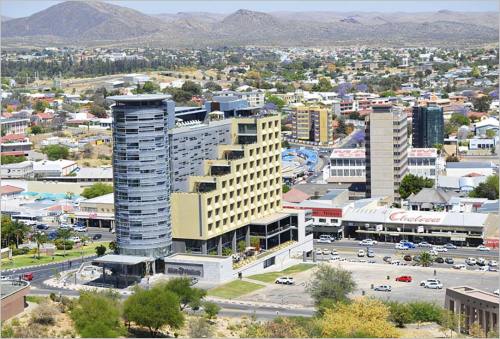 An image from Namibia
.
.
Click the link below for images:
.
__________________________________________
June 7, 2022
Mohenjo
Business, Enthralling, Human Interest, Photographs
amazon, business, Business News, current-events, Future, Hotels, human-rights, medicine, mental-health, research, Science, Science News, technology, Technology News, travel, vacation
Click the link below the picture
.
Kamikōchi is a remote mountainous highland valley within the Hida Mountains range, in the western region of Nagano Prefecture, Japan.
It has been preserved in its natural state within Chūbu-Sangaku National Park. It is designated as one of Japan’s National Cultural Assets, on the list of Special Natural Monuments and Special Places of Scenic Beauty. It is sometimes referred to as the “Japanese Yosemite Valley,” although it is considerably smaller than its Californian counterpart.
Kamikōchi is a high mountain valley approximately 18 kilometers in length. The average elevation of the valley floor ranges between roughly 1,400 m (4,600 ft) above sea level at the south end and roughly 1,600 m (5,200 ft) at the northern tip.
Kamikōchi is located in the Hida Mountains, the “Northern Alps” of the Japanese Alps. The surrounding mountains reach 3,190 m (10,470 ft). Kamikōchi is bordered on its northern end by Mount Hotaka, and on its southern end by Mount Yake, an active volcano.
The Azusa River flows the length of the valley, filling Lake Taishō at the base of Mt. Yake. Lake Taishō received its name because it was formed by the eruption of Mt. Yake in 1915, which was part of the Taishō period in Japan.
Because of the relatively flat topography of the Kamikochi Valley, marshes and ponds are a common feature, including the Takezawa Marsh, Tashiro Pond, and Myojin Pond. As the waters are mainly from melted snow runoff or underground aquifers, the water temperature is cold, even in the height of summer. The Tokusawa area at the far northern end of the valley served as a grazing area for horses and cattle until 1934 when the area was completely integrated into the park.
Kamikochi is a very popular hiking destination, there are an abundance of mountain huts and camping sites that make overnight hiking easier to manage. The most famous hike in the area is Yarigatake which is easily accessible from Kamikochi and often combined with Oku-Hotaka as a multi-day hike. Wikipedia
.
 An image from Kamikochi
.
.
Click the link below for images:
.
__________________________________________
June 6, 2022
Mohenjo
Business, Enthralling, Human Interest, Photographs
amazon, business, Business News, current-events, Future, Hotels, human-rights, medicine, mental-health, research, Science, Science News, technology, Technology News, travel, vacation
Click the link below the picture
.
Ecuador, officially the Republic of Ecuador, which literally translates as “Republic of the Equator”; Quechua:, is a country in northwestern South America, bordered by Colombia on the north, Peru on the east and south, and the Pacific Ocean on the west. Ecuador also includes the Galápagos Islands in the Pacific, about 1,000 kilometers (621 mi) west of the mainland. The capital is Quito.
The territories of modern-day Ecuador were once home to a variety of Amerindian groups that were gradually incorporated into the Inca Empire during the 15th century. The territory was colonized by Spain during the 16th century, achieving independence in 1820 as part of Gran Colombia, from which it emerged as its own sovereign state in 1830. The legacy of both empires is reflected in Ecuador’s ethnically diverse population, with most of its 17.1 million people being mestizos, followed by large minorities of European, Native American, and African descendants. Spanish is the official language and is spoken by a majority of the population, though 13 Native languages are also recognized, including Quechua and Shuar.
The sovereign state of Ecuador is a middle-income representative democratic republic and a developing country that is highly dependent on commodities, namely petroleum and agricultural products. It is governed as a democratic presidential republic. The country is a founding member of the United Nations, Organization of American States, Mercosur, PROSUR, and the Non-Aligned Movement.
One of 17 megadiverse countries in the world, Ecuador hosts many endemic plants and animals, such as those of the Galápagos Islands. In recognition of its unique ecological heritage, the new constitution of 2008 is the first in the world to recognize legally enforceable Rights of Nature, or ecosystem rights.
According to the Center for Economic and Policy Research, between 2006 and 2016, poverty decreased from 36.7% to 22.5%, and annual per capita GDP growth was 1.5 percent (as compared to 0.6 percent over the prior two decades). At the same time, the country’s Gini index of economic inequality decreased from 0.55 to 0.47.
The country’s name means “Equator” in Spanish, truncated from the Spanish official name, República del Ecuador (lit. “Republic of the Equator”), derived from the former Ecuador Department of Gran Colombia established in 1824 as a division of the former territory of the Royal Audience of Quito. Quito, which remained the capital of the department and republic, is located only about 40 kilometers (25 mi), ¼ of a degree, south of the equator. Wikipedia
.
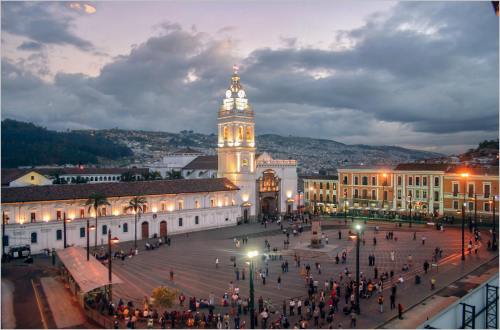 An image from Cities in Ecuador
.
.
Click the link below for images:
.
__________________________________________
Older Entries
Newer Entries
 James' World 2