June 27, 2022
Mohenjo
Business, Enthralling, Human Interest, Photographs
amazon, business, Business News, current-events, Future, Hotels, human-rights, medicine, mental-health, research, Science, Science News, technology, Technology News, travel, vacation

Click the link below the picture
.
Nanjing, alternately romanized as Nanking, is the capital of Jiangsu province of the People’s Republic of China, a sub-provincial city, a megacity, and the second-largest city in the East China region. With 11 districts, Nanjing, which is located in southwestern Jiangsu, has an administrative area of 6,600 km2 (2,500 sq mi) and a total recorded population of 9,314,685 as of 2020. Nevertheless, its built-up (or metro) area encompassing 9 Nanjing urban Districts (all but Lishui and Gaochun not conurbated yet) and Huashan and Yushan Districts and Dangtu County in Maanshan City, largely being agglomerated, was home to 9,648,136 inhabitants. In a very few years, Jurong District in Zhenjiang and Jiujiang, Jinghu and Yijiang Districts in Wuhu will also be conurbated leading to a tri-city built-up area of 11,910,201 inhabitants.
Situated in the Yangtze River Delta region, Nanjing has a prominent place in Chinese history and culture, having served as the capital of various Chinese dynasties, kingdoms, and republican governments dating from the 3rd century to 1949, and has thus long been a major center of culture, education, research, politics, economy, transport networks, and tourism, being the home to one of the world’s largest inland ports. The city is also one of the fifteen sub-provincial cities in the People’s Republic of China’s administrative structure, enjoying jurisdictional and economic autonomy only slightly less than that of a province. Nanjing has been ranked seventh in the evaluation of “Cities with Strongest Comprehensive Strength” issued by the National Statistics Bureau, and second in the evaluation of cities with most sustainable development potential in the Yangtze River Delta. It has also been awarded the title of 2008 Habitat Scroll of Honor of China, Special UN-Habitat Scroll of Honor Award, and National Civilized City. Nanjing is also considered a Beta (global second-tier) city classification, together with Chongqing, Hangzhou, and Tianjin by the Globalization and World Cities Research Network, and ranked as one of the world’s top 100 cities in the Global Financial Centres Index.
Nanjing has many highly-ranked educational institutions with the number of universities listed in 147 National Key Universities ranking third (after Beijing and Shanghai), Nanjing University, which has a long history and is among the world’s top 20 universities ranked by Nature Index. The ratio of college students to the total population ranks No.1 among large cities nationwide. Nanjing has the eighth-largest scientific research output of any city in the world. It has been regarded among the world’s top fourth scientific research centers in chemistry (behind Beijing, Shanghai, and Tokyo), according to the Nature Index.
Nanjing, one of the nation’s most important cities for over a thousand years, is recognized as one of the Four Great Ancient Capitals of China. It has been one of the world’s largest cities, enjoying peace and prosperity despite wars and disasters. Nanjing served as the capital of Eastern Wu (229–280), one of the three major states in the Three Kingdoms period; the Eastern Jin and each of the Southern dynasties (Liu Song, Southern Qi, Liang, and Chen), which successively ruled southern China from 317 to 589; the Southern Tang (937–75), one of the Ten Kingdoms; the Ming dynasty when, for the first time, all of China was ruled from the city (1368–1421); and the Republic of China under the nationalist Kuomintang (1927–37, 1946–49) prior to its flight to Taiwan by Chiang Kai-shek during the Chinese Civil War The city also served as the seat of the rebel Taiping Heavenly Kingdom (1853–64) and the Japanese puppet regime of Wang Jingwei (1940–45) during the Second Sino-Japanese War. It suffered severe atrocities in both conflicts, such as the Nanjing massacre.
Nanjing has served as the capital city of Jiangsu province since the establishment of the People’s Republic of China. It has many important heritage sites, including the Presidential Palace and Sun Yat-sen Mausoleum. Nanjing is famous for human historical landscapes, mountains, and waters such as Fuzimiao, Ming Palace, Chaotian Palace, Porcelain Tower, Drum Tower, Stone City, City Wall, Qinhuai River, Xuanwu Lake and Purple Mountain. Key cultural facilities include Nanjing Library, Nanjing Museum and Jiangsu Art Museum. Wikipedia
.
 An image from Nanjing, China
.
.
Click the link below for images:
.
__________________________________________
June 25, 2022
Mohenjo
Business, Enthralling, Human Interest, Photographs
amazon, business, Business News, current-events, Future, Hotels, human-rights, medicine, mental-health, research, Science, Science News, technology, Technology News, travel, vacation
Click the link below the picture
.
Great Sand Dunes National Park and Preserve is an American national park that conserves an area of large sand dunes up to 750 feet (230 m) tall on the eastern edge of the San Luis Valley, and an adjacent national preserve in the Sangre de Cristo Range, in south-central Colorado, United States. The park was originally designated Great Sand Dunes National Monument on March 17, 1932, by President Herbert Hoover. The original boundaries protected an area of 35,528 acres (55.5 sq mi; 143.8 km2). A boundary change and redesignation as a national park and preserve was authorized on November 22, 2000, and then established on September 24, 2004. The park encompasses 107,342 acres (167.7 sq mi; 434.4 km2) while the preserve protects an additional 41,686 acres (65.1 sq mi; 168.7 km2) for a total of 149,028 acres (232.9 sq mi; 603.1 km2). The recreational visitor total was 527,546 in 2019.
The park contains the tallest sand dunes in North America. The dunes cover an area of about 30 sq mi (78 km2) and are estimated to contain over 1.2 cubic miles (5 billion cubic meters) of sand. Sediments from the surrounding mountains filled the valley over geologic time periods. After lakes within the valley receded, exposed sand was blown by the predominant southwest winds toward the Sangre de Cristos, eventually forming the dunefield over an estimated tens of thousands of years. The four primary components of the Great Sand Dunes system are the mountain watershed, the dunefield, the sand sheet, and the sabkha. Ecosystems within the mountain watershed include alpine tundra, subalpine forests, montane woodlands, and riparian zones.
Evidence of human habitation in the San Luis Valley dates back about 11,000 years. The first historic peoples to inhabit the area were the Southern Ute Tribe; Apaches and Navajo also have cultural connections in the area. In the late 17th century, Diego de Vargas, a Spanish governor of Santa Fe de Nuevo México, became the first European on record to enter the San Luis Valley. Juan Bautista de Anza, Zebulon Pike, John C. Frémont, and John Gunnison all traveled through and explored parts of the region in the 18th and 19th centuries. The explorers were soon followed by settlers who ranched, farmed, and mined in the valley starting in the late 19th century. The park was first established as a national monument in 1932 to protect it from gold mining and the potential of a concrete manufacturing business.
Visitors must walk across the wide and shallow Medano Creek to reach the dunes in spring and summer. The creek typically has a peak flow from late May to early June. From July to April, it is usually no more than a few inches deep, if there is any water at all. Hiking is permitted throughout the dunes with the warning that the sand surface temperature may reach 150 °F (66 °C) in summer. Sandboarding and sandsledding are popular activities, both done on specially designed equipment that can be rented just outside the park entrance or in Alamosa. Visitors with street-legal four-wheel drive vehicles may continue past the end of the park’s main road to Medano Pass on 22 miles (35 km) of unpaved road, crossing the stream bed of Medano Creek nine times and traversing 4 miles (6.4 km) of deep sand. Hunting is permitted in the preserve in the autumn but prohibited within national park boundaries at all times. The preserve encompasses nearly all of the mountainous areas north and east of the dunefield, up to the ridgeline of the Sangre de Cristos.
.
 An image from Great Sand Dunes National Park Colorado
.
.
Click the link below for images:
.
__________________________________________
June 23, 2022
Mohenjo
Business, Enthralling, Human Interest, Photographs
amazon, business, Business News, current-events, Future, Hotels, human-rights, medicine, mental-health, research, Science, Science News, technology, Technology News, travel, vacation
Click the link below the picture
.
Mozambique, officially the Republic of Mozambique, is a country located in Southeastern Africa bordered by the Indian Ocean to the east, Tanzania to the north, Malawi and Zambia to the northwest, Zimbabwe to the west, and Eswatini (Swaziland) and South Africa to the southwest. The sovereign state is separated from the Comoros, Mayotte, and Madagascar by the Mozambique Channel to the east. The capital and largest city of Mozambique is Maputo (known as Lourenço Marques from 1876 to 1976).
Between the first and fifth centuries AD, Bantu-speaking peoples migrated to present-day Mozambique from farther north and west.[citation needed] Northern Mozambique lies within the monsoon trade winds of the Indian Ocean. Between the 7th and 11th centuries, a series of Swahili port towns developed there, which contributed to the development of a distinct Swahili culture and language. In the late medieval period, these towns were frequented by traders from Somalia, Ethiopia, Egypt, Arabia, Persia, and India.
The voyage of Vasco da Gama in 1498 marked the arrival of the Portuguese, who began a gradual process of colonization and settlement in 1505. After over four centuries of Portuguese rule, Mozambique gained independence in 1975, becoming the People’s Republic of Mozambique shortly thereafter. After only two years of independence, the country descended into an intense and protracted civil war lasting from 1977 to 1992. In 1994, Mozambique held its first multiparty elections and has since remained a relatively stable presidential republic, although it still faces a low-intensity insurgency.
Mozambique is endowed with rich and extensive natural resources. The country’s economy is based largely on agriculture, but industry is growing, mainly food and beverages, chemical manufacturing, and aluminum and petroleum production. The tourism sector is also expanding. South Africa is Mozambique’s main trading partner and source of foreign direct investment, while Belgium, Brazil, Portugal, and Spain are also among the country’s most important economic partners. Since 2001, Mozambique’s annual average GDP growth has been among the world’s highest. However, the country is still one of the poorest and most underdeveloped countries in the world, ranking low in GDP per capita, human development, measures of inequality, and average life expectancy.
The only official language of Mozambique is Portuguese, which is spoken mostly as a second language by about half the population. Common native languages include Tsonga, Makhuwa, Sena, and Swahili. The country’s population of around 29 million is composed of overwhelmingly Bantu people. The largest religion in Mozambique is Christianity, with significant minorities following Islam and African traditional religions. Mozambique is a member of the United Nations, the African Union, the Commonwealth of Nations, the Organisation of the Islamic Cooperation, the Community of Portuguese Language Countries, the Non-Aligned Movement, the Southern African Development Community, and is an observer at La Francophonie. Wikipedia
.
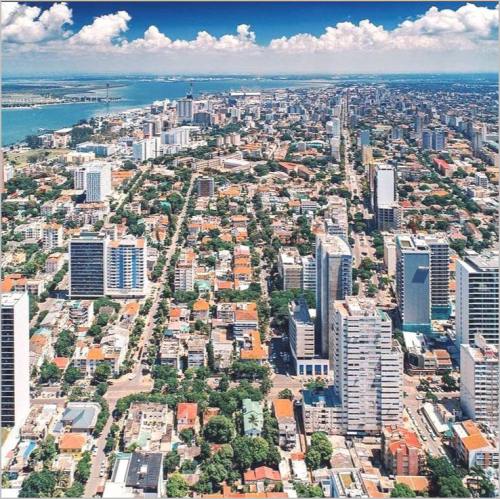 An image from Mozambique City
.
.
Click the link below for images:
.
__________________________________________
June 22, 2022
Mohenjo
Business, Enthralling, Human Interest, Photographs
amazon, business, Business News, current-events, Future, Hotels, human-rights, medicine, mental-health, research, Science, Science News, technology, Technology News, travel, vacation
Click the link below the picture
.
Krabi is the main town in the province of Krabi on the west coast of southern Thailand at the mouth of the Krabi River where it empties in Phang Nga Bay. As of 2020, the town had a population of 32,644. The town is the capital of Krabi Province and the 10 Krabi city sub-districts. Tourism is an important industry. Krabi is 783 km (487 mi) south of Bangkok by road. At the start of the Rattanakosin period in the late eighteenth century, when the capital was finally settled at Bangkok, an elephant kraal was established in Krabi by order of Chao Phraya Nakhon (Noi), the governor of Nakhon Si Thammarat, which was by then a part of the Thai Kingdom. He sent his vizier, the Phra Palad, to oversee this task, which was to ensure a regular supply of elephants for the larger town. So many followers immigrated in the steps of the Phra Palad that soon Krabi had a large community in three different boroughs: Pakasai, Khlong Pon, and Pak Lao. In 1872, King Chulalongkorn elevated these to town status, called Krabi, a word that preserves in its meaning the monkey symbolism of the old standard. The town’s first governor was Luang Thep Sena, though it continued for a while as a dependency of Nakhon Si Thammarat. This was changed in 1875 when Krabi was raised to a fourth-level town in the old system of Thai government. Administrators then reported directly to the central government in Bangkok, and Krabi’s history as an entity separate from other provinces had begun.
Much of the province has been given over to several national parks. Top destinations are Hat Noppharat Thara – Mu Ko Phi Phi National Park, Ao Nang, Railay, and Ko Phi Phi. The province includes over 80 smaller islands such as Ko Lanta and Phi Phi, well-known to adventurers, yachtsmen, scuba-divers, snorkelers, and day-trippers from Phuket. Krabi’s beaches attract both native Thai people and foreigners alike.
Ko Lanta National Park, also in Krabi Province, includes several coral-fringed islands with well-known diving sites. The largest island, Ko Lanta Yai, is the site of park headquarters and is also home to “Chao Le”, or sea gypsies, who sustain themselves largely through fishing. The islands are best visited during the drier months of October through April. Wikipedia
.
 An image from Krabi Thailand
.
.
Click the link below for images:
.
__________________________________________
June 21, 2022
Mohenjo
Business, Enthralling, Human Interest, Photographs
amazon, business, Business News, current-events, Future, Hotels, human-rights, medicine, mental-health, research, Science, Science News, technology, Technology News, travel, vacation
Click the link below the picture
.
Wuhan is the capital of Hubei Province in the People’s Republic of China. It is the largest city in Hubei and the most populous city in Central China, with a population of over eleven million, the ninth-most populous Chinese city, and one of the nine National Central Cities of China.
The name “Wuhan” came from the city’s historical origin from the conglomeration of Wuchang, Hankou, and Hanyang, which are collectively known as the “Three Towns of Wuhan” (武汉三镇). Wuhan lies in the eastern Jianghan Plain, at the confluence of the Yangtze river and its largest tributary, the Han River, and is known as “Nine Provinces’ Thoroughfare” (九省通衢).
Wuhan has historically served as a busy city port for commerce and trading. Other historical events taking place in Wuhan include the Wuchang Uprising of 1911, which led to the end of 2,000 years of dynastic rule. Wuhan was briefly the capital of China in 1927 under the left-wing of the Kuomintang (KMT) government. The city later served as the wartime capital of China for ten months in 1937 during the WWII. Wuhan is considered the political, economic, financial, commercial, cultural, and educational center of Central China. It is a major transportation hub, with dozens of railways, roads, and expressways passing through the city and connecting to other major cities. Because of its key role in domestic transportation, Wuhan is sometimes referred to as “the Chicago of China” by foreign sources. The “Golden Waterway” of the Yangtze River and the Han River traverse the urban area and divide Wuhan into the three districts of Wuchang, Hankou, and Hanyang. The Wuhan Yangtze River Bridge crosses the Yangtze in the city. The Three Gorges Dam, the world’s largest power station in terms of installed capacity, is located nearby. Historically, Wuhan has suffered risks of flooding, prompting the government to alleviate the situation by introducing ecologically friendly absorption mechanisms.
While Wuhan has been a traditional manufacturing hub for decades, it is also one of the areas promoting modern industrial changes in China. Wuhan has three national development zones, four scientific and technological development parks, over 350 research institutes, 1,656 high-tech enterprises, numerous enterprise incubators, and investments from 230 Fortune Global 500 firms. It produced GDP (nominal) of US$274 billion in 2021. The Dongfeng Motor Corporation, an automobile manufacturer, is headquartered in Wuhan. The city is home to multiple notable institutes of higher education, including Wuhan University and the Huazhong University of Science and Technology. Wuhan is a major city in the world by scientific research outputs and it ranks 14th globally and 5th in China (after Beijing, Shanghai, Nanjing, and Guangzhou). In 2017, Wuhan was designated as a Creative City by UNESCO, in the field of design. Wuhan is classified as a Beta- (global second tier) city together with seven other cities in China, including Changsha, Dalian, Jinan, Shenyang, Xiamen, Xi’an, and Zhengzhou by the Globalization and World Cities Research Network. Wuhan is also one of the world’s top 100 financial centers, according to the Global Financial Centres Index.
In December 2019, SARS-CoV-2, a novel coronavirus that caused the COVID-19 pandemic, was first discovered in Wuhan and the city was the location of the first lockdown of the pandemic in January 2020. Wikipedia
.
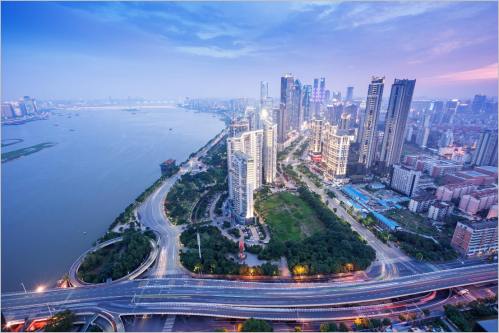 An image from Wuhan, China
.
.
Click the link below for images:
.
__________________________________________
June 20, 2022
Mohenjo
Business, Enthralling, Human Interest, Photographs
amazon, business, Business News, current-events, Future, Hotels, human-rights, medicine, mental-health, research, Science, Science News, technology, Technology News, travel, vacation
Click the link below the picture
.
Acadia National Park is an American national park located along the mid-section of the Maine coast, southwest of Bar Harbor. The park preserves about half of Mount Desert Island, part of the Isle au Haut, the tip of the Schoodic Peninsula, and portions of 16 smaller outlying islands. It protects the natural beauty of the rocky headlands, including the highest mountains along the Atlantic coast. Acadia boasts a glaciated coastal and island landscape, an abundance of habitats, a high level of biodiversity, clean air and water, and a rich cultural heritage.
The park contains the tallest mountain on the Atlantic Coast of the United States (Cadillac Mountain), exposed granite domes, glacial erratics, U-shaped valleys, and cobble beaches. Its mountains, lakes, streams, wetlands, forests, meadows, and coastlines contribute to a diversity of plants and animals. Weaved into this landscape is a historic carriage road system financed by John D. Rockefeller Jr. In total, it encompasses 49,075 acres (76.7 sq mi; 198.6 km2) as of 2017.
Acadia has a rich human history, dating back more than 10,000 years ago with the Wabanaki people. The 17th century brought fur traders and other European explorers, while the 19th century saw an influx of summer visitors, then wealthy families. Many conservation-minded citizens, among them George B. Dorr (the “Father of Acadia National Park”), worked to establish this first national park east of the Mississippi River and the only one in the Northeastern United States. Acadia was initially designated Sieur de Monts National Monument by proclamation of President Woodrow Wilson in 1916, then renamed and redesignated Lafayette National Park in 1919. The park was renamed Acadia National Park in 1929.
Recreational activities from spring through autumn include car and bus touring along the park’s paved loop road; hiking, bicycling, and horseback riding on carriage roads (motor vehicles are prohibited); rock climbing; kayaking and canoeing on lakes and ponds; swimming at Sand Beach and Echo Lake; sea kayaking and guided boat tours on the ocean; and various ranger-led programs. Winter activities include cross-country skiing, snowshoeing, snowmobiling, and ice fishing. Two campgrounds are located on Mount Desert Island, another campground is on the Schoodic Peninsula, and five lean-to sites are on Isle au Haut. The main visitor center is at Hulls Cove, northwest of Bar Harbor. More than 3.4 million people visited the park in 2019.
The park includes mountains, an ocean coastline, woodlands, lakes, and ponds. In addition to nearly half of Mount Desert Island, the park designation also preserves a portion of the Schoodic Peninsula on the mainland, as well as the majority of Isle au Haut and Baker Island, all of Bar Island, three of the four Porcupine Islands (Sheep, Bald, and Long), the Thrumcap (an islet), part of Bear Island, and Thompson Island in Mount Desert Narrows, as well as several other islands and islets. Bar Island, which can be visited on foot over a sandbar around low tide, and the Porcupine Islands are in Frenchman Bay by Bar Harbor. About 57 mi (92 km) of carriage roads were designed and financed by John D. Rockefeller Jr. on Mount Desert Island, 45 miles (72 km) of which continue to be maintained inside the park. Wikipedia
.
 An image from Acadia National Park Maine Scenery
.
.
Click the link below for images:
.
__________________________________________
June 19, 2022
Mohenjo
Business, Enthralling, Human Interest, Photographs
amazon, business, Business News, current-events, Future, Hotels, human-rights, medicine, mental-health, research, Science, Science News, technology, Technology News, travel, vacation
Click the link below the picture
.
A virtual guide to Swaziland, the small landlocked kingdom in southern Africa is bordered by South Africa and Mozambique.
The country covers an area of 17,364 km², it is one of Africa’s smallest countries, slightly larger than half the size of Belgium, or slightly smaller than the U.S. state of New Jersey.
The country is known for its game reserves, the Mlawula Nature Reserve, and the Hlane Royal National Park with diverse wildlife including lions, hippos, and elephants.
Swaziland has a population of 1.4 million people (est. 2015), national capitals are Mbabane and Lobamba.
Autonomy for the Swazis of southern Africa was guaranteed by the British in the late 19th century; independence was granted 1968.
Student and labor unrest during the 1990s have pressured the monarchy (one of the oldest on the continent) to grudgingly allow political reform and greater democracy. Nationsonline.org
.
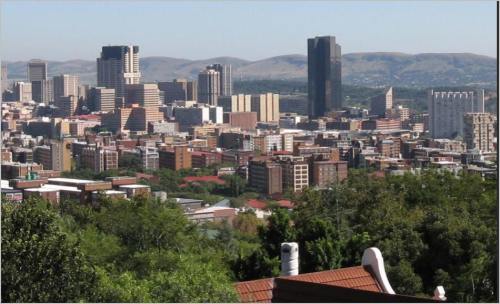 An image from Swaziland Capital City
.
.
Click the link below for images:
.
__________________________________________
June 18, 2022
Mohenjo
Business, Enthralling, Human Interest, Photographs
amazon, business, Business News, current-events, Future, Hotels, human-rights, medicine, mental-health, research, Science, Science News, technology, Technology News, travel, vacation
Click the link below the picture
.
Loch is the Scottish Gaelic, Scots, and Irish word for a lake or sea inlet. It is cognate with the Manx lough, Cornish logh, and one of the Welsh words for lake, llwch.
In English English and Hiberno-English, the anglicized spelling lough is commonly found in place-names; in Lowland Scots and Scottish English, the spelling “loch” is always used. Many loughs are connected to stories of lake bursts, signifying their mythical origin.
Sea-inlet lochs are often called sea lochs or sea loughs. Some such bodies of water could also be called firths, fjords, estuaries, straits or bays.
This name for a body of water is Insular Celtic in origin and is applied to most lakes in Scotland and to many sea inlets in the west and north of Scotland. The word comes from Proto-Indo-European *lókus (“lake, pool”) and is related to Latin lacus (“lake, pond”) and English lay (“lake”).
Lowland Scots orthography, like Scottish Gaelic, Welsh, and Irish, represents /x/ with ch, so the word was borrowed with identical spelling.
English borrowed the word separately from a number of loughs in the previous Cumbric language areas of Northumbria and Cumbria. Earlier forms of English included the sound /x/ as gh (compare Scots bricht with English bright). However, by the time Scotland and England joined under a single parliament, English had lost the /x/ sound. This form was therefore used when the English settled Ireland. The Scots convention of using ch remained, hence the modern Scottish English loch.
In Welsh, what corresponds to lo is lu in Old Welsh and llw in Middle Welsh such as in today’s Welsh placenames Llanllwchaiarn, Llwchwr, Llyn Cwm Llwch, Amlwch, Maesllwch, the Goidelic lo being taken into Scottish Gaelic by the gradual replacement of much Brittonic orthography with Goidelic orthography in Scotland.
Many of the loughs in Northern England have also previously been called “meres” (a Northern English dialect word for “lake” and an archaic Standard English word meaning “a lake that is broad in relation to its depth”) such as the Black Lough in Northumberland.[2] However, reference to the latter as loughs (lower case initial), rather than as lakes, inlets, and so on, is unusual.
Some lochs in Southern Scotland have a Brythonic rather than Goidelic etymology, such as Loch Ryan where the Gaelic loch has replaced a Cumbric equivalent of Welsh llwch. The same is perhaps the case for water bodies in Northern England named with ‘Low’ or ‘Lough’ or otherwise, it represents a borrowing of the Brythonic word into the Northumbrian dialect of Old English.
Although there is no strict size definition, a small loch is often known as a lochan (so spelled also in Scottish Gaelic; in Irish it is spelled lochán).
Perhaps the most famous Scottish loch is Loch Ness, although there are other large examples such as Loch Awe, Loch Lomond, and Loch Tay.
Examples of sea lochs in Scotland include Loch Long, Loch Fyne, Loch Linnhe, and Loch Eriboll. Elsewhere in Britain, places like the Afon Dyfi can be considered sea lochs. Wikipedia
.
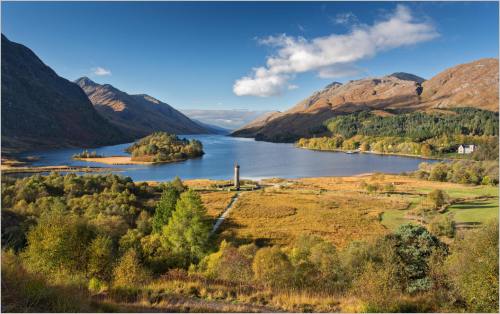 An image from Loch Images
.
.
Click the link below for images:
.
__________________________________________
June 17, 2022
Mohenjo
Business, Enthralling, Human Interest, Photographs
amazon, business, Business News, current-events, Future, Hotels, human-rights, medicine, mental-health, research, Science, Science News, technology, Technology News, travel, vacation
Click the link below the picture
.
Shenzhen, also historically known as Sham Chun, is a major sub-provincial city and one of the special economic zones of China. The city is located on the east bank of the Pearl River estuary on the central coast of southern province of Guangdong, bordering Hong Kong to the south, Dongguan to the north, and Huizhou to the northeast. With a population of 17.56 million as of 2020, Shenzhen is the fourth most populous city proper in China. Shenzhen is a global center in technology, research, manufacturing, business and economics, finance, tourism, and transportation, and the Port of Shenzhen is the world’s fourth busiest container port.
Shenzhen roughly follows the administrative boundaries of Bao’an County, which was established since imperial times. The southern portion of Bao’an County was seized by the British after the Opium Wars and became Hong Kong, while the village of Shenzhen was situated on the border. Due to the completion of a train station that was the last stop on the Mainland Chinese section of the railway between Guangzhou and Kowloon, Shenzhen’s economy grew and became a market town and later a city by 1979, absorbing Bao’an County for the next decade.
In the early 1980s, economic reforms introduced by Deng Xiaoping resulted in the city becoming the first special economic zone of China due to its close proximity to Hong Kong, attracting foreign direct investment and migrants searching for opportunities. In thirty years, the city’s economy and population boomed and has since emerged as a hub for technology, international trade, and finance. It is the home to the Shenzhen Stock Exchange, one of the largest stock exchanges in the world by market capitalization, and the Guangdong Free-Trade Zone. Shenzhen is ranked as an Alpha- (global first-tier) city by the Globalization and World Cities Research Network. Its nominal GDP has surpassed neighboring cities of Guangzhou and Hong Kong and is now among the top ten cities with the largest economies in the world. Shenzhen also has the eighth-most competitive and largest financial center in the world, fifth-highest number of billionaires of any city in the world, the second-largest number of skyscrapers of any city in the world, the 28th largest scientific research output of any city in the world, and several notable educational institutions, such as Shenzhen University, Southern University of Science and Technology, and Shenzhen Technology University.
Due to the city being a leading global technology hub, Shenzhen has been dubbed by media China’s Silicon Valley. The city’s entrepreneurial, innovative, and competitive-based culture has resulted in the city being home to numerous small-time manufacturers or software companies. Several of these firms became large technology corporations such as phone manufacturer Huawei, holding company Tencent, and drone-maker DJI. As an important international city, Shenzhen hosts numerous national and international events every year, such as the 2011 Summer Universiade and the China Hi-Tech Fair [zh]. Shenzhen’s rapid success has resulted in the Chinese government turning Shenzhen into a model city for other cities in China and the world to follow. Wikipedia
.
 An image from Shenzhen, China
.
.
Click the link below for images:
.
__________________________________________
June 16, 2022
Mohenjo
Business, Enthralling, Human Interest, Photographs
amazon, business, Business News, current-events, Future, Hotels, human-rights, medicine, mental-health, research, Science, Science News, technology, Technology News, travel, vacation
Click the link below the picture
.
Lima is the capital and the largest city of Peru. It is located in the valleys of the Chillón, Rímac, and Lurín Rivers, in the desert zone of the central coastal part of the country, overlooking the Pacific Ocean. Together with the seaport of Callao, it forms a contiguous urban area known as the Lima Metropolitan Area. With a population of more than 9.7 million and more than 10.7 million in its metropolitan area, Lima is one of the largest cities in the Americas.
Lima was named by natives in the agricultural region known by native Peruvians as Limaq. It became the capital and most important city in the Viceroyalty of Peru. Following the Peruvian War of Independence, it became the capital of the Republic of Peru (República del Perú). Around one-third of the national population lives in the metropolitan area.
Lima is home to one of the oldest institutions of higher learning in the New World. The National University of San Marcos, founded on 12 May 1551, during the Viceroyalty of Peru, is the first officially established and the oldest continuously functioning university in the Americas.
Nowadays, the city is considered to be the political, cultural, financial, and commercial center of the country. Internationally, it is one of the thirty most populated urban agglomerations in the world. Due to its geostrategic importance, the Globalization and World Cities Research Network has categorized it as a “beta” tier city.
Jurisdictionally, the metropolis extends mainly within the province of Lima and in a smaller portion, to the west, within the Constitutional Province of Callao, where the seaport and the Jorge Chávez Airport are located. Both provinces have regional autonomy since 2002.
In October 2013, Lima was chosen to host the 2019 Pan American Games; these games were held at venues in and around Lima and were the largest sporting event ever hosted by the country. It also hosted the APEC Meetings of 2008 and 2016, the Annual Meetings of the International Monetary Fund and the World Bank Group in October 2015, the United Nations Climate Change Conference in December 2014, and the Miss Universe 1982 contest. Wikipedia
.
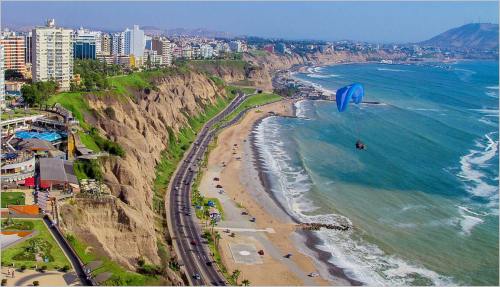 An image from Lima Peru
.
.
Click the link below for images:
.
__________________________________________
Older Entries
Newer Entries
 James' World 2