July 8, 2022
Mohenjo
Business, Enthralling, Human Interest, Photographs
amazon, business, Business News, current-events, Future, Hotels, human-rights, medicine, mental-health, research, Science, Science News, technology, Technology News, travel, vacation

Click the link below the picture
.
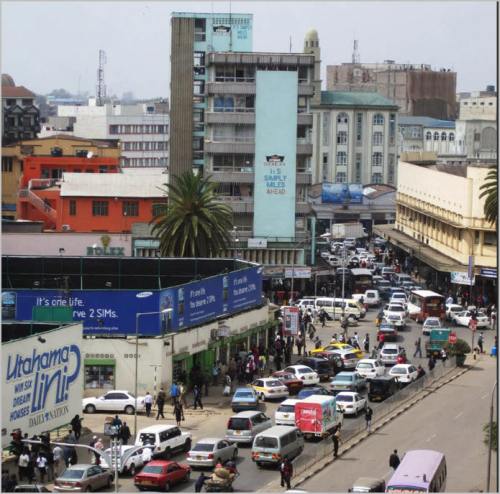
Lusaka is the capital and largest city of Zambia. It is one of the fastest developing cities in southern Africa. Lusaka is in the southern part of the central plateau at an elevation of about 1,279 meters (4,196 ft). As of 2019, the city’s population was about 3.3 million, while the urban population is estimated at 2.5 million in 2018.Lusaka is the center of both commerce and government in Zambia and connects to the country’s four main highways heading north, south, east, and west. English is the official language of the city administration, while Nyanja and Bemba are the commonly spoken street languages.
The earliest evidence of settlement in the area dates to the 6th century AD, with the first known settlement in the 11th century. It was then home to the Lenje and Soli peoples from the 17th or 18th centuries. The founding of the modern city occurred in 1905 when it lay in the British protectorate of Northern Rhodesia, which was controlled by the British South African Company (BSAC). The BSAC built a railway linking their mines in the Copperbelt to Cape Town and Lusaka was designated as a water stop on that line, named after a local Lenje chief called Lusaaka. White Afrikaner farmers then settled in the area and expanded Lusaka into a regional trading center, taking over its administration. In 1929, five years after taking over control of Northern Rhodesia from the BSAC, the British colonial administration decided to move their capital from Livingstone to a more central location, and Lusaka was chosen. Town planners including Stanley Adshead worked on the project, and the city was built out over the subsequent decades.
Lusaka lost some of its status to Salisbury (now Harare in Zimbabwe) when the latter became the capital of the merged Federation of Rhodesia and Nyasaland in 1953 but regained it when it was named as the capital of newly independent Zambia in 1964. A large-scale building program in the city followed, including government buildings, the University of Zambia, and a new airport. Wealthy suburbs in Lusaka include Woodlands, Ibex Hill, and Rhodes Park. Large-scale migration of people from other areas of Zambia occurred both before and after independence, and a lack of sufficient formal housing led to the emergence of numerous unplanned shanty towns on the city’s western and southern fringes. Wikipedia
.
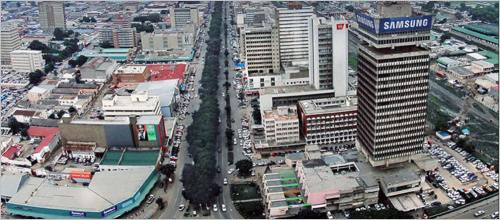 An image from Lusaka, South Africa
.
.
Click the link below for images:
.
__________________________________________
July 7, 2022
Mohenjo
Business, Enthralling, Human Interest, Photographs
amazon, business, Business News, current-events, Future, Hotels, human-rights, medicine, mental-health, research, Science, Science News, technology, Technology News, travel, vacation
Click the link below the picture
.
The Czech Republic, also known as Czechia is a landlocked country in Central Europe. Historically known as Bohemia, it is bordered by Austria to the south, Germany to the west, Poland to the northeast, and Slovakia to the southeast. The Czech Republic has a hilly landscape that covers an area of 78,871 square kilometers (30,452 sq mi) with a mostly temperate continental and oceanic climate. The capital and largest city is Prague; other major cities and urban areas include Brno, Ostrava, Plzeň, and Liberec.
The Duchy of Bohemia was founded in the late 9th century under Great Moravia. It was formally recognized as an Imperial State of the Holy Roman Empire in 1002 and became a kingdom in 1198. Following the Battle of Mohács in 1526, the whole Crown of Bohemia was gradually integrated into the Habsburg monarchy. The Protestant Bohemian Revolt led to the Thirty Years’ War. After the Battle of the White Mountain, the Habsburgs consolidated their rule. With the dissolution of the Holy Empire in 1806, the Crown lands became part of the Austrian Empire.
In the 19th century, the Czech lands became more industrialized, and in 1918 most of it became part of the First Czechoslovak Republic following the collapse of Austria-Hungary after World War I. Czechoslovakia was the only country in Central and Eastern Europe to remain a parliamentary democracy during the entirety of the interwar period. After the Munich Agreement in 1938, Nazi Germany systematically took control over the Czech lands. Czechoslovakia was restored in 1945 and became an Eastern Bloc communist state following a coup d’état in 1948. Attempts to liberalize the government and economy were suppressed by a Soviet-led invasion of the country during the Prague Spring in 1968. In November 1989, the Velvet Revolution ended communist rule in the country, and on 1 January 1993, Czechoslovakia was dissolved, with its constituent states becoming the independent states of the Czech Republic and Slovakia.
The Czech Republic is a unitary parliamentary republic and developed country with an advanced, high-income social market economy. It is a welfare state with a European social model, universal health care, and free-tuition university education. It ranks 12th in the UN inequality-adjusted human development and 24th in the World Bank Human Capital Index. It ranks as the 9th safest and most peaceful country and 31st in democratic governance. The Czech Republic is a member of NATO, the European Union, OECD, OSCE, and the Council of Europe. Wikipedia
.
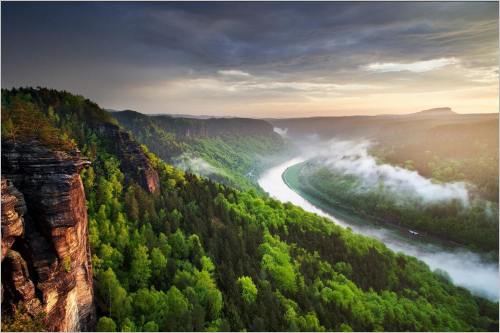 An image from Czech Republic Nature
.
.
Click the link below for images:
.
__________________________________________
July 6, 2022
Mohenjo
Business, Enthralling, Human Interest, Photographs
amazon, business, Business News, current-events, Future, Hotels, human-rights, medicine, mental-health, research, Science, Science News, technology, Technology News, travel, vacation
Click the link below the picture
.
Chengdu is a sub-provincial city which serves as the capital of the Chinese province of Sichuan. It is traditionally the hub in Southwest China. Chengdu is considered a “Beta + (global second-tier)” city classification (together with Barcelona and Washington, D.C.) according to the Globalization and World Cities Research Network. Chengdu is a leading financial center in the Asia-Pacific region and ranks 35th globally the 2021 Global Financial Centres Index.
Chengdu is located in central Sichuan. The surrounding Chengdu Plain is known as the “Country of Heaven” (Chinese: 天府之国; pinyin: Tiānfǔ zhi Guó) and the “Land of Abundance”. Its prehistoric settlers included the Sanxingdui culture. The site of Dujiangyan, an ancient irrigation system, is designated as a World Heritage Site. The Jin River flows through the city.
Founded by the state of Shu prior to its incorporation into China, Chengdu is unique as a major Chinese settlement that has maintained its name mostly unchanged throughout the imperial, republican, and communist eras. It was the capital of Liu Bei’s Shu Han during the Three Kingdoms Era, as well as several other local kingdoms during the Middle Ages. During World War II, refugees from eastern China fleeing from the Japanese settled in Chengdu. After the war, Chengdu’s importance as a link between Eastern and Western China expanded, with railways built to Chongqing in 1952, and Kunming and Tibet afterwards. In the 1960s, Chengdu became an important center of China’s national defense industry.
Chengdu is now one of the most important economic, financial, commercial, cultural, transportation, and communication centers in China. Its economy is diverse, characterized by the machinery, automobile, medicine, food, and information technology industries. Chengdu Shuangliu International Airport, a hub of Air China and Sichuan Airlines, is one of the 30 busiest airports in the world, and the Chengdu railway station is one of the six biggest in China. Chengdu also hosts many international companies and more than 16 consulates; more than 270 Fortune 500 companies have established branches in Chengdu. Chengdu is the seat of the Western Theatre Command region of the People’s Liberation Army. Chengdu hosted the FISU Summer World University Games, an international multi-sport event. It is considered one of the most livable cities in China.
Chengdu’s culture largely reflects that of its province, Sichuan; in 2011, it was recognized by UNESCO as a city of gastronomy. It is associated with the giant panda, a Chinese national symbol, which inhabits the area of Sichuan; the city is home to the Chengdu Research Base of Giant Panda Breeding.
Chengdu is one of the world’s top 40 cities by scientific research output, and home to the greatest number of universities and research institutes in Southwestern China, notably Sichuan University, University of Electronic Science and Technology of China, Southwestern University of Finance and Economics, Southwest Jiaotong University, Chengdu University of Technology, Sichuan Normal University, and Xihua University. Wikipedia
.
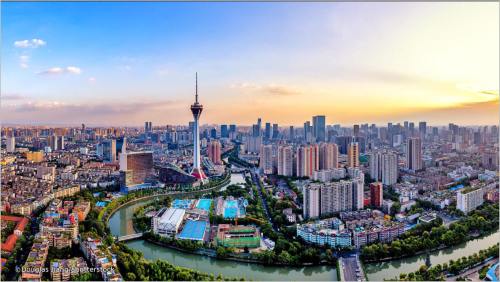 An image from Chengdu, China
.
.
Click the link below for images:
.
__________________________________________
July 5, 2022
Mohenjo
Business, Enthralling, Human Interest, Photographs
amazon, business, Business News, current-events, Future, Hotels, human-rights, medicine, mental-health, research, Science, Science News, technology, Technology News, travel, vacation
Click the link below the picture
.
Isla Incahuasi, Inkawasi or Inka Wasi, Inca wasi house, “Inca house”) is a hilly and rocky outcrop of land and former island in Bolivia situated in the middle of Salar de Uyuni, the world’s largest salt flat, at an elevation of 3,656 meters (11,995 feet). It is located in the Potosí Department, Daniel Campos Province, Tahua Municipality, Yonza Canton.
Incahuasi has a total area of 24.62 hectares (61 acres) and hosts gigantic cacti (Trichocereus pasacana) and a tourist center. There are unusual and fragile coral-like structures and deposits that often consist of fossils and algae. The place is the top of the remains of an ancient volcano, which was submerged when the area was part of a giant prehistoric lake, roughly 40,000 years ago.
.
 An image from Isla Incahuasi
.
.
Click the link below for images:
.
__________________________________________
July 4, 2022
Mohenjo
Business, Enthralling, Human Interest, Photographs
amazon, business, Business News, current-events, Future, Hotels, human-rights, medicine, mental-health, research, Science, Science News, technology, Technology News, travel, vacation
Click the link below the picture
.
Zimbabwe, officially the Republic of Zimbabwe, is a landlocked country located in Southeast Africa, between the Zambezi and Limpopo Rivers, bordered by South Africa to the south, Botswana to the south-west, Zambia to the north, and Mozambique to the east. The capital and largest city is Harare. The second-largest city is Bulawayo. A country of roughly 15 million people, Zimbabwe has 16 official languages, with English, Shona, and Ndebele the most common. It was once known as the “Jewel of Africa” for its great prosperity.
Zimbabwe first became a major trade route in the 11th century. Beginning in the 9th century, during its late iron age, the Gokomere, the Bantu people who would become the ethnic Shona, built the city-state of Great Zimbabwe, which was one of the major African trade centers, controlling the gold, ivory, and copper trades with the Swahili coast, which were connected to Arab and Indian states. By the mid-15th century, the city-state had been abandoned. From there, the Kingdom of Zimbabwe was established, followed by the Rozvi and Mutapa empires.
The British South Africa Company of Cecil Rhodes first demarcated the present territory during 1890 when they conquered Mashonaland and later in 1893 Matabeleland after a fierce resistance by Matabele people known as the First Matabele War. Company rule ended in 1923 with the establishment of Southern Rhodesia as a self-governing British colony. In 1965, the conservative white minority government unilaterally declared independence as Rhodesia. The state endured international isolation and a 15-year guerrilla war with black nationalist forces; this culminated in a peace agreement that established universal enfranchisement and de jure sovereignty as Zimbabwe in April 1980. Zimbabwe then joined the Commonwealth of Nations, from which it was suspended in 2002 for breaches of international law by its then-government under Robert Mugabe, and from which it withdrew in December 2003.
Robert Mugabe became Prime Minister of Zimbabwe in 1980 when his ZANU–PF party won the elections following the end of white minority rule; he was the President of Zimbabwe from 1987 until his resignation in 2017. Under Mugabe’s authoritarian regime, the state security apparatus dominated the country and was responsible for widespread human rights violations. From 2000 to 2009 the economy experienced decline and hyperinflation before rebounding after the use of currencies other than the Zimbabwean dollar was permitted, though growth has since faltered. On 15 November 2017, in the wake of over a year of protests against his government as well as Zimbabwe’s rapidly declining economy, Mugabe was placed under house arrest by the country’s national army in a coup d’état and eventually resigned six days later. Emmerson Mnangagwa has since served as Zimbabwe’s president.
Zimbabwe is a member of the United Nations, the Southern African Development Community (SADC), the African Union (AU), and the Common Market for Eastern and Southern Africa (COMESA). Wikipedia
.
 An image from Zimbabwe
.
.
Click the link below for images:
.
__________________________________________
July 2, 2022
Mohenjo
Business, Enthralling, Human Interest, Photographs
amazon, business, Business News, current-events, Future, Hotels, human-rights, medicine, mental-health, research, Science, Science News, technology, Technology News, travel, vacation
Click the link below the picture
.
Salar de Uyuni (or “Salar de Tunupa”) is the world’s largest salt flat, or playa, at over 10,000 square kilometers (3,900 sq mi) in area. It is in the Daniel Campos Province in Potosí in southwest Bolivia, near the crest of the Andes at an elevation of 3,656 m (11,995 ft) above sea level.
The Salar was formed as a result of transformations between several prehistoric lakes that existed around forty thousand years ago but had all evaporated over time. It is now covered by a few meters of salt crust, which has an extraordinary flatness with the average elevation variations within one meter over the entire area of the Salar. The crust serves as a source of salt and covers a pool of brine, which is exceptionally rich in lithium. The large area, clear skies, and exceptional flatness of the surface make the Salar ideal for calibrating the altimeters of Earth observation satellites. Following rain, a thin layer of dead calm water transforms the flat into the world’s largest mirror, 129 km (80 mi) across.
The Salar serves as the major transport route across the Bolivian Altiplano and is a prime breeding ground for several species of flamingos. Salar de Uyuni is also a climatological transitional zone since the towering tropical cumulus congestus and cumulonimbus incus clouds that form in the eastern part of the salt flat during the summer cannot permeate beyond its drier western edges, near the Chilean border and the Atacama Desert.
Salar has been used as a filming location for movies such as Star Wars: The Last Jedi (2017; as planet Crait), The Fall (2006), Salt and Fire (2016), The Unseen (2017), and several others.
Salar de Uyuni is part of the Altiplano of Bolivia in South America. The Altiplano is a high plateau, which was formed during uplift of the Andes mountains. The plateau includes fresh and saltwater lakes as well as salt flats and is surrounded by mountains with no drainage outlets.
The geological history of the Salar is associated with a sequential transformation between several vast lakes. Some 30,000 to 42,000 years ago, the area was part of a giant prehistoric lake, Lake Minchin. Its age was estimated by radiocarbon dating shells from outcropping sediments and carbonate reefs and varies between reported studies. Lake Minchin (named after Juan B. Minchin of Oruro) later transformed into Paleo Lake Tauca having a maximal depth of 140 meters (460 ft), and an estimated age of 13,000 to 18,000 or 14,900 to 26,100 years, depending on the source. The youngest prehistoric lake was Coipasa, which was radiocarbon dated to 11,500 to 13,400 years ago. When it dried, it left behind two modern lakes, Poopó and Uru Uru, and two major salt deserts, Salar de Coipasa and the larger Salar de Uyuni. Salar de Uyuni spreads over 10,582 km2, which is roughly 100 times the size of the Bonneville Salt Flats in the United States. Lake Poopó is a neighbor of the much larger Lake Titicaca. During the wet season, Titicaca overflows and discharges into Poopó, which in turn, floods Salar De Coipasa and Salar de Uyuni.
Lacustrine mud that is interbedded with salt and saturated with brine underlies the surface of Salar de Uyuni. The brine is a saturated solution of sodium chloride, lithium chloride, and magnesium chloride in water. It is covered with a solid salt crust varying in thickness between tens of centimeters and a few meters. The center of the Salar contains a few islands, which are the remains of the tops of ancient volcanoes submerged during the era of Lake Minchin. They include unusual and fragile coral-like structures and deposits that often consist of fossils and algae.
.
 An image from Salar De Uyuni Reflection
.
.
Click the link below for images:
.
__________________________________________
July 1, 2022
Mohenjo
Business, Enthralling, Human Interest, Photographs
amazon, business, Business News, current-events, Future, Hotels, human-rights, medicine, mental-health, research, Science, Science News, technology, Technology News, travel, vacation
Click the link below the picture
.
Shenyang, formerly known as Fengtian (Chinese: 奉天) or by its Manchu name Mukden, is a major Chinese sub-provincial city and the provincial capital of Liaoning province. Located in central-north Liaoning, it’s the province’s most populous city, with a total population of 9,070,093 inhabitants as of the 2020 census. Among the resident population of the city, the male population is 4,521,021, accounting for 49.85%; the female population is 4,549,072, accounting for 50.15%. The sex ratio of the total population (with women as 100, the ratio of men to women) dropped from 102.10 in the sixth national census in 2010 to 99.38. It’s built-up (or metro) area encompassing 8 Shenyang urban districts and the 4 Fushun urban districts, was home to 8,192,848 inhabitants in 2020. It’s also the largest city in Northeast China by urban population, with 7.49 million people (2020 census).
Shenyang is also the central city of one of the major megalopolises in China, the Greater Shenyang Metropolitan Area, which has a total population over 23 million. The city’s administrative region includes the ten metropolitan districts of Shenyang proper, the county-level city of Xinmin, and two counties: Kangping and Faku.
The Manchu people conquered Shenyang in the 17th century and briefly used it as the capital of Qing-dynasty China. The Battle of Mukden took place in 1905 during the Russo-Japanese War. Japan’s subsequent victory allowed Tokyo to annex the region west of the old city and to increase Japanese influence on Shenyang; in September 1931 the Mukden Incident led the Japanese to further invade and occupy the rest of Northeast China, forming the puppet state of Manchukuo. After the Japanese surrender in 1945, Shenyang remained a Kuomintang stronghold, but the Communists captured it in 1948 after the Liaoshen Campaign.
Along with its nearby cities, Shenyang is an important industrial center in China and serves as the transportation and commercial hub of China’s northeast—particularly involved in links with Japan, Russia, and Korea. A center of heavy industry in China since the 1930s and the spearhead of the Chinese central government’s Northeast Area Revitalization Plan, the city has been diversifying its industry, including expanding into the service sector. Growing industries include software, automotive, and electronics.
Shenyang is also a major city for scientific research, appearing among the top 200 Science Cities in the world as tracked by the Nature Index. The city is home to several major universities, notably Northeastern University and Liaoning University, members of China’s prestigious universities in the Double First-Class University Plan. Wikipedia
.
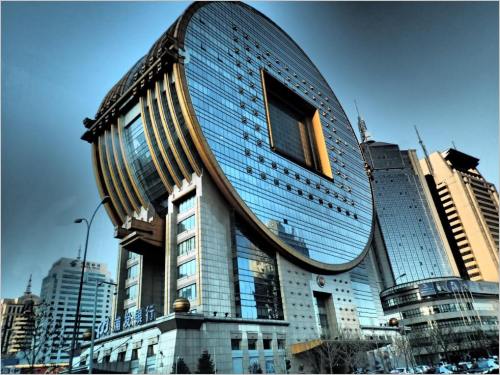 An image from Shenyang, China
.
.
Click the link below for images:
.
__________________________________________
June 30, 2022
Mohenjo
Business, Enthralling, Human Interest, Photographs
amazon, business, Business News, current-events, Future, Hotels, human-rights, medicine, mental-health, research, Science, Science News, technology, Technology News, travel, vacation
Click the link below the picture
.
Shiretoko National Park covers most of the Shiretoko Peninsula at the northeastern tip of the island of Hokkaidō, Japan. The word “Shiretoko” is derived from an Ainu word “sir etok”, meaning “the place where the earth protrudes”.
One of the most remote regions in Japan, much of the peninsula is only accessible on foot or by boat. Shiretoko is best known as the home of Japan’s largest brown bear population and for offering views of Kunashiri Island, ownership of which Japan and Russia dispute. Shiretoko is also the home of many birds, such as Steller’s sea eagle and white-tailed eagle, and marine animals such as spotted seal, orca whale, and sperm whale. The park has a hot springs waterfall called Kamuiwakka Falls (カムイワッカの滝, Kamuiwakka-no-taki). Kamui wakka means “water of the gods” in Ainu.
The forests of the park are temperate and subalpine mixed forests; the main tree species include Sakhalin fir (Abies sachalinensis), Erman’s birch (Betula ermanii), and Mongolian oak (Quercus mongolica). Beyond the forest limit, there are impenetrable Siberian dwarf pine (Pinus pumila) thickets.
In 2005, UNESCO designated the area a World Heritage Site, advising to develop the property jointly with the Kuril Islands of Russia as a transboundary “World Heritage Peace Park”. Shiretoko’s listing as Natural Heritage was seen by the Indigenous Ainu as contradicting the long history of Ainu settlement in the park area.
The Shiretoko Park Nature Center is in Shari. It serves as the visitor center and includes a movie about the park, a restaurant, and a gift shop. Wikipedia
.
 An image from Shiretoko National Park
.
.
Click the link below for article:
.
__________________________________________
June 29, 2022
Mohenjo
Business, Enthralling, Human Interest, Photographs
amazon, business, Business News, current-events, Future, Hotels, human-rights, medicine, mental-health, research, Science, Science News, technology, Technology News, travel, vacation
Click the link below the picture
.
Malawi, officially the Republic of Malawi, is a landlocked country in Southeastern Africa that was formerly known as Nyasaland. It is bordered by Zambia to the west, Tanzania to the north and northeast, and Mozambique to the east, south, and southwest. Malawi spans over 118,484 km2 (45,747 sq mi) and has an estimated population of 19,431,566 (as of January 2021). Malawi’s capital (and largest city) is Lilongwe. Its second-largest is Blantyre, its third-largest is Mzuzu and its fourth-largest is its former capital, Zomba. The name Malawi comes from the Maravi, an old name for the Chewa people who inhabit the area. The country is nicknamed “The Warm Heart of Africa” because of the friendliness of its people.
The part of Africa now known as Malawi was settled around the 10th century by migrating Bantu groups. Centuries later, in 1891, the area was colonized by the British and became a protectorate of the United Kingdom known as Nyasaland. In 1953, it became a protectorate within the semi-independent Federation of Rhodesia and Nyasaland. The Federation was dissolved in 1963. In 1964, the protectorate was ended: Nyasaland became an independent country under Queen Elizabeth II and was renamed Malawi. Two years later it became a republic. It gained full independence from the United Kingdom, and by 1970 had become a totalitarian one-party state under the presidency of Hastings Banda, who remained in this role until 1994. Today, Malawi has a democratic, multi-party republic headed by an elected president. Lazarus Chakwera of the Malawi Congress Party-led the Tonse Alliance grouping of nine political parties and won the court-mandated Presidential Election rerun held on 23 June 2020 after the May 2019 Presidential Election was annulled due to massive electoral irregularities. The country’s military, the Malawian Defence Force, includes an army, a navy, and an air wing. Malawi’s foreign policy is pro-Western. It maintains positive diplomatic relations with most countries and participates in several international organizations, including the United Nations, the Commonwealth of Nations, the Southern African Development Community (SADC), the Common Market for Eastern and Southern Africa (COMESA), and the African Union (AU).
Malawi is among the world’s least-developed countries. The economy is heavily based on agriculture, and it has a largely rural and rapidly growing population. The Malawian government depends heavily on outside aid to meet its development needs, although the amount needed (and the aid offered) has decreased since 2000. The Malawian government faces challenges in its efforts to build and expand the economy, improve education, healthcare, and environmental protection, and become financially independent despite widespread unemployment. Since 2005, Malawi has developed several programs that focus on addressing these issues, and the country’s outlook appears to be improving: Key indicators of progress in the economy, education, and healthcare were seen in 2007 and 2008.
Malawi has a low life expectancy and high infant mortality. HIV/AIDS is highly prevalent, which both reduces the labor force and requires increased government expenditures. The country has a diverse population that includes Native peoples, Asians, and Europeans. Several languages are spoken, and there is an array of religious beliefs. Although in the past there was a periodic regional conflict fueled in part by ethnic divisions, by 2008 this internal conflict had considerably diminished, and the idea of identifying with one’s Malawian nationality had reemerged. Wikipedia
.
 Images from Malawi
.
.
Click the link below for images:
.
__________________________________________
June 28, 2022
Mohenjo
Business, Enthralling, Human Interest, Photographs
amazon, business, Business News, current-events, Future, Hotels, human-rights, medicine, mental-health, research, Science, Science News, technology, Technology News, travel, vacation
Click the link below the picture
.
Bandhavgarh National Park is a national park of India, located in the Umaria district of Madhya Pradesh. Bandhavgarh, with an area of 105 square kilometers (41 sq mi), was declared a national park in 1968 and then became Tiger Reserve in 1993. The current core area is spread over 716 square kilometers (276 sq mi).
This park has a large biodiversity. The park has a large breeding population of leopards and various species of deer. Maharaja Martand Singh of Rewa captured the first white tiger in this region in 1951. This white tiger, Mohan, is now stuffed and on display in the palace of the Maharajas of Rewa. Historically villagers and their cattle have been at a threat from the tiger. Rising mining activities around the park are putting the tigers at risk. The Park derived its name from the most prominent hill of the area which is said to have been given by Lord Rama to his brother Laxman to keep a watch on Lanka. (Bandhav = Brother, Garh = Fort).
The three main zones of the national park are Tala, Magdhi, and Khitauli. Tala is the richest zone in terms of biodiversity, mainly tigers. Altogether, these three ranges comprise the ‘Core’ of the Bandhavgarh Tiger Reserve constituting a total area of 716 km2.
With the tiger at the apex of the food chain, it contains at least 37 species of mammals. According to forest officials, there are more than 250 species of birds, about 80 species of butterflies, a number of reptiles. But many people have the species’ list of about 350 birds along with photographs. The richness and tranquility of grasslands invites pairs of sarus cranes to breed in the rainy season.
.
 An image from Bandhavgarh National Park India
.
.
Click the link below for images:
.
__________________________________________
Older Entries
Newer Entries
 James' World 2