July 20, 2022
Mohenjo
Business, Enthralling, Human Interest, Photographs
amazon, business, Business News, current-events, Future, Hotels, human-rights, medicine, mental-health, research, Science, Science News, technology, Technology News, travel, vacation

Click the link below the picture
.
Somalia, officially the Federal Republic of Somalia, is a country in the Horn of Africa. The country is bordered by Ethiopia to the west, Djibouti to the northwest, the Gulf of Aden to the north, the Indian Ocean to the east, and Kenya to the southwest. Somalia has the longest coastline on Africa’s mainland. Its terrain consists mainly of plateaus, plains, and highlands. Hot conditions prevail year-round, with periodic monsoon winds and irregular rainfall. Somalia has an estimated population of around 17.1 million, of which over 2 million live in the capital and largest city Mogadishu, and has been described as Africa’s most culturally homogeneous country. Around 85% of its residents are ethnic Somalis, who have historically inhabited the country’s north. Ethnic minorities are largely concentrated in the south. The official languages of Somalia are Somali and Arabic. Most people in the country are Muslims, the majority of them Sunni.
In antiquity, Somalia was an important commercial center. It is among the most probable locations of the fabled ancient Land of Punt. During the Middle Ages, several powerful Somali empires dominated the regional trade, including the Ajuran Sultanate, the Adal Sultanate, and the Sultanate of the Geledi.
In the late 19th century, Somali Sultanates like the Isaaq Sultanate and the Majeerteen Sultanate were colonized by Italy, Britain, and Ethiopia. European colonists merged the tribal territories into two colonies, which were Italian Somaliland and the British Somaliland Protectorate. Meanwhile, in the interior, the Dervishes led by Mohammed Abdullah Hassan engaged in a two-decade confrontation against Abyssinia, Italian Somaliland, and British Somaliland and were finally defeated in the 1920 Somaliland Campaign. Italy acquired full control of the northeastern, central, and southern parts of the area after successfully waging the Campaign of the Sultanates against the ruling Majeerteen Sultanate and Sultanate of Hobyo. In 1960, the two territories united to form the independent Somali Republic under a civilian government.
The Supreme Revolutionary Council seized power in 1969 and established the Somali Democratic Republic, brutally attempting to squash the Somaliland War of Independence in the north of the country. The SRC subsequently collapsed 22 years later, in 1991, with the onset of the Somali Civil War and Somaliland soon declared independence. Somaliland still controls the northwestern portion of Somalia representing just over 27% of its territory. Since this period most regions returned to customary and religious law. In the early 2000s, a number of interim federal administrations were created. The Transitional National Government (TNG) was established in 2000, followed by the formation of the Transitional Federal Government (TFG) in 2004, which reestablished the Somali Armed Forces.
In 2006, with a US-backed Ethiopian intervention, the TFG assumed control of most of the nation’s southern conflict zones from the newly formed Islamic Courts Union (ICU). The ICU subsequently splintered into more radical groups, such as Al-Shabaab, which battled the TFG and its AMISOM allies for control of the region.
By mid-2012, the insurgents had lost most of the territory they had seized, and a search for more permanent democratic institutions began. Despite this, insurgents still control much of central and southern Somalia, and wield influence in government-controlled areas, with the town of Jilib acting as the insurgents’ de-facto capital. A new provisional constitution was passed in August 2012, reforming Somalia as a federation. The same month, the Federal Government of Somalia was formed and a period of reconstruction began in Mogadishu. Somalia has maintained an informal economy mainly based on livestock, remittances from Somalis working abroad, and telecommunications. It is a member of the United Nations, the Arab League, African Union, Non-Aligned Movement, and the Organisation of Islamic Cooperation. Wikipedia
.
 An image from Somalia Capital City
.
.
Click the link below for images:
.
__________________________________________
July 19, 2022
Mohenjo
Business, Enthralling, Human Interest, Photographs
amazon, business, Business News, current-events, Future, Hotels, human-rights, medicine, mental-health, research, Science, Science News, technology, Technology News, travel, vacation
Click the link below the picture
.
Bruges is the capital and largest city of the province of West Flanders in the Flemish Region of Belgium, in the northwest of the country, and the sixth-largest city of the country by population.
The area of the whole city amounts to more than 13,840 hectares (138.4 km2; 53.44 sq miles), including 1,075 hectares off the coast, at Zeebrugge (from Brugge aan zee, meaning ‘Bruges by the Sea’). The historic city center is a prominent World Heritage Site of UNESCO. It is oval in shape and about 430 hectares in size. The city’s total population is 117,073 (1 January 2008), of whom around 20,000 live in the city center. The metropolitan area, including the outer commuter zone, covers an area of 616 km2 (238 sq mi) and has a total of 255,844 inhabitants as of 1 January 2008.
Along with a few other canal-based northern cities, such as Amsterdam and St Petersburg, it is sometimes referred to as the Venice of the North. Bruges has significant economic importance, thanks to its port, and was once one of the world’s chief commercial cities. Bruges is a tourism destination within Belgium and is well known as the seat of the College of Europe, a university institute for European studies.
The earliest mention of the location’s name is Bruggas, Brvggas, or Brvccia in AD 840–875. Afterward, it appears as Bruciam and Bruociam (892); as Brutgis uico (late 9th century); as in portu Bruggensi (c. 1010); as Bruggis (1012); as Bricge in the Anglo-Saxon Chronicle (1037); as Brugensis (1046); as Brycge in the Anglo-Saxon Chronicle (1049–1052); as Brugias (1072); as Bruges (1080–1085); as Bruggas (c. 1084); as Brugis (1089); and as Brugge (1116).
The name probably derives from the Old Dutch for ‘bridge’: brugga. Also compare Middle Dutch brucge, brugge (or brugghe, brigghe, bregghe, brogghe), and modern Dutch bruggehoofd (‘bridgehead’) and brug (‘bridge’). The form brugghe would be a southern Dutch variant. The Dutch word and the English bridge both derive from Proto-Germanic *brugjō-. Wikipedia
.
 An image from Bruges, Belgium
.
.
Click the link below for article:
.
__________________________________________
July 18, 2022
Mohenjo
Business, Enthralling, Human Interest, Photographs
amazon, business, Business News, current-events, Future, Hotels, human-rights, medicine, mental-health, research, Science, Science News, technology, Technology News, travel, vacation
Click the link below the picture
.
Addis Ababa, also known as Finfinne, is the capital and largest city of Ethiopia. It also serves as the regional capital of Oromia. In the 2007 census, the city’s population was estimated to be 2,739,551 inhabitants. Addis Ababa is a highly developed and important cultural, artistic, financial, and administrative center of Ethiopia.
In the 15th century, Addis Ababa was depicted as a fortified place named “Barara” and served as a residence of the Emperors of Ethiopia until Dawit II. Barara was completely destroyed during the Ethiopian–Adal War and Oromo expansions. The founding history of Addis Ababa dates back in late 19th-century by Menelik II, Negus of Shewa, in 1886 after finding Mount Entoto unpleasant two years prior. At the time, the city was a resort town; its large mineral spring abundance attracted nobilities of the empire, led them to establish permanent settlement. It also attracted many members of the working classes — including artisans and merchants — and foreign visitors. Menelik II then formed his imperial palace in 1887. Addis Ababa became the empire’s capital in 1889, and subsequently, international embassies were opened. Addis Ababa urban development began at the beginning of the 20th century without any preplanning.[12]
Addis Ababa saw a wide-scale economic boom in 1927, and an increase in the number of buildings owned by the middle class, including stone houses filled with imported European furniture. The middle class also imported newly manufactured automobiles and expanded banking institutions. During the Italian occupation, urbanization and modernization steadily increased by a master plan which they hoped Addis Ababa would be more colonial city and continued after their occupation. Consequent master plans were designed by French and British consultants from 1940s onwards focusing on monumental structures, satellite cities, and inner-city. Similarly, the Italo-Ethiopian master plan also, projected in 1986 concerning only urban structure and accommodating service, which was later adapted by the 2003 master plan.
Addis Ababa remains federal chartered city in accordance with the Addis Ababa City Government Charter Proclamation No. 87/1997 in the FDRE Constitution. Referred to as “the political capital of Africa” due to its historical, diplomatic, and political significance for the continent, Addis Ababa serves as the headquarters of major international organizations such as the African Union and the United Nations Economic Commission for Africa (ECA).
The city lies a few kilometers west of the East African Rift, which splits Ethiopia into two, between the Nubian Plate and the Somali Plate. The city is surrounded by the Special Zone of Oromia and is populated by people from the different regions of Ethiopia. It is home to Addis Ababa University. The city has a high human development index and is known for its vibrant culture, strong fashion scene, high involvement of young people, thriving arts scene, and having the fastest economic growth of any country in the world. Wikipedia
.
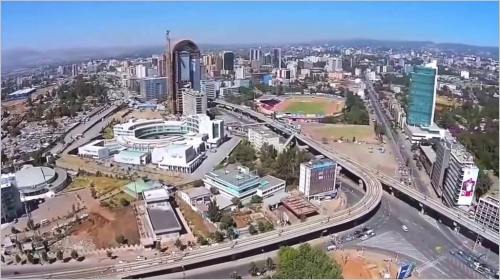 An image from Ethiopia’s Capital
.
.
Click the link below for images:
.
__________________________________________
July 16, 2022
Mohenjo
Business, Enthralling, Human Interest, Photographs
amazon, business, Business News, current-events, Future, Hotels, human-rights, medicine, mental-health, research, Science, Science News, technology, Technology News, travel, vacation
Click the link below the picture
.
Asher Brown Durand (August 21, 1796, – September 17, 1886) was an American painter of the Hudson River School.
Durand was born in and eventually died in Maplewood, New Jersey (then called Jefferson Village). He was the eighth of eleven children. Durand’s father was a watchmaker and a silversmith.
Durand was apprenticed to an engraver from 1812 to 1817 and later entered into a partnership with the owner of the company, Charles Cushing Wright (1796–1854), who asked him to manage the company’s New York office. He engraved Declaration of Independence for John Trumbull during 1823, which established Durand’s reputation as one of the country’s finest engravers. Durand helped organize the New York Drawing Association in 1825, which would become the National Academy of Design; he would serve the organization as president from 1845 to 1861.
Asher’s engravings on banknotes were used as the portraits for America’s first postage stamps, the 1847 series.[2] Along with his brother Cyrus he also engraved some of the succeeding 1851 issues.
His main interest changed from engraving to oil painting about 1830 with the encouragement of his patron, Luman Reed. In 1837, he accompanied his friend Thomas Cole on a sketching expedition to Schroon Lake in the Adirondacks Mountains, and soon after he began to concentrate on landscape painting. He spent summers sketching in the Catskills, Adirondacks, and the White Mountains of New Hampshire, making hundreds of drawings and oil sketches that were later incorporated into finished academy pieces which helped to define the Hudson River School.
Durand is remembered particularly for his detailed portrayals of trees, rocks, and foliage. He was an advocate for drawing directly from nature with as much realism as possible. Durand wrote, “Let [the artist] scrupulously accept whatever [nature] presents him until he shall, in a degree, have become intimate with her infinity…never let him profane her sacredness by a willful departure from truth.”
Like other Hudson River School artists, Durand also believed that nature was an ineffable manifestation of God. He expressed this sentiment and his general opinions on art in his essay “Letters on Landscape Painting” in The Crayon, a mid-19th century New York art periodical. Wrote Durand, “[T]he true province of Landscape Art is the representation of the work of God in the visible creation…” Wikipedia
.
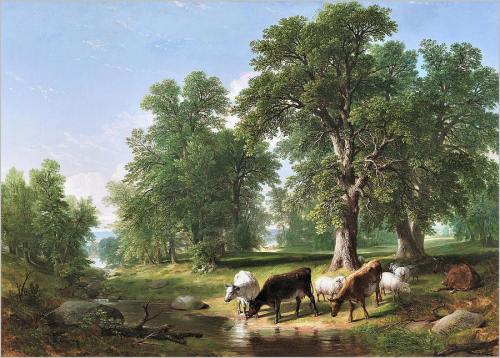 An image from Summer Afternoon Asher Brown Durand
.
.
Click the link below for images:
.
__________________________________________
July 15, 2022
Mohenjo
Business, Enthralling, Human Interest, Photographs
amazon, business, Business News, current-events, Future, Hotels, human-rights, medicine, mental-health, research, Science, Science News, technology, Technology News, travel, vacation
Click the link below the picture
.
Sudan, officially the Republic of the Sudan, is a country in Northeast Africa. It shares borders with the Central African Republic to the southwest, Chad to the west, Egypt to the north, Eritrea to the northeast, Ethiopia to the southeast, Libya to the northwest, South Sudan to the south, and the Red Sea. It has a population of 45.70 million people as of 2022 and occupies 1,886,068 square kilometers (728,215 square miles), making it Africa’s third-largest country by area, and the third-largest by area in the Arab League. It was the largest country by area in Africa and the Arab League until the secession of South Sudan in 2011, since which both titles have been held by Algeria. Its capital is Khartoum and its most populated city is Omdurman (part of the metropolitan area of Khartoum).
Sudan’s history goes back to the Pharaonic period, witnessing the Kingdom of Kerma (c. 2500–1500 BC), the subsequent rule of the Egyptian New Kingdom (c. 1500 BC–1070 BC), and the rise of the Kingdom of Kush (c. 785 BC–350 AD), which would in turn control Egypt itself for nearly a century. After the fall of Kush, the Nubians formed the three Christian kingdoms of Nobatia, Makuria, and Alodia, with the latter two lasting until around 1500. Between the 14th and 15th centuries, most of Sudan was gradually settled by Arab nomads. From the 16th to the 19th centuries, central and eastern Sudan were dominated by the Funj sultanate, while Darfur ruled the west and the Ottomans the east.
During the Mamluk and Ottoman periods, slave trade played a big role and was demanded from the Sudanese Kashif as the regular remittance of tribute. In 1811, Mamluks established a state at Dunqulah as a base for their slave trading. Under Turco-Egyptian rule of Sudan after the 1820s, the practice of trading slaves was entrenched along a north-south axis, with slave raids taking place in southern parts of the country and slaves being transported to Egypt and the Ottoman empire.
From the early 19th century, the entirety of Sudan was conquered by Egypt under the Muhammad Ali dynasty. It was under Egyptian rule that Sudan acquired its modern borders and began the process of political, agricultural, and economic development. In 1881, nationalist sentiment in Egypt led to the Orabi Revolt, “weakening” the power of the Egyptian monarchy, and eventually leading to the occupation of Egypt by the United Kingdom. At the same time, religious-nationalist fervor in Sudan erupted in the Mahdist Uprising led by the self-proclaimed Mahdi Muhammad Ahmad and resulting in the establishment of the Caliphate of Omdurman. The Mahdist forces were eventually defeated by a joint Egyptian-British military force, restoring the authority of the Egyptian monarch. However, Egyptian sovereignty in Sudan would henceforth be rather nominal, as the true power in both Egypt and Sudan was now the United Kingdom. In 1899, under British pressure, Egypt agreed to share sovereignty over Sudan with the United Kingdom as a condominium. In effect, Sudan was governed as a British possession. The 20th century saw the growth of both Egyptian and Sudanese nationalism focusing on ending the United Kingdom’s occupation. The Egyptian revolution of 1952 toppled the monarchy and demanded the withdrawal of British forces from all of Egypt and Sudan. Muhammad Naguib, one of the two co-leaders of the revolution, and Egypt’s first President, who was half-Sudanese and had been raised in Sudan, made securing Sudanese independence a priority of the revolutionary government. The following year, under Egyptian and Sudanese pressure, the United Kingdom agreed to Egypt’s demand for both governments to terminate their shared sovereignty over Sudan and to grant Sudan independence. On 1 January 1956, Sudan was duly declared an independent state.
After Sudan became independent, the Jaafar Nimeiry regime began Islamist rule. This exacerbated the rift between the Islamic North, the seat of the government, and the Animists and Christians in the South. Differences in language, religion, and political power erupted in a civil war between government forces, influenced by the National Islamic Front (NIF), and the southern rebels, whose most influential faction was the Sudan People’s Liberation Army (SPLA), which eventually led to the independence of South Sudan in 2011. Between 1989 and 2019, Sudan experienced a 30-year-long military dictatorship led by Omar al-Bashir, who was accused of human rights abuses, including torture, persecution of minorities, allegations of sponsoring global terrorism, and ethnic genocide due to its actions in the War in the Darfur region that broke out in 2003. Overall, the regime’s actions killed an estimated 300,000 to 400,000 people. Protests erupted in 2018, demanding Bashir’s resignation, which resulted in a coup d’état on 11 April 2019 and Bashir’s imprisonment.
Islam was Sudan’s state religion and Islamic laws were applied from 1983 until 2020 when the country became a secular state. The economy has been described as lower-middle income and largely relies on agriculture and despite long-term international sanctions and isolation, to some extent on oil production in the oil fields of South Sudan, Sudan is a member of the United Nations, the Arab League, African Union, COMESA, Non-Aligned Movement and the Organisation of Islamic Cooperation. Wikipedia
.
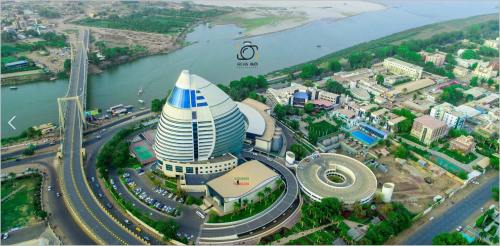 An image from Sudan
.
.
Click the link below for images:
.
__________________________________________
July 14, 2022
Mohenjo
Business, Enthralling, Human Interest, Photographs
amazon, business, Business News, current-events, Future, Hotels, human-rights, medicine, mental-health, research, Science, Science News, technology, Technology News, travel, vacation
Click the link below the picture
.
Goiás is a Brazilian state located in the Center-West region. Goiás borders the Federal District and the states of (from north clockwise) Tocantins, Bahia, Minas Gerais, Mato Grosso do Sul and Mato Grosso. The state capital is Goiânia. With 7.2 million inhabitants, Goiás is the most populous state in the Center-West and the 11th most populous in the country. It has the ninth largest economy among Brazilian federative units. In Brazil’s geoeconomic division, Goiás belongs to the Centro-Sul (Center-South), being the northernmost state of the southern portion of Brazil. The state has 3.3% of the Brazilian population and is responsible for 2.7% of the Brazilian GDP.
The history of Goiás dates back to the beginning of the 18th century, with the arrival of pioneers from São Paulo. The Rio Vermelho region was the first to be occupied, where Vila Boa (later renamed Goiás) was founded. The development and settlement of the state took place, in a more intensified way, starting in the 1930s with the founding of the new capital, Goiânia, and especially with the construction of Brasília in the 1950s.
Goiás is characterized by a landscape of chapadões (plateaus). In the height of the drought season, from June to September, the lack of rain makes the level of the Araguaia River go down and exposes almost 2 kilometers (1.2 mi) of beaches. At the Emas National Park in the municipality of Mineiros, it is possible to observe the typical fauna and flora from the region. At the Chapada dos Veadeiros, the main attractions are the canyons, valleys, rapids, and waterfalls. Other attractions include the historical city of Goiás and the hot springs of Caldas Novas.
Goiás occupies a large plateau, the vast almost level surface of which stands between 750 and 900 m above sea level and forms the divide between three of Brazil’s largest river systems: to the south, Goiás is drained by the Paranaíba river, a tributary of the Paraná River; to the east, it is drained by tributaries of the São Francisco River; and northward the state is drained by the Araguaia River and the Tocantins River and their tributaries. Other major rivers in the state are the Meia Ponte, Aporé, São Marcos, Corumbá River, Claro, Maranhão, Paranã and Preto. None of these rivers is navigable except for short distances by small craft.
The state’s highest point is Pouso Alto, at 1,676 meters (5,499 ft) above sea level, in the Chapada dos Veadeiros.
Goiás is covered with a woodland savanna known in Brazil as campo cerrado, although there are still tropical forests along the rivers. This cerrado has been seriously diminished in recent years due to cattle raising and soybean farming with great loss of animal life and forest cover. The climate of the plateau is tropical. Average monthly temperatures vary from 26 °C (79 °F) in the warmest month to 22 °C (72 °F) in the coldest. The year is divided into a rainy season (October–March) and a dry season (April–September). Average annual rainfall is about 1,700 millimeters (67 in), but this varies due to elevation and microclimate. Some parts of the state, however, have small remnants of tropical Atlantic forest, that mostly appears around rivers and valleys.
The Great Central West Region, consisting of the states of Goiás, Mato Grosso, Mato Grosso do Sul, and the Federal District is among the fastest-growing regions of Brazil. The population of Goiás state tripled in size in the period from 1950 to 1980 and is still growing very quickly. However, outside the Federal District and the Goiânia metropolitan region (with a population of over a million) most of Goiás is very thinly populated. The chief concentration of settlement is in the southeast, in the area of Goiânia (Goiânia and Aparecida de Goiânia), across the border from Minas Gerais (Catalão, Rio Verde, Jataí, and Caldas Novas), and around the Federal District (Formosa, Planaltina de Goiás, and Luziânia). Wikipedia
.
 An image from Goias, Brazil
.
.
Click the link below for images:
.
__________________________________________
July 13, 2022
Mohenjo
Business, Enthralling, Human Interest, Photographs
amazon, business, Business News, current-events, Future, Hotels, human-rights, medicine, mental-health, research, Science, Science News, technology, Technology News, travel, vacation
Click the link below the picture
.
Uganda, officially the Republic of Uganda, is a landlocked country in East Africa. The country is bordered to the East by Kenya, to the North by South Sudan, to the west by the Democratic Republic of the Congo, to the southwest by Rwanda, and to the south by Tanzania. The Southern part of the country includes a substantial portion of Lake Victoria, shared with Kenya and Tanzania. Uganda is in the African Great Lakes region. Uganda also lies within the Nile basin and has a varied but generally a modified equatorial climate. It has a population of over 42 million, of which 8.5 million live in the capital and largest city of Kampala.
Uganda is named after the Buganda kingdom, which encompasses a large portion of the south of the country, including the capital Kampala and whose language Luganda is widely spoken throughout the country.
Beginning in 1894, the area was ruled as a protectorate by the United Kingdom, which established administrative law across the territory. Uganda gained independence from the UK on 9 October 1962. The period since then has been marked by violent conflicts, including an eight-year-long military dictatorship led by Idi Amin.
The official languages are English and Swahili, although the Constitution states that “any other language may be used as a medium of instruction in schools or other educational institutions or for legislative, administrative or judicial purposes as may be prescribed by law.” Luganda, a central region-based language, is widely spoken across the Central and South Eastern regions of the country, and several other languages are also spoken, including Ateso, Lango, Acholi, Runyoro, Runyankole, Rukiga, Luo, Rutooro, Samia, Jopadhola, and Lusoga.
Uganda’s current president is Yoweri Kaguta Museveni, who took power in January 1986 after a protracted six-year guerrilla war. Following constitutional amendments that removed term limits for the president, he was able to stand and was elected president of Uganda in the 2011, 2016, and in the 2021 general elections.
Much of Uganda was inhabited by Central sudanic and Kuliak-speaking farmers and herders before Bantu speakers arrived in the south and Nilotic speakers in the northeast 3,000 years ago in 1,000 BC. By 1500 AD, they were assimilated into Bantu-speaking cultures south of Mount Elgon, the Nile River, and Lake Kyoga.
According to oral tradition and archeological studies, the Empire of Kitara covered an important part of the great lakes area, from the northern lakes Albert and Kyoga to the southern lakes Victoria and Tanganyika. Bunyoro-Kitara is claimed as the antecedent of the Toro, Ankole, and Busoga kingdoms.
Some Luo invaded the area of Bunyoro and assimilated with the Bantu society there, establishing the Babiito dynasty of the current Omukama (ruler) of Bunyoro-Kitara. Wikipedia
.
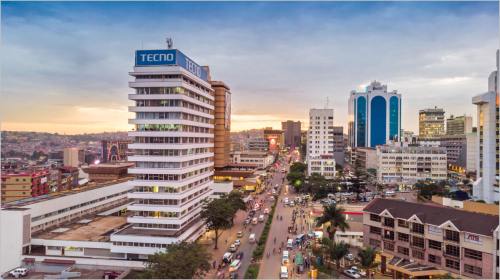 An image from Uganda Capital
.
.
Click the link below for images:
.
__________________________________________
July 12, 2022
Mohenjo
Business, Enthralling, Human Interest, Photographs
amazon, business, Business News, current-events, Future, Hotels, human-rights, medicine, mental-health, research, Science, Science News, technology, Technology News, travel, vacation
Click the link below the picture
.
On private property close to Chapada dos Veadeiros National Park is an amazing and ancient place much like a water park created by nature with pools, natural water slides, and cascades. It’s called Vale da Lua or Valley of the Moon due to the smooth rocks formed by river and ancient lava flows. Still, others call it Moon Valley.
These rocks are very unusual and some consider them to look like lunar rocks. This Moon Valley is not well-known, not even among the people of Brazil. https: unusualplaces.org/vale-da-lua/
.
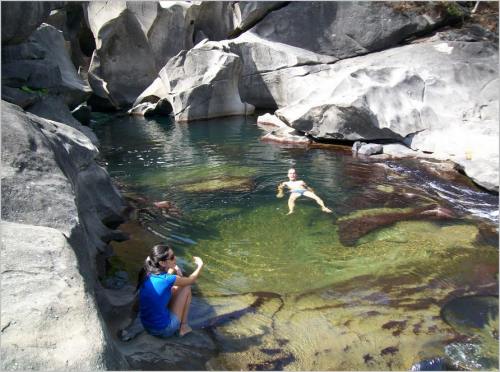 An image from Vale Da Lua Brazil
.
.
Click the link below for article:
.
__________________________________________
July 11, 2022
Mohenjo
Business, Enthralling, Human Interest, Photographs
amazon, business, Business News, current-events, Future, Hotels, human-rights, medicine, mental-health, research, Science, Science News, technology, Technology News, travel, vacation
Click the link below the picture
.
Hangzhou, also romanized as Hangchow, is the capital and most populous city of Zhejiang, People’s Republic of China. It is located in the northwestern part of the province, sitting at the head of Hangzhou Bay, which separates Shanghai and Ningbo. Hangzhou grew to prominence as the southern terminus of the Grand Canal and has been one of China’s most renowned and prosperous cities for much of the last millennium. Its West Lake, a UNESCO World Heritage Site west of the city, is among its best-known attractions. A study conducted by PwC and China Development Research Foundation ranked Hangzhou first among “Chinese Cities of Opportunity”. According to the Globalization and World Cities Research Network (GaWC), the city is classified as Beta (global second-tier) city, together with Chongqing, Nanjing, and Tianjin in China. Hangzhou is also one of the world’s top 100 financial centers, according to the Global Financial Centres Index.
Hangzhou is classified as a sub-provincial city and forms the core of the Hangzhou metropolitan area, the fourth-largest in China after Guangzhou-Shenzhen Pearl River agglomeration, Shanghai-Suzhou-Wuxi-Changzhou conurbation, and Beijing. As of the 2020 Chinese census, it had a total population of 11,936,010 inhabitants. However, its metropolitan area, populated by 13.035 million people over an area of 8,107.9 km2 (3,130.5 sq mi), consists of all urban districts in Hangzhou and 3 urban districts of the city of Shaoxing.
Hangzhou has been repeatedly rated as the best commercial city in mainland China by Forbes. Home to the headquarters of world Internet industry leaders such as the Alibaba Group, Hangzhou is known for attracting professionals and entrepreneurs who work in information technology. Since 2014, its rapid population growth has led to a steady increase in local housing prices. According to the 2020 Hurun Global Rich List, Hangzhou ranks 11th in the world and 6th in China (after Beijing, Shanghai, Hong Kong, Shenzhen, and Guangzhou) in the number of resident billionaires.
Hangzhou is a major city for scientific research in China, ranking 23rd globally by the Nature Index as of 2021. It hosts several notable universities, including Zhejiang University of Technology, Hangzhou Normal University, Hangzhou Dianzi University, Zhejiang A&F University, Zhejiang Sci-Tech University, and China Jiliang University. Notably, Zhejiang University is one of the world’s top 100th comprehensive public research universities.
In September 2015, Hangzhou was awarded the 2022 Asian Games. It will be the third Chinese city to host the Asian Games, after Beijing 1990 and Guangzhou 2010. Hangzhou also hosted the 11th G20 summit in 2016. Wikipedia
.
 An image from Hangzhou, China
.
.
Click the link below for images:
.
__________________________________________
July 9, 2022
Mohenjo
Business, Enthralling, Human Interest, Photographs
amazon, business, Business News, current-events, Future, Hotels, human-rights, medicine, mental-health, research, Science, Science News, technology, Technology News, travel, vacation
Click the link below the picture
.
Seattle is a seaport city on the West Coast of the United States. It is the seat of King County, Washington. With a 2020 population of 737,015, it is the largest city in both the state of Washington and the Pacific Northwest region of North America. The Seattle metropolitan area’s population is 4.02 million, making it the 15th-largest in the United States. Its growth rate of 21.1% between 2010 and 2020 makes it one of the nation’s fastest-growing large cities.
Seattle is situated on an isthmus between Puget Sound (an inlet of the Pacific Ocean) and Lake Washington. It is the northernmost major city in the United States, located about 100 miles (160 km) south of the Canadian border. A major gateway for trade with East Asia, Seattle is the fourth-largest port in North America in terms of container handling as of 2021.
The Seattle area was inhabited by Native Americans for at least 4,000 years before the first permanent European settlers. Arthur A. Denny and his group of travelers, subsequently known as the Denny Party, arrived from Illinois via Portland, Oregon, on the schooner Exact at Alki Point on November 13, 1851. The settlement was moved to the eastern shore of Elliott Bay and named “Seattle” in 1852, in honor of Chief Si’ahl of the local Duwamish and Suquamish tribes. Today, Seattle has high populations of Native, Scandinavian, Asian American, and African American people, as well as a thriving LGBT community that ranks sixth in the United States by population.
Logging was Seattle’s first major industry, but by the late 19th century, the city had become a commercial and shipbuilding center as a gateway to Alaska during the Klondike Gold Rush. Growth after World War II was partially due to the local Boeing company, which established Seattle as a center for aircraft manufacturing. The Seattle area developed into a technology center from the 1980s onwards with companies like Microsoft becoming established in the region; Microsoft founder Bill Gates is a Seattleite by birth. Internet retailer Amazon was founded in Seattle in 1994, and major airline Alaska Airlines is based in SeaTac, Washington, serving Seattle’s international airport, Seattle–Tacoma International Airport. The stream of new software, biotechnology, and Internet companies led to an economic revival, which increased the city’s population by almost 50,000 between 1990 and 2000. Seattle also has a significant musical history. Between 1918 and 1951, nearly two dozen jazz nightclubs existed along Jackson Street, from the current Chinatown/International District to the Central District. The jazz scene nurtured the early careers of Ray Charles, Quincy Jones, Ernestine Anderson, and others. Seattle is also the birthplace of rock musician Jimi Hendrix, as well as the origin of the bands Nirvana, Pearl Jam, Soundgarden, Heart, Alice in Chains, Foo Fighters, and the alternative rock movement grunge. Wikipedia
.
 An image from Seattle, Washington
.
.
Click the link below for images:
.
__________________________________________
Older Entries
Newer Entries
 James' World 2