July 30, 2023
Mohenjo
Business, Food For Thought, Human Interest, Medical, Political, Science, Technical
amazon, business, Business News, current-events, Future, Hotels, human-rights, medicine, mental-health, research, Science, Science News, technology, Technology News, travel, vacation

Click the link below the picture
.
About 2,300 holiday seasons ago, the Greek philosopher Epicurus wrote a letter to his friend Menoeceus in which he noted: “a wise person does not simply choose the largest amount of food but the most pleasing food.”
As we find ourselves in another season of joyous excesses, we may wonder why we don’t heed this advice.
It’s certainly not because we’re already disciplined eaters. My longtime co-author Brian Wansink and two of his colleagues used data from wireless scales to record the daily weight of 2,924 people over the course of one year. They found an average weight gain of 0.6 kg in the days after Christmas in the United States and 0.8 kg in Germany. Six months later, half of this weight gain had still not been lost.
It is not also because we actually happy to keep this extra weight. Interest in dieting, as shown in Google searches, skyrockets as soon as the season of indulgences turns into the season of good resolutions. But this interest diminishes as the year progresses, and 80% of diets fail, only to spike again with renewed eagerness on the next year, in an endless cycle of hopefulness and forgetfulness.
Why then do we go for the largest amount of food rather than the most pleasing? As is often the case, it is because we eat with our eyes, hearts, and cultural norms, and neglect to pay attention to how we actually feel when we are eating.
Happiness is a small portion of food
Over the past 10 years, I have studied how people choose how much indulgent food to eat; in other words, when eyeing a chocolate cake, when do they take a big slice, a small one, or none? Over and over again, I’ve found that people overwhelmingly focus on a) the fear of being hungry and b) value for money, which both lead to choosing large portions. Another important factor, which I discussed in an earlier HBR article, is that our brain is very bad at product sizing and significantly underestimates the size of today’s jumbo food portions. If we’re worried about feeling cheated by (and ravenous after eating) an overpriced, tiny bag of popcorn at the movies, we’re also incapable of guessing just how much bigger the jumbo size is.
.
 Big size
.
.
Click the link below for the article:
.
__________________________________________
July 28, 2023
Mohenjo
Crime, Food For Thought, Human Interest, Medical, missed News, Political, Science, Technical
amazon, business, Business News, current-events, Future, Hotels, human-rights, medicine, mental-health, research, Science, Science News, technology, Technology News, travel, vacation

.
News You might have missed!
Use your browser or smartphone back arrow (<-) to return to this table for your next selection.
.
__________________________________________
July 27, 2023
Mohenjo
Crime, Food For Thought, Human Interest, Medical, missed News, Political, Science, Technical
amazon, business, Business News, current-events, Future, Hotels, human-rights, medicine, mental-health, research, Science, Science News, technology, Technology News, travel, vacation
.
News You might have missed!
Use your browser or smartphone back arrow (<-) to return to this table for your next selection.
.
__________________________________________
July 25, 2023
Mohenjo
Crime, Food For Thought, Human Interest, Medical, missed News, Political, Science, Technical
amazon, business, Business News, current-events, Future, Hotels, human-rights, medicine, mental-health, research, Science, Science News, technology, Technology News, travel, vacation
.
News You might have missed!
Use your browser or smartphone back arrow (<-) to return to this table for your next selection.
.
__________________________________________
July 22, 2023
Mohenjo
Crime, Food For Thought, Human Interest, Medical, missed News, Political, Science, Technical
amazon, business, Business News, current-events, Future, Hotels, human-rights, medicine, mental-health, research, Science, Science News, technology, Technology News, travel, vacation
.
News You might have missed!
Use your browser or smartphone back arrow (<-) to return to this table for your next selection.
.
__________________________________________
July 20, 2023
Mohenjo
Crime, Food For Thought, Human Interest, Medical, missed News, Political, Science, Technical
amazon, business, Business News, current-events, Future, Hotels, human-rights, medicine, mental-health, research, Science, Science News, technology, Technology News, travel, vacation
.
News You might have missed!
Use your browser or smartphone back arrow (<-) to return to this table for your next selection.
.
__________________________________________
July 17, 2023
Mohenjo
Business, Food For Thought, Human Interest, Medical, Political, Science, Technical
amazon, business, Business News, current-events, Future, Hotels, human-rights, medicine, mental-health, research, Science, Science News, technology, Technology News, travel, vacation

Click the link below the picture
.
My family doesn’t own any firearms, but I live in Arizona, where I witnessed someone bring a gun into a children’s fun center just because they could. And considering my state’s laws regarding open and concealed carry, as well as its fascination with firing ranges at strip malls, the chances one of my children will play in a home with a weapon inside seems high, if not inevitable.
I know I need to introduce the concept and hazards of firearms to my children, but I’m unsure how to start the conversation. So I spoke to several experts about how to raise awareness about the dangers of guns and what to do if they ever encounter one.
Set boundaries
From James Bond’s Walther PPK, the video game Doom and the curving bullets in the film Wanted, popular media does romanticize guns and how they’re used. Because children are unaware of the hurt these weapons can actually cause, you might want to set boundaries around what your children watch and the toys they play with.
“We have to have age-appropriate, open conversations with our children about the difference between what happens in a movie, video games, or television versus what happens in real life,” says Dr. Alison Tothy, a pediatric emergency medicine physician at the University of Chicago. “As they get older, you’ll have to frame the conversation differently.”
You have to talk to your kids about guns, even if you don’t have one
You may not have a pool, but you still teach your kids how to swim because there will be a time when they’ll need to know how. According to a 2020 Gallup report, 32% of U.S. adults stated they own a gun, and 42% reported living in a gun household. That is one in three American homes with a gun, so even though you don’t own one, the chance of your child being somewhere with one is high.
.
 Illustration: Alisa Stern
.
.
Click the link below for the article:
.
__________________________________________
June 21, 2023
Mohenjo
Business, Food For Thought, Human Interest, Medical, Political, Science, Technical
amazon, business, Business News, current-events, Future, Hotels, human-rights, medicine, mental-health, research, Science, Science News, technology, Technology News, travel, vacation

Click the link below the picture
.
Lutyens’ Delhi is one of the most iconic neighborhoods of India’s capital. Home to the country’s parliament, numerous embassies, and a lush, 90-acre Mughal-era park, it’s an architectural paradise, connected by tree-lined streets and roundabouts with mini-gardens. Yet despite being one of the city’s most refined districts, this clean, green neighborhood is home to something sinister. It is a hot spot for a dangerous and overlooked air pollutant: ozone.
India is no stranger to pollution, with many of its cities reporting some of the worst air quality in the world. Every winter, New Delhi gets shrouded in smog for days. But discussions about air pollution and policies to mitigate it mostly focus on particulate matter: PM2.5 and PM10—small particles or droplets that are only a few microns in diameter. However, scientists are increasingly raising the alarm about surface ozone. It’s a secondary pollutant that isn’t released from any source, forming naturally when oxides of nitrogen and volatile organic compounds—such as benzene, which is found in gasoline, or methane—react under high heat and sunlight. This makes ozone a particularly ugly modern threat—a problem that arises where pollution and climate change coincide.
“Even an hour of exposure can give you very poor health outcomes,” says Avikal Somvanshi, a researcher at the Center for Science and Environment in New Delhi. While ozone is beneficial in the high atmosphere, where it absorbs ultraviolet radiation, down on Earth’s surface, concentrations of it can be deadly. Data on its impacts is patchy, but a 2022 study estimates that ozone killed more than 400,000 people worldwide in 2019, up 46 percent since 2000. And according to the State of Global Air Report 2020, it is in India where the number of ozone deaths has increased the most over the past decade.
Ozone wreaks havoc in the respiratory tract. The gas can “inflame and damage airways” and “aggravate lung diseases like asthma,” warns the US Environmental Protection Agency. It does this by affecting the cilia, the microscopic hair-like structures that line the airways to help protect them, explains Karthik Balajee, a clinician and community medicine specialist based in Karaikal, India. After exposure “we are more prone to respiratory infections,” he says, adding that inhaling ozone also affects lung capacity. Studies show that long-term exposure is associated with an increased risk of chronic obstructive pulmonary disease, a lung disease that makes it hard to breathe and increases the risk of dying from other cardiovascular or respiratory conditions. Even short-term exposure can land you in the emergency room. “One or two days following a peak in ozone, there have been increases in hospital admissions due to respiratory problems,” says Balajee.
.
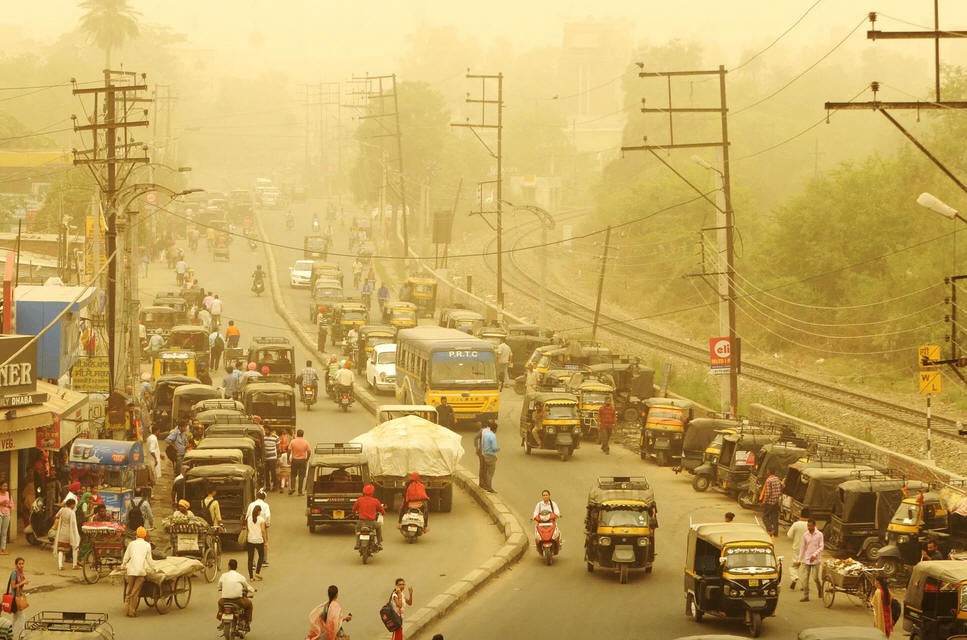 Photograph: Bharat Bhushan/Hindustan Times/Getty Images
.
.
Click the link below for the article:
.
__________________________________________
June 17, 2023
Mohenjo
Business, Food For Thought, Human Interest, Medical, Political, Science, Technical
amazon, business, Business News, current-events, Future, Hotels, human-rights, medicine, mental-health, research, Science, Science News, technology, Technology News, travel, vacation

Click the link below the picture
.
During my first two years as a medical student, I almost never went to lectures. Neither did my peers. In fact, I estimate that not even a quarter of medical students in my class consistently attended classes in person. One of my professors, Dr. Philip Gruppuso, says in his 40 years of teaching, in-person lecture attendance is the lowest he’s seen. Even before the COVID-19 pandemic, first- and second-year medical students regularly skipped lectures. Instead, they opted to watch the recordings at home on their own time. The pandemic accelerated the shift. This absence from the classroom has a lot of people in the medical education system wondering how this will affect future doctors and has precipitated wide discussion among medical institutions. Medical education is changing rapidly, and the change is being driven by students — so how do schools incorporate the reality of virtual learning while training them adequately for the huge responsibility of patient care?
“Flip” the classroom for the first two years
The first half of medical education (traditionally the first one to two years, which are also sometimes called the pre-clerkship years) prepares students to succeed during the second half of medical school, clerkships, where students work directly with patient care teams. Preclerkship medical education is where students learn the technical elements of being a doctor before seeing patients. It includes lectures in medical science — anatomy, embryology, physiology, pathology, and pharmacology — and health system science – ethics, professionalism, and public health. And it goes beyond lectures. It includes dissecting a human body in anatomy lab, practicing how to interview a patient and conduct a physical exam (typically using patient actors), and numerous small group discussion sessions connected to specific lectures.
.
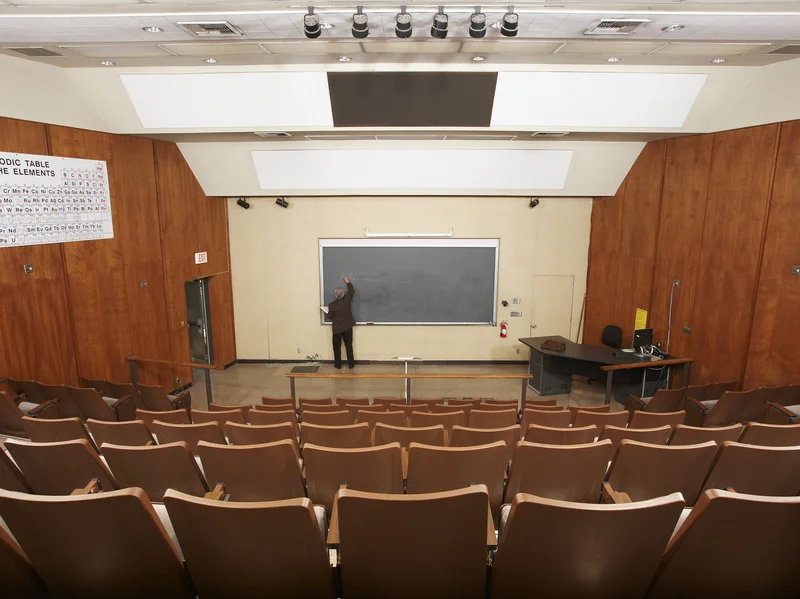
Many medical students do not attend lectures in the first two years, instead opting to watch recorded classes on their own time. Tom Fowlks/Getty Images
.
.
Click the link below for the article:
.
__________________________________________
June 13, 2023
Mohenjo
Crime, Food For Thought, Human Interest, Medical, missed News, Political, Science, Technical
amazon, business, Business News, current-events, Future, Hotels, human-rights, medicine, mental-health, research, Science, Science News, technology, Technology News, travel, vacation
.
News You might have missed!
Use your browser or smartphone back arrow (<-) to return to this table for your next selection.
.
__________________________________________
Older Entries
Newer Entries
 James' World 2