Home

A Distorted Mind-Body Connection May Explain Common Mental Illnesses

Leave a comment

Click the link below the picture

.

By the time Maggie May, an Arkansas resident in her 30s, was admitted to a psychiatric clinic in 2024, she had been struggling for years with atypical anorexia nervosa, an eating disorder that leads to severe food restriction and profound disturbances in body image. (Her name has been changed for privacy.) She had already tried traditional interventions with a psychotherapist and a dietitian, but they had failed to improve her condition. So when May heard about a trial of a new and unconventional therapy, she jumped at the opportunity.

The treatment was unusual in that, alongside talk therapy, May underwent several sessions in a sensory-deprivation chamber: a dark, soundproof room where she floated in a shallow pool of water heated to match the temperature of her skin and saturated with Epsom salts to make her more buoyant. The goal was to blunt May’s external senses, enabling her to feel from within—focusing on the steady thudding of her heart, the gentle flow of air in and out of her lungs, and other internal bodily signals.

The ability to connect with the body’s inner signals is called interoception. Some people are better at it than others, and one’s aptitude for it may change. Life events can also bolster or damage a person’s interoceptive skills. Sahib Khalsa, a psychiatrist and neuroscientist at the University of California, Los Angeles, and his colleagues think a disrupted interoception system might be one of the driving forces behind anorexia nervosa. So they decided to repurpose a decades-old therapy called flotation-REST (for “reduced environmental stimulation therapy”) and launched a trial with it in 2018. They hypothesized that in people with anorexia and some other disorders, an underreliance on internal signals may lead to an overreliance on external ones, such as how one looks in the mirror, that ultimately causes distorted body image, one of the key factors underlying these conditions. “When they’re in the float environment, they experience internal signals more strongly,” Khalsa says. “And having that experience may then confer a different understanding of the brain-body relationship that they have.”

Studies have implicated problems with this inner sense in a wide variety of conditions, including anxiety disorders, post-traumatic stress disorder, and borderline personality disorder. Some researchers and clinicians now think that problems in interoception might contribute to many mental illnesses. Alongside this research, which itself is complicated by challenges in testing design and by a less than clear understanding of interoception, other groups are also developing therapies that aim to target this inner sense and boost psychological well-being.

This work is circling in on a central message: the body and mind are inextricably intertwined. “We have always thought about [mental health conditions] as being in the brain or the mind,” says Camilla Nord, a professor of cognitive neuroscience at the University of Cambridge. But clinicians have long noted that people with mental illness frequently report physical symptoms such as abnormalities in heartbeats, breathing, and appetite, she adds.

The idea that the body can influence the mind dates back centuries. In the 1800s, two psychologists on opposite ends of the globe independently proposed a then novel idea: emotions are the result of bodily reactions to a specific event. Called the James-Lange theory after its founders, American psychologist William James and Danish doctor Carl Lange, this view ran counter to the long-dominant belief that emotions were the cause, not a consequence, of corresponding physiological changes.

Although this notion has garnered critics, it inspired a slew of studies. The 1980s saw a surge of interest in the role of physiological signals in panic disorders. Researchers discovered that they could bring on panic attacks by asking people to inhale carbon dioxide–enriched air, which can increase breathing rates, or by injecting them with isoproterenol, a drug that increases heart rate.

Breathing rate can affect how someone perceives the intensity and unpleasantness of pain.


These findings led some psychologists to suggest that physical sensations were the primary trigger of panic attacks. In the early 1990s, Anke Ehlers, a psychologist then at the University of Göttingen in Germany, and her team examined dozens of people with panic disorders and reported that these patients were better able to perceive their heartbeats than healthy individuals—and that this greater awareness was linked to more severe symptoms. On top of that, a small, preliminary study by Ehlers of 17 patients revealed that those who were more skilled at this task were more likely to relapse and start having panic attacks again. These observations hinted at a two-way dynamic: not only could physical sensations within the body cause psychological effects, but the ability to perceive and interpret those signals—in other words, one’s interoceptive ability—could have a profound influence on mental health.

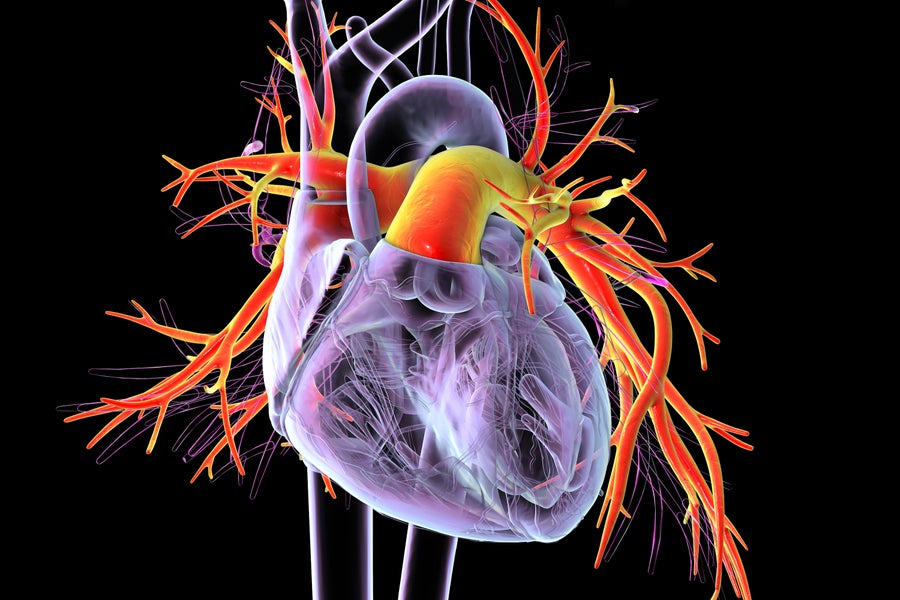
Over the years, a growing body of evidence has indicated that interoception plays an important role in shaping both emotions and psychological health. A large chunk of this work has focused on the heart. With every heartbeat, blood rushes into the arteries and triggers sensors known as baroreceptors, which shoot off messages to the brain conveying information about how strongly and rapidly the heart is beating.

In one pivotal 2014 study, Hugo Critchley, a neuropsychiatrist at Brighton and Sussex Medical School in England, and his team reported that this process can affect a person’s sensitivity to fear. By monitoring volunteers’ heartbeats while they viewed fearful or neutral faces, they found that people detected fearful faces more easily and judged them as more intense when their heart was pumping out blood than when it was relaxing and refilling. But participants with higher levels of anxiety often perceived fear even when their hearts relaxed.

Researchers have also demonstrated that bodily signals such as breathing patterns and gut rhythms can influence emotional reactions. People are quicker to react to fearful faces while breathing in than while breathing out, and breathing rate can affect how someone perceives the intensity and unpleasantness of pain.In more recent work, some neuroscientists have turned their attention to the gastrointestinal system. In 2021, Nord and her colleagues discovered that people given a dose of an antinausea drug that affects gut rhythms—processes within the stomach that help digestion—were less likely to look away from pictures of feces than they normally would have been. These disgust-related visceral signals, Nord speculates, may be relevant to eating disorders. “It’s possible that some of these signals contribute to feeling aversion to signals of satiety, making satiety very uncomfortable, a feeling you don’t want to feel,” she says.

.

https://static.scientificamerican.com/dam/m/5f5aa8a950387356/original/saw0126Kwon01.jpg?m=1764955552.057&w=900DTAN Studio

.

.

Click the link below for the complete article:

https://www.scientificamerican.com/article/interoception-is-our-sixth-sense-and-it-may-be-key-to-mental-health/

.

__________________________________________

It’s time to accept that the US supreme court is illegitimate and must be replaced Ryan Doerfler and Samuel Moyn

Leave a comment

Click the link below the picture

.

The justices of the US supreme court – even its conservatives – have traditionally valued their institution’s own standing. John Roberts, the current US chief justice, has always been praised – even by liberals – as a staunch advocate of the court’s image as a neutral arbiter. For decades, Americans believed the court soared above the fray of partisan contestation.

No more.

In Donald Trump’s second term, the supreme court’s conservative supermajority has seized the opportunity to empower the nation’s chief executive. In response, public approval of the court has collapsed. The question is what it means for liberals to catch up to this new reality of a court that willingly tanks its own legitimacy. Eager to realize cherished goals of assigning power to the president and arrogating as much for itself, the conservative justices seemingly no longer care what the public or the legal community think of the court’s actions. Too often, though, liberals are responding with nostalgia for a court that cares about its high standing. There is a much better option: to grasp the opportunity to set right the supreme court’s role in US democracy.

Attention to the body’s legitimacy surged in the decades after the extraordinary discussion on the topic in Planned Parenthood of Southeastern Pennsylvania v Caseythe 1992 case that memorably preserved the abortion rights minted in Roe v Wade despite recent conservative additions to the court. “The Court’s power lies in its legitimacy,” former justices Anthony Kennedy, Sandra Day O’Connor and David Souter explained in their joint opinion, “a product of substance and perception that shows itself in the people’s acceptance of the Judiciary as fit to determine what the Nation’s law means and to declare what it demands”. The fact of popular acceptance of the institution’s role was itself a constitutional and legal concern.

Compared with the prior quarter-century, when they angled for just one justice (often Kennedy) to swing to their side, it was already clear as Trump’s first term ended how much was going to change with Amy Coney Barrett’s conservative substitution for Ruth Bader Ginsburg. Yet liberal justices generally proceeded as if their conservative peers would continue to take their own institution’s legitimacy seriously. They focused on warning conservatives against further eroding it. The dissent in Dobbs v Jackson Women’s Health Organization, which removed the federal right to abortion, is a classic example. The liberal justices lionized Kennedy and other conservatives for refusing to overturn Roe v Wade out of the need they cited in Casey to maintain the supreme court’s image.

That was then. In Trump’s second term, the court has ceded to him near total control over federal spending, even as the president is now openly threatening to withhold funds from “blue” states and projects not aligned with administrative “priorities. Authorized by the court to engage in racial profiling, masked federal agents continue to descend upon “Democrat-run” cities, subjecting Latinos and now Somalis to ongoing abuse.

Most recently, the court hinted at its plan to declare most, if not all, “independent” agencies unconstitutional, allowing Trump to fire members of the Federal Trade Commission and the National Labor Relations Board – though Chief Justice Roberts did suggest that the Federal Reserve might be different, drawing sighs from legal commentators (and sighs of relief from investors). The conservative justices appear wholly unbothered by the howls that the court is no more than a partisan institution, turning their destructive attention next to what remains of the Voting Rights Act.

Yet with the conservative justices shattering the supreme court’s non-partisan image during Trump’s second term, liberals are not adjusting much. The liberal justices – Ketanji Brown Jackson, Elena Kagan, and Sonia Sotomayor – have become much more aggressive in their dissents. But they disagree with one another about how far to concede that their conservative colleagues have given up any concern for institutional legitimacy. Encouragingly, Jackson pivoted to “warning the public that the boat is sinking” – as journalist Jodi Kantor put it in a much-noticed reported piece. Jackson’s fellow liberals, though, did not follow her in this regard, worrying her strategy of pulling the “fire alarm” was “diluting” their collective “impact”.

Similarly, many liberal lawyers have focused their criticism on the manner in which the supreme court has advanced its noxious agenda – issuing major rulings via the “shadow” docket, without full-dress lawyering, and leaving out reasoning in support of its decisions.

What appears to matter for such respectful institutionalists, most prominently the liberal professor Stephen Vladeck, is that the errant, reactionary justices rationalize their disastrous rulings. But aside from the fact that few Americans read their opinions in the first place, the objection presupposes that a more enlightened despotism ought to be the goal – that the justices trashing the respect Americans once had for them merely need to explain themselves, instead of giving up their power to inflict so much ongoing harm.

Some liberals worry that concluding the supreme court is beyond redemption is too close to “nihilism” about the constitution, or even about law itself. In the aftermath of Trump’s re-election, Professor Kate Shaw remarked: “I don’t think abandoning the constitution in the course of abandoning institutions is the right way forward or is something that we can survive.” Vladeck cautioned similarly against “doomerism”, warning the “rule of law” in the United States might “struggle to survive” the “emergence of any kind of popular consensus that law increasingly doesn’t matter”.

Such qualms suggest some can’t imagine an alternative to a legitimate supreme court, even once the institution itself has abandoned that role. Much like in the early 20th century, Americans today are responding to a series of institutional failures with an extended period of constitutional rethinking. Tracing many of those failures to the undemocratic features of our written constitution – the electoral college and the Senate, most notably – reformers are proposing creative solutions or workarounds that might move us in the direction of an actual democracy.

Similarly, progressives are increasingly converging on the idea of both expanding and “disempowering” federal courts. Attentive to the reality that the supreme court especially, is not and rarely has been their friend, left-leaning advocates are finding ways to empower ordinary people, trading the hollow hope of judicial power for the promise of popular rule.

To label as “nihilists” those sketching an alternate, more democratic future is, in other words, not only mistaken but outright bizarre. Rather than adhere to the same institutionalist strategies that helped our current crisis, reformers must insist on remaking institutions like the US supreme court so that Americans don’t have to suffer future decades of oligarchy-facilitating rule that makes a parody of the democracy they were promised.

In Trump’s second term, the Republican-appointed majority on the supreme court has brought their institution to the brink of illegitimacy. Far from pulling it back from the edge, our goal has to be to push it off.

  • Ryan Doerfler and Samuel Moyn teach law at Harvard and Yale

.

a building is reflected in water‘The supreme court is at the brink of illegitimacy. Far from pulling it back from the edge, our goal has to be to push it off. Photograph: Stefani Reynolds/AFP via Getty Images

.

.

Click the link below for the complete article:

https://www.theguardian.com/commentisfree/2025/dec/19/us-supreme-court-legitimacy

.

__________________________________________

Mitt Romney: Tax the Rich, Like Me

Leave a comment

Click the link below the picture

.

In 2012, political ads suggested that some of my policy proposals, if enacted, would amount to pushing Grandma off a cliff. Actually, my proposals were intended to prevent that very thing from happening.

Today, all of us, including our grandmas, truly are headed for a cliff: If, as projected, the Social Security Trust Fund runs out in the 2034 fiscal year, benefits will be cut by about 23 percent. The government will need trillions of dollars to make up the shortfall. When lenders refuse to provide the money unless they are paid much higher interest rates, economic calamity will almost certainly ensue. Alternatively, the government could print more money, inducing hyperinflation that devalues the national debt — along with your savings.

Typically, Democrats insist on higher taxes, and Republicans insist on lower spending. But given the magnitude of our national debt as well as the proximity of the cliff, both are necessary. DOGE took a slash-and-burn approach to budget cutting and failed spectacularly. Europe demonstrates that exorbitant taxes without spending restraint crushes economic vitality and thus speeds how fast the cliff arrives.

On the spending-cut front, only entitlement reform would make a meaningful difference, since programs such as Social Security and Medicare represent the majority of government outlays. No one countenances cutting benefits for current or near retirees. But Social Security and Medicare benefits for future retirees should be means-tested — need-based, that is to say — and the starting age for entitlement payments should be linked to American life expectancy.

And on the tax front, it’s time for rich people like me to pay more.

Our roughly 17 percent average tariff rate helps the revenue math. Doubling it — which seemed possible shortly after “Liberation Day” — would further burden lower- and middle-income families and would have severe market consequences.

I long opposed increasing the income level on which FICA employment taxes are applied (this year, the cap is $176,100). No longer; the consequences of the cliff have changed my mind.

The largest source of additional tax revenues is also probably the most compelling for fairness and social stability. Some call it closing tax code loopholes, but the term “loopholes” grossly understates their scale. “Caverns” or “caves” would be more fitting.

Consider, for example, the cavern of the capital gains tax treatment at death for those with enormous estates. Let’s look at a hypothetical scenario using Elon Musk as a proxy. If he had originally purchased his Tesla stock with, say, $1 billion and held it until his death, and if it were then worth $500 billion, he would never pay the 24 percent federal capital gains tax on the $499 billion profit. Why? Because under the tax code, capital gains are not taxed at death. The tax code provision known as step-up in basis means that when Mr. Musk’s heirs get his stock, they are treated as if they purchased it for $500 billion. So no one pays taxes on the $499 billion capital gain. Ever.

This unusual provision makes sense when you’re talking about helping families keep their family farms. But it’s used by billionaires to avoid capital gains taxes. In order to raise more revenue, this cavern should be sealed for mega-estates over $100 million.

Sealing the real estate caverns would also raise more revenue: 1031 exchanges allow a real estate developer to defer and possibly avoid paying the capital gains tax on the profitable sale of a building. Depreciating the purchase price of a building, including the debt, shields income from taxes. As with the previous example, hugely profitable real estate properties held at death are not subject to the capital gains tax. I presume these provisions were originally intended to stimulate the real estate industry. Today, they insulate multibillionaires.

There are more loopholes and caverns to be explored and sealed for the very wealthy, including state and local tax deductions, the tax rate on carried interest and charity limits on the largest estates at death. It is not that the rich, in these cases, are cheating the government — they are playing by the rules. But given the potential peril ahead, we need to follow the Willie Sutton rule: Go where the money is.

I believe in free enterprise, and I believe all Americans should be able to strive for financial success. But we have reached a point where any mix of solutions to our nation’s economic problems is going to involve the wealthiest Americans’ contributing more.

Of course a much-faster-growing economy would save us from the debt cliff. This truism has long rationalized politicians’ failure to act: Faster growth, promised with tax cuts, is always just around the corner, but that corner never arrives.

Yes, taxes can slow growth. But most of the measures I propose would have a relatively small impact on economic growth. If my party wants to be the one to give working- and middle-class Americans greater opportunity — to be the party that is trying to restore some sense of confidence in our capitalist system — this would be a start.

It would help us avoid the cliff ahead, and might tend to quiet some of the anger that will surely grow as unemployed college graduates see tax-advantaged multibillionaires sailing 300-foot yachts.

.

https://static01.nyt.com/images/2025/12/22/opinion/17Romney/17Romney-superJumbo.jpg?quality=75&auto=webpBen Hickey

.

.

Click the link below for the complete article:

https://www.nytimes.com/2025/12/19/opinion/romney-tax-the-rich.html

.

__________________________________________

Meet Your Future Robot Servants, Caregivers and Explorers

Leave a comment

Click the link below the picture

.

In the future, a caregiving machine might gently lift an elderly person out of bed in the morning and help them get dressed. A cleaning bot could trundle through a child’s room, picking up scattered objects, depositing toys on shelves, and tucking away dirty laundry. And in a factory, mechanical hands may assemble a next-generation smartphone from its first fragile component to the finishing touch.

These are glimpses of a possible time when humans and robots will live and work side by side. Some of these machines already exist as prototypes, and some are still theoretical. In situations where people experience friction, inconvenience or wasted effort, engineers see opportunity—for robots to perform chores, do tasks we are unable to do, or go places where we cannot.

Realizing such a future poses immense difficulties, however, not the least of which is us. Human beings are wild and unpredictable. Robots, beholden as they are to the rules of their programming, do not handle chaos well. Any robot collaborating or even coexisting with humans must be flexible. It must navigate messes and handle sudden changes in the environment. It must operate safely around excitable small children or delicate older people. Its limbs or manipulators must be sturdy, dexterous, and attached to a stable body chassis that provides a source of power. And to truly become a part of our daily lives, these mechanical helpers will need to be affordable. All told, it’s a steep challenge.

But not necessarily an insurmountable one. To see how close we’re getting to this vision, I visit the Stanford Robotics Center, which has 3,000 square feet for experiments and opened in November 2024 at Stanford University. There, I am greeted by Steve Cousins, the center’s executive director and founder of the company now known as Relay Robotics, which supplies delivery robots to hospitals and hotels. He believes robots will become indispensable to modern life—especially in areas such as caregiving, which will need more workers as the world’s population ages. “Robotics is about helping people,” he says.

In some roles, robots’ abilities can surpass those of the flesh and blood. Yet it’s also true that there are certain jobs only humans ever could or should do. The Stanford Robotics Center is one attempt to probe that boundary and find out just how many tasks of daily life—at home, at work, in medicine, and even underwater—are best offloaded to metal and plastic assistants.

One skill in particular is a significant stumbling block for robots. “The biggest challenge in robotics is contact,” says Oussama Khatib, director of the center. Lots of robots have humanlike hands—but hands are more complex than they seem. Our articulated fingers belong to an appendage built of 27 bones and more than 30 muscles that work in concert. Our sense of touch is actually a synthesis of many senses, relying on cellular receptors that detect pressure and temperature and on proprioception, or our knowledge of our body’s location and motion. Touch and dexterity enable humans to outperform current robots at many tasks: although children often master tying their shoes between the ages of five and seven years, for instance, only machines designed specifically to tie shoelaces can do so at all. Many robots rely not on hands but on “jaw grippers” that bring two opposing fingers toward each other to hold an object in place.

Impressive demonstrations of robotic hands, such as when Tesla’s humanoid Optimus robot was recorded snatching a tennis ball out of the air in 2024, often rely on teleoperation, or remote control. Without a technician guiding Optimus off-screen, playing catch would be out of the question for the robot.

In the early 1960s, the first industrial robot arm—a bulky, 3,000-pound machine—was installed in a General Motors plant in Trenton, N.J. Named Unimate, it was designed for “programmed article transfer,” as its patent describes. In practice, this meant the robot used its gripper to grab and lift hot metal casts from an assembly line. Unimate’s proprioception was crude. A handler had to physically move the arm to put it through any desired motion. It could carry out basic tasks, including hitting a golf ball and pouring a beverage from an open can—which a Unimate robot demonstrated for Johnny Carson on the Tonight Show in 1963.

Yet Carson gave the machine’s business end a wide berth. Maintaining a respectful distance from robot arms is, after all, a long-standing norm, part of the structured environments that have helped manufacturing robots succeed for the past 60 years. Moving them out of such orderly domains, as the roboticists at Stanford are trying to do, is hard. Khatib says he and his colleagues are “taking robots to a world that is uncertain—where you don’t know where you’re going exactly and where, when you touch things, you [might] break them.” He seeks inspiration from what he calls human “compliance,” or the way we adapt to our environment by touch and feel. Guided by these principles, he developed a pair of cooperative robot arms equipped with grippers, named Romeo and Juliet.

.

https://static.scientificamerican.com/dam/m/7175ceb1024f569d/original/saw0126Guar01.jpg?m=1764952818.235&w=900

Bed making is one household task that could eventually be outsourced to robots such as TidyBot, a project led by Stanford University computer scientist Jeannette Bohg. Christie Hemm Klok

.

.

Click the link below for the complete article:

https://www.scientificamerican.com/article/meet-your-future-robot-servants-caregivers-and-explorers/

.

__________________________________________

Why Time to Value Is the Most Important Metric for Measuring Customer Love—and How to Turbocharge it

Leave a comment

Click the link below the picture

.

Blame Amazon.

Consumers increasingly expect to see value quickly. Shoppers expect same-day delivery, comparable prices, immediate responses, subscription options, and easy return processes. All of these things are considered in a brand and product’s value, says Ari Lightman, professor of digital media and marketing at Carnegie Mellon University.

He calls it the Amazon-ification of business. 

These changes have made it more important than ever for every business to pay attention to time to value, or TTV—a measure of how long it takes for a customer to fully realize the value of your product.

“TTV can be used to understand how effective you are at converting dabblers into advocates, where you are losing customers on the purchasing journey, and what commercial techniques are most effective and efficient,” says Tyler Rainey, director in the performance improvement practice at business advisory firm Portage Point Partners. He thinks of TTV as the time it takes for consumers to have an aha! moment with a brand. Perhaps they realize the product will save time or money, make a task easier, or help them achieve a goal. 

Though TTV will differ across products, industries, and brands, no matter how your business defines value, remember that speed counts. As growth expert Bruce Eckfeldt wrote for Inc., “a shorter TTV often leads to higher customer satisfaction and retention rates.”

It’s helpful to calculate TTV on each stage of the customer journey, to identify the speed at which customers progress from initial exposure to meaningful engagement. That way you can identify where value is realized—or delayed—within the journey, says Rainey. “By monitoring how quickly customers move from awareness to consideration, convert to first use, and ultimately demonstrate loyalty and advocacy, organizations can pinpoint friction points and optimize targeted interventions that accelerate perceived value and long-term ROI.” 

.

https://img-cdn.inc.com/image/upload/f_webp,c_fit,w_1200,q_auto/vip/2025/11/inc-premium-metrics-that-matter-3-time-to-value.jpgPhoto illustration: Inc. Art; Getty Images; Unsplash

.

.

Click the link below for the complete article:

https://www.inc.com/sydney-sladovnik/why-time-to-value-is-the-most-important-metric-for-measuring-customer-love-and-how-to-turbocharge-it/91263298

.

__________________________________________

Live Updates: Trove of Epstein Files Includes New Photos and Court Records

Leave a comment

Click the link below the picture

.

The material includes thousands of documents related to past investigations of Jeffrey Epstein, as well as hundreds of images. Some depict politicians, pop stars, and royals; others show women whose faces have been redacted.

Here’s the latest.

The Justice Department released thousands of documents and hundreds of photographs related to investigations of Jeffrey Epstein on Friday, responding to a deadline set by Congress and reviving a scandal that has dogged the second Trump administration.

The significance of the disclosure was unknown, given the volume of the records and how much Epstein material has been previously disclosed. And because the Justice Department said that it had withheld some documents, citing ongoing investigations or national security concerns, the release is as likely to reignite the furor over the so-called Epstein files as quell it.

The Epstein files include a 1996 child porn complaint that the F.B.I. ignored.

A woman who once worked for Jeffrey Epstein filed a complaint to the F.B.I. about his interest in “child pornography” in 1996, about a decade before investigators began scrutinizing his predatory behavior.

The woman, Maria Farmer, has for years said that she had called federal investigators in the summer of 1996, but the F.B.I. had never publicly acknowledged her original report, even to Ms. Farmer. Some people following the Epstein case had accused her of inventing the story. After the release of thousands of Epstein files on Friday, The New York Times contacted Ms. Farmer about a report stamped with the date of Sept. 3, 1996. She broke down in tears.

President Trump’s name is rarely mentioned in the latest release of Epstein files.

President Trump’s name is rarely mentioned in the batch of Jeffrey Epstein files that his Justice Department released on Friday, based on a preliminary New York Times scan of thousands of documents and hundreds of photographs.

Mr. Trump and Mr. Epstein were close friends for years, The Times has reported, and Mr. Trump’s initial refusal to release federal files related to investigations into Mr. Epstein sparked speculation about whether those files featured Mr. Trump. His allies have previously confirmed that his name appears in the files about Mr. Epstein.

Bill Clinton features prominently in the newly released files.

The first tranche of documents released by the Justice Department from its investigations into Jeffrey Epstein appeared to focus significantly on material connected to former President Bill Clinton, at a moment when Republicans have fought to shift public attention away from Mr. Epstein’s friendship with President Trump.

The dozens of photos released on Friday include one of Mr. Clinton in a hot tub and another showing Mr. Clinton swimming in a pool with Ghislaine Maxwell, who conspired with Mr. Epstein to operate his sex trafficking operation , along with a second woman. Another shows a woman seated closely with Mr. Clinton on what appears to be an airplane. There is also what appears to be a candid shot of Mr. Clinton speaking with Mr. Epstein and pictures of him with the musician Mick Jagger.

One of the redacted files, containing 119 pages and entitled “Grand Jury NY,” is entirely blacked out. The Justice Department went into federal court twice in Manhattan seeking the release of grand jury materials arising from the investigation into Jeffrey Epstein and his close associate Ghislaine Maxwell. Even though a judge agreed to the department’s second request, it appears as if the grand jury materials remain shielded from the public.

Almost two hours after the Justice Department made public thousands of documents from its Jeffrey Epstein files, President Trump has not yet commented on their release. The case has long haunted him politically.

The files contain a set of phone message notes written years ago for Jeffrey Epstein. One message, dated Nov. 8, 2004, from a caller whose name was redacted, said: “I have a Female for him.” The following January, he got another message with identical wording: “I have a female for him.”

Senator Chuck Schumer, Democrat of New York and the minority leader, called for more information on the redactions in the files released by the Justice Department today.

“Simply releasing a mountain of blacked out pages violates the spirit of transparency and the letter of the law,” he said in a statement. “For example, all 119 pages of one document were completely blacked out. We need answers as to why.”

The law that required the release of the files allowed the Justice Department to redact some information. The department is required to file a report to the House and Senate Judiciary Committees in 15 days that details the legal basis for the redactions that it made.

.

https://static01.nyt.com/images/2025/12/19/opinion/19epstein-files1/19epstein-files1-jumbo.jpg?quality=75&auto=webp

Jeffrey Epstein in a photograph included in Friday’s release.Credit…Department of Justice

.

.

Click the link below for the complete article:

https://www.nytimes.com/live/2025/12/19/us/epstein-files-release

.

__________________________________________

Jared Isaacman Confirmed to Head NASA at Pivotal Moment for Space Science

Leave a comment

Click the link below the picture

.

NASA finally has a new boss. After a year of back and forth, the U.S. Senate on Wednesday confirmed Jared Isaacman, a tech billionaire who has paid to go to space twice, to head the space agency.

His confirmation comes at a pivotal moment for NASA, which is under mounting pressure from both budget cuts and technical hurdles that together could scuttle its most ambitious missions. On the chopping block are an effort to return samples of Martian rock that have already been collected to Earth for study and the possible delay of NASA’s bid to return U.S. astronauts to the moon before the decade’s end.

Isaacman, age 42, was originally nominated to lead the agency in December 2024. President Donald Trump withdrew him from the running in May over apparent conflicts of interest—the tech entrepreneur had previously donated to Democratic lawmakers and associated with Trump’s out-of-favor former adviser, Elon Musk. But Trump renominated Isaacman in November.

Now that Isaacman has the job, his attention is likely to be fixed on getting NASA back on track to putting astronauts on the moon in 2028. U.S. lawmakers have told him repeatedly throughout his confirmation process that beating China to the moon is the top priority; Beijing plans to land its astronauts on the lunar surface by 2030.

Space scientists and former astronauts told Scientific American that they hoped Isaacman, having gone to space twice himself and participated in the first private spacewalk, would reinvigorate NASA after years of delays and setbacks to its moon and Mars exploration program. Isaacman seems committed to lighting a fire under NASA’s efforts to stay one step ahead of China. What remains far less clear, however, is how he will fare against the Trump administration’s push to shrink the agency’s budget, space race or no space race.

.

https://static.scientificamerican.com/dam/m/16d2b53a96b45497/original/isaacman.jpg?m=1765916204.023&w=900Photo by Jonathan Newton/The Washington Post via Getty Images

.

.

Click the link below for the complete article:

https://www.scientificamerican.com/article/jared-isaacman-confirmed-to-head-nasa-at-pivotal-moment-for-the-space-agency/

.

__________________________________________

Gavin Newsom Trolls Trump Speech With 1 Word, Repeated Over And Over And Over Again

Leave a comment

Click the link below the picture

.

Donald Trump drew rare bipartisan agreement with his address to the nation on Wednesday, with people across the political spectrum asking on social media just what was the point of the speech.

California Gov. Gavin Newsom (D) led the mockery of the president’s comments ― which were heavy on baseless boasts and light on much else ― in a series of posts.

In one, the potential Democratic 2028 presidential candidate summed up “Trump tonight” with one word, “Me,” which he repeated many times.

Newson, whose said his online trolling of Trump in recent months is intended to shine a light on the president’s most ridiculous and divisive antics, also suggested the whole speech “could have been an email.”

.

.

.

Click the link below for the complete article:

https://www.huffpost.com/entry/donald-trump-speech-reaction-newsom_n_6943a560e4b0fd459ef010fa?origin=home-latest-news-unit

.

__________________________________________

‘Don’s Best Friend’: How Epstein and Trump Bonded Over the Pursuit of Women

Leave a comment

Click the link below the picture

.

Jeffrey Epstein was a “terrific guy” and “a lot of fun to be with.” He and Donald J. Trump also had “no formal relationship.” They went to a lot of the same parties. But they “did not socialize together.” They were never really friends, just business acquaintances. Or “there was no relationship” at all. “I was not a fan of his, that I can tell you.”

For nearly a quarter-century, Mr. Trump and his representatives have offered shifting, often contradictory accounts of his relationship with Mr. Epstein, one sporadically captured by society photographers and in news clips before they fell out sometime in the mid-2000s. Closely scrutinized since Mr. Epstein died in a Manhattan jail cell during Mr. Trump’s first term, their friendship — and questions about what the president knew of Mr. Epstein’s abuses — now threatens to consume his second one.

The controversy has shaken Mr. Trump’s iron hold on his base like no other. Loyal supporters have demanded to know why the administration has not moved more quickly to unearth the convicted sex offender’s remaining secrets. In November, after resisting months of pressure to release more Epstein-related documents held by the federal government — and facing an almost unheard-of revolt among Republican lawmakers — Mr. Trump reversed himself, signing legislation that requires their release beginning this week.

Mr. Epstein had a talent for acquiring powerful friends, some of whom have become ensnared in the continuing scrutiny of his crimes. For months, Mr. Trump has labored furiously to shift himself out of the frame, dismissing questions about his relationship with Mr. Epstein as a “Democrat hoax” and imploring his supporters to ignore the matter entirely. An examination of their history by The New York Times has found no evidence implicating Mr. Trump in Mr. Epstein’s abuse and trafficking of minors.

But the two men’s relationship was both far closer and far more complex than the president now admits.

Beginning in the late 1980s, the two men forged a bond intense enough to leave others who knew them with the impression that they were each other’s closest friend, The Times found. Mr. Epstein was then a little-known financier who cultivated mystery around the scope and source of his self-made wealth. Mr. Trump, six years older, was a real estate scion who relished publicity and exaggerated his successes. Neither man drank or did drugs. They pursued women in a game of ego and dominance. Female bodies were currency.

Over nearly two decades, as Mr. Trump cut a swath through the party circuits of New York and Florida, Mr. Epstein was perhaps his most reliable wingman. During the 1990s and early 2000s, they prowled Mr. Epstein’s Manhattan mansion and Mr. Trump’s Plaza Hotel, at least one of Mr. Trump’s Atlantic City casinos, and both their Palm Beach homes. They visited each other’s offices and spoke often by phone, according to other former Epstein employees and women who spent time in his homes.

With other men, Mr. Epstein might discuss tax shelters, international affairs, or neuroscience. With Mr. Trump, he talked about sex.

“I just think it was trophy hunting,” Stacey Williams, who rose to fame as a star of the Sports Illustrated swimsuit editions during the 1990s, said in an interview with The Times. In social media posts and interviews with news outlets in recent years, Ms. Williams has described how Mr. Trump groped her in 1993 at Trump Tower while Mr. Epstein — whom she was then dating — watched. “I think Jeffrey liked that he had this Sports Illustrated model who had this name, and that Trump was pursuing me,” she said. Mr. Trump has denied her account.

To shed light on their friendship, The Times interviewed more than 30 former Epstein employees, victims of his abuse, and others who crossed paths with the two men over the years. The Times also obtained new documents that illuminate their relationship and scoured court documents and other public records.

Many of the people interviewed by The Times asked to share their stories anonymously, saying they feared for their safety at the hands of supporters of Mr. Trump, a president who has deployed the might of the federal government to target and punish his political opponents. Some Epstein victims have already received death threats for demanding a full accounting of the government’s investigations, according to a statement released by more than two dozen of them last month.

.

https://static01.nyt.com/images/2025/12/18/mosaic-1-card-134/mosaic-1-card-134-square640.png?quality=75&auto=webp

.

.

Click the link below for the complete article:

https://www.nytimes.com

.

__________________________________________

Four Million U.S. Children Had No Health Insurance in 2024. Some Will Die of Cancer

2 Comments

Click the link below the picture

.

More than four million U.S. children under age 19 lacked health insurance in 2024. The uninsured rate peaked at 6.1 percent—the highest level in the past decade, according to a recent analysis by the Georgetown University Center for Children and Families, a health policy research organization. That marks a nearly 20 percent increase in the number of uninsured children nationwide since 2022.

Being uninsured creates gaps in medical care. And these gaps don’t just interfere with routine pediatric care; they also disrupt treatments for serious illnesses such as pediatric cancers, for which early detection is often a matter of life and death.

“When you dn’t have insurance, you’re likely to delay care,” says Kimberly Johnson, a pediatric cancer epidemiologist and a professor at Washington University in St. Louis. “In the case of cancer, that can delay diagnosis, and the cancer can become more advanced, which then is associated with a worse prognosis.”

The spike in the number of uninsured children is a direct upshot of Americans’ fragmented health care system. This patchwork of public insurance, private insurance and other employer plans creates a shaky environment for families whose income or job status changes, says Derek Brown, a health economist and a professor at Washington University in St. Louis. These life shifts may force parents to repeatedly lose and re-enroll in insurance, threatening the health of their children.

Many uninsured children are eligible for Medicaid (the government insurance program for people with limited income) or the Children’s Health Insurance Program (a joint federal-state program that provides matching federal funds for states to help insure children) but aren’t enrolled, says Joan Alker, a research professor at the Georgetown McCourt School of Public Policy. People may not know they are eligible, and individuals who are undocumented may fear deportation. “Especially in today’s climate, there are families where the child is a citizen and the parent is an immigrant, and they’re fearful of interacting with government,” Alker says. But such fears can only explain a small proportion of those who are uninsured, she notes.

More children are losing insurance because of bureaucratic red tape. In a process informally referred to as “Medicaid unwinding,” states have resumed Medicaid eligibility checks after a period of continuous coverage during the COVID pandemic. Some people who were eligible previously have been disenrolled not as a result of disqualification but simply because of bureaucratic mistakes.

These gaps in insurance coverage will result in more children getting sicker and dying. A 2020 national study in the International Journal of Epidemiology of more than 58,000 children and adolescents under age 20 with cancer found that those who were uninsured faced a sharply higher risk of dying within five years than those with private insurance across most cancer types. Eleven percent of the uninsured study participants received no cancer-directed treatment compared with 6.7 percent of those who were privately insured. Children and adolescents without insurance also had 31 percent higher odds of being diagnosed at a later stage of cancer and were 32 percent more likely to die in the five years after diagnosis than those with private insurance—living about two months less on average.

In the study, those on Medicaid also had a higher risk of dying than those on private insurance, suggesting that other differences between the groups could explain the former’s higher mortality rate, such as family income level.

Because different types of cancer grow differently, however, insurance gaps don’t harm every child in the same way. For certain types, the earlier they were found, the higher survival rates tended to be. For example, in tumors of the reproductive organs, the study found that about 40 percent of the survival difference between the privately insured and the uninsured was explained by catching the disease at a later stage, whereas for brain and spinal tumors, timing of diagnosis made little difference no matter what insurance they had—likely because the latter type of cancer tends to be less treatable in general.

Even if kids have insurance some of the time, going on and off Medicaid can jeopardize cancer treatment. In a 2024 study in Pediatric Blood & Cancer that looked at more than 30,000 children and adolescents under age 20 who were diagnosed with cancer between 2006 and 2013, Johnson, Brown and their colleagues found that those who were intermittently insured by Medicaid during the assessment period had double the odds of being diagnosed at a later stage when cancer had metastasized and faced an increased risk of cancer death compared with their continuously insured and non-Medicaid-insured peers—most of whom had private insurance.

The five-year survival gap was widest among children and adolescents with soft-tissue cancers and liver tumors, for whom losing Medicaid coverage could interrupt lifesaving treatment; nerve-cell cancers were the only cancers that didn’t follow this trend. People with other types of cancers, such as leukemia, a form of blood cancer, also benefited from continuous insurance. Leukemia symptoms are often urgent enough to send children to the emergency room, leading to faster diagnosis, unlike many quiet-progressing solid tumors, whose symptoms parents may not recognize as urgent.

“As a country, we’re long overdue to move to a system where no baby leaves the hospital without [insurance] coverage, just the same way they shouldn’t leave the hospital without a car seat,” Alker says. The Trump administration is phasing out a policy that has allowed some states to cover children continuously until age six despite any family’s changes in circumstances.

The situation isn’t hopeless, experts say. Paperwork errors could be fixed, and legislators could make new guarantees to stop children from losing insurance. In addition, hospital and clinical social workers should help people stay connected with Medicaid enrollment supports and guide them through some of common pitfalls and challenges, Brown says. For caregivers of children with cancer, it’s especially important to make sure each state’s Medicaid enrollment process is accessible, which requires clear websites and adequate staffing, he says.

.

https://static.scientificamerican.com/dam/m/214bd7e15d40a965/original/uninsured-children_graphic_leadImage.png?m=1765562915.493&w=900Eve Lu

.

.

Click the link below for article:

https://www.scientificamerican.com/article/how-rising-rates-of-uninsured-children-will-increase-pediatric-cancer-deaths/

.

__________________________________________

Older Entries Newer Entries

TradingClubsMan

Algotrader at TRADING-CLUBS.COM

Comedy FESTIVAL

Film and Writing Festival for Comedy. Showcasing best of comedy short films at the FEEDBACK Film Festival. Plus, showcasing best of comedy novels, short stories, poems, screenplays (TV, short, feature) at the festival performed by professional actors.

Bonnywood Manor

Peace. Tranquility. Insanity.

Warum ich Rad fahre

Take a ride on the wild side

Madame-Radio

Découvre des musiques prometteuses dans la sphère musicale française (principalement, mais pas que...).

Ir de Compras Online

No tiene que Ser una Pesadilla.

Kana's Chronicles

Life in Kana-text (er... CONtext)

Cross-Border Currents

Tracking money, power, and meaning across borders.

Jam Writes

Where feelings meet metaphors and make questionable choices.

emotionalpeace

Finding hope and peace through writing, art, photography, and faith in Jesus.

Wearing Two Gowns.COM

MOVING FORWARD...That's how WINNING is done!”-Rocky Balboa

...

love each other like you're the lyric to their music

Luca nel laboratorio di Dexter

Comprendere il mondo per cambiarlo.

Tales from a Mid-Lifer

Mid-Life Ponderings

Hunza

Travel,Tourism, precious story "Now in hundreds of languages for you."

freedomdailywriting

I speak the honest truth. I share my honest opinions. I share my thoughts. A platform to grow and get surprised.

The Green Stars Project

User-generated ratings for ethical consumerism

Cherryl's Blog

Travel and Lifestyle Blog

Sogni e poesie di una donna qualunque

Questo è un piccolo angolo di poesie, canzoni, immagini, video che raccontano le nostre emozioni

My Awesome Blog

“Log your journey to success.” “Where goals turn into progress.”

pierobarbato.com

scrivo per dare forma ai silenzi e anima alle storie che il mondo dimentica.

Thinkbigwithbukonla

“Dream deeper. Believe bolder. Live transformed.”

Vichar Darshanam

Vichar, Motivation, Kadwi Baat ( विचार दर्शनम्)

Komfort bad heizung

Traum zur Realität

Chic Bites and Flights

Savor. Style. See the world.

ومضات في تطوير الذات

معا نحو النجاح

Broker True Ratings

Best Forex Broker Ratings & Reviews

Blog by ThE NoThInG DrOnEs

art, writing and music by James McFarlane and other musicians

fauxcroft

living life in conscious reality

Srikanth’s poetry

Freelance poetry writing

JupiterPlanet

Peace 🕊️ | Spiritual 🌠 | 📚 Non-fiction | Motivation🔥 | Self-Love💕

Sehnsuchtsbummler

Reiseberichte & Naturfotografie

Spotlight Choices

astrology - life coaching - optimistic reality

INFINITE ENERGY

"قوتك تبدأ من هنا"

Mesime ÜNALMIŞ

Her çocuk hikayelerle büyümeli

Treasurable Life: The Dirty, Divine Truth of Becoming

No shame. No filters. Just everything we were told to hide.

Dr. Edward McInnis

Doctor of Medicine

Ishaya Zephaniah

Explore the dynamic relationship between faith and science, where curiosity meets belief. Join us in fostering dialogue, inspiring discovery, and celebrating the profound connections that enrich our understanding of existence.

Through Pain Suffering , Mental Health , Addictions , Cancer , Death , Drs

Living with Purpose: Finding Meaning Amidst Life's Challenges